
Travelers Beware: Speaking English Won't Get You Very Far In These 10 Countries
We may receive a commission on purchases made from links.
To many English-speaking travelers, their native language may feel inherently global, something that should, in theory, readily open doors internationally. And while this may be true in some places, there are still many coveted destinations where spoken English is rare and the language gap wide. In these places, once you're outside the bubble of a planned holiday — beyond the hotels, guided tours, and well-trodden tourist trails — the reach of English can drop abruptly. As visitors go about more everyday pursuits like taking public transport, ordering in restaurants, or even taking cash out of an ATM, they are quickly reminded that English has its limits. But these hiccups need not be a hindrance. Often, the effort to bridge the language gap brings its own rewards, leading to more spontaneous encounters and helping travelers connect with a place beyond the surface.
This list is anchored on the findings of the EF 2025 English Proficiency Index, a survey conducted by Education First (EF), a Swiss education company, cross referencing official figures with reports in local media, national statistics, language surveys, travel blogs, and discussions on travel forums on Reddit and Facebook. How far English travels can vary significantly within a single country, depending on how much the radius stretches beyond tourist hubs. While translation apps can help decode a menu or work through digital ticket machines, a mix of non-verbal cues, patience, and a genuine willingness to try remains the best way to break through the language barrier. Ultimately, this list looks not only at the presence of English in these countries, but also at how that translates for visitors when it begins to fade.
Japan
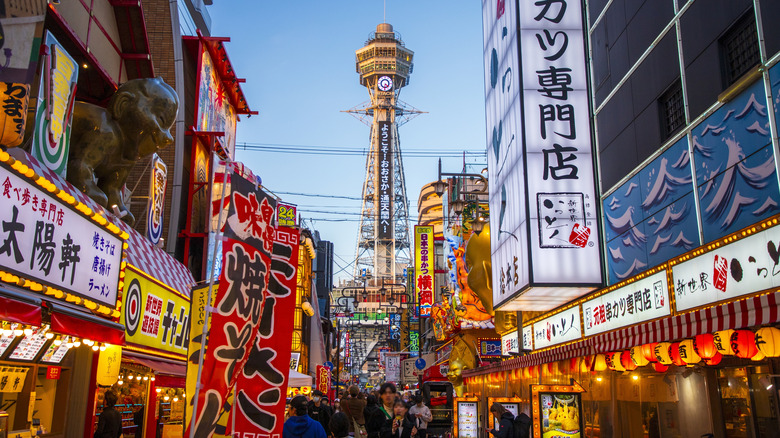
Boasting one of the most sophisticated tourism infrastructures in the world, with precise transit systems, pristine public spaces, and elevated hospitality, Japan has been ranked the best country for travel and tourism in 2026 by TimeOut. However, on the language front, travelers relying on English alone may still hit a few stumbling blocks. According to the EF 2025 English Proficiency Index, the country was ranked very low in English proficiency (96 out of 123), which was also reported by the Nippon Communications Foundation. This, of course, impacts tourists as well.
Social media is awash with accounts of visitors surprised by the limited use of English, especially given the sheer volume of international tourists that Japan attracts. The experience varies between mega cities like Tokyo and small towns like Obuse, or from high-end restaurants to tiny ramen joints. Dependency on gestures, pointing, visual cues, and translation apps, therefore, becomes key. Some travelers on Reddit say that learning a few basic phrases — such as "sumimasen" (excuse me), "arigato" (thank you), or "wakaranai" (I don't understand) — can smoothen the everyday experience.
Outside mainstream tourist circuit, or sometimes even within, Japanese menus pose another hurdle. Picture menus — found especially in izakayas (pubs) or small family run eateries — can be navigated by pointing. However, getting around might not always have easy, workable solutions. While in many urban centers, road signs are in both Japanese and English, the further one moves from the tourist orbit, the more likely signs are to be in Japanese alone. Given that it's also a country that encourages tourism beyond its classic attractions, creates a disconnect language-wise.
South Korea
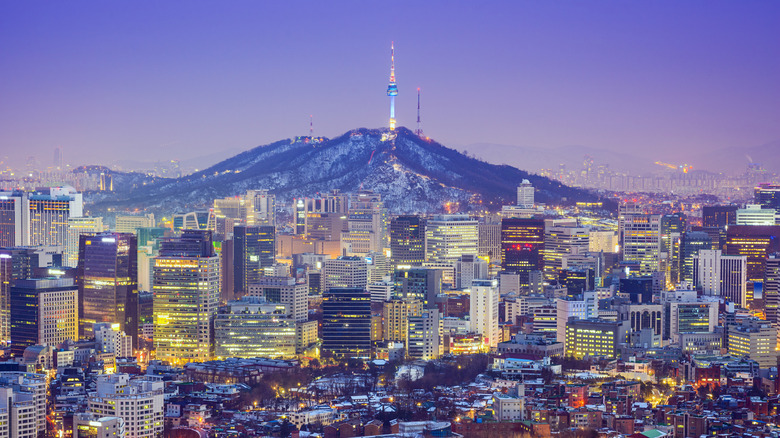
Despite South Korea's world-class infrastructure, its language barrier has long been flagged as a major issue by foreign visitors. In 2015, a government survey of 12,000 foreigners found language to be an overarching problem, as reported by Korea Times. Recent data shows the issue still persists, with EF's 2025 English Proficiency Index ranking it under moderate proficiency (48 out of 123). Beyond the hurdles of speaking and reading Korean, Korea JoongAng Daily has also noted instances of price discrepancies for those trying to make online bookings in English.
Even as picture menus allow for simple pointing, tools like Papago and Google Translate are handy for deciphering finer details, according to travelers on Reddit. If the timing is ideal, one could spot something appealing at a neighboring table and request the same order, as observed by blogger Loes Kieboom. Navigation can get tricky too, especially while following routes in English, with visitors reporting mixed experiences on Naver, the Google of South Korea. Even with thorough preparation, sudden changes in local transport timings could set you back. Still, knowing how to pronounce your destination correctly can make asking for directions easier, and getting a friendly local to jot your query in Korean is a useful fallback.
However, the language barrier is nowhere near enough to deter travelers. Over 15 million foreign visitors arrived in the first eight months of this year, according to Korea.net. Spending in Jeju Island itself, South Korea's island resort city, reportedly topped 1.3 trillion South Korean won (about $980 million USD) in the first half of 2026. The country's food, pop culture, shopping, and landscapes continue to draw travelers beyond Seoul, who clearly deem it well worth the effort to power through the language gap.
Mongolia
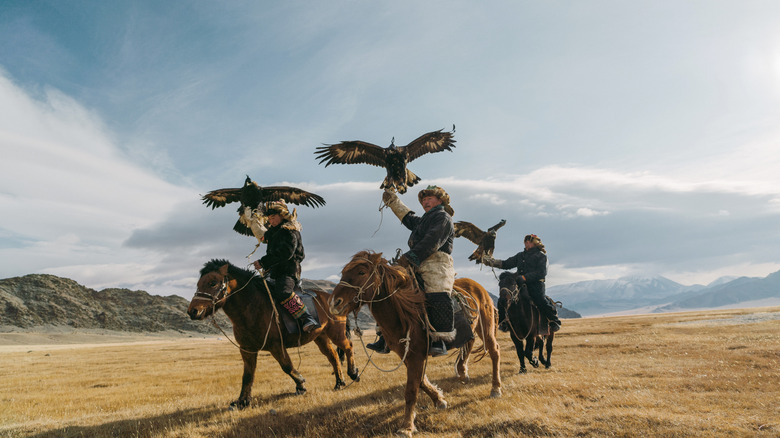
Ranked No. 95 on EF's 2025 English Proficiency Index, Mongolia has recorded English proficiency only in its capital, Ulaanbaatar. Here, young residents usually speak decent English, especially those working in hospitality, tourism, and business sectors, while signages and menu cards are often bilingual, in both Mongolian and English. So, within the commercial and tourist districts in Ulaanbaatar, travelers typically don't hit a wall in terms of language. But step outside the capital, and it's a different story. Mongolia's countryside, mainly characterized by nomadic herding, offers little to no opportunity to rely on English.
Mongolia's underrated wonders and nomadic charm mean that travelers can take in the country in its rawest essence — crossing the steppe, staying in ger camps, riding camels and sleds, getting to know nomadic tribes. In this leg of the journey, licensed tour guides are, of course, trained to help visitors, but those venturing out on their own can encounter a very different linguistic landscape. Even small detours from an organized itinerary could have their challenges, such as shopping at local markets or asking for directions. In these scenarios, some rudimentary Mongolian would be needed, in addition to hand gestures and pointing.
The first half of 2026 recorded an unprecedented 475,974 foreign visitor arrivals according to the National Statistics Office of Mongolia, a testimony to the country's growing appeal for travelers looking to explore the Gobi and beyond. And if these numbers are anything to go by, the language barrier clearly hasn't stood in the way of Mongolia's tourism boom.
China
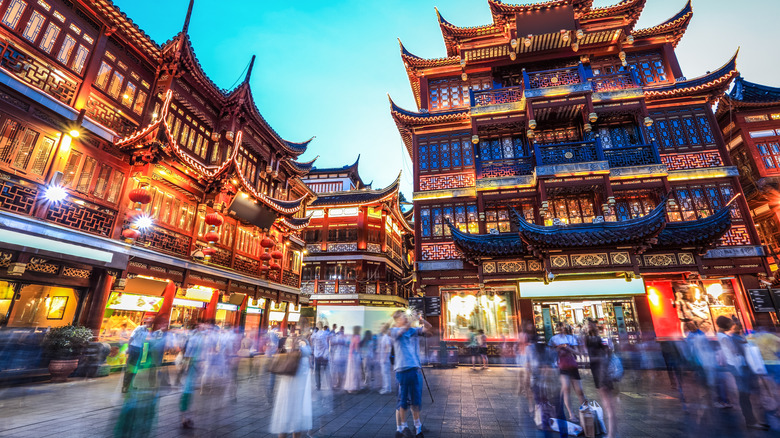
There was a time in China, before the Internet had taken over our phones, when it was not entirely absurd for foreigners to enter the kitchen in a restaurant and point at the ingredients to place their order. Most restaurants used to have menus in Mandarin characters only, leaving foreigners with unorthodox options to explore. Even today, bilingual menus in English are largely limited to touristy eateries, however, translation tools can smooth over the ordering process, especially with the Alipay app, which has a built-in translation feature that is ideal to decode QR code menus. Those willing to put in some extra effort, learning a handful of common Chinese characters can help decipher menus further, reducing dependency on apps.
At No. 86 on EF 2025 English Proficiency Index, China has sharp regional swings, with major tourist draws like Chongqing, Zhengzhou, Xi'an, and the Yunnan province scoring below 480 out of 800, falling in the low to very low proficiency tiers. In the centers of commerce, expectedly enough, English does better, with Beijing, Shanghai, and Guangzhou more likely to have English speakers. For solo travelers who don't speak the local language, the advice is mixed on travel forums. While some strongly advise against it, others feel it's doable with translation apps and a good deal of preparedness.
General conversation, however, is only part of the puzzle. Navigating China's payment systems is the bigger hurdle. Transactions run largely on WeChat Pay and Alipay, and setting either up takes some getting used to, especially because some translations are a work in progress. One traveler on Reddit advises setting up both apps before landing in the country to minimize technical snags.
Madagascar
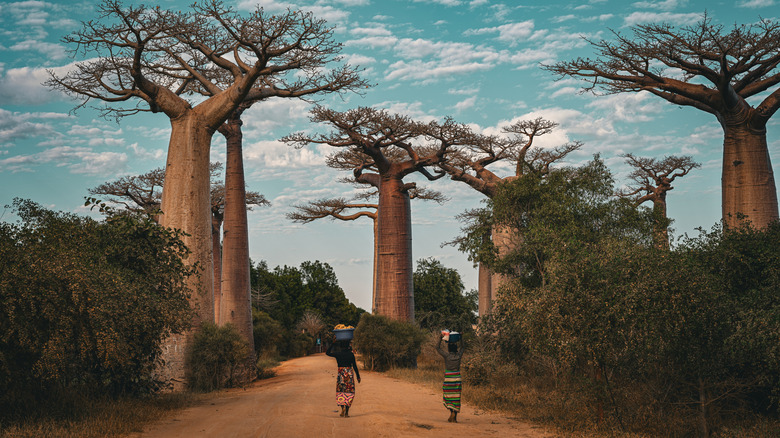
This wildly biodiverse African island's two main linguistic pillars are Malagasy and French. Any recorded English proficiency is confined to the capital, Antananarivo, which puts Madagascar at No. 90 in the EF 2025 English Proficiency Index. Within the tourist hotspots, one can find English speakers among staff in upmarket hotels, drivers, tour guides, but in smaller towns and villages, it's harder to come by. In Madagascar, this matters more because the most memorable experiences in the country lie in its natural treasures: rainforests, deserts, seascapes, and canyons that make the island so unique. And at the same time, these are areas where English becomes considerably less useful.
A thumb rule in social interactions here is to greet first, even when making a purchase or asking for directions; locals do light up to a "salama" (hello) and "misaotra" (thank you). At local markets and small eateries, French is more dependable after Malagasy, but a few local phrases like "azafady, ohatrinona" (excuse me, how much is this), coupled with a smile can go a long way. To tide over patchy Internet in remote areas, downloading an offline translator app, especially in French, is advisable, while carrying a notebook with useful phrases offers an analogue backup. Booking a bilingual English-speaking tour guide is also essential here, especially if the driver can double as an interpreter while you're exploring off the beaten path. The warmth of locals, however, makes the language gap easier to bridge, and with a little preparation and willingness, visitors can meet that openness halfway.
Kazakhstan
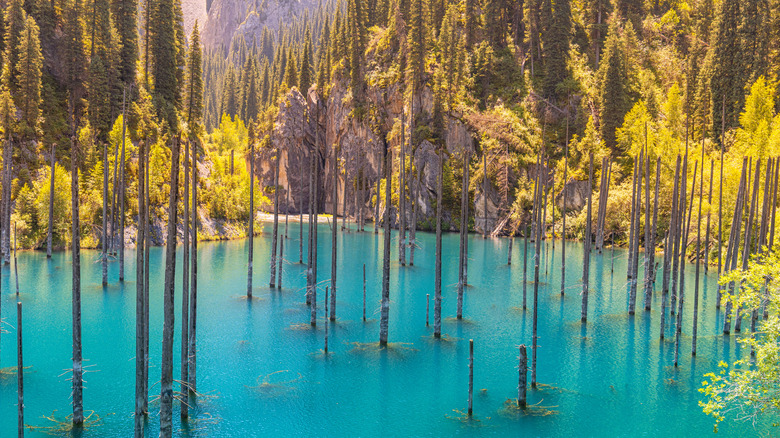
Among Central Asia's quieter success stories is Kazakhstan, which has seen remarkable tourism growth that was helped in large measure by its visa-free entry for citizens of 80 countries. The surge, however, hasn't made the country any easier to navigate in English. The ninth largest country in the world is trailing at No. 107 in the EF 2025 English Proficiency Index, classified as "very low proficiency." Kazakh and Russian are the dominant languages here, with Russian being prevalent in cities and the north, while Kazakh is preferred in rural areas and is largely spoken in the south.
Road signs, in large cities like Almaty, are in all three languages, including English, but the same can't be said for rural and semi-urban areas. Making things slightly more difficult are ATMs, which typically don't offer any English translations. Visitors may have to photograph the screen and use a translation app to work through the options.
Learning the Cyrillic alphabet can be particularly useful for reading street signs, menus, and figuring out public transport. Since Russian contains a surprising number of words similar to English, some may even look familiar, making the Cyrillic text more intelligible than one might expect. Think "банк" (bank), "кафе" (café), "метро" (metro) and so on. While Google Translate works well in areas with strong internet, downloading the offline Russian language library provides a reliable fallback. Outside Almaty and Astana — the world's weirdest capital city — into the heart of Kazakhstan's majestic terrain of glacial lakes, canyons, and steppes, would also lie the real linguistic adventure. With a little homework, that isn't impossible to navigate.
Thailand
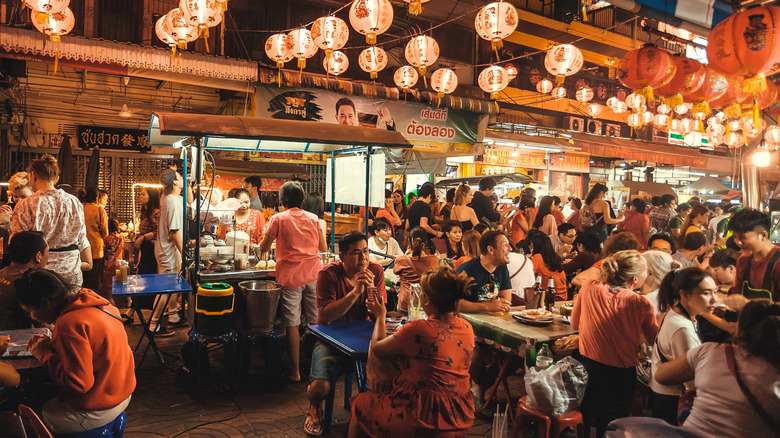
Among Thailand's biggest draws for tourists is its street food, with some of the most memorable meals coming straight off a pavement stall. The appetite reflects in the numbers, too. Michelin's first Bangkok guide in 2018 recognized 98 restaurants, including 28 street vendors, and a Tourism Authority of Thailand survey found that tourists' preference for street food climbed from 63% to 77.3%. Yet, some of these rewarding gastronomic experiences come with menus offering little or no English translation, particularly in smaller stalls and local eateries.
Aside from pointing, which is perfectly acceptable, understanding the categories of the menu can see you through most orders. Terms like "mai phet" (not spicy) or "mai sai" (without), signed off with a polite "khrap" (for men) or "kha" (for women) would not only make ordering easier, but also show effort. Thailand's spot at No. 116 out of 123 countries in the EF 2025 English Proficiency Index, with a very low speaking score of 377, might suggest that getting around in English is difficult. Traveler accounts on Reddit, however, are more reassuring. Many report managing with a little Thai, helped by English signages and ticket machines, and a slightly higher likelihood of finding someone who can help in English, at least in the touristy areas.
Further afield, communicating a specific destination can take more effort. Showing its name on your phone to your driver may work better than saying it out loud. On buses, knowing a nearby landmark can be more useful when the driver doesn't recognize the stop by its English name. A few Thai greetings and words of thanks are worth learning too, though travelers often find that hand gestures, smiles and a little patience count for more than perfect pronunciation.
Brazil
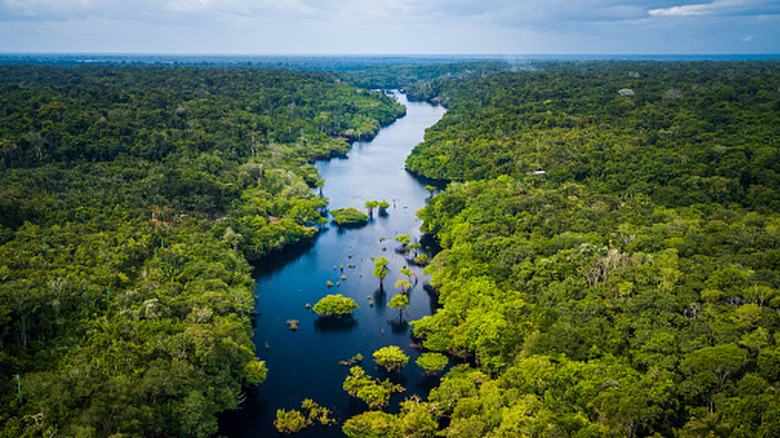
For South America's largest country that attracts millions of international visitors — 9.3 million in 2025, according to the Brazilian-American Chamber of Commerce, Inc. — the English support hasn't quite kept apace. In a country where Portuguese is the dominant language, the EF 2025 English Proficiency Index placed Brazil at No. 75, which is considered "low proficiency." Geography also appears to guide the figures. The mega cities of Rio de Janerio and São Paulo are categorized as moderately proficient. In Salvador and Manaus, the gateway to the Amazon, the scores drop further, while Rondônia and Tocantins fall into the "very low" proficiency rating. For some travelers on Reddit, that meant encountering pubs and restaurants with no English menus (even at international airports) and customer service agents that would speak little to no English.
Travelers recommend learning basic phrases, numbers, food names, and the Portuguese terms used in ATMs, while Google Translate can fill the gaps as and when the need arises. It's also advisable to keep offline Portuguese language packs handy, especially a few essential phrases and relevant screenshots, for moments in remote areas when one might be stranded without Internet. Although lodges in the Amazon and the Pantanal would typically have English-speaking guides, independent travelers might find it harder to escape Portuguese altogether. In cities too, being able to speak or read a little of the local language can make getting around easier, even when opting for private transport like taxis, and also for a smoother ordering experience in restaurants.
Ecuador
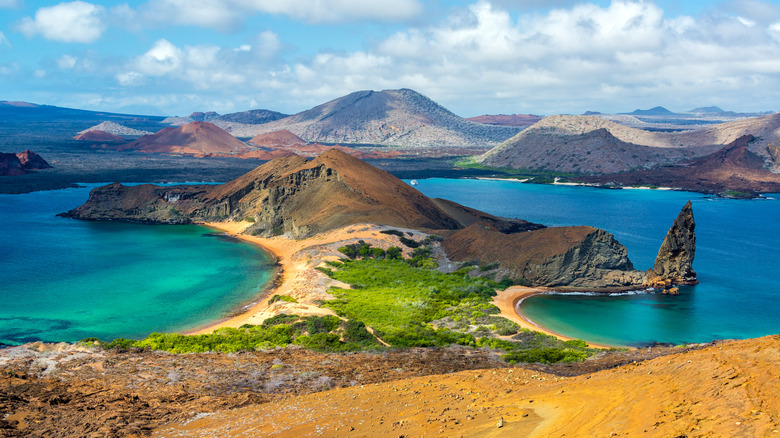
Ecuador may be called the "country of four worlds" — the Andes, the Amazon, the Pacific coast, and the Galápagos — but English doesn't travel evenly across all of them. The country was ranked No. 83 in the EF 2025 English Proficiency Index, but regional scores underline an imbalance. While the city of Quito ranks as moderately proficient, Cuenca, "the Athens of Ecuador", Guayaquil, and the Galápagos region, the top fixtures on visitor itineraries, fall under the low and very low proficiency bands.
The language gap isn't glaring on organized tours, as guides and staff on Galápagos cruises and in Quito and Cuenca generally speak English. But it's felt in local restaurants, markets, and rural areas, as well as in smaller family-run hotels, where English-speaking staff are a rarity. While Spanish is the official language of the country, there is another linguistic layer in the highlands, with Quechua (also known as Kichwa) still spoken in the markets of Otavalo. Unsurprisingly, there are traces of English where tourism thrives, but a modest attempt at Spanish can open doors that English alone cannot, even in big cities. A simple greeting in Spanish can break the ice, with a "buenos días" (good morning) or a "buenas tardes" (good afternoon) often making everyday exchanges warmer and easier.
Hungary
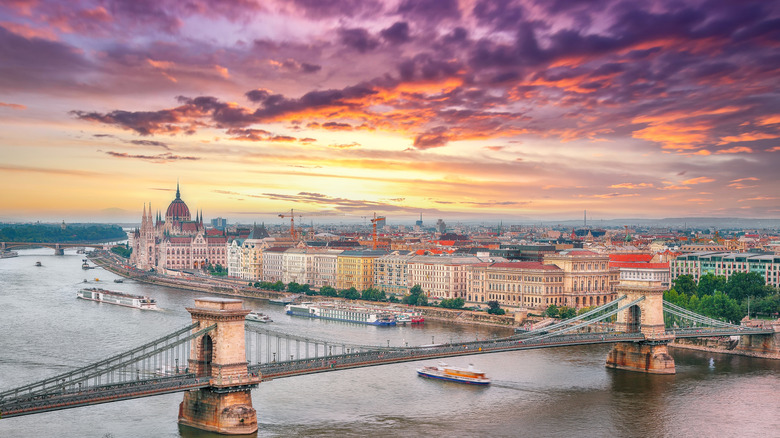
Hungary may fall under the "high proficiency" category in the EF 2025 English Proficiency Index, but the reality on the ground may not always mirror its impressive ranking at No. 22 of 123 countries. Having lived here for three years and counting, I've observed English to be far less prevalent than one might expect. Even in Budapest, Europe's "most authentic" food city, step outside the tourist centers and the language gap becomes hard to ignore. While English-speaking servers and menus are common in downtown Budapest and the popular Castle District, many restaurants scattered around the city still have menus in Hungarian only, and servers with limited English.
Public transport does have English signage, but announcements are usually in Hungarian, except at major train stations. Outside the capital, English fades fast. On trains, ticket inspectors and other staff may not understand English, even on mainstream routes between Budapest and other cities like Szeged, Pécs, or Debrecen. Around Lake Balaton, Hungary's prime holiday region, English is again scant, and there is some likelihood that professional tours in smaller cities like Szeged, Eger, and Pécs may not have English-speaking guides — so be sure to check before you book!
A 2023 EU Language survey found that just 31% of Hungarians speak English. So, for visitors, Google Translate earns its keep in everyday exchanges and decoding menus, although dish names can sometimes be amusingly off the mark. But the language barrier need not deter travelers from exploring Hungary's underappreciated parks and lakes. Hungarians are usually helpful, and will work with you to understand and communicate, appreciating the effort behind a "szia" (hello) or a "köszönöm" (thank you).