
Travel Essentials From The '80s That Have Become Nearly Obsolete

The decade that gave us MTV, music titans like Michael Jackson and Madonna, and fluffy hairstyles that contributed to a hole in the ozone layer was also instrumental in globalizing the travel industry. New flight routes and increasingly affordable destinations meant the middle class could finally afford to vacation somewhere not within driving distance. Yet, travel in the '80s was far from the simple affair of today, where an entire trip can be planned, booked, and paid for from one's bedroom on a single laptop.
A trip in the '80s required a slew of travel essentials that have all but disappeared from the modern traveler's lexicon. Access to the internet was borderline nonexistent, portable phones were far too expensive for the average traveler (not to mention bulky), and hotel recommendations came from personal experience or expert sources. This Gen-Z writer confesses she had to Google several of the travel items on this list, as none have ever appeared on her own travels. After pestering her Boomer parents for their own travel recollections and reading similar discussions on forums and articles, here are some essential travel items from the '80s that most younger travelers today will have never, or rarely, used.
Disposable film cameras
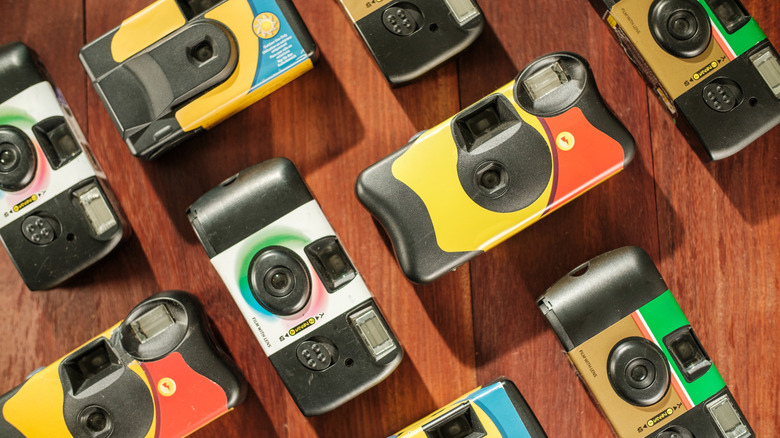
Smartphones make documenting a vacation so easy. In the '80s, your only options were expensive and bulky film cameras, Polaroids (which are seeing a resurgence among travelers), or the then-new and affordable disposable cameras limited to a single roll of film. Families would ration that film like their lives were at stake, and if you sneezed during the family photo, tough luck. It's now immortalized on film, and everyone from your friends to the studio developing the pictures to the relatives receiving it as a Christmas card will know you sneezed in front of the Eiffel Tower.
Paper maps
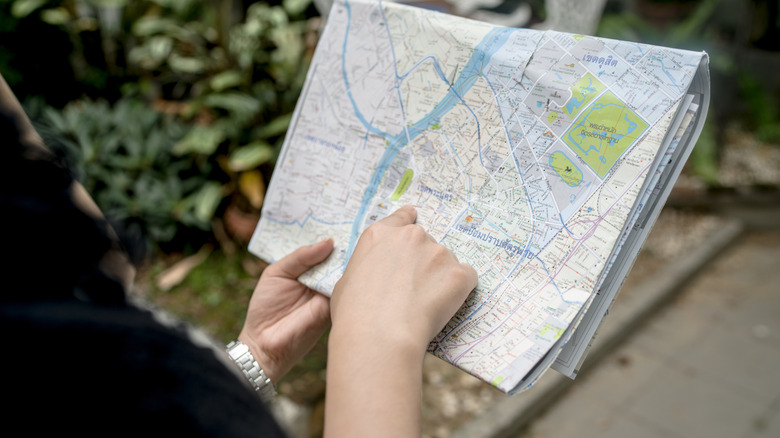
Long before the invention of Google Maps, the foldable paper map was the most important travel item. Every place had its own local version, and many hostels and hotels would provide out-of-town travelers with a printed map. No American road trip even began without a large, unfolded copy of the Rand McNally Road Atlas, which showed routes, exits, and landmarks updated annually. Certain editions even had updated information on airport layouts and local eateries. While many still fondly keep a paper map in the glove compartment, it's one of several '80s travel trends that have been outdated.
Guidebooks and business directories
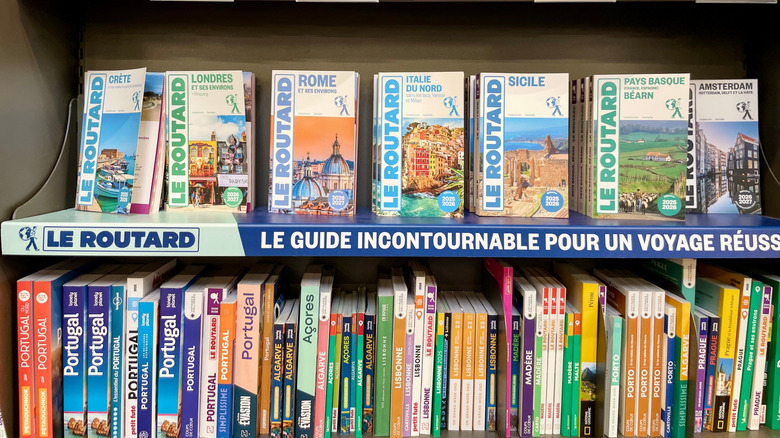
Travelers searching for hotels or restaurants today can consult websites like Tripadvisor or Yelp, social media, or trusted travel websites. In the '80s, one of the only trusted third-party travel resources was guidebooks — still trusted today, but no longer the only source. As one Reddit comment said, "When I started traveling, the only options for picking a place was looking in the Lonely Planet accommodations section and reading the [three]-word descriptions they had of each hostel." If you needed phone numbers not listed in a guidebook, you had to consult physical business directories, aka the "Yellow Pages."
Traveler's checks
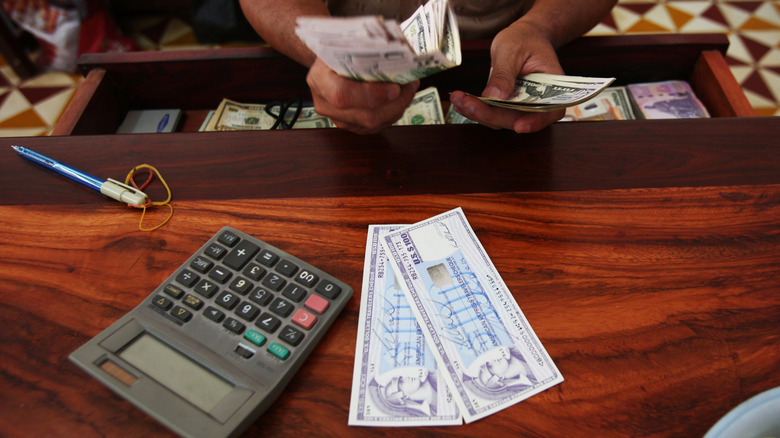
Before credit cards took over the business of international travel expenses, travelers still faced the headache of carrying wads of cash. Enter the traveler's check. They were considered a much safer alternative to cash, but have since been relegated to the outdated travel advice list. You'd sign once when you received the check, then once more when you spent it. The merchant would only accept it after ensuring both signatures matched, effectively making it theft-proof. Today, even though some places still only accept cash, traveler's checks have all but disappeared, as most banks no longer issue them.
A Walkman with cassette tapes
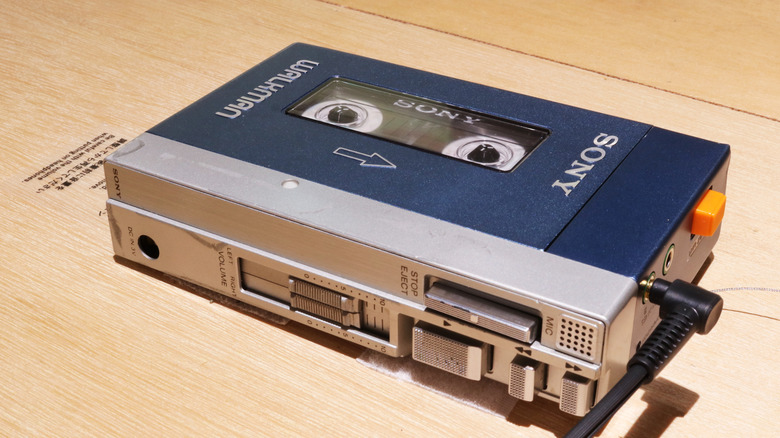
Today, airplanes are filled with people listening to music from their phones, with the highest-rated noise-canceling headphones perched on their heads. In the early 2010s, MP3 players and iPods were all the rage. In the '80s, the travel music essentials were a Walkman and cassette tapes. The Sony Walkman was released just before the turn of the decade and quickly became a travel favorite thanks to its portable nature. People would record their favorite songs on a cassette (the early precursor to Spotify playlists) and walk around with their personal soundtracks blasting in their ears.
International calling cards
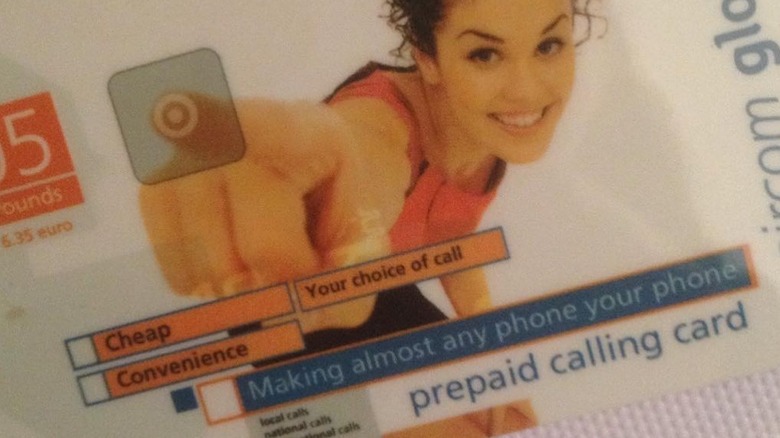
Before mobile phones existed, you had to make expensive landline calls or pay by the minute at the nearest payphone. For '80s travelers, international calling cards were the best low-cost alternative. You could buy them from carriers like AT&T or Sprint, and they would hold a fixed number of minutes that were prepaid or billed directly to your account at the end of the month, making international calls much cheaper. Today, international calling cards have been phased out in favor of local SIM cards, which are also slowly being replaced by the new travel-friendly alternative — e-SIMs.
Pocket dictionaries
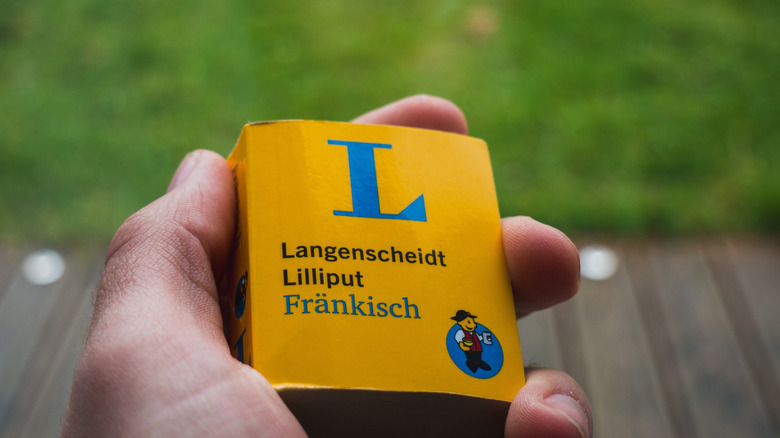
Instead of stumbling through a half-remembered set of essential phrases and words in foreign languages for each vacation, most of us today just pull out our phones and use built-in translators to get the message across. In the '80s, however, the holy grail of international communication was a pocket dictionary. These bilingual dictionaries were small enough to fit into a large pocket or small day bag and often featured tougher covers, making them easy to carry around. Pocket dictionaries from publishers like Berlitz and Langenscheidt quickly became a staple in every international traveler's bag.
Printed airline tickets
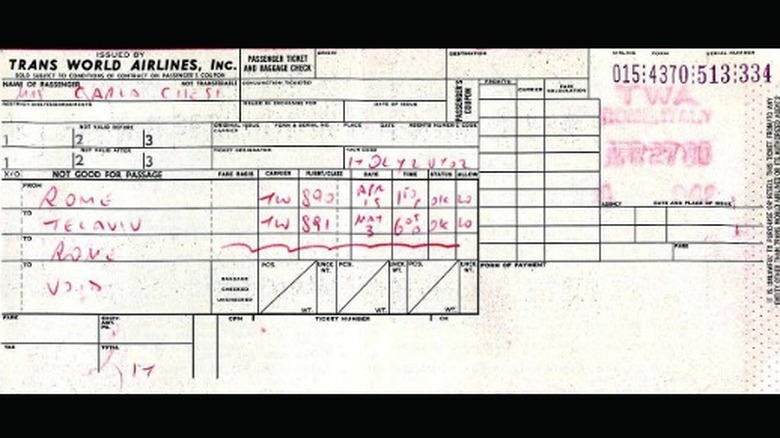
Airline tickets today are entirely digital. People buy tickets online and receive them by email, and only boarding passes are still printed, although even that is slowly changing. But in the '80s, airlines were still figuring out how to simplify airline ticketing. Most tickets were handwritten up until the '70s, and magnetic strips that could be digitally scanned were only introduced in 1983. In the '80s, people would often call a travel agency, which would then call the airline and book the tickets. The tickets would then be mailed to your house or the travel agency.
A Filofax
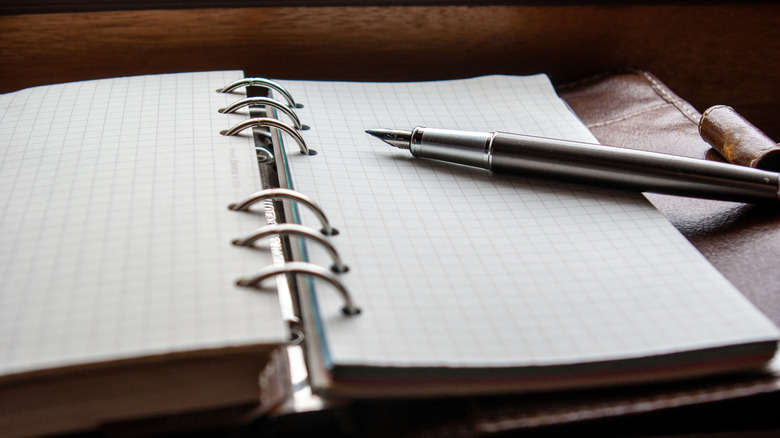
Travel in the '80s was still almost completely non-digitized, which meant every trip involved a lot of paper. Tickets, itineraries, maps, scribbled notes, etc., all went into your bag, where they would invariably slip into some hard-to-reach corner. For business travelers especially, the solution was the Filofax. This planner first became popular in offices, but soon found its way into travel as a convenient storage solution for all those loose pieces of paper. Travelers could add, remove, and rearrange pages as needed, and eventually the company began making dedicated travel-specific inserts and wallets.
Loose coins

Payphones today are seen as relics of a bygone era. In a world where everyone has a smartphone and cheap data, there's no need to pay for a minute of conversation. But for travelers in the '80s, cheap public payphones were a godsend. A few coins would grant you a couple of minutes of call time before you needed to insert more to continue. As a result, travelers never went anywhere without a stash of coins, in case they needed to make a sudden call. To this day, my mother carries a dedicated "coin purse."