
Essential Stops To Plan Before Driving This Underrated Midwestern Scenic Byway In Nebraska
We may receive a commission on purchases made from links.
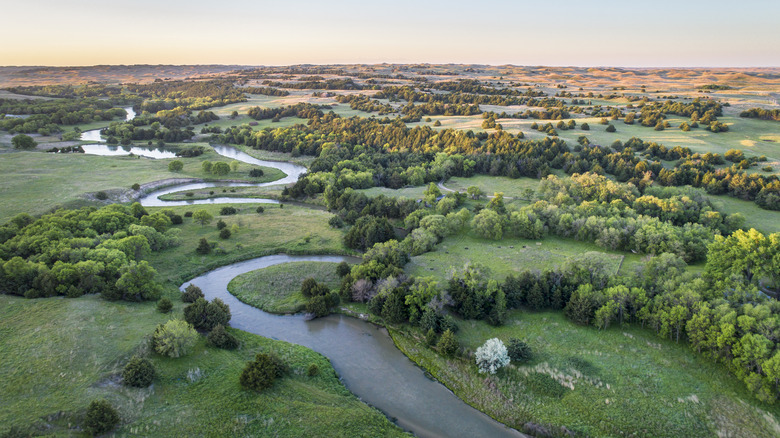
Nebraska's Sandhills rise north of the vast Platte River system, one of the best birdwatching destinations in America. This remote prairie landscape, intersected with rivers and countless small lakes and ponds, was also a favorite of the late Dr. Jane Goodall, which is probably a good hint that the heart of Nebraska is an ecologically spectacular place. The Sandhills region comprises of ancient, grass-covered dunes and encompasses a huge portion of northern Nebraska and a sliver of South Dakota, spanning more than 19,000 square miles. It's composed of more than a million acres of wetlands, plus more than 11 million acres of grassland — an environment that creates an incredible habitat for millions of migrating birds.
One of the best ways to experience the region, especially for the first time, is via the Sandhills Journey National Scenic Byway, a 272-mile road trip route through small towns, over beautiful rivers, past expansive ranches, and more. The byway stretches along Nebraska Highway 2 (NE-2) from Grand Island in the east to Alliance in the west, cutting a northwesterly route through the middle of the state. Grand Island makes an easy place to either start or end because of its nearby access to Interstate 80 (I-80) and a number of other U.S. Highway routes. At its westernmost extent, the byway hooks up with U.S. Route 385.
Below, explore seven essential stops along the Sandhills Journey route, starting in Grand Island. We've consulted a number of travel and tourism sites related to the byway, plus the U.S. Forest Service and individual business and institutional sites. We've also researched Google Maps and considered reviews for specific businesses and attractions to form this list.
Grand Island
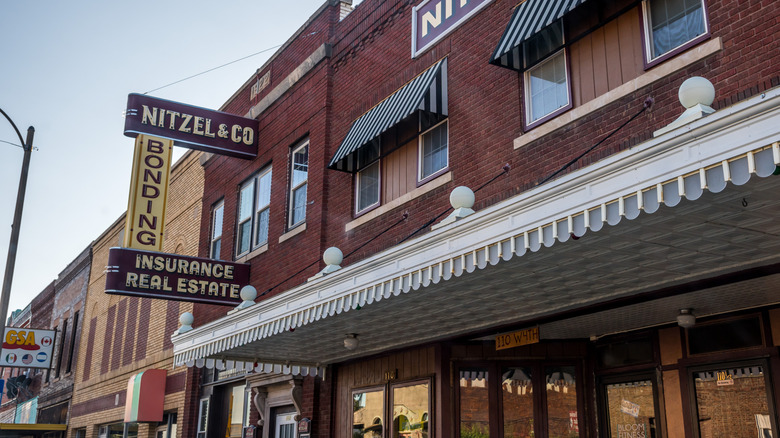
Central Nebraska's hidden gem city of Grand Island is the largest community on the Sandhills Journey byway, situated where U.S. Routes 30, 34, and 281 meet NE-2, with I-80 just south of town. It's a great place to stock up on provisions for the road at major supermarkets, but you'll also find charming eateries and attractions that could easily build out a day's itinerary.
If you're interested in Nebraskan culture, head to Raising Nebraska at the state fairgrounds to learn about all things farming in The Cornhusker State. The central Railside District is where to head for local shops and restaurants, plus a Sculpture Walk, which involves a gradually rotating program of public artworks. Pick up some unique snacks for the road at indie food stops like Mabid Central American Market or African Mart. Grab a sweet treat at The Chocolate Bar, dig into some sushi or hibachi at Kuru Saru, or, if you're hanging out for the evening, grab a craft beverage at The Archives, an atmospheric, lounge-style cocktail bar. Grand Island Casino Resort is a popular stop for road trippers, but there are a number of other chain hotels line U.S. Route 281 west of downtown if you need to get some kip before hitting the road.
One thing the Sandhills region is known for is its pivotal situation amid the Central Flyway, a giant migration route stretching from Canada down to Mexico. To delve right into the area's ecological wonders, head to The Crane Trust's Nature & Visitor Center, a serene spot about 20 minutes south of Grand Island, to learn about the Sandhill crane migration. If you brave the March cold, you can join guided bird-viewing opportunities from the center's blinds that overlook the largest Sandhill crane roost in the world.
Stuhr Museum, Grand Island
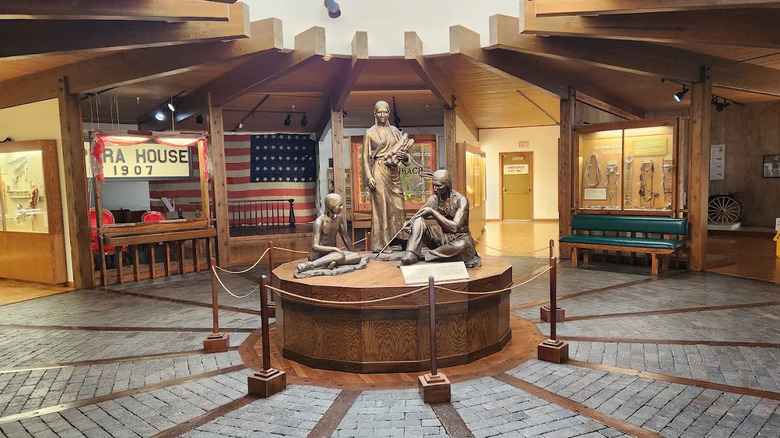
The Stuhr Museum, a sprawling living history museum about 15 minutes south of downtown Grand Island, is worth a mention on its own. It's a great stop along yet another road trip for Wild West sagas and pioneer tales, the cross-country Lincoln Highway that heads through Grand Island on U.S. Route 30. The modernist main building and its collection of historic structures sit on more than 200 acres of prairieland, and American architecture enthusiasts will enjoy its design by Edward Durrell Stone, who is also known for designing the John F. Kennedy Center in Washington, D.C. The main building of the Stuhr Museum strikes a bold presence on an island amid a man-made lake, accessed via a causeway. Its collection boasts more than 140,000 artifacts and over 100 historic buildings from the pioneer era and early cross-country railroads.
Admission rates depend on the time of year, with standard adult entry running $14 in the winter and $18 between March and October (kids aged 5 to 15 are always $12, and children 4 and under are free). All year round, visitors can explore exhibits in the main Stuhr Building, which also houses an art gallery. The Fonner Memorial Rotunda, designed in the shape of a wagon wheel, is also open all year.
Between May and September, the expansive Railroad Town invites visitors of all ages to explore 1890s storefronts, houses, a school, newspaper office, post office, and more. The entire assembly is constructed from preserved buildings of the era and a few new reconstructions to complete the picture, so to speak. Costumed interpreters demonstrate trades and crafts that were significant in the late 19th century, and special Maker Experiences invite visitors to participate in hands-on activities (although an additional fee may be required).
Sandhills Journey Scenic Byway Visitor Center and Broken Bow
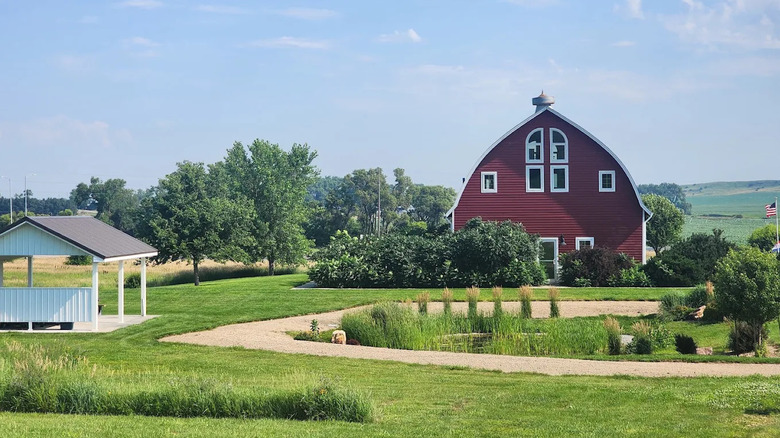
Just about 80 miles from Grand Island is the first major stop on our list, a two-fer featuring the Sandhills Journey Scenic Byway Visitor Center, a.k.a. the Byway Barn, and the community of Broken Bow, blending scenic outdoor adventures with small-town hospitality. Along this stretch, the byway consists primarily of cultivated farmland, so it's fitting that the barn located east of Broken Bow is a nod to Nebraska's agricultural heritage. The building is a beautifully preserved 1920s structure that was moved here from the other side of Broken Bow and sits amid a lovely green space that's ideal for a picnic. Inside, exhibits, artwork, tourist maps, and information found here are essential for making the most of the route.
Broken Bow is a small town with a population of around 3,500, and it brims with history. Custer County Museum is located on South 9th Street, featuring displays of historical objects and a comprehensive research center where genealogists and historians can search records of local homesteads, cemeteries, and more. One of the highlights of the museum's collection are photographs by Solomon D. Butcher, who documented settlement on the Great Plains through a remarkable amount of images.
If stopping in Broken Bow for lunch before carrying on, several options sit directly along the main route. Tumbleweed Cafe on the east edge of town has a menu full of American classics, or downtown, stop into City Cafe for old-fashioned diner fare or The Bonfire inside of the historic Arrow Hotel. If you're staying the night, a couple of other chain hotels can be found on NE-2. There's also an inviting vacation rental that comes with grazing Nigerian goats, or the "Bed and Beer" bungalow adjacent to Kinkaider Brewing Company will appeal to beer aficionados.
Nebraska National Forest
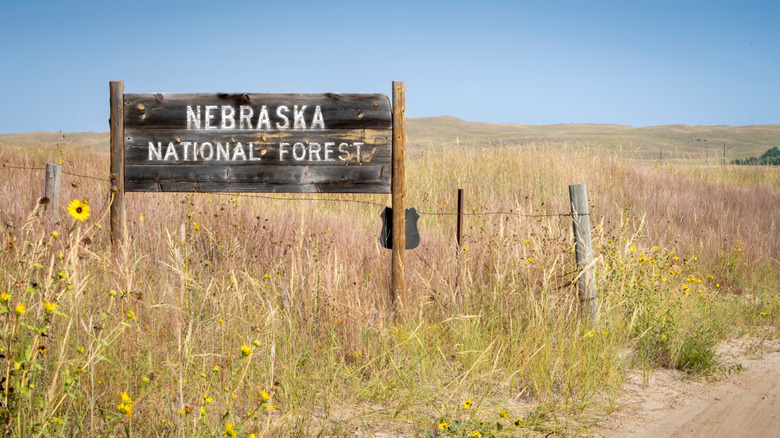
The Nebraska Sandhills is more than 90% privately owned, mostly by ranchers, so while the views may be expansive, a lot of the area isn't technically accessible to visitors. One exception to this is Nebraska National Forests and Grasslands, which consists of a number of separate areas, the largest of which are located in northwest Nebraska near Chadron, where visitors feel the cowboy spirit. This particular area also includes the Oglala National Grassland. Another smaller section, the Bessey/Halsey Ranger District, sits right along the Sandhills Journey Scenic Byway between the towns of Halsey and Thedford, making an interesting stop without having to go divert from the byway.
Just west of Halsey, a small road crosses the beautiful, meandering Middle Loup River to the Bessey Recreation Complex Campground, which is open between early May and the end of September. It's a great place to park the rig or pitch a tent, with electrical hookup sites at $20 and non-electric at a reasonable $15. In this area, you'll also find a series of greenhouses comprising the Charles E. Bessey Tree Nursery, which was established in 1902 and clocks in as the oldest seed nursery managed by the U.S. Forest Service. That's another thing that makes Nebraska National Forest a standout: it's the largest hand-planted forest in the country.
From the recreation complex, the Scott Lookout National Recreational Trail heads south for 3 miles, connecting to the trail's namesake lookout tower (6 miles round-trip). Unfortunately, the tower was damaged during a fire in 2022, so visitors aren't permitted to climb it until renovations are complete, but hikers can still walk around below it.
Mullen
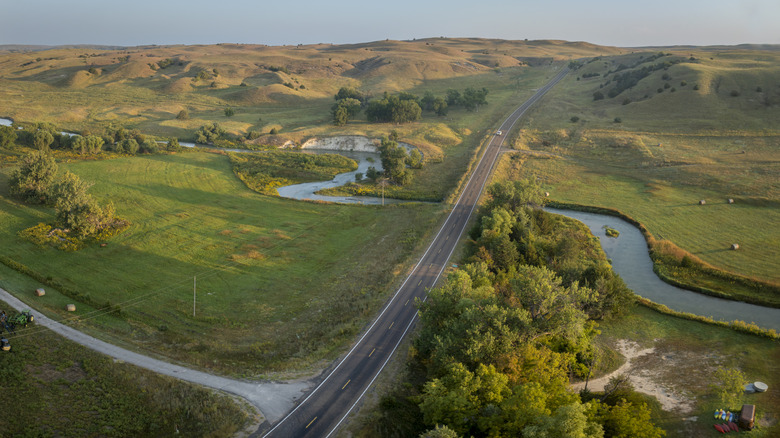
At a little more than 40 miles farther west along the byway from Halsey, travelers encounter the village of Mullen, a hidden Sandhills escape with stunning lakes and wildlife. It's a great stop for lunch at the homey, retro Big Red's Bar & Grill, which sits right along the railroad tracks, or Highway 2 Depot. North of the tracks, on NE 1st Street, you'll find Macke's Grocery & Deli Corner for drinks and snacks for the road — or for taking on a unique journey along the Middle Loup River.
The winding Middle Loup River is about 200 miles long in total, generally very calm, and one of the biggest draws to Mullen during the summer. The river intersects with NE-97 about 2 miles north of town, and local outfitters Glidden Canoe Rental is open all year. In addition to traditional canoes, the business specializes in a true Nebraska tradition called "tanking." Ever been on a "lazy river" in a waterpark? Consider it the Cornhusker State's answer to that, except it's out in nature. Tanking is a joyful, quirky activity perfect for a small group that involves a wide metal craft, which looks like a shallow tank (hence the name) that can hold up to eight people with enough room for coolers and chairs.
Mullen is also a gateway to Samuel R. McElvie National Forest via NE-97, which spans a 116,000-acres swath of the Sandhills near the city of Valentine. It requires a bit of a detour from the byway to make the most of a visit, but if you're looking for a place to camp before dropping back down to carry on westbound, its small campground and Niobrara River access is worth the hour's drive for a bonus jaunt.
Attractions along the byway's remote western third
The final third of the Sandhills Journey byway between Mullen and Alliance is stunningly remote, where the beautiful, rolling landscape feels like endless grassland and towns are very small with few services. On your way to Ellsworth, it's worth stopping in at the Grant County Museum and Historical Society in the village of Hyannis to explore a wide range of old photographs and ephemera of prairie life. Ellsworth is then another 28 miles west, where the crossroads town comprises little more than a post office, a historical marker for the vast Spade Ranch, and a quirky corner store called Morgan's Cowpoke Haven. This legendary stop used to be a hangout for local homesteaders and cowboys who worked at the Spade. The building still has its original pressed ceiling from 1898, when it opened as Morgan's General Store, and amid artifacts of the area's history, you can shop western wear to your heart's content.
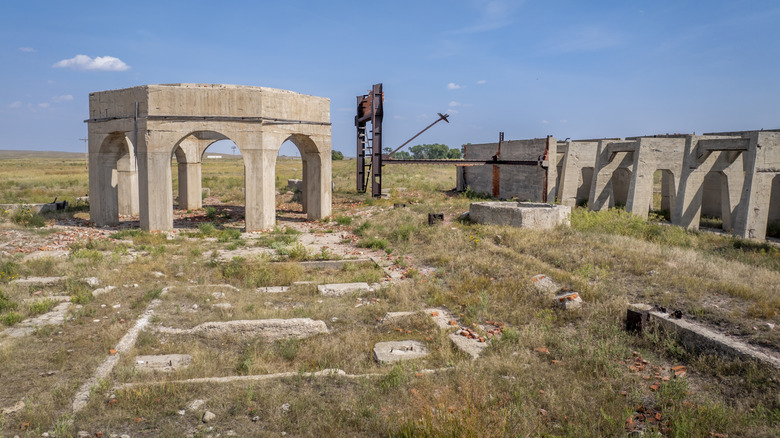
A further 16 miles west of Morgan's Cowpoke Haven is an unusual roadside attraction in the form of a small, post-industrial ghost town. Home to a former potash production facility, the tiny community of Antioch experienced a boom and bust between 1916 and 1921, when World War I cut off the European supply of the potassium-rich substance used primarily as agricultural fertilizer. The hills in this region are expansive and beautiful, dotted with tiny ponds and lakes filled by the Ogallala Aquifer, and the old potash plant is an eerie reminder of a slice of American history seemingly in the middle of nowhere.
Carhenge and Alliance
Alliance is the second-largest community on the Sandhills Journey National Scenic Byway after Grand Island on the other end. Here, NE-2 hooks up with U.S. Route 385, along which you can continue your trip north toward South Dakota's Black Hills or south toward I-80. If you need a good night's sleep before the next leg of your journey, Alliance has a few chain hotels including Holiday Inn Express and the Alliance Hotel & Suites, a Howard Johnson hotel by Wyndham.
Head to Ken & Dale's Restaurant for comfort food in a diner-like atmosphere or Texas-style smoked meats at Golden Hour Barbecue in its charmingly historic building. Downtown in general is a historic treat, complete with brick streets, quaint storefronts, and a strikingly retro cinema called the Alliance Theatre. You also won't want to miss a stop into the Knight Museum and Sandhills Center, which features exhibits about life on the plains.
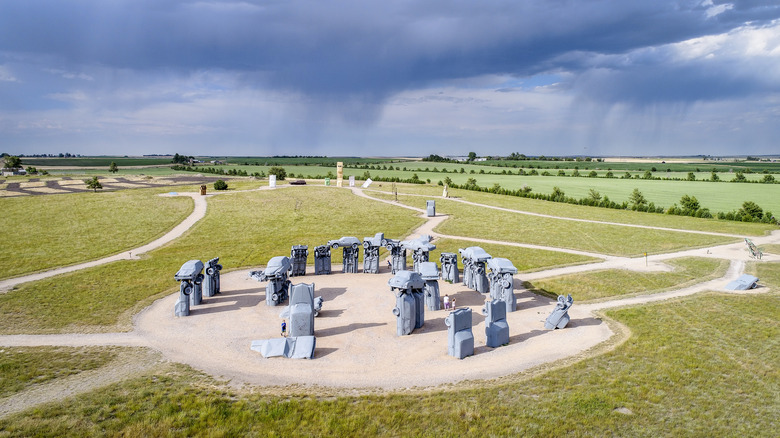
Fulfilling the kind of kitschy roadside attraction that any good American road trip itinerary should have at least one of, Carhenge is an unmissable feature of the journey that requires only a short detour. About 4 miles north of Alliance, the quirky, monumental outdoor artwork consists of full-size vintage cars that creator Jim Reinders arranged in a circle in the middle of a field as a tribute to Stonehenge, located on England's Salisbury Plain. It's free to explore and open all year.