
Award-Winning Beaches That Are Better In Shoulder Season
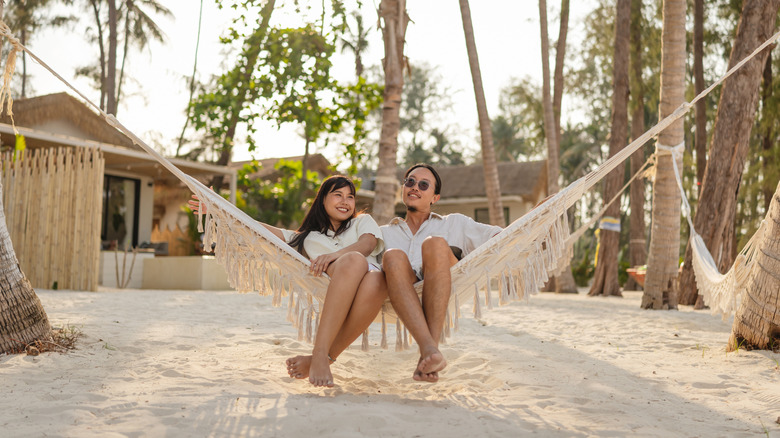
Award-winning beaches often have the same problem. The crystal-clear water, the stunning sand, the surrounding nature — in fact, everything that earns the accolades in the first place — is exactly what draws the crowds. Before you know it, you can't even see the sand, while that pristine water is packed with jet skis, banana boats, and inflatables. Hotel prices soar, and the heat can make the whole experience more like a chore. Of course, this isn't the picture for every award-winning beach. Some of them are more remote or located in national parks, but peak season can bring other issues.
School holidays might dictate your calendar, or maybe you think the weather is a safe bet. Whatever the reasons, there's a collective assumption that peak season is the right time. But shoulder seasons are definitely worth considering. Prices drop, crowds thin, and the beach you came to see reappears from under a sea of umbrellas and towels. But going off-peak often goes beyond the obvious. The shoulder season can be a better time to view wildlife or experience cultural events and festivals — and you can enjoy them in temperatures that aren't dehydrating you within 10 minutes.
Every beach on this list has won a legitimate 2026 award from a recognized travel organization, and they were selected to cover all corners of the globe. Visiting any of them outside peak season delivers fewer crowds and lower prices without making sacrifices on weather or things to do. But they are not just quieter, cheaper versions of the same trip — they are genuinely better experiences for a lot of travelers.
Entalula Beach, Palawan, Philippines
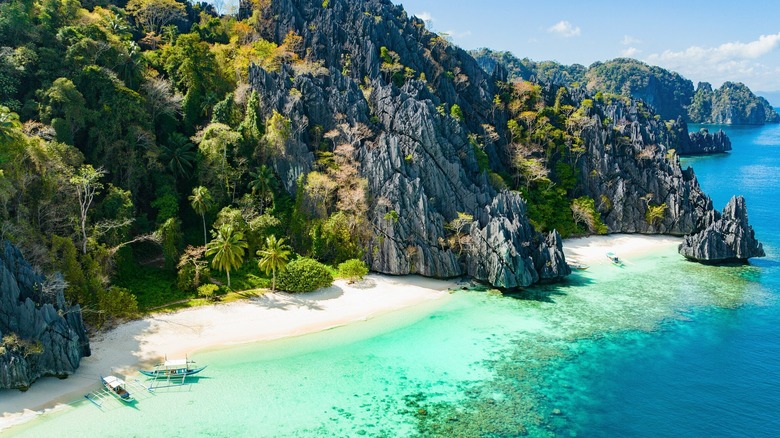
Judges for the World's 50 Best Beaches praised Entalula Beach's exceptional natural preservation and seclusion and concluded that these qualities are increasingly difficult to find in today's world. They were so impressed that they ranked it at the top of their 2026 list. It's a secluded slice of paradise with limestone cliffs and the turquoise waters of the incredible Bacuit Bay. They lap against this narrow strip of white sand on the eastern side of the uninhabited Entalula Island. Towering, moss-streaked karst spires crowd around every side, with jagged faces draped in jungle tumbling down to the shoreline. The water shifts from a glassy green by the shore to a deep turquoise, and it's clear enough to see every coral head and sand ripple beneath.
Getting there requires a boat trip, which is one reason visitor numbers are low. The sheltered waters are ideal for swimming, while scuba divers are treated to walls, drifts, and coral gardens with visibility of up to 100 feet. There are plenty of turtles, stingrays, and colorful reef fish, and the shoulder months of November and May, as well as the high-season months in between, offer calm seas and excellent visibility. December through April are the peak months, but May, and particularly November, offer genuine transition-season value. Hotel rates drop in El Nido, where travelers typically base themselves, and visitor numbers to the beach are lower. The weather remains warm and sunny, but November is probably the stronger pick of the two, thanks to conditions that improve steadily as the dry season draws near.
Isla Pasión, Cozumel, Mexico
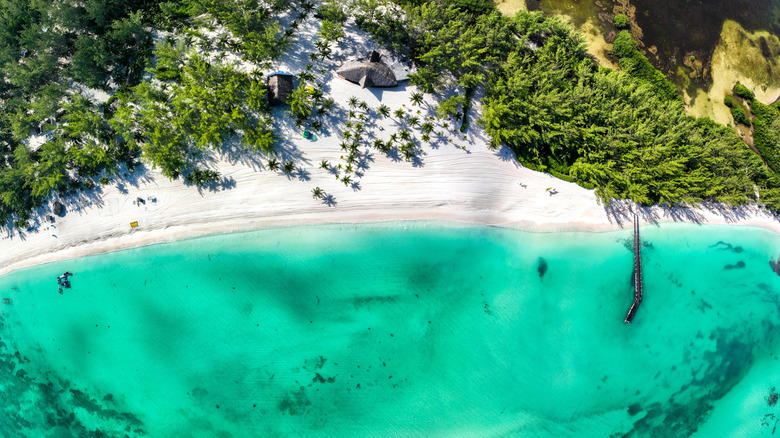
Contributors on Tripadvisor voted Isla Pasión, a secluded white-sand island paradise off the Caribbean coast of Cozumel, Mexico, as the top beach in the platform's 2026 Travelers' Choice Awards. At less than a mile long, it's a compact island, and visitor numbers on this privately run island are capped so it never feels overrun. The only way in from Cozumel is by boat through a mangrove lagoon, and it's also a popular excursion for cruise ship passengers. What greets travelers on arrival is a continuous arc of wide, powdery white sand and dense tropical green running the length of the island. Shallow waters shift from vivid turquoise lapping gently at the shore to a deep aquamarine further out.
Visitors can explore in a kayak or paddleboard, while the calm lagoon offers excellent conditions for snorkelers. The surrounding waters hold protected coral reefs and diverse marine life, while jet skis and mangrove tours are also available. You can even observe sea turtle nesting spots in May, one of the islet's shoulder season months. Visitor numbers are even lower at this time and the second November/December shoulder season. The weather is still largely dry, and underwater visibility is at its clearest for snorkelers. January through April is the peak season for Cozumel, with the heaviest crowds arriving in March during spring break.
Poipu Beach, Hawaii, US
A crescent of golden sand curves its way around a sheltered pool of turquoise, while dark lava outcrops hold the Pacific Ocean at bay. In the evening, those rocks glow as the sky ignites in colors ranging from orange to violet. This is Poipu Beach on the southern shores of Kauai, the number one beach in the U.S. in 2026, according to Dr. Beach. It's actually two pocket beaches divided by a slim finger of sand that connects to a small islet. One side is shallow and calm; the other opens out to the full force of the sea.
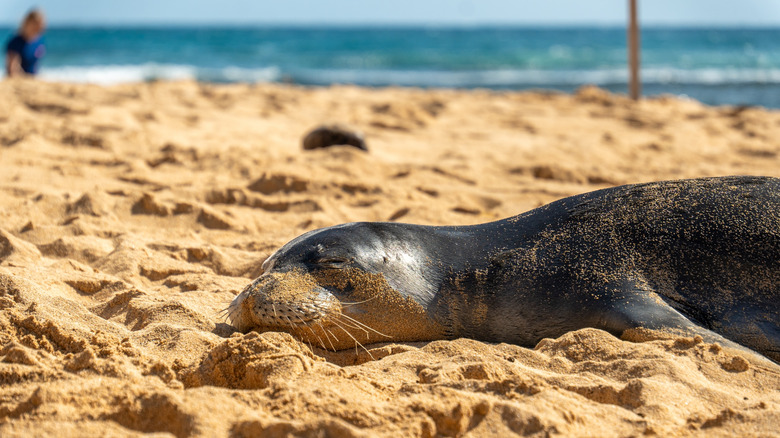
Six surf breaks line the shore, all within an easy walk of each other. They cover the full range of expertise from gentle beginner waves to double-overhead reef breaks. The surf season here runs from May to October, which overlaps with the April/May and September through November shoulder seasons. If you come at either of those times, you also won't miss out on the beach's iconic wildlife. At Poipu Beach, turtles haul out on the sand almost daily throughout the year. In fact, Hawaii is one of the only places in the world where they bask on land. You might even spot the rare Hawaiian monk seal, one of the planet's most endangered seal species, while Poipu is also one of the best destinations to snorkel on Kauai.
But the shoulder season also overlaps with whale-watching season when humpbacks make their journeys between Alaska and Hawaii to give birth and nurse their calves. November is when the first spouts appear, with April catching the last. Of course, shoulder season travelers also receive the usual benefits when visiting Poipu. Flight prices and accommodation rates drop, while the beach breathes more freely with fewer people and weather that avoids the heat of summer.
Pensacola Beach, Florida, US
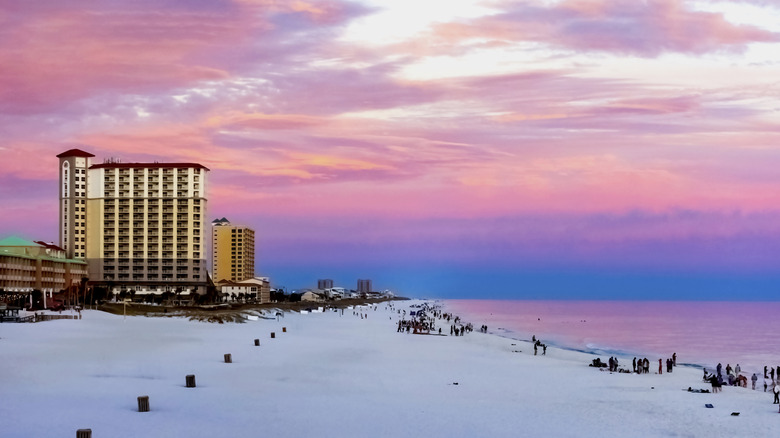
Pensacola Beach is a place of stunning contrasts. The sand is so white you could mistake it for packed snow. It's spread generously along a shoreline that meets the water, glowing in a vivid, almost unnatural, green in the Florida sun. It stretches along the long, slender Santa Rosa Island, with the calm waters of Little Sabine Bay on the northern shore and the Gulf to the south. Much of it is undeveloped, and it rarely gets crowded. Its beauty was rewarded by Condé Nast Traveler readers, who ranked it the number one beach in the U.S. in the travel publication's 2026 Readers' Choice Awards.
But peak season here is hot. Oppressively hot. Daily thunderstorms are also a drawback, while the risk of hurricanes builds through September. Shoulder season is regarded as the best time to visit. The weather is much more comfortable in April and May, while the warm water remains swimmable. It also brings significantly reduced accommodation prices, and festival season also starts at this time. Indeed, Pensacola is known as the "Festival City of the South," and visiting in the shoulder season doesn't mean you'll miss out. Events happen across the year, with the spring shoulder bringing Bands on the Beach, where live acts perform on the sand.
The fall shoulder in October is considered the best month outright. It's still comfortably warm, and the hurricane risk is still low. The sunsets at this time are particularly beautiful, and they are complemented by events like the Pensacola Beach Songwriters Festival. The Pensacola Interstate Fair follows, while the Taste of the Beach Festival showcases local chefs. The Foo Foo Festival, a 12-day celebration of arts and culture, starts at the tail end of the fall shoulder and spills into the first week of off-peak November.
Eagle Beach, Aruba
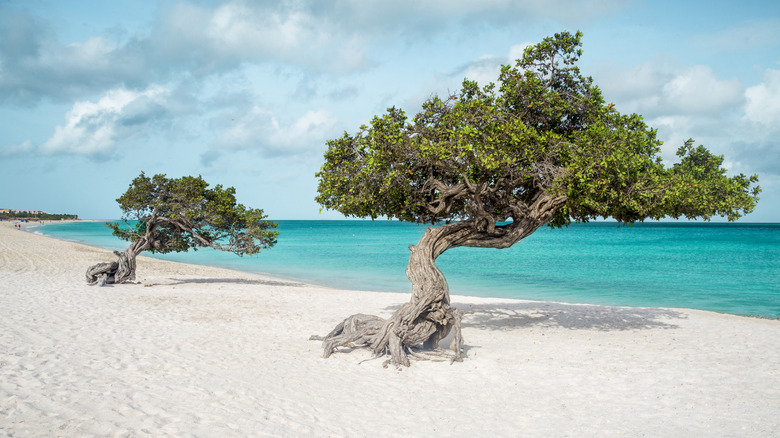
Eagle Beach rolls in a long, generous sweep of white coral sand that consistently stays cool underfoot despite the Caribbean heat. The turquoise water complementing this wide stretch is clear, lacks chop, and isn't as plagued by algae and jellyfish as other Caribbean beaches, which makes it perfect for swimming and wading.
An iconic pair of Fofoti trees arc toward each other at the water's edge. Their trunks are bent and twisted by decades of trade winds, and they frame a sky that burns deep orange and gold when the sun goes down. It's consistently ranked as one of the world's best, but, surprisingly, Eagle Beach is one of the quietest on the island; Tripadvisor readers named it the best beach in the Caribbean for 2026.
Aruba is pretty much year-round because it sits outside the hurricane belt, so intense tropical storms are fairly rare. This means you get just about everything the peak season offers when visiting in the shoulder season. Accommodation rates drop in April, which is considered the island's shoulder period. Winds pick up at this time, but they help make the year-round high 80s/low 90s Fahrenheit feel considerably cooler. The off-season is said to start in May, but April through August is widely considered to have the best weather.
Ipanema, Rio de Janeiro, Brazil
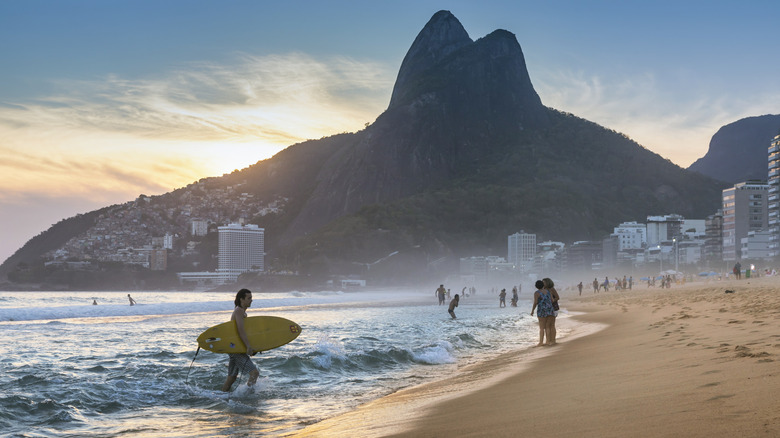
"Tall and tan and young and lovely, the girl from Ipanema goes walking, and when she passes, I smile, but she doesn't see." So go the English lyrics of "The Girl from Ipanema." And it's no wonder the girl doesn't see; she would likely be distracted by the incredible views in front of her. Ipanema sweeps along Rio de Janeiro's South Zone in a broad, almost luminous curve of pale sand that runs for a couple of miles toward the double summit of Dois Irmãos. At dusk, the beach fills with sound and color while people wind their way between umbrellas dotting the sand. The twin peaks cut a dark shape against the amber sky, and every sunset, people applaud the big orange ball at Arpoador, the rocky headland where Ipanema meets Copacabana.
Tripadvisor readers named Ipanema the best beach in South America in 2026, and if you visit, it's easy to understand why. The Atlantic breaks attract surfers, the sand is buzzing with beach soccer, and vendors move through the beachgoers offering everything from coconut drinks to cold beers. Just a block from the sand, bossa nova filters out onto the streets from the bars and restaurants, and there comes a moment when every visitor just gets it. Even fans of the Copacabana-loving Barry Manilow will be converted.
Ipanema can get particularly busy in the peak season. And those crowds are paired with summer heat and humidity, routine afternoon downpours, and hotels filling up months in advance — and charging appropriately. The September through November spring shoulder season offers an entirely different experience. Warm sunny days, much more space on the sand, and prices that will have you smiling just enough that you might even catch her eye when the Ipanema girl passes.
Fteri Beach, Greece
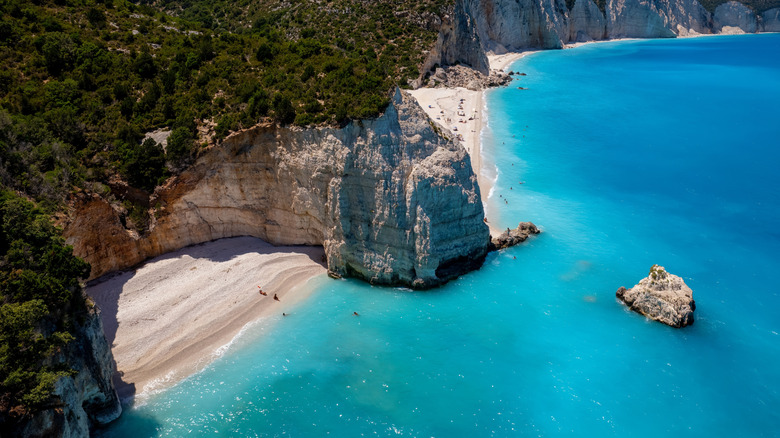
You'll find the incredible Fteri Beach occupying a secluded cove on the north coast of the Paliki Peninsula on Kefalonia. Its pale, pebbled shore and dramatic white cliffs are sharply contrasted by the bright, vivid turquoise and electric blue waters of extraordinary clarity that hem them in. The dense green forest running along the clifftops overhead completes a palette of color that takes some time for the eyes to comprehend.
However, getting there is all part of the experience. The only options are a water taxi from the port of Zola or a 40-minute hike down a rather steep trail. There are markers along the route, but sturdy footwear is essential for both the path and the pebbled beach below. But it's this remoteness that has kept the beach preserved. And it has also contributed to it earning the number one beach in Europe on the World's 50 Best Beaches 2026.
In fact, this paradisial Greek destination was voted the second-best beach in the world. But with no shade to escape the sun, no vendors to snag a cool drink, and no easy way back up that hill, Fteri can be exhausting in the peak season. Boats run every half hour, and cruise ship day-trippers literally arrive by the boatload, swelling the numbers higher as the day progresses. It's also hot. Blazing hot. And with the island running at capacity, accommodation and ferry costs sit at around double the shoulder season prices. Come in the May/June or September/October shoulder seasons, and the trip is much more manageable with no crowds and cooler temperatures. But the sun still shines, and that pristine water has a temperature that sits somewhere in the pleasant 70s.
Monte Clérigo, Portugal
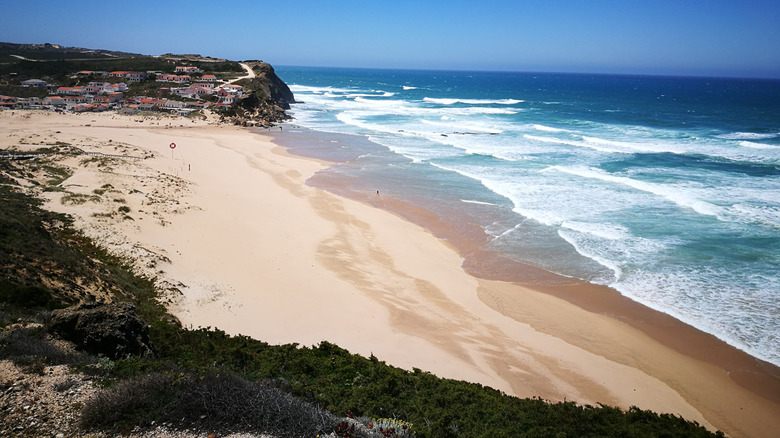
Fteri Beach may have picked up the top European award on the World's 50 Best Beaches list, but European Best Destinations named Portugal's stunning Blue Flag beach, Praia de Monte Clérigo, as their pick for the best European beach. It sits within the National Park of Southwest Alentejo and Costa Vicentina and is a protected stretch of coastline prized for its raw Atlantic setting. The water is pristine and clear, while the sand is wide and golden at low tide. It's soft underfoot, and there are rock pools sitting at either end.
Behind the beach sits the village of Aljezur. The community's chalk-white walls and rust-red roofs are home to a few restaurants serving up local fare throughout the year, but after dinner, the entire place drops into a hush. Down on the sand, the Restaurante O Sargo draws in locals and visitors for informal evenings of live music and the chance to witness one of the country's finest sunsets. As the light fades, the cliffs flush amber and the sky bleeds colors from rose through deep crimson.
July and August might have the warmest sea temperatures for swimming. But it can get busy, and the park's natural setting can lose some appeal when the beach is packed. The car park is also full by mid-morning. The spring and fall shoulder months of May/June and September/October still bring pleasant temperatures, but with a fraction of the crowds. They are also pleasant times for hikers to explore the surrounding trails, while the autumn season brings heavier, more reliable swells for surfers.
Arugam Bay, Sri Lanka
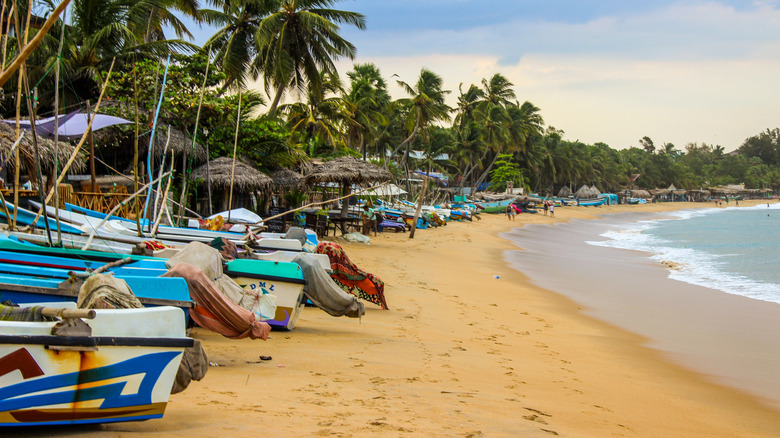
Condé Nast Traveller readers named Arugam Bay the best beach in Asia for 2026. It's a former fishing village situated on the southeast coast of Sri Lanka, and it has a low-key stretch of sand with an unhurried pace. While respectful dress here is appreciated, that doesn't mean it's so sleepy you can't have any fun. The tourist resort zone is a place where revelers can enjoy themselves, and peak-season parties can run into the wee hours.
But its main draw is surfing. In fact, this well-established destination has drawn surfers since it became a part of the old Hippie Trail back in the '70s. The season runs from April through September, with June to August the peak window. At this time, the crowds are at their heaviest, and the parties at their wildest — advance booking is essential. May at the start of the surf season and late September as the rains approach are the shoulder seasons, and they offer the same reliable waves but with thinner crowds and lower prices. The bay has breaks to suit all levels, from powerful waves for experienced surfers to calmer spots for beginners.
Additional breaks include Elephant Rock, where elephants are known to wander in from the bush, while you'll also catch them wading at Whisky Point. You can enjoy boat trips at dawn that thread through mangrove-lined channels where crocodiles, water monitors, and wading birds are regularly spotted, while wildlife lovers can also visit Kumana National Park, a 34-mile drive south. Waiting there are plenty of leopards, more elephants, and over 250 bird species.
Manly Beach, Sydney, Australia
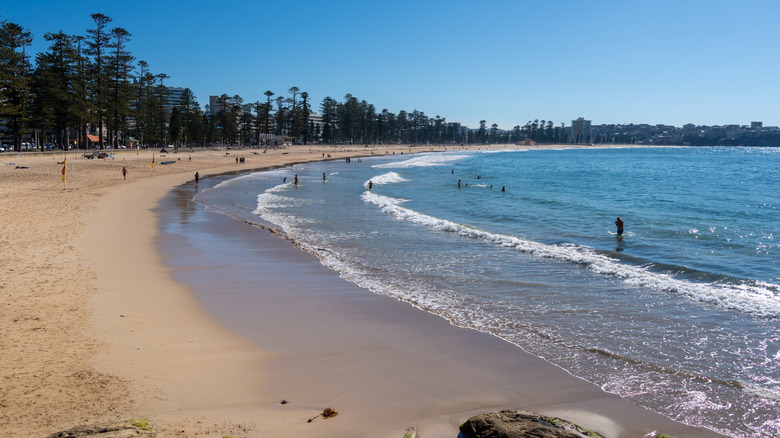
Reaching Manly Beach means hopping on one of the world's most iconic ferry rides. The half-hour crossing from Circular Quay passes the imposing Sydney Harbour Bridge and the unmistakable Sydney Opera House, while it also skirts by the Prime Minister's residence at Kirribilli. Upon reaching the beach, you're greeted by a wide crescent of golden sand backed by impressively tall Norfolk pines. Cafés, restaurants, shops, and all the public facilities you could possibly need line the shore, while the turquoise water comes in big swells. Tripadvisor named it the best beach in the South Pacific for 2026, and those swells make Manly another award-winning beach fit for surfers. However, there are small, calm pockets around the area, like Shelly Beach, where snorkelers and swimmers can also enjoy the water.
In Australia, summer runs from December through February, so the hot peak season coincides with the holiday season and booking early is essential. The fall shoulder arrives in March and lasts through May. Visitor numbers and prices drop, and humpback whales are already moving north on their annual migrations. You can see them from North Head, just a short drive from the beach. But the spring shoulder from September to November is the best time to spot them. This is when these majestic animals breach and tail-slap closer to shore. The spring shoulder also offers a couple of excellent festivals. The Manly Arts Festival takes place in September, while in October, free outdoor concerts line the beachfront during the Manly Jazz Festival.