
12 Classic European Beer Cities, Ranked Worst To Best
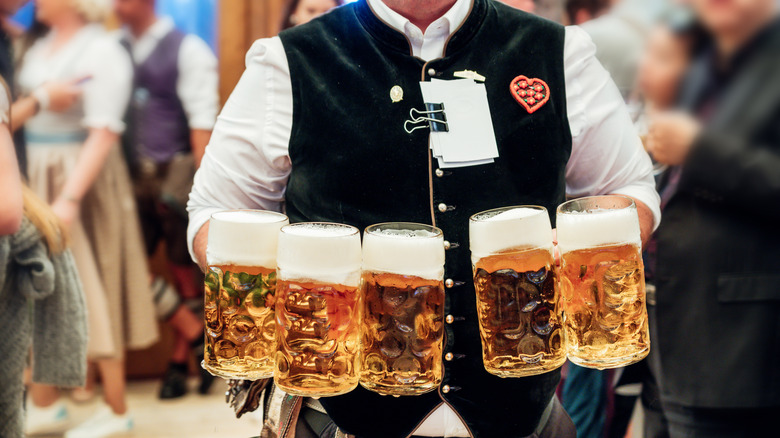
The United States has an incredible beer scene. With over 9,000 craft breweries across America's classic beer cities and beyond, there's no denying its dominance. But the modern craft beer boom differs greatly from Europe's traditions and was largely a response to a lackluster beer scene, focusing on tasteless light lagers served ice-cold so they couldn't be tasted properly.
Europe's best beer cities, on the other hand, have been thriving for centuries, and the continent's craft beer revolution took a different path. After all, you didn't need a triple IPA when your local pilsner was a thing of utter beauty. The craving for brilliant beer was satiated over centuries of brewing tradition, pub culture, and even the skill of monks whose monasteries became important brewing centers in medieval Europe. It's those traditions that have made the continent's classic beer cities so special. Where American beer cities are hipster strongholds with ultra-experimental microbreweries strung through art districts, Europe's are grand affairs celebrating the simple concoction of water, hops, barley, and yeast.
We've ranked 12 classic European beer cities from worst to best, based on their historic and cultural impact, beer tourism, brewery numbers, and accessibility. Grab a pint of your favorite ale and get planning your next hop-centric Euro trip.
12. Amsterdam, Netherlands
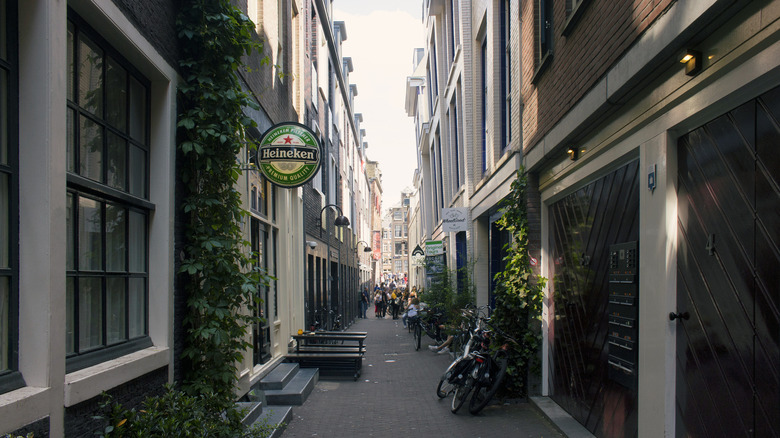
Amsterdam has an interesting history with beer. Though not regarded as a brewing powerhouse, it's home to Heineken, the world's second-largest brewing group by volume. While that's largely due to acquisitions, Heineken beer itself, as well as Amstel, are major international beer brands. But it's also home to the wonderful bruin café culture, Amsterdam's answer to a British pub and a pillar of local social life.
The Heineken Experience, which occupies the former brewery, is one of the city's major tourist attractions and was an early pioneer in industrial tourism, and is well worth a visit even for those not interested in beer. Elsewhere, Brouwerij 't IJ, set inside a former bathhouse beneath a canalside windmill, might just be the most picturesque brewery in Europe — and that's saying something. But the big joy is getting into the city's brown cafes, ordering a pint and a plate of bitterballen, and getting cozy for the evening. De Pijp's quirky bohemian breweries are worth another round.
Amsterdam's international influence is immense, and it boasts enough bars and breweries for days, but a lot of its reputation is based on the size of Heineken. It doesn't have its own distinct style; its beer scene is still fairly modern, and it can be super expensive in the city center, too. It's a great facet of the culture, but you're less likely to come for a purely beer-centric trip.
11. London, United Kingdom
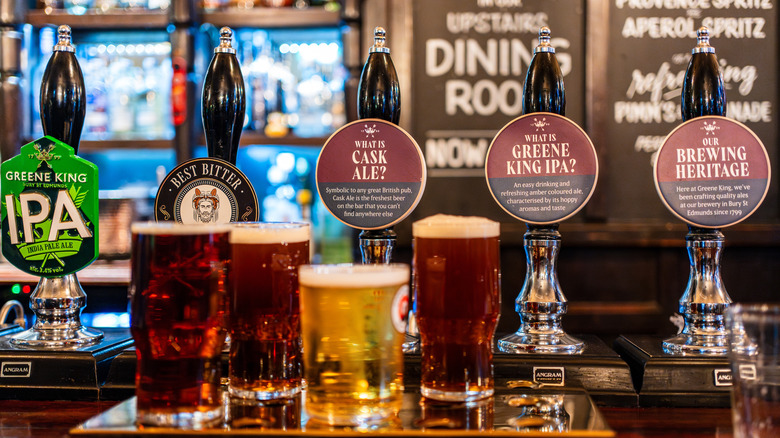
London was at the center of the brewing world in the 18th century. As the British Empire stretched its long arms across the world, its subjects demanded beer, fueling the early industrialization of brewing. It was around this time that the porter style of beer was invented, helping fuel factory workers with its calorie-dense recipe and facilitating an easier practice for pub owners in the city.
Beer remains central to London. Historic pubs are one of the city's greatest attractions, with 63.6% of visitors to the U.K. as a whole intending to visit at least one pub during their visit, according to the British Beer and Pub Association. Breweries are growing in number, too. Traditional breweries like Fuller's Griffin in Chiswick remain major draws, while excellent microbrewery hubs like the Bermondsey Beer Mile satisfy those with an eye for experimental beer. In 2007, London only had 10 breweries operating within its limits, but that's soared to almost 100. London arguably has a stronger influence on global beer culture than many of the cities above it, but its enormous size, eye-watering pint prices, and scattered breweries make it a little less attractive as a beer-centric destination.
10. Düsseldorf, Germany
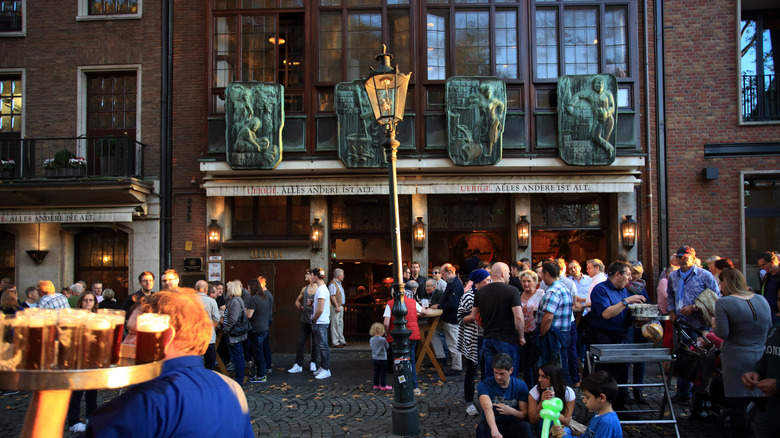
Düsseldorf is the beer aficionado's niche-city choice, the sort of city you can throw into a conversation after someone says Munich is the best beer city in Germany, just to show off a little. While most associate Germany with lager, Altbier, a copper-colored, top-fermented ale, is the dominant brew here. That process gifts it a richer taste than other regional styles, while still staying fairly light.
The Brauhäuser (brewhouses) in Düsseldorf are a unique experience, with instant refills appearing almost out of nowhere in smaller glasses than elsewhere in Germany. Servers keep tabs by marking your beer mat. With 260 pubs, bars, and restaurants in the Altstadt (Old Town), there's a lot of scope for trying some of the best-known names like Uerige, which has brewed in the same spot since 1862, as well as Schumacher, Schlüssel, and Kürzer. With plenty of Altbier brewery walks and tastings, you can spend an entire weekend getting to know the local beer. Its Oktoberfest could be a unique alternative to Munich's gargantuan one, too. Its compact brewery district and focused brewery slant give it the edge over London's sprawl and exorbitant prices, but the narrow focus on Altbier prevents it from climbing further up the list this time.
9. Dublin, Ireland
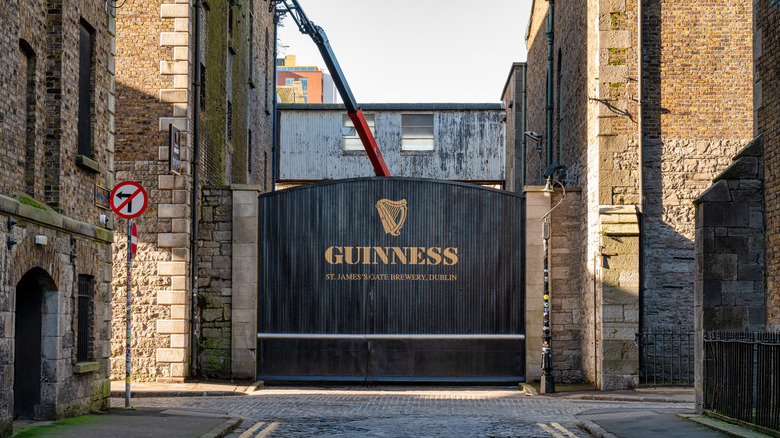
Mention Dublin and another word beginning with "G" springs to mind. The city's biggest tourist attraction is found at St James's Gate, where Arthur Guinness famously signed a 9,000-year lease for the Guinness Brewery in 1759. Since then, the stout has become one of the world's most recognizable brands, spawning television shows, viral trends, and endless arguments over which pubs sell the best pint. Its popularity is so immense that many believe stout was invented in Ireland — in reality, the "stout porter" was from London.
Naturally, the Guinness Storehouse is the primary draw for most tourists. It's an excellent tour, featuring seven floors of exhibits, interactive experiences including learning how to complete the perfect pour, and the stunning Gravity Bar on the roof. But getting out of the brewery is just as important. Traditional pubs like The Gravediggers, Neary's, and O'Donoghue's are perfect for the true Irish pub experience. Learn the essential rules of pub etiquette, and with more than 20 craft breweries operating in the city, there's scope for a weekend with the hops.
Guinness's global reputation does a lot of the heavy lifting here, with the strong craft beer scene also helping it step ahead of Düsseldorf's more traditional, Altbier-focused scene. But for many, the Guinness-centric experience, commercialization, and some brutal pricing down in tourist-heavy Temple Bar will be restrictive as a true beer city, keeping it relatively low on this list.
8. Cologne, Germany
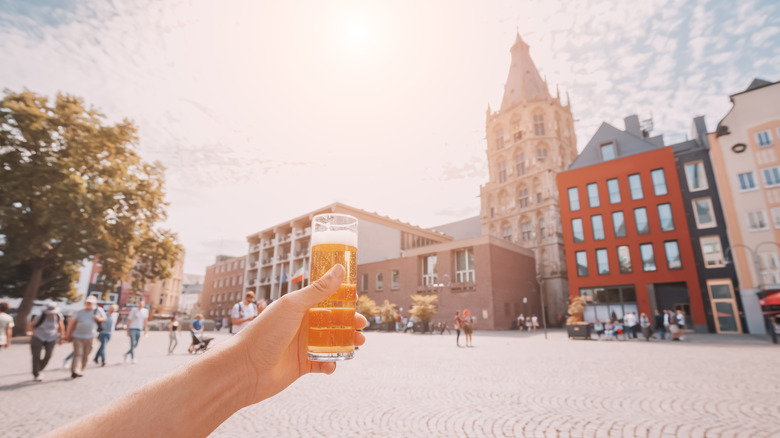
Cologne is another German city with a proud brewing tradition, and one that's fiercely protective of its local beer. Kölsch, a pale, top-fermented ale that's crisp and refreshing enough to rival a lager, is king here. So much so that the city's brewers signed the Kölsch Convention in 1986, protecting the name and restricting where the beer can be produced. It's a major point of local pride, and it helped keep Cologne's brewing identity intact.
Like Düsseldorf, visiting Cologne's traditional Brauhäuser is an experience in itself. Kölsch is served in slender 6.7-fluid-ounce glasses called Stangen, with notoriously gruff servers replacing your beer almost as soon as it's empty. They'll keep them coming until you put your beer mat over your glass. Historic establishments like Brauhaus Sion, Früh am Dom, and Päffgen are among the best places to experience this tradition. Throw in a plate of local food, and you've got yourself an excellent afternoon.
Cologne's strictly protected beer style and distinctive drinking customs give it a slight edge over Dublin, where Guinness' fame is the draw. But like Düsseldorf, the city's laser focus on one type of beer means it lacks some of the variety found higher up the list.
7. Leuven, Belgium
Belgium has an odd beer reputation. For those who love it, Belgium is the center of world brewing. But casual drinkers pass it over for Germany, Prague, and other lager-centric nations. They shouldn't overlook Leuven, an under-the-radar city worth swapping Brussels for. Its brewing history stretches back to the 14th century, when the Den Hoorn brewery (which later became associated with Stella Artois) launched in 1366. It's now the home of Anheuser-Busch InBev, the largest brewer in the world.
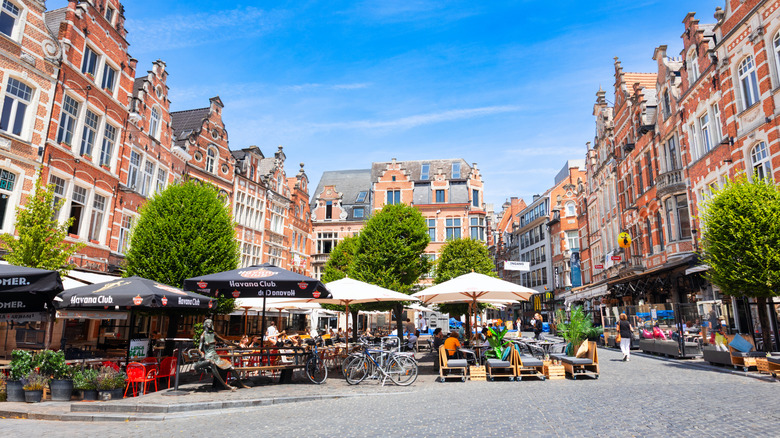
Leuven's beer culture is best experienced in the Oude Markt, or "Europe's longest bar," thanks to the over 40 cafes operating there. It's a brilliant spot to settle in, but there's tons more to explore. The Stella Artois brewery offers guided tours, while Domus Brauhaus produces its own beers right in the city center. Smaller breweries like Hof ten Dormaal (in nearby Haacht) represent Belgium's experimental side, and the city's numerous beer walks and cycling routes make it easy to turn a few pints into a full weekend of exploring. It's also a unique chance to try Stella from the tank, letting you experience the full flavor that's often lingering behind the carbonation.
Leuven has an immense brewing reputation, thanks to Stella and InBev, as well as a broader beer experience than Cologne and an excellent central bar hub, helping lift it to seventh. But its reliance on a single lager can distract from the other spectacular offerings in the town, allowing some cities with greater variety to step above it.
6. Bruges, Belgium
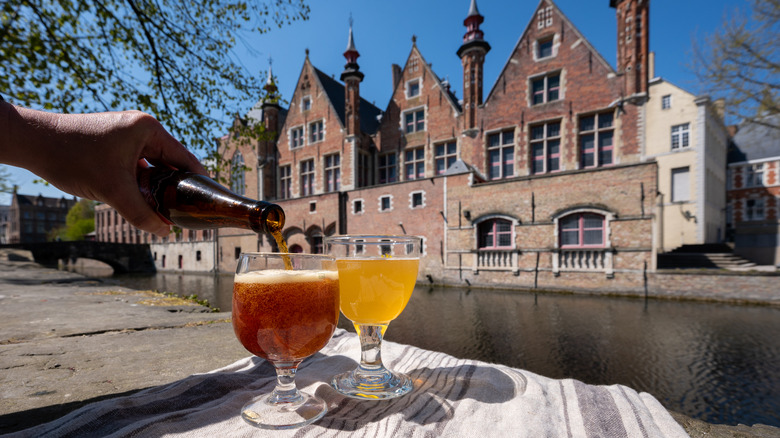
We're sticking to Belgium this time, but moving to the impossibly beautiful city of Bruges. Combining Belgium's tremendous brewing heritage with one of the best Medieval city centers in Europe is a hop-drenched dream, especially as the focus is on Belgian Ales. Famously brewed by Trappist monks and not bound by strict purity laws found elsewhere, Belgian brewing is bold, creative, and strong.
De Halve Maan is the big brewing attraction, with a family brewing history dating back to 1856 and a modern setup featuring an immense underground beer pipeline that connects the brewery to its bottling facility. Then there's Bourgogne des Flandres, another brewery offering tours and tasting flights, the Bruges Beer Experience museum, and a number of brilliant beer cafes like 't Brugs Beertje and Cambrinus. Beer cafe culture is a gem unto itself, typically offering a range of unique Belgian brews in a cozy cafe setting. If you're there for the beer festival, usually around mid-September, you can sample hundreds of beers from around 60 breweries and beer companies.
Bruges offers more than enough beer attractions to warrant a full beer trip: A museum, two city-center breweries with contrasting styles and history, a beer festival, and a spectacularly varied beer scene. Throw in the walkability and so-pretty-it's-silly surroundings, and it's an epic trip in the making. It's a city beer enthusiasts must visit, though arguably too touristy for some.
5. Plzeň, Czechia
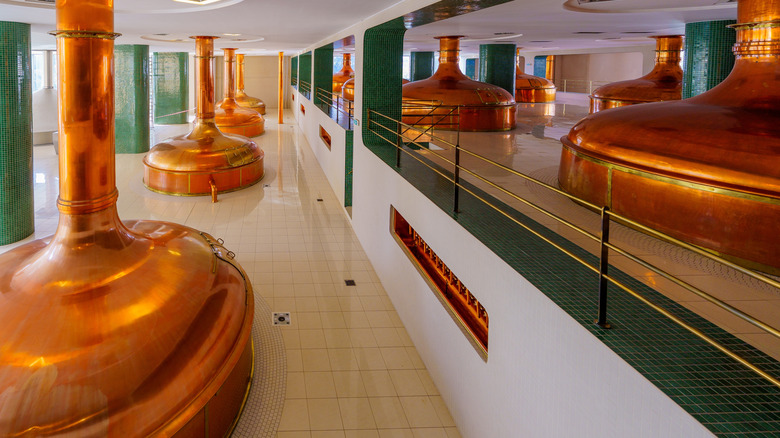
Plzeň has possibly the strongest historical claim to a beer on this list. In 1842, the Bavarian brewmaster Josef Groll unveiled the original Pilsner Urquell. If that means nothing to you, here's a way to look at it: without Pilsner Urquell, you'd have no Budweiser or American light beers. It's the single most influential beer style on the planet, and Plzeň is where it all started.
Pilsner Urquell is a Mecca for beer fans. It offers tours of its historic brewing facilities and its cellars, and even throws in some unique unfiltered beer experiences. Another stop is the Brewery Museum, which traces the city's brewing history, as well as offering a look at its underground tunnels once used to store beer, food, and ice. There are also many breweries operating within the city limits and in the broader region, allowing you to sample the breadth of the beer culture there. If you're lucky enough to arrive around October, keep an eye out for the Pilsner Fest, a large festival celebrating the city's brewing heritage — naturally, a lot of beer is drunk there.
Plzeň's impact on beer is undeniable, surpassing titans like Munich and Brussels for the sheer influence it had on the world's beer habits. It's also incredibly affordable, has a high number of breweries, and is compact enough to make getting around easy. What prevents it from creeping higher is the scale and breadth of styles and drinking experiences.
4. Bamberg, Germany
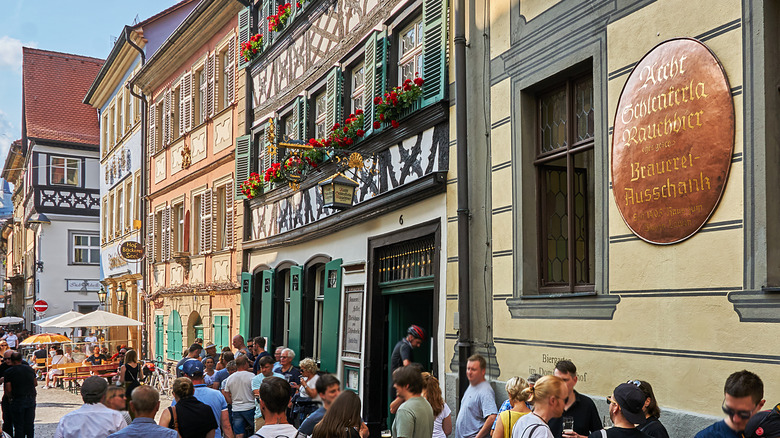
Bamberg may be the most underrated destination on this list. Falling below the radar of anyone not interested in the intricacies of beer, the small Franconian city has the highest concentration and density of breweries per capita on the planet, as per Rich Higgins. On top of that, its unique Rauchbier, or smoked beer, boasts a special brewing style in which malts are dried over open-fire beechwood kilns — a practice that has been continued in the town since at least the 16th century, but probably earlier.
With a population of just over 75,000, Bamberg has many breweries within its city limits, and dozens in the area directly surrounding the town, supplying it with an extraordinary range of distinct styles. The focus on historic breweries should center on Schlenkerla and Spezial for smoked beers, with the former having operated on the same spot for centuries. For a more informative experience, the Franconian Beer Museum has over 1,300 exhibits.
Bamberg takes the edge on Plzeň for the sheer variety of beer found in such a small town. It's been doing its own thing for so long that its cultural heritage is worth the time in itself, even if its styles are not as impactful as those of others. However, Rauchbier is divisive in the beer world, and if it's not for you, Bamberg might not be the best place for your Euro beer adventures.
3. Brussels, Belgium
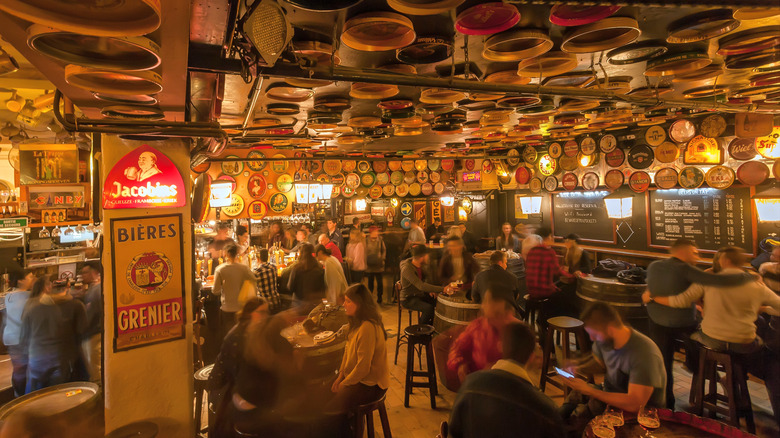
Belgium's third appearance testifies to its brewing prowess. Brussels storms into third place with its unbelievably varied beer scene. The country's beer culture is a UNESCO intangible cultural heritage site, and the capital city is the best place to experience it alongside an array of modern brewing styles, on a grander scale than the other two Belgian destinations mentioned.
The last of its kind in the country, Cantillon Brewery (founded in 1900) is a standout, homing in on Belgium's lambic styles — a sour style made with spontaneous fermentation — with designated public brewing sessions. Elsewhere, Delirium's vast beer campus is a must-visit for anyone interested in beer; its bars are amazing and have, at different times, featured menus with over 2,000 beers. From there, flip to Brasserie de la Senne, which led Brussels' craft beer revival in the 21st century, and then to the Belgian Beer World for its interactive beer experience in a former stock-exchange building. Throw in a growing collection of independent microbreweries, and you've got arguably the most varied beer experience in Europe.
Its sheer variety and scale help place it third, with few places capable of truly competing. Its lambic heritage helped lay the foundation for almost any sour or wild ale produced today, a truly creative style. But while that variety is incomparable, the two that pip it to the post do so for the cohesive experience they offer.
2. Prague, Czechia
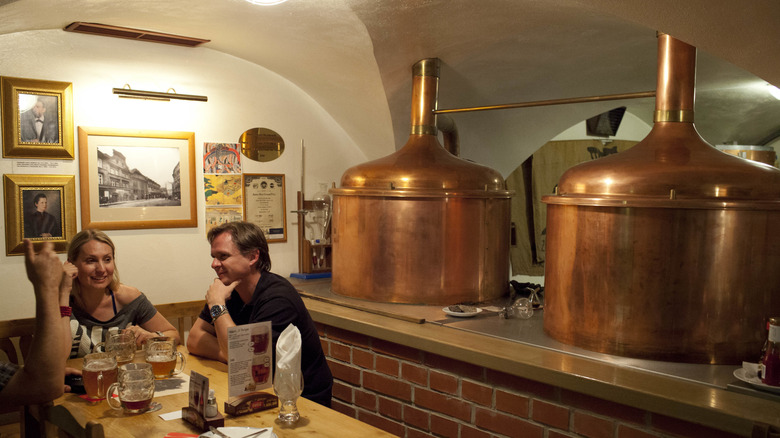
On another day, Prague may have come out on top of this list: it's the beer capital of Europe to many, but second here. The Czech capital has a rich brewing history, with some of its most famous breweries — like U Fleků — in operation for over 500 years. Combine that with a flourishing beer tourism industry, countless atmospheric beer bars and a culture tied to it, the highest per-capita consumption on the planet (according to Kirin), and one of the most affordable beers you'll find in Europe, and you've got a real beer heaven.
Its traditional hospody and beer halls are central to any Prague drinking experience. These are found everywhere, from touristy haunts in the historic center to blink-and-you'll-miss-them basement establishments further out where locals gather nightly. You'll need to learn how to drink there, too, with three distinct pour styles to get to grips with — hladinka, šnyt, and mliko — and you can even bathe in a tub of beer. The Czech Beer Museum dives deep into the country's brewing history, and the independent craft brewing scene is equally passionate about making its voice heard above all the Pilsner talk. Just check out the wonderfully atmospheric BeerGeek basement taphouse.
While there's so much to take in in Prague besides beer, a true beer pilgrimage could comfortably take up the better part of a week. It's affordable, integrates beer into the experience, and lets you experience beer the way the locals do.
1. Munich, Germany
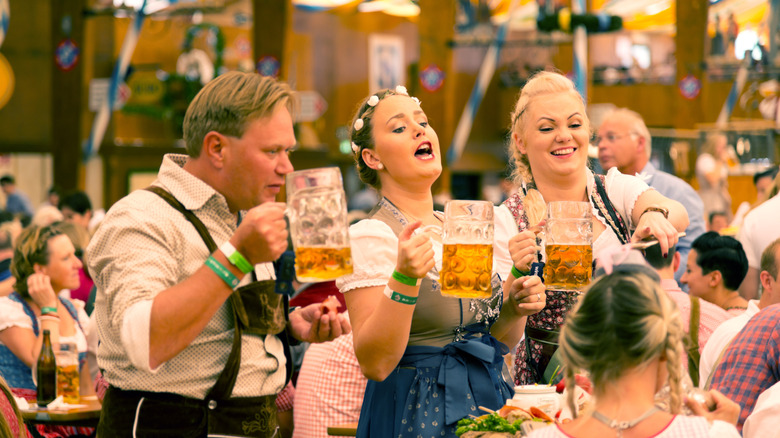
Beer as an experience is fundamentally tied to Munich in a way nowhere else can even replicate. Yes, other places have beer halls, breweries, and beer styles, but they don't have Oktoberfest — everything else is imitation. First, you have the city's Purity Law, introduced in 1487 and extended across Bavaria in 1516, which protected citizens from harmful additives and helped regulate beer prices. Its core principles of good, clean beer have shaped the future of the city's beer culture, which is celebrated every year in incredible style.
Even if every other bar closed for the rest of the year, Oktoberfest would make up for it. The enormous festival, with its sprawling beer tents, runs for just over two weeks a year around mid-September, drawing millions of visitors from around the world. What transpires is the greatest party on earth — cultural, beer-fueled, and supported by excellent German food and music. But other bars are open year-round, and the geographically protected beer served, supplied by one of six breweries, is tremendous. There are brewery tours, an Oktoberfest museum, smaller festivals, beer gardens only locals know about, and Munich styles like Helles, Dunkel, Weissbier, and Märzen.
Prague offers cheaper beer, Plzeň could argue a stronger heritage, and Belgium is more inventive, but Munich wins because of its distinctive drinking traditions, incomparable events, and the scale of its beer tourism. No one forgets their first beer in Munich, even if they might forget the last.