
America's First 10 Cities Ever Founded Are Still Worth Visiting Today
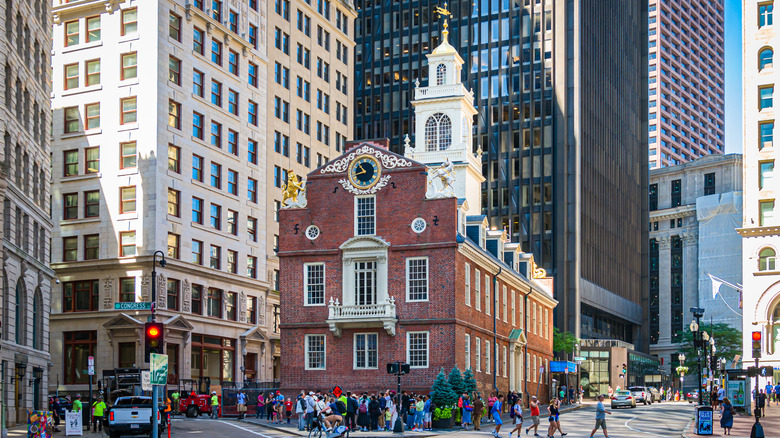
America's story didn't begin with independence. It was thrust into being as a chaotic hodgepodge of far-flung outposts, fortified missions, colonial harbors, and experiments in survival that somehow fused into the thriving places over 300 million people now call home. While many travelers chase the newest hotspots, the country's earliest cities can still offer some of the richest layers of culture, architecture, and storytelling you can find anywhere in the country. That said, many of these destinations aren't just historically significant; they're modern, dynamic cities worthy of an entire trip.
From the coquina walls of a 16th-century Spanish fort in Florida to a Dutch and Native American-rooted megacity, these places reveal how diverse early America truly was. Dutch traders, English colonists, Spanish explorers, Indigenous nations, and later waves of immigrants all shaped these places in ways still visible on every street and shoreline. These are places where centuries-old traditions blend with the energy of modern life.
Whether you're drawn to colonial relics, Indigenous heritage, or simply the thrill of standing in the oldest spots on the map, these 11 cities show that America's first chapters are still being written — and are well worth the visit.
St. Augustine, Florida (1565)
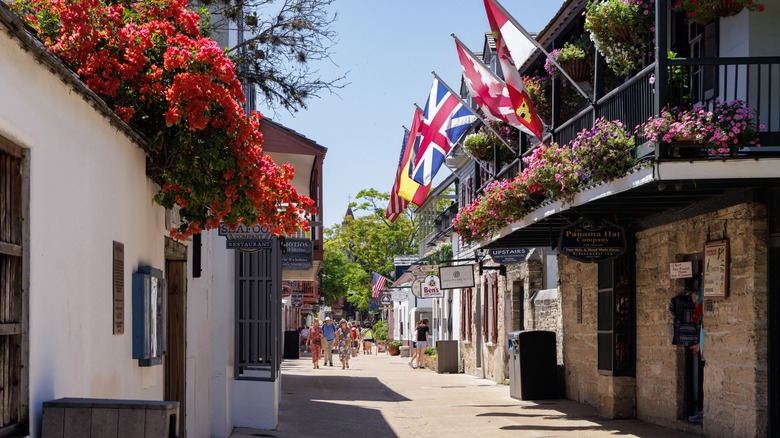
St. Augustine was founded in 1565 by Spanish admiral Pedro Menéndez de Avilés, making it the longest continually occupied European-founded city in the country. As was the case with many early outposts, its early years saw battles, fires, pirate attacks, and shifting colonial powers, leaving behind a rare concentration of Spanish colonial architecture. The star-shaped Castillo de San Marcos remains one of the most impressive fortifications in North America.
Today, the city blends its Old World charm with a relaxed Atlantic Coast atmosphere. Narrow lanes lined with centuries-old buildings weave through a walkable historic district filled with cafés, galleries, and live music, while plenty of modern — if a little corny — resort-town attractions keep kids happy, like the Medieval Torture Museum (because that's what you want on a beach vacation) and the ever-present Ripley's Believe It or Not! Museum. Its waterfront and historic core are still the heart of town, though. Sailboats drift along the Intracoastal Waterway, the St. Augustine Lighthouse offers staggering views, and colonial re-creation displays pop up regularly.
Plenty of visitors come solely for the resort-town atmosphere but stay for the immersive, European feel. If it weren't for the British burning everything else down, there would be even more to enjoy. As it is, though, the town's oldest building — an old schoolhouse — is still a big draw. Elsewhere, beaches, wildlife preserves, and nearby islands round out a surprisingly well-rounded trip, helping make America's oldest city a family-friendly coastal gem full of historic charm.
Jamestown, Virginia (1607)
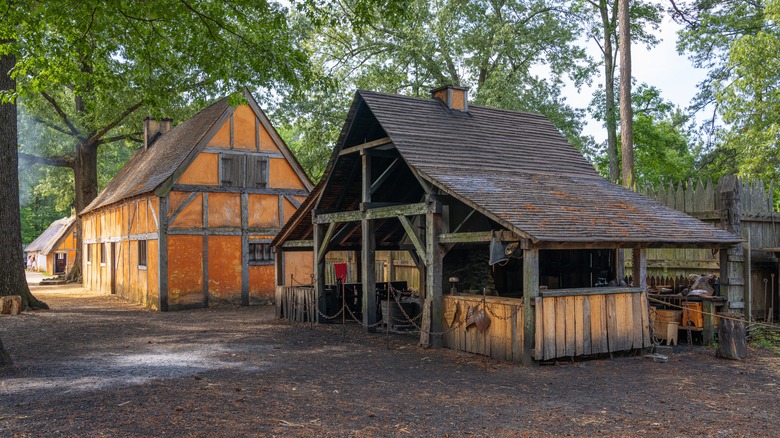
Jamestown's presence on the list is technically a little controversial because, although it's one of the country's oldest cities, it's now just an archaeological site. But you can still visit it — and it is worth doing so — and that's enough to earn its place here. The town was founded in 1607 as the Virginia Company's bold attempt to secure England's presence in the New World. What followed was a brutal saga of hardship, diplomacy, conflict, and survival involving English settlers and the Powhatan people. Much of the original site disappeared over time, but modern archaeology has uncovered fort outlines, artifacts, and early burial grounds that continue to reshape the story.
Now known as "Historic Jamestowne," the island preserves both the archaeological site and a living-history museum that brings the 17th century to life. Costumed guides, recreated ships, and riverside pathways help visitors picture what the settlement once looked like. Nearby Colonial Williamsburg (Virginia's best holiday destination), which became the colony's capital and eventually eclipsed Jamestown's, is also a great stop for history lovers. But it's a fully developed city and doesn't offer the quiet authenticity you'll find at Historic Jamestowne.
Of course, a visit here isn't a weekend-long affair. But it's a fully developed city and doesn't offer the quiet authenticity you'll find at Historic Jamestowne. Tickets currently cost $15 for the Preservation Virginia site ($5 for children) and an additional $15 to explore the attached National Park Service section. Both sections highlight vital aspects of the settlement's history, making it worth visiting both. There are numerous walking trails, wildlife, and outdoor viewpoints surrounding the site, rounding out a rewarding visit.
Santa Fe, New Mexico (1610)

Around the same time the British were exploring Virginia, the Spanish were establishing New Mexico. The city itself was founded by colonists in 1610 atop an even older Pueblo settlement, offering layers of history unmatched anywhere else in the country. As the capital of the Spanish province of Nuevo México, it became a crossroads for trade, conflict, and cultural exchange. The central plaza and the Palace of the Governors remain iconic touchpoints of its complex past and are among the oldest buildings in the country in continuous use.
The modern iteration of Santa Fe is a desert cultural powerhouse (and, oddly, one of America's best-smelling cities). It's equal parts artist haven, foodie destination, and architectural marvel. The strict preservation rules enforced in the city have allowed its historical buildings and the general style to flourish, so it still looks like nowhere else in the United States. The soft adobe lines, earthy hues, and dramatic mountain backdrops are breathtaking. Its creative community is one of the largest per capita in the nation. And yes, if you also had no clue what "adobe" meant (it's a type of brick made from sun-dried clay), you can now drop that into casual conversation.
Beyond the epic historical sites, visitors come for world-class museums, like the Georgia O'Keeffe galleries, the Museum of Indian Arts and Culture, and the New Mexico Museum of Art, as well as for outdoor adventures in the nearby Sangre de Cristo Mountains. The blend of Pueblo, Spanish, and contemporary influences creates a travel experience that feels both ancient and distinctly modern.
Hampton, Virginia (1610)
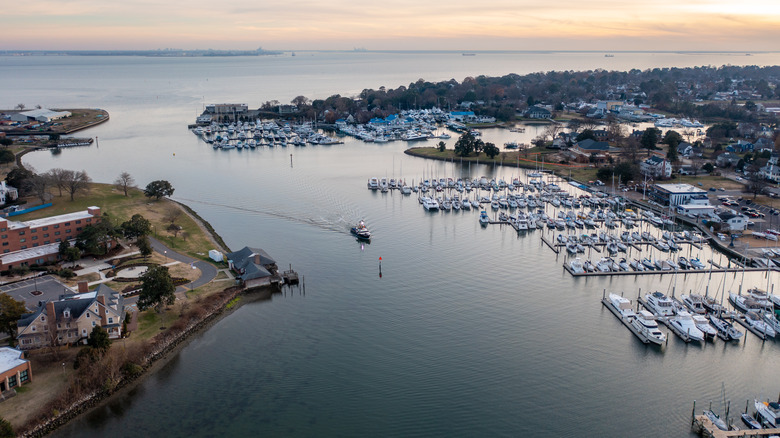
Established in 1610 near the mouth of the James River, just 35 miles from Historic Jamestowne, Hampton is the oldest continuously occupied English-speaking settlement in the United States. Its strategic location on the Chesapeake Bay made it a vital military and trade site for centuries, with the Powhatan people also using it long before the English arrived. From colonial conflicts to Civil War history, the city's early story reflects the broader American narrative in many ways.
Today, Hampton's idyllic waterfront remains central to the experience, with marinas, boardwalks, and breezy coastal scenery helping make it an impossibly beautiful place to visit. It's far quieter and more laid-back than some of the bigger coastal Virginia cities, but that's the appeal: visitors can explore history without the heavy crowds found elsewhere.
Fort Monroe, once one of the largest stone forts ever built in the U.S., is a standout attraction, boasting museums, beaches, and scenic walking paths that are all the more unique because 160 families still reside within its walls. There's also St John's Episcopal Church, the oldest continually used English-speaking parish in the U.S. It's even home to one of the best NASA space centers to visit with kids. Hampton's blend of maritime culture, nature, and accessible history makes it a rewarding stop for travelers interested in America's early coastal heritage.
Albany, New York (1614)
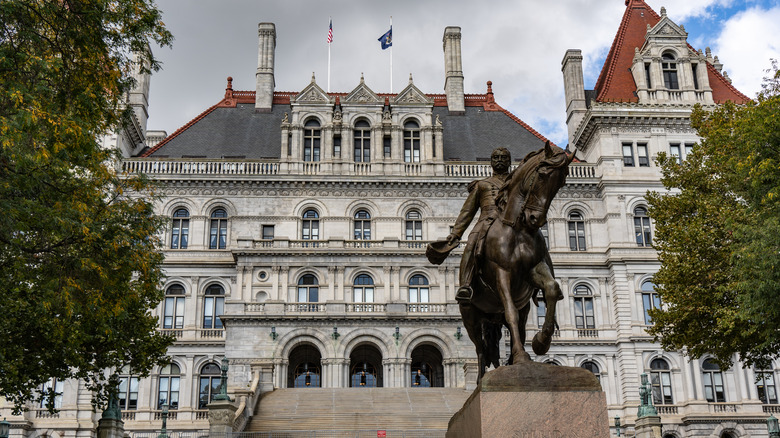
Of course, the English and Spanish weren't the only European colonial powers staking claims on the New World in the early days of the United States. The Dutch were in the north, where they founded Albany in 1614 as a fur-trading post named Fort Nassau. Taking full advantage of its position along the Hudson River, it soon grew into one of the most important outposts of New Netherland and later expanded under British rule. Its early streets, patterns, and place names still reflect its Dutch origins.
Today, Albany serves as New York's state capital (no, it's not New York City), but for the most part, it retains an approachable, small-city feel. The Empire State Plaza is a notable exception, with its modern skyscrapers serving as government buildings. However, the historic districts and riverfront parks balance that scale, maintaining Albany's cozy, heritage neighborhood feel. Its cultural scene includes theaters, festivals, and galleries throughout the year.
The variety of architecture is a major highlight, spanning Dutch-era homes, British Victorian mansions, and grand state buildings. Plus, Albany is conveniently close to the Hudson Valley's wineries, historic estates, and scenic drives, making it an ideal base for exploring Upstate New York's broader story.
Plymouth, Massachusetts (1620)
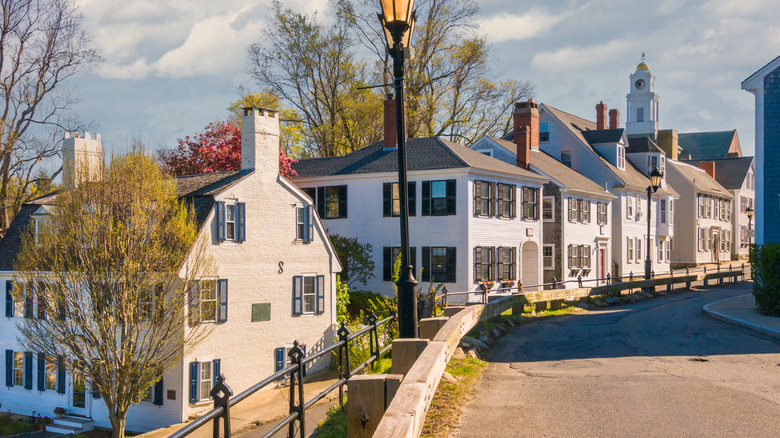
Despite being founded over a decade after Jamestown, Plymouth, Massachusetts, is widely viewed as "Hometown." Whatever the angle, Plymouth's place in American memory is undeniable. Founded in 1620 by English Pilgrims who arrived aboard the Mayflower, the settlement became a cornerstone of the nation's early colonial history. The key difference between these "pilgrims" and the economic prospectors who arrived in Jamestown is that they were fleeing religious persecution. It's also where the concept of Thanksgiving emerged (even if things took a turn for the worse for Indigenous people). You can still enjoy America's most historic Thanksgiving parade in this Massachusetts Coast town. These initial settlers came to represent core American values and cemented Plymouth's place in history.
21st-century Plymouth blends small-town coastal life with heritage tourism. Its harbor is lined with seafood spots, sailboats, and waterfront walks, while nearby forests and beaches give it the classic New England mix of maritime and woodland landscapes. Sites like Plymouth Rock (literally a rock with 1620 carved into it), Burial Hill, and the stunning replica Mayflower II are symbolic touchpoints everyone should visit, but the town's deeper narrative is found in its museums and day-to-day experience.
It's easy to explore the city on a day trip from a nearby city like Boston, but taking it at a slower pace over a weekend can be rewarding. The historic homes, museums, and generally laid-back seaside vibe make it a remarkably atmospheric town. Visit in the fall for Massachusetts' famed foliage, which adds an extra layer of charm.
Gloucester, Massachusetts (1623)
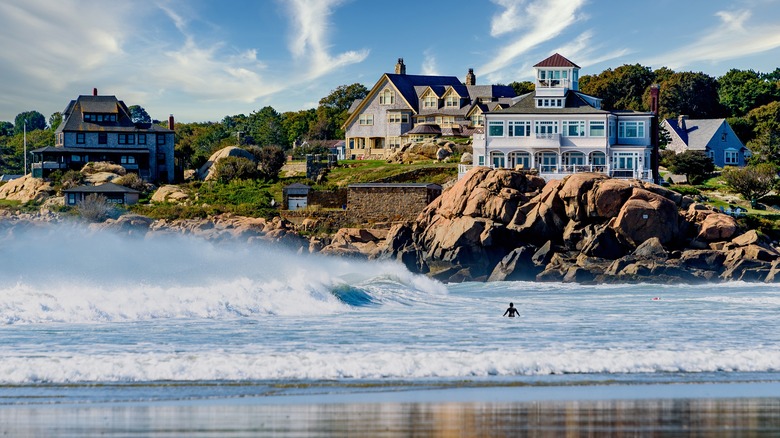
Gloucester is a special entry on this list. It's arguably less famous than many of the others, but that gives it the ability to offer one of the most authentic visits on the list. Founded in 1623, Gloucester is one of the nation's oldest continuously operating fishing communities. Its early settlers faced brutally harsh conditions, set by ever-turbulent seas, yet the city grew into a vital hub of the North Atlantic fishery. Maritime traditions still shape everyday life, and the fishing industry remains very much intact.
The Gloucester of today remains a working harbor, offering visitors an unfiltered look at New England's seafaring culture. Fishing boats, waterfront murals, and the iconic Man at the Wheel statue pay tribute to centuries of maritime history, yet the city still feels welcoming to visitors. The town's pulse is set by that industry, while a newer wave of artists and tourism-focused ventures has helped make it a standout destination and a welcome alternative to the more polished towns and cities associated with the Northeast coast.
Travelers to Gloucester can explore seafood shacks (seriously, grab a lobster roll), head out on whale-watching tours, enjoy local artist enclaves, and soak in the dramatic Cape Ann scenery. Let's face it: The region's scenery is worth visiting on its own.
New York, New York (1624)

New York doesn't need much of an introduction. As one of — if not the — most recognizable cities on the planet, its reputation as a tourist destination is immense. But it's the modern New York that gets most of the plaudits, often leaving its remarkable history in the background. Originally founded by Dutch settlers in 1624, New Amsterdam was a small trading post at the southern tip of Manhattan (now primarily the Financial District). Unbeknownst to many, its early street layout, Dutch place names (Manhattan, Harlem, Brooklyn, Wall Street), and commercial origins reveal a city still shaped by its founders. Of course, it wasn't until after the British takeover in 1664 that the newly named New York expanded rapidly into a global center of trade and culture.
While skyscrapers and ever-changing modern architecture dominate the city's skyline today, echoes of its early history remain in places like Stone Street, a pedestrian-only street and one of the oldest in the city. Bars like Fraunces Tavern and McSorley's offer similar reminders, leaning into New York's history and offering a solid beer at the same time. The contrast between 17th-century remnants and soaring skyscrapers is part of its enduring magic.
The list of attractions in New York is endless. Some of the world's great museums are found within its limits; the musical theater mecca of Broadway remains unmatched; there is food from every corner of the globe, legendary parks, and incredible New York neighborhoods that each feel like a town of their own. But despite constant reinvention, New York's 400-year story is always visible.
Boston, Massachusetts (1630)
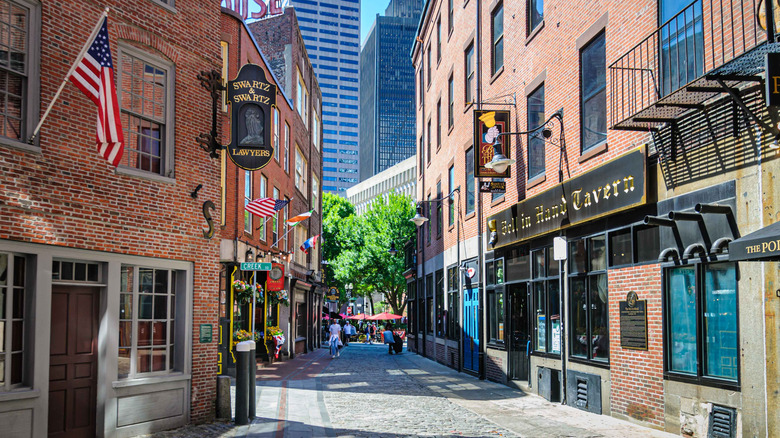
Oddly, despite being younger than New York, Boston's image is far more historic in nature than its Northeast counterpart. Founded by English Puritans in 1630, Boston quickly grew into one of the most influential port cities in early America. Its harbor, intellectual curiosity, and political spirit made it the backdrop for many major events leading up to the American Revolution, including the Boston Tea Party and the first battles of independence.
The modern city keeps the romance of the old alive while fully embracing a dynamic future. Its universities, business and tech presence, and creative institutions keep Boston youthful, exciting, and more than worthy of a weekend trip for an art and food aficionado, all while keeping the evocative 17th-century streetscapes firmly intact. Neighborhoods like Beacon Hill and the North End maintain their historic charm and lend an atmosphere not truly felt in many other places in the U.S. An old pub in Boston is about as close to the British experience as you'll find anywhere outside the real thing.
There's a ton to do in Boston. For the best overview of the city's history, follow the Freedom Trail, a 2.5-mile-long, redbrick walkway punctuated by 16 historic sites related to the American Revolutionary War. Explore its museums to deepen your understanding afterward, then let your romanticism run loose as you wander its atmospheric cobblestone alleys. The food scene these days is spectacular, too. Boston's invigorating balance of old and new makes it one of America's most rewarding historic destinations.
Green Bay, Wisconsin (1634)
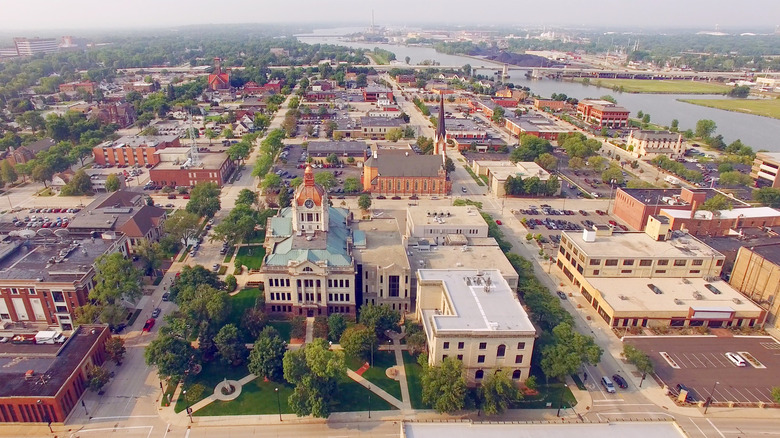
Let's add yet another European power to the mix: the French. Green Bay was established in 1634 when French explorer Jean Nicolet arrived at the mouth of the Fox River, creating one of the earliest European-founded communities in the Midwest. It became an important fur-trading center and a point of contact between French settlers and Indigenous nations. Life there was not easy, marked by brutal weather conditions and constant conflict with local Indigenous tribes.
Thankfully, things have improved. Green Bay isn't widely known as a tourist destination. In fact, it's better known for its reputation as a football powerhouse (go Cheeseheads). But the city's history stretches far beyond the Packers and is still easy to trace on a visit. Sitting at the southern tip of Green Bay on Lake Michigan, the city's riverfront paths, local museums, and preserved sites highlight centuries of maritime and frontier life. Despite having a population of over 100,000, the city still boasts a friendly, small-town feel that distinguishes it from larger Great Lakes destinations.
Its museums are wide-ranging, from the Packers Hall of Fame to Indigenous-focused experiences like the Oneida Nation Museum, while Heritage Hill State Historical Park offers one of the best looks into the region's colonial history. There are also plenty of outdoor experiences, waterfront dining, boat tours, and easy trips into Door County, a stunning Midwestern escape packed with cherry orchards, lighthouses, coastal cliffs, and peaceful villages. Green Bay's mix of history and nature makes it an unexpectedly engaging stop.
Methodology
The list of destinations is based on the established timeline of the earliest European-founded cities in the United States. Each city was then researched individually to identify the most compelling modern reasons to visit, including cultural sites, heritage attractions, architecture, nature, and contemporary travel experiences. Official tourism resources were used to confirm basic visitor information, supplemented by historical research and expert travel content to shape the final narrative.