
The 5 Best Caves To Visit In California, According To Travelers
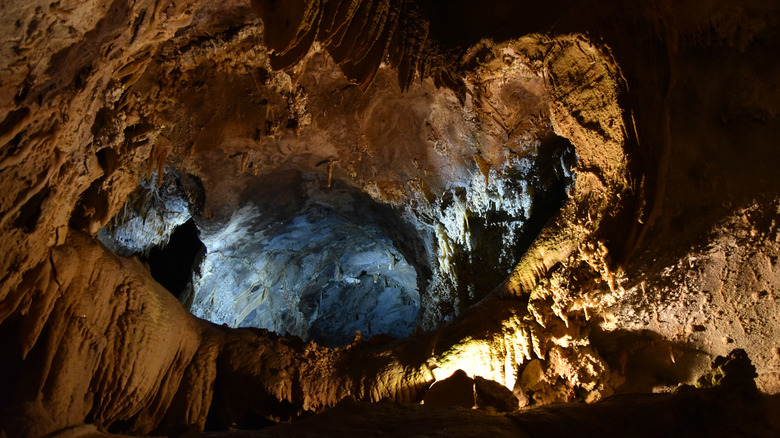
California may be best known for its long sandy beaches and bustling urban centers, but there is far more to the Golden State than that. From deserts to redwood forests, California's diverse landscape makes it a popular destination for nature-loving travelers of all kinds. Fewer people realize that California is also an ideal destination for adventures below ground. From stalactites hanging from ceilings like fangs and dramatic rock formations to the sound of ocean waves echoing off stone walls, rare rock art, and massive underground chambers that feel more like alien architecture than naturally occurring spaces, the state's caves offer a striking contrast to its surface beauty.
To select the best caves and underground caverns for travelers to add to their California itineraries, we reviewed social media posts, blogs, and travel videos from visitors who had explored them firsthand. We compared those accounts with traveler reviews from across the web to ensure each destination was widely regarded as worth the trip. From that shortlist of traveler-approved caves, we selected sites offering distinctly different environments and experiences, resulting in a mix of underground adventures for every type of intrepid traveler willing to venture into the dark.
Boyden Cavern
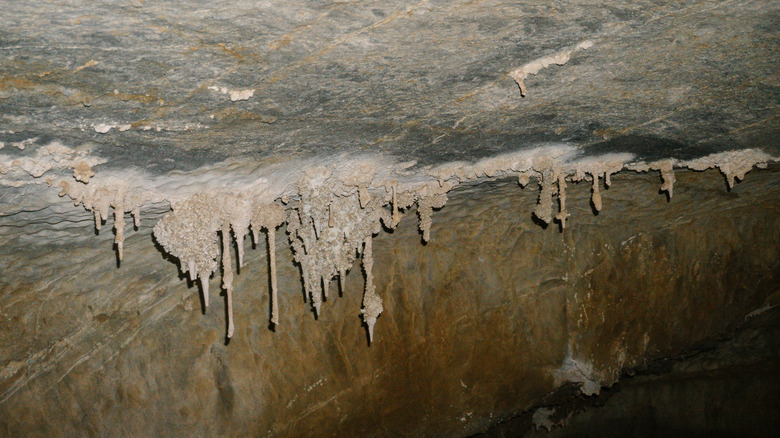
Travel to what may be California's most wildly underrated national park: Sequoia & Kings National Parks. With canyon walls rising high on every side, you can begin a short, steep trek toward what looks like a pointed doorway blocked by a heavy metal gate. This is Boyden Cavern. You wouldn't necessarily know it from the outside, but inside, you'll find a massive marble cavern. You'll walk from chamber to chamber, taking in sights of towering white stalactites and unusual rock formations all along the way. Portions of the tour can be physically demanding – travelers may need to duck beneath low ceilings, edge through narrow passageways, and carefully walk through pools of water over slick stones. Even under artificial lighting, the cavern feels otherworldly, and you'll probably find yourself blinking at the bright sunlight when you step back out into the canyon.
Josh, of the photography and travel blog California Through my Lens, said he talked about the experience for weeks and ranks it among his favorite caves he has explored. His experiences were echoed by reviewers, many of whom praised the views both inside and outside the cavern and the tour guides' knowledge.
Tours are operated seasonally by a private concessionaire, typically from April through November. Options include a standard walking tour (generally around $18 per adult), a longer private tour, and a flashlight tour that allows visitors to experience the cave in near-total darkness. As one Google reviewer raved, "Walking through the cavern in the dark gave a whole new perspective — the stalactites and formations looked stunning in the glow of our lights."
Lake Shasta Caverns
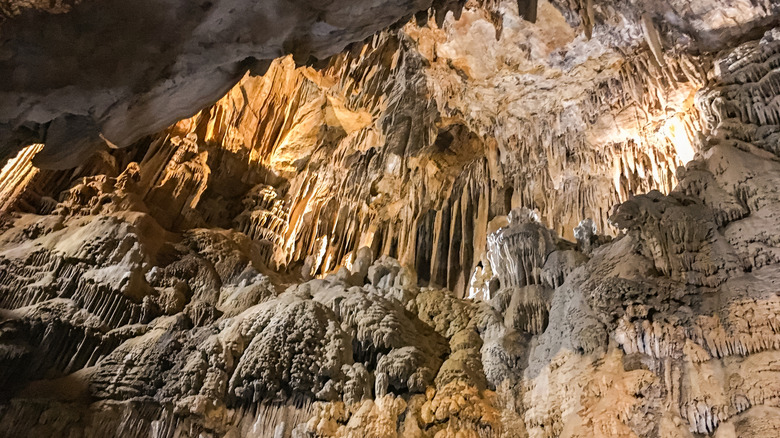
Mount Shasta, located on the California-Oregon border, is a snow-capped peak that looms large both in the cultural memory of the region and over the landscape. Beneath its foothills, however, another almost otherworldly environment awaits. Shasta Caverns offers one of California's most distinctive cave experiences, and the journey begins well before visitors ever step underground. To reach the caverns, you will need to take a short boat ride across Shasta Lake, followed by a shuttle bus trip up a steep incline to the cave entrance. The arrival itself feels surreal: A seemingly ordinary door set into a rocky outcropping. When it opens, you'll see a metal staircase plunging down into the caverns.
Inside, you'll find one of the most expansive underground spaces in the state. While caves are often associated with tight, enclosed passageways, the space inside Lake Shasta Caverns is larger than most. The sound of footsteps on metal staircases and the drip of water echo throughout the space, illuminating strange rock formations on nearly every surface, some looking like intricate limestone carvings and sculptures. Be aware that the tour includes hundreds of stairs, which reviewers on Tripadvisor noted was an issue for some visitors.
At $44 at the time of writing, this isn't the cheapest cave in California to visit. Many visitors, however, say the experience justifies the cost. While the tours are somewhat divisive for reviewers on Tripadvisor, the cave itself consistently garners praise. One Google Reviewer noted: "All about it it's a great adventure. Beautiful sights and amazing time traveling to see the formations in the cave."
Chumash Painted Cave
Just over 20 minutes from the iconic California beach town of Santa Barbara lies a fascinating historical site tucked away in the wooded hills. The way there is lush, green, and wild, to the point that some reviewers on Google Maps say they enjoyed the journey as much as the destination itself, with one remarking, "WOW I've never seen views quite like this."
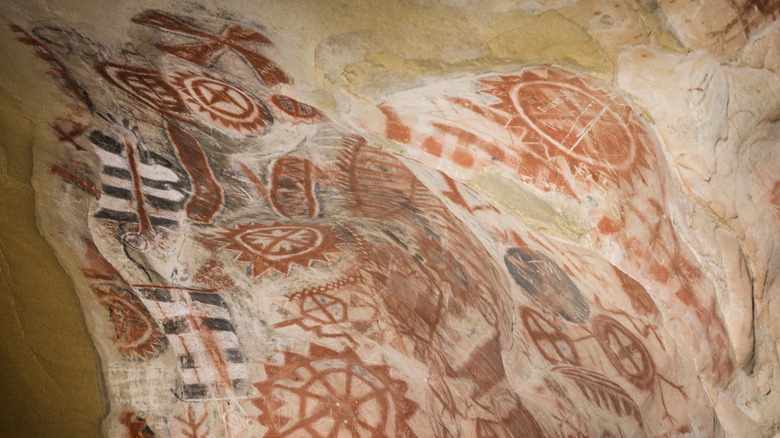
The site itself does not immediately command attention, though a roadside sign points visitors in the right direction. This isn't the kind of cave that can be entered and explored. Instead, it consists of an unobtrusive opening in the side of a craggy rock, sealed by a metal gate. Peering through the bars, however, reveals awe-inspiring rock art. Once known as Alaxuluxen, the site is now commonly called the Chumash Painted Cave. As one reviewer noted, "It is amazing to see such a delicate piece of Native American and Californian history and art."
When you look inside the cave, you'll see intricate red paintings on the stone. It's believed that in the 1600s, the Chumash created many of these symbols to represent the sun and the moon. In fact, according to CyArk, the 3D technology company that works to protect important cultural sites, astronomer Katherine Bracher has suggested that some of the imagery may depict an eclipse that occurred in 1677. It's free to visit Chumash Painted Cave State Historic Park, hike the trail to the cave, and take a fascinating glimpse into the past. So if you're in Santa Barbara, don't miss the chance to see them for yourself and take a guess at their meaning.
Mitchell Caverns
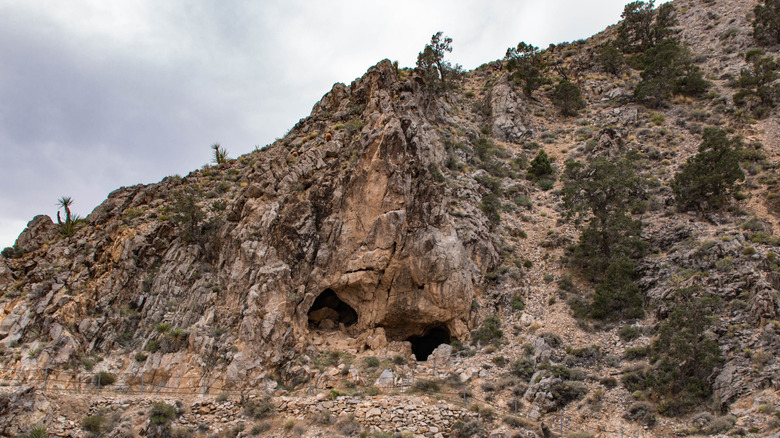
Those who venture into Mojave National Preserve will find far more than sand and solitude in the California desert. Hiking through the harsh desert landscape is not to be taken lightly, but if you do brave the burning heat and the rocky hillside, a truly remarkable landscape awaits within the mountains: Mitchell Caverns. Known as the "eyes of the mountain" by the Chemehuevi people (via Desert USA), the only visible signs of this vast cave system from above are two dark openings in the stone. Inside, you'll find architectural columns of naturally formed stone structures that look almost as if they have melted and dripped like a hot candle.
At first, the stone walls are smooth, and the rocks you see along the way are typical, but the deeper you go, the more unusual the place becomes. As you wend your way through the narrow passageways beneath the desert, you'll see a unique underground world emerge from the darkness wherever you point your flashlight. The unusual rock formations in Mitchell Caverns are well worth the journey to see them. In many places, the rock, shaped by erosion and weather, looks like dripping ice formations or ancient carvings.
"This place defines some place in the middle of nowhere, but it's worth going to," one visitor on Google Reviews reported, "I've been to quite a few caverns in the last few months and this one is definitely unique." Going underground in a remote landscape might be intimidating, but fortunately, tours are led by park rangers who provide insight into the area's geology, ecology, and cultural history. Tours typically last about two hours and cost about $20 per adult as of this writing. One hiker on Reddit described their time there simply, writing, "It was one of the coolest experiences I've ever had."
Painted Cave

California is known for its gorgeous coast, so it makes sense that one of the best caves to visit in the state would be on the water. If you're seeking out a true wilderness adventure, challenge yourself to find Painted Cave. Located on Santa Cruz Island within Channel Islands National Park, Painted Cave is one of the largest sea caves in the world and is accessible only by boat.
From the island's clifftops, you can enjoy a sun-soaked island trail ending in a Pacific panorama of wild whales and sea lions. Along the rocky coastline, boat tours approach the cave opening, where an arched chamber looks like an enormous grotto on the deep blue water. The cave takes its name from the vivid bands of color created by algae and lichen that streak the walls.
Many boats operating within the Channel Islands National Park take the time to bring passengers into the cave. The cavern is so large that its interior has been compared to the size needed to fit the Empire State Building laid on its side. Despite its immense scale, the cave's remote location typically means only a single tour vessel is present at a time. If you happen to have a small boat, you can even venture deeper into the cave than the large charter boats can fit. One reviewer on Tripadvisor who took a kayak wrote: "An extraordinary experience inside the cave and out with the whales, dolphins, seal and all sea life."
Methodology
To identify the best caves in California, we began with recommendations from travelers. We first compiled a long list using Reddit posts, travel blogs, and vlogs from avid cave explorers. To narrow that list, we compared visitor reviews across multiple sites, including Google Reviews, Yelp, Tripadvisor, and AllTrails. While our selections were not based solely on online ratings, we used them to gauge travelers' general opinions after visiting each site. If too many people are leaving a cave with a negative impression, it may not be a good fit for most potential travelers, so we removed it from consideration.
In general, we prioritized locations where the cavern's natural rock formations were the primary attraction, rather than extensive modifications or surrounding attractions. While we emphasized wild caves on protected public lands where visitors can experience them for what they are, we did not penalize sites for having lighting or man-made walkways, which can improve accessibility and safety for many travelers. When two strong candidates were located close together — such as Crystal Cave and Boyden Cavern, or Moaning Caverns and Mercer Caverns — we selected one unless both offered significantly different and widely praised experiences. From the remaining sites, we chose those that provided the greatest variety of underground environments. Additionally, we chose to exclude the Arroyo Tapiado Mud Caves in Anza Borrego State Park due to their documented risk of deadly collapses.