
Digital Nomad Starter Guide: The Top Tips And Tricks No One Tells You

I pitched this article on a muggy afternoon in Kuala Lumpur, Malaysia. I built the piece's structure from my hotel room at Disney World, Orlando. Now, I'm writing it from my girlfriend's backyard in North Carolina. Just 20 years ago, that would have been a near-impossible feat. But the rise of the digital nomad lifestyle means it's almost as normal today as clocking into the office.
Despite (or owing to) its popularity, the lifestyle is subject to heavy doses of criticism and skepticism. Social media has turned it into both a punchline and a fantasy, while detractors question its sustainability and romantics gloss over the harsher realities.
I've spent the last seven years living and working in more than 45 countries, and learned that digital nomadism is neither an endless vacation nor a guaranteed path to freedom. It's a lifestyle that requires planning, adaptability, and a willingness to be uncomfortable. From practical preparation and mindset shifts to the less-talked-about challenges along the way, these are the tips and lessons that actually matter when you decide to take the leap.
Define the lifestyle you're hoping for
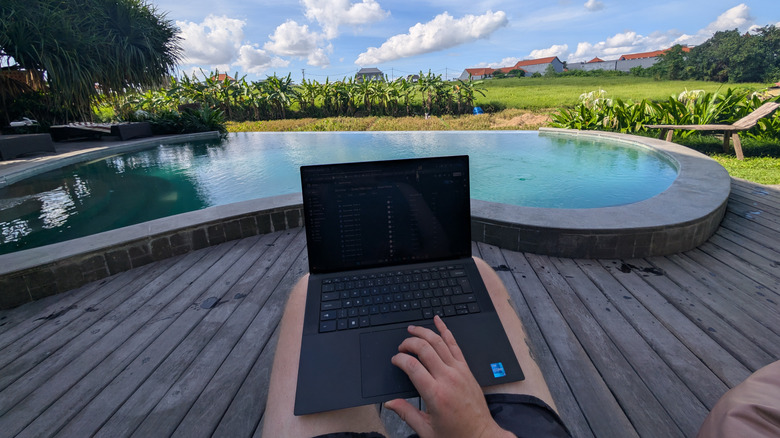
The single most overlooked aspect of a new digital nomad's preparation is considering what their lifestyle will actually look like. It's one of the reasons so many give up after a few months. They anticipate an easy-going life, glancing through work with their toes in the sand. And while that can be part of it, it ignores the practical realities. Setting an intention before you depart is vital for managing expectations and keeping things sustainable.
When I left, the principal goal was travel. I was teaching English online purely to fund my globetrotting and was willing to sacrifice creature comforts to see as much as I could in a year (my original planned trip length). I was willing to move countries each month, which is slow but still a lot to take on, and accept a degree of exhaustion. For others, it's more about lifestyle or even just living in one of the sunniest countries in Europe. I've met many nomads who just wanted a slower pace of life. They often stayed in countries for up to a year, maximizing the legal tourist time or applying for extended visas. Others fell somewhere in the middle.
Understanding what you want from your digital nomad experience is what will dictate your strategy, budget, and goals. It's okay if that shifts along the way. It did for me. But acknowledging you're okay with a fast-and-furious backpacking jaunt mentally prepares you to handle some tougher situations than a beach-beach-island-for-a-year mindset. And remember, there's no wrong way to do it. Everyone is different.
Make sure you have the right job

It may seem redundant, but you'd be surprised how many people head across the world with a job that's incompatible with the lifestyle they want. More careers than ever allow remote work, but not all of them come with the freedom we imagine digital nomads enjoying.
If you've been given the freedom to work remotely, but are still clocking in on American time, you'll need to anticipate what that will look like for you. Maybe you can cope with a 3 p.m. to 11 p.m. schedule in Europe, but that still means you won't have any evenings free during the week. In that scenario, you might be limited to staying at home until something shifts. It's not all doom and gloom, though; these are some of the best cities in America for remote work thanks to affordable living, comfortable amenities, and urban charm.
When I started traveling, I taught English online to Chinese kids. My travels also began in China, so the work hours were fine and limited only to the weekend. Teaching those same children when I arrived in Serbia a year later meant my workday began at 2 a.m., kickstarting a year of absurd sleeping patterns I had to correct every Friday and Monday. In the long run, it would have been unsustainable. Today, I'm privileged enough to be a freelance writer with project-based timelines that aren't dictated by logged hours. That shift has been key to me living this way as long as I have.
Do your homework on locations and consider your impact

Some countries and cities have significantly stronger infrastructure for digital nomads than others. The same applies to Airbnbs, hostels, hotels, and homeshares. Going in blind is a recipe for disaster, leaving you stressed and tired at best and jobless at worst.
During my first year teaching, I made this mistake many times. My partner and I booked tiny apartments, leaving me to teach while sitting on the toilet on some occasions (seriously), while our month dealing with brutal internet speeds in Ulaanbatar, Mongolia, had us close to being fired. A little research before arriving could have at least given us a chance to prepare for problems. In reality, we could have chosen countries, cities, and accommodation that supported our lifestyle. Places like Slovenia, an underrated European gem that's wooing remote workers with a new digital nomad visa, would have been perfect.
The opposite is also true. It's important to support the places you choose to stay, and sometimes that might mean avoiding them. One of the greatest criticisms of digital nomads is their contribution to the economic burden felt by some destinations. Cities like Lisbon and Mexico City have worked hard to attract digital nomads, but now want them to leave. Locals have revolted against tourists and digital nomads, who they claim have helped drive living costs through the roof. While other factors are at play, there's no denying the impact of often wealthier long-term visitors. What may feel like a great monthly deal to a New Yorker could be double the average rental price in Lisbon. It's not hard to see how some locals are being priced out of their homes. You shouldn't discount these towns and cities, but always consider the consequences of your presence.
Set clear work and travel boundaries

Like most other things in life, digital nomadism is about balance. Focus too much on the travel, and your career and finances will suffer. Doubledown on work and neglect the travel, and you might wonder the point of you leaving in the first place. Learning early on to set boundaries for both sides of the equation is key to longevity in this world.
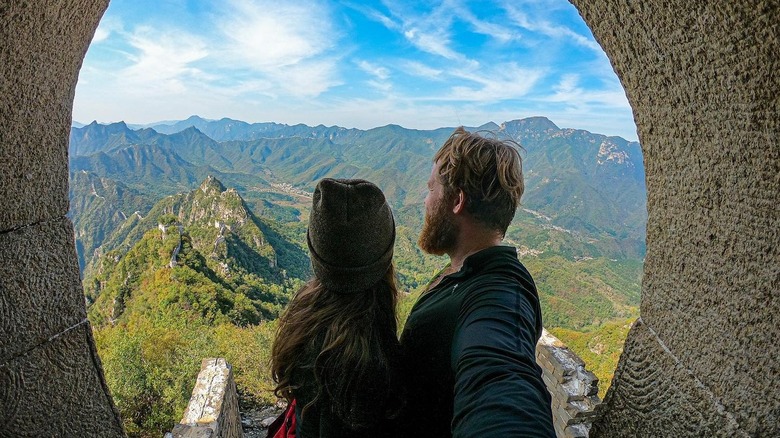
When teaching English, I purposely loaded all my teaching hours from Friday evening to Sunday night. I worked about 24 hours during that time period, and was completely free from Monday until Friday afternoon. While it got more complicated in Europe, it still meant I had clearly defined boundaries for the two parts of my life. I could enjoy the city I was in or travel around the country for at least four days a week, then buckle down for a little more than two days. It gave me the best of both worlds and allowed me the time to hike and camp on the Great Wall of China, live with nomadic farmers in Mongolia, and explore the jungles of Borneo, before returning to earn some money back.
Today, I have far more flexibility, but I still keep the two sides distinct. The distinction will look different for everyone. If you opt to live in one place for three or four months, you can take more time with work (if required) and still have the ability to embrace every experience a place has to offer. If you're moving faster, a week of intense work can be offset by another seven days of all-out travel. Do what feels right, find a system that makes the lifestyle possible for a long time, and never underestimate the value of routine.
Slow down
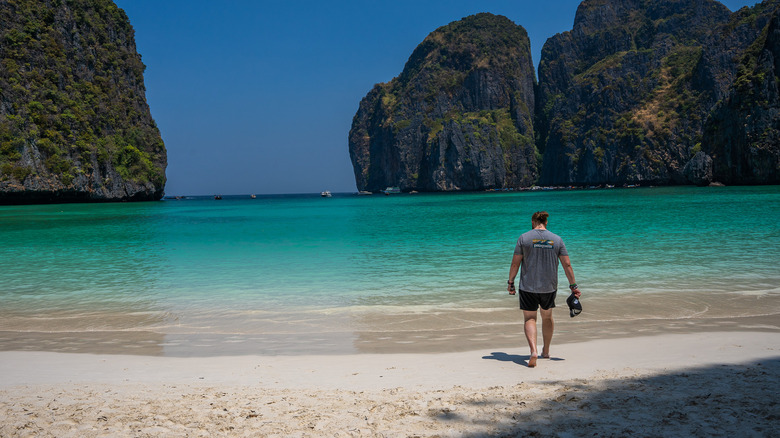
Definitions of slow travel vary wildly. For less experienced travelers, it might be as simple as a week in one city instead of a two-week, six-city sprint. For a long-time digital nomad, it could mean three, six, or even 12 months in a single city. Whatever your distinction, there's value to be found in taking the digital nomad lifestyle slowly. Every long-term digital nomad I know adopts this in some way.
The benefits of slower travel are numerous. The obvious experiential perk is getting under a city's skin in a way that's simply not possible on a shorter timeframe. Enjoying your favorite cafes and bars, building a routine, and getting the feeling of home in a foreign place is a remarkable experience. It imparts a love that's incomparable. I have dozens of cities around the world that feel like home, and it's one of the greatest privileges of being a traveler.
But taking your foot off the gas has practical benefits, too. Long-term rentals are far better value; you're more likely to cook for yourself and save money, you'll be more productive, and you'll significantly decrease the chances of fatigue or burnout. All of these benefits scale up. A week in Paris can be more rewarding for your experience than giving it two days, followed by the same for Brussels and Amsterdam, while three months in Bangkok can feel rejuvenating compared to a comparatively frenetic month.
Stay connected (to the internet)
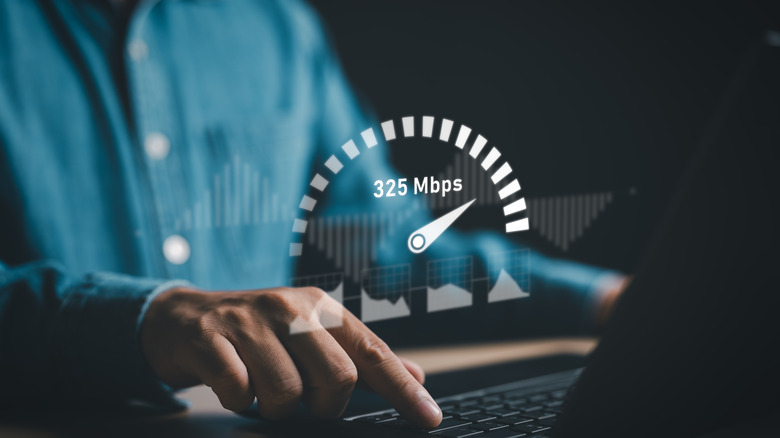
For digital nomads, it's quite simple. No internet connection means no job. Even after seven years, I still have the odd connectivity blip (just ask my Islands editors when I go dark for a few days). While it's easier than ever to stay connected, there are some tactics to adopt that will ensure you're ready for almost anything.
One of the biggest mistakes guests make when booking Airbnbs and other accommodations is not checking the listing. That should indicate whether there is high-speed internet. Even if it says so, ask the manager or host for an internet speed test. There are plenty of apps that do this, and my favorite is the aptly named Speedtest. It'll show the upload and download speeds for whatever Wi-Fi the phone or computer is connected to. While it's easy to fabricate, this gives you evidence that they may have misled you in the worst-case scenario. That has happened to me once, but one in over 60 apartments is a decent ratio. The higher both numbers are, the better. At the bare minimum (and this is pushing it), you want download and upload speeds of 25 Mbps (megabits per second) and 5 Mbps. My current place in Malaysia has download speeds of 500 Mbps, so you can see how much better it can be.
It's also worth grabbing an eSIM as a backup hotspot. It's easier than buying a new SIM card everywhere, and it's simple to add more data. Before I arrive, I also check out nearby cafes and co-working spaces to find reviews from other remote workers. Just search the term online to see if it's a good alternative. If you have the budget, you now have Starlink and other satellite devices as an option, too.
Stay connected (to people)
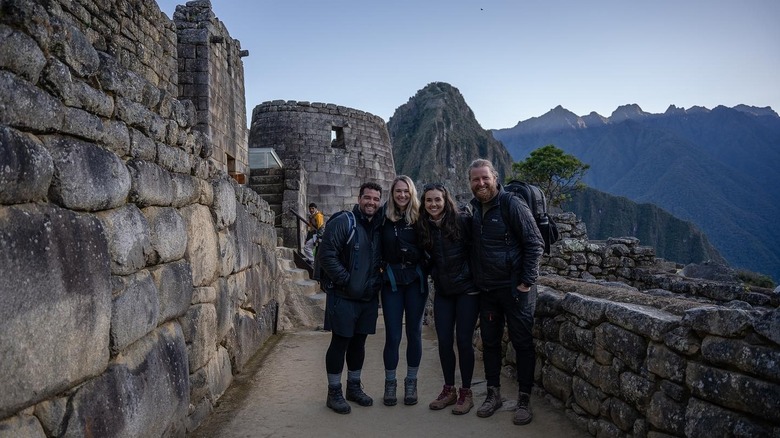
It's one of the great misconceptions of the digital nomad lifestyle. While you can and do meet amazing people on your travels, it can be a spectacularly lonely life choice. Consider anytime you've moved town or city, and the time it can take to build a social group. Opting to move every few weeks or months constantly puts you back at square one, and forcing yourself to socialize can be draining. Without actively addressing that, you can find yourself in a tough headspace.
Despite being comfortable in social settings, I've felt that battery drain on many occasions. After spending one month in an Ecuadorian hostel dorm where I had the same conversations with new travelers every day, I actively avoided humans for the rest of my time in South America. I probably missed out on some amazing experience because of that. Other times, because I travel with my girlfriend and we're never truly alone, we've accidentally gone weeks without speaking to other people.
While strategic social withdrawals are super valid, it's important not to completely fall off the map. Prioritize calls with friends and family back home — don't necessarily set a specific time, but commit to a call a month or every fortnight — and make an effort every so often to go out and meet people. Joining expat, traveler, and locals Facebook groups before arriving is a great way to do this. You'll not only find advice for living there, but they host big meet-ups where you'll bump into like-minded people and others from completely different ends of the spectrum. And that's what travel is all about.
Invest in your environment

Some might see this as general life advice, whether you're traveling or not, but there comes a time when investing in your environment makes more sense than pinching pennies. In my early travel days, I opted for the cheapest everything: apartments, food, experiences, everything. I lived off pot noodles, Pringles, and $1 beers, and stayed in tiny apartments or hostels with almost no space to work.
As I continued, I could feel my sanity, comfort, and productivity waning, and I became more comfortable spending more on stable environments. We stayed closer to the main draws of the city, had better kitchens to cook and store food, and uncluttered workspaces to earn a living from. While it may have cost more up front, I can probably trace the uptick in my income to the moment we made that shift.
Again, I was okay sacrificing this comfort in my first year because I believed it was going to be a one-year experience. As soon as I realized this was going to be a lot longer, things felt different. It wasn't just a year-long jaunt. It was my life. If you know this is going to be a long-term venture, be prepared to put yourself in a place where you can thrive.
Protect yourself

You can support yourself by investing in comfortable apartments and giving yourself enough time in a place, but the digital nomad lifestyle can still throw curveballs. And dealing with those can be intimidating on the other side of the world. I count myself incredibly lucky to have had very few serious issues abroad, but I've always been protected.
The most important of these is travel insurance. Don't leave home without it. While medical care may be affordable in some countries, it may not always be the best. Travel insurance will often get you into the stronger international or private hospitals, a huge difference in some places. Many of them cover evacuation in political crises or natural disasters. I've not had to use either, but came close during the COVID-19 pandemic and left Ecuador a week before its capital became chaotic and violent. This stuff happens.
Elsewhere, grabbing a VPN to protect yourself online, purchasing security tools like AirTags to keep tabs on your possessions, and even taking out tech insurance are some of the best ways to keep your gadgets safe while traveling. It may feel annoying to pay for things you might never use, but trust me, it's worth it when it does happen. It's also important to let a point of contact know where you are. Pass on travel details to a family member or friend, whether that's the address you'll be staying at, the flight you're catching, or the amount of time you'll be unreachable if you're on a trip. There's a lot that can go wrong. Even if it never does, be prepared.
Methodology
This piece was primarily dictated by my own experiences as a digital nomad. I know from my own circle of friends and the broader travel community that the advice offered is fairly consistent across the board, and much of this has been substantiated by other blogs and websites written by fellow travelers and digital nomads.