
America's 10 Best Hot Springs For A Warming Winter Season Soak
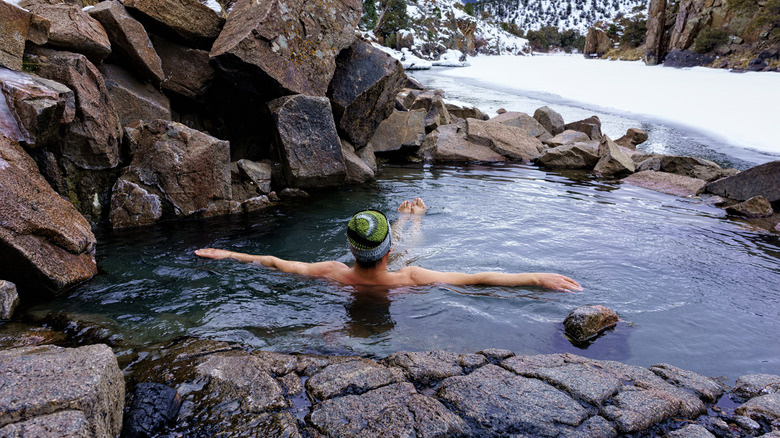
Scientific opinion on the healing powers of hot springs remains largely observational, but they are believed by many to alleviate things like arthritis and high blood pressure as well as helping to improve circulation and skin conditions. Soaking in winter brings its own distinct advantages. For one, when that cold, biting air meets the steaming water, it creates a sensory-rich ambience that energizes your mind while simultaneously relaxing your body. Those tight, winter muscles and constricted blood vessels are relieved of tension by the dilating warmth of the hot water, while some practitioners believe the "false fever" that the heat triggers can help prevent colds and viruses. Rising steam also helps to hydrate nasal passages and clear congestion, while the entire experience may even boost your mood by releasing endorphins that can help fend off those winter blues.
Despite being home to more than 1,600 hot spring sites, the U.S. has historically lacked international recognition as a premier thermal bath destination. However, recent years have seen a surge in visitor numbers at some resorts, and extensive restoration programs are transforming historic spas into fully operational resorts with wellness programs and carefully-designed accommodations. But, of course, adventurous types can still hike to naturally formed pools in isolated areas to soak their trail-tired bones. So, between these pampered resort indulgences and raw backcountry escapes, hot springs in America have variety — and here are some of the best for a cold-weather soak.
Chena Hot Springs, Alaska

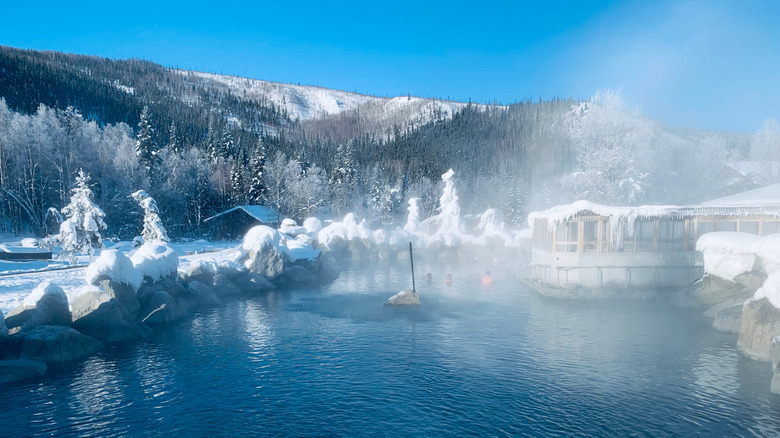
After hearing about thermal waters in the area back in 1905, brothers Robert and Thomas Swan sought out hot springs near Fairbanks to help alleviate Robert's rheumatism pains. They discovered the Chena Hot Springs, and the people of Fairbanks soon came to appreciate the warm mineral-rich waters that soothed their aching muscles. Today, it's one of the most renowned hot springs across North America. And despite everything there is to see and do in the state, to get the full Alaskan experience, you absolutely must have a long soak in Chena's legendary waters.
But what makes them so special? Well, how about letting the heat work its magic while you admire the Aurora Borealis dancing above? The location of the springs is far enough from Fairbanks that light pollution is at a minimum. And from fall all the way through to spring you can absorb the healing minerals while the earth-warmed waters are constantly refreshed and those dazzling Northern Lights flicker and shift against the wide-open Alaskan skies.
The springs are very hot, so they're actually cooled to a soakable 106 degrees Fahrenheit in the outdoor Rock Lake. There's also an indoor pool maintained at 90 degrees Fahrenheit and several hot tubs. In addition to the warm pools, the Chena Hot Springs Resort is home to the world's largest year-round ice museum. It's built from 1,000 tons of snow and features ice sculptures and an ice bar where even the martini glasses are made from frozen water.
Hot Springs National Park, Arkansas
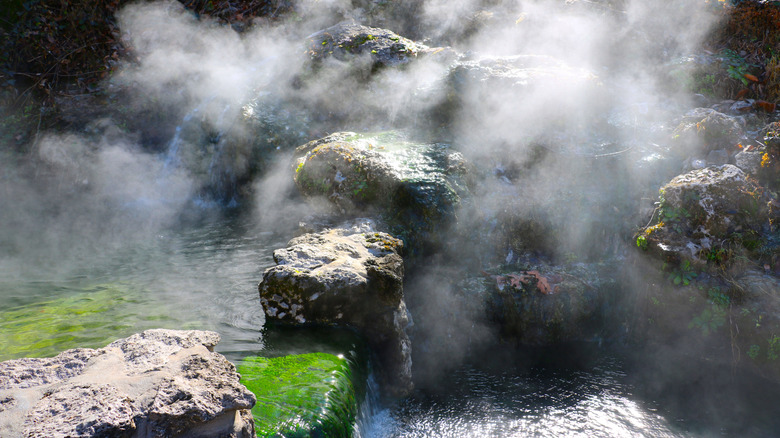
Joined onto the town of Hot Springs, Arkansas, is a 5,550-acre national park with no entrance fee or entrance gate to speak of. The Hot Springs National Park is easily accessible from its namesake town, which, as you might have guessed, is famous for its hot springs. It actually became federally protected land some 40 years before Yellowstone and was officially declared a national park in 1921. Before then, Native Americans used the thermal baths for centuries and called the area "Valley of the Vapors." You can walk to the park or take a bus from the city, and if you're in Arkansas during the chilly winter months, visiting is a must-do.
There are no less than 47 springs surging from Hot Springs Mountain. It pours out 700,000 gallons every day at 143 degrees Fahrenheit, which is too hot to bathe in. However, the pools at Bathhouse Row are prepared for soaking. There are eight historic bathhouses, and two remain operational for visitors. The Buckstaff offers traditional 1912-style treatments with private soaks, hot towel wraps, and steam cabinets with personal attendants. Quapaw Baths provides a modern spa with four communal pools ranging in temperature from 95 to 104 degrees Fahrenheit. If you want to stay a night or three, guests at the Hotel Hale have thermal water piped directly to their in-room soaking tubs, which is the perfect way to unwind after exploring the park's hiking trails and the 360-degree landscapes from Mountain Tower.
Umpqua Hot Springs, Oregon
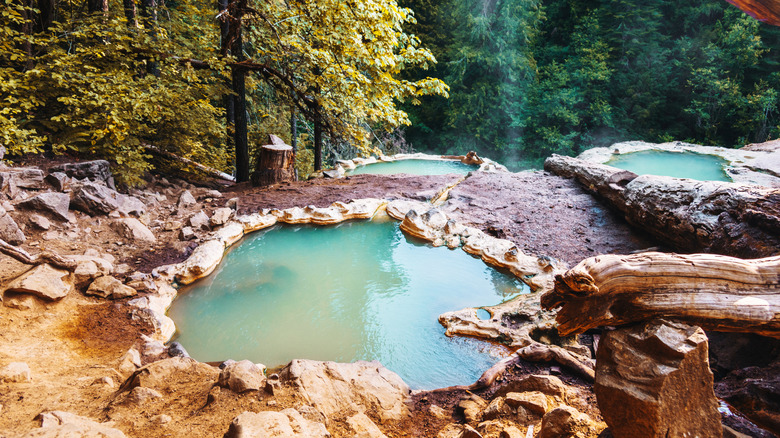
The Umpqua Hot Springs are one of the most breathtaking natural hot springs in the Pacific Northwest and cascade down from a travertine terrace high above the roaring North Umpqua Wild and Scenic River. The hottest pool sits at the very top. It measures just 3 by 5 feet, and the water temperature reaches 115 degrees Fahrenheit. It slips through an active fault and spills downward before fanning out into progressively cooler pools below. The water tends to be a little murky, rather than the crystal-clear wilderness spring water you might expect. But they are warm and soothing — and difficult to leave.
It takes a bit of commitment to get to them, though — especially in winter. Accessing the springs usually requires a 2-mile drive up a pothole-riddled road to the parking area. But in winter, the road often closes and forces visitors to hike the 2 miles. You can make this part easier with snowshoes, or you can even turn it into some cross-country skiing. From the parking lot, it's a short but steep hike up a dirt path lined with roots and rocks.
You should also note that the springs are around 100 miles from any major city. But because they are 75 miles from Crater Lake National Park, it makes sense to add them in as a side trip while exploring Oregon's only national park. Toketee Lake Campground is just 3 miles away, while Umpqua's Last Resort offers cabins, tiny homes, and glamping some 16 miles from the springs.
Glenwood Hot Springs, Colorado
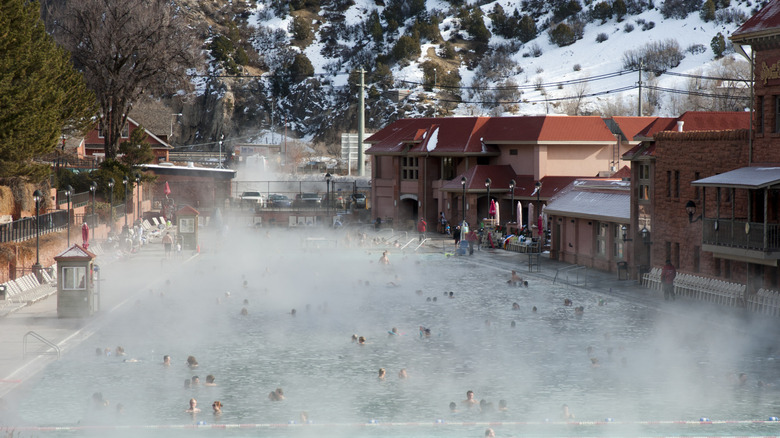
Since 1888, this Colorado hot spring has presented itself as a wellness retreat, attracting people from all around the world with its mineral-rich waters and restorative reputation. However, the Ute nomadic tribe used these therapeutic waters long before any explorers stumbled across them. They took advantage of the Yampah Spring, which pumps out an astonishing 3.5 million gallons of mineral water daily. It's hot, too. At 122 degrees Fahrenheit, it needs to be cooled to 104 degrees Fahrenheit before it enters the Therapy Pool, while in the Grand Pool, it's maintained at a comfortable 90 to 93 degrees Fahrenheit.
These pools are found in the Glenwood Hot Springs Resort, and the Grand Pool is the crown jewel. It's recognized as the world's largest mineral pool and holds around 1 million gallons of warm spring water and provides plenty of space for families to splash around and play. However, there are seven pools in total sprawled out across the resort, with five of them found in the new Yampah Mineral Baths section. Here you'll find waterfalls tumbling over a natural stone grotto and pools lit up in turquoise and blue when the sun goes down.
The baths range in temperature from the Inhale cold plunge pool, where you'll need to take a deep breath before diving into its 52 to 60 degrees Fahrenheit water, to the soothing 100 to 104 degrees Fahrenheit Cascade Waters pool. It's a temperature range set up for those looking to experience the ancient healing power of hot-cold therapy. The resort sits conveniently between Aspen and Vail, so the thermal pools offer a perfect end to a hard day's skiing at the nearby Sunlight Mountain Resort, and Glenwood Hot Springs offers special ski packages through early spring.
Iron Mountain Hot Springs, Colorado
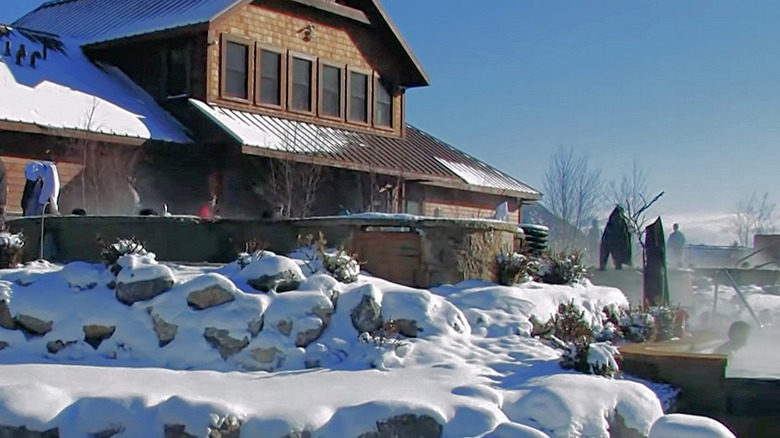
The small city of Glenwood Springs actually feels like an Icelandic escape thanks to the quality of the thermal baths there. Iron Mountain Hot Springs are just a mile or so away from the Glenwood Hot Springs Resort, but are worthy of a mention in their own right. They were first launched as the West Glenwood Spa back in 1896 and were a big draw for early wellness seekers across the country.
Nowadays, the resort features a total of 31 pools, with many of them stepping down a terraced slope above the Colorado River. Each has been named after a different gemstone, and among the collection of individually styled pools are things like a waterfall, an infinity edge, natural pebble bottoms, and even one shaped as a romantic heart for honeymooners and couples. Temperatures range from 98 to 108 degrees Fahrenheit, giving winter bathers the option of comfortable to steaming soaks.
With 14 different minerals flowing through the spring, everything is pure and natural. No chemicals are added to treat the water, and a regular Select Access ticket admit all ages to 16 thermal pools plus a large heated freshwater family pool and a jetted spa. You can unlock 13 more pools (restricted to 21 years old and over) with a Premier Access ticket. These premium basins include a cold plunge and recreate iconic thermal destinations from across the world, including the Dead Sea.
Castle Hot Springs, Arizona
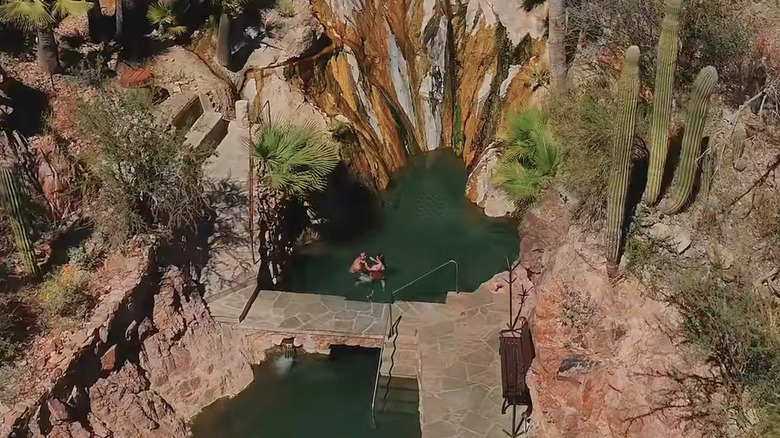
In the early 20th century, the luxurious Castle Hot Springs played host to Gilded Age industrialists and presidential families on winter retreats. However, the Yavapai people had been bathing in the thermal waters there for centuries before it became Arizona's first wellness resort in 1896. Decades later, the property served as a rest and rehabilitation center for veterans injured in World War II, including John F. Kennedy. The resort is a lush green oasis in a desert canyon and sprawls across 1,100 acres in the Bradshaw Mountains, about 50 miles to the northwest of Phoenix.
The spring flows at a steady rate of around 200,000 gallons of clear, odorless mineral water every day, and the 115 degrees Fahrenheit flow fills three carved rock pools, each of which is maintained at a different temperature. The top pool nearest the source is the hottest at a searing 106 degrees Fahrenheit. Below, the second pool cools to 96 degrees Fahrenheit as the water cascades downward. The lowest basin sits at a comfortable 86 degrees Fahrenheit and is ringed by mature palms and is at a suitable depth for swimming.
Castle Hot Springs offers a range of accommodation types scattered across the property including options with indoor or outdoor fireplaces and pits for chilly winter evenings. Some even include private outdoor soaking tubs fed directly from the spring — so turn off the lights and slide back into the tub and marvel at the night skies, which, given the desert location and winter season, are quite the sight.
Ojo Caliente, New Mexico
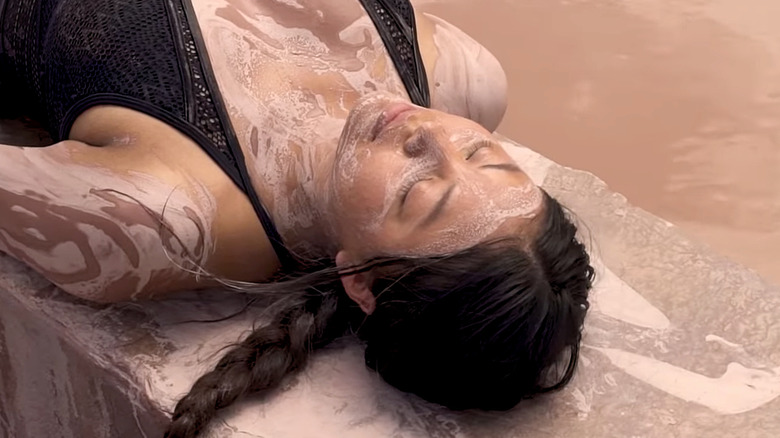
The Ojo Caliente is another of America's earliest health resorts, having opened its doors as far back as 1868. Not only that, but it also holds the distinction of being among the only hot springs in the world to offer four different sulfur-free mineral waters, containing iron, arsenic, soda, and lithia. There are nine communal pools dotted around the property with temperatures ranging from 80 to 105 degrees Fahrenheit, with each basin offering a different take on the surrounding New Mexico landscape.
The Iron Pool features a pebbled bottom with thermal water bubbling underfoot. Then there's the deeper Soda pool with its digestion-aiding properties. The spacious Lithia Pool is an excellent spot for winter stargazing, and it's believed to relieve depression. After soaking in them all, you can move on to the Mud Pool, which cakes you in clay before drying in the sun to purify pores and soften the skin.
Later, you can relax in either of the two Cliffside pools that are nestled dramatically against rock faces. Like the Lithia Pool, they are also prime spots for stargazing after sunset and offer secluded soakings for couples and small groups. The resort sits about 55 miles to the north of Santa Fe, and there is a range of lodging available, including suites with private tubs, cottages, and renovated vintage trailers. There are RV and tent camping sites, too. They sit within a cottonwood grove, and overnight stays in any accommodation include unlimited mineral pool access.
Dunton Hot Springs, Colorado
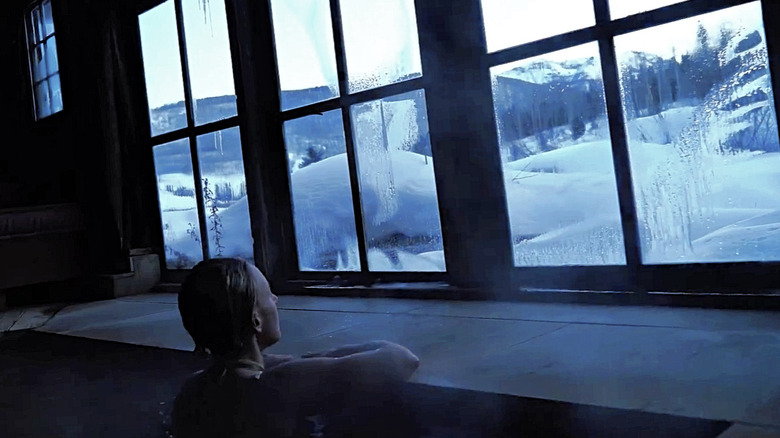
Nestled in a remote alpine valley deep in the San Juan Mountains in Colorado is Dunton Hot Springs. During the 1880s, Dunton was a scrappy mining settlement where determined prospectors worked the riverbanks along the West Dolores River for silver and gold. At its peak, there were 500 residents, of whom the most famous — or infamous — was Butch Cassidy. He fled there in 1889 after robbing a bank in Telluride. But, with the remote location making ore transportation nearly impossible, the town, along with its cozy log cabins, was deserted by 1919. After decades of abandonment, the mountain ghost town was transformed into a luxury hot spring resort with its historic Western character fully preserved.
There are 14 beautifully restored cabins with modern interiors spread across 200 acres. Each is either named after the purpose it served, the miner who built it, or a colorful character that once lived there, and features vary by cabin. The natural springs feed two outdoor pools and a historic bathhouse with mineral-rich water spanning temperatures from a pleasant 85 to a scorching 106 degrees Fahrenheit. There's an underwater swing swaying beneath the surface in the bathhouse, as well as hissing steam showers and a cold plunge, while you can check for charcoal graffiti scratched into the walls dating back to well over a century ago. You can also look for Butch Cassidy's signature carved into the saloon bar where he used to knock back whiskies. Year-round rates include all meals, drinks, and unlimited hot springs access, while additional winter activities across the grounds include ice climbing on a frozen waterfall, heli-skiing, dog sledding, snowmobiling, snowshoeing, and cross-country skiing.
Calistoga Hot Springs, California
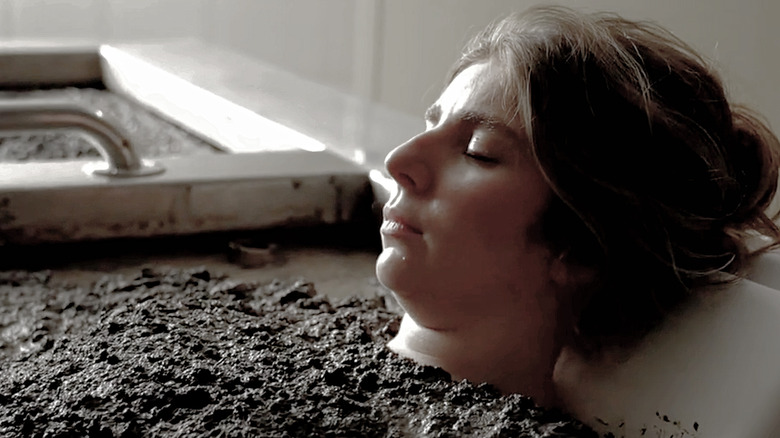
Calistoga is a small city at the northern end of Napa Valley in California. It not only provides easy access to the region's world-class wineries, but it's also home to some outstanding hot springs. These springs can be found at resorts throughout the city and have been in use for thousands of years, with the Wappo tribe even naming them "coo-lay-no-maock," or "the oven place." Calistoga's signature volcanic ash mud baths combine local ash with hot spring water for detoxification treatments. The thermal pools provide soakers with calcium and sodium bicarbonate that are said to improve blood circulation, while the deep muscle relaxation they induce helps promote more restorative sleep and reduces stress and anxiety. Practitioners even claim these waters can help with rheumatoid arthritis and back pain.
There are many resorts to choose from with each offering something a little different. If it's an Olympic-sized mineral pool and those renowned volcanic ash baths you're after, consider the Indian Springs Calistoga resort. If it's fine dining you want to complement your soakings, Solage has a Michelin-starred restaurant and a 130-foot adults-only pool. Meadowlark Country House operates Calistoga's only clothing-optional resort, while Calistoga Motor Lodge offers retro-inspired camper rooms and two geothermal pools.
The family-owned Carlin's Cottage Court offers rooms with jacuzzis fed directly by hot spring water, while the Roman Spa Hot Springs Resort features Mediterranean gardens, indoor and outdoor mineral pools, and barbecues for enjoying delicious food and wine. Additionally, Dr. Wilkinson's Backyard Resort has been in operation for over 60 years and features three hot-spring-fed pools. On top of soothing soakings, winter visitors can also enjoy hot air balloon rides over the Napa Valley vineyards, explore hiking trails, and visit the famed wineries while the winter crowds are lighter.
Arizona Hot Springs (Ringbolt), Arizona
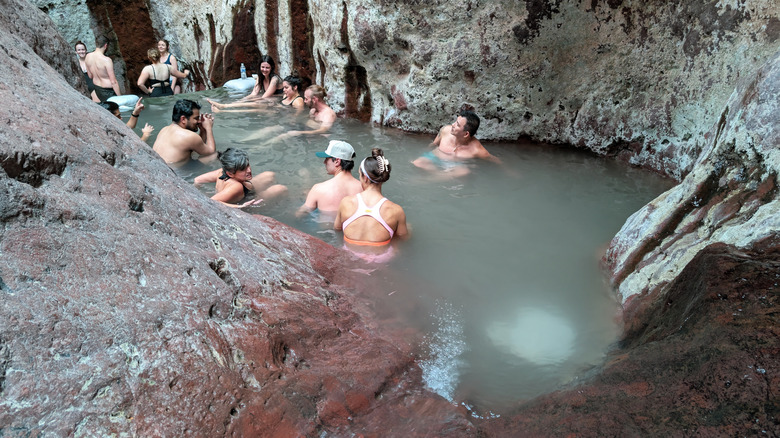
The Arizona Hot Springs, also called the Ringbolt Hot Springs, are hidden along the Colorado River, tucked inside a slot canyon just south of the Hoover Dam. The trailhead is just 40 miles southeast of Las Vegas. So if you tire of the casinos and shows and want to do something more energetic with a muscle-melting reward at the end, pencil this hike into your plans. However, it's no walk in the park. Prepare for a strenuous 6-mile loop with an elevation gain of 750 feet that requires scrambling over rocks and climbing or descending a slippery 20-foot ladder, depending on which way you hike.
You'll need about four or eight hours to do the entire loop, depending on your pace, and you should know that it is exposed and there is no cell service. Bring sunscreen, plenty water, and a satellite communicator if your phone doesn't have one. Other hazards to look out for include the threat of flash floods. The National Park Service recommends you don't hike if a storm is approaching.
If all that doesn't put you off, your endeavors will be worth it in the end. The springs sit within a stunning volcanic canyon with walls streaked in various colors from rust red to burnt orange with pink and golden tones in the right light. There are four pools in total, and the water temperature gets hotter as you climb through them to the uppermost bath, which is the one you need to be careful of. It simmers between 111 and 120 degrees Fahrenheit. So, the most relaxing experience — where you listen to the soothing sounds of trickling water while you soak in comfortable heat — is in the lower pools.
Methodology
We based our research on established and renowned travel blogs like Local Adventurer, O.Christine, and Backroad Ramblers, as well as specialized hot springs guides like Top Hot Springs. We also took to travel magazines like Lonely Planet and Travel and Leisure, as well as outdoor specialists such as OutdoorOnline. News and lifestyle media like Vogue, Time Out, and CBS News also gave us more information, and we chose our destinations from those that consistently appeared across these expert lists. Lastly, we only chose hot springs that you are actually permitted to bathe in.