
Don't Think About Climbing Kilimanjaro Without Reading These 10 Tips
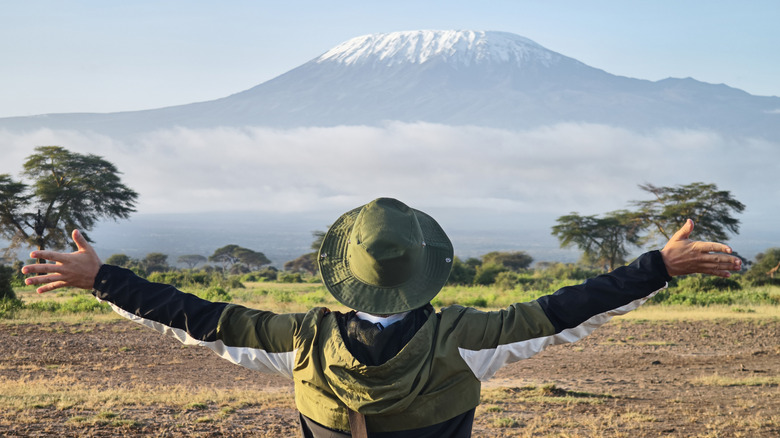
Summiting Mount Kilimanjaro rightfully sits at the top of countless adventurous travelers' bucket lists. The Tanzanian legend tops out at an astounding 19,340 feet, making it the tallest mountain in Africa and the highest free-standing peak in the world. Visible from over 100 miles away, its snow-capped summit is a symbol of adventure in the travel world, and one of the most accessible climbs of its kind.
But accessible doesn't mean easy. While it doesn't require the technical skills of an Everest or Puncak Jaya attempt (or any of these more dangerous mountains), no climber should underestimate the mountain. Every year, up to 40% of the 40,000 hopefuls attempting the climb fail, succumbing to fatigue, cold, or altitude-related issues. That's not a small number.
There's no guarantee of success (something every company will remind you), but there are precautions to take, steps to consider, and preparations to prioritize that can help increase your chances of summiting significantly. I've climbed it myself and know first-hand the obstacles you'll face, and the things that helped (or would have helped more) on any summit attempt. Don't think about planning your own Kilimanjaro trip until you've read these tips.
Choose your route carefully
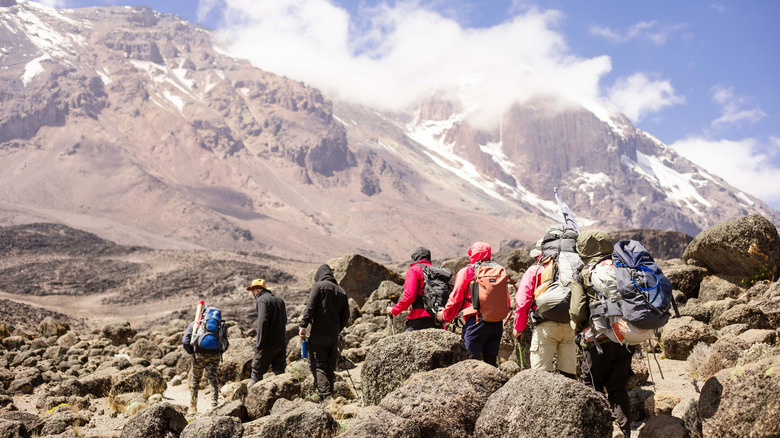
One of the biggest surprises for many of the climbers attempting Kilimanjaro is the number of routes available. Skimming through any company's list of available dates, you'll see anything from five-day trips to nine-day treks, with a number of specific route names used or a combination of several. When climbing Kilimanjaro, the complications can begin before the first step.
For those with no altitude or climbing experience, this is where a catastrophic mistake can take place. Many instinctively think that opting for a shorter route is the best option. In reality, this decreases your chances of summiting by a huge amount. We'll go into the intricacies of altitude later in the article, but in short, a faster climb is tougher on the body, allowing less time to adapt to the sudden shifts in altitude and providing less rest time. If you're hellbent on summiting, and you don't have any real understanding of climbing, always err on the longer side.
There are also experiential factors to consider. The North Face, for example, is less crowded and lets you see more of the mountain, but it is a more challenging hike. The Rongal route is considered easier and less scenic, but it offers more wildlife opportunities. Once you've determined how long you want to take, you can consider these factors, but don't make a decision lightly. It's better to wait until you get the route you want than to blow your chances with a bottom-of-the-barrel pick. I opted for the newest route, the Northern Circuit, which has a high success rate, a long trail, and few crowds — and it was unbelievable. If I did it again, I'd challenge myself with a faster route.
Don't underestimate the altitude
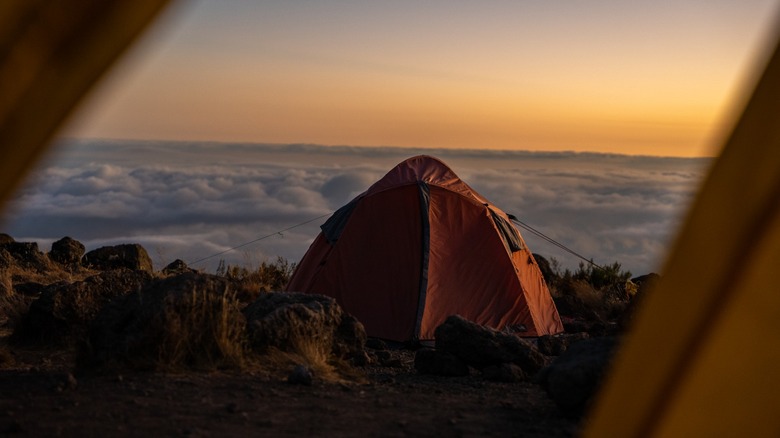
As mentioned, fitness and poor gear choices are not the primary reason for summit failures: It's the altitude. Kilimanjaro almost scrapes to 20,000 feet, and is a completely freestanding mountain. That simply means it's an isolated peak with no other mountains around it. Everest, for example, is not, and most summit attempts begin above 17,000 feet. Kilimanjaro starting points vary, but mine started at around 7,000 feet.
Climbing from such a low altitude to a high one so quickly is a brutal adaptation for anyone's body to experience, and is the primary cause of failure. Climbers heading into high altitudes in the Himalayas or Andes often spend days or even weeks above 10,000 feet to give themselves time to acclimatize. Unless you can acclimatize at home, maybe by climbing America's tallest mountain, Kilimanjaro offers no such luxury. Even the town you'll be based in beforehand, Moshi, sits at just 2,900 feet above sea level.
The altitude didn't hit me until day four, when I was struck by a near-constant plague of nausea and headaches until summit day. My girlfriend, on the other hand, was hit hard on day five, almost collapsing in the process. One of my party of five collapsed 650 feet from the summit, and another on the way back down. While we all felt it later in the trip, I saw multiple climbers vomiting at the side of the trail early on, too. Don't assume you'll be fine, especially if you've never experienced it before. Mentally prepare yourself for severe discomfort, a loss of appetite, and sometimes worse, and always let your guide know what's happening. They'll check your blood oxygen levels every day to monitor your condition, but be responsible in between.
Prepare yourself physically
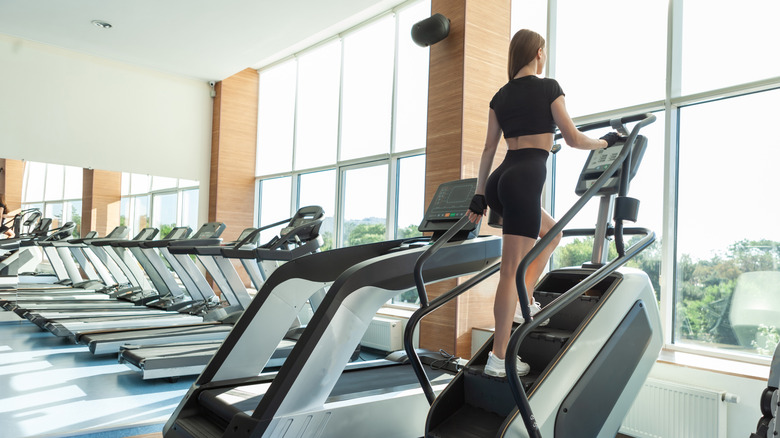
While Kilimanjaro isn't a technical climb (meaning, you don't need any specialist ice-climbing, rappelling, or alpine experience), it is still a gruelling multi-day hike at altitude. You don't need to be running marathons, but if you're not at least moderately fit, it's going to get tough. With so many aspects of the climb completely out of your control, your fitness is something you can fight back with.
Some days are easier than others, and may only involve four or five hours of climbing, but others, like summit day, can stretch to 12 hours of steady incline and aggressive decline. Being as fit as possible significantly increases your chances of success. Start as early as you can, whether you're hiking on real mountains or setting your treadmill to a high incline — it all helps. Don't underestimate the value of strength training, too. A strong pair of legs can help drive you upwards, and a steady core will help with the inevitable back pains you'll be taking on.
I was lucky to have been living in South Africa's melting pot city, Cape Town, right before my own expedition, which gifted me with countless hiking trails to clamber up and get my legs used to the slow burn of climbing. I was also doing CrossFit and almost destroyed my chances by deadlifting a little beyond my capabilities. If I were doing it again, I'd taper off the higher-injury-risk activities and focus on cardio and strength training. That way, I'd avoid any last-minute scares and put my body in a good place to thrive.
Going cheap decreases your chance of summiting
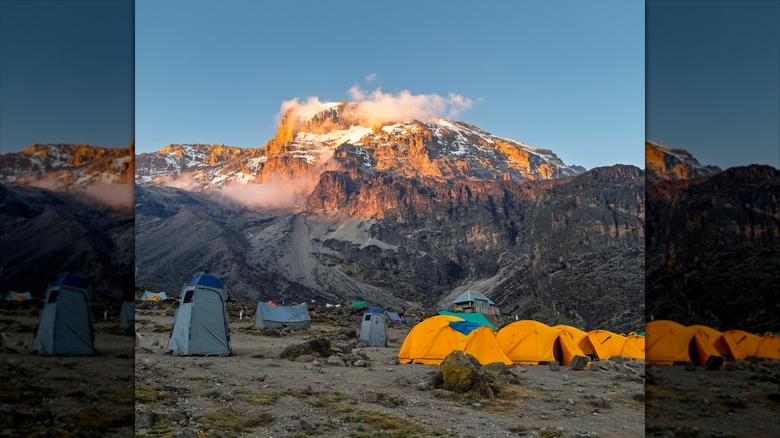
A successful Kilimanjaro summit is built long before you take your first steps. The more preparation you put in, the better your chances. That's never more true than when picking a company. It's not possible to climb Kilimanjaro without a guide, but, depending on your level, you can choose from a wide range of companies, from bare-bones outfits to literal luxury experiences.
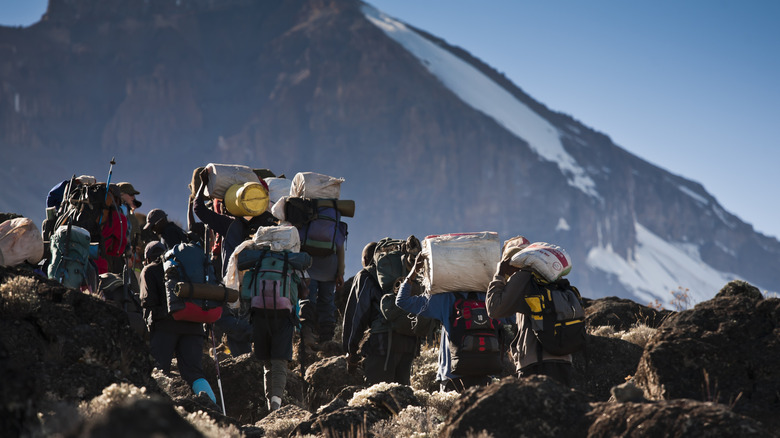
If you're in the inexperienced category and aren't used to the tribulations Mother Nature can throw at you, it's worth spending a little more on your guides. Top-of-the-line options are ludicrously over-the-top, providing you with fully built beds, large tents, amazing food, private toilets, and top-end gear to track your health stats or even provide oxygen supplements. A simpler setup provides you with all the necessities, but won't go above and beyond. With that said, we still had a team of 20 porters, guides, and cooks helping five of us. They hiked ahead, pitched our tents, provided us with hot water for washing, cooked for us, and kept our pace steady but sensible. They were unbelievable, but I know many of the people I met on the mountain would have struggled with some of our experiences.
It's vital to shop around among the different companies. Read reviews, consider the amenities they offer, and speak directly with the owners to get a sense of what your climb might look like. If you feel like a good night's rest is imperative to you summiting, be prepared to pay for it. It's also a question of ethics, as some companies pay their porters far less than others, with poor working conditions to boot. If you can help ensure a porter is paid well, it's worth splashing out.
Consider having Diamox in your bag
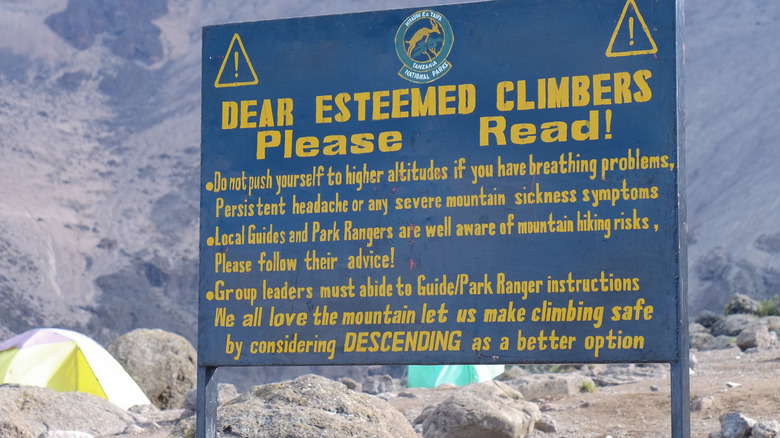
Something that might feel a little intimidating on your trip is the use of Diamox, an altitude sickness drug (among other things). If, like me, you're hesitant about medicine (or if you happen to live in the U.S. state with the highest average elevation), you might feel inclined not to use it. It is your choice, and no company will force you to take it, but a significant number of climbers do and have positive experiences with it.
My partner and I didn't take it (not out of intention, but because we were unorganized) and, as I mentioned earlier, we were both struck by the altitude mid-way through the expedition. Our guide recommended that my girlfriend try it, as she was on the brink of turning back. She did, as did I, and within a few hours, the issue plaguing us both had practically dissipated. Mine never fully left, but I was able to eat again comfortably, and the nausea died down considerably.
It's worth noting that the best indicator of success is a longer route, regardless of whether Diamox was involved, so prioritize that above all else. It's also not guaranteed to work for everyone, and it's advised that you try it out at home to see how you react. It can lead to dehydration, which means you'll need to consume extra water, and, oddly enough, it can cause nightmares (according to Reddit). It's not sold over the counter, so you'll need to speak to your doctor about it, which is always a good thing. The general recommendation is to start taking it two days before your climb and continue for a day after. Make the right choice for yourself, but do your research and always consult a medical professional.
Take your kit list seriously
Once you pay your deposit to your guide company, you'll receive a ton of information. One predictably long piece of information included will be your kit list. It can't be stressed enough how important it is to take that list seriously.
For those with little experience in the great outdoors, the climate changes throughout the climb can be dumbfounding. Kilimanjaro has five distinct ecological and climate zones, ranging from humid, mosquito-ridden rainforests to alpine tundra. Arriving ill-equipped for these sudden and dramatic shifts not only lessens your chance of success but also puts you at real risk. Summit day is a stark experience of this. You'll start the day in pitch black, fingers freezing, and face stinging with bitterly cold winds. You'll likely end the day in shorts, getting a burnt face.
Take every detail of the list into account, and know that your company will likely check your gear before you leave. If anything is missing, they'll drive you to the nearest gear store where you can rent what you need. If you refuse, they're completely fine with leaving you at the hotel. Take your health seriously and be prepared for any weather shift. You don't want to be caught out on the highest mountain in Africa. Some of these affordable winter travel purchases might help beef up your kit, too.
Remember money for tips
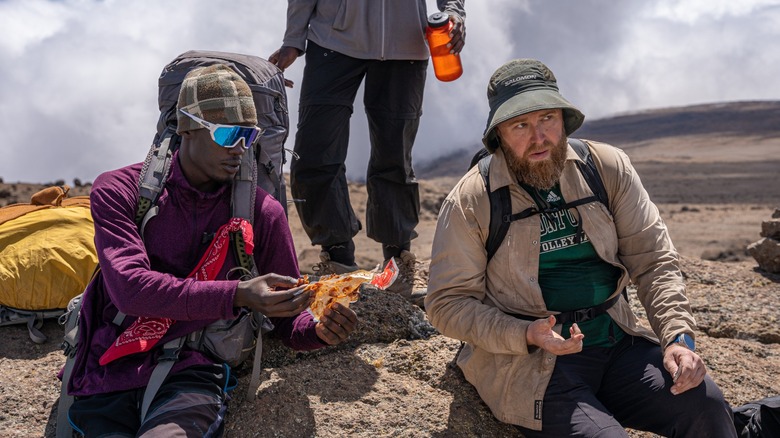
Tips on Kilimanjaro aren't the same as tips at an all-inclusive resort. It's a complicated affair. In fact, calling them tips is, realistically, the wrong term. Before you set out, your head guide or tour operator will tell you what each member of your team is expected to receive in tips. This will work hierarchically, with the head guide getting the largest sum, then working down through the assistant guides, cooks, head porters, porters, and toilet porter. You'll put this cash into envelopes, and the lead guide can help disperse it among the crew.
The figure offered is, generally, the same as their daily wages for the trip, doubling their pay. This might seem counterintuitive. Why not just pay double up front and be done with it? But this cultural quirk goes back decades, and helps pay for the workers to remain transparent. Many companies in the past were accused of underpaying staff, so customers offering payment in person to the crew is a way to validate the process.
It's also a nice moment to round out the trip. The porters are unbelievable people, performing superhuman feats on a daily basis, so that we can enjoy an incredible experience, and being able to share a moment of thanks at the end of it all means a lot. Don't forget to sort this out before your trip, as you don't know if you'll have a chance to find cash when it's all over.
Mentally prepare for summit day
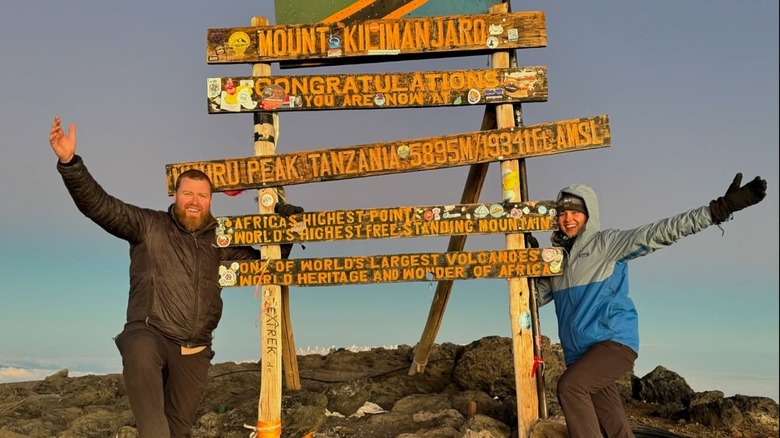
The entire trek is a gruelling affair. Summit day is a beast unto itself. Even the fittest climbers will point to the final push as a feat, catching them off guard after the comparative ease of the previous few days. It can be so hard for inexperienced climbers that guides actively lie the whole trip about what it's like to keep morale up.
While it will depend on the specific route you take, most climbers aim to arrive at Uluru Peak at sunrise. This means rising from your tent in the dead of night and launching your attempt at midnight. Ours was a bitterly cold, seven-hour-long slog up a seemingly endless number of switchbacks. The trail is loose volcanic scree that crumbles underfoot, the temperature plummets to as low as minus 17 degrees Fahrenheit, and you can't see more than a few feet ahead. Your legs are aching, your body is exhausted, and the altitude makes your head pound. Looking up can be disheartening, as you constantly tell yourself you must be close, only to see torches hundreds of meters above you.
It's the culmination of the whole expedition, and the part you'll remember most. For many, the mountain's constant Swahili echo of "pole-pole" (slowly, slowly) becomes something of a mantra for life. Brace yourself for it. Take it one step at a time, and you'll be rewarded with one of the greatest sunrises you'll ever experience. Then the journey down begins.
Pay for the private loo if you're squeamish
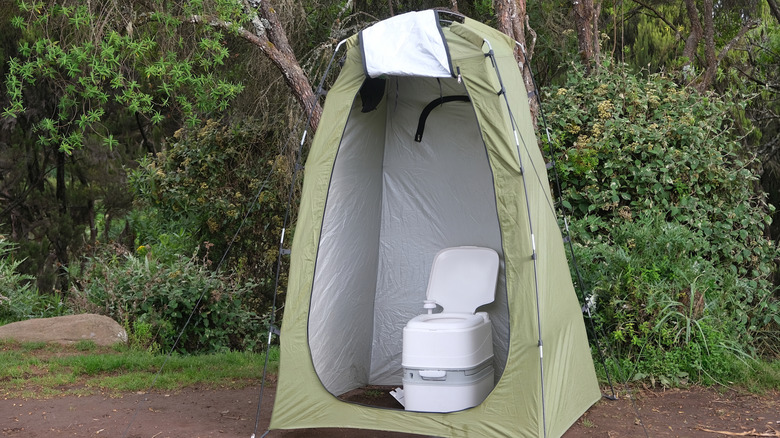
Second only to the transformative experience of summit day is your first visit to a camp toilet. As can be expected, plumbing is not a thing on the mountain. Bathrooms are found in an assortment of little huts on the outskirts of each camp, which provide a pleasant walk to take in the great outdoors as you head for your morning rituals.
Sadly, this is where the pleasantries end. There are no physical toilets, only six-inch holes in the ground with loosely boot-shaped markers on either side. There are no handrails to steady yourself, and some of the doors don't even have locks. Combine the physical awkwardness with a limited diet, altitude, and exhaustion, and you have one of the messiest hell-holes you've ever seen in your life.
If you're squeamish in the slightest, you'll likely find yourself squatting in the middle of a field nearby instead. But there is another option. Most companies offer a private toilet. In this scenario, another porter is hired to carry a special toilet-tent with a plastic sit-down toilet that can be emptied each day. You can pitch in with your group or get one for yourself. I didn't, but regretted it immensely. I'm yet to meet someone who wasn't happy with the extra cost.
Break your boots and socks in
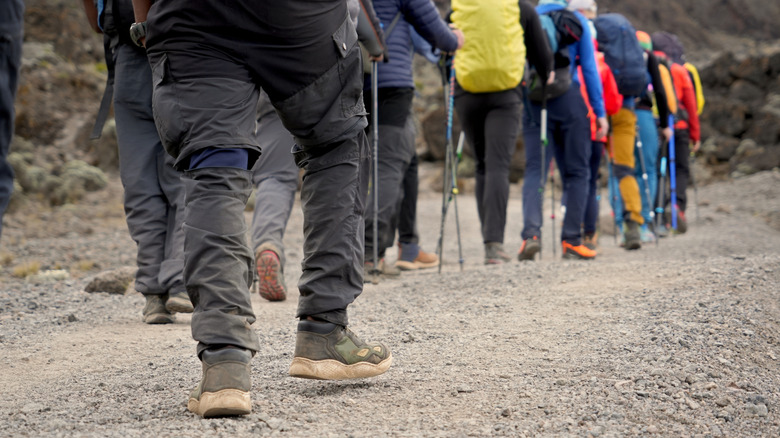
This should be a given, but you would be surprised by how many people embark on the most challenging physical experience of their lives without breaking in their boots and socks. If you've never owned a pair of proper hiking boots, they are tough, stiff pieces of footwear. They're designed to deal with the toughest terrain our bodies can handle, and carry us for miles at a time. But that toughness means your feet need to get used to them.
Regular wear allows the stiffer material to soften around the shape of your feet, creating a more comfortable and supportive experience. The frustrating part is that until they're the most comfortable shoe you own, they're the least comfortable. It's a massive mistake to wear boots for the first time on Kilimanjaro. With up to nine days of ascent and descent, for up to 14 hours a day, it's likely your heels will be blistered, your toes rubbed raw, and the soles of your feet in constant turmoil. If you're not in the headspace to deal with the pain, you're setting yourself up for failure.
If you're buying new boots, do so as early as possible and wear them as much as you can. Walk around the house in them, climb hills, and take increasingly long walks to get them in as good a condition as they can be for the expedition. Mine were broken in as best I could, but I still ended up with a few blisters. Don't make it worse for yourself.
Methodology
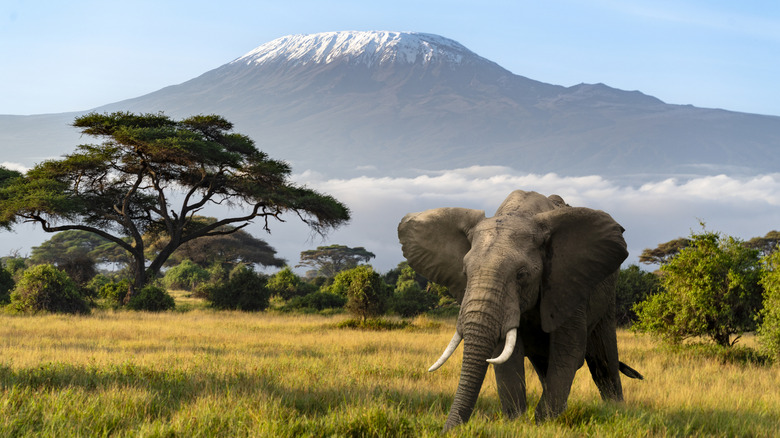
The advice offered in this article comes from my own experience summiting Kilimanjaro, as well as the advice of countless experts and tour companies operating on the mountain. Some I learned the hard way, while some I observed others struggling with their own mistakes. Climbing the mountain lovingly called the "Roof of Africa" is no simple walk in the park; the more prepared you are, the better.