
The 5 Most Charming And Scenic Gold Rush Towns In California
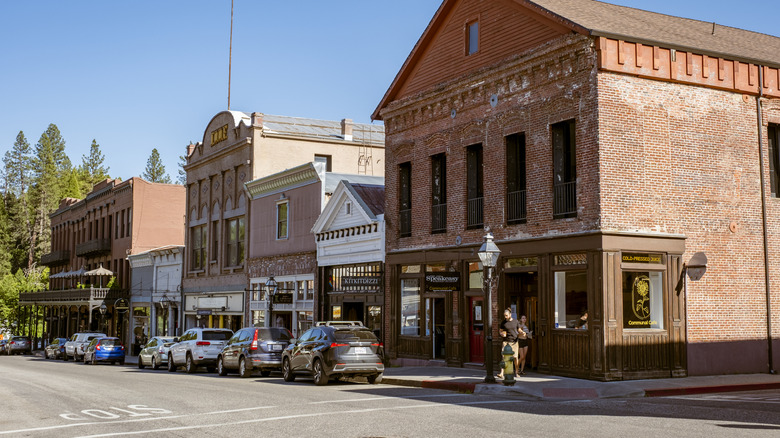
There's no better region of California to go looking for the crème-de-la-crème of Gold Rush towns than the official Gold Country. Strung along the western side of the Sierra Nevada mountain range, it covers a whopping 10 counties and includes the very location where gold was first discovered in the state in 1848. These charming towns not only tell the story of one of America's most famous historic periods, but they're also surrounded by some of the most scenic destinations in the United States.
I was lucky enough to travel the length of the 49 Highway, an iconic road trip that links all the most charming Gold Rush towns, in 2025. I spent time exploring the wild Sierra Nevada foothills, camping in the woods, wandering rich historic sites, and hopping between saloons and boutique shops in the vintage downtowns along the way. This guide draws on that experience, combined with recommendations from leading travel blogs, with the aim of pinpointing five of the most alluring and enchanting Gold Rush towns. From Nevada City, the so-called "Queen City," and its Art Deco stays to the perfectly-preserved Gold Rush town of Auburn, now a hub for coffee and beer, these are five of the best Gold Rush towns in the Golden State.
Nevada City
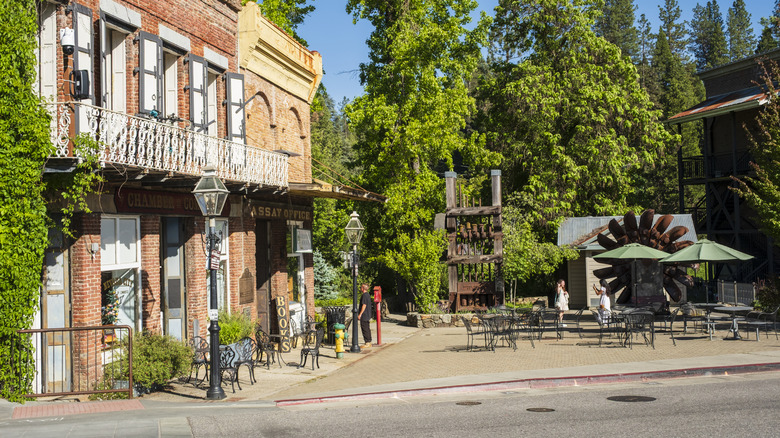
Just over an hour northeast of Sacramento and just a touch more to the west of the shimmering waters of Lake Tahoe, Nevada City sits in a wooded bowl in the mountains. Founded in 1849, it sprang to life in the form of a few makeshift cabins along the gold-rich Deer Creek. It's been hailed as one of the Gold Country's prettiest spots according to Visit California, and it isn't difficult to see why.
The town's historical central district is a crisscrossed grid of semi-steep roads that are dotted with landmarks that hearken back to the old days of the Wild West. Keep your eyes peeled for the Nevada Theater. Established in 1865, it's the oldest running theater on the entire West Coast. A short walk down the road and you'll find The National Exchange Hotel, sporting its glorious Classical Revival frontispiece from the 1850s and a noir period bar to boot.
Nevada City also represents a great stepping stone to the wilder side of the western Sierra. A short drive out of town reveals the swimming holes and wildflower meadows of the South Yuba River State Park, while there's also a web of four different hiking trails that start within a short distance of the center of town, including one that leads to the nearby Woodpecker Wildlife Preserve — an ideal stop for birdwatchers.
Sutter Creek
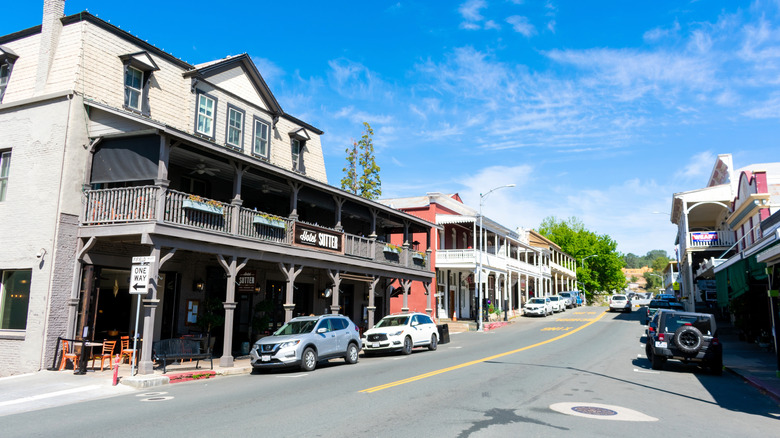
Pint-sized Sutter Creek stole my heart perhaps more than any other Gold Rush town in California. It truly looks the part with timber-fronted facades, ironwork balconies, covered walkways, and Sutter Creek itself gurgling through the middle of it all. But it's no museum piece. This "Jewel of the Motherlode" is a shopping and wine hotspot as well as a looker. Antiques take center stage, and there are independent clothing boutiques, mountain gear outfitters, perfumeries, game shops, and art galleries all in attendance along Main Street. Wine is particularly popular, too; this is the de facto capital of Amador Wine Country, after all. Tasting rooms jostle for space between shopping outlets, tempting passersby with tipples of local reds and whites.
Sutter Creek also happens to be the western terminus of the beautiful California State Route 88 drive over Carson Pass. Head east and you'll soon find yourself in the idyllic mountain community of Pine Grove, itself a gateway to the Indian Grinding Rock State Historic Park, where there's a ceremonial roundhouse of the Miwok people rising from a patchwork of meadows and pine forests.
Coloma
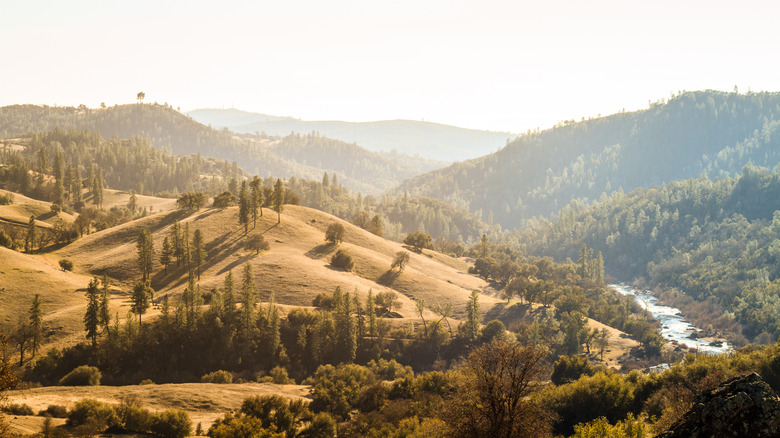
Coloma is where the entire Gold Rush era began in 1848. John Sutter pulled the first ever nugget of gold discovered in the state of California from the waters of the American River at this spot, kick-starting the largest migration of humans in U.S. history. The majority of Coloma is now a registered historic landmark, not to mention a state park, which encompasses the exact location where the precious metal was discovered, along with a clutch of restored buildings dating back to the mining boom days and a museum chronicling this bygone age.
Modern Coloma, California, for its part, is a bijou little place — the area has about 200 permanent residents, and the vast majority of land here is a part of the adjoining state park. That means there's none of the buzz you get in other, more lively, Gold Rush towns like Nevada City, though the upshot is that it's sleepy and ultra-scenic.
Indeed, Coloma's been called "California's Best River Town" for its fine location astride the South Fork of the American River. Foothills clad in live oak and wildflowers rise all around, while whitewater rafting courses — some of the most popular in the state — beckon downstream. There's hiking, too, whether you want the relatively easy short loop up to Monroe Ridge to see the historic sites from above, or challenge yourself on the longer network of paths that make up the South Fork American River Trail as it weaves through the meadows and forests of the western Sierra Nevada.
Sonora
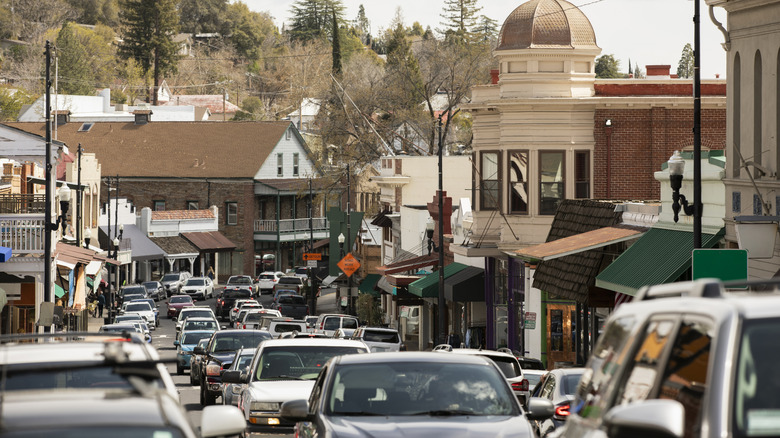
Sonora is one of the first Gold Rush towns you'll come to as you head north from Yosemite National Park. It's part of Tuolumne County, which covers the northern sections of the park, and has been hailed the "Queen of the Southern Mines" due to it's location towards the tail end of Highway 49. Like many others on this list, it dates to 1848, but Sonora's history is unique in that it was founded by Mexican miners. Over the following decades, it would go on to garner a rather gritty reputation as a hotbed for gambling, debauchery, and crime, which hit fever pitch when American miners tried to expel their Mexican compadres. The conflicts were a blow to Sonora's boom times, but the town remained an important lumber and logistics hub, eventually transforming into the lively commercial center it is today.
Katie Kirkland, marketing director for Visit Tuolumne, told 209 Magazine described Sonora as having "new life in downtown, where old meets new. Old-time architecture is filled with new restaurants and boutiques." Head up Washington Street (Highway 49), the main vein of downtown, and you'll happen upon spots like Revive Coffee, an organic specialty roaster. Just around the corner is The Armory, a drinking hole with a curated whisky menu.
Auburn
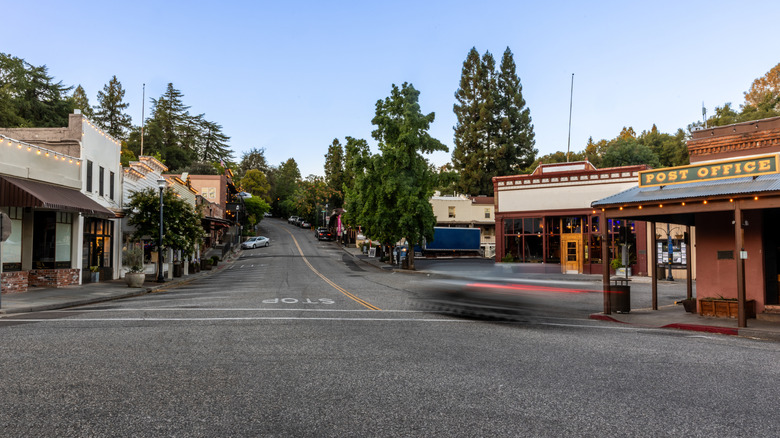
Auburn is a charming town known as the unofficial heart of the Gold Country. Highway 49, the historic route that links all these erstwhile mining towns, starts some 174 miles to the south in Oakhurst and ends 115 miles to the north in Vinton, CA. What's more, Auburn is the official seat of Placer County, which has over 1,000 gold-producing mines to its name, along with 15 historically important gold mining areas.
Auburn got its start in 1848 as an ad hoc camp with just a few prospectors in attendance, but it only really solidified its position as a proper mining town during the wild winter of 1849, when people flocked here to escape rough weather and heavy rains. You can still wander between buildings that date to that era by diving into the Auburn Old Town, which now doubles as an official Entertainment Zone replete with taquerias, artisan pizza joints, and breweries alike.
The town buts up to the sprawling Auburn State Recreation Area, where you'll find some 42,000 acres of protected country on either side of the American River. It's a haven for lovers of the great outdoors, offering roaring whitewater rafting and in excess of 100 miles of hiking paths. Go 10 minutes in the opposite direction, and you'll find the Folsom Lake State Recreation Area, where campgrounds and picnic spots beckon under the shadow of the low-lying edges of the Sierra Nevada.
Methodology
This list of the most charming and scenic Gold Rush towns in California comes from my first-hand knowledge and the recommendations of both local publications and the experiences of other travelers. I road tripped the entire length of the famous Highway 49 in 2025, visiting all of the towns listed above, and many more in the surrounding region on the western flank of the Sierra Nevada. I combined that knowledge with research across multiple leading blogs and travel posts to choose a selection of places that not only stood out during my own travels, but are consistently ranked among the most charming Gold Rush-era settlements in the state.