
5 Remote National Parks In America You Can Only Access By Plane Or Boat
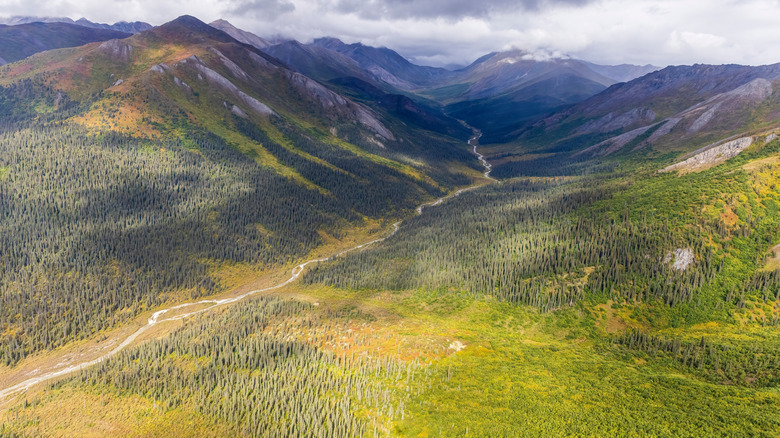
Vast, wild, and sparsely populated, the U.S. has 499,800 square miles of protected wilderness. From the Grand Canyon to the Yellowstone geysers, some of the most recognizable natural landmarks on earth are wrapped into the country's national park system. While some sit city-side and others span multiple states, there are a handful of parks that are so far-flung they can only be reached by boat or by plane. From the monumental ice-slicked mountains of Alaska to the Caribbean enclaves off the Florida coast, these tricky-to-reach destinations are among the most beautiful in the country.
Millions of visitors descend upon the country's most popular national parks each year, but these rugged regions see sparse crowds due to the added difficulty of accessing their entrances. For travelers looking for solitary experiences in pristine wild spaces or epic adventures far from the crowds, it's worth the extra effort to reach the United States' remotest national parks.
Gates of the Arctic National Park and Preserve
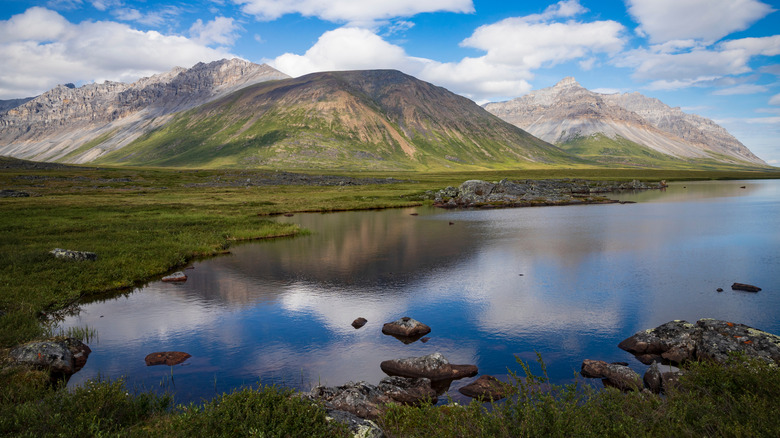
Spanning an enormous area north of the Arctic Circle, the Gates of the Arctic National Park and Preserve is defined by extremes. It's the most northerly of all national parks, encompassing the Arctic divide and the northernmost mountain range in the country. It's staggering in scope, roughly the size of Switzerland. It's America's least crowded national park, and it is also one of the most remote, rugged, and scenic. Comprised of quiet mountains, dense boreal forests, wild rushing rivers, and glacier-wrought valleys, there is virtually no national park infrastructure. No campgrounds or established trails, and most surprisingly of all, no roads. Hardcore adventurers hungry for immersion in this total wilderness will have to work a little harder to reach its bounds.
Travelers can access the park on a chartered bush plane. These primarily take flight from Fairbanks, though you'll find a few smaller communities that also offer access. Seasoned outdoorsmen with significant experience can also hike in from the side of the Dalton Highway, the scenic Alaskan drive that showcases stunning mountain views along the Arctic Circle. Those unsure about putting boots on the backcountry ground can also opt to take a flight-seeing tour of the park, soaring over the monumental mountains of the remote Alaskan national park.
Isle Royale National Park
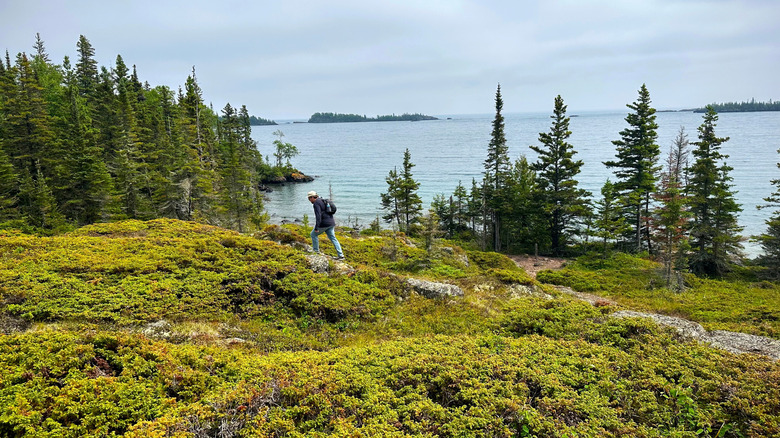
Settled in the midst of the seemingly endless expanse of Lake Superior, Michigan's little-visited national park is made up of a network of craggy island cliffs and often empty waterside trails. Filled with paddle-in sea caves and rocky, pine-lined shores, this remote national park in the Midwest is bursting with adventure. Not solely centered on the eponymous island, the park has 450 islands, crisscrossed by more than 160 miles of trails primed for hikers. It's also favored by fishermen, peaceful campers, and wildlife lovers with a keen eye for roaming moose and floating river otters. The outdoor recreation escape sits far from the mainland shores of Michigan and Minnesota, making it a little trickier to reach than some of its fellows in the National Park Service.
Given its position in the gigantic Great Lake, it's only possible to access the park by ferry or seaplane. It takes six hours to reach the islands from Houghton by boat, or three hours and 45 minutes from Copper Harbor. Speedier arrival can be made on one of the seaplanes that depart from Hubbell, which only take 45 minutes and offer spectacular views over Lake Superior. With no vehicles whatsoever permitted entry into the park, you'll need to orient your adventures around on-foot or on-boat travel once you reach the park. While almost nobody ever reaches the entrance of the park as an independent paddler, canoe-packing and kayak-packing are some of the best ways to explore the myriad islands. Vessels can be carried over on the ferry.
Dry Tortugas National Park
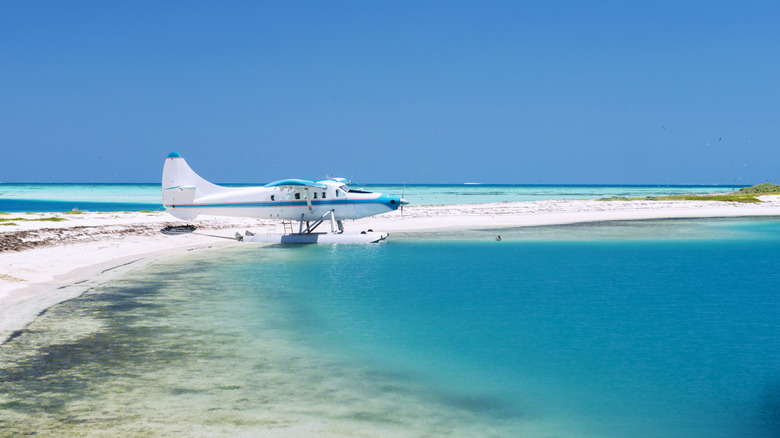
With white Caribbean sands, crystalline seas, and technicolor coral reefs, you might be surprised to discover that one of America's least-visited national parks is this Florida paradise. Featuring seven islands, the above-water portion of Dry Tortugas National Park only accounts for 1% of the territory – the rest is underwater, made up of 100 submerged square miles teeming with tropical fish and sea turtles. One of the best destinations in the U.S. for snorkeling and diving, it pairs shipwrecks and historic Civil War fort walls with flourishing coral beds. In addition to packing your swimming gear, guests will need to pack food and water ahead of time — the stripped-back park doesn't provide concessions or running water, and composting toilets are only available to campers on a limited basis.
Located 70 miles west of Key West, the island park has no overland connection to the country's mainland. As such, guests will have to catch either a high-speed ferry or a seaplane to reach the Dry Tortugas National Park. Departing from the Key West ferry terminal, the boat takes travelers over to the islands in just over two hours. Seaplanes leave from Key West International Airport, which has direct connections to several U.S. states. These take 40 minutes of flight time each way. Private boat owners can also access the park using their own vessels, but will require a permit in order to visit.
Katmai National Park & Preserve
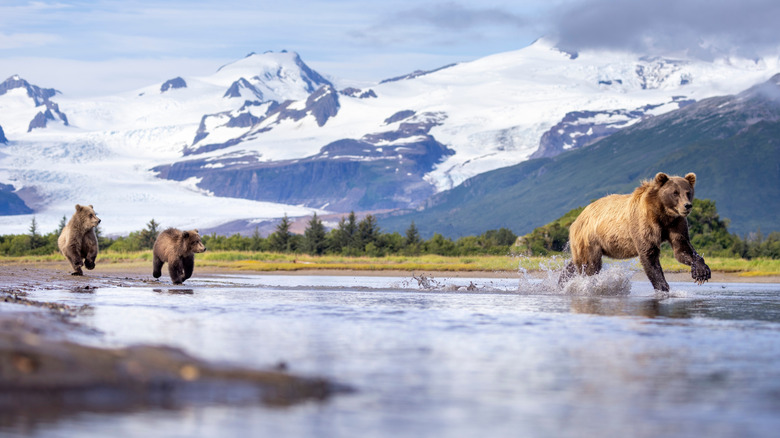
Spread out under the volcanic shadow of the Valley of Ten Thousand Smokes, Katmai National Park and Preserve is the ultimate Alaskan destination. It's home to the state's characteristic ferocious northern climes, enormous rugged peaks, and wide rushing rivers populated by bears snatching at the salmon that surge through the summer waters. A top brown bear viewing spot with views unlike anywhere in the world, the Alaskan park has slightly more infrastructure than some of these other remote locations. Most of the main tourist attractions and excursions are oriented around Brooks Camp, on the banks of Naknek Lake. Open from the start of June to September, the camp rents out kayaks to paddlers prepared to face the river's rush and is a short walk away from the trailhead for hikers headed to Brook Falls. A world-renowned bear watching destination, the Brooks Falls Trail has safe viewing platforms from which seasonally-savvy travelers are almost guaranteed to see a bear.
Katmai National Park & Preserve's remoteness is integral to its appeal. Its vast, untamed landscapes cannot be accessed by road, so travelers will need to rely on boats or planes to reach its depths. The easiest route is through the sky, with air taxis departing from Anchorage, Dillingham, Homer, King Salmon, and Kodiak, as well as other Alaskan settlements close to the park. Alternatively, power boats can navigate their way to Brooks Camp from Naknek or King Salmon.
Channel Islands National Park
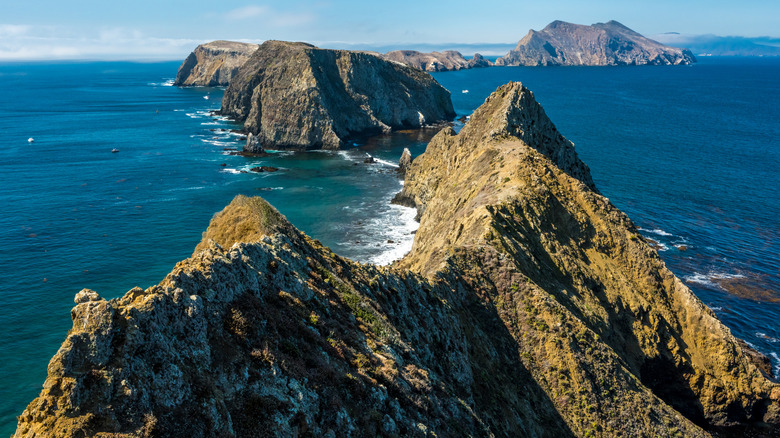
Secluded off the coast of California, rugged cliffs jutting from the Pacific form the remote Channel Islands National Park. The smattering of quiet isles is home to so much wildlife and so many unique species that it's regarded as one of the stunning island destinations across the world that look just like the Galapagos. Its land animals scamper alongside the windswept coastal trails that wind through the park, while the abundant marine life navigates through the inter-island channels. Ideal for hikers seeking solitary trails on clifftop crag and wildlife lovers looking for unique encounters, the lesser-visited destination offers an offshore escape from California's tourist crowds.
Undeveloped and carefully protected, Channel Islands National Park requires a bit of planning to reach. Travelers can access the island destination via ferry from Oxnard, just an hour away from Los Angeles. From Ventura Harbor, seasonal ferries travel to almost all of the park's five islands. There are no roads on the islands themselves, no cars, no restaurants, no hotels — guests need to get around on foot and carry food, water, and camping equipment with them.