
These Are Michigan's 5 Deepest Lakes Outside Of The Great Lakes
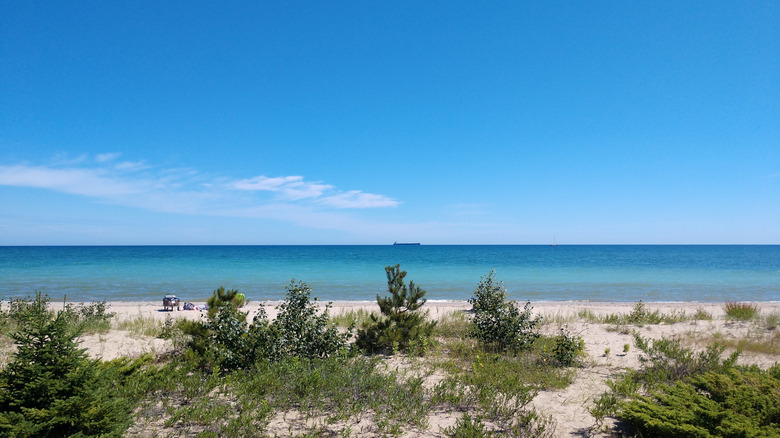
Many of Michigan's top tourist attractions are centered around the Great Lakes, which is little surprise, given that the state touches four of the massive bodies of water. From the pleasant beach in Sleeping Bear Dunes to the gilded glamor of Mackinac Island, the Great Lakes make for a great time.
But the Great Lakes aren't the only really big lakes in the state. There are more than 11,000 inland lakes in the Michigan, which has more freshwater shoreline than any other state in the U.S. Many of Michigan's most beautiful inland lakes offer sunny sands, swimming, and boating opportunities without the crowds that you'll find at some of the more popular Great Lakes beaches (you'll also get to skip the potentially intimidating vastness and 1,332-foot depths of Lake Superior).
You'll find Michigan's deepest inland lakes in the northern areas of both the Lower Peninsula and the Upper Peninsula. This location isn't an accident; most of these lakes were formed by glacial activity during the Pleistocene era, which ended around 10,000 years ago. Today, these lakes are a boon to summer tourism, drawing visitors from all over the world who want to swim, boat, fish, and simply enjoy the views. If you're thinking about putting a visit to Michigan on your summer itinerary, here are the five deepest inland lakes in the state that should be on your radar.
Elk Lake
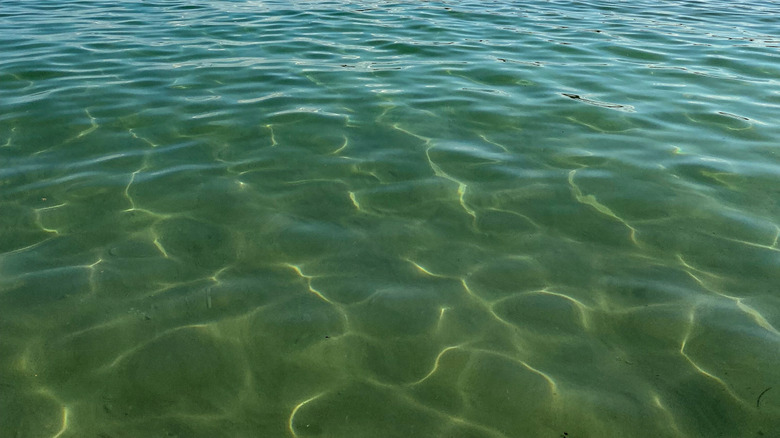
Located in the northern part of the Lower Peninsula, Elk Lake has a maximum depth of 150 feet and stretches for 8,194 acres across 28 miles of shoreline. It's separated from Lake Michigan by just a thin strip of land and is surrounded by the small towns of Elk Rapids and Kewadin.
Visitors to Elk Lake are struck by the beauty of the clear waters surrounded by trees. Swimming, boating, and fishing are all popular summertime activities here, as are water sports such as tubing, water skiing, and wakeboarding.
Freshwater snorkelers can watch lake trout swim and view sunken wrecks like that of the 1903 Shale Scow shipwreck. Want to explore the surrounding area? Besides being next to Lake Michigan, Elk Lake is part of the Chain of Lakes Water Trail, an inland water trail spanning more than 100 miles across 12 interconnected lakes and rivers in northwestern Michigan. Past visitors on Google describe the lake as their "favorite place in the world to be," and "quintessential 'Up North.'"
Thumb Lake
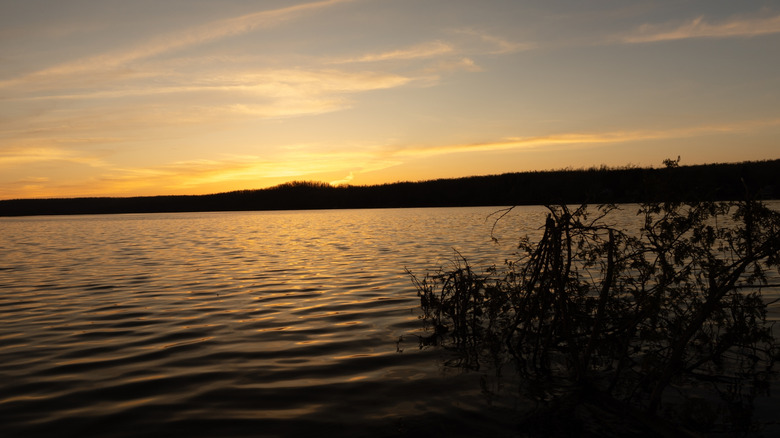
At 152 feet deep, Thumb Lake (also known as Lake Louise) is just slightly deeper than Elk Lake but much smaller in surface area, at 510 acres. Despite its name, it's not located in Michigan's "thumb" but in the northern part of the Lower Peninsula, between the towns of Vanderbilt and Boyne Falls.
Thumb Lake is a kettle lake, meaning it formed within the depression left by a glacier. It's also a seepage lake, meaning it only loses water through evaporation and groundwater channels, rather than through an outlet (so water stays in the lake for much longer than other lakes).
Visitors enjoy spending time on Thumb Lake's sandy, 1,600-wide beach, a portion of which is dog-friendly. Swimming, boating, and fishing are all popular in the summer months. Reviewers remark on the clear water and peaceful surroundings (the spotty cell service in the area adds to this effect).
Lake Angeline
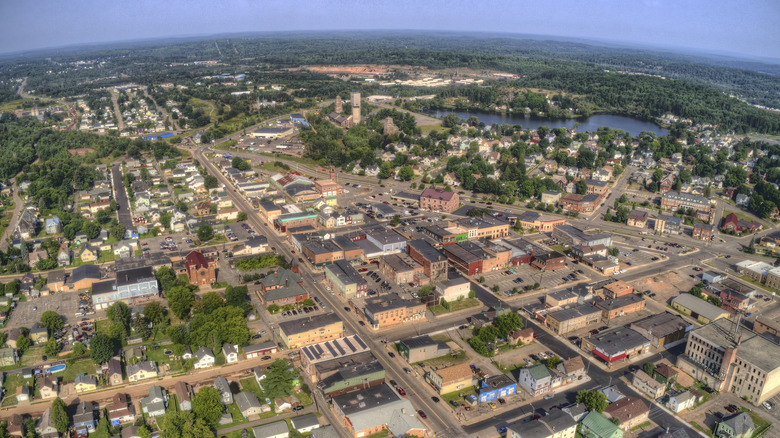
Head north to Michigan's Upper Peninsula, and you'll find Lake Angeline, which is 162 feet deep at its deepest point and only 96 acres in area. It's located within the small city of Ishpeming, a charming gem with pristine views. Unlike the other lakes on this list, Lake Angeline was not formed by a glacier.
Instead, it was created in a former open-pit and shaft iron mine. In the late 19th century, the former body of water that stood here was drained entirely, and its bottom was mined extensively for iron ore. Beginning in the 1940s, it began to refill and was eventually repurposed as a fishing lake and stocked with rainbow trout.
Today, scuba divers can see the remains of a submerged forest that likely began to grow there as the lake slowly refilled over the years. Lake Angeline is a popular fishing lake and is regularly stocked with several trout species, including splake. Ice fishers often head out onto the ice in the winter. And in the summer, people take advantage of the boat launch. Though some prefer to stay out of its cold waters, others enjoy swimming in the lake, too.
Crystal Lake
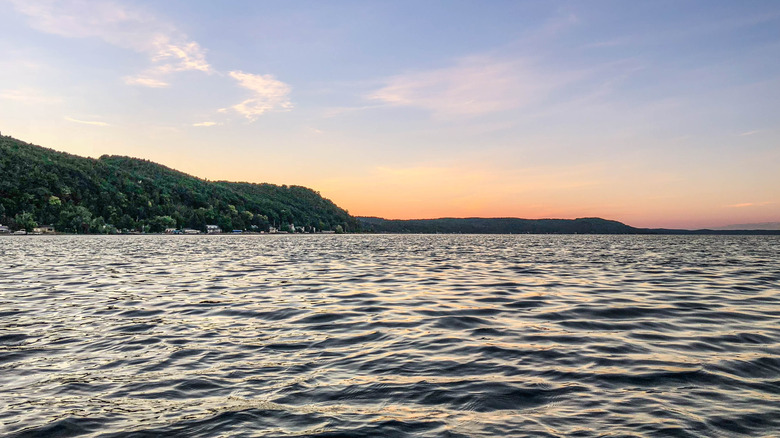
Like Elk Lake, Crystal Lake is located in northwestern Michigan and separated from Lake Michigan by a thin strip of land that turns it into a separate, inland lake. Crystal Lake has a unique history: It's both natural and artificial. In 1873, a man named Archibald Jones attempted to build a series of locks connecting Crystal Lake (then called White Cap Lake) to Lake Michigan.
Due to crucial technical oversights, the dam Jones had built to hold back water during canal construction failed, and Crystal Lake lost about 20 feet of water. Somewhat fortuitously, this loss exposed the beautiful sandy beaches that visitors enjoy today.
Today, Crystal Lake is 175 feet deep and covers just under 10,000 acres. Its crystal-clear blue waters mean that Crystal Lake is often compared to the Caribbean. Bordered by the city of Frankfort and the villages of Beulah and Benzonia, Crystal Lake is a hidden gem summer destination. Tourists can go swimming, sailing, boating, and fishing at several lakeside beaches, including Crystal Lake Public Beach, Mollineaux Beach, and Beulah Village Park. One past visitor on Google called the lake an "amazing diamond in the rough," further adding that the water "is breathtaking with [its] gorgeous shades of blue."
Torch Lake
At 250 feet deep, Torch Lake is not only Michigan's deepest lake outside of the Great Lakes, it's also deeper than Lake Erie (which reaches 210 feet deep). It's located in northwest Michigan, just a short distance from Elk Lake, and like Elk Lake, it's likewise separated from Lake Michigan by a thin strip of land.
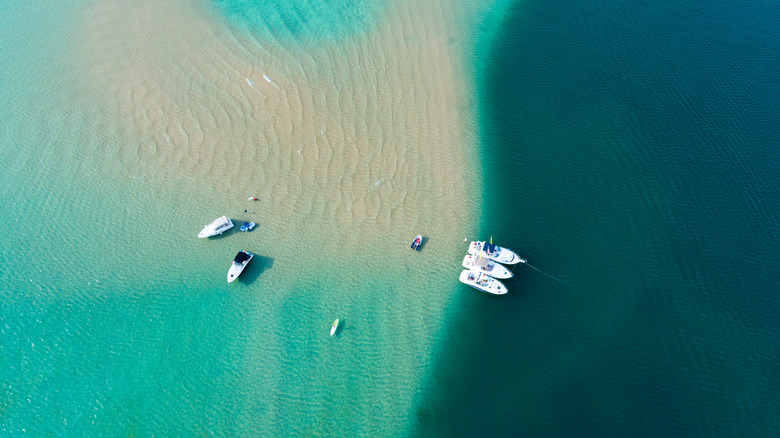
Covering 18,473 acres in surface area and 41 miles of shoreline, Torch Lake was naturally shaped by glaciers (and was originally a bay that was part of Lake Michigan). Its crystal-clear waters mean it's sometimes called the Caribbean of Michigan. Parts of the shoreline are rocky (you might find some Petoskey stones, fossilized corals from prehistoric times), while other sections are covered in sand. Speaking of sand, if you visit the lake during the summer months, head to the Torch Lake Sandbar in the middle of the water, where you'll often find a gathering of boats partying and enjoying some of the best fun the Midwest has to offer.
Snorkeling is another popular activity here due to the water's clarity. "I've been to many lakes throughout the world and I've never seen a spring-fed lake as clear ... and beautiful, almost a turquoise color, like Torch Lake," wrote one past visitor on Tripadvisor.