
These Are America's Wealthiest Suburbs To Visit In 2026, According To Research
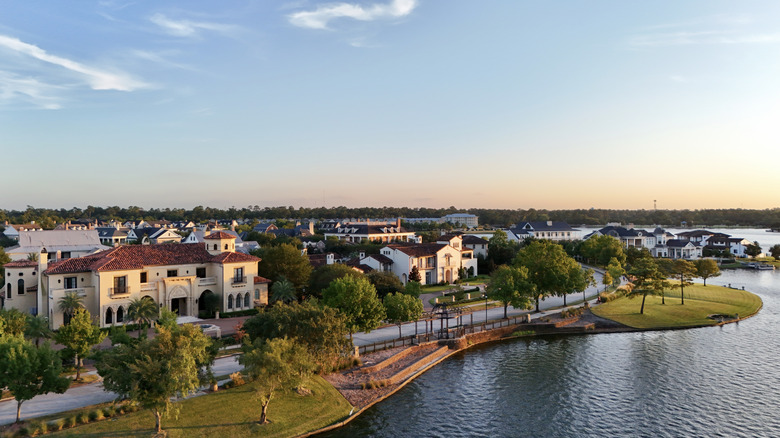
Suburbs rarely attract visitors. Even the richest are often defined by sprawling estates and high household income, with exclusivity being the primary draw. But that's not true of all of them — some of America's wealthiest suburbs are places with distinct identities, architectural character, and genuine travel appeal. In 2026, these suburbs represent a version of American luxury that travelers can actually afford.
Using the latest data from GoBankingRates, this list compiles America's richest towns by household income and home value data that offer more than simply impressive real estate. These affluent suburbs stand out for their walkable downtowns, scenic settings, and cultural attractions. Some are resort destinations, others are polished weekend escapes, while several function as prime bases for exploring nearby cities. Together, they prove that some suburbs truly do offer more than meets the eye.
La Cañada Flintridge, California
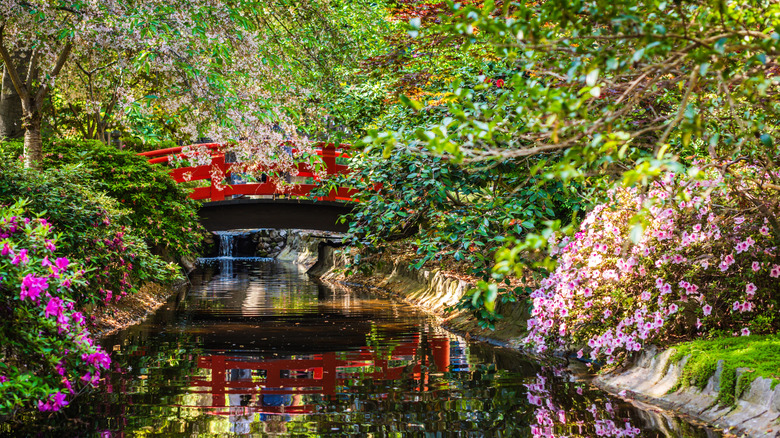
Tucked in the foothills of the San Gabriel Mountains about 13 miles north of Los Angeles, La Cañada Flintridge made the list as the 19th-wealthiest suburb in the nation in 2025, with the average household income well in the $300,000s. In stark contrast to the urban wealth of many neighborhoods closer to downtown Los Angeles, the town has a distinctly natural setting and a quiet, residential feel. Forget beach views and office buildings; this Los Angeles suburb is defined by the backdrop of rugged peaks and canyon trails.
While the town of La Cañada Flintridge itself can hardly be called a tourism hub — it has a more car-dependent downtown compared to other wealthy suburbs — it unlocks a world of hidden gems and scenic hikes, all from a high-end home base in the hills. Descanso Gardens spans more than 150 acres of carefully landscaped, themed gardens, while more primitive excursions through Cherry Canyon Park offer stunning views of the surrounding mountains. Much of the city's identity is also closely tied to the presence of NASA's Jet Propulsion Laboratory, which has been responsible for numerous high-profile missions such as the Mars Rovers. The facility offers public tours and hosts an ongoing lecture series, making it more than just a fun fact. It might be among the most polished of L.A.'s suburbs, but La Cañada Flintridge also offers a different take on the Greater Los Angeles region.
Menlo Park, California
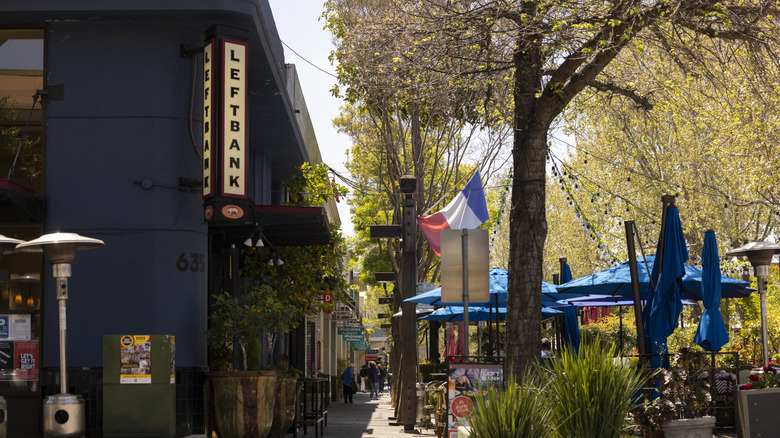
Occasionally referred to as the "Capital of Venture Capital," Menlo Park has long been a beacon for the tech elite. Not only is it home to dozens of startups ranging from financial services to AI and machine learning, but it's also been home to Meta's headquarters since 2011. It's easy to see, then, how it fits in among America's wealthiest suburbs as no. 15 on the list, with the ever-increasing median home price currently sitting around $2.7 million, according to Zillow. That said, while the area may often be associated with big-name companies and venture capital, it's also a surprisingly travel-friendly spot in the heart of Silicon Valley.
Situated in the center of the San Francisco Peninsula, Menlo Park is well-positioned to be a stopover town for visitors traversing the Bay Area. It's a little more than a mile from Stanford University in Palo Alto, sandwiched between some of the most influential corridors in the global tech economy and exclusive golf courses with views of the bay. In the middle of the suburb is a walkable downtown district where eateries and shops line El Camino Real and provide direct Caltrain access to San Francisco. For travelers seeking a taste of Silicon Valley luxury that doesn't feel just like a tour of corporate campuses, Menlo Park delivers on the tech wealth with a walkable suburban feel.
Los Gatos, California
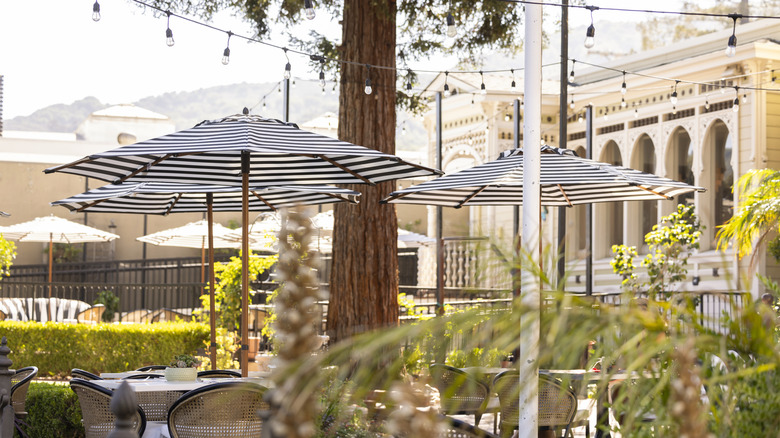
Ten miles outside of central San Jose, Los Gatos is an attractive but oft-overlooked town that offers a version of the Bay Area that's less corporate and more classic. As part of the wider Silicon Valley region, it ranks as the 18th-wealthiest suburb in the United States, and has a reputation for a vast collection of well-preserved Victorian-era homes. In fact, its median home value is close to $3 million. The town's founding dates back to the late 1800s, and you can retrace it with a historical walking tour through downtown, provided by Visit Los Gatos.
Far from the residential, gated communities one might expect from a wealthy suburb, Los Gatos has a genuinely walkable urban core filled with independent boutiques, breweries, and cafes serving famous Bay Area sourdough bread. On weekends, a steady stream of people fills the streets, though more nature-immersed places for a stroll are close at hand. The town sits on the lower slopes of the Santa Cruz Mountains, close enough to drive to nearby redwood forests such as Henry Cowell Redwoods State Park or trek to Castle Rock Falls to cool off in a spray of waterfall mist. Though it might've made the list for its wealth, Los Gatos feels like a surprisingly accessible stop worth checking out for any travelers making their way through the Bay Area.
Saratoga, California
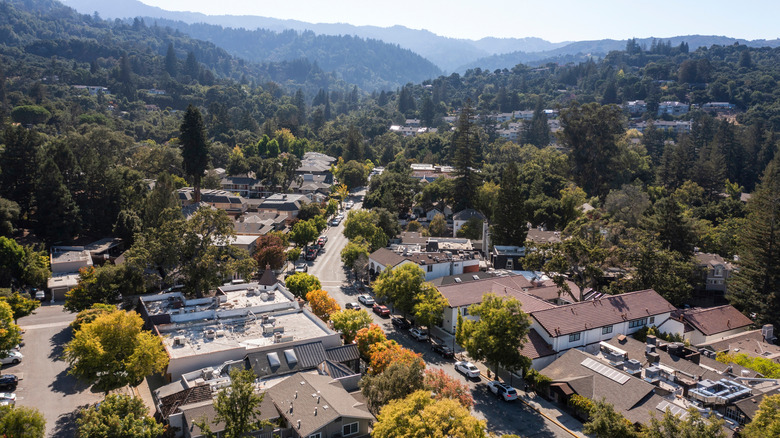
Although it's also well-known as a Silicon Valley suburb, Saratoga's appeal doesn't lie in cutting-edge tech or scrappy startups. It's true that it's the 14th-wealthiest suburb in the nation, where media home prices have ballooned over $4 million, but Saratoga feels much more understated than that number would lead visitors to believe. Rather, this suburb of San Jose is known for its historic downtown, wine tastings, outdoor experiences, and a vibe that leans more artistic and artisanal despite being next door to Apple's headquarters.
Throughout Saratoga, you'll see midcentury modern homes by iconic developer Joseph Eichler, whose naturalistic elements capture the understated charm that makes this area a perfect foil to the bustling energy of nearby tech hubs. Downtown, locally known as the Village, is chock-full of shops and galleries nestled along tree-lined streets, all set against the majestic backdrop of the Santa Cruz Mountains.
Numerous wineries are situated in the foothills, taking advantage of the fertile soil that has earned the region a designation as an official viticultural area and the breathtaking views that make visitors want to sip and stay a while. Walk the grounds of the Villa Montalvo Arts Center and marvel at the magnificent Mediterranean architecture, or head to Hakone Gardens to experience one of the oldest Japanese Gardens in the Western Hemisphere. Wherever your travels take you, this is the kind of place best experienced at a relaxed pace: a long lunch, a garden stroll, an early evening tasting, and a drive through hillside neighborhoods that feel more like a countryside enclave than a Bay Area suburb.
Palos Verdes Estates, California
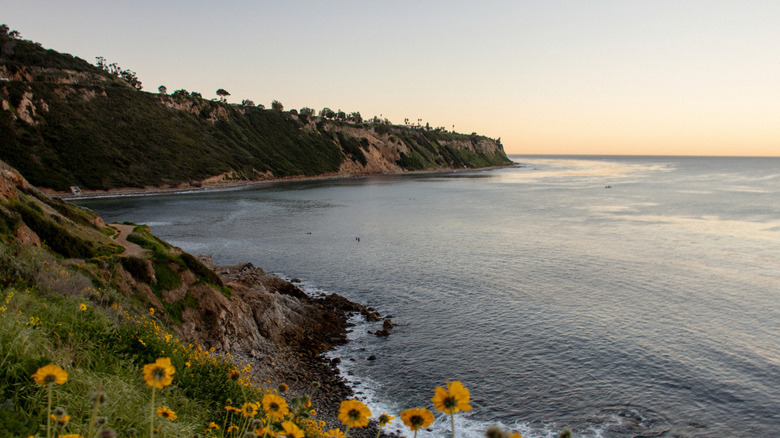
If your idea of a dream destination is defined by dramatic coastal scenery, then look no further than Palos Verdes Estates. Perched above the Pacific Ocean on the Palos Verdes Peninsula, this Los Angeles-area suburb has been called a chic under-the-radar beach town whose cliffside trails, panoramic ocean views, and Mediterranean-style architecture make this Southern California enclave feel more like a Greek island. Both the estates and the larger peninsula have been home to a host of celebrities over the years, which should come as no surprise considering it ranks as the 11th richest suburb in America. But beyond the gated communities and $2 million-dollar homes, there's more for visitors to explore.
Unlike many suburbs featured in this list, Palos Verdes Estates isn't a downtown destination. The area is still largely residential, but the landscape itself is the star attraction. Compared to the surrounding metropolitan area, Palos Verdes Estates feels strikingly rural — drive down the coast and stop at the scenic overlooks to take in the untamed ocean views. The peninsula is also full of hiking trails, complete with the same shrub-dotted hills you'd expect to see in coastal Spain. Make your way down to the shore to walk beaches, which are much more pebbly and much less busy than well-known sites like Venice Beach or Santa Monica. You can even plan to make it a day excursion from the city, as downtown Los Angeles is just 25 miles north.
Palm Beach, Florida
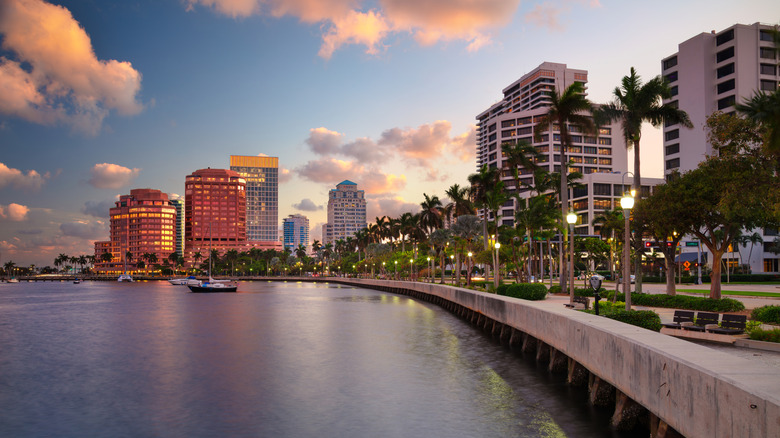
Although Palm Beach hardly feels like a suburb — think beachfront resorts rather than neighborhood cul-de-sacs — it's technically considered a suburb of Fort Lauderdale because of its comparatively low population density. Of that population, Palm Beach counts more than 11,000 millionaires among its residents, making it no surprise that it's the richest suburb in Florida, with the median home value sitting at a staggering $10 million, per GoBankingRates.
Sometimes called "America's first resort destination," the air in Palm Beach seems to smell like the Gilded Age money that has come to define Florida's Gold Coast. The experience of visiting Palm Beach is inseparable from its image of wealth: Iconic resorts, manicured beaches, designer shopping, private clubs, and an overall aesthetic that is intentionally polished, but not inaccessible. Travelers can experience the glitz and glamour of high-end shopping on Worth Avenue, dine at restaurants curated by world-class chefs, and stroll along oceanfront walks surrounded by historic architecture without needing an invitation into the gated world.
For those who do want to experience how the other half lives, book an overnight stay at a luxe resort favored by billionaires. However you choose to experience Palm Beach, though, the area's opulent reputation is sure to shine through in its swanky Mediterranean Revival and Spanish Mission-style mansions along the town's famed billionaire's row.
Wellesley, Massachusetts
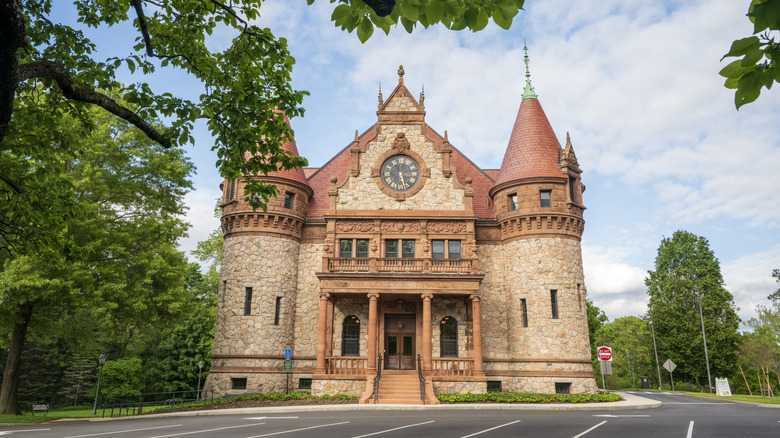
Picture it: A postcard-perfect small New England town about 15 miles west of Boston, complete with a walkable town center where boutique shops occupy historic storefronts. Now toss in a high-ranking liberal arts college, a prestigious business school, and some multimillion-dollar mansions to boot. You're envisioning Wellesley, Massachusetts, a charming college town that doubles as the state's wealthiest suburb as well as the 10th richest in the nation. According to GoBankingRates, the median home value hovers just over $2 million.
The presence of three colleges within the town's approximately 10 square miles lends it a distinctly academic atmosphere, as well as a cultural depth and youthful energy that many other well-established, wealthy suburbs lack. It also provides unique amenities such as the Davis Art Museum and the Wellesley College Greenhouses, both located on the Wellesley College campus, just a short walk from shopping and dining along (aptly-named) Central Street in Wellesley Center. It's the sort of storybook New England town where visitors can spend the day moving between bookstores, cafes, and scenic public spaces. Admire the ornate Romanesque Town Hall building overlooking Morton Park or take a stroll through the Massachusetts Horticultural Society's Garden at Elm Bank. With an MBTA line linking the town directly to Boston, Wellesley is an excellent stop for travelers who prefer a quieter, slower-paced way to experience the Boston area.
Hinsdale, Illinois
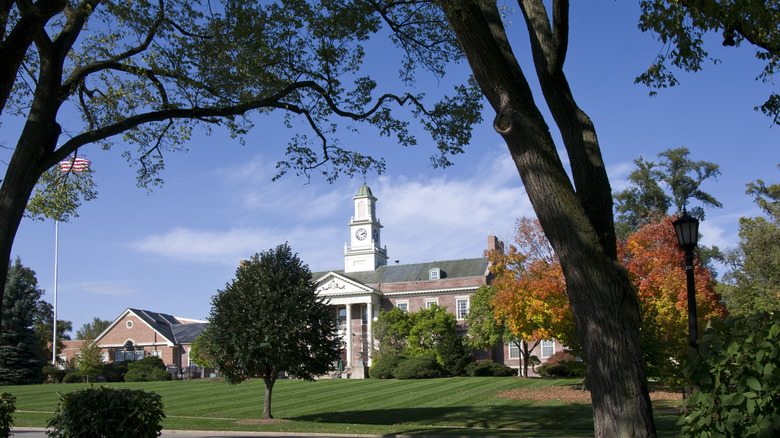
About 20 miles west of Chicago, Hinsdale is a little village known for its picturesque downtown, good eats, and friendly community. At first glance, it might look like any other quaint but sleepy suburb; in truth, Hinsdale is the eighth-wealthiest suburb in the nation. This unassuming town is the only Midwestern suburb to crack the top 30 richest suburbs in America, sitting at no. 8 with an average household income of $375,000. In some ways, its 20th-century homes and "old money" character almost feel like it belongs on the East Coast.
What makes Hinsdale worth including on a travel-focused list is its charming, walkable town center. This central business district is listed on the National Register of Historic Places, complete with old-fashioned hanging signs dangling above flower-dotted patios where residents can have brunch al fresco. Almost all of the shops and restaurants that line Washington Street and the surrounding district are locally owned and lean more towards luxury goods than secondhand shops, from jewelry to tailored clothes. Just a few streets over, well-tended Victorian homes sit on prim lawns.
Although Hinsdale doesn't make an ostentatious show of its riches, its distinctly Midwestern variety of quiet wealth and historic charm is exactly what draws people to it. It's not a place you visit for headline attractions. Instead, Hinsdale provides a relaxed atmosphere for strolling past historic architecture and browsing boutiques. With direct Metra access to Chicago, Hinsdale makes for a worthy detour or day-trip to get a break from the city.
Wolf Trap, Virginia
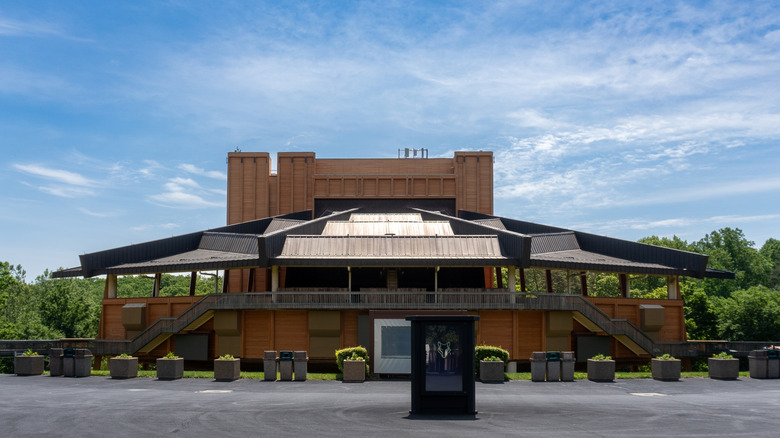
The counties of northern Virginia that surround Washington, D.C., are notoriously wealthy, and — with a median home price of $1.2 million — Wolf Trap is no exception. That said, it's still a standout among America's richest suburbs, not for its residential architecture, shopping, or dining, but for its gorgeous arts and culture park. That's right — Wolf Trap National Park for the Performing Arts is owned and operated by the National Park Service, and is the only national park dedicated to presenting musicals, dance performances, and popular artists. The venue itself is surrounded by woodlands, giving it an immersed-in-nature feel that blends culture with the great outdoors. Easily its most recognizable building is the Filene Center, a large amphitheater constructed from Douglas fir and southern yellow pine, lending further architectural depth to a massive structure that aims to coexist harmoniously with the surrounding forest. The best part? It's just 16 miles from the nation's capital.
The surrounding suburbs are predictably quite residential, with the average home value hovering around $1.1 million, according to Zillow. Homes stretch out on generous lawns and come in a variety of distinguished styles, from Colonial Revivals to Federal style homes that evoke the streets of Washington. While its iconic arts venue makes it a standout inclusion, for travelers, it's a rare Washington-area suburb with a reason to go that extends beyond proximity to the city.
Rye, New York
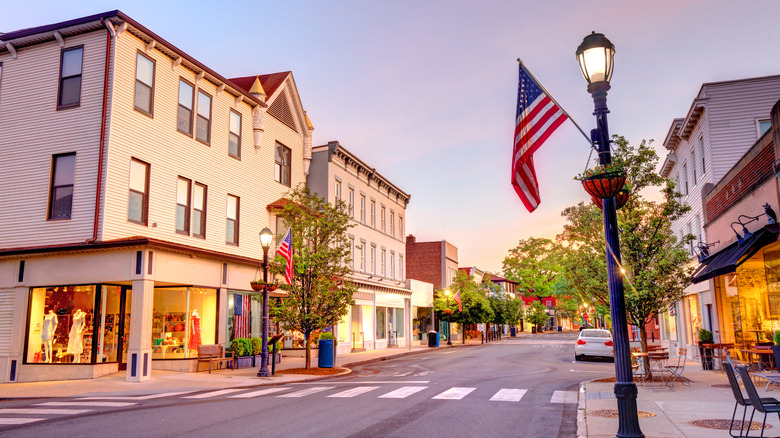
Rye, New York, ranks second on the list of the richest suburbs in America, with an average household income of around $420,000. However, that's far from the most interesting thing about it. This affluent town boasts historic charm and natural scenic views, making it little wonder why New York's well-off would choose such a suburb to settle in. That's exactly what also gives it the distinct travel hook that most rich neighborhoods lack: Waterfront access and an iconic amusement park.
Located along the Long Island Sound in Westchester County, Rye straddles the line between metropolitan New York City suburb and coastal New England town with surprising grace. Restaurants and shops cluster along Purchase Street, a busy central thoroughfare that manages to feel slow-paced thanks to the rows of trees and stately brick-and-stone storefronts.
Venture down to Rye Town Park and Beach for tranquil views of the Long Island Sound, where the historic Bathing Complex towers over swimmers and sunbathers with impressive Spanish Mission-style elegance. The neighboring amusement park, Playland, is listed in the National Register of Historic Places for its Art Deco architecture and comprehensively =planned horticulture and landscaping. Though the park has undergone many changes since its heyday in the 1930s, it still features well-loved rides such as the famous Derby Racer carousel. For thrill-seekers, beach bums, and anyone who appreciates an adorably walkable town center, Rye makes for an ideal day or weekend trip.
Scarsdale, New York
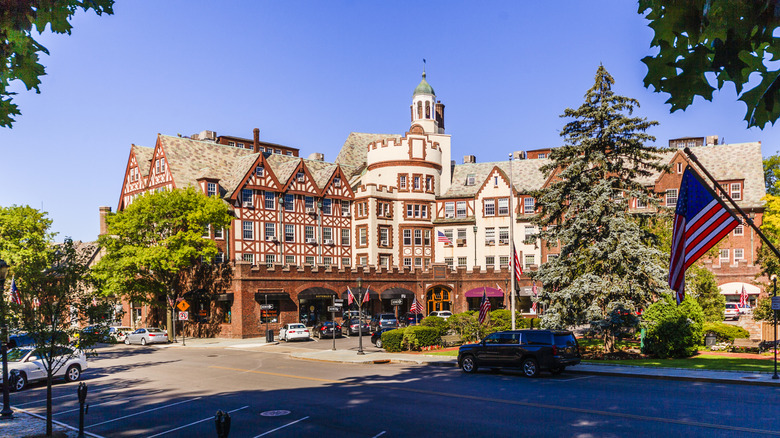
Known as the richest town on the East Coast, Scarsdale, New York, also happens to be the wealthiest suburb in the entire nation by household income, averaging just over $600,000 and beating out dozens of elite Silicon Valley enclaves. Nestled in the Hudson Valley about 30 miles north of New York City, the town has garnered a reputation as a wealthy commuter's haven, connected by the Metro-North Railroad to Grand Central Station in the very heart of Manhattan. But this charming neighborhood has more visitor appeal than it's often given credit for.
Much of what makes Scarsdale unique is its English-influenced architecture, best demonstrated by the Harwood Building — a commercial and retail space that looks more like an Elizabethan castle than your average strip mall. The surrounding structures in the center of town maintain the façade, from a Tudoresque train station to streets named for several British landmarks, including Paddington and Kensington Roads. In the neighborhoods, grand estate-style homes sit behind long driveways, surrounded by genuine 18th-century historic homes and 20th-century revival styles. Unlike more car-dependent suburbs, Scarsdale has its own modest downtown district, where residents can walk from high-end boutiques to a Michelin-starred restaurant. Whether you come to gawk at the massive manors or imagine yourself amid the English countryside, Scarsdale's proximity to New York City and quaint Tudor stylings make it a worthwhile stop.
Methodology
This list was built from GoBankingRates' list of the wealthiest suburbs in America, based on 2025 household income and home value data. Only the top 20 neighborhoods were considered, though not all of them made the cut — many suburbs are entirely residential, with little to no commercial or retail. In order to make this a true compilation of places worth visiting, only areas with a compelling reason to visit were included, whether that means a walkable town center, stunning natural amenities, or nearby attractions and metropolitan centers.