
10 Popular Travel Credit Cards, Ranked By An Expert

The world of travel credit cards is complicated. Issuers promise the world, and while they're not technically lying, they're less transparent about the hoops you'll need to jump through. It doesn't help that the loyalty landscape is constantly shifting, making it tough to keep up on which cards make sense for whom.
I've spent the past seven years traveling the world full-time, hopping through almost 60 countries month-to-month. You'd assume the flight tab on that lifestyle like that runs sky-high. But I learned the best ways to use credit card points to travel for free, racking up as much as $10,000 in savings a year in some cases. Those savings aren't luck. I've learned the ins and outs of almost every card on the market, viewing each as a tool built to help keep my costs low. I even run a twice-weekly points and miles newsletter with over 1 million subscribers, have penned hundreds of articles on the subject, and built my own course to teach others to do the same.
Not everyone wants to be like me, though. I have as many as eight credit cards in my wallet at any one time — way too much for the average person. But which is best if you only want one? The answer is complicated, and realistically, one card isn't likely to change your life. Everyone has different habits and goals, and each product caters to different things. But if I were to rank some of the most popular cards on the market in terms of easy-to-access value with the best chance of getting you flying free, this is how I'd place them.
1. The Capital One Venture X Rewards Credit Card

At the top is the Capital One Venture X Rewards Credit Card. It's been my most frequent recommendation for the past three years and, despite some changes to its perks, it's still an incredible product. It sets itself apart by opting for simplicity, which makes it perfect as a one-card system powerhouse. If you have loftier aspirations, it's incredible as part of a broader strategy, too.
One reason it's so valuable is the flat-rate 2x miles per dollar on every purchase. While most issuers opt for specific spending categories, Capital One customers don't have to think about anything. As a basic example, if you spend $2,000 a month, you'll earn around 48,000 miles a year, without considering much else. That's more than enough to get you to Europe and back with a carrier like KLM, Air France, Virgin, or Iberia. Technically, could be enough to get you a business class flight with Virgin, too, depending on the dates you're traveling. Plus, if you spend $4,000 within the first three months of opening the card, you'll get 75,000 bonus miles. By the end of your first year, you'd be looking at 123,000 miles. That's an epic start.
But the earning rate is just this card warming up. At $395 a year to own, it's not cheap, but it cancels that fee out by throwing in a $300 travel statement credit every year for use on the Capital One travel portal, a bonus 10,000 miles on your cardholder anniversary, and a Priority Pass lounge membership (although its airport lounge rules are now a lot less welcoming). It's a premium card without the complexity and gives anyone a real shot at earning free travel. Pound for pound, it's the best card on the market.
2. Amex Green Card
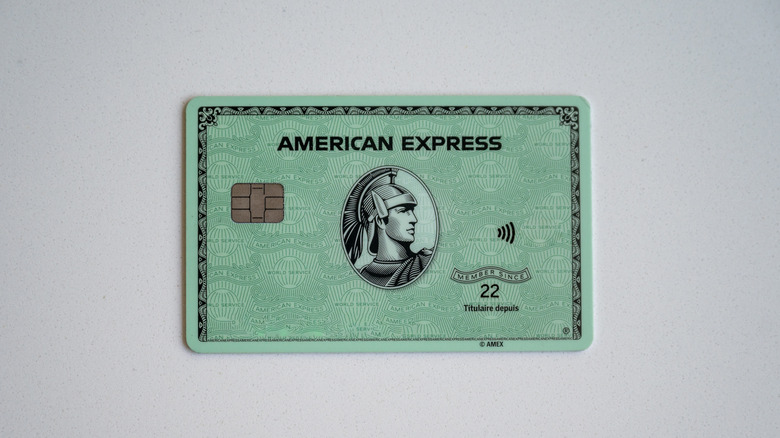
The Amex Green flies well under the radar compared to its shinier premium siblings like the Amex Gold and Platinum cards. But those with the Green in their wallets know how serious an earner this understated card is. In stark contrast to the Venture X, there's little in the way of perks, but the Green is one of the best credit cards for travelers.
The headline earning rates rack up 3x points per dollar on travel, transit, dining at restaurants worldwide, and takeout and delivery in the U.S. Now, if you're a regular traveler, those rates should be lighting up your eyes. The definition of travel and transit is so broad compared to other issuers that you can basically earn 3x points on an entire trip. For example, while other cards might only classify travel as hotels, flights, and maybe big train journeys, the Green will trigger that rate for everything from tours and ferries to subways and campgrounds. I lived almost exclusively in Airbnbs for six years and used the Green to pay for it every time. It was my single largest regular points earner at that time.
Now, if you're not a regular traveler or eater-outer, it may not sound as attractive. And this is where the subjective nature of this list comes into play. But, as you're reading this, it's a fair assumption that you're at least interested in travel. It even has a 40,000-point intro bonus, earned by spending $3,000 within six months of opening the card. It's not a huge bonus, but 40,000 hyper-valuable Amex points can go a long way.
3. Citi Strata Premier

Despite being a major company, Citi has always appeared to languish in the shadow of the bigger names like Amex, Chase, and Capital One. Why this is, is hard to tell. It's possibly the issuer's decision not to open a real premium card until 2025, but even now, it still seems to lag behind its competitors. That reputation means its outstanding cards have never received as much airtime as others — and it's a big loss for everyone else.
The Citi Strata Premier is the issuer's mid-tier option, coming in at $95 a year, boasting a 60,000-point intro bonus after spending $4,000 within three months of opening, and even throwing in a $100 hotel benefit each year to completely flatten the annual fee. And then there's the earning rates: 10x points per dollar on travel booked on Citi Travel and 3x points per dollar on air travel, hotels, restaurants, supermarkets, gas stations, and EV charging stations. Hitting gas, restaurants, and supermarkets with the same 3x point per dollar rate could equate to the average person's entire monthly spend. Assuming the same $2,000 of spending fell into those categories each month, that's around 72,000 points a year.
For those worrying if Citi's transfer partners are weaker than the others, that's definitely not the case. Its lineup was already strong, but it's just become the only true transfer partner for American Airlines, giving it a leg up on the likes of Amex and making ThankYou points immensely valuable. The Strata Premier went from barely used in my wallet to my day-to-day workhorse overnight when I realized I'd be passing it over for no reason. Don't make the same mistake.
4. Chase Sapphire Reserve

The Chase Sapphire Reserve is Chase's premium offering and comes with the eye-wateringly high annual fee of $795. Make no mistake, you must be careful with this card, or it will become a money pit. Do the math on your spending and perks to ensure you're getting real value.
But for those comfortable with the risk-to-reward ratio, the Reserve is a big hitter. It comes with an incredible 125,000 point intro bonus, earned by spending $6,000 within three months, a $300 annual travel credit, $500 in credits for stays with its hotel program, IHG One Rewards Elite Status, a Priority Pass Select membership, Global Entry and TSA PreCheck credits, and a range of lifestyle credits. That's an insane amount of value to be found. I value Chase Ultimate Rewards points at around two cents each, so the bonus alone is worth at least $2,500 in travel. Everything else adds up to around $3,000, so it's possible to get a huge return.
Even the earning rates are solid if you're a big traveler, with 4x points per dollar on hotels and flights, plus 3x points per dollar on dining. But again, it's super important to crunch the numbers. Make sure you can safely hit the intro bonus, see how much you spend on travel each year, and see if you're getting real objective value from the list of perks. After all, you're not saving $120 on DoorDash if you would never have used it in the first place.
5. Amex Gold

One of the shinier siblings mentioned of the Amex Green, the Amex Gold is a card built for foodies with some serious grocery and dining out bills. It's technically a mid-tier card for Amex, but with an annual fee of $325, it's not an impulse choice — you'll still need to do the math. That said, it has the potential to be a serious points earner.
The good news is that its intro bonus is worth up to 100,000 points after spending $6,000 within six months of opening an account. That's almost $2,000 in value by my reckoning and well worth turning your head. But after the bonus is gone, what does the Gold still offer? Quite a lot, thankfully. It's not got much in the way of perks, especially considering its annual fee, but with 4x points per dollar on up to $50,000 a year on restaurants, 4x points per dollar on up to $25,000 on groceries, 3x points per dollar on flights booked directly, 2x points per dollar on prepaid hotels, and everything else at 1x point per dollar, you've got a huge amount of scope. The credit card also has a Global Entry credit, which can save money, too, if you usually pay for it.
As I've mentioned before, I use a multi-card system to ensure I'm never getting 1x point per dollar on anything I buy, but the Gold has been a huge piece of my strategy. I spend an inordinate amount of money on eating out (we can debate whether that's sensible or not), and it's pulled tens of thousands of points per year for me and my partner. But if you only want one card and spend a ton on supermarkets and restaurants, this could be the product to take advantage of.
6. Chase Sapphire Preferred Card

I really like the Chase Sapphire Preferred. It's a simple card, but it can pack a punch for the right person. Its simplicity, strong earning categories, and brilliant intro bonus make it the perfect introduction for newbies in the points and miles space, and it's always at the top of my recommendations for them. It's a card you might grow out of, but for simple value, it's a brilliant product.
For a $95 a year card, its intro bonus is outstanding. New cardholders will earn 75,000 Ultimate Rewards points after spending $5,000 within three months of opening the card. I put that value at around $1,500 on travel if you use them well, but even just on the Chase Travel Portal, that's at least $1,000. Its earning rates clock in at 3x points per dollar on dining (including eligible takeout and delivery), and 2x points per dollar on travel purchases. There are even a few extra categories, like 3x points per dollar on specific streaming platforms and online grocery purchases. There is a little $50 Chase Travel Hotel credit, too, just to help keep the value.
The value in this card comes in its launch value. This is the entry point for many points and milers and the Preferred stays in their wallets for years to come — mine included. I use it in tandem with my other cards, especially when I'm abroad, and a higher-earning Amex card isn't accepted. But if this is your first true travel card, you could do a lot worse.
7. Amex Platinum

The Platinum Card from American Express is arguably the best-known credit card in the world, and almost certainly the most iconic. It set the standard as the original premium card, and its reputation has lingered on, even as it became less and less exclusive. It's a controversial card because, in my opinion and that of many other experts, it's not the card it once was. Its perks are more of a coupon book, its earning rates aren't spectacular, and it's incredibly expensive.
But I've still included it in this list for a few reasons. First, its bonus is huge. You can earn as many as 175,000 points after spending $12,000 within six months of opening the card. It's a big spending goal, but it's also a lot of points. That's well over $3,000 in travel when transferred to a strong airline partner. Second, its perks are definitely valuable. It has the best lounge access of any card, and there's a range of statement credits that can apply to your lifestyle. The earning rates aren't great, though.
I warn my readers about this card a lot. At $895 a year, it's incredibly expensive. But those who use it effectively adore it, as it offers more true perks than any other product. Add up the perks and benefits that are genuinely useful to you, and put that against the fee. If it adds up to more, you're in good shape and can enjoy all the benefits of the card. Otherwise, look elsewhere. If you want a premium card, weigh it against the Sapphire Reserve first, which I think is a better all-around card.
8. Hilton Aspire Card

The Hilton Aspire is a co-branded hotel card that only earns Hilton Honors points. All the other products mentioned so far have been super-valuable transferable general credit cards. Even Rick Steves thinks sticking to these cards is a thrifty travel tip. While this means the Aspire is limited, a strong hotel card can represent huge value.
The Aspire is Hilton's premium option and costs $550. It' not cheap, but it offers so much value on a yearly basis that I think it's worth it. The easiest way to recoup that is the free annual stay award. Each year, you can use the benefit on a stay at almost any of Hilton's properties. That could be a luxury hotel in the Maldives worth $3,000 or a Hampton Inn in Ohio. It should be fairly obvious what side of the spectrum you should aim for. You'll also get complimentary Diamond Status with Hilton Honors, which is one of five hotel programs that are actually worth it. I've been a Diamond Member for over a decade and have never failed to be upgraded at any hotel, and I always enjoy free breakfasts, executive lounge access, and a noticeable shift in employee attitude towards me.
The bonus is good, too. You'll earn 150,000 Hilton Honors Bonus Points after spending $6,000 within six months of opening the card. These days, you'll struggle to get more than two days at a good hotel out of that bonus, but that's still a potential saving of a few hundred bucks. It's the experiential value that's kept this card in my wallet for years, though.
9. World of Hyatt Credit Card

If you've ever read any of my newsletters, you'd know I spend a lot of time talking about how valuable World of Hyatt is. The loyalty program retains one of the best award charts ever seen in the industry, and has somehow continued it as dozens of others give up and move to a dynamic pricing system.
If you have any points-earning Chase cards or one from Bilt, you can transfer your points to Hyatt, but other than that, you're stumped. Opening one of its cards is the best way to counter this. The personal card doesn't have a points bonus, but does offer up to five free nights in a Category 1 through 4 hotel, after spending $15,000 within the first six months of owning the card. You'll still get three if you only spend $5,000 within three months, which isn't bad either. Spending $15,000 on the card will earn you at least 15,000 more points on top of that, which is enough for five nights at a Category 1 hotel. As a single card option, I wouldn't necessarily recommend it. But if your sole focus is hotel stays, there isn't another card I'd choose instead.
10. Southwest Rapid Rewards Credit Card
The final entry on the list is the Southwest Rapid Rewards Credit Card. Again, this is a co-branded card and not a transferable points option, like most of the others. It's found its way here for a few specific reasons that make it valuable to the casual flyer.
Southwest's program doesn't offer insane value. It's impossible to stretch your points to more than around 1.4 cents each, unlike others that might find you hitting 2, 3, or even 8 cents per point for upper-class seating. But where it shines is its reliability. While you won't go beyond that 1.4 mark, it's also very rare that you'll fall far below it. Better yet, you can book any seat on the plane, instead of wrestling for four award seats like on other airlines. This card gives you a solid injection of those points to use when it makes the most sense.
I generally recommend that people hold onto Rapid Rewards Points and use them for last-minute domestic travel or as a last resort when other high-value airlines aren't coming through for you. It's very situational, but they can be an absolute lifesaver when the moment is right.
11. Methodology

I've been writing about and using points and miles for the past six years, helping save almost $10,000 a year between my partner and me while traveling the world full-time. I've ranked this list based on the ease of value for the average person, instead of a purely "this card is better" system. This is because each card has its pros and cons, which can benefit or hamper someone depending on their individual situations