
The 11 Best Day Trips From Porto, Portugal
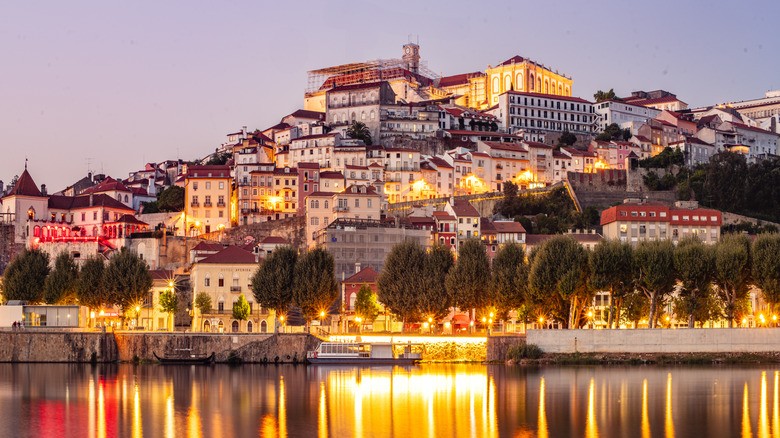
If you didn't go to Porto, which, located along the Douro River, is Portugal's second-biggest city, did you even go to Portugal? This charming city lined with cobblestone streets and a city center that's a UNESCO World Heritage Site is visited by millions of people every year — and for good reason. Home to several iconic tourist attractions, Porto features stunning medieval and Baroque architecture, Roman ruins, and port wine, so much so that Rick Steves says it's a must-visit for wine lovers. Plus, it's great for money conscious visitors, since Porto is ideal for travelers on a shoestring budget.
Of course, if you're also looking to get out of the city, you'll also be met with a bevy of options at your fingertips. Islands rounded up the best day trips that are within an hour and a half drive from Porto, ranging from Portugal's only national park to a seaside village with world-famous buildings and beautiful beaches. Not only did we focus on towns in close proximity to Porto, but also places that have plenty to do for travelers of all interests and have worldwide reputations as destinations. In the interest of time and the ability to see as many of these destinations as possible, renting a car is recommended.
Amarante
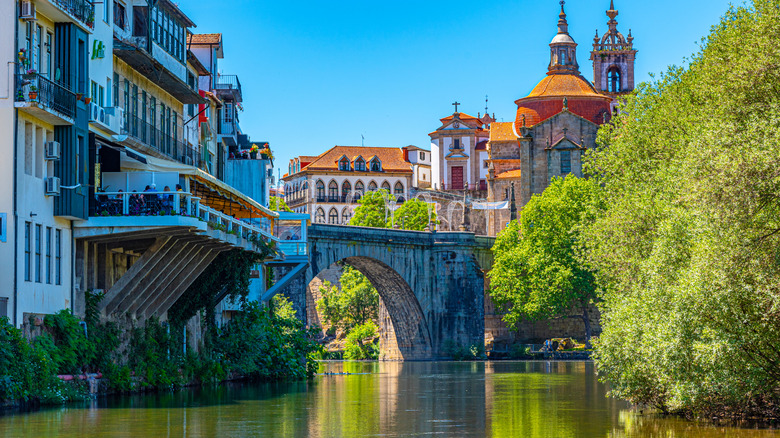
Amarante, which is about an hour-long drive from Porto, has so many claims to fame. It's tough to imagine why the River Tamega town doesn't make it onto more itineraries, especially since it's the perfect day trip from Porto. Dating back to 360 BCE, it's one of the oldest towns in the region, and it has several sites reflecting its storied history.
Some of the town's sites that will thrill history buffs include the opulent, Baroque-style church Igreja de São Gonçalo, which was built during the 1500s and is dedicated to Amarante's patron saint Gonçalo de Amarante. Another must-see site is the Ponte de São Gonçalo, a bridge built during the 1200s that saw the bloodshed of the Peninsular War. Located along the River Tamega, visitors can walk the banks near the bridge to see all-encompassing views of local homes and cafes.
Depending on when you visit, you can also check out the Festa de São Gonçalo, which occurs on the first weekend of each June. The festival features music pumped by DJs, parades, carnival rides, and, most famously, phallic-shaped pastries given to both loved ones and single women to supposedly help them find partners. Less strangely, Amarante also hosts a food market from Wednesday and Sunday that offers everything from Portugal's famous acorn-fed pork to seasonal fruits and vegetables.
Aveiro
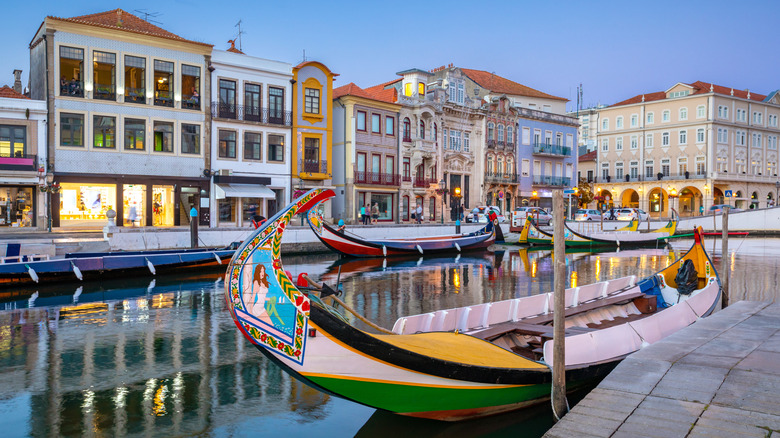
Located just barely over an hour's drive from Porto, Aveiro is a firmly Portuguese city — with many international quirks. It's been dubbed the "Venice of Portugal" due to its moliceiro boats that line the city's canals. While these boats were once used to collect plants from the Ria de Aveiro, they're now used for 45-minute boat rides for tourists. Visitors can also see the Riva de Aveiro by strolling or biking its 5-mile wooden walkway.
Back along the city's canals in moliceiro boats, visitors can expect to see Art Nouveau-style buildings, a rarity otherwise in Portugal as the style is more common in countries such as France. To learn more about the style's presence in Aveiro, art fans should head to Museu Arte Nova inside Casa Major Pessoa, a building that also sports an Art Noveau style. Inside the museum, visitors can learn about Aveiro's more-than two dozen Art Noveau structures.
Food is its own art form in Aveiro. Fishing neighborhood Bairro da Beira-Mar is where to go if you're craving fresh fish, especially shellfish, grilled seafood, or eel. You can even see where some of that seafood, such as Portugal's iconic bacalhau, is salted in Aveiro's salt pans. But Aveiro's real delicacy is ovos moles, an eggy pastry made with sugar syrup and wafers. One of the best spots to try it is Confeitaria Peixinho, which supposedly uses the original recipe first made in a local convent.
Braga
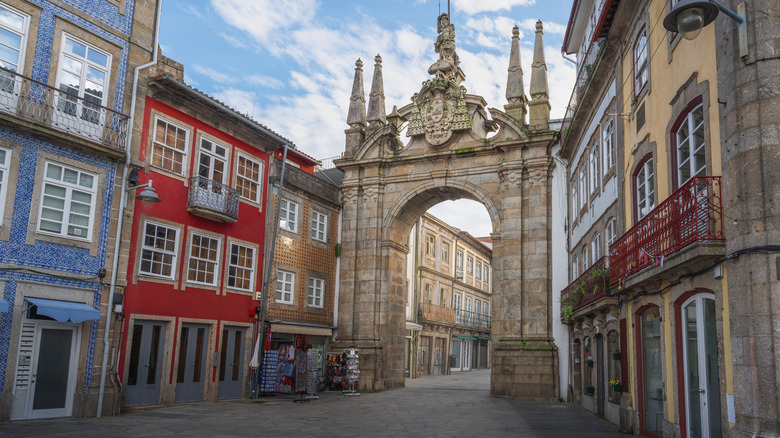
As Portugal's fourth-largest city, Braga is often forgotten in favor of bigger Portuguese destinations like Lisbon, which is, in fairness, considered the happiest holiday destination in the world. However, Braga's gargantuan size means it's packed full of interesting sites — and it's also about an hour's drive from Porto. One of Braga's biggest claims to fame, especially since it's one of Portugal's oldest cities, is its whopping roughly 35 churches, which brings truth to the popular saying, "Porto works, Lisbon plays, and Braga prays."
Those many churches have helped Braga cement its devout reputation, especially in sites such as the Braga Cathedral, which, originally built around the 11th century, is thought be the oldest church in Portugal. Besides this lavish church, another must-see is the Neoclassical-style Bom Jesus do Monte basilica. From its 630 steps, visitors will see panoramic views of the surrounding area, as well as ornate fountains. Braga's religious history is especially on display during its Semana Santa Easter festival, which, featuring evening processions, candlelit altars, and Gregorian chants, is considered one of the best on the planet.
However, as evidenced by Braga once being named as the "European Capital of Youth" and also being a college town, it knows how to kick back. The northern region that the city is in is known for its vinho verde, or young "green" wines, which taste especially delicious in Braga's Praça da República. Within this bustling, historic square, red, rose, and white vinho verde wines are aplenty.
Coimbra
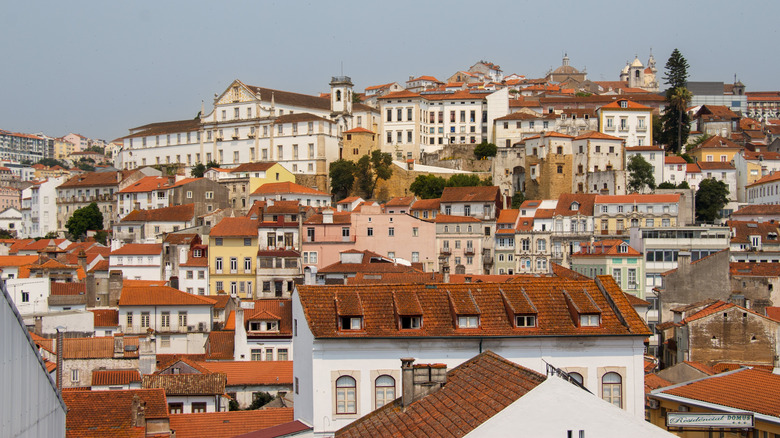
As the home of the University of Coimbra, which is the oldest university in Portugal, Coimbra has all the markings of a historic college town with a hip vibe, trendy restaurants and shops, and an artsy and energetic ambiance all in one hilltop destination. It's been coined as a less crowded, mini Lisbon by Rick Steves, and it was even on the New York Times' 52 Places To Go list of 2025. The country's third-largest city is also just about an hour and a half drive from Porto. Once here, all visitors need to do to find the best of it is wander its quaint streets that range from the upper town to old town.
Follow the streets to the university, which has helped make Coimbra what it is today. Here, visitors will be able to check out King João's Library, which is one of the best examples of a Baroque library on the continent, not to mention it's also famous for its army of bats to keep paper-eating insects at bay. Plus, a recreation of the famous 600,000-book library was even featured in the 2017 live-action adaptation of "Beauty and the Beast." Naturally, admission to this place often sells out in advance.
If stylish shops, bars, and restaurants are what you're after, then you'll find that too in Coimbra. For a cocktail and dancing nearly any night of the week, head to dance clubs like the offbeat Feito Conceito or late-night Passarelle.
Costa Nova
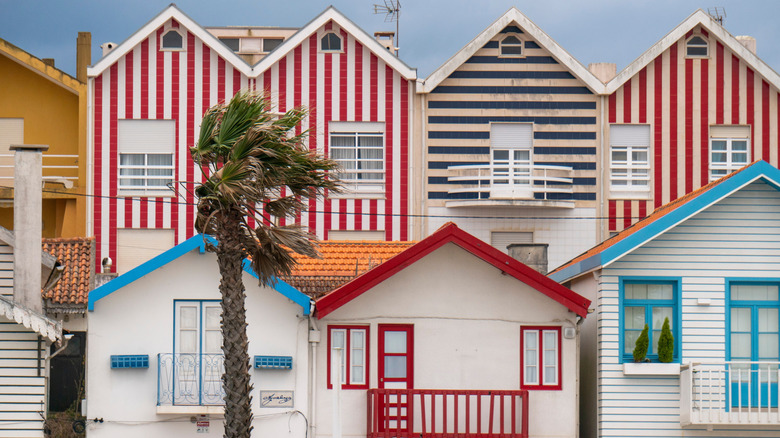
If you've ever Googled photos of Portugal, you've probably come across images of colorful, striped buildings along the seaside. And if you take a one-hour drive from Porto to Costa Nova — which is often paired with a daytrip to Aveiro, as it's just a 20- to 30-minute drive away — you can see those buildings, called palheiros, in person. The buildings were built by fishermen in the early 19th century to keep their nets and tackle and also to salt and dry fish. The fishermen painted them in their signature style so that they could easily find them even when the Ria de Aveiro lagoon was at its mistiest. Today, these staples of a trip to Costa Nova can be best seen along the main promenade of the coastal village on the lagoon side of town.
However, this isn't the only thing to see in Costa Nova. The village also makes for an ideal beach getaway thanks to its protected dunes and boardwalk that both face the Atlantic Ocean. With massive waves, it's also a treasured surfing spot along nearly 6 miles of beachfront. After checking out the beach and palheiros, have dinner or lunch in Costa Nova, as its marisquerias — or seafood restaurants — are famed for their locally-caught shellfish, crabs, and prawns. You can also check out the day's catch at Costa Nova's fish market. Finish off your meal with tripa, a Costa Nova specialty that's a cookie stuffed with egg cream or chocolate.
Guimarães
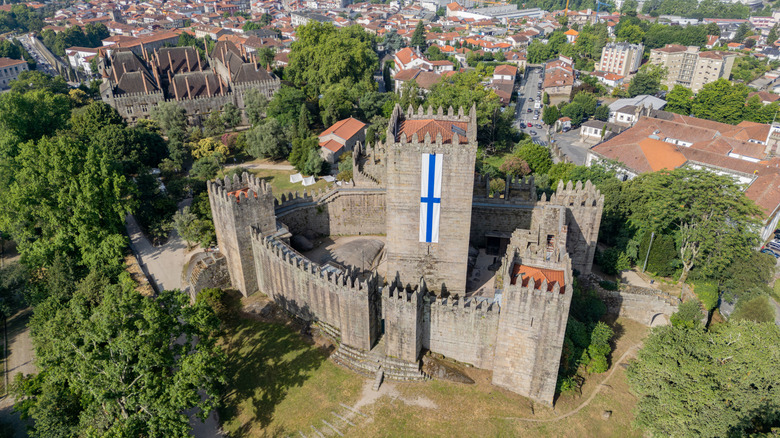
You've likely never heard of Guimarães, which is about an hour's drive from Porto and is located in the cool, lush Minho region. However — even though this city was named as one of the best to visit on the planet in 2026 by National Geographic — that's for the best. This authentic city offers a real taste of Portuguese life rather than a watered-down tourist version, yet is still home to sites that wow visitors.
Visitors should start their journey to Guimarães in the well-preserved medieval quarter, which is a UNESCO World Heritage Site. People can see all of the storied neighborhood from above by climbing the Torre de Alfândega, or see where Portuguese nobility lived inside the Palace of the Dukes of Braganza. But don't leave the city without trekking to Guimarães Castle, which is one of the most well-preserved medieval castles in Portugal. Despite Guimarães' long history — an old sign on Torre de Alfândega even translates to "Portugal was born here" — the city isn't stuck in the past. It was named as the European Green Capital of 2026 due to its dedication to sustainability, as it has implemented cutting-edge programs to reduce trash and features many parks, bike paths, and community gardens.
Guimarães' cuisine is just as delicious as its commitment to the environment. Its known for jesuítas, which are pastries stuffed with frangipane, as well as vinho verde wine, which is also local to the region.
Lamego
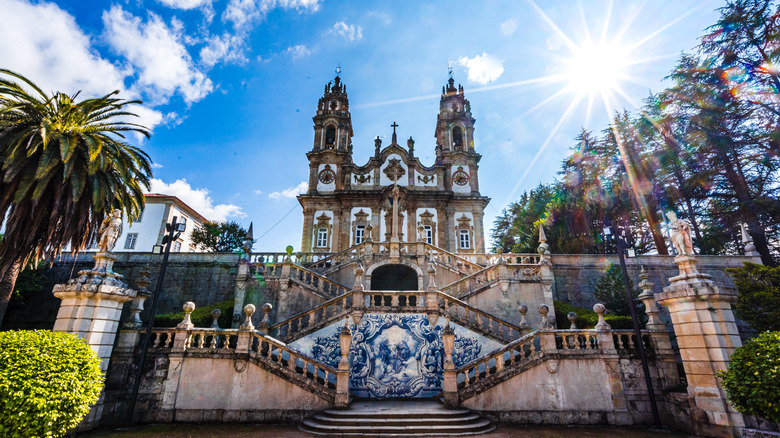
With religion, history, and wine, Lamego — which is an hour and a half drive (a little more with traffic) from Porto — offers a trifecta of some of the aspects that Portugal is most famous for. Its most iconic site is the Sanctuary of Nossa Senhora dos Remédios, which is reachable via a 686-step Baroque staircase that offers jaw-dropping sights of the area. The walk to this Rocco-style church is one frequented by pilgrims since the site used to be home to a chapel dedicated to Saint Stephen. For more views paired with history, visitors should trek to Castelo de Lamego, a significant 12th century Moorish castle that was once used to protect the country. It includes a watchtower that can be climbed as well as ramparts and guided tours.
People can also see historic art at the Museu de Lamego, which is known as one of the best museums in the country. Within its walls, which are of a former episcopal palace, is art once owned by the bishops of the town, including Flemish tapestries dating back to the 1500s. After all this sightseeing, you'll find it tough to resist the town's culinary wonders, such as cured ham.
Matosinhos
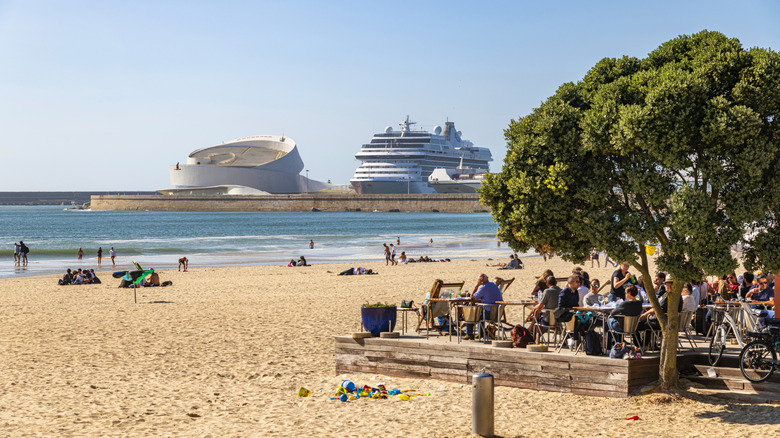
If you want to do as Porto residents do, escape on a hot and sunny day to Matosinhos, which is the favorite beach hangout for locals as it's just a 15- to 30-minute drive from the city. In this town, which is the most important fishing port in the country, people can catch rays and surf from beautiful beaches such as Praia de Matosinhos and Praia de Leca de Palmeira. Off Praia de Leca de Palmeira, people can also check out a rocky, natural saltwater swimming pool, otherwise known as Piscina das Mares. To see Matosinhos' beaches from above, climb Farol de Leca, which the second-highest lighthouse in the country.
Matosinhos is also known for serving some of the best seafood in Portugal. Its often presented simply grilled in humble restaurants that need no ornate décor to attract crowds, especially on Rua Herois de Franca. True foodies should also stroll through Mercado Municipal, where vendors sell local fruits, vegetables, and seafood inside a unique, modern building that's a protected national monument. The city has other markets, too, including the seafood-focused Mercado de Angeiras and prepared food-filled Mercado de Matosinhos.
Although many people don't venture off Matosinhos' beaches to do more than get a bite to eat, they should. The city's most important site is the Baroque-style Sanctuary of Senhor Bom Jesus, which is home to an ancient wood carving made by a man who knew Jesus. It was the first depiction of Jesus to be acquired by Portugal.
Peneda-Geres National Park
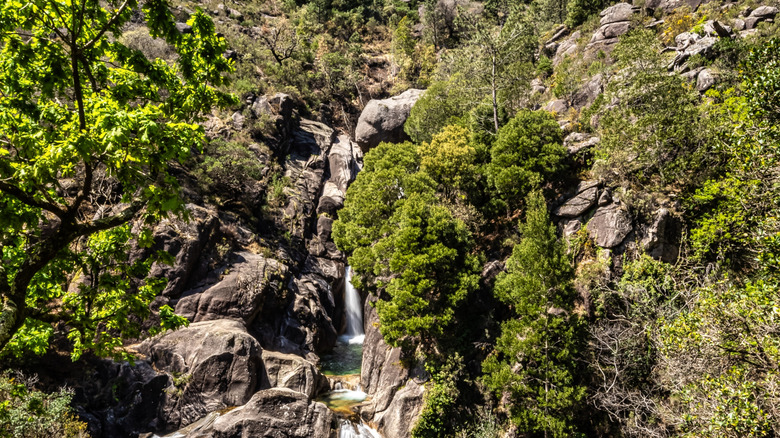
The only park of its kind in Portugal, Peneda-Geres National Park packs a punch — and it's only an hour and a half drive from Porto (depending on traffic). Throughout its nearly 270 square miles, visitors will see natural wonders like lagoons and pine forests; more than 200 types of animals, including Spanish ibex and eagles; and evidence of human history stretching back to 6000 BCE. Nearly two dozen villages still thrive within the park, including Braga, which is one of Portugal's oldest. Dating back to the Iron Age, this village includes a Benedictine monastery as well as a cathedral.
But if Mother Nature is what you're after, you won't have to look far. Just hop on one of the park's many trails, such as the 2-mile Miradouro Velho da Pedra Bela that takes travelers to a waterfall and the 5.5-mile Poço Azul trail that features a stunning, glass-like pond. Throughout your hike, you might spot roe deer, the official symbol of the park, as well as European honey buzzards, Barrosã cattle, Garrano horses, or, if you're lucky, a rare Iberian wolf. All of these stunning animals have made their homes in the park's granite cliffs, marshes, rivers, and oak forests.
Evidence of ancient civilizations is also plentiful throughout Peneda-Geres National Park, such as through its Neolithic tombs and Roman roads. Thermal baths used by the Romans are at the Cascata do Arado waterfalls, while a castle built during the 1200s is in Lindoso.
Pinhao
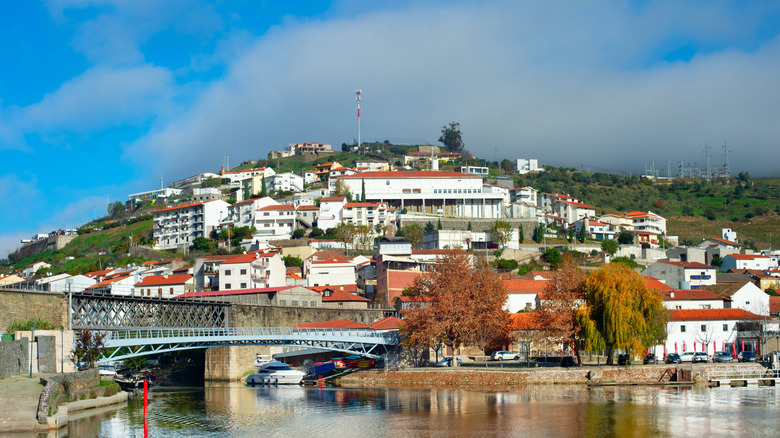
This list wouldn't be complete without a spot to enjoy one of Portugal's most beloved delights: port wine. Visitors can do just that in Pinhao, a small yet scenic town along both the Douro and Pinhao rivers in the heart of the Douro Valley winemaking region. Located about an hour and a half long drive from Porto (more with heavy traffic), you'll know you're close to Pinhao when you start seeing the terraced vineyards rising above and below the road.
Pinhao's soil and climate make it ideal for growing grapes, and its wine estates make it easy to enjoy them. A few of the Pinhao favorites that offer wine tastings and tours include the Vintage House Hotel, the family-owned Quinta do Bomfim, and Quinta das Carvalhas. You can even stay overnight at some of these wine estates. Or, enjoy both local wines and the Douro River with a ride on a traditional wooden rabelo boat, which were once used to transport wine, paired with a wine tasting. The town has such a rich wine history that even its train station is adorned in blue and white tiles that detail Pinhao's winemaking culture, which are worth seeing in person even if you arrived by car.
Viana de Castelo
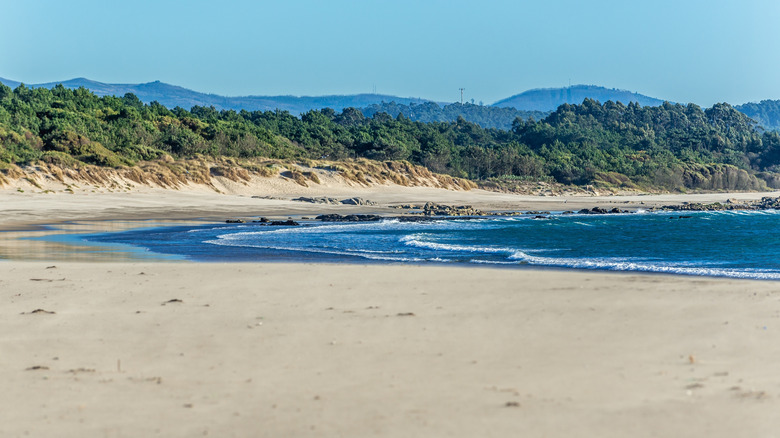
Interested in seeing Portugal's beaches, but with less tourists and more history? Then the Minho town of Viana de Castelo should be your day trip from Porto, as it offers both and is only about an hour's drive from the city. Often visited by locals rather than tourists, Viana del Castelo is known for its Atlantic beaches like the more than 2-mile Praia de Cabedelo, frequented by surfers and kitesurfers, as well as the smaller and rockier beach Praia Norte. If you don't want to get wet but still want to enjoy the beach atmosphere, then take a stroll or bike ride along the Ecovia do Litoral Norte trail that ends at Praia do Cabedelo.
Along the cobblestone streets of Viana de Castelo there is even more to do and see. Visitors can enjoy a sight of it all from the top of the Santuário de Santa Luzia, a neo-Romanesque and Byzantine-style church that's become a symbol of the city and offers what's considered one of the best views in the country. Despite its humble façade, tourists should also visit the Igreja de Misericórdia church, which features a gold leaf interior. And uniquely, Viana de Castelo also has a former hospital ship converted into a museum that was once used to care for injured cod fishermen.
Methodology
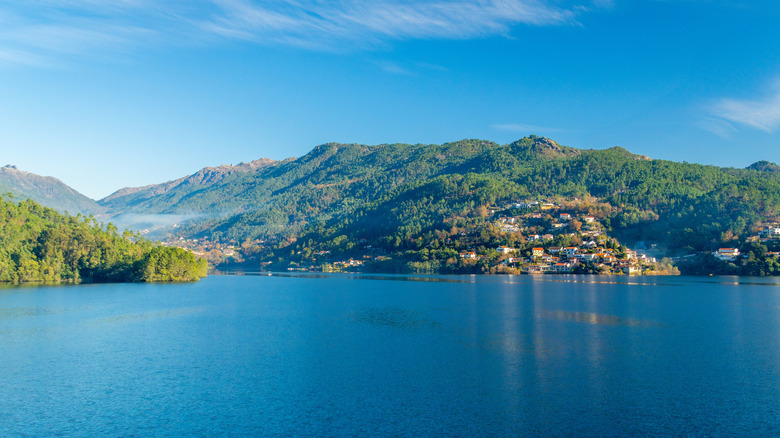
When planning their Portugal itinerary, many people base their travels around two hotspots, which is why it's hard to decide between Porto and Lisbon as your base while visiting the country. There's no wrong decision here, as these two Portuguese cities offer tons of history, culture, fun, and food. But choosing a good base for your entire trip is important, and there are also lots of towns and sites within an hour and a half drive from Porto that are worth visiting.
Islands rounded up which places should be on your radar as a day trip (within an hour and a half driving one way, depending on traffic) from Porto. We based our findings based on which spots have the most activities to do, such as Coimbra, which is Portugal's third-largest city, as well as which have the most unique things to do, like Costa Nova, which features the country's world-famous striped fishing huts. We also considered which have the most to do for people of all interests so everyone in your group can travel happy, such as Peneda-Geres National Park, which includes both ancient sites as well as rare animals.