
The Best Alternatives To Popular National Parks For Crowd-Free Seclusion

Everyone's talking about overtourism these days, especially with hidden-gem destinations now overcrowded because of social media. But not all overtourism is a simple matter of avoiding overrated influencer spots. In recent years, U.S. national parks have been plagued by the same unsustainable crush of tourists.
From Yellowstone to Yosemite, visitation numbers at many of the most popular national parks have been surging, and America's most iconic landscapes stand to suffer when they're overwhelmed with crowds. Not only do visitors not get the close-to-nature serenity they're searching for, but the fragile ecology of these precious wild places is threatened when human encroachment reaches that kind of fever pitch. It's happening all over the country: Zion National Park is having a problem with traffic jams. Glacier National Park in Montana made one popular travel source's "do not travel" list for 2026 as the effects of overtourism and climate change take their toll on its alpine landscape. Peak-season visitors to Yosemite National Park reported lines up to an hour and a half long to enter the park. When faced with headlines like these, many outdoor enthusiasts are beginning to ask if it's even worth visiting anymore.
The National Park Service's response to this issue has been broad, from robust permit systems and timed entry slots to public information campaigns. But there's an even better way to combat overtourism: find an alternative park to enjoy. For every overcrowded park, there's a lesser-known NPS unit or state park with many of the same draws and a fraction of the annual visitors. So if you're considering a visit to one of the most-visited national parks but are conscious of the crowds, consider these unsung alternatives instead.
Instead of Great Smoky Mountains National Park, visit New River Gorge National Park
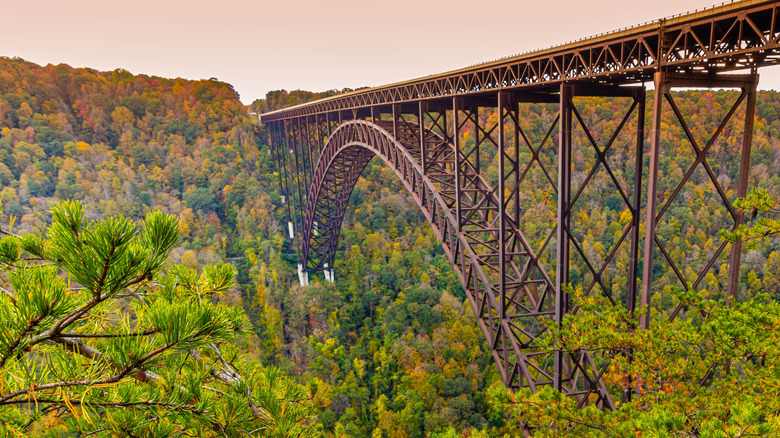
You'd be forgiven for not having heard of West Virginia's New River Gorge National Park. Declared a national park in 2020, it's the newest park in the system. But it's already proven to be a fantastic alternative to the perpetually packed Great Smoky Mountains National Park.
As of the most recent available data, Great Smoky Mountains National Park was the single-most-visited National Park in the United States. This is in large part because it has no entrance fee, and a major regional highway, Route 441, cuts directly through the park, so some of those visits might be drive-through only, but those massive numbers still mean congestion on popular hiking trails and traffic jams on park roads. And with staffing and budget cuts hitting the park hard, those problems likely aren't going away on their own anytime soon. New River Gorge, on the other hand, offers many of the same things that draw visitors to the Smokies, but with over 10 million fewer visitors than the Great Smoky Mountains National Park that year.
If you came to this region for forested mountains, sweeping valley views, and relatively easy access from the East Coast, New River Gorge delivers. The scenery is just as lovely as you'll find in the Smokies — just add solitude. It's not just a copy of its cousin to the west. Visitors to New River Gorge will find one of the oldest rivers in North America, which is now a favorite whitewater rafting destination, and it preserves a fascinating and quintessentially Appalachian history, too. At once similar to its more popular peer and unique, we'll go out on a limb and call this one a true hidden gem.
Instead of Zion National Park, visit Snow Canyon State Park
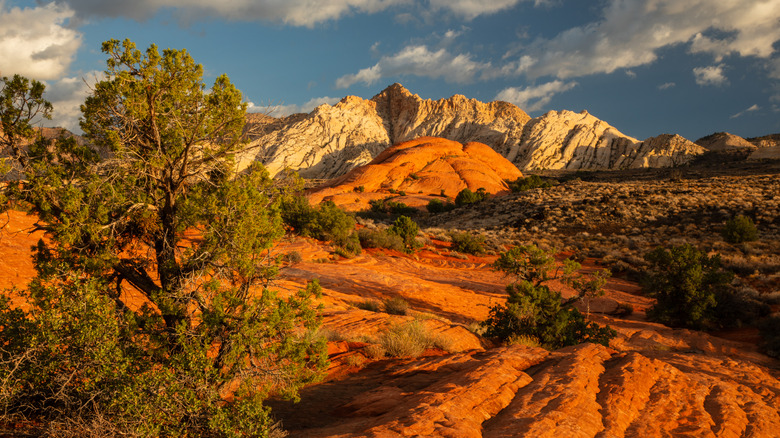
There are more than a few compelling reasons to opt for Snow Canyon State Park if you're craving a trip to southern Utah. In recent years, Zion National Park has been a bit of a poster child for the dangers of overcrowding at national parks.
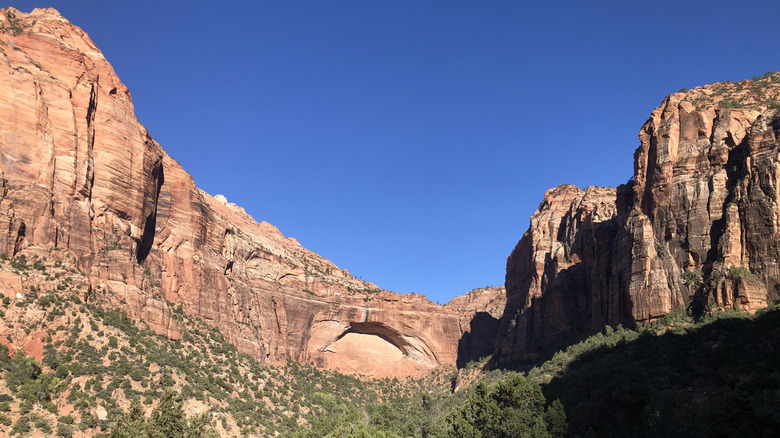
The marquee feature of Zion National Park is a massive canyon with sheer rust-colored walls and a striking silhouette against the sky. That's pretty much what visitors to Snow Canyon State Park get, too. Hikers and campers who just want those dramatic red rock vistas will be more than satisfied at Snow Canyon, where sandstone cliffs meet ancient lava rock, and you might spot the endangered desert tortoise (it's the reason Snow Canyon was set aside for protection in the first place). Not only will you get those red rock scenery shots without setting foot on a park shuttle, but you'll also have the chance to spot a range of biodiversity not found anywhere else in the state — an advantage that an over-trafficked park is far less likely to offer.
And while measures like a mandatory shuttle system and safety-focused permit caps on risky hiking trails have been implemented, this is still the second-most-visited national park in the U.S., and crowds are expected at Zion National Park. This doesn't mean good things for the park's ecosystems or for visitors seeking solitude. But there's a piece of good news in all of this, southwestern Utah has many photo-worthy public lands, and most of them are just as beautiful as Zion National Park. That's where Snow Canyon State Park shines.
Instead of the Grand Canyon, visit Grand Staircase-Escalante National Monument
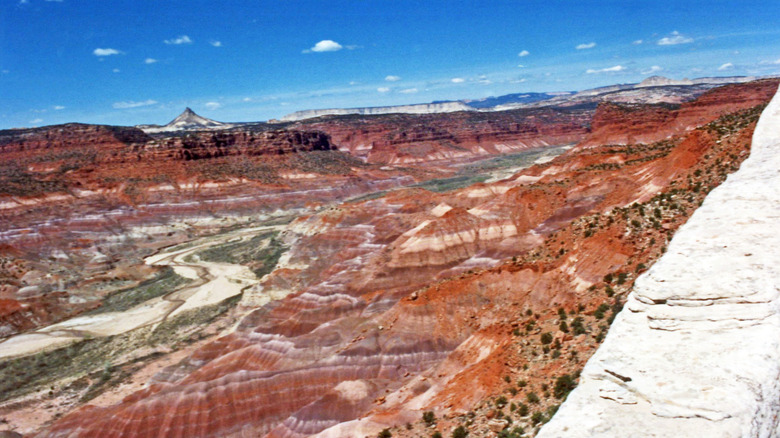
There is only one Grand Canyon, but unfortunately, everyone on the planet seems to know it. It's easy to conclude that it would be best both for the preservation of this one-of-a-kind natural feature and for your own visitor experience to find a substitute park — and while nothing can truly stand in for the Grand Canyon, traveling north to Utah's Grand Staircase-Escalante National Monument will give you a pretty good approximation of the crowd-free Grand Canyon experience.
In recent years, increasing peak-season crowds at Grand Canyon National Park have led to issues with littering, trail degradation, and a total lack of the awe-inspiring solitude in nature that many of said visitors are hoping for. The National Park Service tells visitors to expect long lines and congestion. But you won't have that problem with the colorful badlands and sprawling canyons of Grand Staircase-Escalante National Monument. The park is as geologically unique as it is beautiful, as colorful as it is vast, and recreation opportunities from hiking to off-roading are abundant — and unlikely to come with hordes of people who had the same idea. It's not even very far off the route if you were considering a Grand Canyon visit: in the vastness of the Southwest, 90 miles isn't terribly far.
We get it — there's no real substitute for saying you've seen the Grand Canyon. But as long as it's suffering from the strain of being on too many bucket lists, nature lovers seeking solitude or concerned about the health of this fragile ecosystem would do very well to drive the 90 miles north to Grand Staircase-Escalante National Monument for true solitude and just as many epic views.
Instead of Yellowstone, visit Lassen Volcanic National Park
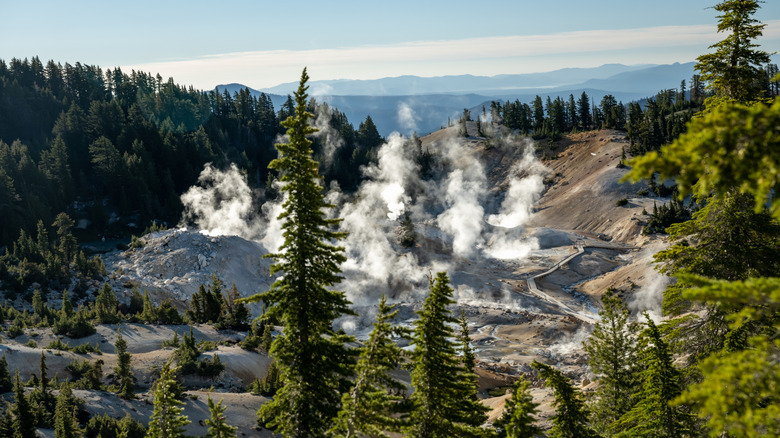
So far, all of our substitute park suggestions have at least been in the same region as their more popular counterparts — not so for America's fourth-most-visited national park. The best substitute for a trip to Yellowstone National Park, in our humble opinion, is not any of the vast public lands of the Mountain West but Lassen Volcanic National Park in remote Northern California. Why? Well, it's mostly a matter of geology.
You won't find any bison at this unsung substitute park, but you also won't find tourist hordes straining the infrastructure or taking liberties with the wildlife. What you will find are geysers. You'll find volcanoes. There will be fumaroles. Geothermal features of all shapes and sizes are the order of the day, and if you want your geyser photos without any fellow visitors wandering through them, Lassen Volcanic National Park is the place to be.
Ranking 47th out of 63 national parks in visitor numbers as of 2024, that's basically guaranteed. That plus a jaw-dropping scenic drive past craggy volcanic peaks, boating, fishing, over 150 miles of trails — it's good stuff. This remote corner of Northern California may not have Yellowstone's name recognition or tourist infrastructure, but Lassen Volcanic National Park goes toe to toe with its more famous peer for geothermal excitement and thoroughly trounces it for relaxed, crowd-free enjoyment.
This is to say, If you're eager to go to Yellowstone National Park but worried about bad tourist behavior or the park's strained infrastructure as visitor numbers soar and budgets do not, shifting to Lassen Volcanic National Park may offer some of the same experiences without the nagging worry that you're adding to the problem.
Instead of Olympic National Park, visit any of the Redwood National and State Parks
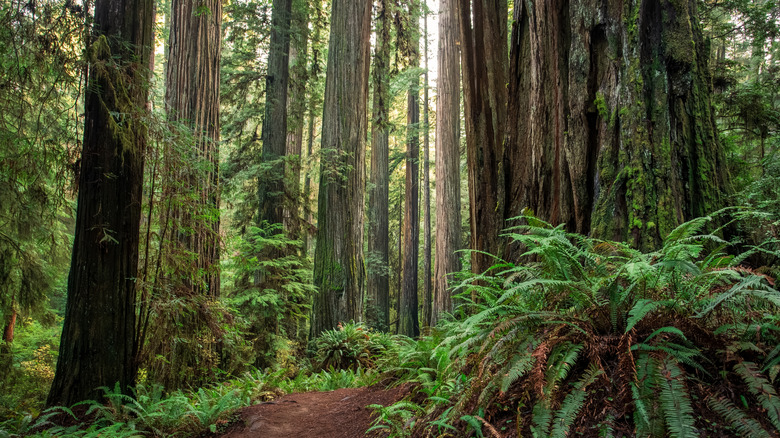
There are a few things that make Olympic National Park so unique: it's one of the few places on Earth where you can wander through a temperate rainforest; it's a UNESCO World Heritage Site; and it ranks eighth among national parks in visitor numbers, drawing almost 4% of national park visits annually. That popularity raises the question of whether it's possible to have a similar experience with a little more solitude, and to that end, we recommend Redwood National and State Parks in Northern California.
Technically, the Redwood National and State Parks system is a whole group of parks at different levels of management along the Northern California coast, and while each is unique, they all have the same focus: preserving the world's largest trees. Temperate rainforest? Ecologically, no, but the wet, foggy forests of coast redwoods certainly make a convincing lookalike. UNESCO World Heritage Site? For sure — the whole group of parks is inscribed on the UNESCO list as a unit, including the totally underrated Richardson Grove State Park.
While 95% of Olympic National Park is wilderness accessible only on foot, the road-accessible parts of the park are so popular that waits of up to two hours to get into the park by car are common. You can easily dodge that by opting for the Redwood Parks down south, which are spread out over a vast stretch of California's northernmost coast and are well positioned never to be unbearably crowded. While Olympic National Park boasts a huge range of ecosystems beyond temperate rainforest that can't be found in these parks, the Redwood parks are a great start if it's the forest you're longing to see.
Instead of Yosemite National Park, visit Kings Canyon National Park
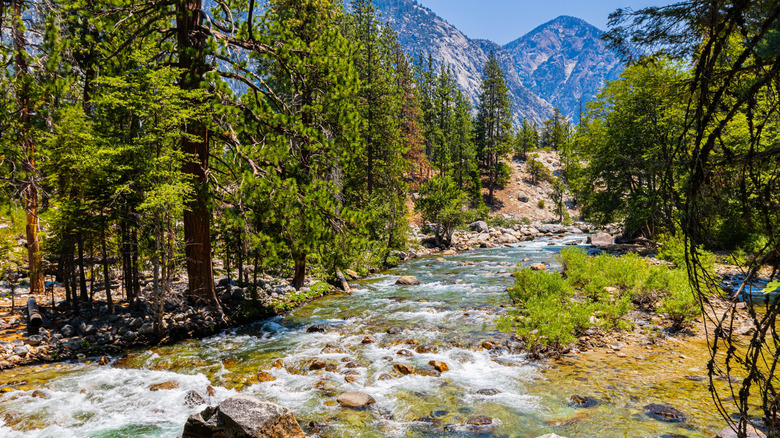
California has an embarrassment of national park riches, with a whopping nine parks — more than any other U.S. state. But just one of those parks is drawing large numbers of visitors, while the others lag far behind. That would be Yosemite National Park, a California icon ranking sixth in the nation for visitor numbers. Let that be your cue to head two hours southeast to the less-visited, still-spectacular Kings Canyon National Park this summer.
One of three national parks, including Yosemite, located in California's Sierra Nevada Mountains, Kings Canyon is hardly unknown among outdoor enthusiasts in California. But it doesn't have the name recognition or visitor numbers of Yosemite — not even close. What this means is that you'll see a whole lot of similar sights: sheer granite cliffs, similar wildlife and vegetation, and mountain peaks in the distance. It may not have Yosemite Falls, but it does have soaring peaks and plunging canyons, not to mention giant sequoias — some of the oldest and largest trees on Earth. It's even managed jointly with neighboring Sequoia National Park (the much more crowded park), for anyone looking to check off two parks for the price of one visit.
Yosemite visitors pay a heavy price for its iconic status. The park's traffic and congestion issues are already well known, and many believe they're going to get much worse following the recent announcement that Yosemite is doing away with the reservation system that was previously used to get a handle on congestion during the peak summer season. So much for serenity. Should you feel the mountains calling, try Yosemite's lesser-known sister park — you may find it's got much more of the wilderness you're looking for.
Instead of Acadia National Park, visit Apostle Islands National Lakeshore
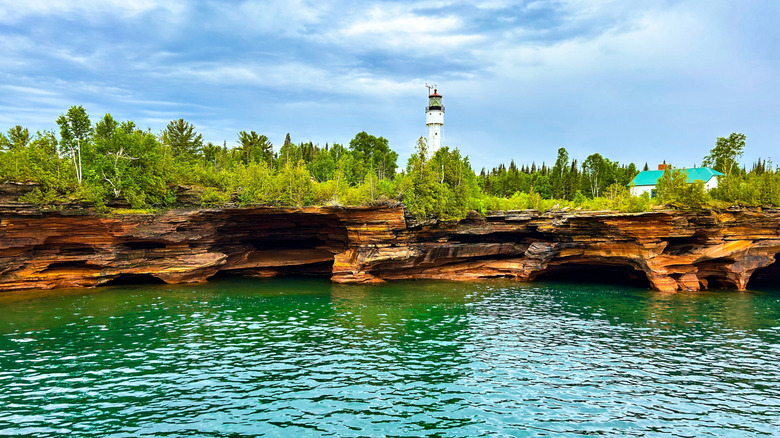
With its proximity to the affordable, coastal Maine escape of Bar Harbor and its unique status as New England's only national park, it's no surprise that Acadia National Park in southern Maine pulled in nearly 4 million visitors in 2024. If you're looking for rugged coastal scenery but would rather not contribute to the gridlock on Park Loop Road, we have a seemingly paradoxical suggestion: head inland to the Great Lakes, where Apostle Islands National Lakeshore offers truly untouched coastline.
Located in remote northern Wisconsin on Lake Superior is a stretch of coastline just as stunning as anything you'll find at Acadia National Park. Apostle Islands National Lakeshore is home to 21 islands, untouched beaches, and the largest number of lighthouses of any National Park Service unit. Yes, that's right — though Acadia is known for its lighthouses too, the Apostle Islands National Lakeshore has even more of them, some of which you can even stay in. Sure, Apostle Islands National Lakeshore admittedly does not have the sedate, historic charm of Acadia National Park, with its paved carriage roads and easily-accessible location. But that may be a good thing.
Acadia National Park is becoming a bit of a victim of its own popularity: traffic congestion, damage to park infrastructure, and delayed emergency responses are only a few of the complications that the park's sudden surge in visitor numbers has begun to cause. Apostle Islands National Lakeshore is decidedly not. That's why we think it's such a fantastic substitute for the rugged coastal stretches of Acadia, one where a far-flung location all but guarantees true solitude. You won't find that kind of adventure at America's seventh-most-visited national park.
Instead of Glacier National Park, visit North Cascades National Park
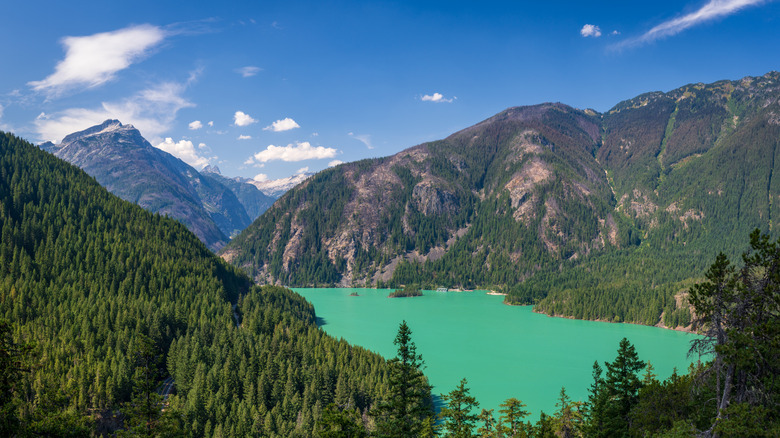
Glacier National Park has recently made all the wrong headlines. Due to its crowd control issues and the effects of climate change on its fragile ecosystem, it was included on a list of destinations conscientious travelers should bypass in 2026. In response, we suggest assigning the "Crown of the Continent" title to a new jewel: Washington's criminally underrated North Cascades National Park.
North Cascades National Park probably isn't one you've heard much about. As of the most recent ranking, it drew the second-fewest visitors of any national park. But that's the park's secret. Boasting the most glaciers of any park outside Alaska, it's actually richer in Glacier National Park's namesake feature than Glacier National Park itself, and the rugged mountains and valleys of the Cascades in rural Washington feel untouched in a way Glacier, with its much greater tourist numbers, likely will not. With countless alpine lakes and mountain hikes to explore, you're not likely to feel like you've missed out on anything by opting for this hugely underrated park.
The fact that Glacier National Park is beginning to suffer from overcrowding is not totally surprising, considering the more than 3 million visitors who make their way to the northern edge of Montana to visit the park each year — but it might be disappointing to travelers who had the famously scenic park on their bucket lists. Luckily, though, Glacier National Park isn't the only national park with stunning alpine views — and our substitute suggestion is one of the least-visited parks in the continental U.S. It may not be the Crown of the Continent, but it's certainly the heir apparent — and we suggest you get there before everyone else figures that out.
Methodology
Let's address the elephant in the room — you will never find a substitute for an iconic national park that truly captures what made it so iconic in the first place. These parks are great stand-ins, but they're by no means one-to-one comparisons or even the only public lands that could be proposed as substitutes for overcrowded parks. So what made us choose the substitute parks that we did?
To make our alternative suggestions, we first thought about what visitors love about the parks in question. Whether it's a park's most unique features (Yellowstone's geothermal wonderland) or the general reason for its appeal (Zion's towering red rock cliffs), we first analyzed what makes the most popular parks so popular. From there, we looked for an appropriate substitute, somewhere that had the same draws for visitors, even if it didn't come with a bucket list-worthy name attached. We didn't aim for anything comprehensive — that would be futile — but this method allowed us to choose parks that could provide a similarly rewarding experience, only without the crowds.
With overcrowding raising alarm bells at the National Park Service and in the media, there's never been a better time to explore the wide array of experiences that the United States public lands have to offer. They don't all get the love they deserve — so as you plan your next outdoor adventure, consider spreading that love a little to these unsung parks where crowding is rarely an issue and nature is still gloriously wild.