
The Best Texas Lakes For Sunny Shores, Smooth Waters, And Slow-Paced Fishing
People might associate Texas with ranches, rodeos, and wide-brimmed hats, but the Lone Star State's lakes add a bit of diversity to the story. They number in the thousands. Some are natural, but the vast majority are man-made. These dams were constructed across the state throughout the mid-1900s to control flooding, and they left Texas with endless shorelines, serene water, and some of the country's best fishing. If slow mornings by a lake with a rod in hand and nowhere in particular to be sounds like your kind of trip, Texas may well be the place for you.
Every lake in the state has its own distinct character. In Hill Country, they fill the gaps between limestone canyon walls. In the east, some disappear into thick forests where the water is emerald green, with alligators drifting between the trees. Out west, they can open up so wide that the far banks can get lost on the horizon. Some have full-service marinas, bars, and restaurants; others have nothing but herons wading in the shallows and the occasional eagle circling overhead.
You can spend your days on Texas lakes kayaking or paddleboarding. Hiking trails offer the chance to take in the scenery from land, and some of these lead to stunning overlooks. But for many, it's the fishing that keeps bringing them back. There's a wide variety of fish species in Texas lakes, and they're well stocked, meaning you'll rarely leave empty-handed. The only question is, which lake should you visit? Here are 10 we believe are well worth the effort.
Lake Travis
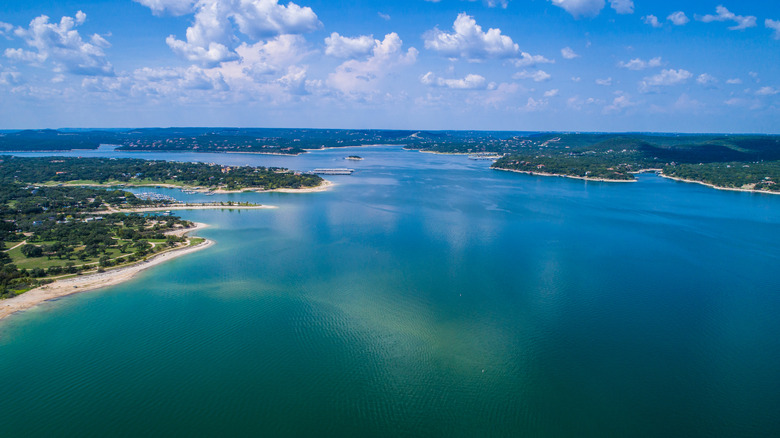
Lake Travis looks like a massive, twisting serpent from above. It follows the snaking path of the Colorado River and stretches for just about 64 miles through the wildly popular and scenic lake region of the Hill Country — and it has a shoreline that constantly shifts. You'll find sandy beaches at Bob Wentz Park, where a narrow peninsula called "The Point" is ideal for picnicking and swimming. On the central stretch of the northern shore, you'll find the sparkling waters and pristine shoreline of Arkansas Bend, while Pace Bend, with its sandy coves, rocky outcrops, and dramatic limestone cliffs, offers nine miles of diverse shoreline. The limestone rises steeply at Pace Bend, and some spots give brave souls the chance to jump straight down from the rocks into the lake below.
In the summer months, the water is at a pleasant temperature. On most days, it's also calm, particularly in the morning. You could spend hours just lazing by the lake, sipping coffee, and admiring the mirror-like surface. Near the banks, the mist still clings in the dawn hours, giving you the perfect setting for quiet contemplation. This is also the ideal time to get the rod out. Largemouth bass show up in good numbers, particularly in spring and fall. In early February, white bass arrive and inhabit the waters until May, while various species of catfish also frequent the lake. To top things off, the sunsets on Travis are really special, and The Oasis, a restaurant perched high up on a cliff above, is one of the best spots to watch them.
Canyon Lake
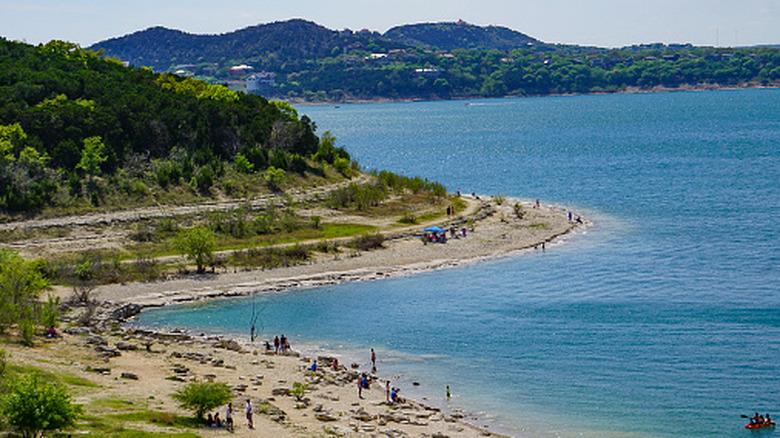
In the rolling limestone hills of Comal County is the "Water Recreation Capital of Texas," Canyon Lake. It's nestled between San Antonio and Austin and stretches across 8,300 acres. And despite the activities on offer, it also draws in those seeking nothing more than a quiet time by the water. The clear, turquoise lake is fed by the Guadalupe River, which is in turn fed by cold groundwater springs, keeping things cooler and clearer than most Texas reservoirs.
The recreation facilities include volleyball courts and picnic areas at Comal Park, which sits on a massive sandy beach and is the ideal spot for a family day out. Near Potters Creek, you'll find sheltered coves where kayakers can glide through the still water or paddleboard across the calm early morning surface beneath limestone walls. Sailors can enjoy the Hill Country breeze across the lake, while a walk across the top of Canyon Dam at Overlook Park opens up views in all directions. But if it's real peace and tranquility you seek, Canyon Park on the north shore has two swimming beaches that are kept free from motorized boats.
But it's the fishing that distinguishes Canyon Lake from others in Texas. You won't find rainbow and brown trout in most other Texas lakes, but they do well here in the cold river tailwaters. On the lake, largemouth, striped, and white bass, as well as catfish, are common and reliable — and they swim among one more unusual attraction: the submerged ghost towns of Hancock and Cranes Mill, which draw in scuba divers seeking to explore their eerie remains.
Possum Kingdom Lake
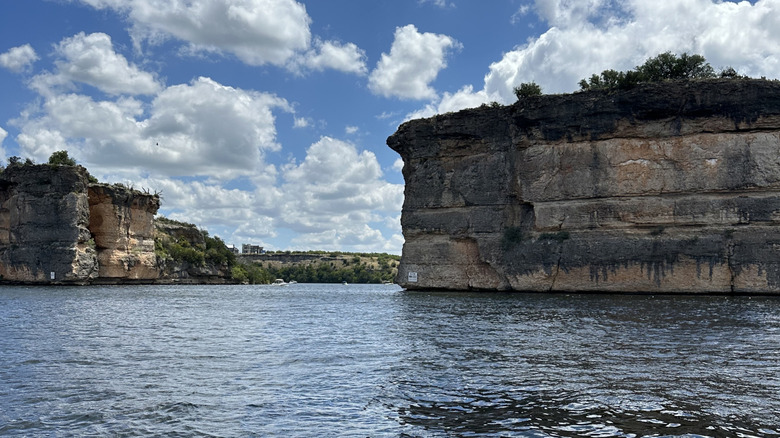
Just two hours west of Fort Worth is a lake set in an estimated 20,000 acres, ringed by cliff-lined shores and scenic coves. Possum Kingdom Lake's identity centers on Hell's Gate, two towering rock formations that rise about 90 feet, creating a narrow passage between the mainland and Devil's Island. It has become an iconic summer gathering spot and the setting for spectacular Fourth of July fireworks that light up the canyon walls. Those cliffs and rock formations create cover for large schools of fish to gather, so it's another fantastic lake for anglers. Costello Island also offers deep water and rocky drop-offs that hold plentiful fish.
The Possum Kingdom Lake shoreline stretches for more than 300 miles, and much of it is accessible from lakeside trails that wind through the canyons to overlook points. Possum Kingdom State Park borders the lake and offers campsites, picnic areas, and hiking routes with even more vistas, while restaurants like The Chaparral Grille & Spurs Bar offer up dramatic views of Hell's Gate and are the perfect way to end the day.
Lake Buchanan
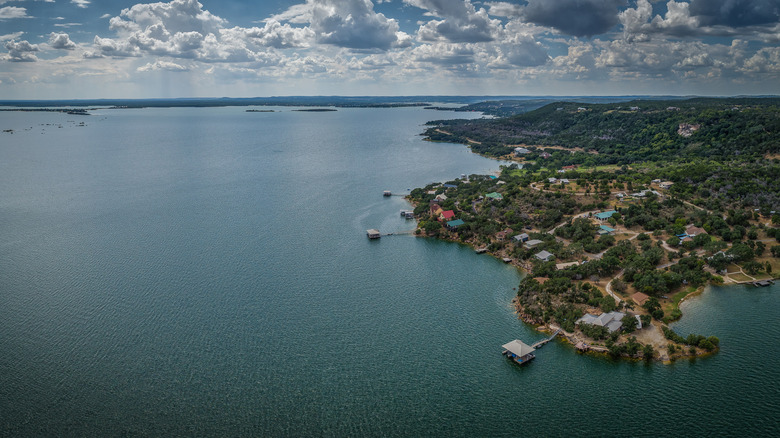
Lake Buchanan has more than 120 miles of shoreline, and with a 30-mile length and a 5-mile width at its broadest point, there's plenty of room for escape. It sits just an hour's drive northwest of Austin and is the largest of the Highland Lakes. The granite and gravel beaches that line the water's edge are hard-packed and great for couples who really do enjoy long walks along the beach. On the lake, kayakers and paddleboarders can find protected inlets tucked between the banks, while sailors love to harness the steady winds that funnel through the Hill Country canyons.
The fishing draws people in, too. Striped and white bass thrive in Lake Buchanan, and spring brings spawning runs toward Beaver Creek and up the Colorado River. Guided fishing tours at sunset put you on the water as the light turns gold and the canyon walls darken around you. Another draw for visitors is the Vanishing Texas River Cruise, a 120-passenger boat that will take you on a variety of cruises through the Colorado River canyon. Bald eagles soar above the steep, rising walls, and waterfalls cut through the rock face as the landscape opens up in such dramatic ways that make the short drive from Austin feel like little effort for a genuine reward.
Lake Conroe
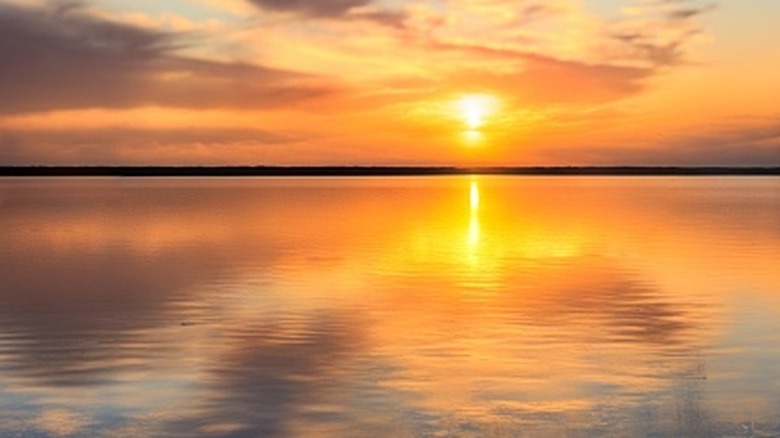
The city of Conroe is situated less than an hour's drive north of Houston. It started life as a small oil and lumber town, but just beyond is a lake often referred to as Houston's favorite. Lake Conroe is a 21-mile-long man-made reservoir, and its 150 miles of shoreline are dotted with luxury condos and golf courses in the south. On the northern shores, the Sam Houston National Forest takes over, where you'll be treated to a much quieter experience.
Several areas are designated for swimming, and you should stick to them because the lake is home to alligators. Scott's Ridge on the northwest has a spacious sandy beach with pavilions, picnic tables, and grills. At the southern end, Lake Conroe Park offers fishing piers, stunning lake views, and tall shady trees. Evan's Cove on the western side is probably the quietest option. It has a gently sloping grassy bank shaded by old trees and is the ideal spot for a slow swim. If it's open water you want, you can rent a boat and a captain and swim from the deck, or you can bring a tube or wakeboard and get pulled across the glittering surface.
Lake Conroe is also one of the state's top fisheries. The five species you'll find across most of the state — largemouth bass, catfish, hybrid striped bass, bluegill, and crappie — all thrive here. Ten-pound bass are a regular catch, and the bluegill can grow to sizes that might surprise even the most experienced of anglers. The hybrid striped bass will put up a bit of a fight, too, if you're ready to put the slow-paced fishing to bed for a bit.
Caddo Lake
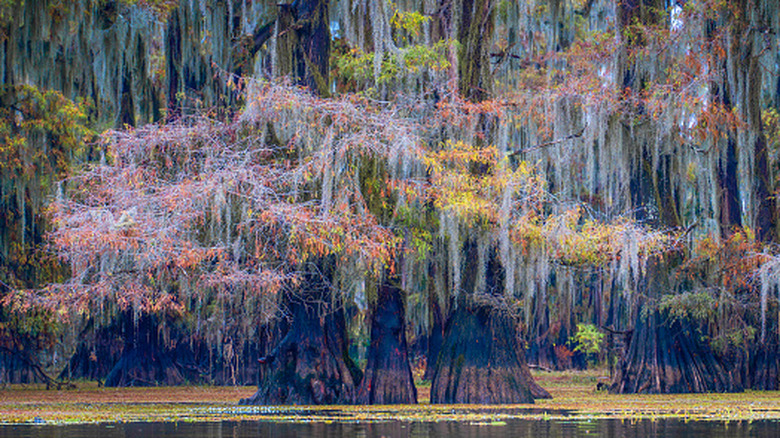
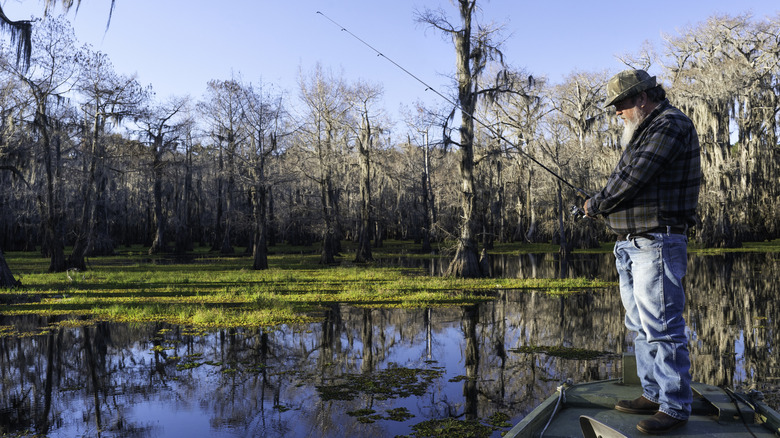
The cypress forest that rises from Caddo Lake is often described as the largest on our beautiful planet. Growing directly from the lake floor, the trees rise from the dark, still emerald water with trunks thick and swollen at the waterline. Long curtains of Spanish moss hang eerily from every branch like something from a ghost story, and delicate lotus flowers grow among lily pads the size of dinner plates on the surface. The whole area boasts a unique Gothic natural beauty, and it's named after the Caddo Indians who once lived along its banks. It's the largest natural lake in Texas, but it is actually split almost perfectly down the middle and shared with Louisiana. You'll find it about three hours east of Dallas, just outside a small town curiously named Uncertain.
The whole place splits into tangles of channels, ponds, and dead ends, and paddling around the maze can easily fill a day or two. Great herons stand motionless in the shallows, beavers build among the roots, and snapping turtles the size of manhole covers surface without warning. Alligators and water snakes ply these channels, too, so stay alert. There are also around 70 species of fish living in this lake, and casting out for bass in the haunting silence is popular with anglers. Around 10 paddle trails wind through the bayou, but it's a good idea to hire a guide; the channels twist and double back on themselves, and it can be easy to lose your way. Pontoon boat tours can take you out on fishing expeditions, but if you'd rather sit back and absorb the surreal atmosphere, sunset tours are on offer, too.
Inks Lake
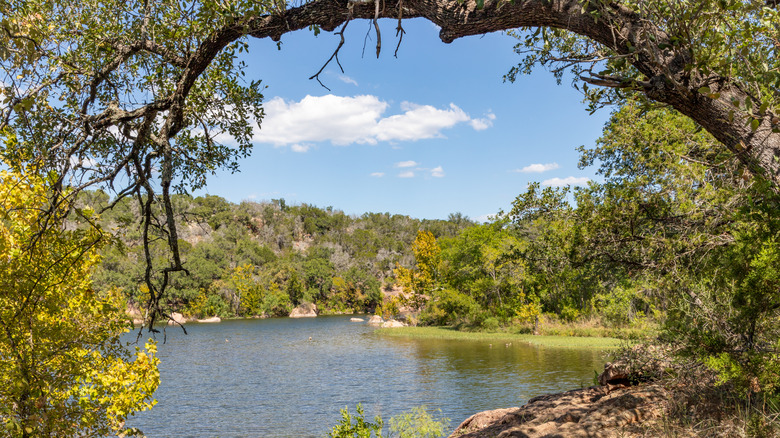
The Highland Lakes are a chain of reservoirs along the Colorado River in the Texas Hill Country. At just 4.2 miles long and 3,000 feet wide, Inks Lake is one of the smallest. But what it lacks in size, it makes up for in calm. The water is broad and still, often so smooth it looks like a sheet of glass. The gentle, mostly untouched shores of trees and dry, rolling hills are broken here and there by outcrops of weathered, multicolored rock. The area is quiet and has a remote feel to it, despite there being a new four-lane bridge crossing it. The original bridge remains, too, but it now acts as a pedestrian walkway perfect for taking in the views across the water.
Inks Lake State Park is a sprawling 1,200-acre expanse of cedar and oak woodland, and the area is threaded with nine miles of shady trails and peaceful waters. Rangers lead guided hikes around the trails, but if you're only interested in the water, they can also take you out on paddling trips. A large section is marked as a no-wake zone, which keeps the polished waters flat for paddlers in canoes or kayaks and those drifting along on SUPs.
When the rains have been heavy, waterfalls emerge upstream where Valley Spring Creek feeds the lake. Anglers will find catfish and sunfish, and you can cast throughout the park, including from either of the lake's two piers, or you can launch your own boat from the ramp. The state park will even lend you a rod and tackle for nothing if you want to leave your gear at home, so just find a spot and wait. And make sure you stay for sunset; they are absolutely worth it at Inks Lake.
Lake Texoma
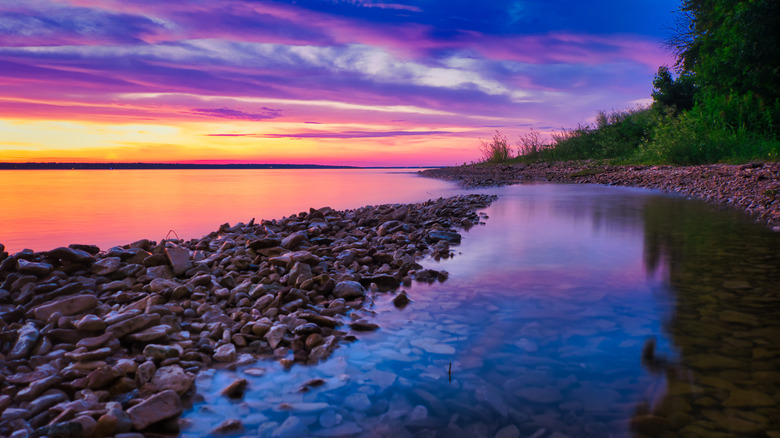
Two-thirds of Lake Texoma may sit in Oklahoma, but Texans have long claimed this 89,000-acre body of water as their own. It boasts 580 miles of shoreline, with long stretches of sand giving way to rocky bluffs and old timber that still stand in the shallows. You can launch a boat from there and head out to the islands, where you'll find more sandy shores that make for excellent summer camping. The water remains warm enough for swimming through October, but be careful; Lake Texoma is one of Texas' most snake-packed lakes. However, most of them are nonvenomous, although you might encounter cottonmouths in marshy areas.
The lake is so vast and the wind so reliable that sailors treat it like the ocean. You can also rent a pontoon or a kayak if you just want to drift toward the horizon and take it all in. By fall, the lake quiets down, and the fishing picks up. The striped bass here do not need stocking — Texoma is one of the only freshwater lakes in the country where they breed on their own. Come February, the cold has taken over, but it's also the time for big catches. Record-breaking smallmouth bass have been caught in both Texas and Oklahoma waters, and there's even a record of a blue catfish weighing in at an incredible 121.5 pounds.
Toledo Bend
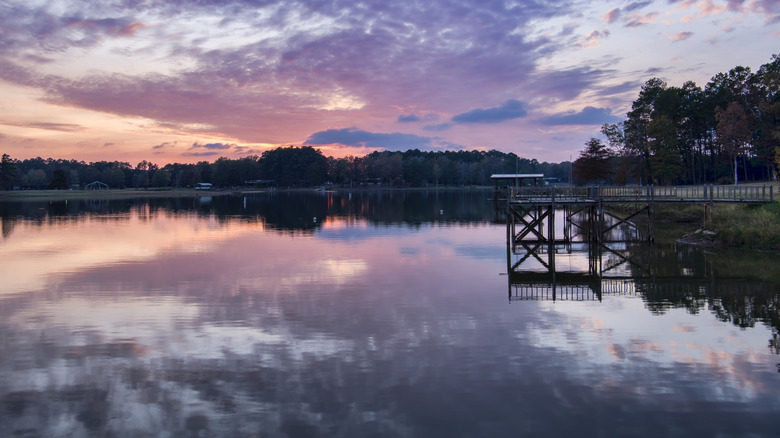
The biggest reservoir in Texas, and the American South's largest artificial body of water, is Toledo Bend. It straddles the Louisiana border for 65 miles across 185,000 acres and has a staggering 1,200 miles of shoreline. The color of the lake is a striking blue, and it's darkened by the dense forest that crowds every bank. But it's not just the shoreline that is crowded with woodland — Toledo Bend is far from your typical lake. Beneath the surface of the lake, the old forest that once covered the area is still there — and this underwater forest provides habitat for all sorts of fish.
This has made Toledo Bend a premier spot for anglers. So much so that Bassmaster magazine named it the No. 1 bass fishing lake in the country. In fact, it was the first lake ever to hold that title for two consecutive years. The sunfish grow to surprising sizes, while the striped bass put up the kind of fight that keeps folks talking long after they've gone home. Tournaments are held throughout the year, but there is still plenty of quiet water from where you can just cast out and relax for the day. Swimmers are welcome at Toledo Bend, too; just don't go too close to the dam. Out on the water, you can take part in everything from wakeboarding to jet skiing, but there are also calmer stretches around that suit kayakers and canoeists.
Lake Whitney
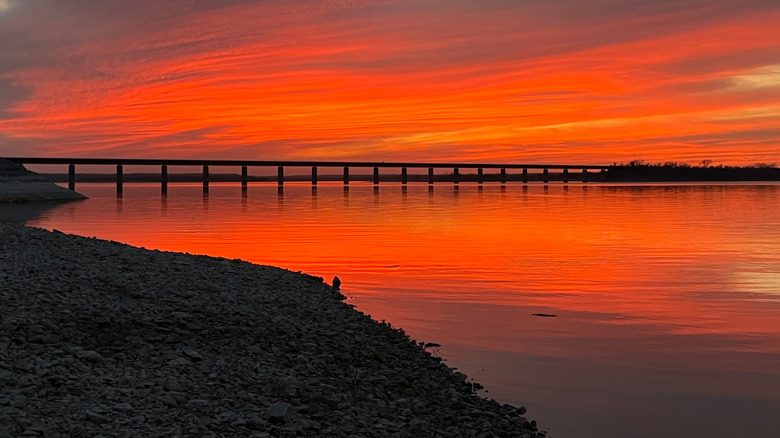
Officially named the Getaway Capital of Texas, Lake Whitney is a charming town sandwiched between Fort Worth and Waco. Its namesake lake is a Brazos River reservoir that covers 23,500 acres of endless, unspoiled natural beauty. The water is some of the cleanest in the state, and its 225 miles of shoreline include long stretches of quiet, undeveloped space. If that's not enough, the 775-acre Lake Whitney State Park opens onto the Washita Prairie, where you'll be treated to wildflowers painting the landscape every spring.
There's a wide stretch of sand at the day-use area that gives you direct access to the water, which is wide and open enough for water skiing and other activities without ever feeling too crowded. There are quiet coves tucked along the shoreline for kayakers and canoeists, and rentals are available if you don't bring your own. On shore, walkers are catered to with the Two Bridges Trail. It takes you on a mile-long ramble beneath post oaks and over two wooden footbridges, while the Towash Forest Trail follows the shoreline for a mile, where you can keep your eye out for ospreys flying above and loons feeding along the water's edge. Other wildlife that call the park home are bald eagles, deer, wild turkeys, and armadillos.
Lake Whitney has a long history with fishing, too. The first-ever competitive bass tournament took place here in 1955. In more recent times, the lake hosted the Bass Pro Tour competition in March 2026, while a youth fishing competition brings families to the shores every June. Largemouth, striped, and white bass all swim here alongside blue catfish, and like other state parks, they'll even lend you fishing equipment if you turn up empty-handed.
Methodology
We looked to a mix of authorities to compile this list of Texas lakes, including fishing associations like Bass Anglers Sportsman Society, while brands such as AAA and Hotels gave us travel context. We also used Texas-focused news sources, including KSAT-TV and TexasOutside, to help us. Together, they allowed us to compare lakes for shore quality, water calmness, and fishing reputations.
So, if you're in the area, why not head down to any of these lakes and enjoy the sunny shores and serenity? If you're a tourist, these lakes offer something different to the ranches, rodeos, and open highways that you'll also enjoy on a visit, giving you something above the regular sights and sounds of the Lone Star State.