
Phoenix, Arizona's 5 Most Beautiful Historic Buildings
Architecture enthusiasts plan trips around visiting Miami's Art Deco District, strolling down Charleston's Rainbow Row, or cruising past Chicago's iconic landmarks on a river boat tour. But in my opinion, several other U.S. cities — though somewhat lesser-known for their historic buildings — are just as worthwhile. Over the winter, I wrote about the best art and architecture spots around Philadelphia, where I'm currently living. Now, as the cold weather drags on here on the East Coast, I'm remembering the sunny landscapes (and fascinating architecture) of Phoenix, another city where I once lived for about a year. I also have extended family here and visit whenever possible.
Arizona's capital has so many interesting and beautiful old buildings that it's hard to narrow down the list of those worthy of visiting to just five. From Frank Lloyd Wright's winter house and a gorgeous old vaudeville theater to a romantic Spanish colonial landmark that's home to a terrific museum dedicated to American Indian art, here are my top recommendations for architecture fans visiting Phoenix.
Taliesin West
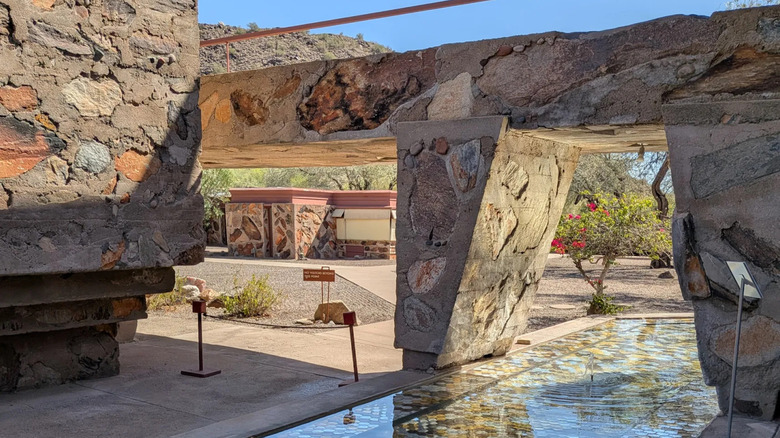
I've been to Fallingwater, which has been called the best all-time work of American architecture, several times, and I've twice toured Frank Lloyd Wright's home and studio in Oak Park, Illinois. I'm a big Wright fan, needless to say, so I have to put Taliesin West, the legendary architect's sustainably built winter home and "desert laboratory," at the top of this list.
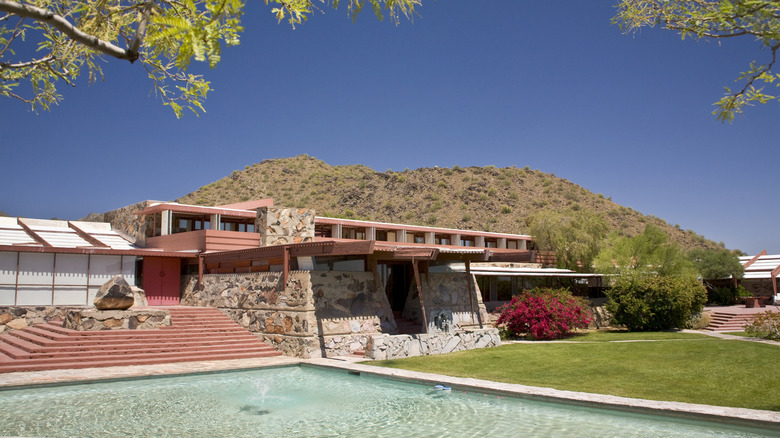
Located in Scottsdale and surrounded by the Sonoran Desert, Taliesin West was built in 1937. It's a striking example of organic architecture that was constructed with locally sourced stone, redwood, and recycled materials. Wandering through its innovative indoor-outdoor layout, characterized by geometric shapes, natural light, flowing water, and terraced gardens, is an ethereal experience. Visitors can take a self-guided audio tour of the building and the grounds or join a longer behind-the-scenes tour with an expert guide. Tickets start at $44 per person, and advance reservations are recommended.
The site is named after Taliesin, the home Wright built in his native state of Wisconsin. Travelers can visit while exploring the Frank Lloyd Wright Trail, a 200-mile route that takes you past a series of his Midwest masterpieces.
Arizona Biltmore Hotel
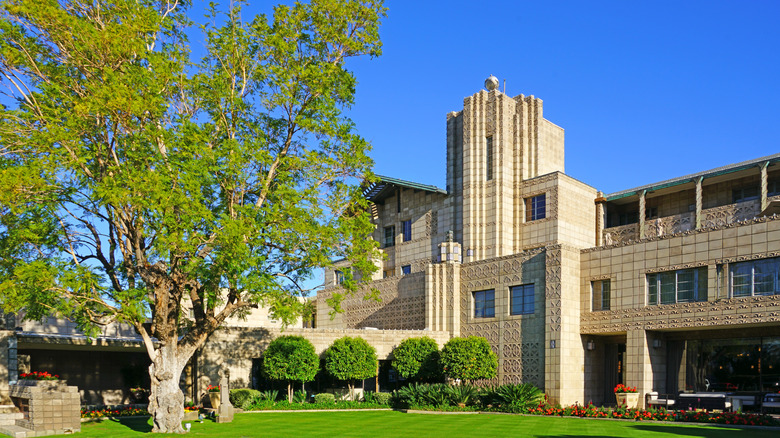
Taliesin West isn't the only building in Phoenix that Frank Lloyd Wright had a hand in designing. The Arizona Biltmore, located east of central Phoenix in the ritzy Biltmore neighborhood, is a historic luxury resort that's a must on the to-do list for architecture fans visiting the city.
The elegant Art Deco-style building, constructed in 1927, was a collaboration between Wright and Albert Chase McArthur. Like many of Wright's works, it was intended to blend in with the surrounding landscape. As you explore the manicured grounds around the resort, take a moment to admire the building's concrete blocks, which feature geometric patterns that Wright designed to resemble palm trees. It's now known as the architect's signature "Biltmore Block" style.
Even if you're not a guest at the hotel, you can step inside the lobby to admire "Saguaro Forms and Cactus Flowers," a stained glass art installation based on a 1927 drawing by Wright. Travelers can also visit the glamorous Wright Bar, named for the architect. The drink to order is the Tequila Sunrise; it was invented right here by the house bartender, Gene Sulit, in the 1930s.
Orpheum Theatre
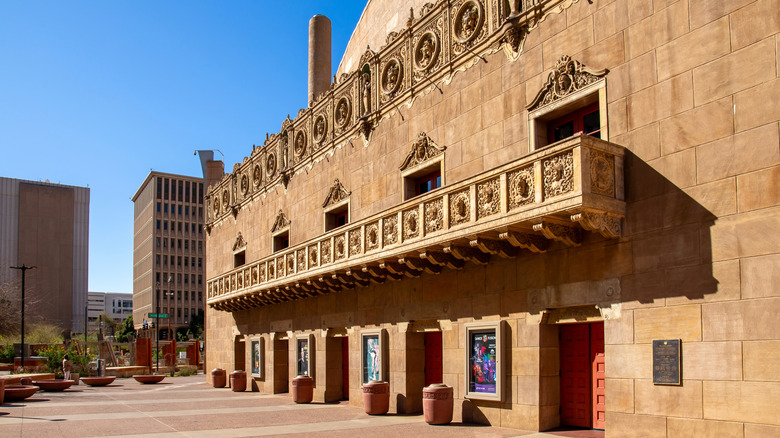
Right next to Phoenix City Hall, which happens to be an interesting piece of modern architecture in its own right, is the opulent Orpheum Theater, another of my favorite old buildings. It opened in 1929 with a staggering 1,800 seats to entertain the public with "picture, talkies, and stage." When I first visited Phoenix, knowing little about the city's cultural history, I was surprised to encounter a historic performing arts venue of this size (the stage is more than 100 feet wide). Apparently, during the height of vaudeville's popularity, it was the only theater between Los Angeles and Denver that could handle the busy lineup of shows that passed through the area.
On the exterior, the venue boasts an opulent Spanish Baroque Revival-style facade. Inside, the design is meant to give theatergoers the feeling that they're actually outside, an aesthetic that's beautiful but somewhat difficult to describe. The theater's website uses the word "atmospheric" and further states that it gives the audience the feeling that they're "sitting in a garden surrounded by Spanish-style buildings, murals of mountains, and forests, under puffy white clouds moving across a deep blue domed sky." You can experience it for yourself by getting tickets to an upcoming event; personally, I'd choose an evening of entertainment with David Sedaris.
Tovrea Castle
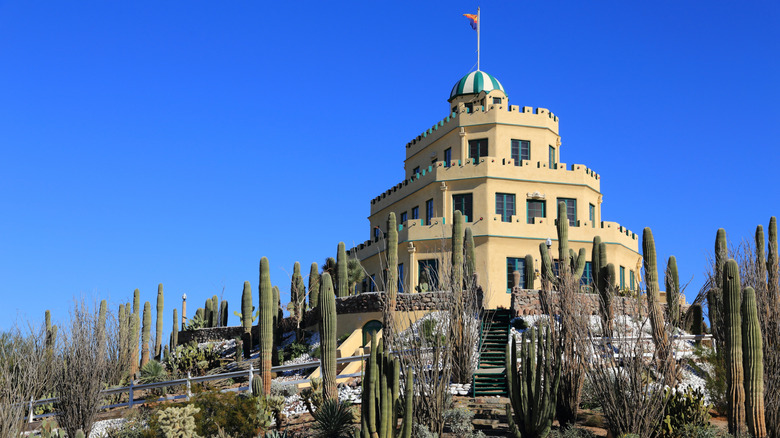
One of the city's more unusual historic buildings is the "wedding cake house," which is officially known as Tovrea Castle at Carraro Heights. Listed on the National Register of Historic Places, it was built as a hotel in the late 1920s by an Italian entrepreneur, Alessio Carraro. The four-story structure was meant to be the centerpiece of a luxurious resort, but Carraro's vision wasn't fully realized, and much of the property was sold off in 1931.
Today, the whimsical castle rises up against a bright blue sky, framed by cacti of all shapes and sizes, not far from the Phoenix Zoo in Camelback East. You can only visit the so-called "Jewel in the Sonoran Desert" and its spectacular cactus gardens (with plants from all over the world) on a tour ($22 per person, or $25 for last-minute tickets, as of this writing), and you might have to book months in advance to get a spot. While you're in the neighborhood, consider making a day of it with a stop at the Desert Botanical Garden in Papago Park.
Heard Museum
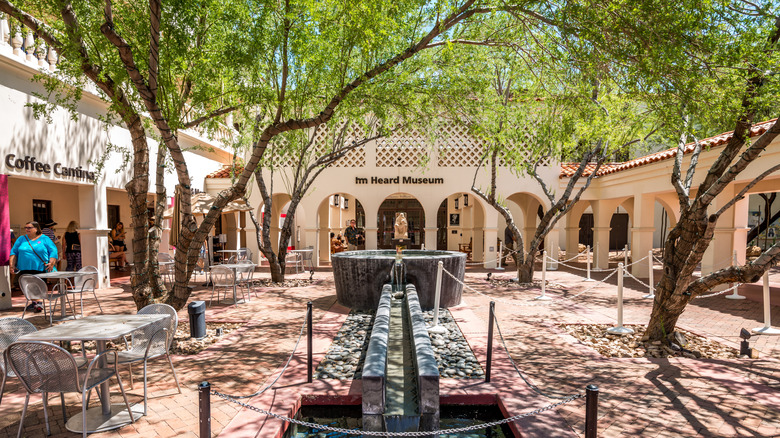
I have a soft spot for the Heard Museum. With its colorful collections of Indigenous art and intriguing historical displays, it feels to me like a Southwest counterpart of the wonderful National Museum of the American Indian at the Smithsonian. My great-uncle, a longtime resident of Phoenix, first took me here years ago. After we explored the exhibitions together, we sat in the museum's leafy courtyard, sipping coffee as I started to truly pay attention to how beautiful the building itself is.
Like many other architectural landmarks around town, the museum was designed in the 1920s in a Spanish Colonial Revival style. But the building has since been enhanced to include elements of Native American art and architecture traditions. In the newer galleries, you'll notice rounded walls and organic shapes; according to Studio Ma, the firm behind the redesign, it's inspired by the concept of "stones in a river," with poplar walls that bend and twist as they lead visitors through the exhibit spaces.
To me, the Heard Museum's architecture represents the best of both worlds. It combines historic Southwest charm with a modern sensibility inspired by the region's Native American roots. If you're interested in learning more about Arizona's original inhabitants after spending some time at the Heard, check out Casa Grande Ruins National Monument, an ancient archaeological site in the desert, about an hour outside of Phoenix.