
The 5 Busiest Airports In The Midwest, According To Data
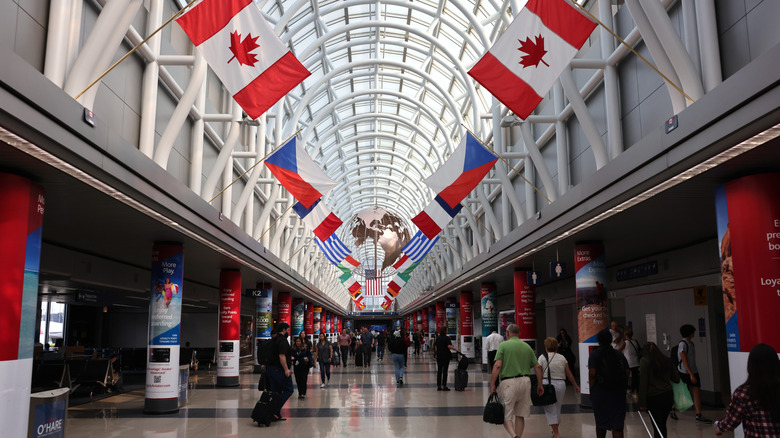
The Midwest is often called flyover country, a large swathe of land in the center of the United States seen by many only through airplane windows. But this is an outdated and unfair view of the region. Priceline's 2026 Travel Trends Report placed the Midwest among the year's hottest destinations, while Chicago O'Hare International Airport, serving the region's largest city, is one of the busiest airports in America, handling 80 million passengers annually. Using the Official Aviation Guide's (OAG) preferred metric, seat capacity — meaning how many airline seats are available to and from an airport in a given time period — O'Hare's capacity in 2025 was 50.58 million, making it the world's eighth busiest airport that year.
O'Hare is a bit of a Midwest outlier. A huge aviation hub, it operates flights to regional airports, coastal cities, and numerous international destinations. According to FlightsFrom, O'Hare has the capacity to operate a whopping 1,073 flights daily, more than any other airport in North America. Though much smaller in scale, other significant travel hubs are scattered across the Midwest, including Detroit Metropolitan Wayne County Airport and Minneapolis-Saint Paul International Airport, both of which can operate more than 300 flights daily and welcomed more than 30 million passengers in 2025. St. Louis Lambert International Airport in Missouri and Chicago's second airport, Chicago Midway International, also serve millions of travelers annually and connect travelers to destinations in the Midwest and beyond.
The airports below have been selected based on available data, including seat capacity, number of flights operated, and passengers handled, drawn from official industry resources like the OAG, the Federal Aviation Administration (FAA), and airport data sets. If you plan to fly to or from the Midwest this year, these are the five most bustling transport hubs you're likely to pass through.
Chicago O'Hare International Airport
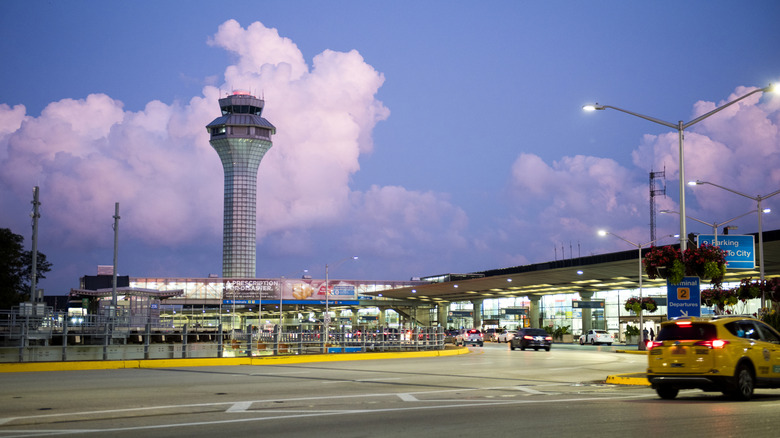
Based on operated flights, O'Hare is the busiest airport in the U.S., with the capacity for more than 1,000 daily, compared to second-place Hartsfield-Jackson Atlanta International Airport, which can operate a little over 900. In terms of seat capacity, only Atlanta and Dallas-Fort Worth International offered more seats than O'Hare in 2025. But the airport is still growing: expensive upgrades, scheduled for completion within the next few years, include a new concourse, additional floor space for amenities, and the introduction of 19 extra gates by 2028. If you're an inbound traveler, Chicago is a fun (not to mention iconic) place to visit, whether you're watching a Cubs game at Wrigley Field or spending an afternoon strolling through Hyde Park.
O'Hare currently serves 174 U.S. cities, with non-stop flights to all corners of the Lower 48. Fancy escaping to one of America's off-beat spring break destinations, like Miramar Beach or Sanibel Island in Florida? You can fly directly to nearby airports. Adventurous travelers can also fly to ski hubs like Vail and Aspen in Colorado or Jackson Hole in Wyoming, and to national parks including Glacier via Glacier Park International Airport, or Yellowstone, via Bozeman Yellowstone International.
If you'd prefer to travel internationally, you're spoiled for choice. Among the 60-plus cities on O'Hare's international roster are some of the world's most sought-after travel destinations: Tokyo (both airports), Seoul, Paris, London, Amsterdam, Sao Paulo, Bogota, and Mexico City. No wonder it was considered America's most connected airport in 2025.
Minneapolis-Saint Paul International Airport
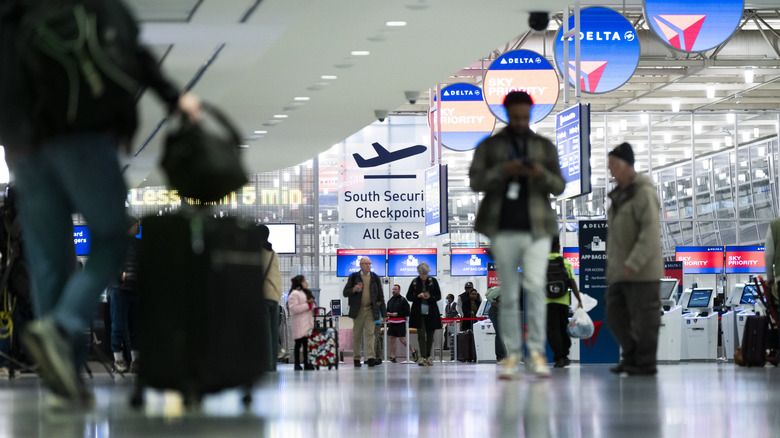
Minneapolis-Saint Paul International Airport, the main transport hub serving the Twin Cities and the state of Minnesota, is also one of the largest in the Midwest. The airport handled more than 36 million passengers in 2025, breaking records for the number of international destinations (35) and international passengers (3.61 million) in a single year. Straddling the Mississippi River, the Twin Cities have grown into one of the most vibrant destinations in Middle America, with a booming performing arts scene bolstered by significant public funding, a sprawling park system along the riverfront, and dazzling, award-winning ethnic cuisine. So it's only fitting that it should have an airport to match that growth.
Minneapolis-Saint Paul International, already sizable, is undergoing further development, including improved parking facilities, a concourse expansion, additional gates, and new passenger amenities. From 2026 to 2028, almost $2 billion has been earmarked for new airport projects. Delta is the major airline operating out of the airport, accounting for the majority of flights and ferrying passengers to major U.S. cities like New York, Miami, San Francisco, and Seattle. Delta also flies to regional Midwest airports such as Rochester, International Falls, Bemidji, and Hibbing in Minnesota, as well as Aberdeen, South Dakota, Cedar Rapids, Iowa, and Madison, Wisconsin.
Delta and other major air carriers fly internationally from the Twin Cities. In Europe, you can get to Reykjavik, London, Paris, Copenhagen, Amsterdam, and even as far as Rome on direct flights. Alternatively, there are multiple Central American destinations at your disposal, including the Caribbean, several cities in Mexico, Honduras, Belize, and Costa Rica.
Detroit Metropolitan Wayne County Airport
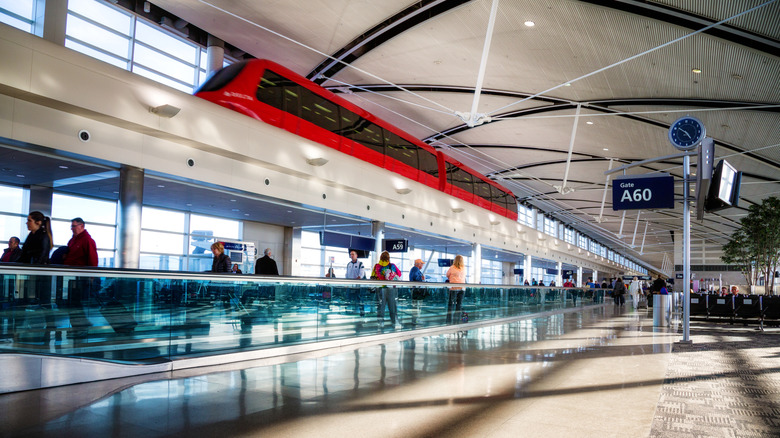
Few cities in America suffered a more precipitous post-industrial collapse than Detroit. But after decades of financial hardship, the city is back on track, with a booming tech scene, fancy new hotels and apartment blocks, and cool neighborhoods to visit, like Eastern Market and the historic Corktown. This has made the city more attractive to potential travelers, while its main transport hub, Detroit Metropolitan Wayne County Airport, is often voted one of the best large airports in America for customer satisfaction. And large it most certainly is, handling 33 million passengers in 2025, based on Detroit Metro Airport data, making it the busiest airport in Michigan.
Outbound travelers can choose from dozens of airlines, including Delta and United, as well as Spirit, which was named the best low-cost airline in America in 2025. Using these airlines, you can reach more than 125 destinations across three continents, from European and East Asian capital cities to diverse and exciting locales throughout North America. The Caribbean, Hawaii, and Alaska, major cities in Mexico and Canada, and regional Michigan airports — Kalamazoo, Iron Mountain, Pellston, Alpena, and Sault Sainte Marie — are all accessible from Detroit Metropolitan. The airport also has direct flights to small Midwestern cities in other states, such as Green Bay, Wisconsin, one of the region's most affordable places to live, and (on an ad hoc basis) Rapid City, South Dakota, on the doorstep of Mount Rushmore.
Chicago Midway International Airport
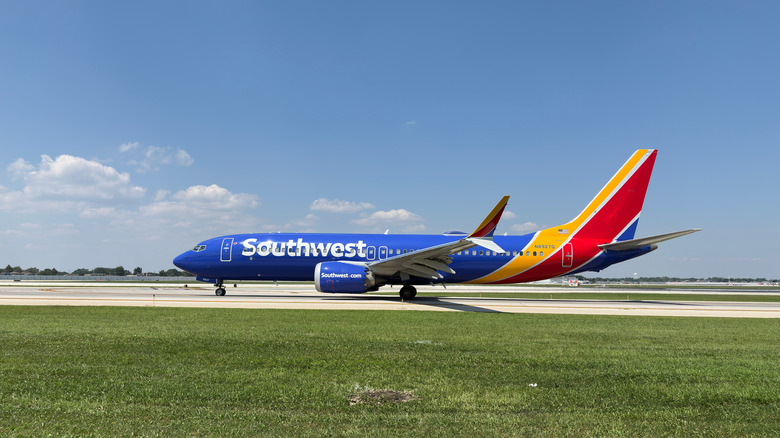
Chicago Midway International, a Southwest Airlines hub, handled around 22 million passengers in 2025, taking the total across Chicago's two major airports — there are also smaller airports in the suburbs of Rockford and Gary — to more than 100 million people. Midway is 20 minutes southwest of Chicago's downtown, and is one of America's oldest airports, having been used for air mail as early as 1923, before becoming a commercial airport 4 years later. Given its proximity to the city and manageable size, Midway tends to be a better option for travelers than O'Hare, provided the airport services your destination or point of embarkation.
Midway flies to dozens of cities in more than 30 states across America, including major airports in the Midwest, mostly with Southwest Airlines, although selected flights are also available with budget air carriers. Despite its history as a domestic travel hub, modern vacationers can also fly direct from Midway to Toronto, Punta Cana in the Dominican Republic, and Mexican destinations including Cancun, Guadalajara, Durango, and Zacatecas. It's worth bearing in mind, however, that the airport has come under scrutiny in recent years for its limited space and severe delays.
St. Louis Lambert International Airport
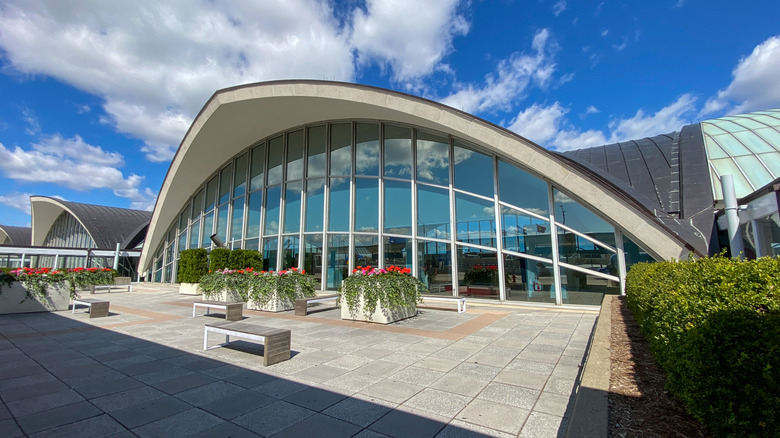
St. Louis Lambert International Airport, near the border of Missouri and Illinois, handled more than 14 million passengers last year, making it one of the largest travel hubs in the lower Midwest. The airport has been criticized for being cramped and outdated, but comprehensive redevelopment is set to take place over the next 15 years to better accommodate millions of annual travelers and create a bolder first impression for new arrivals to the city. The local firm recruited to spearhead the redevelopment, HOK, has previously completed two major and highly acclaimed airport overhauls at La Guardia in New York and Salt Lake City in Utah. So big things are expected of their hometown facelift.
The airport sits on the doorstep of St. Louis, a city known for its iconic sports franchises, barbecue joints, a national park situated entirely within the city limits, and a 630-foot, glinting stainless steel Gateway Arch — designed by legendary Finnish-American architect and designer Eero Saarinen — which stands as America's tallest monument. Plus, it's only a skip away from Route 66, which passes through downtown St. Louis, and what better time to visit America's Mother Road than in the year it turns 100?
Outbound travelers from St. Louis Lambert International have access to loads of interesting destinations, too. Direct flights connect it to the likes of Boston, New York, and Philly in the east, and Vegas, Phoenix, San Diego, and LA in the west. You can also fly to Florida, the Caribbean, Mexico, the Dominican Republic, and Montreal or Toronto, as well as major airports all across the Midwest.
Methodology
There are numerous ways of defining the busyness of an airport during a given time period: enplanements and deplanements, passengers handled, aircraft movement, international arrivals, and seat capacity. Being one of the largest airports in the world, Chicago O'Hare International beats its Midwest competitors in all available metrics, making it the region's undisputed busiest airport.
To decide which would join it on this list of the top five busiest airports in the Midwest, we used the number of passengers handled last year as the key criterion. This was the data set most readily available from official airport sources, including year-end statistics from Detroit Metro Airport, St. Louis Lambert International Airport, the Minneapolis-Saint Paul Metropolitan Airports Commission, and the Chicago Department of Aviation.
We cross-referenced this with the FAA's figures for total enplanements at American airports in 2024, the most recent year for which data was available, and relevant OAG statistics. To provide more context for these airports and their scale, we included information on the host cities, upcoming redevelopments at the airports, and an overview of the destinations that each one serves.