
These National Parks Have The Best Fishing, According To Anglers
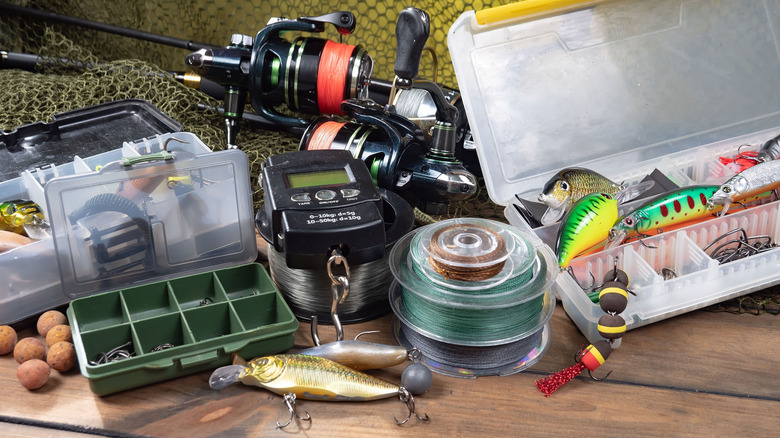
Get off the trails or roads and wade into the water in any of America's national parks, and something shifts. You're no longer a visitor just passing through; you're now a part of the landscape. The waters in these parks are not manicured fishing lakes or stocked reservoirs, either. They are genuinely wild places where fish thrive below some of the country's most staggering scenery. And with America's national parks stretching from the tropical reefs of Florida to the Alaskan tundra, the views complement the sport. Virtually every national park in America offers anglers some action. You can get knee-deep in a Great Smoky Mountains trout stream, cast out into the wild Pacific at Olympic, or share a river with bears chasing salmon in Katmai. The variety is truly staggering.
According to the U.S. Department of the Interior, the National Park Service oversees 270 parks and more than 150,000 miles of rivers and streams. Fishing is central to keeping populations and ecosystems thriving. The American Sportfishing Association adds that close to $2 billion was generated in 2022 for conservation. And just less than half of that comes from fishing license fees alone. However, license requirements vary by park. For some, you don't need one at all. For others, you'll need to get one in advance.
We've looked to renowned fishing magazines and websites as well as taken to forums to find out what anglers are saying about the best national parks in America for fishing — and we have come up with 10 clear favorites. So, grab your fishing gear and get that license — if you need one — and visit your nearest park for some epic angling adventures.
Yellowstone National Park
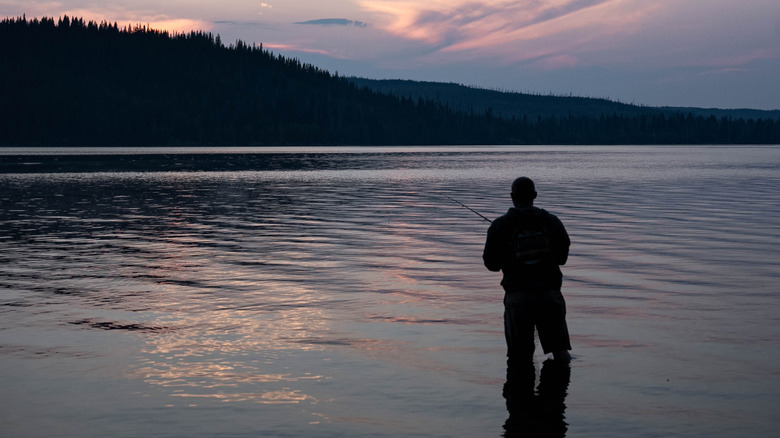
With 2,650 miles of rivers and streams and around 150 lakes, Yellowstone is one of the best places in the U.S. for anglers. The park is home to several game fish species, including the native Yellowstone cutthroat trout. However, it has been losing ground over the decades to invasive species, especially the lake trout. As a result, all native species in the park are catch-and-release only, and invasive species must not be returned to the water. Yellowstone Lake is the largest high-elevation lake in North America and a great spot to fish for those unwanted lake trout. You are encouraged to catch and take as many home for supper as you can. One Redditor pointed out the benefits of this when they said, "It will take continuous control of the lake trout to keep the cutts from crashing again, but cutthroat numbers have rebounded drastically from the low point in about 2008."
But it's the Firehole River that is usually the first waterway to offer good fishing every season. It clears the snowmelt first. By June, you'll find the Gibbon River and Madison River in good condition, too — and the stretch where all three meet at Madison Junction is prime territory. By midsummer, Firehole lives up to its name. The water temperature becomes too high for fish due to geothermal activity, and Madison can suffer the same fate. Serious anglers don't return to these spots until September, and it's brown trout on their spawning run they're after. The Firehole and Madison rivers, along with the lower Gibbon River, only permit lead-free artificial lures or flies. For those over 15, a Yellowstone National Park fishing permit is required and not a state license.
Acadia National Park
Acadia National Park sits on a cluster of rocky islands and headlands along the coast of Maine, centered on Mount Desert Island. It's a unique national park with postcard-worthy scenery, and the fishing there is split cleanly into two distinct zones. On the saltwater side, you don't need a fishing license. Just register online, and you're good to go. But a freshwater fishing license is required for Maine residents 16 and over and non-residents 12 and over.
Along the shores of Somes Sound, Sargent Drive, Frazer Point, and the Schoodic Peninsula, you can fish for striped bass, mackerel, and bluefish from July through September. Somes Sound is particularly good for mackerel. One Redditor reported catching "Atlantic mackerel on almost every cast" in October. For striped bass, another contributor said to "look for birds and busting bait, and you'll find them."
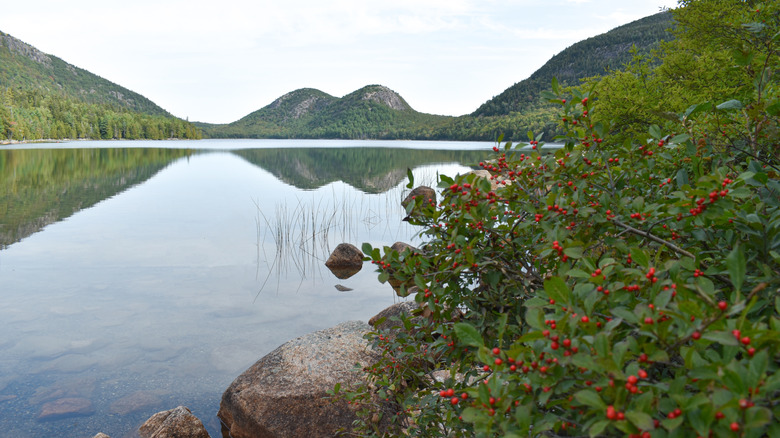
Inland, you'll find Eagle Lake. It's one of the park's premier freshwater destinations. The water is cold and deep, holding landlocked salmon and lake trout — and with a glassy surface mirroring the surrounding green slopes, it's one of the park's most photogenic spots. Hunter's Brook to the south runs alongside a hiking trail, and if you know where to look, you can cast a line for native brook trout. They run up to 4 inches long, but they are wild, colorful, and surprisingly fun on light tackle.
Everglades National Park
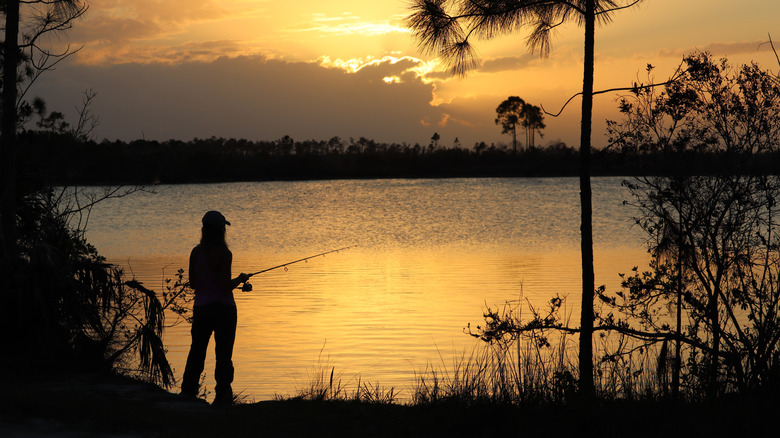
Everglades National Park is a vast area of sawgrass and water sprawling across the southern tip of Florida. A significant portion of it is covered by saltwater; the rest is freshwater wetland. It's also the only place on Earth where both alligators and crocodiles coexist. While you need to be aware of that, there is another cautionary tale. Due to high mercury levels, you should severely limit or avoid eating certain fish caught here, as well as those caught in Florida Bay. However, the park is home to many endangered species, trails, and unique experiences, and in terms of fishing action, Flamingo on the saltwater side has a big reputation. You'll find snook, redfish, tarpon, and trout, with some catches weighing up to 20 pounds.
Ten Thousand Islands in the park's northwest corner is another excellent spot for tarpon. They rest and feed in the channels between mangroves. Jason Sullivan, writing for Orvis, one of America's oldest and most respected fly fishing outfitters, said to "look for small minnows" because "those schools of smaller bait will help you locate big schools of tarpon." The freshwater side has its own appeal. Largemouth bass can be found throughout the interior marshes, canals, and lakes. The butterfly peacock bass, brought over from South America in the 1980s, is among the most striking freshwater fish in the world with its brightly colored scales and fins. You'll need a freshwater license for freshwater fishing and a saltwater license for saltwater fishing, but children under 16 are exempt.
Glacier National Park
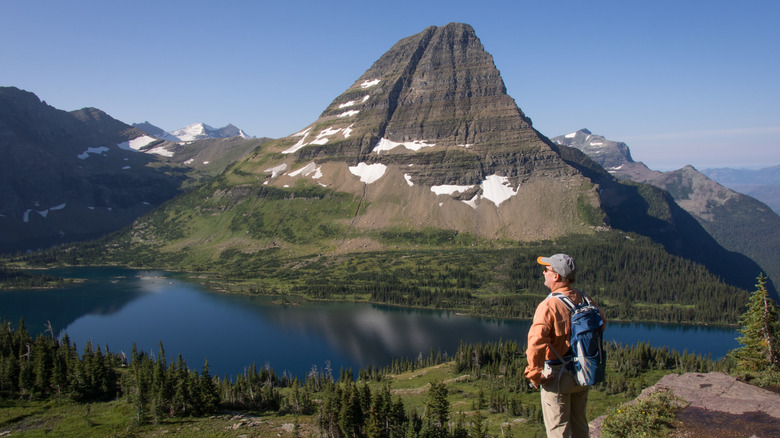
With more than 750 lakes and a network of streams and rivers, Glacier National Park is another to feature some of the better fishing in the U.S. The trout do run small; alpine water will do that. However, monsters are known to frequent the park's bigger rivers.
Good technique and patience are required to find those trophy fish lurking in the deep. But along the park's southern boundary, you'll find accessible fly fishing in the Middle Fork of the Flathead River. It's long and winding and perfect for wading with its manageable depth and good visibility. The targets there are westslope cutthroat trout, a native protected species that must be released, and rainbow trout, which you can put on the grill. If you're fishing from park lands or bridges in the Middle Fork of the Flathead River, you'll need a Montana fishing license. You don't require one for the rest of the park.
Head north into the interior, and Hidden Lake awaits beneath the ridgeline at Logan Pass. Its clear, blue water curves below the steep slope of Bearhat Mountain and holds Yellowstone cutthroat trout against a backdrop that's hard to beat. Take note: it closes for most of July around the outlet when bears descend on the spawning cutthroat in large numbers. For the more adventurous, you can push further north into the backcountry to Elizabeth Lake near the Canadian border. It takes a serious hike to get there, and it's best done as an overnight camping trip, at least. But once there, the scenery is stunning. On top of that, the rainbow trout and Arctic grayling are biting, with Ken Sperry on the DIY Fly Fishing blog reporting some "as large as sixteen inches prowling the crystalline waters."
Olympic National Park
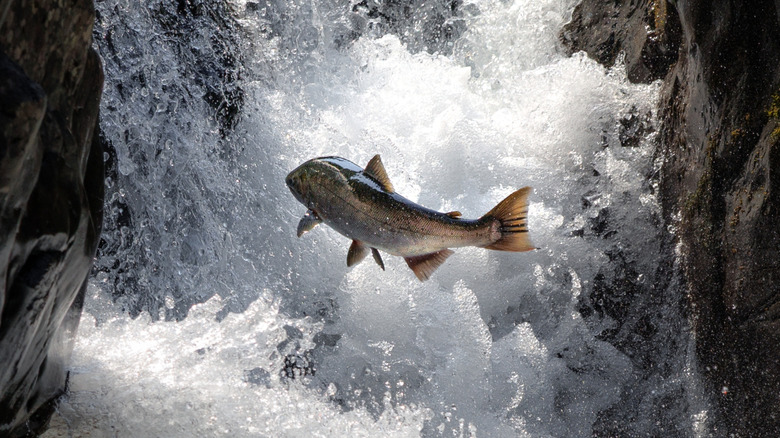
Few places in the PNW can match Olympic National Park for its sheer variety of wild salmon, trout, and char. In fact, all five salmon species (Chinook, coho, sockeye, chum, and pink) share these waters along with several species of trout, including a rarity at Lake Crescent. It may be a Pacific Northwest gem for mountain views, clear blue waters, and paddling, but it is also home to a remarkable native species, the Beardslee Trout. It exists nowhere else on the planet and is the result of 7,000 years of geological isolation following a catastrophic landslide. But, if it's steelhead you're after, you should plan your visit between December and March. This is when the coastal rivers offer the best conditions, but you must keep in mind that just about all wild fish in the park need to be put back in the water.
The Hoh River is another prized spot. It's open from June through mid-March with the same catch-and-release rules in place on top of fly fishing only in certain stretches. In summer, the Sol Duc River is open for salmon and steelhead fishing, while the more adventurous might want to try the higher alpine lakes. One local angler on Facebook mentioned that many of them are "stocked with trout... and you can fish them without limit if you don't mind steep hikes." A Washington State fishing license is not required for anywhere other than the Pacific Ocean shore. But if you're after salmon or steelhead, you'll need to carry a free Washington State catch record card.
Biscayne National Park
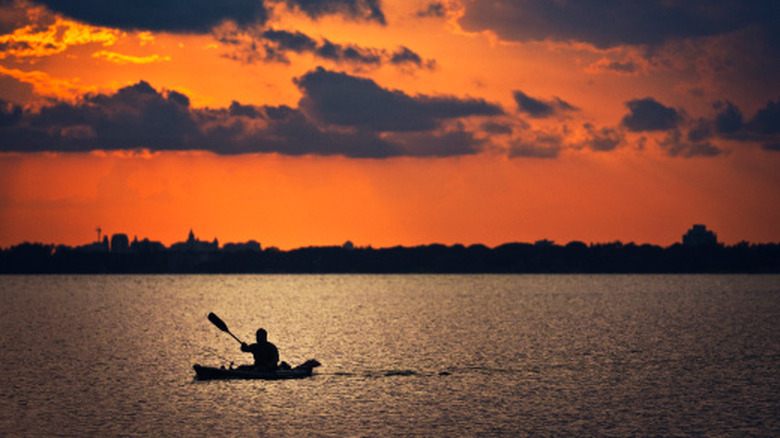
Fishing has shaped life on Biscayne Bay for thousands of years. Nowadays, anglers of all walks of life are drawn to Biscayne National Park. This is hardly a surprise given that the national park is almost entirely water. Local Miami fishing guide Captain Jerry Perez wrote that 2025 offered "some of the best fishing conditions for bonefish, tarpon, and permit," with bonefish "particularly active on the shallow flats" and tarpon fishing "exceptional, especially in the early morning." If you are over the age of 15, you must carry a valid Florida fishing license. Shark fishing from the shore, private vessel reef-fishing, and pursuing snook, spiny lobster, or tarpon each require separate permits.
Boca Chita Key is where to go for one of the park's best fishing spots. It's marked by a short stone lighthouse standing on a narrow seawall. You'll find plenty of tarpon along the rocky shoreline, while snapper, barracuda, bonefish, and crevalle jack show up in the flats. Stiltsville is one of the park's more unusual fishing spots. It consists of a handful of wooden houses perched on stilts above the open water. The surrounding shallow flats are home to bonefish and permit, and the calm, clear conditions make it a favorite spot for fly fishing.
Alternatively, you can take a boat out to deeper waters, where you'll find barracuda and sharks putting up a rod-bending fight. The largest island in Biscayne Bay, Elliot Key, is another prime spot. The exceptional water clarity there makes it ideal for fly fishing and light tackle.
Great Smoky Mountains National Park
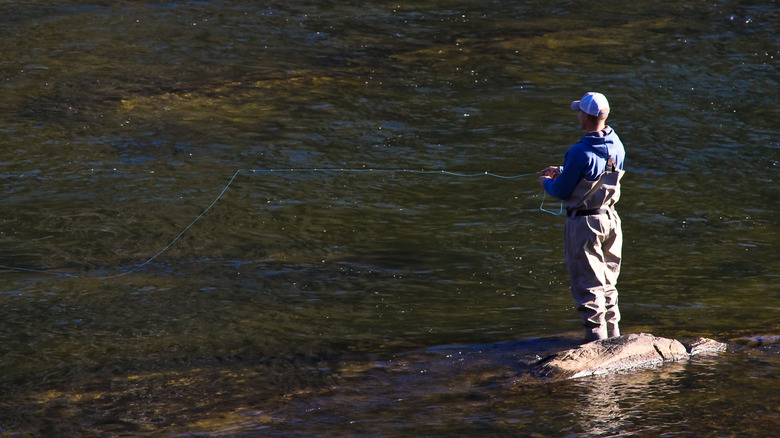
The Great Smoky Mountains National Park may be defined by its postcard-perfect mountain ranges and renowned hiking trails, but its 2,900 miles of waterways are one of the few genuinely wild trout habitats left in the eastern U.S. Brook trout are the park's only native species. They inhabit the higher elevations, while rainbow and brown trout can be found lower down. And those browns can grow to significant sizes.
The Trout Bandit wrote on his personal fly-fishing blog that "the trout water there is like nothing I have yet to experience. Just driving along Little River Road between Townsend and Elkmont is to experience trout-water Shangri-La." However, spots close to parking areas tend to get crowded. People like to have fun in the water there, so it pays to push further in, especially in the summer months.
If you're willing to walk about four miles through some spectacular scenery, the Middle Prong of Little River is particularly rewarding. Higher up, Lynn Camp Prong is one of the best places to target brook trout. Those after smallmouth bass should look to places like Abrams Creek, the East and West Prongs of Little Pigeon River, or among the tributaries feeding into Fontana Lake.
But wherever or whatever you fish, it's artificial flies and lures only. No bait is permitted. The season runs all year, and anglers can cast a line from just before dawn until just after dusk. There's a 7-inch limit on trout and smallmouths on top of a five-fish daily limit, and you must be in possession of either a Tennessee or North Carolina license.
Voyageurs National Park
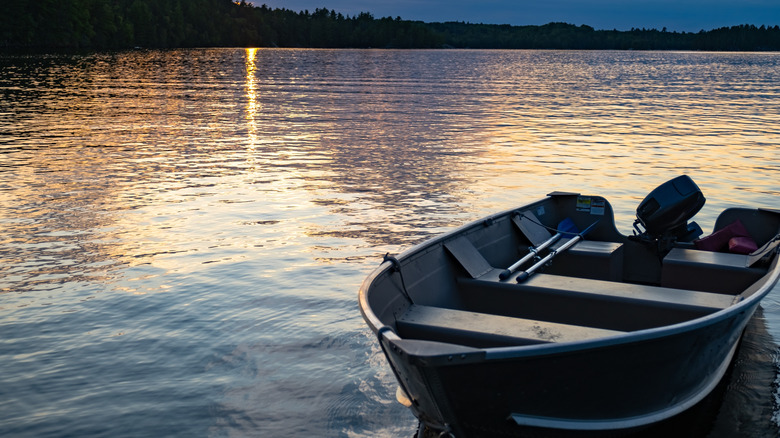
There are few that can match Voyageurs National Park on the Minnesota/Canada border for variety. It features 30 fishable lakes with no fewer than 54 species of fish. Among them are walleye, northern pike, and smallmouth bass. The four large lakes, Kabetogama — a summer vacation paradise lined with cabins — Rainy, Namakan, and Sand Point, all permit bait fishing. The smaller interior lakes are artificial lures only.
You can fish in the park year-round, with open-water opportunities available through spring, summer, and fall. Winter offers some excellent ice fishing, but you'll need a Minnesota fishing license at any time. In winter, you'll also need an additional ice shelter license for your ice house. Guides can be arranged locally if you need one, as can equipment if you don't have your own, but make sure you verify ice conditions before setting out.
Those willing to be more adventurous will find even better fishing on the smaller wilderness lakes. As one Redditor put it, "The less used, the better the fishing." Another recommended Peary Lake for pike, Cruiser Lake for lake trout, and Locator, War Club, and Quill lakes for bass and pike. You're not allowed to bring your own watercraft for the interior lakes, but the park runs a Boats on Interior Lakes rental program, which places canoes and rowboats directly on-site at each.
Katmai National Park
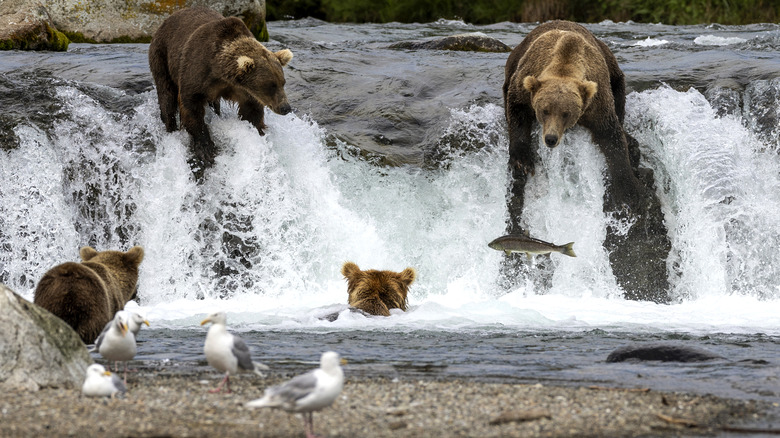
There aren't many places in the U.S. that can match Katmai National Park in Alaska for a wildlife spectacle. It's a top brown bear viewing destination unlike anywhere in the world, and Brooks Camp, in particular, is one of the world's most photogenic. The spectacle peaks at Brooks Falls every July when the bears gather in enormous numbers to intercept sockeye salmon pushing upstream. The falls are off limits entirely to anglers, but below is Brooks River, the park's iconic fishing spot. You will be casting off with those bears for company, and all visitors must complete a safety briefing on arrival.
Rainbow trout, arctic char, arctic grayling, and all five Pacific salmon species share the waters across the park. The rainbows average around 20 inches, while 8- to 12-pound chum salmon put up a fight in the Alagnak River. To the south, the Naknek River offers productive conditions from July through early September. For something more remote, Steve Buckner of the regional fly fishing magazine, Northwest Fly Fisherman, reports that those willing to seek out Contact Creek will find "one of the most scenic places to encounter grayling, char, and rainbow that I've ever seen."
Both visitors and most residents aged between 16 and 59 will need a state-issued Alaska sport fishing license. Additional documentation in the form of a harvest record card or king salmon stamp may apply, depending on what you're looking to catch. Additionally, the park is not really the easiest to get around, with boats and float planes the primary means of access.
Rocky Mountain National Park
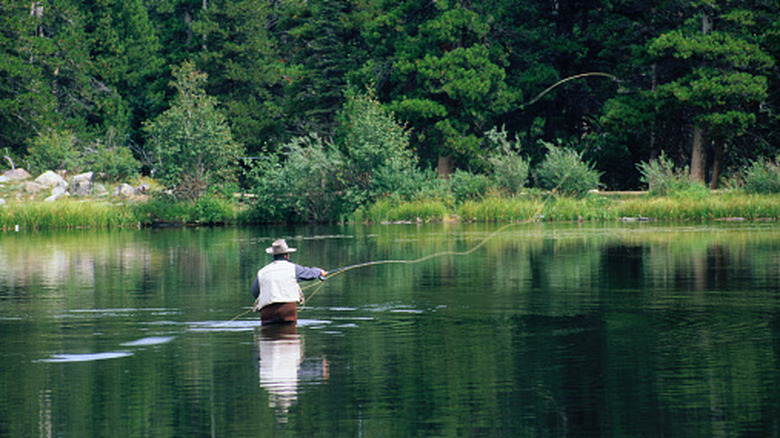
Native cutthroat trout have been the primary conservation effort in Rocky Mountain National Park since the 1970s. Today, there are two native species: the greenback and the Colorado River cutthroat. Additionally, you'll find other trout species like brook, brown, and rainbow. Early spring fishing is concentrated on the lower elevation waterways like the Big Thompson, Fall River, and Glacier Creek. Big Thompson cuts through Moraine Park and is one of the Rocky Mountains' most celebrated rivers. It holds large populations of browns and brooks, but push further upstream, and you'll find them replaced by greenback cutthroats, which are among the rarest native trout anywhere in the western U.S.
Glacier Creek feeds into the Big Thompson, and it holds four species — brown, brook, rainbow, and those native cutthroats. The rapid water here is characterized by riffles, boulders, and plunge pools with excellent pocket-water fishing. Take a 20-minute drive northwest to Fall River for a compact, technical stream where the fish are easily spooked. Former fly fishing guide and casting instructor Jason Klass said on his Tenkara Talk blog that he "definitely had to work for my fish, but the scenery and solitude were well worth it." Only careful wading and skilled casting will yield results here, and only artificial flies or lures with a single hook are permitted park-wide. Bait is banned in catch-and-release waters, and a Colorado fishing license is required for anyone 16 and over.
Methodology
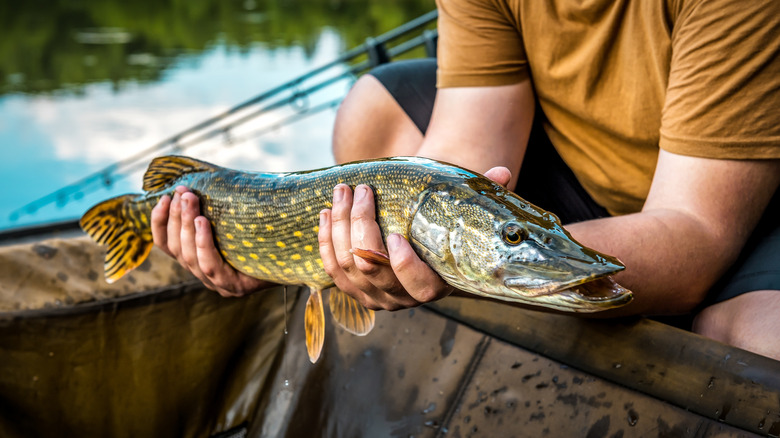
To find anglers' favorite national parks for fishing, we turned to expert angling websites as well as government sites and organizations like the National Park Service and National Parks Conservation Association. We also took to forums on Reddit and Facebook groups to find out what some regular anglers were saying. We compared them all and came up with a list of ten that were head and shoulders above all others.