
Unwritten Rules You Should Know Before Visiting Yellowstone National Park
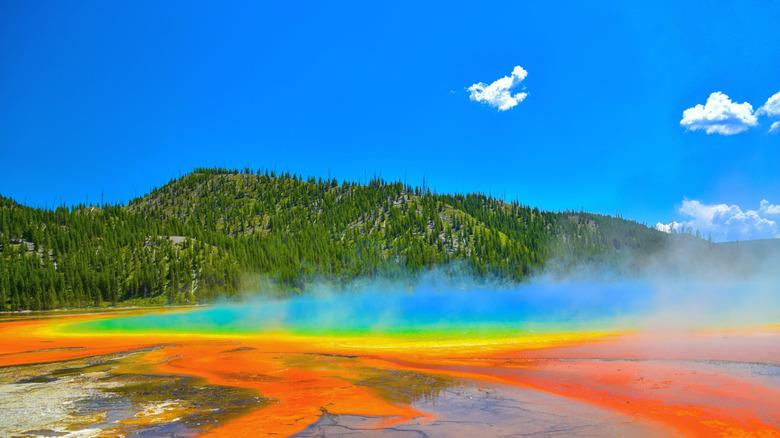
Yellowstone used to be a myth. When European-American trappers reported that they'd seen a land where the hot springs were made of rainbow waters and geysers sprayed high into the sky, nobody believed them. In 1869, expeditions reached the area, and the "myth" got even grander. Tales of giant waterfalls and valleys where bison, elk, and eagles roamed freely joined the previous stories. Ferdinand Hayden's expedition had the advantage of being accompanied by photographer William H. Jackson, whose photographic evidence convinced people that Yellowstone was a real place.
The land was no longer viewed as a fantastical place, fodder for explorers with grand imaginations. The U.S. government drafted legislation protecting the 2.2 million acres of natural wonders, and by 1872, Yellowstone National Park became the world's first national park. Today, Yellowstone remains much as it was when it astonished early explorers. For visitors hoping to experience it safely, a few simple guidelines can make all the difference.
Split your stay over multiple areas of the park
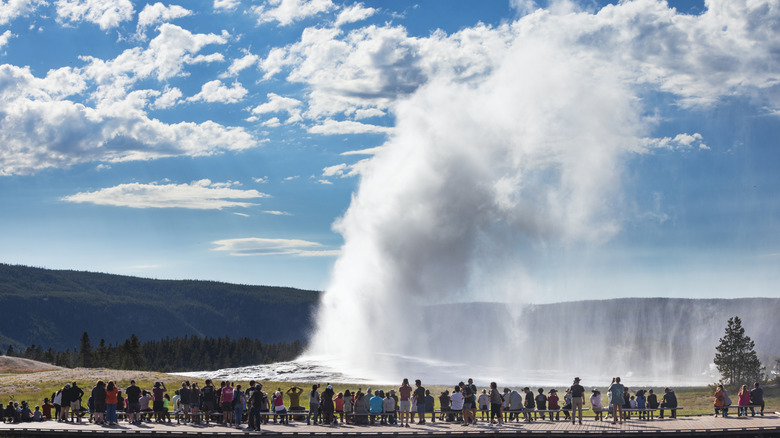
With 2.2 million acres of rugged landscapes and an area of 3,500 square miles, Yellowstone is a massive wonderland. To put that into perspective, at 305 square miles, you could squeeze New York City into Yellowstone 11 times and still have land left over. This size would be more manageable if the park's most famous sites weren't scattered on different ends. But with stunning places like Lamar Valley on the upper loop in the northeastern end and the famous Old Faithful geyser on the western end, confining your stay to one section of the park wastes valuable hours you could have spent exploring.
For instance, if you stayed in the popular Old Faithful Snow Lodge & Cabins, you would have to drive approximately 2 1/2 hours to get to Lamar Valley and the other attractions on the northeastern end of the park. That's five hours of your day spent driving back and forth. On the other hand, if you decided to spend three or four days in the lodge, you would be about 45 minutes from the famous geyser at Old Faithful, West Thumb Geyser Basin, and more. The remaining days of your trip could be spent in a campground closer to the northeast area, where you would be minutes away from the stunning wildlife of Lamar Valley, popularly called the 'Serengeti of America.'
Book your accommodations inside Yellowstone
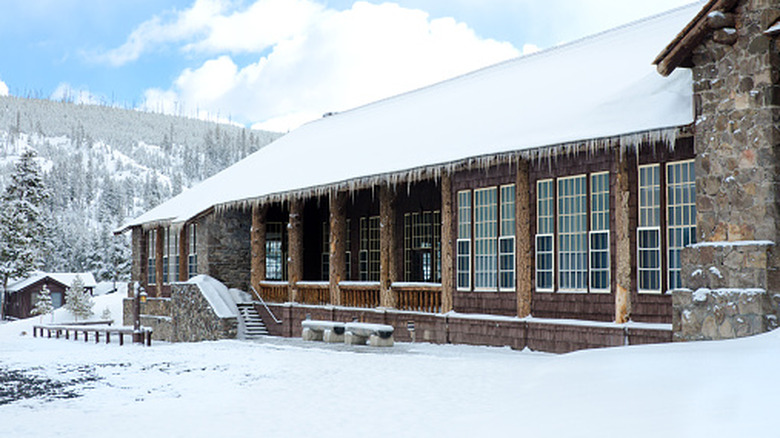
Yellowstone has many gateway towns. You may want to stay in artsy Livingston with its laid-back Montana vibes, or the more touristy West Yellowstone. But for the most stress-free trip, it's a good idea to book a lodge or campground within the park. The main reason is the traffic going into Yellowstone during the popular summer season. Videos of frustrated visitors trying to get into the park after 8 or 9 am sometimes make the news due to the miles and miles of traffic at the entrances. These long lines can cause big delays, but that's not the worst part.
Once you get inside, you still have to find a parking spot. This in itself will take a miracle (or circling parking lot after parking lot). Traffic and parking could easily add hours to your trip. The best way to avoid this is to book accommodations within the park, as close as possible to the places you want to see. In addition to making it easier for you to get to the sites early, there'll be another advantage. Yellowstone is a wonder in the early morning. Since you don't have to worry about traveling to the park, you'll be able to see the park wake up, long before day trippers arrive.
If arranging accommodations inside Yellowstone won't work for your situation, and you need to stay in one of the nearby towns, try to get to the park by 7 am. At that time, the big lines haven't started yet, and parking is easier to find.
Bring winter jackets in summer and spring
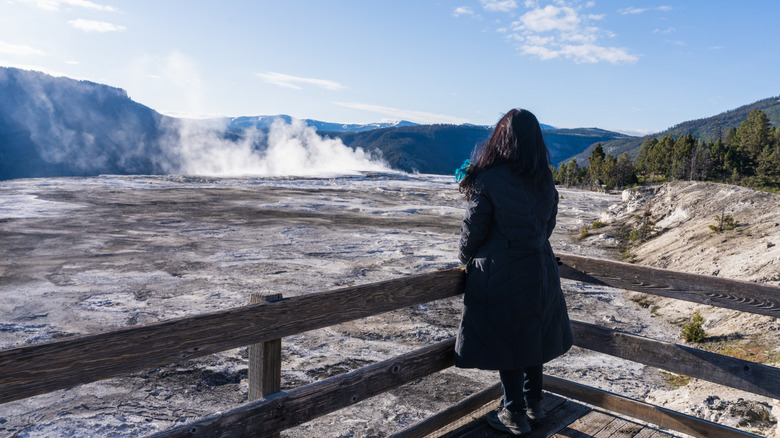
There's a noticeable uptick at Yellowstone during the warmer months. From June to September 2025, there were around 3.6 million visitors, roughly 75% of the 4.8 million annual total. With daytime temperatures between 70 and 80 degrees Fahrenheit during summer, it's a perfect time to see the stunning landscapes without getting too hot. But come night, it's a different story.
Nighttime temperatures drop drastically. Freezing temperatures are not unusual in some parts of the park, and thunderstorms can be expected. Those who visit during spring or fall will also get some snow. If you plan on camping, you must be prepared. Bring a winter jacket, thermal layers, a winter hat, and a rain jacket to keep dry during thunderstorms. A waterproof tent is also a good idea, as are insulated sleeping bags and extra blankets.
You may need to reserve your campsite a year in advance
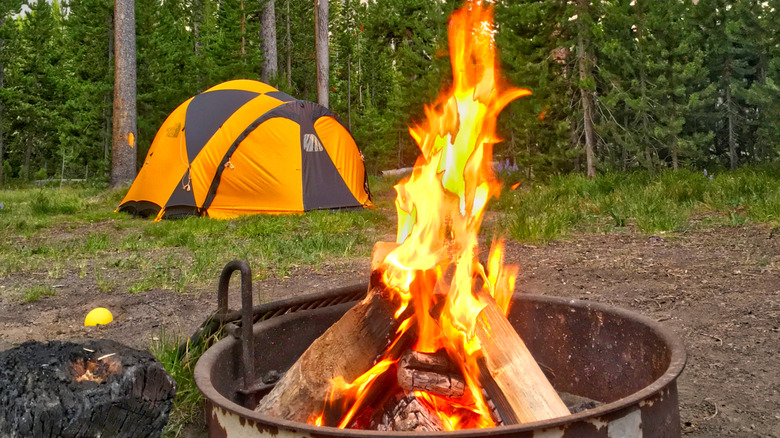
When a national park covers 2.2 million acres, you expect it to offer plenty of campsites and hotels. And Yellowstone does try to do that. In 2026, the 11 campgrounds will offer 2,001 campsites. The RV park provides an additional 310 spots. But with the park's popularity, these camping accommodations prove inadequate year after year. In fact, it's not unusual for visitors trying to book a summer camping spot to find they're reserved by January.
To ensure your spot, book as far in advance as possible. This is especially true if you're visiting in summer. Luckily, the two campground operators responsible for the camping sites inside the park open up reservations early. Yellowstone National Park Lodges will take reservations up to 13 months before a stay. The National Park Service will take a booking up to six months in advance, if a spot is available. Yellowstone's hotels and lodges also book out early. But those are managed by Yellowstone National Park Lodges, so they can be booked up to 13 months in advance.
Start your days early
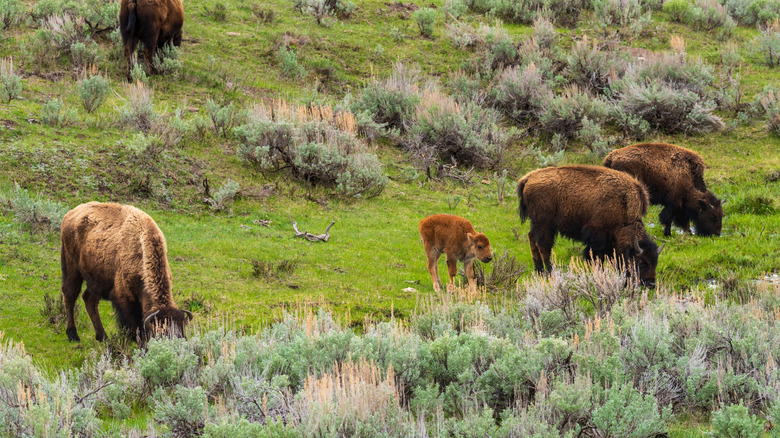
We recommend you get an early start, even if you're staying in the park. As painful as waking up at the crack of dawn may be, Yellowstone in the early morning is completely different from the Yellowstone you'll see at midday.
Dawn is a magical time when wildlife explores freely, taking advantage of the morning cool. Bears, eagles, and roaming bison make it the best national park to visit in 2026. And if you plan on booking a guided wildlife tour, early morning is a popular time for the expeditions. The guides head out to the areas where elk, wolves, coyotes, and other Yellowstone residents hang out early. That way, they can almost guarantee animal sightings.
Many visitors also like to enjoy one of Yellowstone's gorgeous sunrises in the peace of the early morning before the crowds arrive. Some of the best spots are Lamar or Hayden Valley, where watching the sun rise above the wildlife is a sight you won't soon forget. If you're closer to West Thumb Basin, while the sun rises, it sends its reflection into Yellowstone Lake and the colorful waters of the geyser pools. Incidentally, the source of the rainbow colors in the hot springs is one of the bizarre Yellowstone facts you probably don't know.
Don't hike or walk around at night
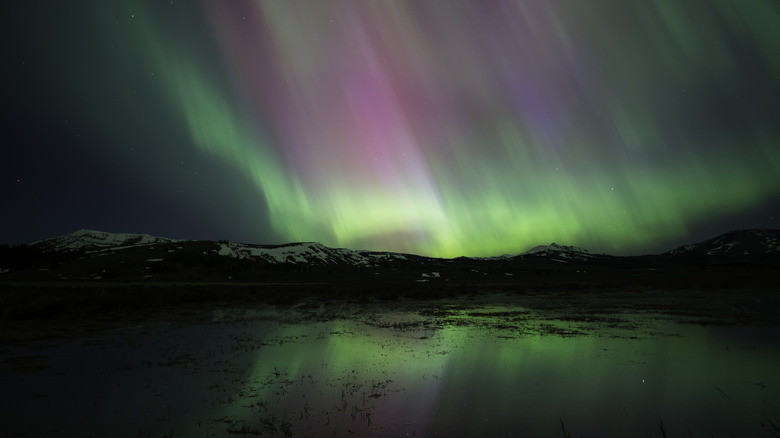
With its massive size, it's understandable that some visitors may want to squeeze as many experiences as possible into the time they have and explore Yellowstone at night. But Yellowstone is not the best place to be wandering around after dark.
Numerous accidents have occurred during nighttime excursions. In August 2000, three night swimmers fell into one of Yellowstone's hot pools, and one did not survive. Park officials also warn about bear attacks, as the predators are most active at dawn, dusk, and night.
If you want to enjoy your nights, we recommend booking one of the park's campfire experiences. Not only will you be seated safely with the rangers who lead the programs, but you'll also enjoy stories of the park's history and wildlife. Stargazing experiences with telescopes are also offered at night.
Hike in groups of three or more
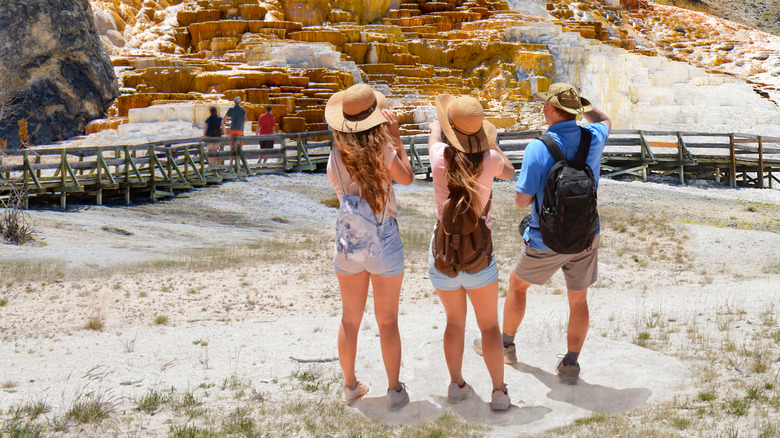
Whether you're hoping to spot one of the more adorable animals known to live in Yellowstone, or your plans include seeing the birds in the breathtaking 'Grand Canyon of Yellowstone,' you'll want to be accompanied by others. The National Park Service says this common safety protocol is most effective against bears.
A group's noise and numbers deter bears before they get too close. A large group also carries more of the signature scent bears associate with humans and may help protect against attack. While hiking, it's also a good idea to carry bear spray and keep any food you're carrying away from animals. If you do happen upon a wild animal, keep a distance of at least 25 yards. If it is a wolf, cougar, or bear, at least 100 yards is recommended.
Don't stop in the middle of the road if you see wildlife
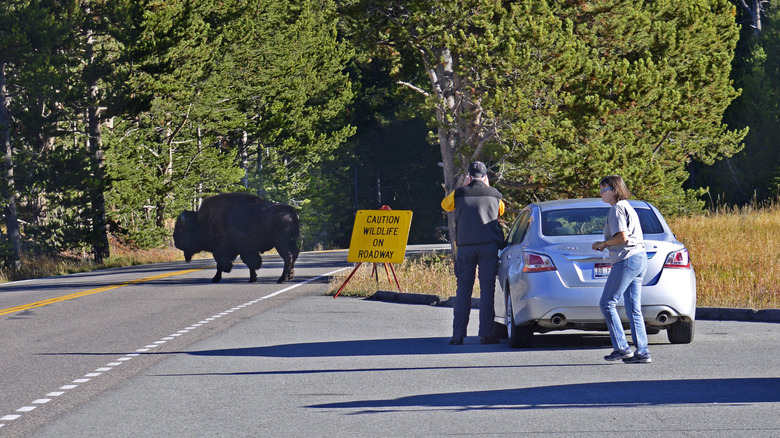
It can be exciting when you spot your first bison or bear. This is just as likely to happen while driving around the park as it is in wildlife habitat areas like Lamar Valley. If you happen to see wildlife while driving, do not stop in the middle of the road to admire them. The practice regularly makes the news for causing traffic bottlenecks, but it can lead to much more serious repercussions. Stopping in the middle of the road can contribute to traffic accidents, which are the biggest cause of injury and death inside Yellowstone.
Many visitors get so excited when they spot wildlife on the road that they forget all driving etiquette and stop suddenly to see the animals and take photographs. This may be okay if there are no cars behind you. Since that is unlikely, your sudden stop could easily cause a collision or other unsafe condition. If you must stop, use a pullout if one is nearby, or ensure all your wheels are safely off the road. The only time it is acceptable to stop temporarily is if you happen upon a bison jam (a term for when bison block the road). In that case, stop and wait until the opposite lane is empty and safely bypass the animals. Another tactic is to approach these animals slowly from behind until they get the hint and move.
Bring a cooler and picnic food
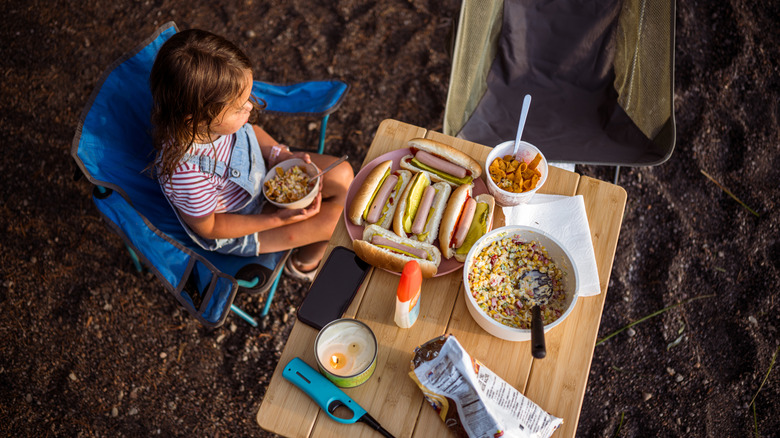
While there are lots of eateries inside Yellowstone, having to stop for breakfast in the mornings can take precious time away from your trip. It may also cause you to arrive at the popular attractions when they're already crowded with day trippers. To overcome this, experienced park visitors carry a cooler and picnic foods. If they're camping, they'll also bring a stove. Granola bars, trail mix, yogurt, fruit, cold cuts, crackers, and other similar foods will make it easy to eat while driving to your first attraction in the morning. Yellowstone has plenty of picnic tables set up next to lakes, waterfalls, and other picturesque sights, so you can also stop and have a meal when you're closer to your destination.
If you're staying in a lodge or hotel, you can keep your food inside the refrigerator and get ice for the cooler from the lodge when you're leaving out in the morning. For campers, ice can be bought from any of the many general stores around the park. The stores will also have any food you may need, but it's better to get supplies from a grocery store in one of the gateway towns you pass while driving to Yellowstone. Once you're stocked up, you'll save money on the park's expensive eateries and enjoy meals you've prepared yourself.
Don't leave your food out
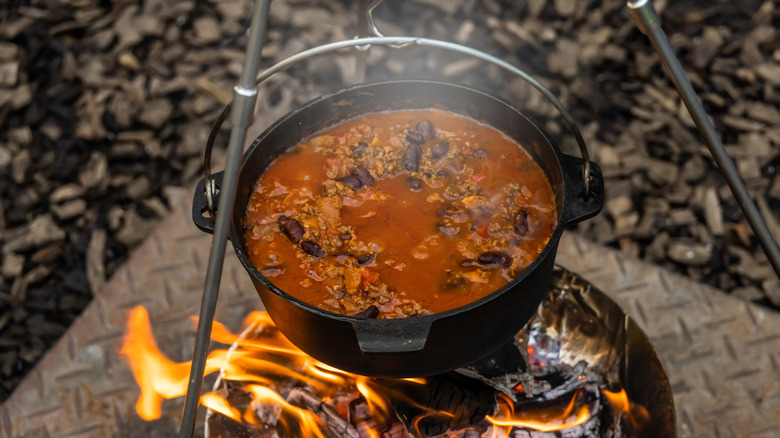
Campers sometimes find it difficult to keep food safely stored in campsites with limited space. But if you're staying in one of Yellowstone's campgrounds, you'll want to ensure you don't leave food out, as that could be dangerous for both you and the animals likely to eat it. Leaving food out may attract chipmunks to frequent your campsite in expectation of more meals. As they get desperate for food, the small creatures can become violent. Once they get too aggressive, park officials will be forced to euthanize them so they don't attack visitors.
The same is true for bears. Bears can get accustomed to human food easily and start visiting your tent for more. Bears that depend on humans for their next meal can get aggressive as they get hungrier. As with chipmunks, park officials will euthanize them once they become a threat to people. Keep yourself and the wildlife safe, and store your food in an unreachable place. Finally, it's important to know that feeding wildlife is illegal in national parks. If you're caught feeding wildlife in a park, you may be fined up to $5000 and imprisoned for up to one year.
Don't expect your phone or digital devices to work
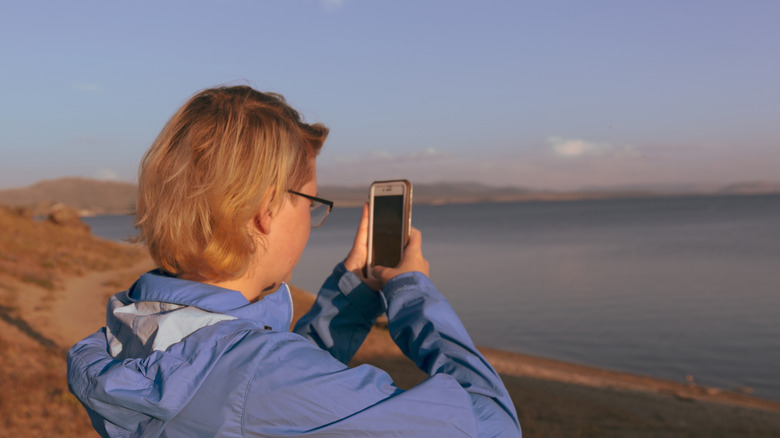
If you've been longing for a digital detox, your trip to Yellowstone may fulfill your desire. Its undeveloped landscape and looming natural features often disrupt cell tower signals, making cell phone and Wi-Fi coverage notoriously bad within the park. With six cell towers around the grounds, you'll find your phone losing connection, then getting coverage again in some areas. These areas are by Old Faithful, Grant and Lake Villages, West Yellowstone, Mammoth Hot Springs, Mount Washburn, and both the north and west gates. Verizon and AT&T are the strongest networks.
Networks may crash in summer when visitor numbers peak, so try to make your calls before the park gets crowded. Wi-Fi is also spotty and is best accessed in the lodges and hotels, if you're a registered guest of the property. But don't expect it to be powerful enough to handle things like streaming. If you want movies and other entertainment, download what you need before getting to the park.