
The World's Most Elusive Creatures (And The Destinations Where You Can Find Them)
There are wonders lurking out in the wilderness. In truth, we will possibly never know exactly how many species exist on earth today. Upper estimates place that number in the billions, but there are only 2.17 million cataloged species that we currently know about: Insects take up the lion's share of that number, followed by flowering plants, fungi, mushrooms, and arachnids. There are only 6,815 recognized species of mammals, which is fewer than the number of fish, mosses, reptiles, birds, and amphibians on the planet.
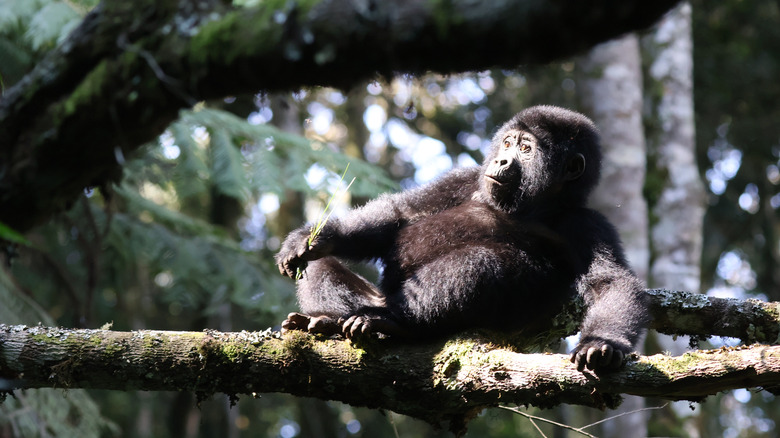
Still, a definitive collection of elusive creatures requires a degree of creative license. In the U.K., you can find moss so rare that you would have to visit a specific rock in Derbyshire to see it. The colossal squid has only ever been filmed once since the species was discovered 100 years ago. There are creatures so small that you'd need a microscope to view one, and others that are so dangerous that it's best to never come within a mile of one. Many people dream of seeing the mountain gorillas of Rwanda, but political unrest in the country makes visiting them unsafe. And then there are those that simply aren't for the squeamishly minded: We live in a world where you either think moonrats are cute or you don't.
What's left is a necessarily subjective attempt to find a balance between the elusive nature of any given animal, the agency gained from spotting one, and the value gained from visiting their locale, even if you fail to do so. Naturally, there are no guarantees here. A visit to one of the world's top whale watching destinations provides a fruitful experience, but fulfilling a lifelong ambition to spot a blue whale? That's as hit and miss as a blind date in a blackout.
Echidna (Australia)
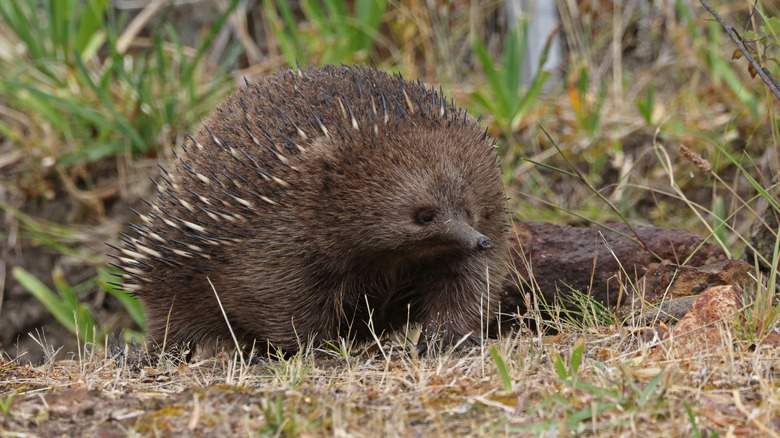
Australia is home to several species of bats, more than a few rodents, and is awash with introduced species such as rabbits, horses, and wild dogs. In addition, you can find some of the most interesting animals on the planet here, including the only two known mammals on the planet that lay eggs: the platypus, and, more importantly, the echidna (or spiny anteater). Those wishing to see the latter in its natural habitat need to take a trip to either Australia or the island of New Guinea.
Reasons to visit Australia range from trips to laid-back tropical towns famed for snorkeling adventures to tours of ancient wine regions filled with scenic trails — but few places offer so much for those interested in unique fauna. Sadly, the echidna is difficult to spot. Spoiler alert: I lived in Australia for seven years and never saw a single one. I saw their tracks, though, and one night, many years ago, while enjoying the criminally underrated Margaret River wine region, I heard one snuffling about outside my cabin. Still, Kangaroo Island in South Australia is the best bet for those who are looking for more than a midnight snuffle. Well worth a visit even without sighting, it is a nature lover's paradise with few peers, and, as the name suggests, it's a great place to watch kangaroos in their natural habitat. It's also the closest you are likely to get to spotting an echidna, provided you are willing to stay up late and sit really still for a really long time.
Kermode Spirit Bear (Canada)
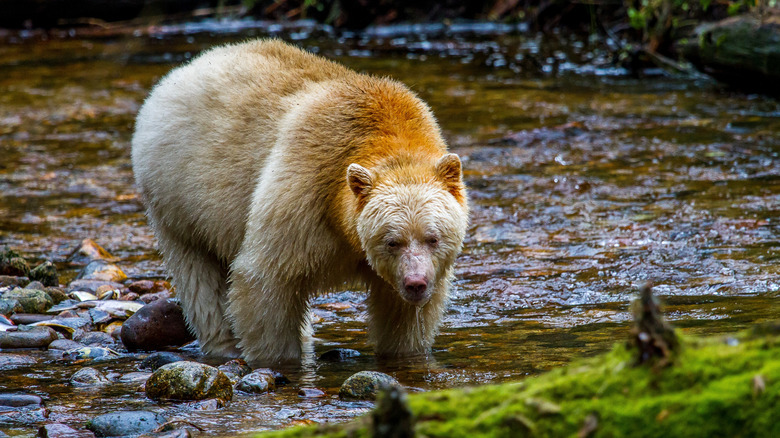
Is the Kermode Spirit Bear an albino bear? The belief that albinism was in some way connected with the spirit world has resonated through history across multiple cultures. Across multiple Native American tribes, hunting albino animals was taboo. In Africa, the condition was often associated with sorcery. Which is all well and good, but the idea that the Kermode spirit bear suffers from albinism is a common misconception; they are simply a subspecies of black bear with a recessive gene that makes them appear all-white.
The Great Bear Rainforest sits on the northeast edge of British Columbia, and, at close to 25,000 square miles, is the largest intact coastal temperate rainforest on earth. Visitors are treated to stunning views of a heavily watered ecosystem that teems with salmon. Coastal regions are blessed with marine mammals, and its ancient forest is filled with roaming wolves and grizzlies. And then there are the Kermode spirit bears. Rare and mysterious, fewer than 400 are thought to exist in the wild and some estimates place the number as low as 50.
Spotting one is no easy task. Most live in remote coastal areas far from the usual tourist hubs. Still, the valley of Bella Coola, home to the Nuxalk Nation, is one of the few places where sighting is still possible. Between September and October, the bears can be seen hunting for salmon at the water's edge. Meanwhile, Spirit Bear Lodge, another Indigenous-owned venue that's accessible by short flights from Vancouver, allows visitors to experience nature in style. As you'd expect, there are no promised sightings of a Kermode spirit bear, no matter what time of year you attend. However, the odds are raised above an effective zero, if only for the briefest of windows.
Sunda Clouded Leopard (Borneo)
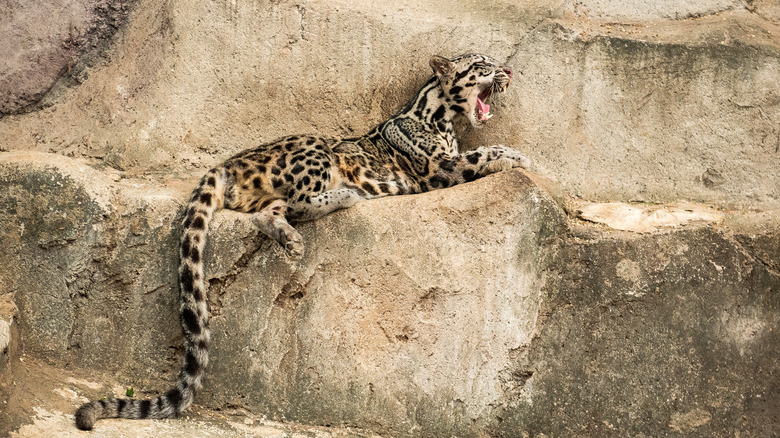
Borneo is a beautiful and complicated place. It is the largest island in Asia and it also happens to be one of the most biodiverse places on the planet. There are unique primates to discover, hundreds of birds to observe, thousands of plants that cannot be found anywhere else, and for those lucky enough to spot one, there is the Sunda clouded leopard. It truly is one of nature's most beautiful and enigmatic creatures.
Spotting one is no easy feat. To start with, you can only find them in Borneo or the nearby island of Sumatra. Secondly, there are thought to be fewer than 10,000 of them left in the wild. Oh, and they are nocturnal and much prefer high altitudes. A chance meeting is extraordinarily unlikely, so those wishing to see one are going to have to take a somewhat proactive stance.
Your best bet is the Deramakot Forest Reserve, in the northern part of the island and around a five-hour drive from the city of Sandakan. It is a vast wilderness filled with unspoiled rainforest. This is an ancient jungle, the oldest such ecosystem in the world, so keeping one eye on the things you should never do in a rainforest should be everyone's first port of call. Eco tours are common and offer the chance to observe pygmy elephants, orangutans, proboscis monkeys, and crocodiles is enough of a lure by itself. Still, taking a night drive through the forest's main road remains the most likely way to manufacture a chance encounter with a clouded leopard, and with so much else to see along the way, even a failed attempt can be thought of as something of a win.
The Platypus (Australia)
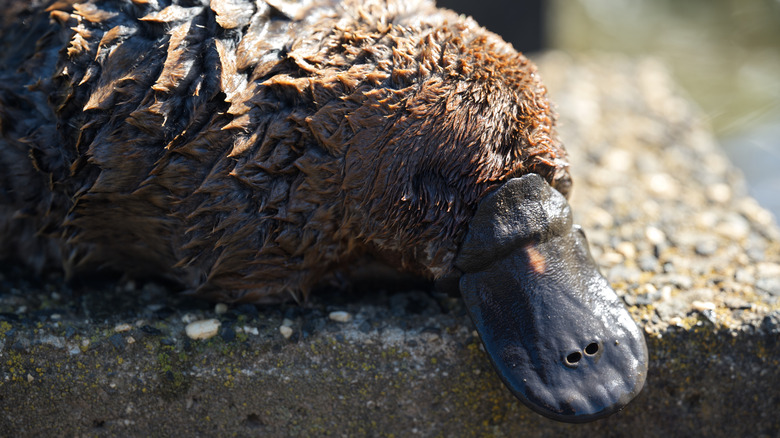
When Europeans first saw preserved specimens of platypus, they thought it was an elaborate prank. Here was a mammal, with the bill of a duck, armed with venomous barbs that also fed its young with milk. It was, to many minds, yet another example of dangerous Australian wildlife best avoided and confounded Western ideas of how fauna should present itself.
Not that the platypus is all that dangerous. True, its sting is one of the worst out there, but the chances of being stung are incredibly low. The platypus is nocturnal, shy, spends most of its time underwater, and is notoriously difficult to spot. Still, for those interested in an at-distance encounter, there's one place that offers more opportunities than others.
A trip down to Tasmania is one of those Australian adventures that really should be included in most itineraries. Famed for its scenic views and rugged terrain, Tasmanian nature walks are famously pristine, and the island offers a respite from the mainland's summer heat. It's also a place filled with incredible things to see and do. Visitors can unwind at Cradle Mountain Lodge, foodies can flex their gastronomic muscles via a plethora of wine, beer, cider, and food trails, while stargazers are well-served by the many islands and coves that tantalize onlookers with a chance to see the Aurora Australis in all its glory. And then there is the Hartz Mountains National Park. It too offers incredible views, but it's also the closest thing out there to platypus central. About 13 miles to the east lies the town of Geeveston and its famous Platypus Walk. Sightings are not guaranteed, but those who keep an eye out for the telltale bubbles it exudes as it snuffles around might be rewarded with a photo opportunity.
Pangolin (South Africa)
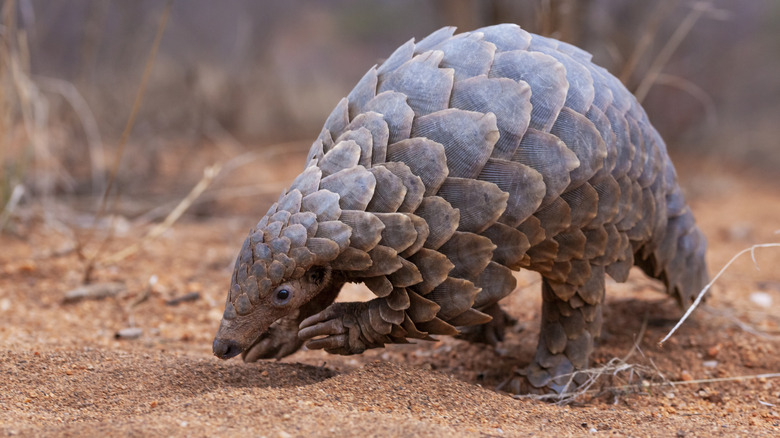
There are eight recognized species of pangolins scattered across two continents: Africa and Asia. A recent entry to this family of Manidae, the Manis Mysteria pangolin was only discovered after scientists examined the scales of one seized in China during a raid relating to illegal trafficking. It's a tale that is told far too often: Prized for their use in traditional medicines, they are the most trafficked animals in the world. Across the globe, populations are in steep decline.
So, spotting one of these shy, mostly nocturnal creatures represents something of a challenge, although not an insurmountable one. Humble brag, I've seen one, many years ago, in South Africa. Today, South Africa remains one of the world's most desirable tourist destinations, but there's a Level 2 travel advisory in place by the U.S. Department of State, and visitors would do well to remember that. Still, increased levels of caution aside, the country has so much to offer in terms of fine cuisine, stunning terrain, and some of the best wildlife experiences that money can buy.
The Tswalu Kalahari Reserve lies deep in the country's northern savanna, about 240 miles northwest of the provincial capital of Kimberley. Here, guests can view packs of hunting hyena and black-maned lions as they roam across fiercely contested territory. There are cobra nests to avoid, meerkats to photograph, and dozens of species of reptiles, birds, and other exotic fauna to experience. Hidden among them are some of the most endangered species out there, including aardvarks, bat-eared foxes, and even pangolins. Difficult to track, understandably wary of humans, and more than a little fussy when it comes to the weather, a sighting is as much about luck as it is about patience and expertise.
Snow Leopard (India)
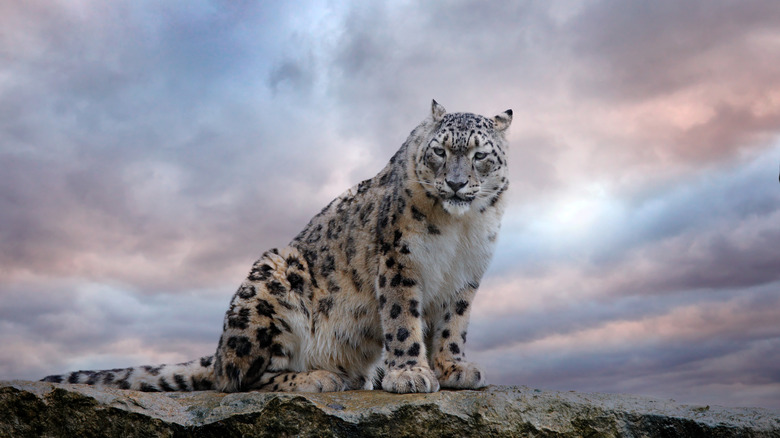
Cat lovers know just how sneaky our feline friends can be, and leopards have a reputation for being the sneakiest of them all — so it's hardly surprising, then, that they find their way onto this list for a second time. The snow leopard is a truly magnificent creature capable of leaping up to six times its body length and possessing a stunning coat of speckled white. They make their home in the high-altitude regions of Central Asia and the Himalayas, meaning that to spot one, you are going to have to visit the highlands of one of a dozen countries within that region. And yes, sorry, humble brag part deux: I spotted one once, at a distance, in the mountains of northern India. It spied me also, of course, and by the time I'd raised my camera, it had already vanished.
Hemis National Park is no stranger to rare and endangered species. Situated in the Ladakh region of India, about an hour's drive from the city of Leh, the park sits at an average elevation of over 15,000 feet. Here, you can find the ever-delightful Himalayan blue sheep, packs of Tibetan wolves, marmots, and Eurasian bears alongside a plethora of birds of prey, rosefinch, and fascinating flora. The snow leopard, however, is a tough nut to crack. Camouflage is an issue, as is the reality of high-altitude camping, a concerted effort is needed here. Fast and cautious, they at least leave their mark on the landscape, and traveling with experienced trackers represents the best opportunity to see one, however fleeting the encounter might be.
Aye-aye (Madagascar)
The island nation of Madagascar, famed for its rare wildlife and rainforests, also comes with a Level 2 travel advisory, meaning that visitors should exercise increased caution. In certain areas, the U.S. Department of State has even elevated the risk assessment to a Level 3, indicating that you should reconsider traveling there. So, there's that. Still, outside of those areas, the island nation offers a varied experience to would-be travelers. The capital city of Antananarivo is alive with activity. The surrounding waters are dotted with island paradises blessed with pristine beaches and unspoiled views. And then there are the nature trails through the ancient rainforest, the only place in the world where you can spot the ever-elusive aye-aye.
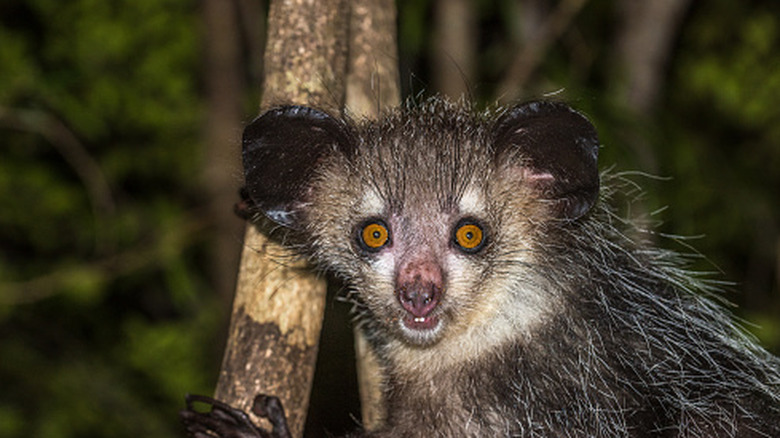
For those who have yet to have had the pleasure, the aye-aye — also known as the long-fingered lemur — is a tree-dwelling nocturnal primate of approximately 16 inches in length. It gets its nickname from its sixth finger, which is actually a "pseudothumb" that it uses to help find grubs. It lives only in the eastern half of the forested island, and, with the usual caveats in place that there are no guarantees on this list, one of the best places to spot them is in the Masoala National Park.
Described as the largest and least visited of Madagascar's protected spaces, it consists of a pleasant mix of rainforest, beaches, and mountainous regions stretched out across almost 900 square miles. Within, you will find 19 separate species of lemur, including the aye-aye, accessible via a myriad of jungle trails. There's also a fantastic,14-capacity lodge within the park which can be used as a base of operations. Surrounded by trails that are well suited to night walks, the chance to spot an aye-aye here is as good as it's going to get.
Red Panda (India)
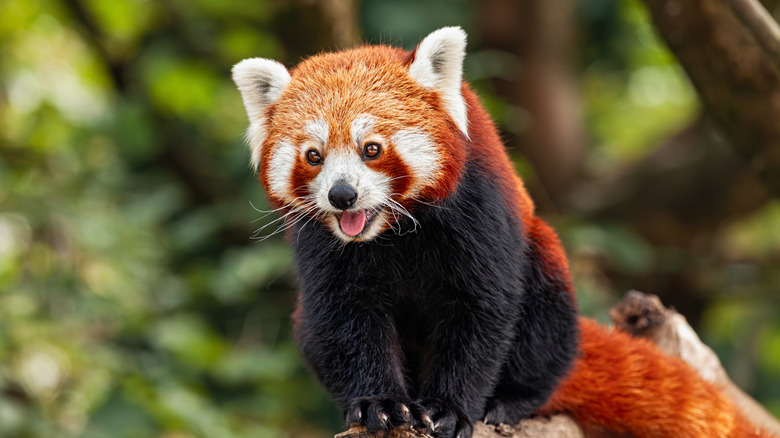
The bamboo-eating giant panda of mainland China often steals the limelight thanks to its gentle nature and photogenic qualities. In truth, it's not the only panda out there. The red panda is no less adorable, but it is only about the size of a large domesticated cat. Although it can be found across the forests of China, Nepal, Myanmar, India, and Bhutan, it is, if anything, even more elusive than its oversized cousin. They aren't great fans of the heat, and consequently, they prefer to live at higher altitudes. This far down the list, it should be apparent that that one fact alone makes spotting one something of a challenge.
Singalila National Park in West Bengal, sits some 7,000 feet above sea level and represents one of the best options for those wishing to view red pandas in their natural environment. It is a place of stunning views with forested areas filled with natural wonders, including over 300 species of birds and 600 types of orchids, all of which help to make a visit an unforgettable experience. There are also bike trails to navigate, guided tours through the forests to enjoy, and camping opportunities that represent a once-in-a-lifetime view of the Himalayan mountain range, including the mighty Mount Everest herself.
As for spotting red pandas, well, they are what is known as a crepuscular animal, meaning that they are most active at dawn and dusk. Early morning walks through the forest, or an after-dinner stroll, is the best way to get results. True, they are well-camouflaged, and yes, they rarely come down from the trees. Still, looking up and pausing to stay still and silent as you move through the forest goes a long way here — and the payoff, if it happens, is well worth the effort.
Vaquita (Mexico)
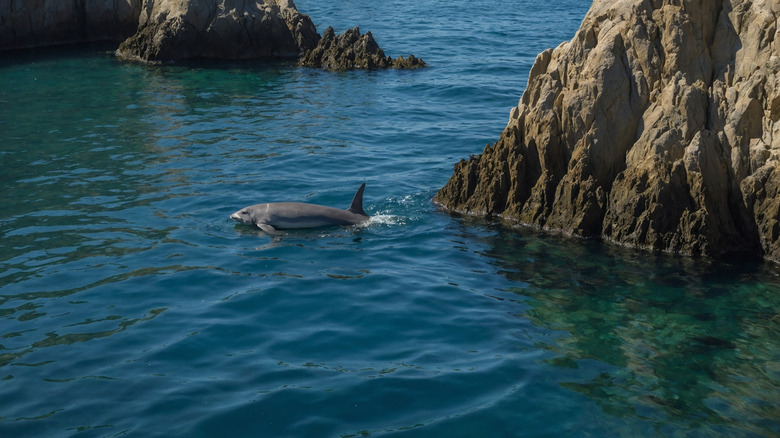
The vaquita is one of the planet's most photogenic creatures, and, at the same time, one of its rarest. There are sadly fewer than a dozen or so of them left in the wild. Spotting one of these ultra-rare porpoises in the wild is a near-mythic experience — nobody had even heard of them prior to 1958 — and the only chance of doing so lies in the shallow waters of the Gulf of California. That means taking a trip to Mexico to visit what is often considered to be one of nature's most precious ecosystems.
Baja California is home to a number of eco-friendly tourist destinations, and those looking to spot a vaquita would do well to charter a boat in the hopes of doing so. Whale excursions are probably your best bet, but a reality check is needed here: The chance of actually seeing one of the endangered porpoises is vanishingly small. They don't like people; they prefer to stay below the waves and, again, there are only about 10 of them left.
Methodology
For many of use nature and travel go hand in hand, and over the years I've been on more than one vacation where observing animals in their natural habitat was the whole point of the trip. In some cases, such efforts were fruitless, but, critically for an article such as this, none of the trips ended with a sense of regret.
This list is no different; each selected location is worth a visit in its own right. The chance to spot something rare is just the icing on the cake. Where statistics on population numbers are cited, data have been obtained from up-to-date scientific research. Animal facts, of which there are many, come either from personal experience — I can still spot echidna tracks in the dark — or else are taken from expert testimonials, websites, or academic papers.