
10 Things You Didn't Realize Could Get You Banned From A Casino

It's hardly surprising that the world's biggest casinos are able to offer such luxury and entertainment. In 2025, their global take-home stood at $321.77 billion. In short, the industry managed to sail through the eddies of economic uncertainty and come out the other side smelling of, well, smelling of money really.
It's all great news for those who enjoy the glitz and glamor of the casino floor, and such a notion is not restricted to American shores. Europe is awash with casinos, often found in unlikely places; a glamorous beach town just south of Lisbon houses one of Europe's largest, and Asia offers gambling hubs that, like Vegas, owe their very existence to the gaming floor. It's a global affair, to be sure.
This is all well and good for those who toe the line when it comes to the strictly regulated rules and regulations of the casino industry. It's less fun for those who suddenly find themselves unwelcome thanks to a moment of impaired judgment. Which begs the question: How do you get banned from a casino? The usual suspects almost go without saying: the unruly drunk, the jerk yelling at staff, or those people engaging in illegal activities such as stealing or using narcotics. Such behavior can get you turfed out of anywhere. But when it comes to casinos, there are less obvious ways to find yourself on a persona non grata list. Testimonials from security experts, official rules from regulatory bodies, and more than a few media reports helped lay the foundations of this article. Some of the activities found below result in temporary bans restricted to a single establishment. More egregious or persistent infractions can lead to an exclusion that spans entire jurisdictions.
Failing the KYC audit

In the highly regulated world of legal bets, few things are left to chance. An irony, to be sure, but casinos are uniquely placed in the world of commerce; the odds are stacked in their favor, yes, but margins are often tight. Allowing people to game the system is, for many establishments, a simple matter of survival, which is why most places invest in a multilayered approach to security. The very first level of said defense is known as the KYC audit. In short, if you run a casino, you really need to KYC — know your customers.
Casinos see the KYC audit as an opportunity to protect themselves from multiple vectors in one fell swoop. First, they want to prevent even inadvertent regulatory breaches. In Nevada, for example, gambling under the age of 21 is forbidden; anyone caught doing so risks fines, forfeiture of their winnings, expulsion from the premises, and possible arrest. The casino and its staff may also be subject to fines for knowingly allowing an underage patron on the premises.
Money laundering is another area where the KYC audit applies. In most jurisdictions, casinos have the right to check the source of your funds before allowing you to withdraw chips. They are also legally obligated to file a report on anyone who attempts to bring in more than $10,000 in cash within a single 24-hour period. In addition to such measures, casinos also have a responsibility towards people identified as problem gamblers. Any patron entering a gaming floor without the legal right to do so risks arrest. Any gamer who attempts to bypass checks and balances will likely suffer the same fate. Even those who merely invite suspicion will almost certainly be asked to leave; casinos do not need to give a reason for not wanting your patronage.
Winning too much

Casinos, for all their detractors, are designed as places for people to enjoy themselves. They operate on margins that follow a simple calculation: players will lose more than they win. There is an important emphasis on players plural here. Individual gamers can absolutely beat that house edge; if they could not, nobody would ever show up. Still, casinos are private property, and while they are unlikely to escort you from the premises simply because you are having a run of good luck, there are circumstances when winning big can land you in hot water, which is not where you want to be.
Even the best-reviewed Las Vegas casinos employ staff whose sole job is to monitor play at the tables and slots; surveillance technology is everywhere. The issue they face with gamblers who are winning too much is not the amount of money per se, but rather the methods being used to accrue it. Card counters — more on that below — will be asked to leave due to excessive skill. Suspicious betting patterns are also frowned upon; betting one dollar on each blackjack hand, then upping the stakes to $1,000 just before a big win is going to light up some screens in the security room.
It's important to note that mere suspicion of gaming the system can land you in trouble. In 2025, a Florida man was banned from a North Carolina casino after winning over $500,000. Although the casino eventually paid him his winnings, his lifetime ban remains in place. This is not to suggest that such occurrences are common; where incidents of people being thrown out of the casino after a winning streak occur, in most cases, there is more to the story than meets the eye.
Counting cards
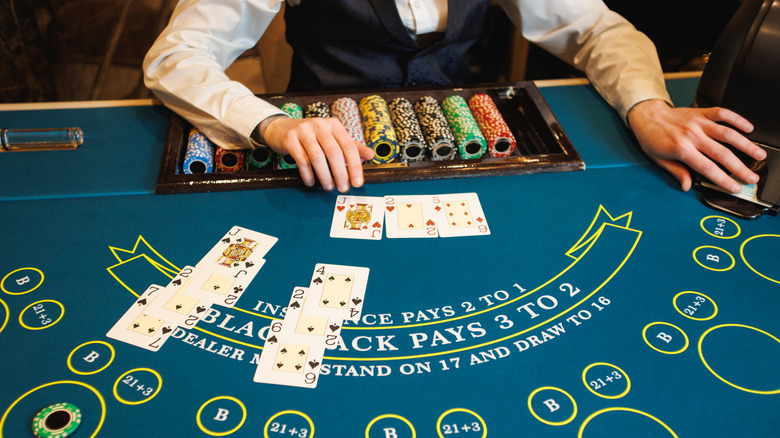
There are games out there where winning or losing is mostly a question of luck: the rolling of dice, the drawing of a card, or the spin on a roulette wheel. Then there are games that are entirely a matter of skill: nobody ever lost a game of chess because they were dealt a bum piece. There is, however, a third category of games that combines the two metrics. Bad cards are bad cards, sure, but poker is still a skill game.
Still, casinos exist thanks to the profit motive, and the last thing they want is to find themselves facing off against an opponent that can outplay the odds. Ok, so what is card counting and how does it work? In its purest form, it's a way of gaining the system while playing Blackjack. It's a memory test that involves keeping track of the cards as they play and then applying a simple formula that you can then use to inform you of your next move. You'll have to go elsewhere to learn the whole method, but suffice it to say that it gives you an edge over the dealer. Oh, and it's not illegal; you cannot punish someone simply for being good at math.
However, the legality of the situation doesn't help you all that much when you are playing Blackjack at a private establishment. If a casino suspects you are counting cards, they are well within their rights to ask you to leave, and refusing to leave if asked actually is illegal. The technique can also be applied to poker, but in such a game, casinos make money by taking a percentage of the pot; gifted players keeping track of which cards have been dealt aren't breaking any rules.
Proxy betting

Having someone else make a bet for you is certainly one way to have fun in Las Vegas without stepping foot in a casino, but it comes with a rather important caveat. You're not really allowed to do so. Let's face it, any announcement of a plan to visit a casino invites mischief: a $20 thrust into your hand with an instruction to place it on a specific number. A promise to play a round of Blackjack for Aunty Mavis. A sideways wink with detailed instructions of exactly when, where, and how to place a Baccarat wager in someone else's name. Proxy betting is probably as old as gambling itself. And as far as most casinos are concerned, it's absolutely not ok.
There are several layers at play here. The first is linked inextricably to the concept of the KYC audit; you could be placing a bet for a minor, you might be standing in for a banned individual, or there's always a slight chance that you are part of a money laundering scheme. The proxy might be safe and sound on the other side of a telephone, but the person placing bets on their behalf is at risk of eviction if caught.
The legality of the issue, as you'd expect, varies from location to location. Allowing proxy betting is a license revoking violation in the U.K., and casinos in the U.S. can find themselves hit with huge fines for turning a blind eye, so anyone caught doing so risks being kicked off the premises and told to never come back. Nevada allows it under certain circumstances, but it requires registering the proxy so they can conduct the same KYC audit they would on anyone else gaming at their establishment.
Picking up dropped chips and using them

Hard truth time: in a casino, most people lose more than they win. The house, as everyone knows, has an edge, and math paints a bleaker picture than starry-eyed patrons might want to believe. For every $1000 bet, you can expect to lose $52. You'll probably lose more than that; human psychology dictates that people keep playing to recoup losses. Which is fine, because the key word is "probable." So long as you don't lose more than you can afford, most people accept that they are paying for an evening of entertainment. Still, it sucks to lose, which is why it must be nice to sit down at a slot machine and spot a dropped chip on the floor or rattling around in the tray. Payback is, after all, a David and Goliath moment writ large across the bright lights of Vegas. One catch: that chip isn't yours.
The adage of finders keepers is something of a gray area when it comes to finding chips in a casino. First up, low denominations are less problematic than high ones. Casinos keep track of high-value chips, and attempting to cash out one you stumbled across might be considered petty theft. Far better to hand it in and hope that they will release it back to you if it remains unclaimed. Fishing forgotten chips out of slots is probably less problematic, but if the casino suspects you of slot walking – the process of deliberately walking the aisles in search of lost booty — they'll almost certainly ask you to leave.
Vulturing

While slot walking is frowned upon, Vulturing is seen as a more serious violation of the rules. As is often the case with casino nomenclature, the term is one part opaque and one part an intimate description of the process. In the wild, vultures circle around dead or dying animals; at casinos, they circle the slot machines. The metaphor fit, and casinos decided to run with it.
The process of vulturing is separate from slot walking (or silver mining, as it is sometimes called). In those cases, patrons are simply looking for forgotten tokens or coins. Vultures, on the other hand, have a different intention in mind. You see, while slot machines offer a random chance of winning, they must legally state what that chance is and provide players with what is known as an RTP, or return to player percentage. That leads some to conclude that the machines self-correct if a payout is overdue. Spoiler alert: they don't.
So, keeping an eye out for slot machines that at least appear to offer an enhanced chance of a jackpot isn't cheating. It's just annoying. From underrated casino resorts in downtown Las Vegas to European art of living capitals blessed with opulent casinos, security casts a careful eye over so-called advantage players, loitering around slot machines in the hope of gaming the system. Remember, they have the right to ask you to leave without giving an explanation, and failure to comply will almost certainly land you with a trespassing charge or worse. And it would, of course, all be for nothing because, again, the idea that slots keep track of wins and losses simply isn't true.
Using a gaming device

In case it's not clear by now, attempting to cheat in a casino is a bad idea. Security is well-versed in all the latest tricks; there are cameras everywhere. If you are caught, you're probably going to jail. To that point, using any kind of tool, whether it be a physical one that manipulates slots or an electronic device that grants a player some kind of edge, is absolutely forbidden. Needless to say, casinos take such violations extremely seriously.
Casinos use the term gaming device quite broadly. Back in the day, using them was the province of hardened fraudsters; with the onset of cell phones, however, everyone in the casino has access to a mobile computer, the internet, and a wealth of advantage-giving options. That alone creates something of a grey area. In most cases, phones aren't allowed at the table, but no casino is going to ban their use outright. Stepping away and getting some online advice or assistance is illegal, and sure, it might look like an innocent text, but considering the penalties, it simply is not worth it. Regardless, leaving the table to use your phone might raise suspicions and, again, in many cases, casinos may simply ask you to leave.
The same goes for note-taking. Yes, a pencil can be considered a gaming device if it is used for the purpose of cheating. Casinos are happy to provide pre-printed strategy cards for games such as Blackjack, and you can make notes at a roulette table. In most other cases, however, doing so is probably going to lead to a tap on the shoulder or possible arrest.
Banning yourself

It's no secret that although many people enjoy the odd wager, gambling can lead to serious addiction. Indeed, across the U.S., some 5 million people are said to fall into the category of problem gamblers: in China, that number rises to 60 million, or around 4 percent of the entire population. Men are twice as susceptible as women to developing a gambling disorder, but the reality of human psychology is that addiction is demographic-neutral. And to those who recognize that they have a problem, self-exclusion can help mitigate risk.
The process works like this. During a moment of clarity, individuals can voluntarily approach a gambling establishment (of both online and physical persuasions) and request a ban. The length of the embargo is generally up to the individual, but usually runs for between six months and five years. In some cases, they can be banned for life. Once you have filled in an application, you are granted persona non grata status and will not be allowed on the premises.
Or premises; over in the United Kingdom, it is possible to ban yourself from every single casino in the country. Regulations in the U.S. vary from state to state, but there is a consistent caveat to most places that allow individuals to ban themselves: there are no take-backs. Once you have signed the exclusion, you cannot change your mind. Casinos have a duty to ensure responsible gaming: yes, they are a business trying to turn a profit, but willfully destroying people's lives is bad PR, and most casinos are at pains to demonstrate their willingness to prevent such human tragedy. They have cameras, they use facial recognition, and if you attempt to enter while the ban is still active, you run the risk of arrest for trespassing, and any winnings will be forfeited.
Filming

Casinos are exciting places, frequented by glamorous people, bright lights, polished tables, and whirring machines. In the Instagram age, it's only natural to want to capture the experience. A selfie here, a 360 panorama of the gaming floor there? It all serves to cement in everyone's minds how windswept and interesting you are. Sadly, there are more than a few unwritten rules you should know before visiting Las Vegas, and knowing that filming is frowned upon is certainly one of them.
The reasons that casinos have such strict rules of photography ֪– and they are rules, it's not illegal – are straightforward. To start with, there are the aforementioned issues relating to gaming devices. Phones aren't allowed at the table by default, so you can't film a blackjack win with one. Regular cameras, however, might also serve as a gaming device: cameras can zoom in on things, and the casino won't want to risk the chance that you are looking at someone else's cards and relaying the information back to someone else. So, there's that. Next comes the issue of privacy; not everyone wants to be filmed gambling away the family silver. Societal taboos exist, and for some, gambling is frowned upon, or, at the very least, is not something that they want advertised on social media. Lastly, camera equipment is a security threat; filming camera placements or allowing an after-the-fact frame-by-frame analysis of the place where the money is stored isn't something the casino wants to encourage.
Policies vary by location, but as a rule of thumb, filming on the gaming floor is forbidden. Anyone seen doing so is likely to receive a warning at the very least. If such warnings are ignored, or if they simply think you are up to no good, expect to be led to the exit.