
The Most Underrated Summer Getaways In Canada In 2026
We may receive a commission on purchases made from links.
There's nowhere quite like Canada. From the roaring Niagara Falls and dramatic peaks of Banff National Park to the lively streets of Toronto, the Great White North is known for its spectacular beauty, vast size, and impossibly friendly people. The nation attracts millions of visitors every year, but summertime is arguably the best time to visit — of course, you might end up fighting hoards of other tourists who also want to take advantage of Canada's many charms. Luckily, you can still find some under-the-radar summer getaways in Canada that give you a unique, authentic experience without too many crowds, including adventurous outdoor destinations, mineral hot springs, and charming seaside towns.
For this article, we wanted to get a good selection of getaways for every traveler. We looked at several articles and guides on outlets such as Conde Nast and 1000 Towns of Canada, as well as recommendations from travelers on social media in order to represent a variety of places and travel styles. Whether you're craving an adventure in nature or a slightly more urban setting with plenty of things to do, Canada's many hidden gems have all that in store and more in 2026.
Manitoulin Island (Ontario)
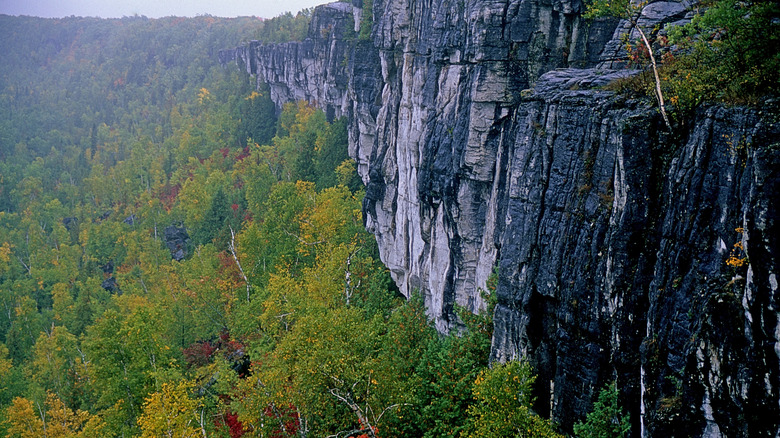
Manitoulin Island is one of Ontario's best-kept secrets. Located on Lake Huron, Manitoulin is the largest freshwater island in the world. Known as "Spirit Island" in the Ojibwe language, visitors can enjoy a perfect summer getaway learning about local history, hiking stunning trails, exploring waterfalls, and relaxing on the beach. To get to Manitoulin Island, travelers can drive via the Little Current Swing Bridge or take the MS Chi-Cheemaun Ferry from Tobermory. It's over a two-hour drive from Sudbury, and the ferry costs about $13 USD (about $18 CAD) per adult at the time of writing. Travelers can also take their own vehicle on board for an additional charge.
Manitoulin Island provides plenty of opportunities to cool down on a hot summer's day. Providence Bay Beach has a little over a mile of sand to enjoy, with restaurants, live music, a playground, a picnic area, and a boardwalk. There's even a dog-friendly area and free parking. Travelers can also take a dip at the base of Bridal Veil Falls, a stunning 36-foot waterfall, which is located just off the road with well-maintained stairs leading down to it, according to reviews on Tripadvisor. But, if you're in search of a good hike, look no further than Cup and Saucer Trail, a route that leads to fantastic views of the island, Lake Huron, and the surrounding area.
The island also has many opportunities to learn about local Indigenous culture through events, tours, and more. For adventurous eaters, join an experience where you forage for your own ingredients along the Bebamikawe Memorial Trail and then learn to cook them yourself with an Anishinaabe guide. The island also has incredible camping and stargazing opportunities, bike trails, places to fish, and small town charm — making this Canadian gem a wonderful summer getaway.
Au Diable Vert (Québec)
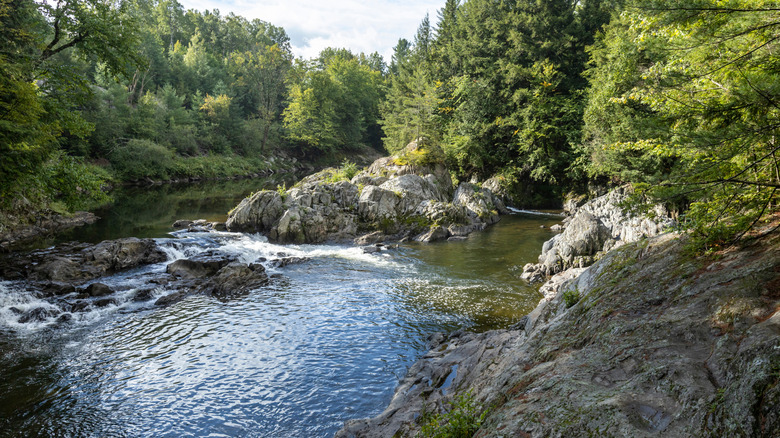
Au Diable Vert is a unique resort getaway for those who love adventures in nature. Located about a two-hour drive outside of Montreal, close to the border of Vermont, this summer escape has treehouses, cabins, campsites, and apartments to stay in at night while you spend your days enjoying the many thrilling outdoor activities the Au Diable Vert has to offer.
The resort is located on the Missisquoi River, where visitors can kayak, float in an inner tube, and paddleboard to cool off from the summer sun. Inner tube rentals and kayaking tours cost anywhere from $10 to $39 USD ($15 to $55 CAD), depending on time limits and size of the watercraft you're looking for. If you want to spend some time among the trees, Au Diable Vert is home to the VéloVolant: a cable-mounted bicycle connected through the treetops that takes visitors on a ride with aerial views of the Canadian countryside. For those wanting to explore the trees from the ground, the resort also has over 13.6 miles of hiking trails as well.
For amateur astronomers and night sky enthusiasts, Au Diable Vert is an excellent place to see the stars. It was certified by DarkSky International as the first "Starry Night Accommodation" in Canada and was designated a "Dark Sky Preserve" by the Royal Astronomical Society of Canada in 2018. Au Diable Vert is also home to ObservÉtoiles, the first open-air planetarium with augmented reality. Visitors are taken on a journey through the stars with nightly shows led by astronomers in June and July.
Bonnechere Caves (Ontario)
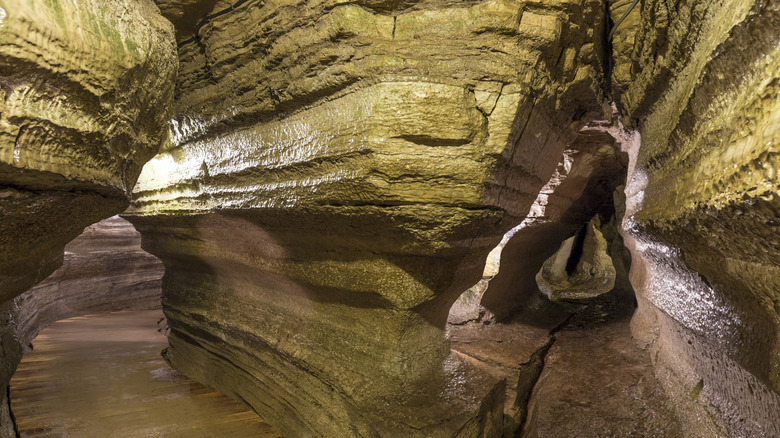
The Bonnechere Caves are a wonderful summer escape for adventurous families, offering both fascinating geological history and cool temperatures year-round. The caves have guided tours every day that depart every 20 to 30 minutes from 10 a.m. to 4 p.m. with no reservation needed.
Tours cost about $18 USD ($25 CAD) for adults, and much less for children, seniors, and teenagers. Children under 4 are free. On the tour, the guides share the history and geological facts about the area, the impact of glaciers, the small brown bats that call the Bonnechere Caves home, and more.
The caves are located right next to the Bonnechere River, where visitors can kayak, bike, and visit Fourth Chute Falls. There are also plenty of organized activities for all kinds of visitors, including daily painting gatherings for burgeoning artists, weekly t-shirt tie-dying events, cycling challenges, and more. Visitors can even participate in fossil hunts to look for straight-shelled cephalopods, gastropods, honeycomb coral, and more. The caves also host the Cavestock Concert Series, which brings in local musicians for live performances.
Elk Island National Park (Alberta)
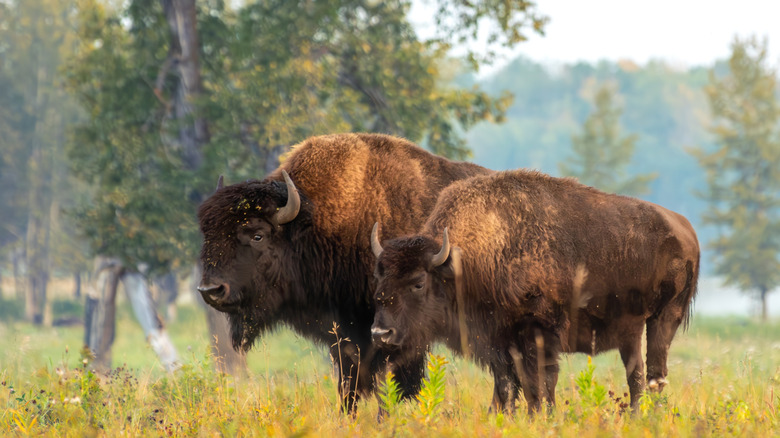
Of course, Elk Island National Park in Alberta promises what its name suggests, but it's also home to all kinds of animals besides elk, including deer and bison. Located less than 40 minutes from Edmonton, the park is an idyllic getaway with hiking trails, lake fun, or spending the night underneath the stars. It is part of the Beaver Hills Biosphere, which received its official designation from UNESCO in 2016. Thanks to the park's long-standing conservation efforts, over 250 species of birds and 42 species of mammals call the park home today, including 600 plains bison and 400 wood bison.
Throughout the park, there are several hiking trails of various lengths and difficulty levels, but all include spectacular views. Beaver Pond Trail (easy), Shirley Lake Trail (moderate), Moss Lake Trail (difficult), and Wood Bison Trail (difficult) are the best for catching a glimpse of bison, moose, beavers, elk, waterfowl, and more — but hikers should always remain at a safe distance. On Astotin Lake, visitors can also canoe, kayak, lie on the beach, have a picnic, sit around a fire pit, or go golfing. Motorized boats are not allowed on the lake, but if you have a sailboat, this is the perfect place to take it out.
The park is also part of the Beaver Hills Dark Sky Preserve, so visitors can sleep under the stars by renting a spot at one of the multiple tent, backcountry, or RV campgrounds. Or you can opt to stay in a more luxurious accommodation at the Elk Island Retreat, which has geodomes, yurts, and cabins, as well as other amenities such as a sauna, free Wi-Fi, onsite volleyball, a cooking shelter with barbecues, and camping supply rentals.
Harrison Hot Springs (British Columbia)
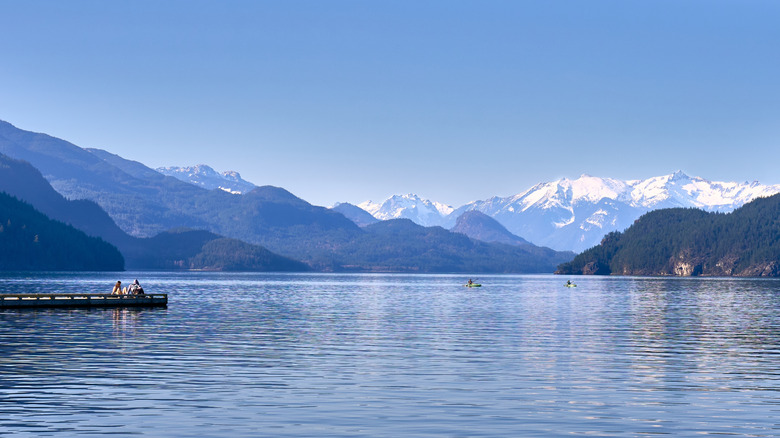
Harrison Hot Springs, located a little over two-hours from Vancouver, is the ideal summer getaway location for travelers seeking natural wellness, rejuvenation, and pure relaxation. These hot springs were known as the "healing place" by the Indigenous Sts'ailes people. Today, they are operated by the Harrison Hot Springs Resort, where guests have access to five spring-fed mineral pools. These pools are heated by two types of hot springs in the area, called Potash and Sulphur, and reach temperatures as high as 104 and 145 degrees Fahrenheit, respectively. These thermal waters are then pumped into the resort pools, each with its own temperature that's safe for soaking (between 85 and 100 degrees Fahrenheit). The mineral waters average about 1,300 parts per million of dissolved minerals, which makes them some of the most concentrated in North America, according to the resort's website.
The resort is also located near a marina on Harrison Lake, where there are plenty of activities to do. Guests can jet ski, go kayaking, rent a boat, go on a wildlife eco tour, hike, and even play at an inflatable waterpark. For fishing enthusiasts, professional guides can take visitors out to fish for salmon, steelhead, trout, and sturgeon. There's also the nearby Harrison Resort Golf Course, local shops and restaurants, and even Sasquatch-themed events, as Harrison is known as Canada's "Sasquatch Capital."
Ball's Falls Conservation Area (Ontario)
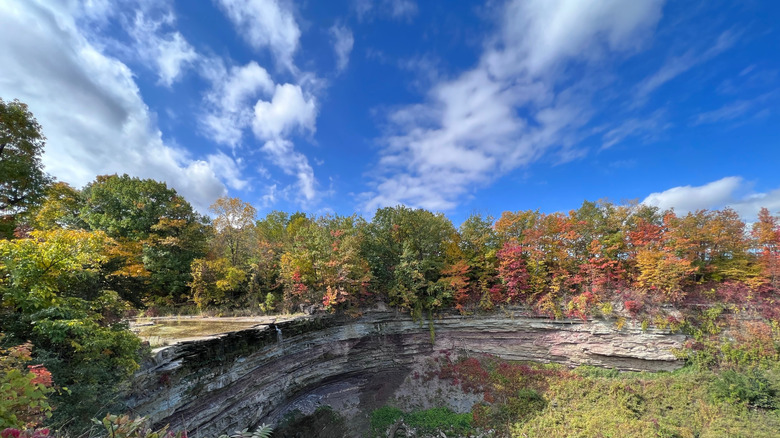
Everyone has heard of Niagara Falls, but just a short 30-minute drive away lies another set of waterfalls where visitors can enjoy fewer crowds, hiking, geological history, and well-preserved nature. Ball's Falls Conservation Area in Ontario spreads over 200 acres with original buildings from the 19th century. The Ball family, originally from Germany, settled there and used the land for saw mills, wool mills, and more. The blacksmith shop, lime kiln, flour mill, church, and original Ball family home still stand today.
Visitors can view the waterfalls from the top or hike to the bottom on either the Cataract Trail or the Bruce Trail. Cataract Trail is a 2-mile loop that brings hikers to the upper and lower parts of the falls and past a woolen mill from 1824 via wide gravel paths and forest trails. The Bruce Trail is slightly shorter at 1.7 miles, and is not a loop. Rather, hikers go in and back the same way they came.
Ball's Falls is also home to a gorgeous wedding venue, perfect for couples who want a ceremony in lush nature. Ball's Falls offers several wedding spaces, including an outdoor venue with a wooden arch, a historic chapel built in 1864, the bucolic Big Barn, and the more sophisticated Glen Elgin Room, which has floor-to-ceiling windows and an outdoor patio.
Lunenburg (Nova Scotia)
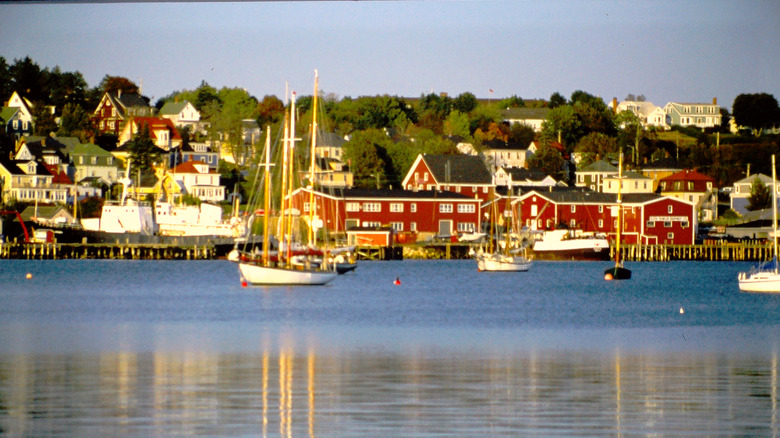
If your ideal summer getaway includes a colorful, chic town with quirky charm and fresh seafood, look no further than Lunenburg, Nova Scotia. Lunenburg is one of only two urban UNESCO World Heritage Sites in North America, and it's famous for its colorful buildings on its waterfront. Getting there is just about a one-and-a-half hour drive from Nova Scotia's capital city of Halifax, making it the perfect day trip or weekend getaway.
Perhaps the most iconic thing to do in Lunenburg is walk the waterfront, filled with shops and restaurants in the colorfully-painted and historically-preserved homes. There are walking tours available that will teach travelers about the town's history as an important fishing town and more. In fact, today it still plays an important role in Canada's fishing industry. The famous Bluenose II schooner is a popular attraction, where visitors can walk aboard and sail in the harbor in a replica of the original boat that won the International Fishermen's Cup. The Fisheries Museum of the Atlantic, right on Lunenburg's waterfront, gives an interesting look at an old fish processing plant and teaches visitors about the fishing culture and history of the area.
And, of course, a trip to a famous fishing town wouldn't be complete without eating some fresh seafood. The waterfront has several options, including The Salt Shaker Deli, The South Shore Fish Shack, The Old Fish Factory Restaurant, and Boathouse Bites, which serve mouth-watering options like salmon, oysters, lobster, and more along with beautiful views of the water.
Anticosti Island (Québec)
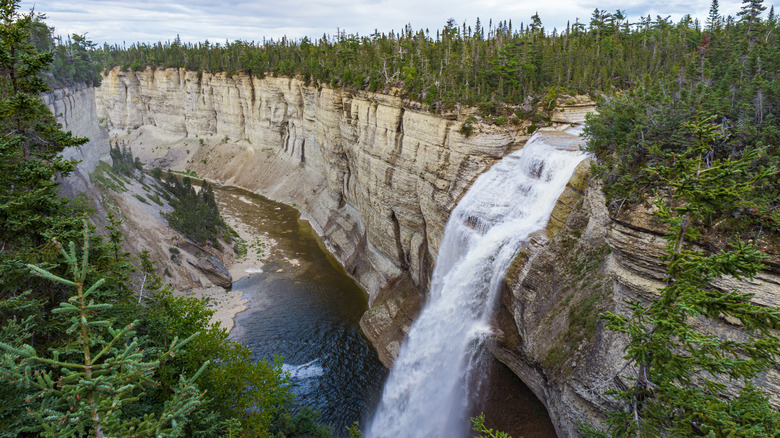
Anticosti Island is home to stunning scenery, canyons, and a large group of white-tailed deer, all nestled in the Gulf of St. Lawrence in Québec. Designated a UNESCO World Heritage site in 2023, this so-called "fossil treasure in Canada" is the "best preserved paleontological record of the first mass extinction of animal life," according to UNESCO. These fossils date back to between 447 and 437 million years ago, and the marine fossils date back to 10 million years ago. The island is also home to the one of longest caves in Québec, ruins of lighthouses from the 1800s, and hundreds of shipwrecks.
The white-tailed deer population dates back to when the island was privately owned by French chocolatier and hunter Henri Menier, who brought the deer here in the late 1800s to early 1900s. Because the deer have no natural predators on the island, their population, estimated to be between 130,000 to 200,000, now outnumbers the human population. Many come to the island to hunt, but for those just wanting to catch a glimpse of the deer, they can be seen when exploring the island's natural sites, such as the Vauréal Falls. At 250 feet tall, the waterfall is also a great place to try to find a fossil. A 4.3-mile hike takes travelers through Vauréal Canyon, where more than 600 fossils have been found, and every vertical meter of the rock walls is considered 15,000 years of geological information.
Another interesting part of the island's history is that it's known as the "Graveyard of the Gulf" because of the estimated 400 shipwrecks that surround the island. Though some are visible from land, the best way to see these spooky ships is to take a snorkeling or scuba diving tour.
Kluane National Park and Reserve (Yukon Territory)
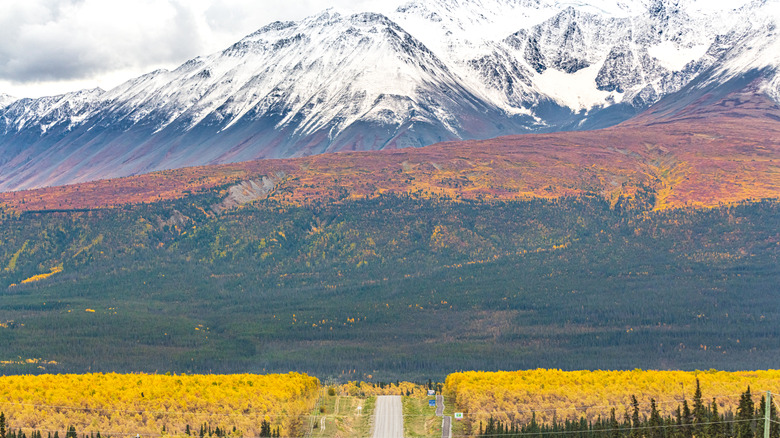
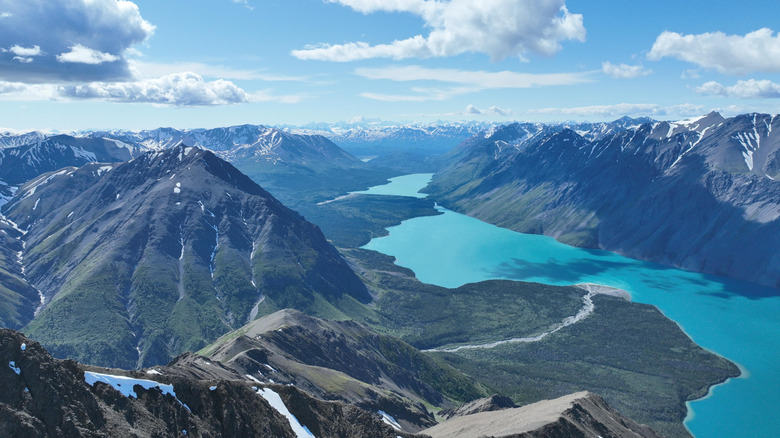
Kluane National Park and Reserve in Canada's Yukon Territory is known for its spectacular beauty since it is home to the largest non-polar ice fields in the world and 17 of 20 of Canada's tallest mountains. These unique natural features mean visiting the national park that has otherworldly features with glaciers, wildlife, and dramatic views.
Kluane National Park is a nature lover's paradise. One of the most popular options of seeing the park is by air. A flightseeing tour gives visitors a bird's-eye view of the glaciers and peaks. For those wanting to explore on foot, the best trail options include Soldier's Summit, Kokanee, Sheep Creek, Shorty Creek, and more. These trails, which can take anywhere from 20 minutes to several days to complete, allow hikers to enjoy amazing views and historical sites, such as the site of the opening of the Alaska Highway in 1942, an old mining road, Kathleen Lake, rock glaciers, and more.
Getting to Kluane, however, is no easy feat — but that's the price of getting to such a secluded part of the world. It's at least a two-hour drive from Whitehorse, the capital of the Yukon Territory, via the Alaska Highway, and a two-hour drive from Haines, Alaska. Whitehorse also has daily flights from Vancouver, Calgary, Victoria, Fairbanks (in the summer), and more. Once there, there are plenty of places to stay, from backcountry camping to amenity-filled hotels. The most popular camping site is close to Kathleen Lake, where one can hike, paddleboard, and go boating. Most hotels are located in the nearby towns, including options such as Mount Logan Ecolodge, the Glacier View Inn, Kluane Cabins, Kluane Wilderness Lodge, and more for guests who want to be comfortable while still embracing the outdoors.
Haida Gwaii (British Columbia)
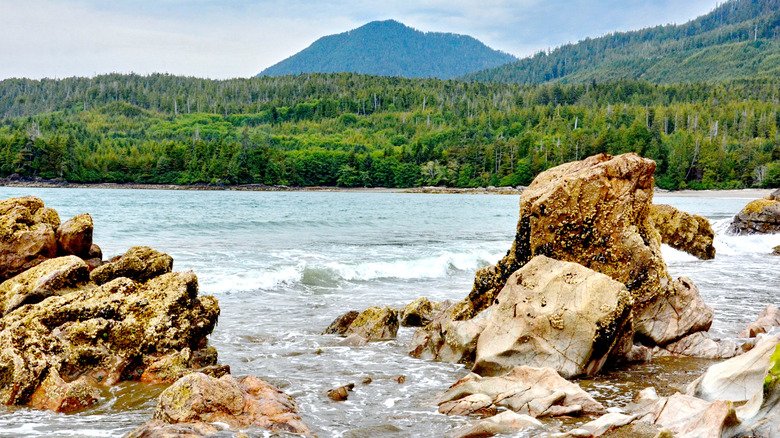
Known as the "Galapagos of the North," Haida Gwaii is a collection of islands full of incredible biodiversity, outdoor activities, and fun adventures. Because it has been so isolated, unique species found nowhere else in the world call Haida Gwaii's land and sea home, including the Haida Gwaii black bear. These bears are unique because they have larger jaws and teeth than regular bears thanks to their diet of salmon and crabs.
Haida Gwaii is a paradise for both bird watchers and marine animal-lovers alike. The area is known to have around 1.5 million seabirds that come from 12 different species. This includes the Ancient Murrelet, a bird whose only nesting area in Canada is in Haida Gwaii. To see marine life, visitors can take a boat tour or kayak to see animals such as dolphins, different types of whales, seals, sea lions, and orcas. And for more natural wonders, head to Gwaii Haanas National Park — the first area in the world to be protected from the mountains down to the sea floor. This rainforest has 1,000-year-old trees and many opportunities to learn about the Indigenous population that called this land home through Haida totem poles and other artifacts.
Getting to these remote islands requires a bit of planning. It has two main islands of its more than 200 total: Graham Island and Moresby Island, both of which have airports with daily flights to and from Vancouver International Airport. Travelers should be aware that flight schedules change depending on the time of year. There is also a ferry from Prince Rupert, and the benefit of taking this mode of transportation is the opportunity to see whales and other marine life on the journey there.