
10 Cities In The World That Offer Free Public Transportation

There are very few things that can derail a dream vacation like the sheer cost of it. Sure, you can find the odd all-inclusive resort for under $250 a night, and yes, guides on the cheapest destinations for a beach holiday sometimes bear fruit. For the most part, however, the expenses build upon one another with an ominous refrain. There are hotels to book, concierge fees to absorb, flights to pay for, and the ever-present reality of having to mostly dine out every day. Oh, and then there are transportation costs, an oft-overlooked yet significant expenditure of so many vacations.
Taxis to and from airports are notoriously pricey. Traveling by train isn't always cheap, walking everywhere is tiring, and while cities such as Copenhagen and London actively encourage visitors to rent bicycles, such methods of locomotion are not for everyone. Buses and trams are fine for the most part, and many cities offer discounted travel cards for students, older adults, or sometimes tourists.
Still, if there's one thing better than a discount, it's the idea of getting something completely free. There are cities out there that offer free public transportation as a matter of principle. In some cases, there are caveats attached; for example, you might have to prove you are staying overnight before receiving your free pass. In other cases, such access is given across the board to tourists and citizens alike. We've traveled around enough to find out where some of these places are. Moreover, we've narrowed the list to include only those places where the gift of free transport enhances the overall experience, and we've checked in with local transport authorities and tourist boards to provide the most accurate overview possible.
Luxembourg
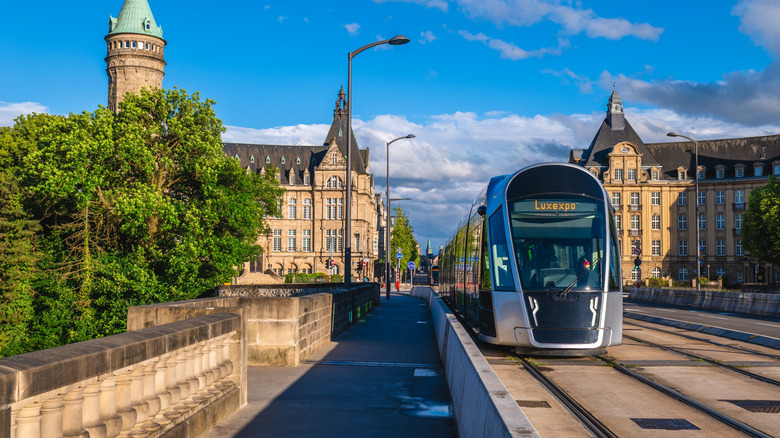
You might be forgiven for thinking that Luxembourg doesn't even really need a public transportation system. Spread across less than 1,000 square miles of European land, you can drive across the whole country in just over an hour, and that includes the outlying areas. The city itself is only 20 square miles. Still, however compact that it might be, there is so much to see and do in the Grand Duchy's capital that the usefulness of free transportation carries considerable weight.
The decision to offer free public transportation across the country took effect in 2020, when the government made the entire transportation network fare-free. There were no hidden caveats; transportation is free for anyone who wishes to use it, across bus, train, and tram services. For a nation that relies heavily on commuters traveling in from neighboring countries, it was a welcome and well-thought-out gesture; Luxembourg road traffic is among the most congested in Europe.
Cut loose from the cost of getting from point A to point B, exploring this gorgeous and wildly underrated European country has never been easier. A trip into the vast underground defensive network known as the Bock Casemates tells stories of Luxembourg's convoluted past. Meanwhile, Chemin de la Corniche is one of the few inland treks that can rival the best coastal walks in the world in terms of sheer beauty, the Château de Vianden is as fairy-tale a castle as you could ever hope to imagine, and the Grand Ducal Palace is invitingly open to the public during high summer. And once all that has been experienced, a ride back to the center takes you to some of the best dining experiences in all of Western Europe. Luxembourg boasts no fewer than 12 Michelin-starred restaurants.
Melbourne, Australia
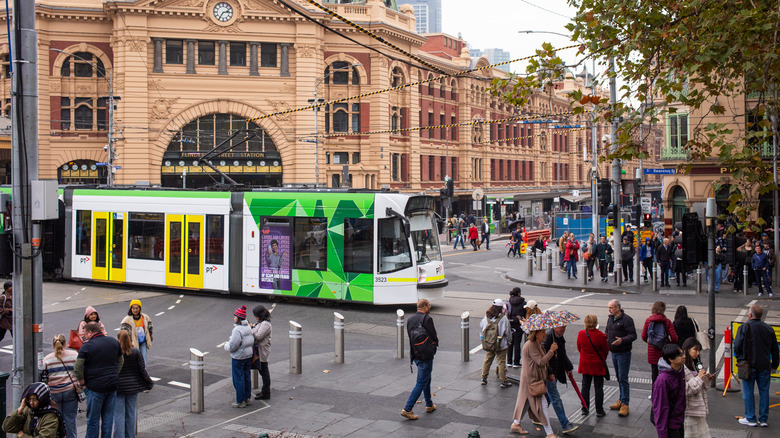
Australia is one of those nations where geography can get a little unclear for those not overly familiar with the place. A quick primer: Most of the major cities are clustered around the coast, Canberra, not Sydney, is the capital, and Melbourne, despite its relatively small size, is considered by some to be one of the most livable cities in the entire world. Such high praise comes, no doubt, in part due to its excellent public transportation system and fare-free central tram zone.
The free rides are restricted to its tram system and only operate in the admittedly spread-out city center itself. Still, that covers a lot of ground considering all that Melbourne has to offer. Melbourne is, after all, something of a foodie hub: It has well over 3,000 restaurants and, thanks to the cosmopolitan nature of its population, you can find cuisines from no fewer than 70 different countries. Pro tip: Queen Victoria Market is a must-visit location for those who want to get to grips with the city's culinary scene.
Elsewhere, you'll get to experience the delights of Chinatown and rub shoulders with the diverse arts scene found within the self-styled coffee capital of the world. Photo opportunities abound, with Flinders Street Station offering a window into Australia's colonial past and the Royal Botanical Gardens showcasing the wonderful flora of the antipodean world. The Old Melbourne Gaol provides insight into a different, perhaps darker chapter, with a nod toward Australia's early use as a British penal colony.
Geneva, Switzerland
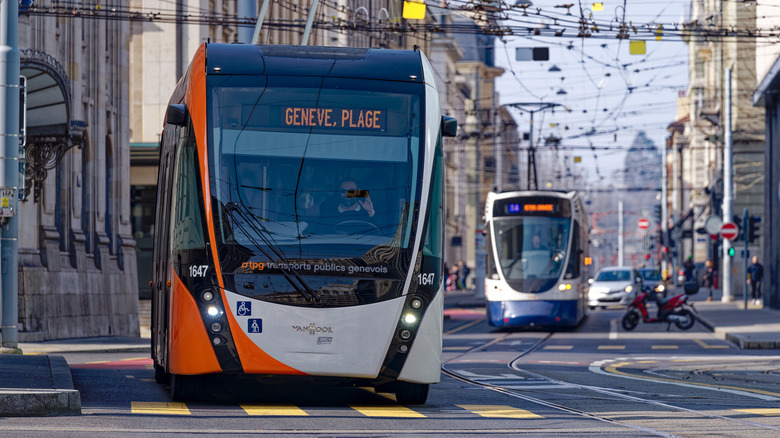
Geneva's Latin motto of "Post tenebras lux" rolls off the tongue with such consummate ease that its similarly poetic translation, "after darkness, light," pleases with equal measure. It's an apt description; Geneva is the birthplace of humanitarian diplomacy, a cradle of the Enlightenment, and the absolute best place to be if you want to purchase a truly outstanding timepiece.
The city sits alongside a lake of the same name for the Anglophones among us, or Lac Léman for those who prefer the rounded vowels of the lingua franca. The city's Old Town is an absolute delight, filled with historic landmarks such as the 12th-century Cathédrale Saint-Pierre, the bistro-lined Place du Bourg-de-Four, and the famous Reformation Wall. Geneva is also home to some of the best shopping experiences in all of Europe, and while it is not the capital city of Switzerland, it does house the European headquarters of the United Nations, the CERN laboratories, and the WHO campus. For Switzerland, it's a truly cosmopolitan place. Meanwhile, a cruise across the lake offers some of the best views you'll find anywhere in the world, and some services can take you as far as Montreux and its bucket-list-worthy lakeside castle. And much of it can be reached using free public transportation.
Well, perhaps not entirely free: You need to stay overnight to be eligible for a digital transportation card. Your hotel or hostel can provide you with a downloadable pass that grants access to buses, trains, and boats, so long as those boats serve as a taxi service. Actual lake cruises require separate paid tickets.
Salzburg, Austria
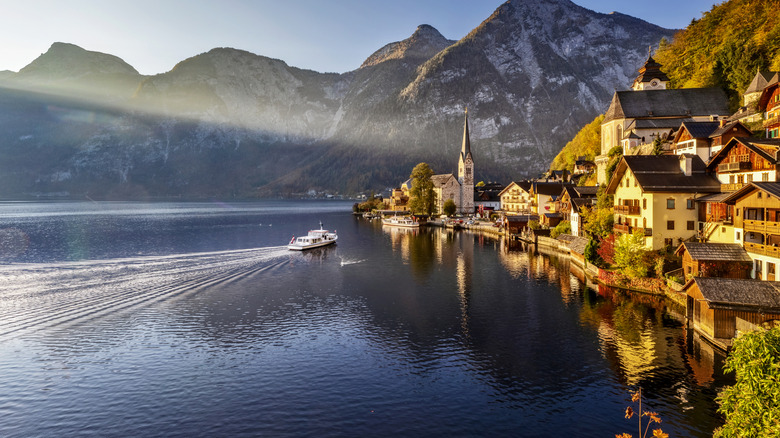
Salzburg, home to one of the best Christmas markets in Europe, birthplace of Mozart, a masterclass in Baroque design, and the fourth-largest city in Austria, is a hidden gem worth shouting about. Famed for its stunning Alpine views – "The Sound of Music" was filmed here — there is a lot more to the city than meets the eye. And, thanks to its Guest Mobility Ticket, which allows full access to public transportation across the entire province for overnight guests, you can explore on the cheap.
There's no one reason to visit Salzburg. It's a foodie hub for starters. Yes, Vienna steals the limelight when it comes to café and cake, but Salzburg boasts world-class chocolatiers, paired with ancient beer hall culture, while its ubiquitous Wiener Schnitzel can hold its own against the best that the capital has to offer. Meanwhile, the Mozart connection continues to shape the city's character. This is a city of music, one that comes alive each summer during the Salzburg Festival, a celebration of the arts, opera, fine dining, and open-air concerts. It's not for nothing that Salzburg is known as "The Stage of the World."
The entire historic center of the city is a UNESCO World Heritage site and presents itself as a most welcome assault on the senses thanks to its mix of Germanic and Italian influences. Salzburg Cathedral is a must-see here, as is the Residenzplatz with its monumental Baroque fountain. The surrounding regions are no less worthy of exploration, and yes, that travel pass extends surprisingly far. The unmissable Hohensalzburg Fortress may only be a short hike away, but those wishing to spend a day in the Salzkammergut lake region, will be grateful for the free ride.
Dunkirk, France
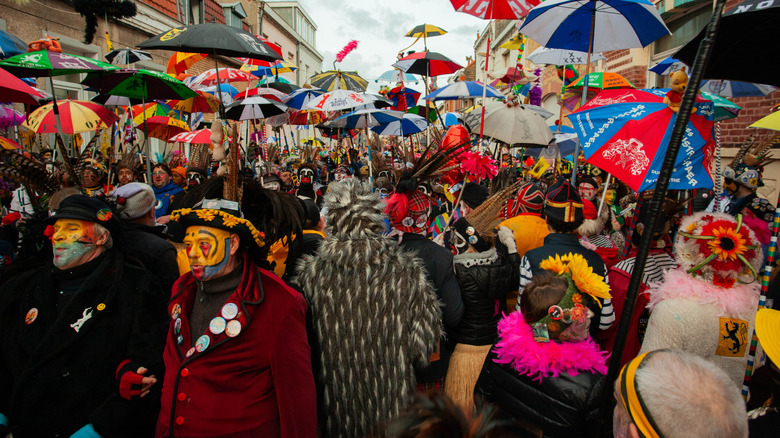
For many, Dunkirk is remembered as the site of the dramatic British retreat during World War II, when the British Expeditionary Force was rescued from its beaches via hundreds of small boats. It's true, the coastal town is steeped in history, and its mass of sandy beaches is pockmarked with the wreckage of that terrible war to this very day. But the coast is compelling nonetheless, and those wishing to explore it can do so for free, thanks to a free bus network that stretches across the Dunkirk urban community and reaches the Belgian border.
As the third-largest port in France, Dunkirk celebrates its maritime history at the sprawling and, frankly, fantastic Musée Maritime et Portuaire. Many of the ships moored there are open to the public and offer a fantastic glimpse of how the rugged Dunkirk coast shaped the city. Meanwhile, the Risban Lighthouse offers views of the English Channel that make the climb to the top well worth the effort. The Dunkirk Carnival is also worth getting out of breath for. Running from January through May, this mix of music, sports, and costumes highlights the city's unique blend of French and Flemish culture, one that extends through to its highly regarded foodie scene.
Next up is the coastal route, which has a rugged charm of its own. There are close to 150 miles of navigable paths to explore, and for those who can't quite manage that distance, again, the entire route can be reached free of charge by bus. It's gratifying, to say the least; there are many places in Europe where you can take a day trip from one nation to another, but few allow you to do so without spending a dime.
Livigno, Italy
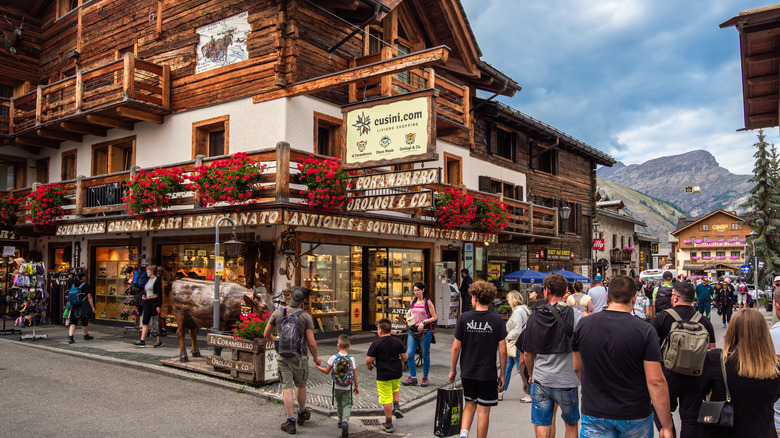
The north-south axis of the Italian peninsula has blessed the country with a diverse range of landscapes. From the vineyards of Tuscany's rolling hills to the sun-blessed beaches of Sicily, all the way to the Swiss border and its imposing mountains, Italy is a land of contrasts. Livigno is located toward that latter section of Italy, perched high enough in the Alps that it stays cool year-round and remains open for skiing for around 150 days a year. Those wishing to visit will be glad to discover that buses in Livigno run entirely free of charge and allow you to transport your skiing equipment in the most hassle-free way imaginable.
As you'd expect, most people travel to the roughly 6,000-feet-above-sea-level town for quality time on the slopes. There's more to the place than a skiing trip, though. Over the summer, it offers high-altitude hiking and biking trails that can hold their own against any other such place anywhere in the world. Lake Livigno is a kayaker's dream that also doubles as an angler's paradise, provided you make sure to get hold of a fishing license before heading onto its frosty surface and casting a line or two.
Meanwhile, the town's take on classic Alpine cuisine is of a surprisingly high quality. Pizzoccheri are one of Lombardy's most beloved dishes, but Livigno seems to have perfected it: Buckwheat noodles, cheese, cabbage, and chard might not sound like high cuisine, but the marriage of high-altitude appetite and grounded, rustic fare creates something that exceeds the sum of its parts. Oh, and that free bus pass means you can wash it all down with a lunchtime beer at 1816 La Birra Livigno.
Akureyri, Iceland
There are many places where, for travelers at least, the capital city dominates the collective consciousness. Bangkok is the most visited city in the world, even though there are underrated tropical islands to explore, and northern capitals blessed with flower festivals. Iceland is no different; its entire population sits around 400,000, and over 60% of residents live in the broader metropolitan area of Reykjavík. Akureyri, with its population of just over 18,000 people, feels comparatively forgotten.
It's a five-hour drive through dramatic terrain to get there from the capital, but flights between the two cities are fairly regular. As soon as you arrive, however, your transportation needs are taken care of since all the buses are free. Those looking to take advantage of this fare-free mobility are liable to feel somewhat spoiled for choice. A trip to the waterfront is well in order for starters; the town offers some of the best whale-watching around, and the midnight sun cruises during the summer are an Instagram goldmine.
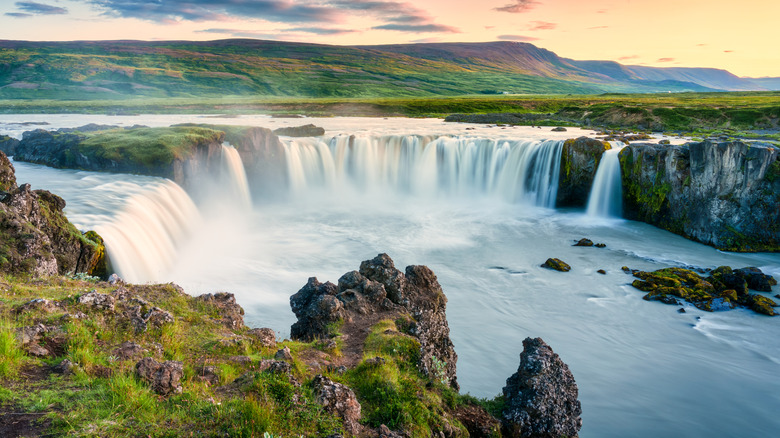
Despite being only around 35 miles south of the Arctic Circle, the climate here is surprisingly mild. As if to challenge those who doubt such an assertion, the town also sports its very own botanical garden, an homage to some of the toughest flora you'll find anywhere. Aurora sightings are common, and outside of the scope of free bus rides but still within shouting distance, you'll find the Diamond Circle, home to the magnificent Goðafoss, and placid Lake Mývatn. As jumping-off points in search of adventure go, Akureyri is up there with the best of them.
Manchester, United Kingdom
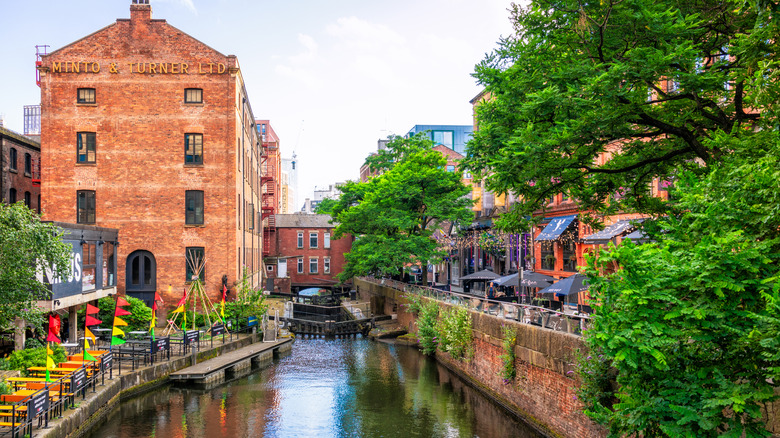
Speaking of overly dominant capitals, there is a simple truth that, while London rightly attracts most of the attention from overseas tourists, it is not the be-all and end-all of things to see in the United Kingdom. Manchester is located in the northwest of the country, close to Liverpool, and is a city once burdened with the scars of its industrial past, but now transformed into a modern, cosmopolitan hub of arts, culture, music, and city living. Manchester used to be tiring to navigate, but these days, much of what the city has to offer can be explored for free by bus.
Manchester grew out of the late 18th-century cotton industry and did so because raw cotton loves the damp. That's a Mancunian way of warning people about just how rainy the city can be. The old mills are everywhere, but many have been repurposed as upmarket residential buildings.
Proudly LGBTQ-friendly, the city also sports a seemingly endless variety of clubs, restaurants, and pubs. There are dozens of museums to view, art galleries aplenty, and almost as many theaters. You can fly in directly or take a train from London for an overnight stay without having to break the bank. Such descriptions might smell faintly of a "trust me bro" moment, but the city is a hidden delight well worth looking into regardless.
Calgary, Canada
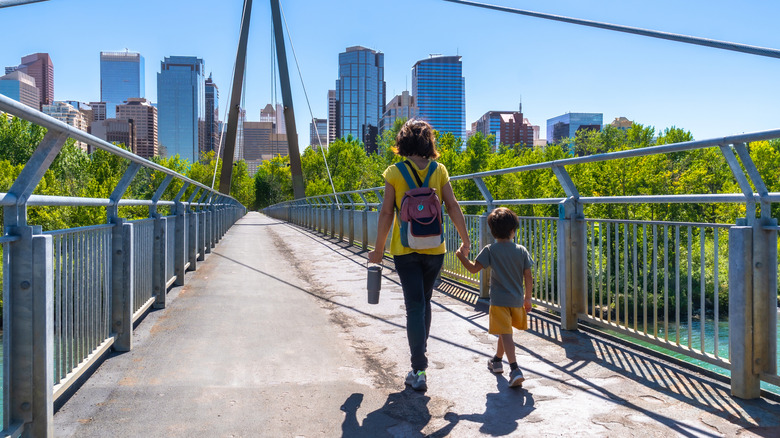
North America is not known for its largesse when it comes to free public services, and Calgary is not known for its liberal attitude toward such things either. Which is why it comes as something of a surprise that it offers free train rides across the downtown area, and even less of a shock that there are current moves to cancel the service. Still, at the time of writing, it remains in situ, and so now is as good a time to take advantage of it as any.
The free zone only covers the 7 Avenue corridor in the city's downtown, but you can use the line as a strategic hub to help you get elsewhere. Inglewood, for example, sits just one stop east of the zone close to the Bridgeland/Memorial Station. You can take the free train all the way across downtown, then walk from City Hall toward one of Calgary's oldest and most walkable neighborhoods.
Or you can stay within the zone and forgo the exercise in style. Downtown is home to the Calgary Tower, which offers fantastic views of the city and the distant Rocky Mountains. You can picnic in Prince's Island Park, avoid poor weather in the indoor Devonian Gardens, or simply get a fix of some good old-fashioned shopping as you navigate the city's impressive network of skywalks.
Tórshavn, Faroe Islands
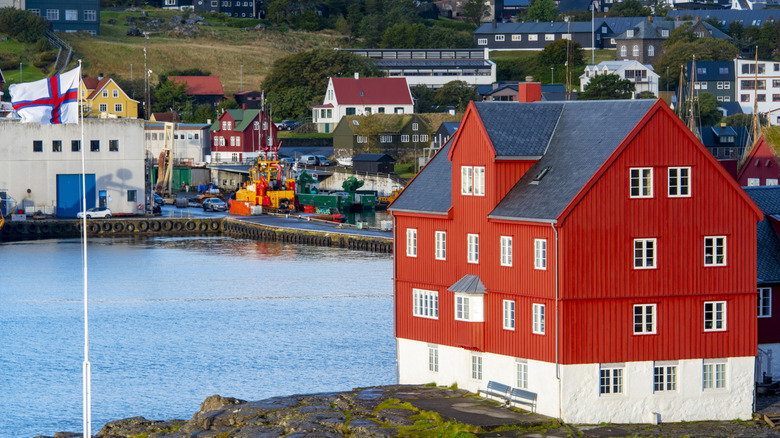
Now, it is true that the Faroe Islands could politely be described as being in the "middle of nowhere." And it's also a fact that the capital city, found along the coast of the largest island in the archipelago, is no teeming metropolis. There are fewer than 15,000 people living there. But it's also an ancient place, home to one of the world's oldest parliaments, and offers visitors an experience like no other. As an added bonus, you can explore the entire municipality for free via the city's distinctive red buses, Bussleiðin.
As for what sights said transportation can take you to, well, Tórshavn is filled with hidden surprises. The old town of Reyni is a place of cobbled lanes and old, black-tarred timber structures with grass-covered roofs. There are a surprising number of eateries to choose from, including the ever-charming Paname Café, and no fewer than two Michelin Star restaurants: Raest, which specializes in the fermentation of seafood, and Roks, which offers a more balanced view of Nordic cuisine.
If the food on offer is not quite your thing, there are the remains of medieval villages to discover, ferry hops that take you to the tranquility of Nólsoy, or the chance to while away an afternoon at the city's well-preserved 16th-century fortress. Meanwhile, its northerly latitude means that it's good for Aurora spotting, and as you'd expect from an island chain in the North Atlantic, the opportunity to spot some truly incredible wildlife is an ever-present treat.