
America's Most Iconic Fly Fishing Spots Offer Riverside Cabins, Tarpon Battles, And Bear Sightings
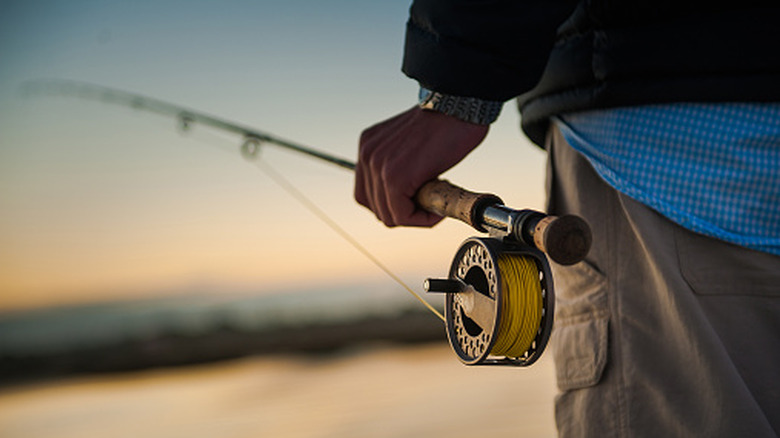
From glacier-fed mountain rivers to desert canyon tailwaters and saltwater flats, fly-fishing spots across the United States cover significant ground — and even more significant landscapes. Trout dominate most spots, but a handful of destinations offer something different. Redfish are known for the stalking challenge they bring; salmon for their explosive runs. Then there is tarpon, a saltwater fish that makes appearances in coastal rivers and bays. They aren't in every destination we mention below, but where you can find them, we've highlighted them. Tarpon is widely regarded as one of the toughest, most physically demanding fights on a fly rod.
Renting a riverside cabin is one good way to recover from the battle. They are usually found scattered along the banks of many places where fishing thrives. With fires burning through the evening and the water's steady soothing flow, you won't find it hard to switch off. Step outside onto the porch, and the wildlife can be closer than the water. You may spot deer slipping through the trees, eagles soaring overhead, and every so often, a bear or two.
Bear encounters, whether black bears or grizzlies, rarely end in an incident, but it's worth knowing the basics in the unlikely event of an attack. Keeping your distance is essential; avoiding them altogether is even better. We've researched fly-fishing publications, including Fly Fisherman and Hatch Magazine, alongside guide services like Fly Fishing Bozeman, to find America's most iconic spots. Each offers breathtaking scenery, the chance of wildlife encounters, and a riverside cabin to settle into when it's time to put the rods down.
Madison River, Montana
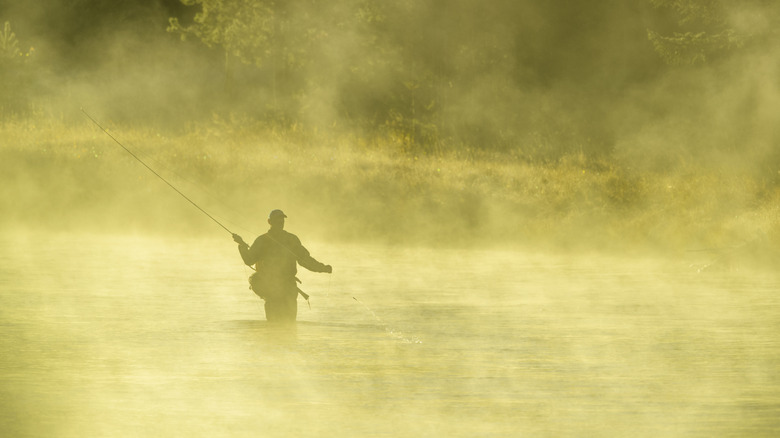
The Madison River attracts fly fishers from all over the world, a reputation that comes from the sheer variety it provides. It changes character at just about every bend and runs through some of Montana's most striking valleys. The Madison, Gravelly, and Tobacco Root ranges rise up on either side, and that stunning scenery is enhanced by its proximity to Yellowstone National Park — and the wild country that comes with it. Grizzly bears are a regular sight along the water's edge, as are moose, elk, and bison.
The fishing backs the hype, too. The Madison holds trout numbers that not many rivers in the state can match — and there is a genuine chance of a trophy catch on every cast. At the Slide, the river tumbles over boulders left by a 1959 landslide. The trout here are stacked so thick that you'll probably be in for a fight from the first cast. If you seek something bigger, there's a short stretch between Hebgen and Quake Lakes where you'll find the river's biggest browns, some of which push past 2 feet long.
Each year, salmonfly and golden stonefly hatches send the trout into a feeding frenzy. It's one of the Madison's biggest events. Anglers arrive on the banks the moment the bugs emerge. It's a busy time, so book ahead if you want to catch one of the riverside cabins. Many are just steps from the water, with weathered log cabins, cozy A-frames, and sprawling timber lodges among the choices.
Everglades National Park, Florida
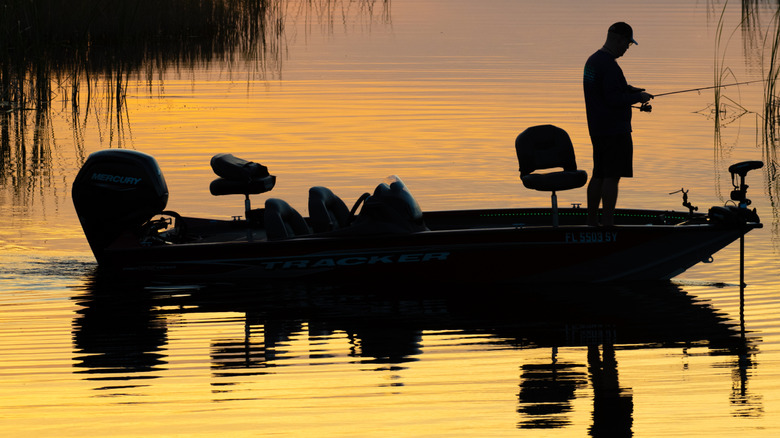
Everglades National Park is a patchwork of marsh, bay, and tidal creek that eventually spills out into the Gulf of Mexico. Just getting to the fish here means threading your boat through hundreds of mangrove islands — and once there, it's no guarantee that whatever you hook makes it to your boat. Sharks patrol these waters for one. They're not shy about snatching what's on your line. Then there are the tarpon battles. These fish can launch themselves clear out of the water when they're hooked, and if they reach the mangroves, the fight is pretty much over.
Tarpon are one of the "Big Three" in the Everglades. The other two are snook and redfish. Snook demand patience from anglers. They hold still in the shallows, are easily spooked, and can vanish the moment you cast carelessly. Redfish round out the three and are much tougher to catch than they look. But whichever species you chase, sight fishing is what the Everglades is all about, and that can be difficult because the water is often clear in one corner and murky just around the next.
Look out for Florida black bears roaming the wilderness here. Once down to just a few hundred in the state, they now number in the thousands. They can run at speeds of up to 35 mph, so an encounter calls for caution. Stay calm, back away slowly, don't raise your voice, and don't make eye contact. Towns like Everglades City and Naples offer waterfront cabins where you might catch sight of other wildlife, such as dolphins surfacing in the river or marsh birds picking through the shallows.
Snake River, Wyoming, Idaho, Washington
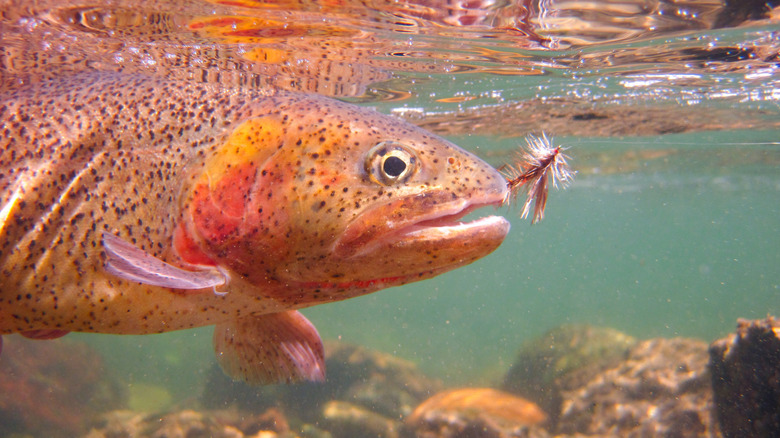
Wyoming, Idaho, and Washington all share a piece of the Snake River. It might be one of Washington's most snake-filled rivers, but it's also a place of stunning natural beauty. This is especially true through Grand Teton National Park, where the famed jagged peaks sit close enough to the river that they seem to lean over you with every cast. The fishing matches the scenery. The Snake River fine-spotted cutthroat trout doesn't exist anywhere else outside this system, and if you manage to hook one, it'll put on a show. They usually measure 12 to 24 inches and can thrash and leap in a way that'll have you wondering who's really in charge.
The browns play a different game. They're cautious and difficult to spot. You'll find them tucked away in the cold, deep waters at Snake River Canyon, and given they can reach up to 30 inches, pulling one out is a genuine win. At the South Fork, getting the right fly is everything. Pick one that resembles the bugs hatching at the time, and the trout will start biting.
Black bears and grizzlies also call the Snake River area home. They can be spotted feeding on fish along the water's edge when the weather starts to warm. Elk, moose, and bald eagles are regularly spotted, too, and you can look for them from your riverside lodge. Many are situated close enough to town that you'll never feel too far away, but far enough for it to be very quiet at night. In fact, you'll likely fall asleep to nothing but the soothing sounds of the river.
Yellowstone River, Wyoming/Montana
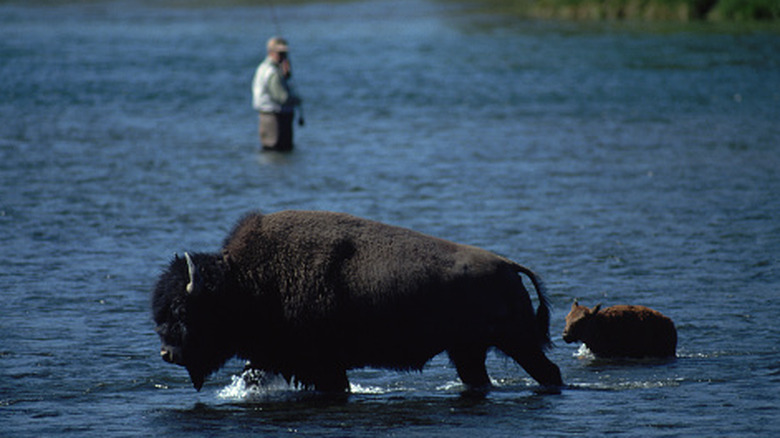
There isn't a dam to be found anywhere along the Yellowstone River, and it's the longest river in the Lower 48 to run completely wild. Paradise Valley is where the scenery puts on its best attire. Here, the river is hemmed in by the Absaroka and Gallatin mountain ranges. They show off snowy white crowns from almost anywhere you choose to cast. What's more, Paradise Valley is also a soothing hot springs getaway should you want to soak your bones after a long day's fishing. Riverside cabins line the banks on the park's northern boundary, and when you step outside the door, you'll probably see grizzlies, bison, and elk — animals that are simply part of the view here, as opposed to a rare sight.
The fish population is healthy, too. In fact, few wild trout rivers on the continent produce the numbers Yellowstone does. Paradise Valley delivers brown trout that can push past 10 pounds. On the Livingston Town Stretch, they can be as heavy as 15 pounds — numbers that will turn a normal day's fishing into a story you'll never get tired of telling. But the river is arguably most famous for its late summer/early fall hopper fishing. During this time, the banks around Paradise Valley are lined with grass and hayfields. This makes it a prime grasshopper habitat, which allows anglers to trick the trout into believing their fly is an actual grasshopper more easily. Of course, this, in turn, leads to plenty more bites than you might usually encounter.
Au Sable River, Michigan
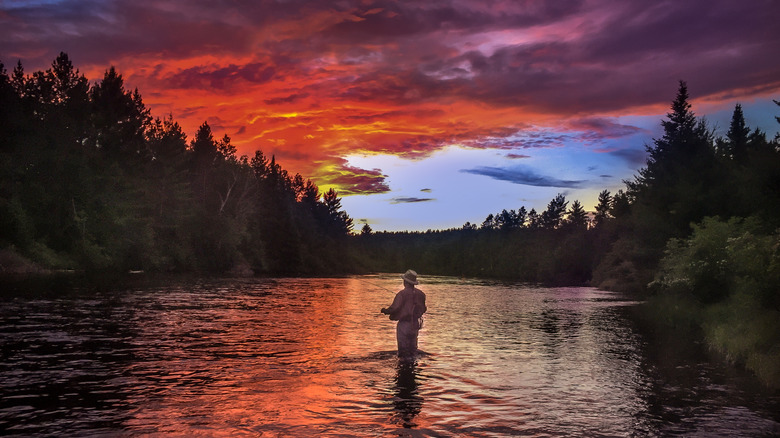
Along this magical river, hidden in northern Michigan, the riverbanks are wild and untouched. Au Sable River is a place of tall red and white pines rising over sun-dappled grassy clearings. When fall arrives, the entire corridor lights up in color. Cabins and lodges sit close enough to the water for a dawn start, a good time to spot bald eagles overhead or deer taking an early morning drink. Deeper in the forest, black bears wander through the trees, while porcupines shuffle in the underbrush.
But the Au Sable River has a claim to fame. Trout Unlimited, the country's biggest coldwater conservation group, was founded here in 1959. This could explain why the river consistently ranks among the country's top trout-fishing destinations. It holds strong numbers of brown, brook, and rainbow trout, with steelhead and salmon adding plenty more action. For a short period each summer, anglers can stand thigh-deep in the river at night during the Hex hatch. The air is thick with clouds of dancing insects — the continent's largest mayfly, the Hexagenia. They come off the water under the cover of darkness, leading the river's hungry brown trout to finally give up their location.
Fall is another excellent season to fish for browns when the summer crowds have thinned, and the trout are restless as they head into spawning season. The 9-mile "Holy Waters" stretch is restricted to fly fishing and has earned itself a solid reputation as sacred ground for purists. Then, about 30 miles south of Grayling, the water transitions into a stretch prized for its trophy fish.
Deschutes River, Oregon
The Deschutes River carries both a strong native trout fishery and a thunderous summer steelhead run in the same water. That, combined with the fascinating geology the area wears like a storybook, is what makes this river such a fantastic place to fish. This wild and scenic river in central Oregon etches its path through a deep canyon of dark volcanic rock set against a sun-scorched high-desert plateau. The canyon walls cast long shadows across the river, and where light still reaches, the water adopts a warm, amber tint.
It's a beautiful spot, and you can enjoy it from riverfront cabins near Bend. They put the water right on your doorstep, and their crackling wood stoves and steaming hot tubs are welcome after a long day working the river. Birds gather thick in the canyon, looking for the same insects that continuously pull fish to the river surface. Deer and other game slip down to the water's edge to drink beneath skies that stay blue for almost the entire year. In the surrounding forest, black bears forage quietly, while you might hear coyotes calling at dusk.
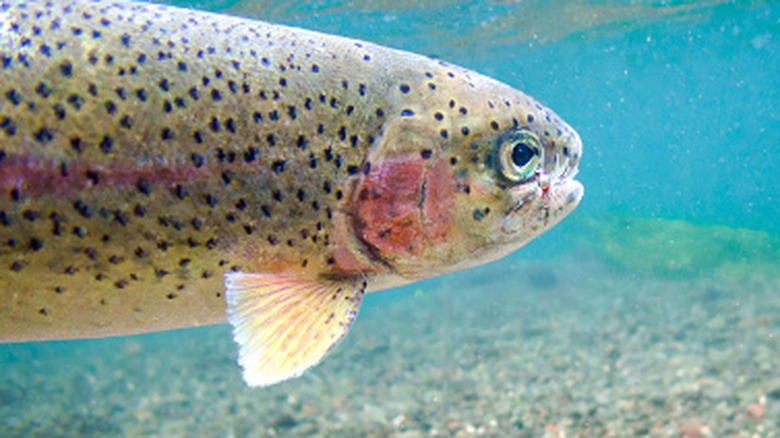
In the water, the Deschutes Redside is unlike any other rainbow trout. It is thick-bodied and vividly colored, and once it bites, it explodes with a strength and acrobatic fury that can catch even the most experienced angler off guard. By midsummer, the steelhead begin their upstream push. Once they reach the final 20 miles, it's some of the most electric steelhead water you'll see. They are aggressive enough to chase a fly all the way to the surface, which means the Deschutes is one of the most respected floating-line steelhead fisheries anywhere.
Kenai River, Alaska
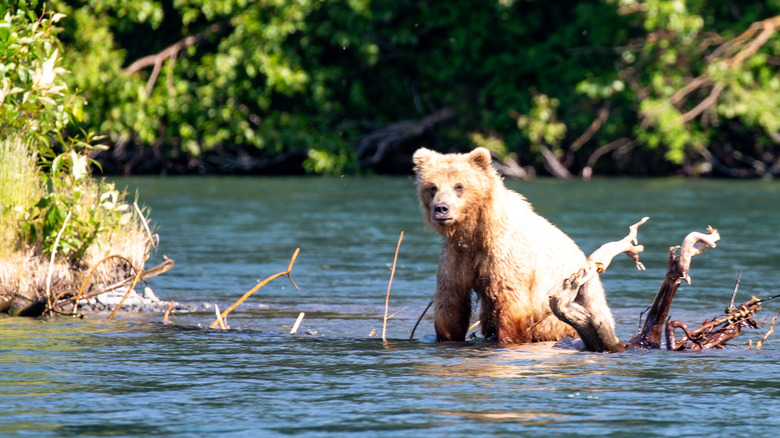
The Kenai River is fed by glaciers high above, which gives it an intense turquoise color. But that's not the only thing you might consider intense. A visit here means you'll fish the same waters that grizzlies wade into every summer, looking for the same fish as you. It's not unusual for an angler and a bear to set their sights on the same stretch. More often than not, there's room for both; sometimes it means one, most likely the angler, shifts a little farther along the bank. If a bear approaches, give it plenty of space, and back away slowly if you need to increase the distance.
It's easily the busiest river for fishing in Alaska. Almost 300,000 anglers cast out here every year. Its legacy was sealed back in 1985 when the largest king salmon ever caught by rod and reel was pulled from its depths. At an astonishing 97.4 pounds, it's a record that still stands today — and one that was set after fighting the fish for over an hour, beaching the boat, and wrestling the giant ashore by hand.
However, there's still plenty to keep a fly rod busy. A streamer swung through the current for sockeye works just as well here, while the upper river holds wild rainbow trout big enough to draw anglers back season after season. And after a long day on the water, a riverside cabin is always a welcome sanctuary. Along the Kenai, they are often built in the style of old Alaskan pioneer cabins, and most have a private porch looking straight out over the water.
Big Pine Key, Florida Keys
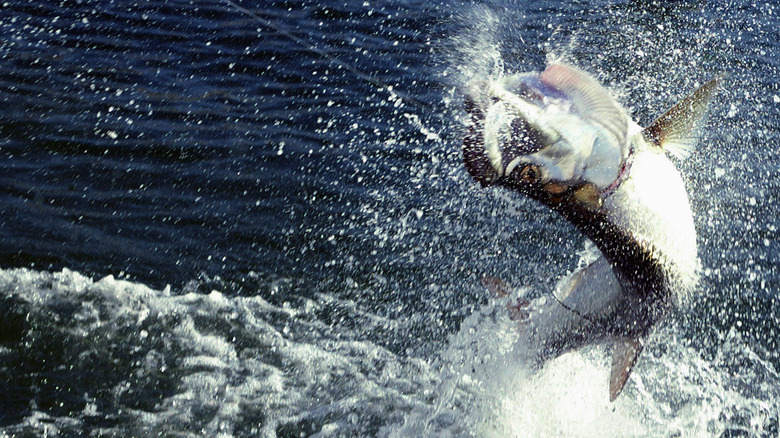
Huge tarpon congregate around Big Pine Key from mid-March to June. But around the full moon in late May or early June, a hatch of tiny worms surfaces off the Atlantic side of the Keys. The Palolo worm draws tarpon into a feeding frenzy, and this is prime time for fly fishers. Permit and bonefish also share these flats, and an angler skilled enough to land all three in a single outing can claim what is locally known as the "Inshore Grand Slam."
Bahia Honda Bridge is one of the most reliable spots. The tarpon may not announce themselves as dramatically as they fight. It'll probably just quietly eat your fly. But that's when the fun starts. It'll tear away, throwing up walls of spray and offering an adrenaline rush not many fish can match. But, even under good conditions, landing rates are low. You might hook several fish over the day, but actual catches will probably be minimal.
Whatever your success rate, you can reminisce about the day's action in the floating cabins at the Old Wooden Bridge Resort. They have a rustic feel with beautiful views from their small decks. Big Pine Key also has some of the nicest beaches in the archipelago and is perfect for nature lovers with its unique wildlife and backcountry kayaking.
Colorado River, Texas
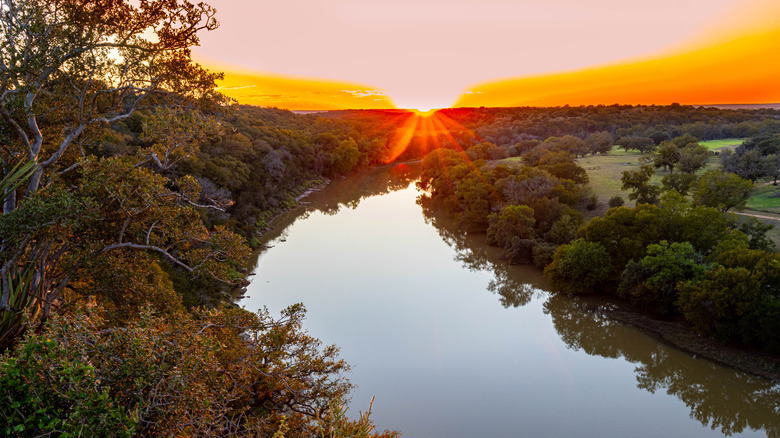
Not to be confused with the Colorado River in Colorado, the Colorado River in Texas runs from its headwaters in the western part of the state to the point where it finally meets saltwater in the Gulf of Mexico. It flows for well over 850 miles, and south of Austin is where it settles into prime bass territory for fly fishers. In fact, this is where the heaviest Guadalupe bass ever recorded in the Lone Star State was caught. You'll find largemouth on this same stretch, which occasionally top 7 pounds. Herons, hawks, and eagles work the water and riverbanks here, while bobcats, white-tailed deer, and coyotes move through the surrounding lands. Near the coast, as the river winds its way through wetlands and low marsh, alligators are a common sight. You might see them soaking up the sun along the water's edge.
Once you're at Matagorda Bay's saltwater flats, you'll be chasing redfish. Targeting the species here is more like a stalking game than conventional fishing. It demands quiet movements, sharp eyes, and a perfect cast at distances many anglers find difficult. But it's the tarpon that provides another prize. They regularly top 100 pounds in these parts. Bringing one to hand on a fly rod may well be regarded as one of the sport's toughest challenges — but it is a lot of fun trying. With guide and angler working as a unit, surviving the long stretches of almost nothing before that sudden, violent fight once the fish commits defines the experience in the bay.
Green River, Utah/Wyoming
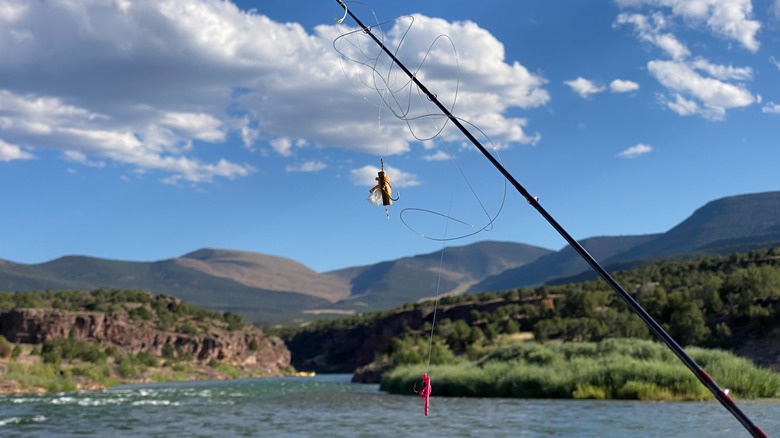
Starting in the rugged peaks of Wyoming's Wind River Mountains, the Green River winds its way south through deep, glowing canyons of red rock. Towering cliffs, ancient arches, and weathered hoodoos rise on every side all the way to the tranquil, family-friendly paddling paradise of Labyrinth Canyon in Utah. Scattered along the riverside are cabins in just about every style. They range from snug standalone retreats to roomy lodges built for groups. Just about every one offers a porch where you can admire the night stars that burn here like scattered embers. You'll also see the plentiful wildlife that inhabits the valley. Among them are moose lingering by the water's edge, or even black bears or mountain lions moving along the banks.
Each June into early July, the Wyoming stretch of "the Green" comes alive with the river's most legendary hatch — the gray drake. Its timing is perfect. Almost as soon as the water clears after the spring snowmelt, the hatch sends brown and rainbow trout into feeding frenzies on the surface. Farther south, the water maintains a cold temperature year-round. This keeps the trout fat and active. Most fly fishers pick them off on the surface from a drift boat here. The stretch is split into three distinct sections, simply named A, B, and C. Section A is the one point where getting out of the boat is preferred. It's a wade fisher's playground, and its famous feeding zones and the stunning Flaming Gorge scenery draw anglers from all over. Back in the boat, sections B and C have fewer fish. But they are big. On this stretch, quality wins over quantity every time.