
9 Wildly Underrated Senior-Friendly Destinations In Europe

Aging has never been a one-size-fits-all affair. Eos, the Greek goddess of the dawn, begged Zeus to grant her favorite immortality, but forgot to ask that eternal youth be thrown into the mix. The Sphinx's riddle focused on declining mobility, while the Vikings viewed age as a source of hidden power. Still, when it comes to vacations, the questions we ask are far less grandiose: Is the place crowded? Is it safe? Am I going to get footsore? Moreover, what is there for me to see and do when I get there?
Such musings bring with them a temptation to curate a list of quiet, out-of-the-way locations bereft of life, energy, and excitement. That's not what we've done here. Yes, some assumptions have been made — if you're an octogenarian rock climber, then God love you, but this list isn't for you, because our expectations of what seniors might look to get out of a vacation were put in place with the best of intentions. It's okay to shy away from the steep hills of Rome or to avoid the club-lined streets of Spanish resort towns. It's fine to admit that you want to take things at a slower pace. A raised eyebrow at a list of cities that offer free public transport is a sign of wisdom, not defeat.
This list is mostly written from personal experience, but local knowledge has been gathered and hard data harvested from official tourism and government sites. The selected cities are anything but dull, and no, they are not exclusively geriatric affairs: young people would do well to visit these places also. But each one is demonstrably pro-senior, a place where adventure is never sacrificed in the name of discomfort. And each city offers the chance to experience beauty and charm without the chaos of overtourism.
Ljubljana, Slovenia
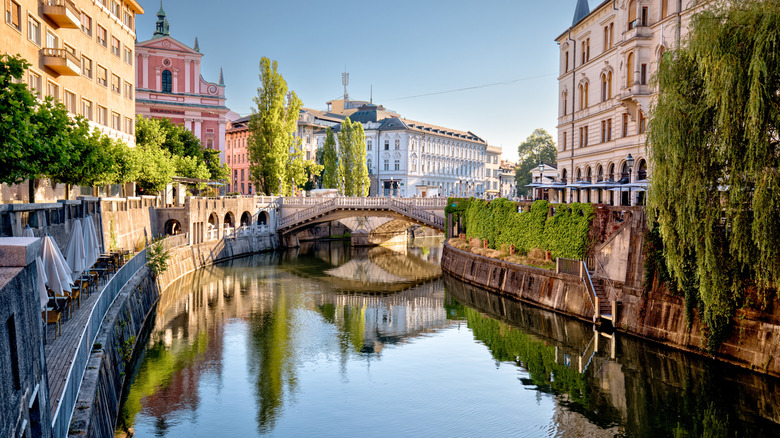
The name Ljubljana is phonetically similar to the Slovenian word for beloved, and it's easy to see why the local population pours so much praise upon their capital city. Eco-friendly and with an entirely pedestrianized city center, there is a romantic feel to the place that at times almost rivals that of Paris. Oh, and senior citizens can explore the city via Kavalir, free-to-ride electric cars that are the only vehicles allowed in the city center.
Tivoli Park's sprawling majesty sits as a testament to Ljubljana's green credentials: it makes an incredible spot for a picnic while also offering a rare opportunity to spot the endangered red squirrels as they go about their day. Meanwhile, as the Ljubljanica River snakes its way through the city, lined with picturesque willow trees, the sheer variety of cafés and eateries on display is genuinely beguiling. As too are the variety of bridges in situ: the Dragon Bridge is perhaps the most famous of these, but the Jože Plečnik-designed Triple Bridge is no less iconic, and crossing it is as Instagrammable a moment as you could ask for.
In fact, Plečnik's influence can be found all over the city, from his iconic and still bustling to this day Central Market to his revamp of the Križanke Summer Theatre. For those not familiar with his work, the mixture of Roman, Art Nouveau, and modern lines can be hard to parse: guided tours of the best of his works are available and come highly recommended. Such activities make for a full itinerary, but time should also be made for a trip to Ljubljana Castle. It's gorgeously well-preserved, and although it's situated on a steep hill – castles usually are — it can be reached via cable car, which is always a blessing on tired calves.
Valencia, Spain
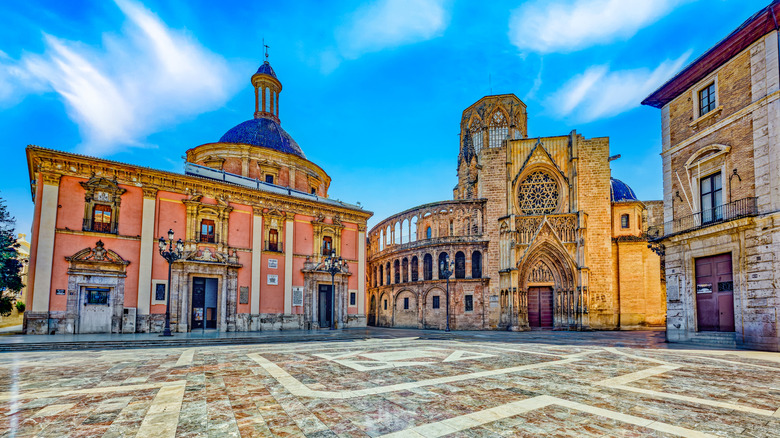
There are few places in the world where you can find 2,000 years of history sandwiched between a penchant for ultra-modern architecture and the cozy predictability of Mediterranean life. Valencia is one such place. You'll find the city halfway down Spain's eastern coast, around 200 miles south of Barcelona, but unlike the Catalonian capital, Valencia is an ocean of calm, introspection, and sedentary living. It's built at sea level, so the topography is easy on the legs, but it also has excellent public transport, making navigation something of a breeze. It has much to offer the senior crowd.
First up, the beaches. There really is no age limit when it comes to the desire to while away some time by large bodies of open water. If soaking up some rays is your thing, then Valencia has you covered: there are close to two miles of golden sand fronting the city alone.
Still, Valencia also boasts one of Europe's largest historic centers, and, clustered around it, you'll find more to see than a simple beach vacation town might suggest. There are the usual ecclesiastical offerings on display – Valencia Cathedral is easily one of Spain's most beautiful places of worship — but other, more secular points of interest also manage to stand out. The city's 15th-century Silk Exchange is both a masterpiece of Gothic architecture and a museum of world-class repute. Those tired out by walking through its many halls will find themselves well served by the city's love of food. There are dozens of local dishes to try — try the Horchata de Chufa; it's to die for — and many times that number of places to try them. Or perhaps head to the fantastic Turia Gardens and picnic the afternoon away in one of Europe's most coveted green spaces. Or both.
Aarhus, Denmark
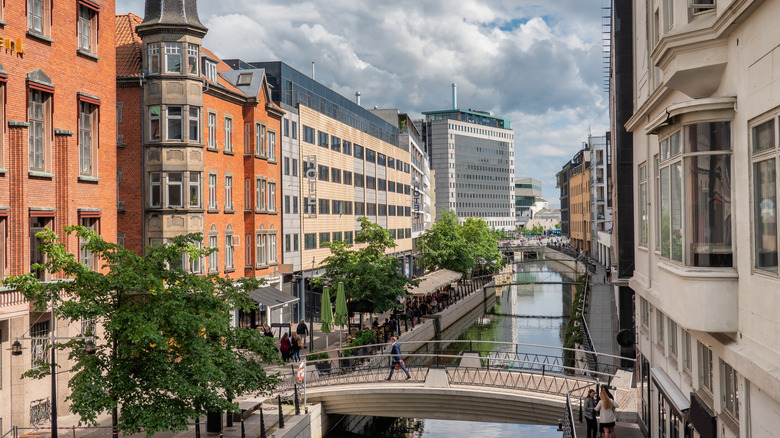
As fantastic as Copenhagen is — and the Danish capital is not known as the happiest city in the world for no reason — it's far from being the only contender in the region when it comes to places worth visiting. Copenhagen is sprawling and best explored by bicycle, while Aarhus, known locally as the city of smiles, offers an ultra-compact center featuring points of interest that most definitely appeal to the senior mindset.
The coastal town is quite some distance from the capital, although it can easily be reached by air, a three-hour train ride, or ferry. That latter method takes about the same amount of time as the train, once you factor in the overland journey to Odden Harbour, but it's an experience all by itself. Still, regardless of your method of transport, once you arrive, you'll find the city is as vibrant as it is welcoming.
The ARoS Art Museum is one of the largest in Scandinavia and is a must-see for art lovers. It offers an eclectic mix ranging from the ultra-modern all the way back to Denmark's very own Golden Age. But you'll also find some stunning views of the city in genuine technicolor thanks to its rooftop walkway of colored glass and a fun place to spy another non-negotiable itinerary tick, Den Gamle. You'll find it to be a place of quaint shops, incredible food, and bustling streets, yes, bit one cloaked in the distinctive style of yesteryear design. As time capsules go, it's up there with the best on offer and is surprisingly walkable despite the cobbled lanes. Meanwhile, the Latin Quarter is yet more ancient, but leans towards modern convenience; while it does not quite make the cut as one of the best shopping experiences in Europe, in terms of hard-laced retail therapy, it's no slouch whatsoever.
Plovdiv, Bulgaria
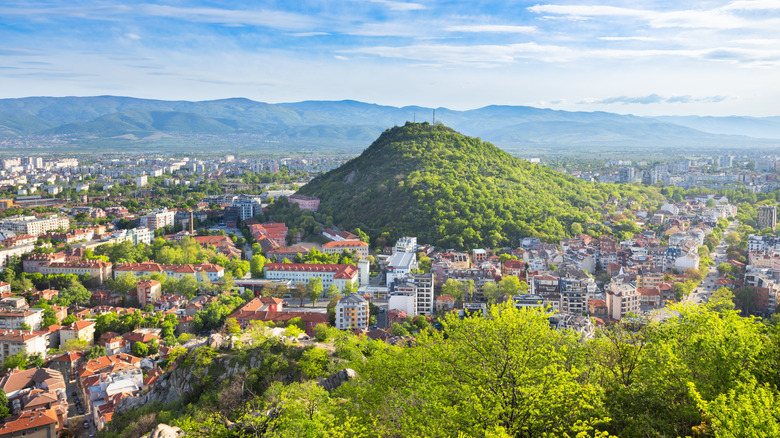
Bulgaria absolutely fits the description of an underrated European location. Its Black Sea coast is known to provide beach holiday vacations at a fraction of the price, and its capital city, Sofia, is a budget-friendly, walkable paradise and a gateway to skiing trips come winter. Not that the senior-friendly credentials end there. The city of Plovdiv, some 90 miles southeast of the capital, has seen continuous habitation for over 2,500 years; there's so much history on display here that it's hard to know where to begin. There are hills, yes, but the central area is mostly level. That, added to the fact that the Balkan pace of life is deliberately lethargic and punctuated with great food, elevates the city to an S-tier choice for retirees.
The first thing to note is that a visit to the city's surviving Roman amphitheater is an absolute must. It's at least 1,900 years old, and once played host to gladiatorial contests for as many as 6,000 spectators at a time. Even today, the theater is so well preserved that it sports a 4,000-person capacity. Its events calendar offers an eclectic mix of art, music, and film, mostly in Bulgarian but with some notable exceptions; booking ahead is highly recommended.
Even if none of the shows or exhibitions take your fancy, the city rarely comes up short. There are the ruins of a Roman stadium to explore, galleries filled with a trove of incredible archeological finds, and the open-air museum that is the city's Old Town. Close by, you'll also find The Trap, the city's beating heart. It's delightfully quirky and a great place to pause and enjoy some local cuisine. Oh, yes, Bulgarian food is surprisingly good, loaded as it is with fresh cheese, crisp vegetables, and grilled meats.
Lucca, Tuscany
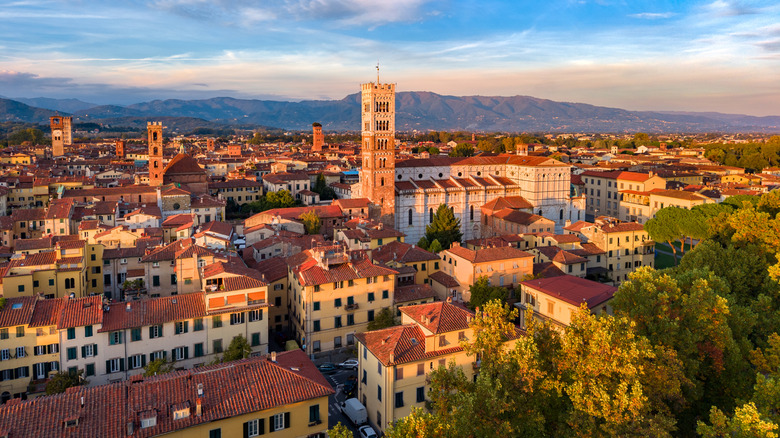
I know, Tuscany appears on more best-ever lists than Taylor Swift, but there are parts of the region that are less well-trodden than others and yet still deserving of a look. Lucca, some 50 miles to the west of the regional capital, Florence, is one such locale. It almost goes without saying that it's a less prestigious place than the former cradle of the Renaissance in terms of actual heritage, but that is not to say that the medieval city plays a distant third fiddle. Far from it.
Where to start? Well, the town is the birthplace of Giacomo Puccini. Lovers of opera can visit his birth home — now a super-quaint museum –- which is nice, but the treat doesn't arrive until after the sun sets. Recitals at the nearby Church of San Giovanni occur daily, and securing tickets is one of the first things visitors should turn their mind to. Audiophiles should time their visit to coincide with the Lucca Summer Festival. You'll find music here to suit all ages, with past headliners including Bob Dylan, James Brown, and the Rolling Stones.
Or you could forego the crowds and opt for a stroll along the city's still intact 16th-century ramparts. Repurposed as a green space, an elevated stroll with the aptly named city of 100 churches spread out below you is as good for the heart as it is for the soul. Post-constitutional, a trip to the Piazza dell' Anfiteatro, the site of a former Roman amphitheater (now repurposed as a stunning square), will help you to get to grips with the locale cuisine. That the eating here is fantastic hardly needs mentioning; Lucca's traditional dishes have a reputation for extracting as much flavor from locally sourced carbohydrates as is perhaps humanly possible. Pro tip: order the Tordelli al Ragù and thank me later.
Ghent, Belgium
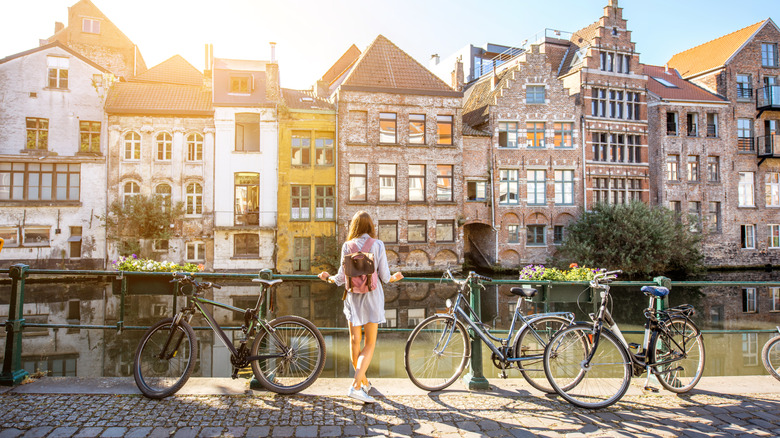
In many ways, Belgium's reputation as a mecca of tourism options has always been muted. The Low Countries have a reputation for being dull, with a coastline as pleasant as England's but with all the drawbacks that come with that comparison. Lounging on the beach so far into the North Atlantic is often an exercise in optimism, not forward planning. Belgium's capital city, Brussels, is, well, fine, but much of it is given over to the grey-suited reality of near-endless administration. Bruges is nicer, sure, and is extraordinarily pretty and walkable. But it can become horrendously overcrowded as a consequence of those very same metrics. Ghent to the rescue, then?
The city of Ghent sits inland, some 30 or so miles distant from Brussels, Bruges, and Antwerp; yes, it's virtually equidistant between all three. But the convenience of location is not all the city has to offer its senior visitors. Somehow, Ghent manages to combine genuine medieval charm with an edgy underbelly of creativity. Like Amsterdam, its waterways are fringed with elegant buildings that range from the truly ancient 12th-century monoliths to the understated beauty of 17th-century guild houses. The Castle of the Counts is even older and proudly still sporting its original moat; it looks every bit the fairy tale fortress.
Those who get tired of watching the grey stone buildings of the past can make their way to the ever-impressive Friday Market, which is, as most things in Ghent tend to be, more grandiose than it sounds: You'll find old LPs on sale alongside musty and not-so-musty tomes. Boutique cafes proliferate, although they still make space for imposing statues and treasured pieces of past prime military hardware. Meanwhile, the foodie scene — which is particularly welcoming to vegetarians – is as rock-solid as you'd expect from a nation that is known all over the world for its waffles.
Gdańsk, Poland
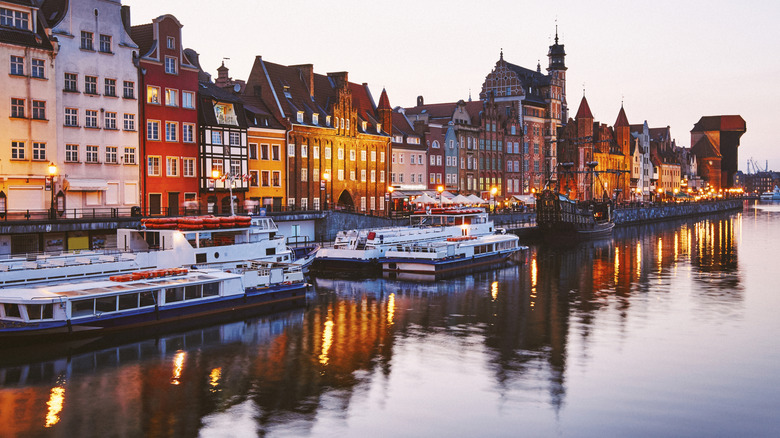
The thing about lists of underrated locations is that they tend to avoid the big hitters. Neither Kraków nor Warsaw find themselves lacking in appreciation: the former is home to one of the best Christmas markets in Europe, while the latter is not known as the Paris of the East without reason. Gdańsk, however, really is overlooked. Located on Poland's far northern coast, the city, as with so many Baltic states, offers only sporadic access to beach-focused vacations. Still, it makes up for the unpredictability of its weather via its undeniable beauty.
The Royal Way is your first clue that Gdańsk is a senior-friendly place. It is, as the name suggests, a path once trodden by the Polish royalty as they made their way through the city: royals like to take things easy, and so, it is, as you might expect, easy-going while still featuring the best that the city has to offer. Along the way, you'll encounter the Town Hall, a masterpiece of Renaissance ingenuity, the Artus Court museum, with its famous statue of Neptune, and eventually make your way to the city's most famous waterway.
The River Motława is lined with cafés and museums such as the gorgeous Soldek floating museum. It's also a very walkable place, but there are hop-on and off-again cruises — some stylized as actual 17th-century pirate galleons – for those who want to take the pace down a notch. The predictable comfort of Polish food is also well represented here. There is an undeniable simplicity of form to all Baltic food, but the taste of Gdańsk is influenced by its maritime heritage: sour soups, potato dumplings, and a thousand different ways to serve herring are staples, but so are meaty dishes of wild boar and roasted duck.
Montreux, Switzerland
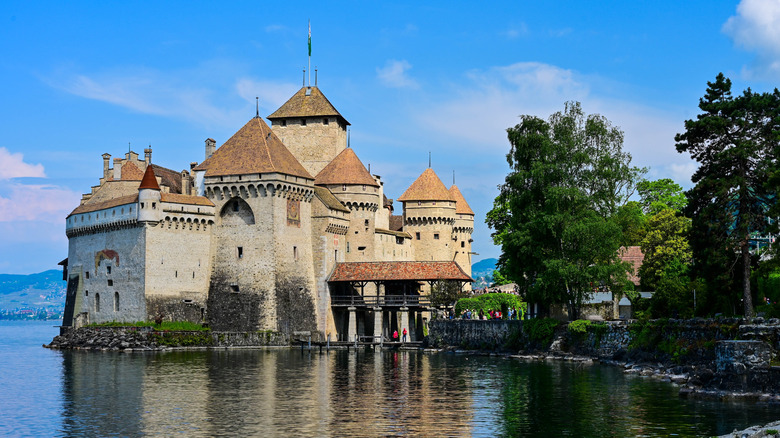
Switzerland is the darling of the well-monied ski set and provides visitors with some of the best views found anywhere in Europe. From the understated elegance of Geneva, with its incredible retail experiences and free public transport, to the Alpine loveliness of the national capital, Bern, Swiss adventures are so often all about living in the moment. Sure, you can find some tricky uphill topography in some of the nation's prettiest and most iconic destinations, but there are also many quiet enclaves of calm that better suit the senior mindset. Take Montreux, for example.
You'll find it on the opposite side of Lake Geneva to the city of the same name. The two cities are about 60 miles apart, but, somewhat surprisingly, transport between them is free for overnight visitors via train, bus, or ferry. More leisurely cruises are, of course, available, allowing you to sail the lake in style. Pro tip: choose one that takes you past the Château de Chillon, a former haunt of Lord Byron and one of the most photographable castles in all of Europe.
Still, the city of Montreux has more to offer than simple lake cruises. Its promenade may very well be the most beautiful spot in Europe, while the city's musical chops — which include a fanatical devotion to rock legend Freddie Mercury – come into full force every summer at the world-renowned Montreux Jazz Festival. Meanwhile, if jazz or indeed Queen are not your thing – and if so, what is wrong with you – then there's always the foodie scene to get excited about. There are Michelin-starred restaurants to choose from, but honestly, you don't have to go that fancy. Central European food leans heavily on the idea of comfort food, and yes, in Switzerland, that means cheese. Lots and lots of really great cheese.
Funchal, Madeira (Portugal)
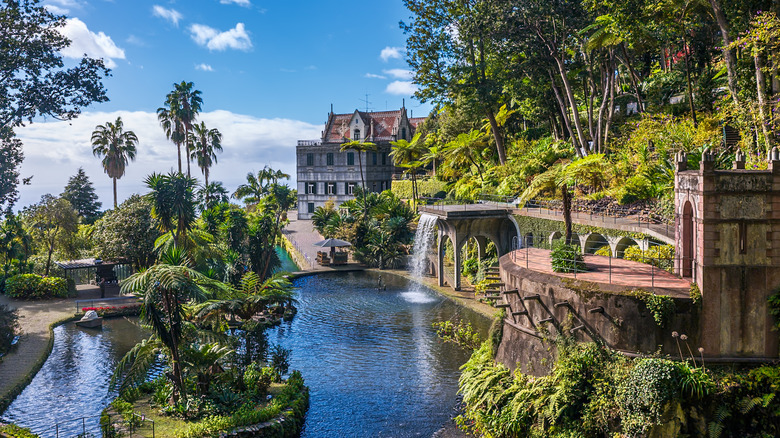
Portugal's popularity has never been in question. True, two cities, Porto and Lisbon, steal most of the limelight, the one for its historic waterfront, fortified wine, and azulejo tiles, the other for its delicious nata in pastéis, fado music, and quirky step-back-in-time trams. Only a fool would decline to recommend such places. Senior or not, see them if you can. Still, they are not the be-all and end-all when it comes to a vacation here. Portugal is also home to one of the longest and best coastal walks in the world, and many miles to the southwest of said coast lies Funchal, the historic capital of the Madeira archipelago.
The Island of Eternal Spring is aptly named; the climate is subtropical, which is a polite way of saying "kind of warm and rains too much." Funchal adheres to that trend, but most of its rainfall takes place over the winter, leaving summers dry and kind of glorious. So yes, Funchal is a beach lover's paradise. But it is also a place that sees year-round flower blooms; the excellent Madeira Botanical Garden is proof of that. Meanwhile, the Old Town drips with historic timbre, the painted doors of the Rua de Santa Maria form part of an open-air gallery, and across the city, the eating is magnificent This is a city almost built for seaside walks, and if that's not your thing, it just so happens to be one of the best whale-watching spots in all of Europe.