
9 Common Tourist Complaints About Visiting The Eiffel Tower
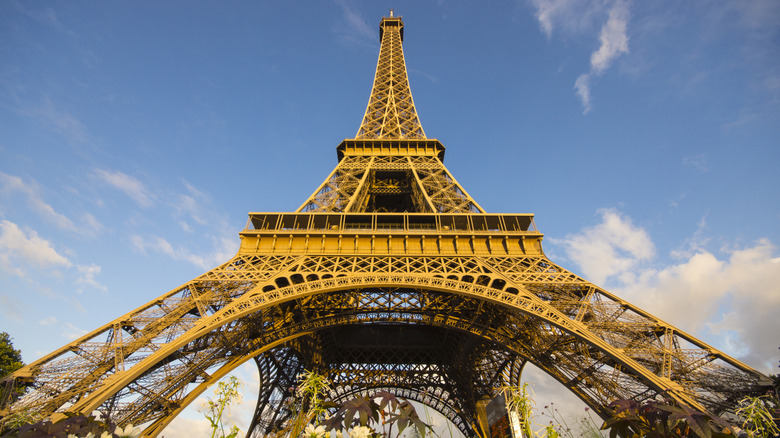
The Eiffel Tower is one of the world's most recognizable landmarks, but for some travelers, the experience of seeing it in person doesn't match the vision in their head. Since Gustave Eiffel's architectural marvel was completed in 1889 (and even before then — construction took a bit over two years), people have had opinions about the tower. Some have loved it, and some have hated it throughout history, but very few people have been neutral. Today, about seven million tourists come to the Eiffel Tower annually, and not all of them are happy with the experience.
From long lines to inclement weather to frustrating elevators, experiencing the Eiffel Tower firsthand is not always an ideal experience. That doesn't mean you should skip visiting, though! The Eiffel Tower is constantly surprising visitors with its secrets and fascinating history. Instead of foregoing this global icon, knowing what other tourists complain about can help you plan ahead and enjoy your visit with realistic expectations. Here, we'll look at nine common tourist complaints about visiting the Eiffel Tower and provide solutions for how to alleviate them, when appropriate.
To compile this guide, I drew on my own experience from visiting the Eiffel Tower, as well as firsthand accounts on Tripadvisor, Facebook, Quora, and Reddit. I also used advice from high-authority websites like the official Eiffel Tower webpage.
The weather plays a huge role in the experience
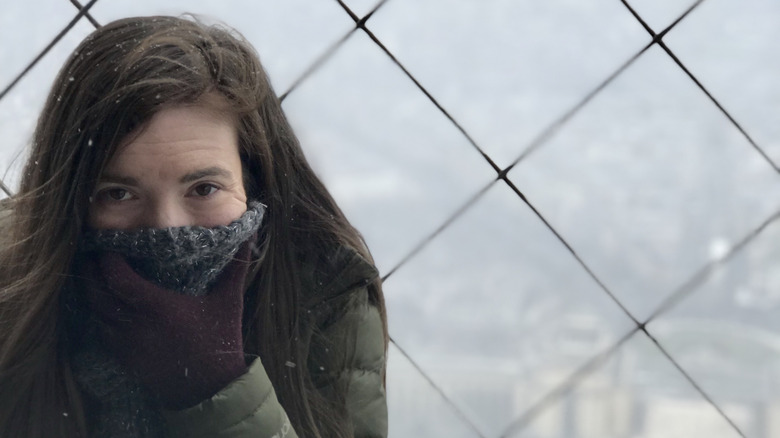
While Hollywood gets many things wrong about visiting Paris, the way the Eiffel Tower is often portrayed is decidedly near the top of the list. In movies like "Funny Face" and "A View to Kill," blue skies and sunshine prevail when the main characters visit the tower. In reality, though, weather plays a huge role in one's Eiffel Tower experience. Rain, fog, high-speed winds, snow, and even extreme heat can all impact visibility of the city from the tower as well as the attraction's operating hours.
I've experienced this firsthand. During a February visit, I trekked to the top of the Eiffel Tower during heavy snow. It was an incredibly memorable visit (the steps to the summit were covered in ice!), but visibility was so low that we couldn't even see the ground. While the snow-covered atmosphere was beautiful in its own right, I can absolutely understand how inclement weather could be frustrating for those visiting the Eiffel Tower once in their lives. A Tripadvisor traveler shared that they "will always have an interesting story to tell," as they were actually evacuated due to winter weather, writing, "everyone was asked to leave as it was SNOWING."
During the already-infamous summer 2026 heat wave, the summit of the tower was closed for visitors' safety. The good news is that a little planning can go a long way if you're concerned about weather impacting your Eiffel Tower trip. If your itinerary is flexible, monitor the forecast before reserving your timed-entry tickets online. On hot days, for example, go early in the morning for the best chance of visiting the summit, and on foggy days, going later in the day after the air has cleared is smart.
It isn't the best place to take pictures of the Eiffel Tower
Once you stop and think about it, it's obvious that standing onsite at the Eiffel Tower isn't the best place to photograph the structure. It's next to impossible to get a good view of the entire 1,083-foot structure when you're directly beneath it (or standing on it!) It is, however, a great place to take artistic shots underneath the tower. I love to take close-ups of the intricate scrollwork!
Regardless of whether it should be apparent or not, first-time visitors are sometimes caught off guard by the fact that you can really only photograph the bottom of the tower when you see it up close. Many arrive expecting to recreate the iconic Eiffel Tower photos they've seen on Instagram and in travel magazines, only to realize that those images were taken from entirely different vantage points around Paris. Once you've reached the tower, the surrounding city becomes the focal point of your photographs.
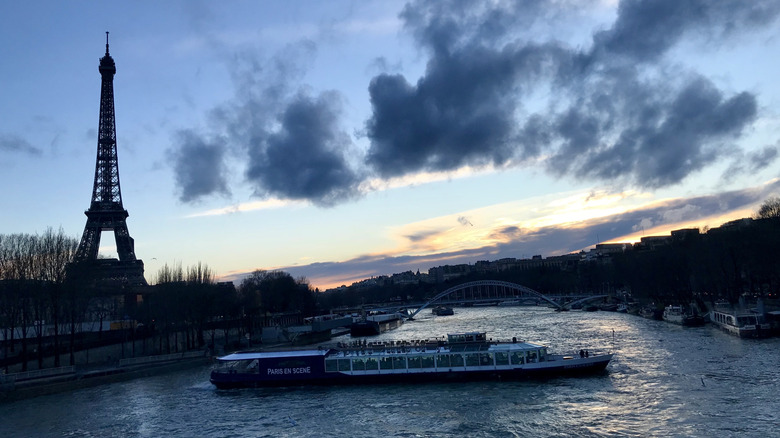
Fortunately, there are plenty of great places to take gorgeous Eiffel Tower pictures. Spots like the Trocadéro, Avenue de Camoëns, Champs de Mars, Rue de l'Université, and the Pont de Bir-Hakeim bridge (where I took the feature image for this section!) are among the city's best locations for photographing the landmark. Each arrondissement offers a different perspective. Whether you're trying to frame the Eiffel Tower as a vintage postcard, an everyday street scene, or a movie still, one of these spots will work for you. Another pro tip? After you've photographed the tower to your heart's content, check out the charming Île Saint-Louis, an island smack dab in the middle of Paris!
Certain ticket types can quickly sell out
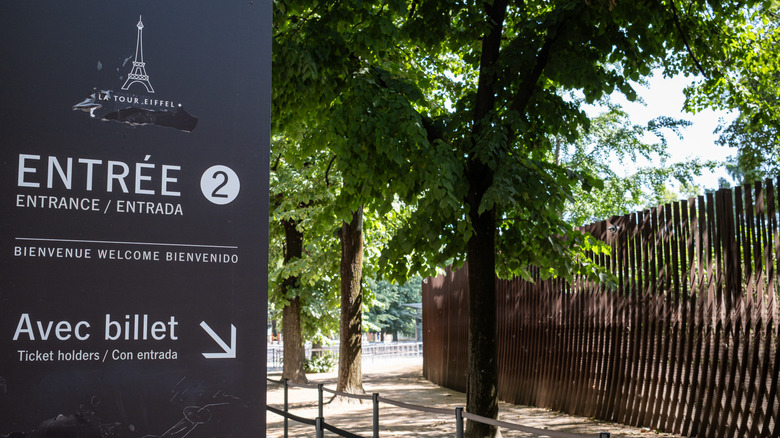
For many people, seeing the City of Light from the top of the Eiffel Tower is the whole point of visiting this landmark in the first place. Unfortunately, that also means it's the most difficult ticket type to secure. While people are able to purchase timed-entry tickets to the tower up to 60 days ahead of their planned visit, the bulk of summit tickets are released exactly seven days in advance. One Reddit user advised, "You have to go on the site at midnight French time exactly to get tickets."
This mad rush for summit tickets often catches first-time Eiffel Tower guests off-guard. On Reddit, one poster bemoaned, "Like many others I did not realize the Eiffel Tower Summit sold out so quickly." The good news, though, is that sold-out online tickets don't necessarily mean you won't be able to visit. The Eiffel Tower still sells same-day tickets at the monument, subject to availability. Some Redditors report waiting only 20 to 30 minutes and easily gaining summit access on low-crowd days, so it is possible, but not advisable, to make an 11th-hour visit. If visiting the top of the Eiffel Tower is a priority for your party, the best thing to do is buy advance tickets on the official website.
If those tickets are gone, consider purchasing second-floor tickets rather than risking not getting inside at all. The second-floor observation deck still offers incredible views. In fact, Rick Steves advises that the best place to see Paris is actually the middle of the tower, not the top! Then, if desired, you can wait in the ticket line on the day of your visit to see if summit tickets are still available for that date. I have personally had success buying same-day tickets during off-peak seasons, especially in the winter.
It is not as cheap as you might expect (especially if you dine!)
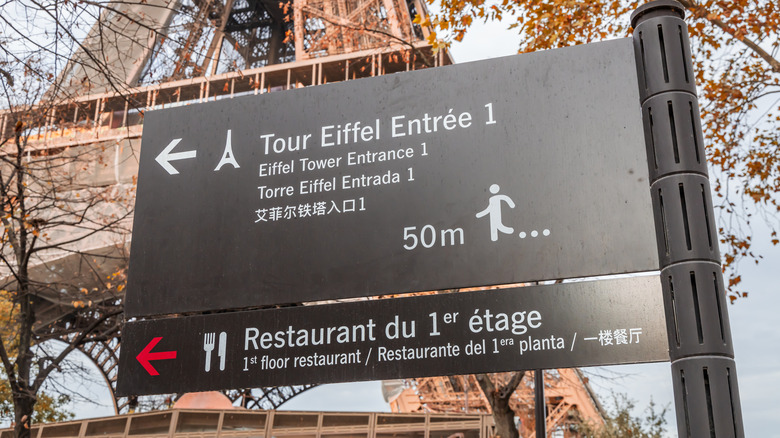
The French capital is not exactly known for its affordability. Paris is home to some of the most luxurious hotels in the world, and the high-end shopping in the Golden Triangle is second to none. Even the cost of visiting the Eiffel Tower can add up, surprising some visitors. While admission rates themselves aren't particularly unreasonable for one of the world's most famous landmarks — the most expensive adult ticket inclusive of two elevator rides is about $43 — the price can skyrocket once you factor in souvenirs, dining, and other extras like a glass of champagne added onto your ticket fee.
The biggest price jump, however, comes if you decide to eat at one of the tower's restaurants. Madame Brasserie, located on the first floor, and Michelin-starred Le Jules Verne offer unforgettable dining experiences, with prices to match. Madame Brasserie runs between about $80 and $163 per adult, depending on which view you select at booking. Facebook users question whether the cost is worth it, despite the exceptional experience.
Le Jules Verne, meanwhile, is one of Paris's most legendary fine-dining restaurants, located on the second story of the tower. Dinner prices here range from about $340 a head for five courses to $380 for a seven-course meal. One Google reviewer found the experience disappointing for the high price point, with standoffish staff and no effort made to give them the city view table they reserved. Another person on Google noted that they paid nearly $1,000 for "the worst food I have had in a long time."
Aggressive vendors capitalize the neighborhood
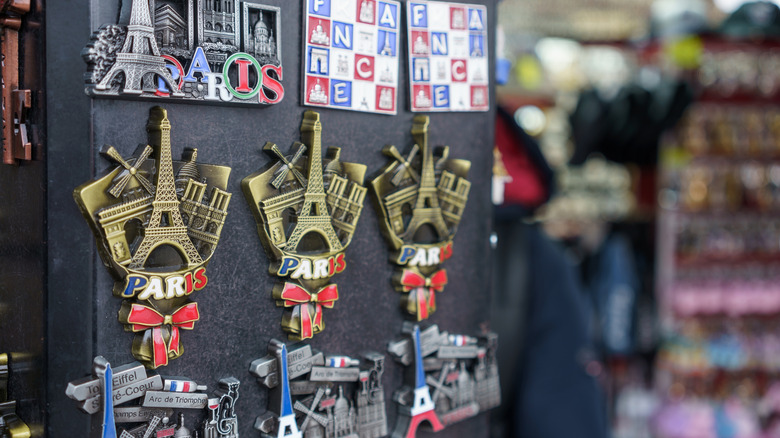
One of the most off-putting things about visiting the Eiffel Tower is the constant presence of aggressive souvenir sellers, petition solicitors, and other unofficial vendors operating in the surrounding neighborhood. One Tripadvisor reviewer shared, "the crowds, illegal peddlars ... makes this one of the most ugly and uncomfortable travel experiences I've ever had in my life." The first time I came to the tower, this was the main thing that I personally found shocking, as well. If you know how to handle these vendors, though, traversing their stalls to get to the tower doesn't have to ruin the atmosphere for you.
Travelers frequently caution against engaging with the petition scammers, in particular. A Redditor noted, "the ones who try to get you to sign a petition – it's a distraction so their accomplice can try to get your wallet or go through your bag." Another person on Tripadvisor believes the "government really need to do something about this problem because you can't enjoy yourself at the base of the tower without being hassled to buy stuff." In short, the sheer volume of sellers can detract from an otherwise magical visit to the Eiffel Tower.
Fortunately, it's fairly easy to disengage from most of these vendors. I have personally found that a polite but firm "Non, merci" while continuing to walk typically does the trick. On Reddit, people concur, with one traveler sharing, "We told them no and they were respectful." It's also smart to avoid stopping to look at merchandise unless you seriously intend to make a purchase. The more you interact with Eiffel Tower street peddlers, the more likely they are to hassle you if you try to walk away empty-handed.
The security process can be stressful
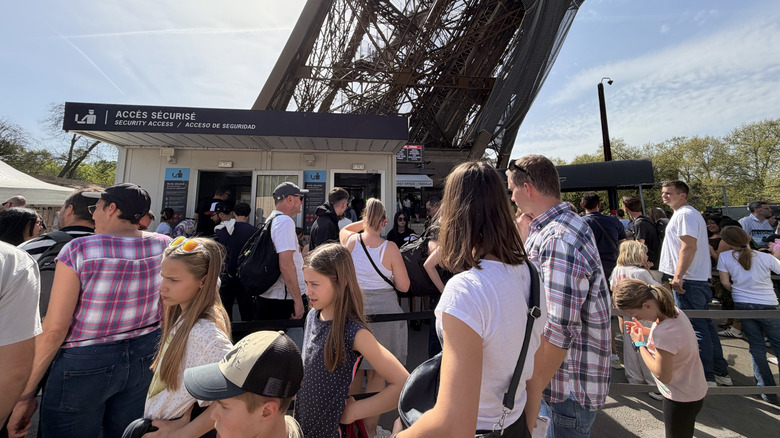
Before ascending the Eiffel Tower, you can expect a fairly intense security process, reminiscent of going through an airport terminal. As a matter of fact, many of the dos and don'ts of a TSA checkpoint can apply at the Eiffel Tower, too. Following instructions from security agents, staying calm, and ensuring you don't have any prohibited items on your person can make the process go much faster. While these security protocols are important for keeping Eiffel Tower employees and guests safe, they are also a frequent point of contention among guests who didn't properly prepare.
Upon entering Eiffel Tower grounds, every person must go through two screening checkpoints, including bag inspections and metal detectors. One traveler on Rick Steves' discussion forums shared that they were taken aback to see fencing surrounding the tower, noting, "You cannot bring any type of liquids or gels with you ... Basically the security guards ask you to throw it in the trash can right there & then." She described the process as being much like airport security. It's also important to be aware that there are baggage size restrictions, and no lockers are available.
Another guest on Tripadvisor was particularly upset when a small bottle of corked wine in their mother's bag was confiscated for violating liquid regulations. They, too, were frustrated by the lack of lockers. The best way to make the Eiffel Tower security screening process as painless as possible is to arrive with plenty of time before your timed entry, pack light, and avoid bringing any items that could slow down your screening or trigger additional inspection. As with going to the airport, staying organized and having your ticket prepared will also help things move more efficiently.
It is often overly crowded
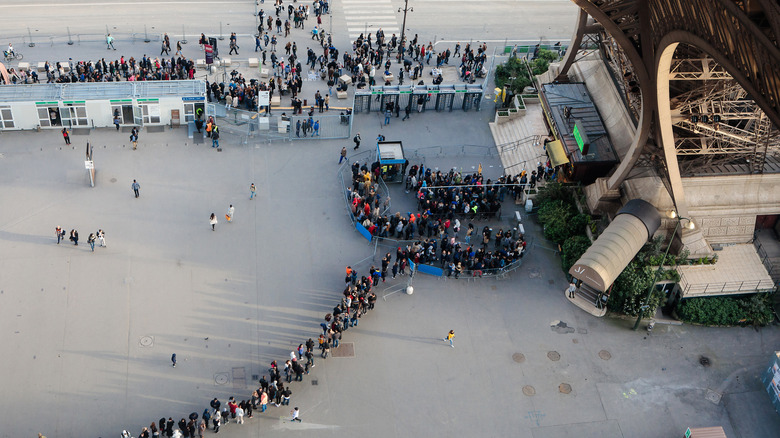
While nobody expects the Eiffel Tower to be an out-of-the-way Paris attraction to beat tourist crowds, sometimes the volume of people at the site can still take visitors by surprise. One Tripadvisor reviewer complained, "Went up it at night the queues are so long it's ridiculously overbooked." However, this doesn't mean that it isn't worth the wait for many travelers. Another person on Tripadvisor called their experience "magical" and shared: "The queue was very long- but it was worth it!" I have personally found that if you approach your visit with the understanding that observation decks fill with people taking photos, elevators can get crowded, and patience is key to waiting your turn for the best view, you can have a great experience.
One option for those who want to avoid the most crowded space on the Eiffel Tower (the summit, of course) is stopping at the second deck. Tom Bricker at Travel Caffeine noted that the highest observation deck can become "crowded to a claustrophobic degree," which may legitimately be difficult for some travelers to manage. Furthermore, proper preparation can help guests avoid the worst of the crowds. One of Rick Steves' devotees shared on Facebook, "Research. It always pays off. I've been to the top twice and never had to queue."
Timing can also make a huge difference in the crowd levels at the tower. If your schedule allows, mid-week days from Tuesday to Thursday tend to be the least crowded. Additionally, traveling during shoulder seasons like spring or early fall, rather than at the height of the summer tourist rush. I have also had good luck reserving early morning or late evening tickets for sparser crowds.
The summit sometimes closes
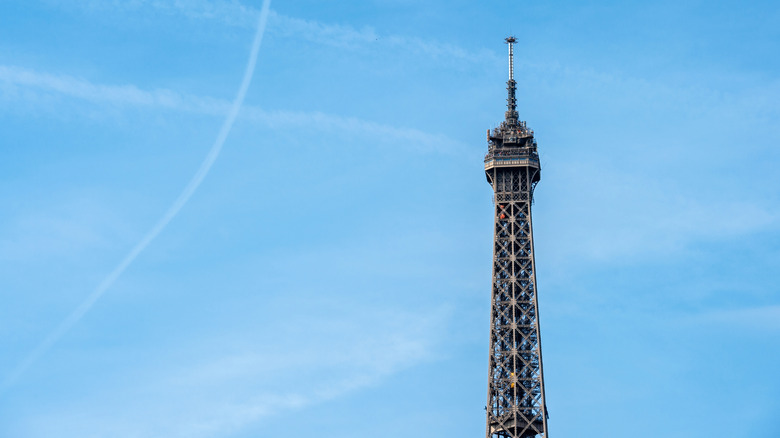
Standing at the tip-top of the Eiffel Tower is the highlight of going to Paris, especially for many first-time visitors. Unfortunately, as we noted earlier in this guide, there are certain circumstances that can lead to the summit's closure. We previously described how weather can close the top observation deck, but capacity limits and other situations can also cause officials to cordon off this area.
While these closures can undoubtedly be disappointing, they're implemented to keep everyone safe. High winds are an especially common reason for the summit to temporarily close. Sustained wind speeds of 50 miles per hour typically lead authorities to shut down Eiffel Tower summit access. The top of the tower can also close due to winter weather, lightning in the area, elevator maintenance, and security concerns, among other things. Do be aware that if the top deck is closed due to capacity restraints, many Redditors report that they were still allowed to enter if they had booked a summit-access ticket in advance.
Also, don't panic if the summit happens to close and you are denied access during your visit. In some cases, this section of the tower may reopen while you are still on-site. In some cases, access to the top of the Eiffel Tower is only restricted for a few minutes, though it could take hours or even days depending on the reason. One important thing to be aware of if you are planning a winter visit is that the top observation deck is closed for about a month annually from early January to early February for maintenance.
The elevator system can be frustrating
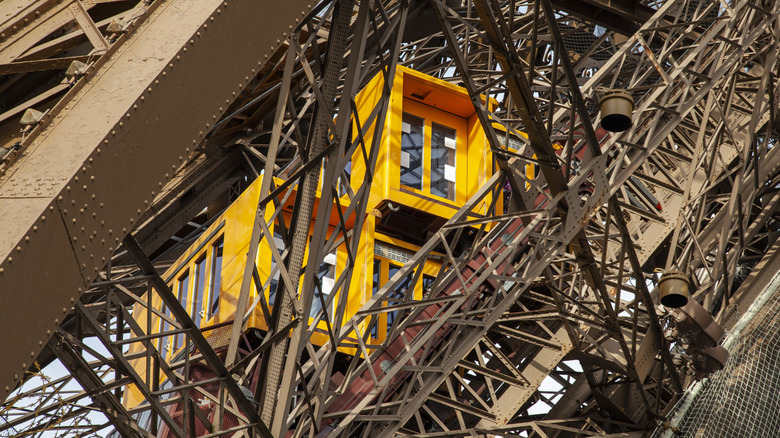
Figuring out how the more-than-century-old elevator system works at the Eiffel Tower can be a source of frustration for visitors. Unlike many observation towers, the Eiffel Tower uses multiple elevators that serve different sections of the monument, which means the process can be a bit bewildering for those coming to the tower for the first-time. From the bottom of the tower, there are three primary elevators for visitors, plus a dedicated elevator for Le Jules Verne diners. Additionally, freight and staff elevators are available.
Furthermore, visitors who are going to the summit don't ride a single elevator all the way to the top. Rather, they usually stop at the second floor observation deck and continue their ascent from there using a summit-specific elevator. Bear in mind that if the summit is closed for any reason, that second elevator will not be available. One Reddit user lamented the amount of time it took them to navigate the system: "It took hours, just to get through security ... Then the elevator line to the second floor. Then the elevator line to the summit."
Another source of frustration is that elevator lines can be quite lengthy. A Tripadvisor reviewer who ended up taking the stairs part of the way noted, "Lines for the elevators up and down the tower were ridiculous." If you are physically able, climbing the 674 steps to the second floor observation deck can be an incredible experience in and of itself. This option helps visitors avoid the elevators altogether unless they are visiting the summit or dining at Le Jules Verne. However, for those who want or need to take the elevators, following posted signage and asking for assistance from English-speaking staffers can make the process simpler.