
America's 8 Caves And Caverns That Are Best-Kept-Secrets From Tourists
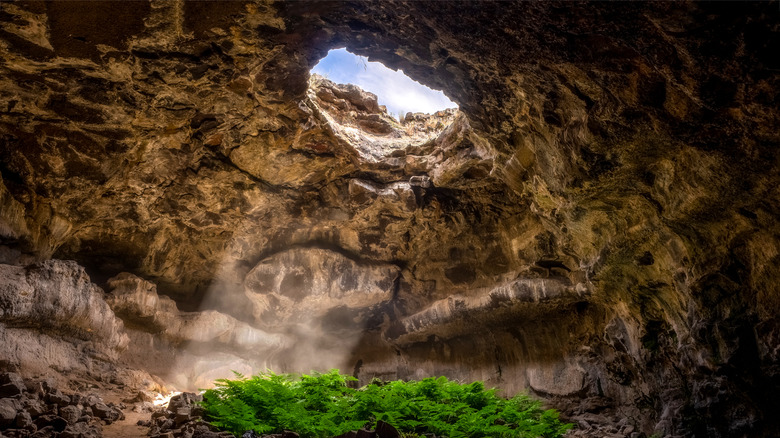
Real spelunkers often employ superhuman efforts to reach into the far recesses of the earth. It seems the more hidden a cave, the more rewarding its otherworldly beauty. Famous ones, like Son Doong, a natural wonder buried in the Vietnam jungle and the world's largest cave, require scaling slopes and wading through underground rivers. But submerged forests, giant stalactites, and unusual wildlife are the reward. Getting to the mysterious Sandia Man Cave in New Mexico's Cibola National Forest involves a steep hike and spiral staircase. But the payoff is an eerie, historic cavern. Not all caves demand this level of strenuous effort, though. Regular tourists wanting to experience the underground can easily find stress-free adventures.
For example, smooth walkways make exploring Luray Caverns, popular for having the world's largest musical instrument, easy. However, along with convenience, touristy caves like Luray can come with masses of people. For fewer crowds and off-the-beaten-track bliss, America's more secret caves are another option. With many being further from popular areas, fewer tourists know of them, and so they're not swarmed. Indeed, being remote and challenging to reach is precisely why they're considered best-kept secrets — don't worry, we ensured difficult hikes or roads were doable for those with decent fitness and driving abilities!
Since Mammoth Cave National Park is the only U.S. cave consistently ranked among the world's most famous (via BBC and Oxalis Adventure), we used it as the benchmark for what metrics would qualify a cave as less-known. We settled on 25% of the famous park's visitors. This works out to 165,000 people, as Mammoth gets around 660,000 annual visitors. We also considered remoteness, reviewers calling the cave uncrowded or hard to reach, and the number of Google reviews. Where data wasn't available, these factors were considered instead of visitor numbers.
Derrick Cave (Fort Rock, Oregon)
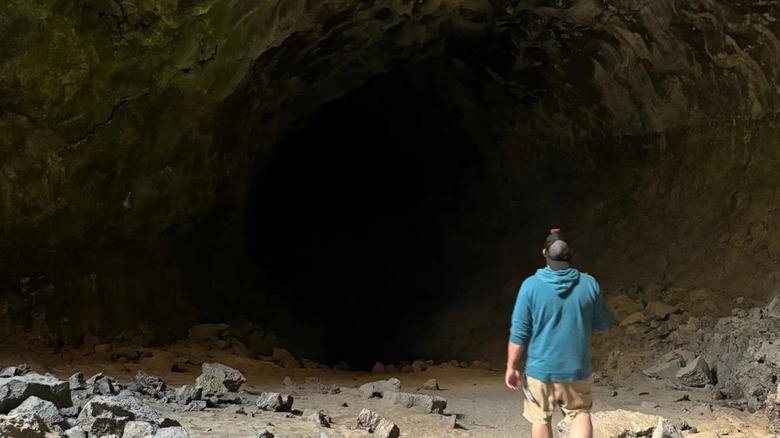
When you consider its challenging location and just a handful of reviews on Google, it's no surprise that Derrick Cave, in Fort Rock, Oregon, is one of those seldom-visited, hidden gems that feels like a rare treat once discovered. According to travelers, faulty mapping and poor signage are responsible for the cave being difficult to find. Still, they admit to being stunned upon arrival. "It was hard to find but when we finally did it was amazing," gushed a visitor on Google. The route to get there is also a factor. The cave sits on the edge of Deschutes National Forest, far from any towns, and can only be reached by a dirt road. "The last 12 or so miles are on a gravel and dirt road which was a little rough," explained a Google day tripper.
Although Derrick Cave flies under the radar, the few who find it discover a destination as spectacular as it is historic. In the 1960s, its hidden chambers were outfitted as a nuclear fallout shelter and filled with supplies. Prior to that, there were plans for it to be used as a shelter in case of Japanese attacks during World War II. Today, the only sign that remains from this interesting past is the frame for the door that guarded the rations in the 1960s. Go past that, and a keyhole tube, rocky ceilings, and breathtaking skylights with beams of sun shining through invite exploration. These skylights ensure the cave isn't too dark if you visit during daytime.
By all reports, if you follow directions through Christmas Valley or Derrick Cave Road, you'll get lost. It's best to follow the Bureau of Land Management's directions to National Forest Road 2325 to get there, as visitors report success with that route.
Sand Cave (Cumberland Gap National Historic Park, Kentucky)
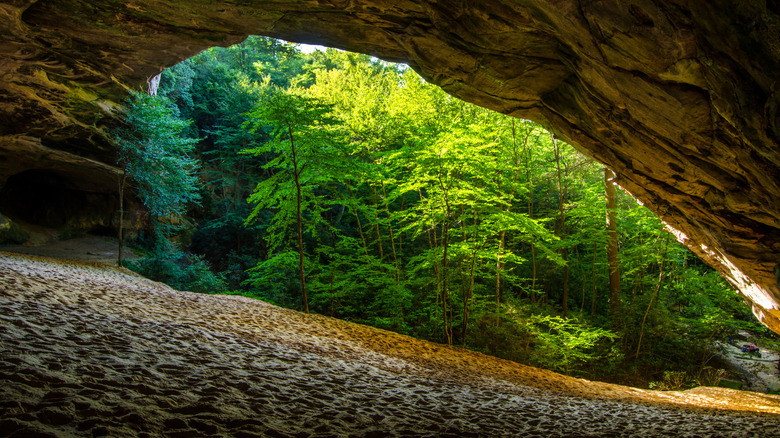
Those who discover Sand Cave in Cumberland Gap National Historical Park are treated to some of the most amazing sandstone views. Of course, they'll have to find it first. And this is precisely why it's one of the country's most secret caves. With the hike to get there being rugged and around 4.2 miles one way, few visitors ever try. In fact, it's such a hidden gem that of the thousands of Google reviews on Cumberland Gap, only a few dozen mention the caves. And this isn't because it isn't worth the hike. Those who visit often have sentiments similar to this hiker's on All Trails: "Any hardships of the trail were forgotten when we reached the sand caves ... breathtaking."
As expected, the difficult hike results in the less-visited cave being uncrowded, making it ideal for those looking for an off-the-beaten-track excursion."Sand cave was amazing ... Only saw one other person on the trail. So essentially had the place to ourselves," said a visitor on All Trails. With fewer crowds, expect to see the swirls of red and orange sandstone on the cave's ceiling clearly. And since Sand Cave used to be a huge block of sandstone that got hollowed out by the forces of nature, the mounds of sand left behind on the floor make for an unusual experience.
The hike to get there seems insurmountable, but those in good physical condition will find it manageable. Hikers rate the trail hard — just above moderate. This ranking suggests it's doable for physically fit visitors who handle stairs and exercise well and can walk several hours. Expect a round-trip hike to take 5 to 5.5 hours, which includes the extra mile to get to White Rocks, a picturesque overlook above the cave.
Paisley Five Mile Caves (Summer Lake, Oregon)
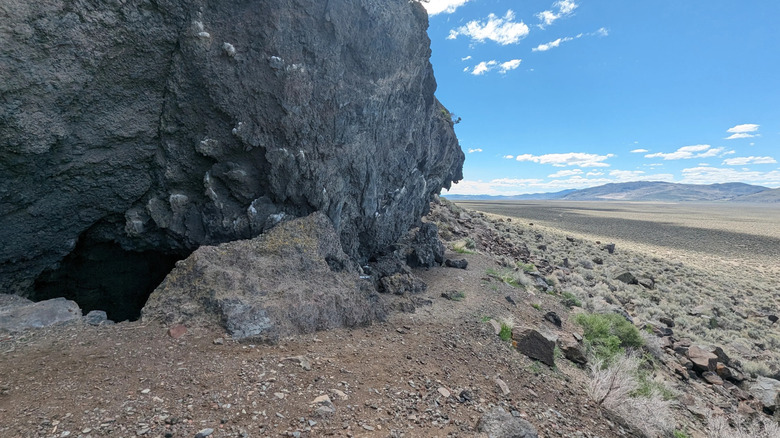
With just over a dozen reviews on Google, you would think the hardly-visited Paisley Five Mile Caves in Summer Lake, Oregon, suffer from defects that deter visitors from making the trip. But the shallow nooks actually have a long, storied past and have been added to the National Registry of Historic Places. If we had to guess, we'd say the lack of a proper road and their location in the remote town of Paisley, a hidden Oregon destination with hot springs and the ancient caves, are some of the reasons for the destination being less-known. When visitors do venture out to find them, they get rewarded with one of the region's most historic places.
Prior to Paisley Caves' excavation in the 1930s, it was accepted that the earliest peoples in the Americas were the Clovis culture. Evidence from the excavation suggested that another civilization predated them by over 1000 years. More modern techniques confirmed this in the 2000s, resulting in Paisley gaining prominence as one of the continent's most important historical sites. With its remarkable significance, a trip is more than worth it for history buffs wanting to stand on the important spot. "Really cool ancient site. They have confirmed human occupation at these caves going back to the ice age 15000 years ago," said one history enthusiast on Google.
In addition to its historicity, nature lovers will enjoy the stark landscape and its scenic rocks. Most of the caves are too small to get into without crawling, so this is the best way to experience the area. The caves can be found at 47225 Highway 31 in Oregon, around seven miles south of Paisley. The dirt road to get there is rocky and will probably need a four-wheel drive vehicle to navigate.
Oregon Caves National Monument and Preserves (Cave Junction, Oregon)
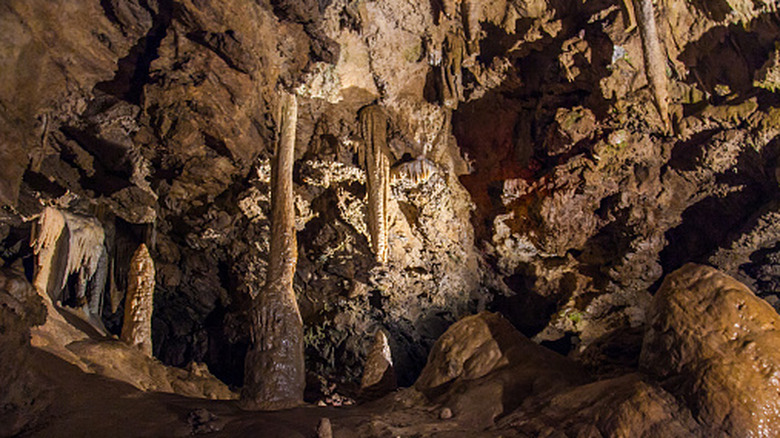
When Oregon Caves National Monument and Preserve in Cave Junction, Oregon, recorded 94, 000 visitors in 2024, officials at the remote cave network considered it record-breaking. In the previous year, it had gotten 32,041 visitors, so the response was expected. These low numbers are a pity, considering all the breathtaking formations within the caves. On the other hand, those who prefer their adventures to come without crowds will appreciate it being a secret from hordes of tourists, so it being less popular may not be such a shortcoming: "Cave tour was fun and entertaining thanks to our wonderful funny ranger," raved a reviewer on Google. "Love that this park was not crowded, only 15 people on the tour."
Nicknamed the "Marble Halls of Oregon," the unusual caves are hewn from marble instead of limestone. Intricate passageways, along with breathtaking marble formations, stalactites, and crystal formations, line the underground world. But these take on different faces, depending on what tour is booked. Join a Candlelight Tour at the end of the day, and the dark recesses look magical as the lights flicker on the sculpted walls. These tours are limited to 10 people, so crowds will never be a worry. Book a Discovery Cave Tour or Kids and Family Cave Tour.
The Off-Trail Caving Tour is for those with advanced spelunking skills who want to explore deeper inside the caves' belly. Belly crawling, scrambling over boulders, and tight spaces are part of the experience, so cavers looking for a challenge may find it ideal. Park officials warn not to follow GPS or Google Maps directions to get to the park, so check the website and follow the directions there.
El Malpais National Monument, (Grants, New Mexico)
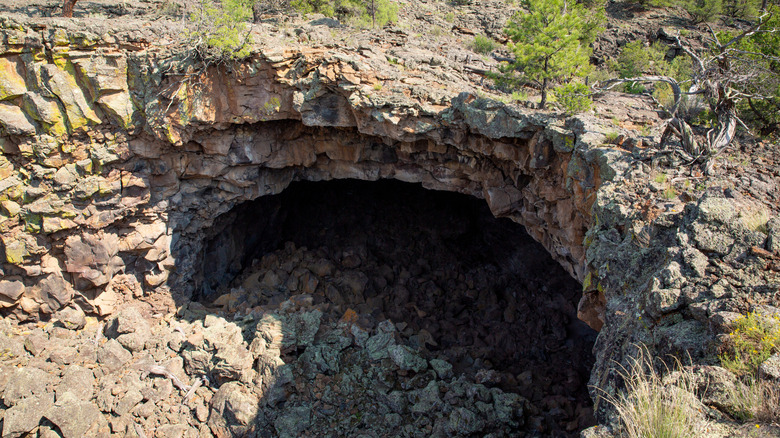
El Malpais means the badlands in Spanish, but a visit to the monument is more picturesque than unsightly. Lava flows, cinder cones, and a network of lava tube caves mark the area, whetting the appetite of the inquisitive. Those who head to the tubes will find themselves in one of the U.S.' lesser-known caves, as only around 150,000 travelers visit every year — a fraction when compared to the half a million and more people who visit touristy caves like Mammoth and Luray. With visitor numbers like these, it's certain that many tourists don't know about the caves. One visitor on Google confirmed, "From the drive-in views of the Sandstone Bluffs to the breathtaking lava tubes, this monument is a hidden gem."
Visitors who go while it's still fairly secret will find a desert-looking landscape created by years of volcanic action. The lava tube caves are in their wild state, so no steps, lighting, or trails are provided, but many nature lovers will find beauty in this virgin condition. Since the formations are uncharted, those without route-finding experience or in bad physical condition may want to start with the more manageable Junction or Ice Caves. Visitors who stop by in summer will want to stay until evening to observe flocks of bats as they leave Bat Cave in search of food. To see them, head to the El Calderon section just before sunset. Other attractions on the site include sandstone bluffs and lava fields.
Although the park is open seven days a week, the caves close from November to April to protect the bats as they hibernate. Visit outside of that period and go early enough to grab a free caving permit as one is required and only ten permits per cave are issued daily.
Lehman Caves ( Great Basin National Park, Nevada)
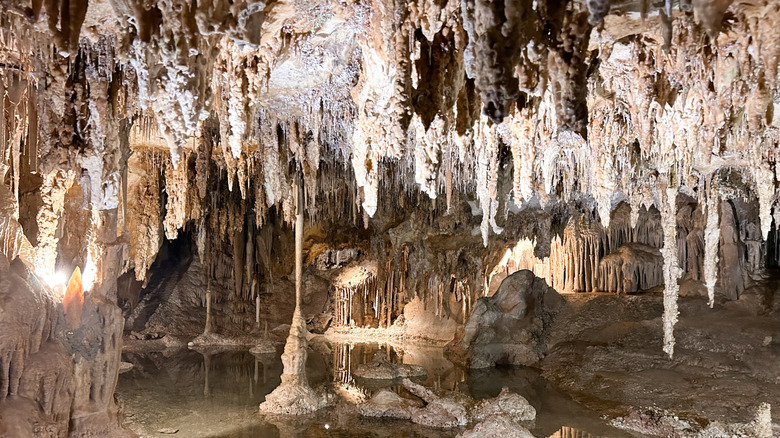
With only 50,000 yearly visitors and a few hundred reviews on Google, Lehman Caves inside Great Basin National Park, Nevada, is one of America's less-visited caves. The capped tours certainly contribute to these unimpressive numbers. But when you consider that Great Basin National Park itself gets record-low visitors and is considered America's most underappreciated national park, it makes sense that not many people would visit. This all adds up to a destination that will delight those searching for an uncrowded expedition into the heart of the underworld.
Without lights, the pitch-black caverns can feel scary for some. Luckily, the guides leading the four tours bring plenty and may only turn them off temporarily to illustrate what the caves look like in their rawest form. Those who book the Lodge Room Tour get to visit three of the underground rooms. The usual stalactites and stalagmites line the floors and ceilings, throwing their shadows in the lights, and creating glittering formations inside the mesmerizing cave. Visitors also get treated to more unusual formations. Cave bacon, or long thin rock formations, is common. And cave turnips, either stalactites or stalagmites with bulges in the center and thinner ends, can also be seen.
While exploring, guides explain the geological and natural history of the sights, so by the time a tour is over, all the proper names of the various natural features will be cemented into memory! Tours are limited to 20 people per trip and can sell out early, so plan your trip well in advance.
Ape Caves (Mount St. Helens National Volcanic Monument, Washington)
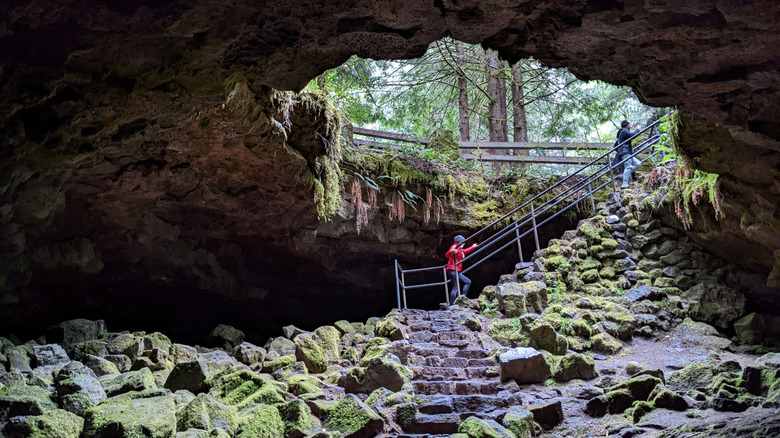
From the out-of-the-way drive to the strenuous hike to fully explore both of its sections, visiting Ape Caves in the Mount St. Helens National Volcanic Monument in Washington state can feel like an odyssey. Around 170,000 visitors make the journey to the trail annually. Admittedly, this number is just a tiny bit above our metric, but visits to the caves require a reservation, and it's quite a trek to actually get through them, so your trip will still be relatively uncrowded.
It's estimated that the caves formed when Mount St. Helens sent lava down its southern flank 2,000 years ago. Cool temperatures solidified the outside, but the lava inside flowed through, emptying out and forming a lava tube cave that consists of an-easier-to-explore section called Lower Cave and the more difficult Upper Cave area. Parts of the tube collapsed, making skylights that penetrate the darkness inside at intervals. As time passed, stalactites, etchings that look like railroad tracks, and a large rock called "The Meatball," which is lodged above a passageway, formed.
Visitors who embark on the easier hike through Lower Cave encounter The Meatball, the Railroad Tracks, and more. Upper Cave is a different story. Here, scrambling over abrasive rocks, scaling an 8-foot lava fall, and lots of squeezing and squatting make it extremely challenging for many visitors. Some do succeed, but report feeling pushed to their limit. So it's possible, but we recommend some research to prepare for the challenge. Timed tickets, headlamps, or flashlights are required before entry, so plan accordingly. Follow directions on the ticketing platform.
Dungeon Rock (Lynn Woods Reservation, Massachusetts)
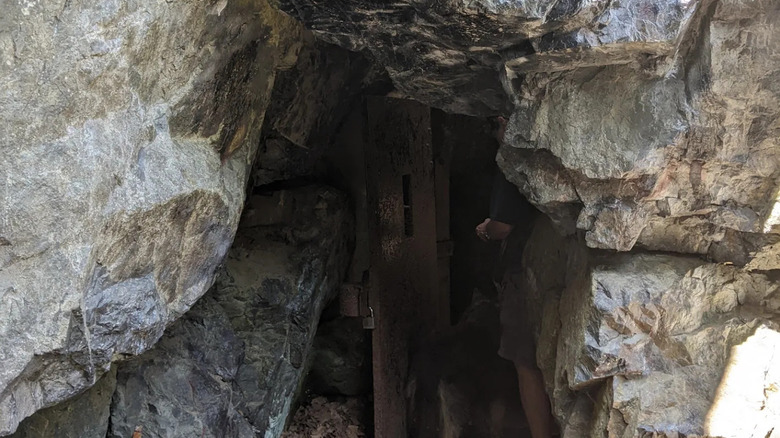
Pirates, ghosts, and buried treasure riddle stories of Dungeon Rock's past. But apparently the colorful lore isn't enough to launch the Lynn, Massachusetts, attraction into popularity. Centuries after the man-made cave was visited by an infamous pirate in the 1600s, it remains one of the U.S's best-kept-secret caves. Thousands of people visit Lynn Woods Reservation, where it's located, each year, but, judging by its few reviews on Google, not many of them take the additional hike to reach the legendary cave.
According to legend, in the 1600s, a pirate called Tom Veal buried his treasure within the cave. An earthquake struck and destroyed the cave, burying the treasure. In 1851, Massachusetts resident Hiram Marble bought the land surrounding the rock that was left over from the collapsed cave. Marble consulted mediums who supposedly channeled Tom Veal's ghost to lead him to the treasure. After digging miles of tunnels and spending a small fortune, the treasure was never found. But visitors keen on doing a little treasure hunting can embark on their own quest.
The hike to get to the cave at Dungeon Rock is an easy 4.2-mile trail that goes past nice views of Boston, a historic tower, and more. The cave is usually locked, but rangers will open up for a few hours if asked. Many report it being dark inside, so flashlights or headlamps are a good idea if you plan on exploring the storied tunnels. "A very interesting and spooky location with a fascinating backstory ... A dark cavern at the bottom of a staircase, so bring a headlamp or flashlight if you want to explore," said a visitor on Google.