
10 Airport Habits That Single Out Inexperienced Travelers
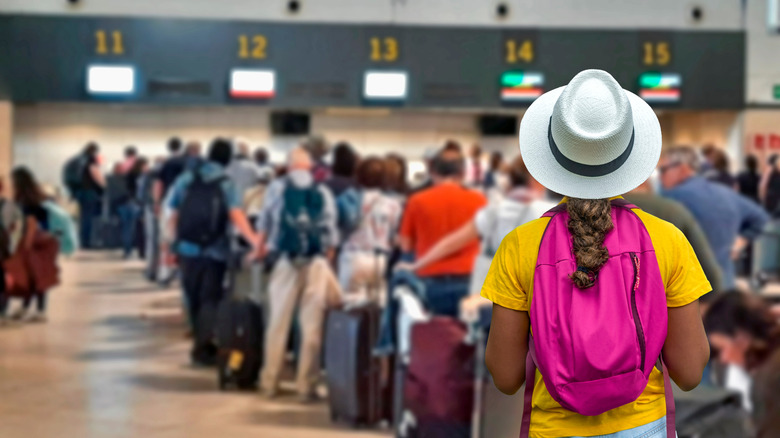
The airport is like a different dimension. Over the years, it's developed its own little ecosystem, where time and cultural norms don't seem to exist in the same manner they do in the real world. On the novel end of things, it's a place where a 5 a.m. beer is socially acceptable, while at the other, it's somewhere many of us seem to utterly lose our sense of direction, manners, and empathy.
None of us are quite the same in an airport. Even experienced travelers like myself — I've travelled to more than 60 countries and flown upwards of 500 times in seven years of full-time travel — have specific routines and attitudes that help us navigate the airport gauntlet run. But some habits, unfortunately bad ones, serve as telltale signs that someone is an inexperienced traveler. While some are amusing, others can have a domino effect, impacting other people and, in the worst-case scenario, even delaying flights.
Whether it's packing issues, departure gate etiquette, or unpreparedness, some things make novice travelers stick out like a sore thumb. You might not even realize you're breaking crucial airport etiquette. To compile this list, I drew on my own experience flying hundreds of times, then checked those observations against airline and airport guidance, academic research into passenger behavior, and recurring experiences shared by travelers on forums such as Reddit.
Bringing way too much carry-on luggage
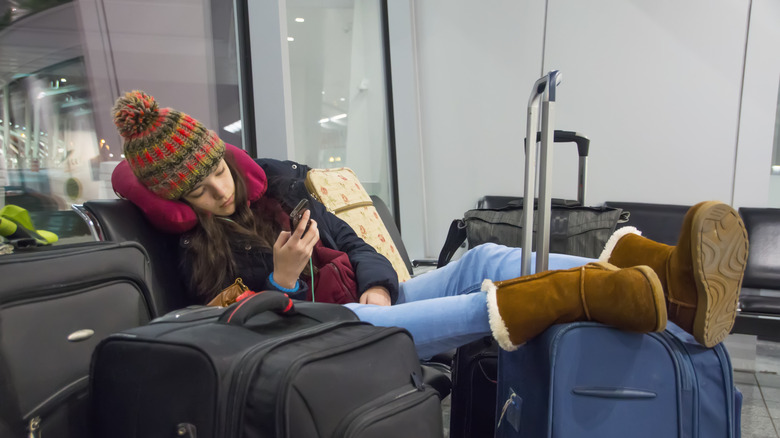
Sit down in a departure hall with a cup of coffee and watch for a few minutes, and one habit quickly becomes noticeable: some travelers are carrying far more than they seem to need. It's not exclusive to inexperienced travelers, but overpacking can make an already stressful airport day much harder to manage.
They stumble into the airport with two brand new roller bags, neck pillow already on, sweatpants sagging from the amount of stuff in their pockets, holding a 2-liter Stanley cup in one hand, a canvas bag stuffed with who-knows-what in the other, and their passport dangling precariously between their pinky and ring finger. It's the picture of chaos, and they're setting themselves up for a rough day. Many of those flying like this aren't even traveling too far. They wouldn't dress or pack like this for a 12-hour drive, never mind a six-hour transatlantic flight, and it feels like they've read too many "X Items You Must Travel With" articles online. It's an easy mistake to make. One traveler on Reddit recalled taking a rolling carry-on and personal bag on a two-week trip to China and Japan, weighing 17 pounds between them, "most of which I didn't even use once." Looking back, they realized they'd brought too many clothes and packed for situations that never materialized.
In my own experience, less is usually more. I did away with neck pillows years ago, and I try to keep what I need in the airport itself down to a few essentials: my passport, phone, wallet, headphones, charger, and an extra layer in case I get cold on the flight. The fewer loose bags and bulky extras I'm juggling, the easier it is to move through security, board quickly, and get settled without digging through my luggage.
Repacking an overweight suitcase at check-in
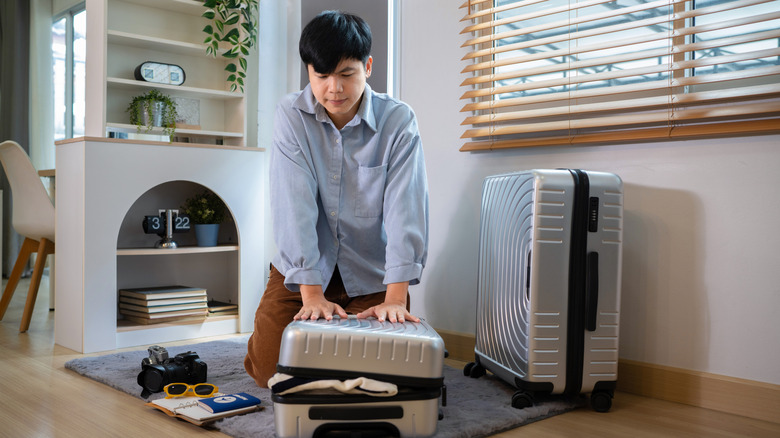
I've lost count of the number of times I've stood behind someone at the airport, looking at the size of their bag and the panic on their face, knowing I've got another wait ahead as they start repacking their overweight suitcase at check-in. This is where your decisions start to impact others.
A little preparation makes everyone's day easier. Every booking states your luggage allowance, including the number of bags and weight limits. There isn't one universal allowance, but 50 pounds is a common checked-bag limit on major U.S. airlines, with international carriers often using the equivalent 23 kilograms. Sure, if you're a pound or two over, you might try your luck — I have — but otherwise you're risking fees or a hurried repack. A 2024 survey from Upgraded Points found that 40% of U.S. travelers purposely overpack. And chances are, some of it isn't necessary. One Redditor recalled packing a "gigantic 70 liter something bag full of stuff I didn't need." When the airline temporarily lost it, they managed with a 15-liter carry-on and later realized they hadn't needed anything in the larger bag.
Always check your limits before packing and invest in luggage scales, or a self-weighing carry-on, so you're not going in blind. Check the limits for both legs if you're switching airlines, too. When I traveled full-time, all my belongings had to stay below 50 pounds, so I kept bulky items near the top for quick removal if needed.
Being unprepared for security
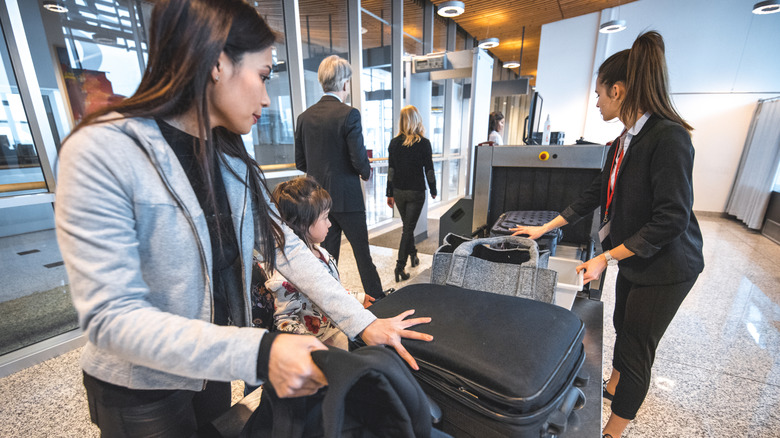
Few places highlight inexperience like the security line. It's not a fun place for anyone, but it's made all the worse by poor preparation. The worst culprits are those who have had time waiting for their turn and still aren't prepared. Laptops aren't out, they've disregarded any or all liquid or electronics rules, their bulging luggage gets flagged by TSA, and their belts are still on. Then, they often take up more time repacking in line.
Some studies show much of an impact this makes. One found that as much as 30% of security delays are caused by poor passenger preparation. In 2016, Atlanta added extra bays to load trays, allowing faster passengers to skip slower ones, thus increasing speed by 30%. Tech is helping speed things up further, with many airports investing in new CT scanners that allow liquids and electronics to be left in bags, but not every airport has these, so it pays to be prepared.
I've spent years honing my security line routine. My carry-on has an accessible laptop sleeve, I rarely travel with any liquids inside, and my outfit is purpose-built for quick on and offs. I carry a small sling bag — this one, if you're interested — that's big enough to hold my essentials. When I'm in line, I put loose items in the bag, loop a belt (if I wear one) around the strap, and take my laptop out (if necessary). By the time others have removed their jackets, I've thrown my carry-on onto the conveyor belt, my sling bag and jacket onto the tray, and headed through the scanner. Once through, I don't stop. If I need to put anything back on, I do it at the gate. Easy.
Crowding the gate
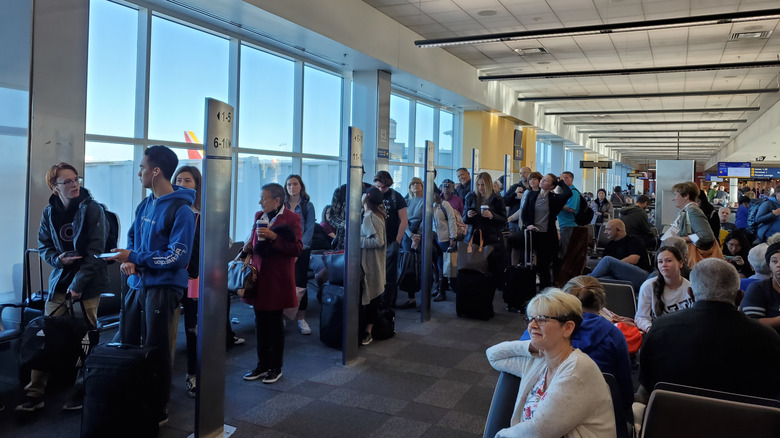
In fairness, I know many long-term travelers who still do this, but this is something of a phenomenon that's attached more to less frequent travelers. "Gate lice," the unflattering nickname coined by flight attendants for passengers who crowd the departure gate before boarding, are everywhere. In many cases, they're in a later boarding group, and end up blocking the way for others or even chancing it and trying to jump on before they're called.
Boarding groups are there to facilitate a smoother process, and by clogging the gate, gate lice are creating confusion and literal barriers to others getting on. The instinct stems from a broader feeling of panic that airports foster for the inexperienced. They might feel that if they don't get on first, there won't be overhead space or they'll be forced to check their carry-on, while others simply have an odd sense of competitiveness or worry they won't hear an announcement. Whatever the reason, it's a headache for those working, and a nuisance for everyone having to fight through a horde of stagnant bodies at the gate. The stats back it up, too, with Navan, a business travel expense company, noting that gate lice cause up to eight-minute delays in boarding, which compound over time.
I did feel the same panic in my early years, but after so much traveling and only having my carry-on checked once, that dissipated. My seat is always there, regardless, and I'll find a spot for my bag, one way or another. I also get an irrational sense of pride at relaxing by the gate while others jostle for supremacy. Just wait your turn; you don't want to do the walk of shame when you're turned away from the gate.
Getting in the way
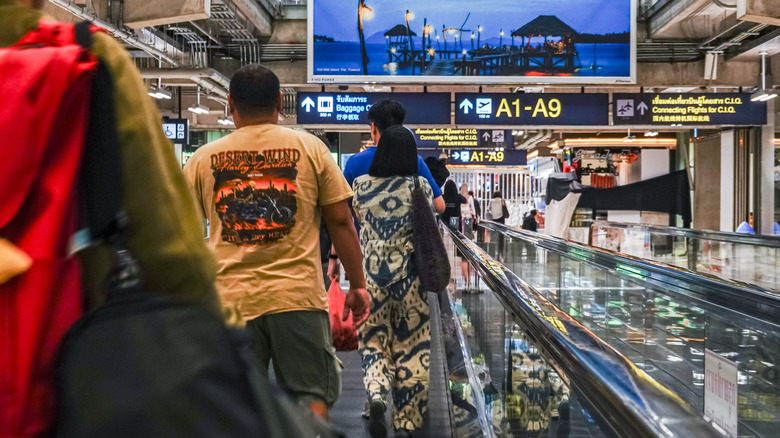
Many of us have experienced someone getting in our way at the airport. You're walking, maybe speedwalking, down a terminal connector to your gate. Out of nowhere, the person in front of you stops and stares up at a sign. You pivot quickly, swinging past, before someone else cuts across you at breakneck speed, eyes down on their phone.
Something about airports changes people's spatial awareness. It feels like there's more of a disregard for other people's movements and a greater sense of importance on their own. For those attempting to move with intention at the airport, the walk to the gate turns into a rage-inducing obstacle course. Interestingly, there is some science to it. Environmental psychologist Steve Taylor, in a piece for Wired, pinpointed airports as "thin places" where boundaries of time, control, and social norms become blurred. This can be a seriously discombobulating experience for inexperienced travelers. Combine this with the panic and sensory overload new travelers can face in an airport, and it's a real possibility that their typically fine decision-making becomes a hazard for everyone else to overcome.
While the stress of the place can be reduced overall by taking some of the other advice in this article, my partner and I have always operated as a team. One is solely focused on directions, while the other is feeding information. If you're alone, take a second, step off the main walkways, find the information you need, then proceed accordingly. Calmer is always better and leads to more confidence. And if nothing else, stand to the left on the escalator so others can move past.
Having everything buried in their bag
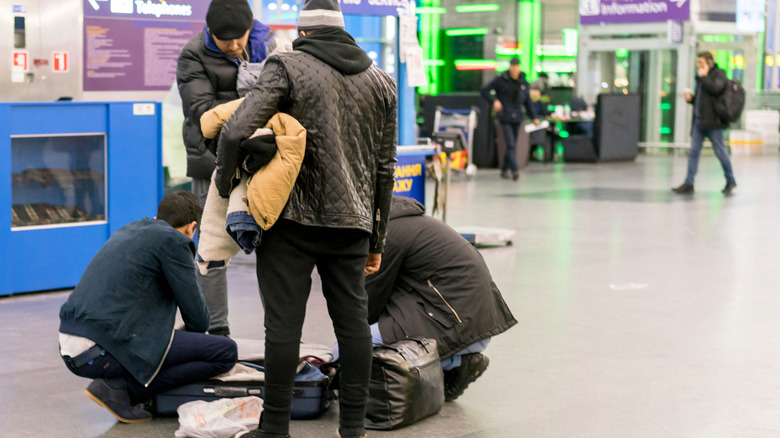
If you have everything buried in the bottom of your bag, you're in for a rough travel day. Packing is a bit of an art form, and I consider myself a master of it. My goal on any given travel day, whether it's an hour-long flight or a mammoth 48-hour journey, is to open my luggage as little as possible — it's always best to have a run-kit packed with emergency items when you fly.
Less experienced travelers are more likely to bury their most vital items at the bottom of a terribly packed tote or hidden amongst their carry-on roller bag. It's obvious at the check-in counter and boarding gate as they scramble to find their passport that has now slid to the bottom of a bag. It's seen again as they proceed to put up and take down their carry-on luggage in the overhead multiple times, before one last scramble to put it all back before the plane lands. "Even if I had the foresight to grab everything at once, the storage (or lack thereof) in an airline seat basically guarantees I lose something," complained one Redditor looking for the perfect travel bag to avoid this scenario.
My security line set-up is directly tied to my essential carries. The little sling I carry is large enough to carry my phone, wallet, headphones, charger, a book, or even a video gaming device like a Nintendo Switch. It means all my essentials are on-hand, and I never have to dive into a larger roller bag or tote. Even the shirt I wear helps. I own a shirt called the "passport shirt" that has a handy breast pocket that fits my passport and boarding pass.
Misunderstanding important times
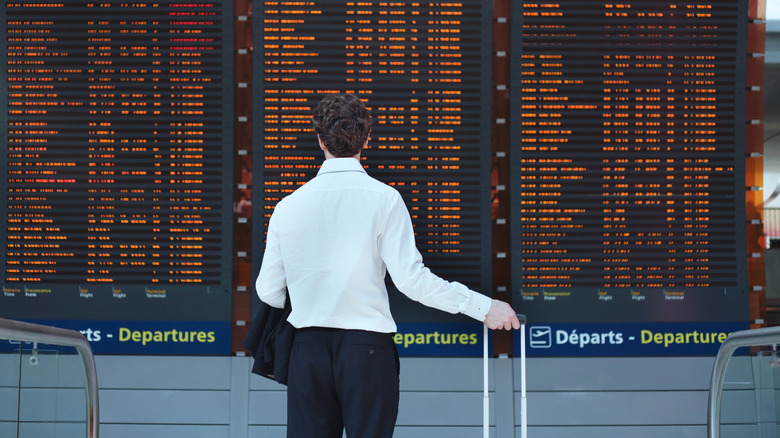
Airport timing is one of the easiest things for inexperienced travelers to misunderstand. Departure time, boarding time, gate-closing time, check-in cutoff, bag-drop cutoff, and the recommended time to arrive at the airport are all different, and confusing one for another can turn a straightforward journey into a stressful one.
You can see that confusion play out in wildly different ways. Some travelers arrive hours earlier than necessary, while others cut things dangerously fine. In one Reddit thread, a self-described first-time solo traveler genuinely asked whether, for a flight departing at 10:30 p.m., getting to the airport at 9:30 p.m. would be enough. Another traveler admitted missing a flight because, "I misread the arrival time as the departure time." Both are understandable mistakes, but they show why knowing exactly what each time on your booking means matters.
There's no universal perfect arrival time, but airlines and airports publish recommendations for a reason. Check your airline and airport's guidance a day or two beforehand and plan around that information. For longer international flights, I generally skew toward the three-hour mark, although that's a comfort thing for me as much as anything. If I know an airport well, I'm more relaxed. At Kuala Lumpur International Airport, for example, security for many international departures takes place near the gate, and I can use the e-gates at immigration, so without checked luggage I can often move through quickly. At unfamiliar airports, I'm far more cautious. The important thing is knowing exactly when and where you need to be.
Holding up boarding
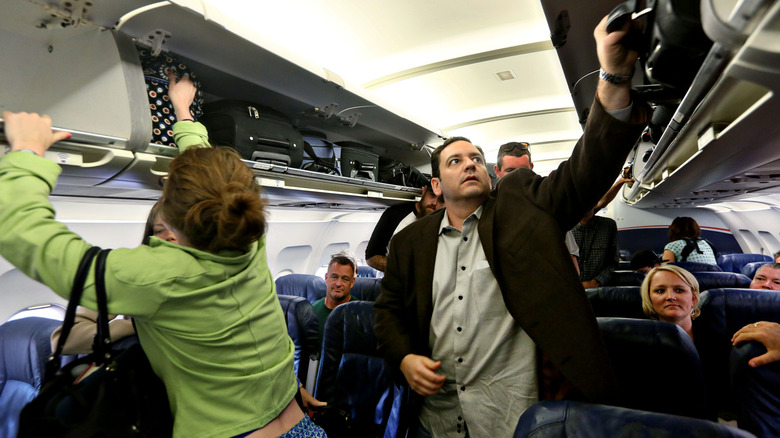
Boarding should be one of the simplest parts of flying: Find your row, put your bag away, sit down. Yet there's always someone who reaches their seat and suddenly realizes they need their headphones, sweater, water bottle, book, charger, and half the contents of the suitcase they just put in the overhead bin. But while this often speaks to a planning or packing fault more than anything, it also suggests a lack of awareness that can be tied to an inexperienced traveler.
Aircraft aisles are narrow, and boarding works best when people keep moving. One passenger standing in the middle of the aisle rearranging their belongings creates a line behind them almost immediately. Add a few people doing the same thing, combined with passengers trying to force oversized bags into already-full bins, and the process slows considerably. Worse still, some passengers embrace the annoying habit of going to the restroom during boarding, slowing down everything. Falling just a few minutes behind the scheduled boarding pattern could wind up with a significant delay — especially at a busy airport where runway slots disappear quickly. On the other side of that, getting everyone on board quickly could lead to an early take-off and landing.
I'm always ready to get settled in my seat the second I'm on board. My carry-on goes up, I sit down, and that's me. If I'm in the aisle, I'll wait to fasten my seatbelt, and if I'm at the window, I'm buckled up and anticipating this to be my position for the next few hours. I strive for minimal impact on my fellow passengers — and it's a good rule to follow.
Standing up immediately after landing
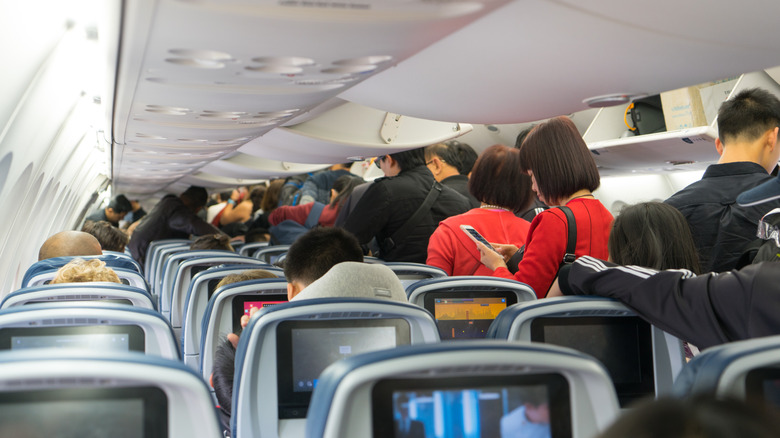
Standing as soon as the seatbelt sign goes off is something of a phenomenon in the airline world. You're left in confusion as half the aircraft springs to its feet, opens the overhead bins, pulls down its luggage, and then stands hunched awkwardly in the same place for the next 10 minutes.
Unless you're sitting close to the front or have an exceptionally tight connection, there's almost no benefit. The doors still need to open, passengers ahead of you still need to leave, and standing in row 34 doesn't somehow teleport you beyond the 150 people between you and immigration.
I understand the instinct after a long flight. You've been sitting for hours, and you want out of the metal tube. But staying seated for another few minutes is usually far more comfortable than standing bent beneath an overhead bin with a backpack wedged against your legs. When the rows ahead start moving, get up, grab your things, and go. You'll leave at almost the same time.
Crowding the baggage carousel
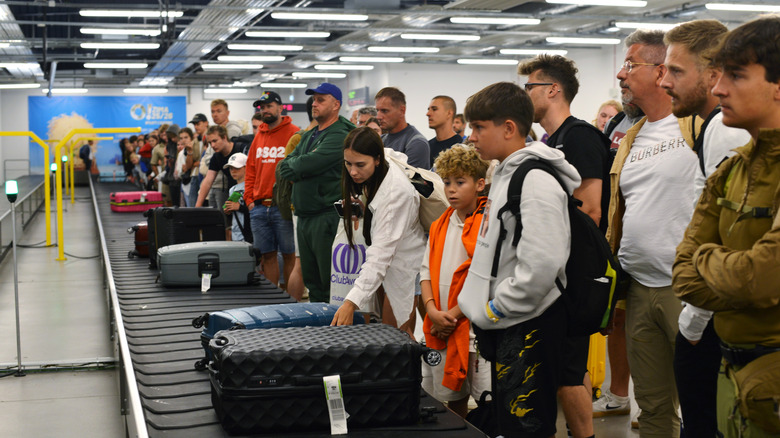
Another airport behavior that alerts everyone to your lack of frequent flyer status takes over at baggage claim. Instead of standing a few feet back and moving forward when their suitcase appears, novice flyers crowd directly against the carousel.
The irony, of course, is that this makes baggage collection harder for everybody, including the people doing the crowding. If everyone takes a small step back, passengers can actually see their luggage approaching, have room to move forward, and pull it clear. It's a frustration other travelers share, too. In one Reddit thread, a traveler pleaded with people to "stand back" and only step forward when their bag appears. Another commenter summed up the problem neatly: "You can't step forward when you see your bag because of the adults crowding the carousel." When there's a solid wall of bodies instead, you end up squeezing between strangers and trying to drag a 40-pound suitcase through their legs. And still, no one moves.
Generally, I stand way back and often move as far from the luggage slide as possible. Sure, I might have to wait an extra 30 seconds for my luggage to get to me, but I don't need to fight anyone for space or accidentally hit a toddler. Or try one of these effective ways to avoid long waits at the carousel and skip the chaos altogether.