
11 Biggest Things That Surprise Americans Visiting Canada
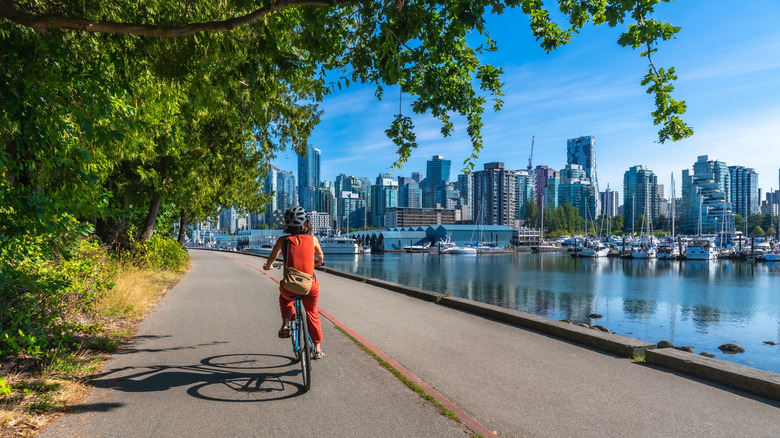
Canada is second only to Russia in terms of overall landmass at nearly 10 million square miles, although around 80% of it is essentially uninhabited, consisting of vast forests, mountains, ice, and tundra. Most people live in the south, roughly along the border with the U.S., which makes getting to some of the most popular areas fairly straightforward. Depending on what part of Canada you're visiting, however, it might feel like you're in a completely different country. It's not unlike the U.S. in that way, where accents and languages, architecture, and even just the sense of space can vary from coast to coast.
Below, discover 11 characteristics of Canada, and in some cases elements of specific regions, that visitors from America may find surprising. From cultural to natural to geographic qualities that make this such a distinctive place, you may find that some things seem quite familiar while others are a bit more unexpected. For example, saying "eh?" at the end of sentences or apologizing profusely in regular interactions might not seem too unusual to someone from the Upper Midwest, but it probably is more surprising for visitors from anywhere else in the U.S. If you're curious to learn more, there are some handy unwritten rules for visiting Canada that might help you prepare for a first visit.
To arrive at this list, we've drawn on the author's experiences visiting various parts of Ontario during a handful of trips. Most information has been drawn from other articles, blogs, Reddit discussions, and other social media posts to get insights from Canadians as well as American tourists who were wowed by things they encountered. Official data and practical information is sourced from a range of tourism sites, such as The Espresso Brief on YouTube, and government resources.
The scale of the country is incredible
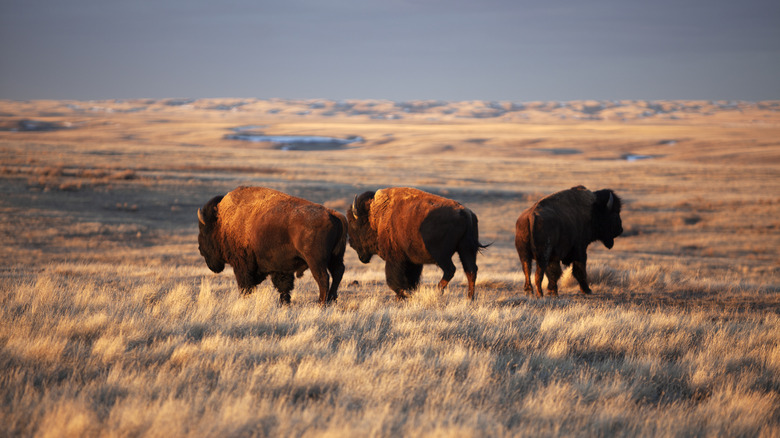
While it might seem a little odd to include a note about Canada's size in a list of what Americans will find surprising, as the U.S. is also a very large nation, Canada's sheer size is worth mentioning because many still don't really grasp its breadth. Some of this comes down to physical geography and some to its population density. Even some Canadians have a difficult time grasping the immensity of what's north of where the majority of people live, while east-west travel is a bit easier to comprehend with major cities and attractions like Banff National Park's majestic mountains spread along the southern Trans-Canada Highway system.
Compared to U.S. states, provinces are the Canadian equivalent. There are 10 provinces, plus three territories. The provinces each have their own independent levels of government, while territories are overseen by the federal government. In general, they're also much larger than U.S. states. The closest comparison is the U.S.' second-largest state of Texas, which spans 268,000 square miles, and Alberta, which clocks in at just a little more than 255,000 square miles — and that's mid-sized as provinces go.
Canada also has a population of about 41.4 million people, while the U.S. is well over 340 million, so population density has a lot to do with why Canada simply feels bigger. There's often more space between towns. Throughout rural Ontario, according to a Redditor, there's "Lots of Canadian Shield rock walls that make you feel like you're driving through the mountains, no towns for hours, and logging trucks that know the maximum speed they can go around each corner."
In the eastern provinces, milk comes in a bag
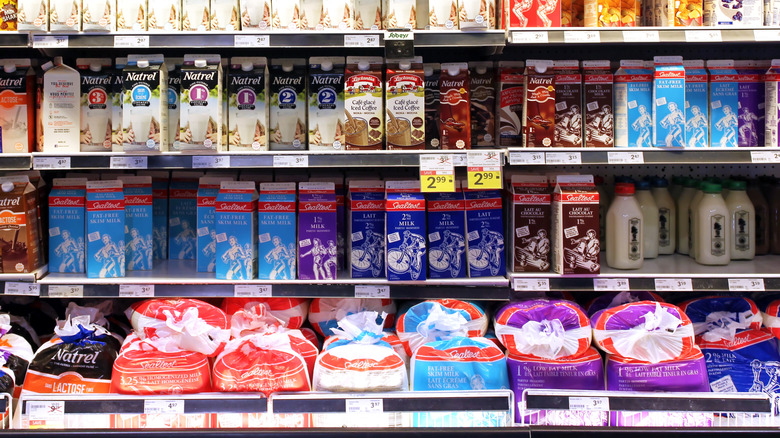
Americans most often think of milk as being sold in plastic jugs or paper cartons, but in some parts of Canada, that's not always the case. In much of Ontario, Quebec, and the Maritime provinces, it's sold in a plastic bag. "Bagged milk is only an eastern thing. Out west we find it just as weird," shares a Redditor. So why only in the east but not in the west? And why bags in the first place? Much of it comes down to the practicalities of changing manufacturing processes in the 1970s, when Canada switched from the Imperial measurement system to metric. It was simply easier to produce bags in a different size — typically 4 liters — than retrofit machinery designed to make containers by the quart.
Most people have a reusable pitcher at home to make storing the bag in the bag easier. The milk stays in the bag, tucked inside the pitcher, with the corner cut off to pour it. "Whenever I have American friends visiting, they think the milk in my fridge is totally ridiculous," CBC reporter Jonathan Pinto says in a CBC Radio cost-of-living segment.
Beer, wine, and liquor may only be sold at province-run stores
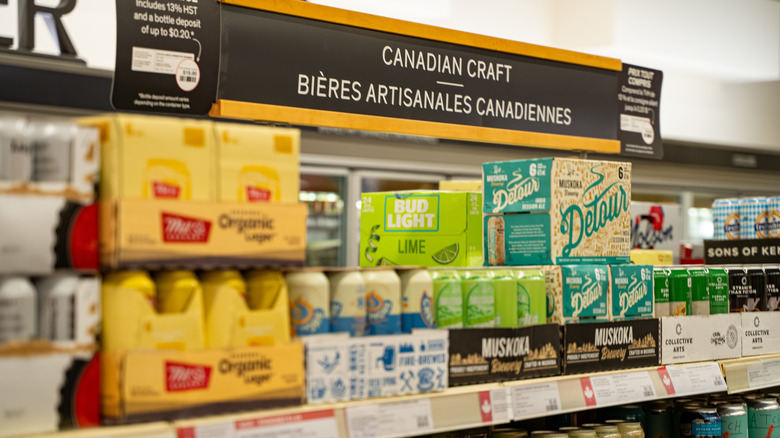
In the U.S., alcohol laws vary a lot by state, county, and tribal reservation. In Canada, there are similar variations from province to province as to where you can find beer, liquor, and wine, and in some cases, the government runs the stores. (These also often retail cannabis, which is legal across Canada — something that may also come as a surprise!) Depending on where you're visiting, you'll want to check local regulations before heading to the grocery store, or you may be disappointed. In Ontario, due to a legal update in the past few years, grocery and convenience stores with the correct license are able to sell beer, wine, cider, and canned cocktails, but to get spirits, you'll still need to head to an LCBO store, operated by the Liquor Control Board of Ontario.
In Quebec, liquor and wine are available through a province-owned corporation called SAQ, but beer and some wine can be purchased in supermarkets. In New Brunswick, the province's corporation called ANBL is the only retailer that can sell alcohol of any kind. And in many other provinces, such as British Columbia, Alberta, and Saskatchewan, it simply depends — you may be able to find some beer or wine in private stores that meet the licensing requirements, or you may find it in provincially owned stores. The time sales can be made also differs. Retailers can sell alcohol in Ontario between 7 a.m. and 11 p.m. every day, but in Nova Scotia, liquor sales from its NSLC corporation are available every day of the week, except they're only permitted between noon and 5 p.m. on Sundays.
Some things will feel very familiar, but with a twist
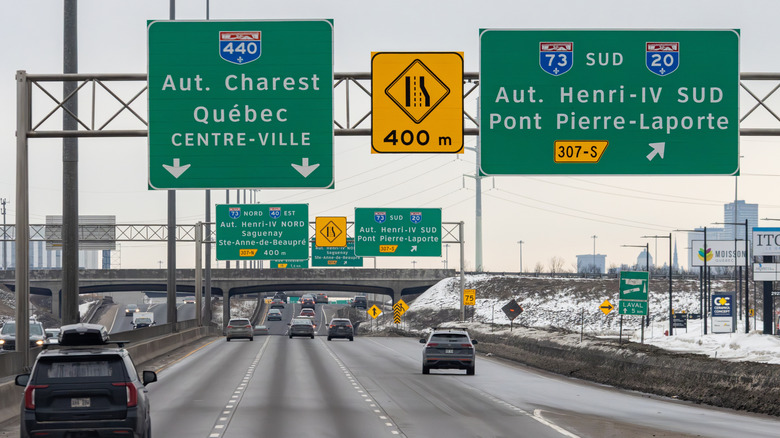
With similar accents, geographic features like the Rocky Mountains and wide-open plains, the Great Lakes, and architecture and infrastructure that generally don't look much different from what you'll see in the northern U.S., parts of a visit to Canada can feel really similar to being at home. But then you'll have these little surprise moments of, "Oh, right, I'm definitely across border," when you remember the difference in currencies, or you start seeing road signs in kilometers rather than miles, let alone French. And just like there are unexpected traits that Canadians notice about Americans, we notice traits, too, like their general politeness — more on that later.
You'll find many familiar brands in shopping centers, such as Walmart, Starbucks, and Home Depot, but you'll also encounter Canadian-owned companies such as Aritzia and Roots for clothing or Loblaws for groceries. And backing up just a step, it would be spelled shopping centre, as Canadians often incorporate some spellings from British English — but not all. It's a British Commonwealth country after all, and King Charles is on the Canadian $20 bill. It's another reminder that you're definitely not in the U.S. anymore.
Tim Hortons is a national treasure
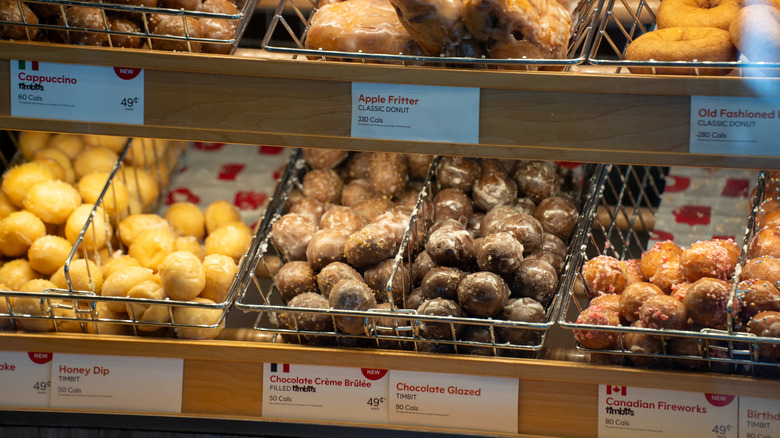
Every region and nation has its favorite chains. In the U.K., you might think of Costa and Caffè Nero for coffee. In the U.S., we love our Dunkin, mall favorite Gloria Jean's, and regional spots like 7 Brew or Caribou. In the Upper Midwest, Kwik Trip coffee is a go-to. All this is to say, for Canadians, Tim Hortons is one of the most prominent national chains you'll encounter. There are more than 4,000 locations across the country, and if you're from certain parts of the U.S., you might have also encountered it before — it has a presence in 16 states. It just may come as a surprise how "genuinely beloved" it is.
Canadians are proud of Tim Hortons, but just like, say, Starbucks, it's a colossal chain and opinions differ about its offerings and even its standing as an emblem of Canadian identity. Of course, people respect it when a successful company or program reflects community pride. It also has a good homegrown story: Tim Horton was a real guy — a hockey player who played for the Toronto Maple Leafs and opened his first shop in 1964 in Hamilton, Ontario, the "waterfall capital of the world." The company is still known for its coffee, bite-sized donuts called Timbits, and other pastries — and for being available just about anywhere.
You might hear a lot of French, and not just in Quebec

Quebec is best known as a French-speaking country, but to those who learned French from a teacher using, say, a Parisian accent, the French Quebecois speak may sound quite different. "I usually explain it to Americans as being similar to the difference between a Texan or Irish accent versus British English," says a Quebec native on Reddit who now lives in the U.S. "In school, we learn proper French, but in everyday life, we use our own slang. Beyond the accent, Québécois French is very anglicized." French is used commonly in the country and is the primary language of government and business, so many people are bilingual.
You will likely also read French road signs and see the language in other places beyond Quebec. "I'm not from Québec but New Brunswick, and most of the people in my town don't speak English," shares a Redditor. Tens of thousands of people also speak French in Ontario, Manitoba, and Nova Scotia, but you may encounter it anywhere. New Brunswick is the only officially bilingual province, and about 30% of the population speaks predominantly French. Overall, 22% of Canadians speak French as their first language, so brush up on your "Bonjour!" and "Merci!"
Politeness really is a common trait
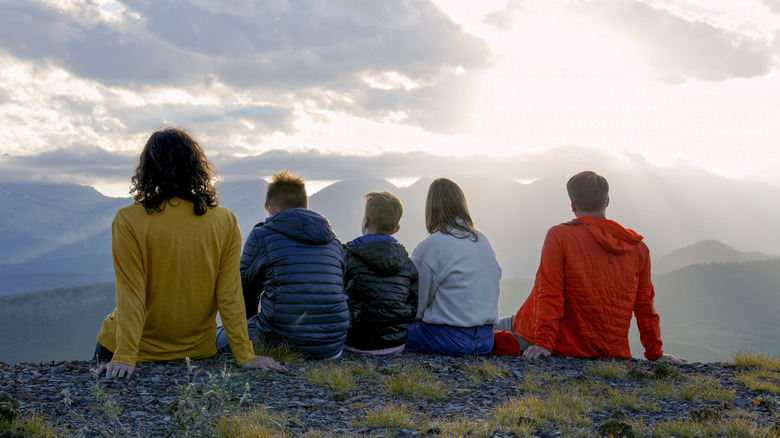
There's a bit of a stereotype about Canadians being nice all the time, or at least really polite. They tend to apologize a lot — "Sorry! I didn't see you there." — which is something Upper Midwesterners in the U.S. are also pretty familiar with. But the pleasantries and the general sense of kindness can sometimes surprise visitors, especially those from faster-paced urban areas where people don't make eye contact on the train or rush by one another too quickly for niceties. "I moved from Germany to Canada and the difference is huge," a Redditor says. "Germans for example don't compliment strangers, never before has someone told me that I have a nice shirt. Here it happens all the time."
Canadians are known to show courtesy in daily interactions, which includes being neighborly. In an area where the weather can be extreme, especially in the winter, and there are lots of small communities, people generally trend toward helping one another and being kind. There will always be people who really aren't nice, as there are anywhere, but for the most part, people are happy to share a kind word and lend a helping hand.
Canadian cities are clean and well-kept
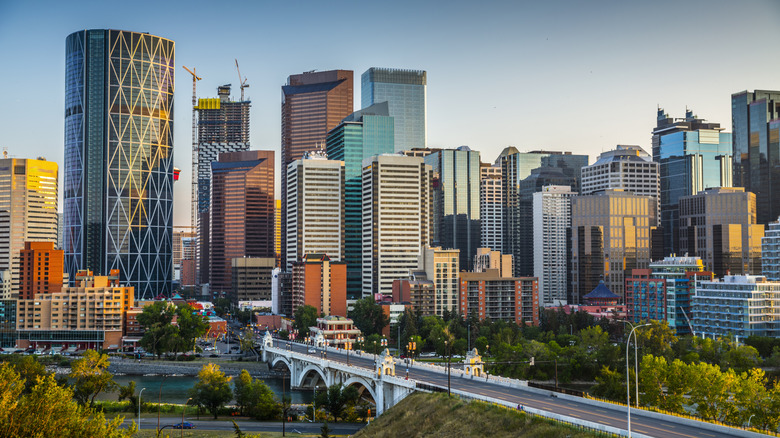
"Many Americans are pleasantly surprised by the appearance of Canadian cities," says a video on British YouTube channel The Espresso Brief. Calgary has a reputation for being one of the cleanest cities around, and it's a Canadian city that American expats are flocking to. The city has committed to having net-zero emissions by 2050 in spite of being located at the heart of the nation's oil and gas industries. Farther east in Toronto, which is the most populous city and quite spread out with numerous suburbs, there's generally not a lot of garbage around on the sidewalks, and it has nicely maintained streets and a general sense of good upkeep.
"One vivid sight that often stands out is seeing modern office towers sitting alongside waterfront parks, cycling paths, and public green spaces," The Espresso Brief adds. Compared to New York City, for instance, which is famous for a general kind of dinginess, it's a refreshing glimpse of tidiness. Many places are also quite eco-friendly, such as Quebec with its 99.8% reliance on energy from renewable sources. And as long as there's access to a recycling program, 97% of Canadian households make use of at least one.
Nature feels closer
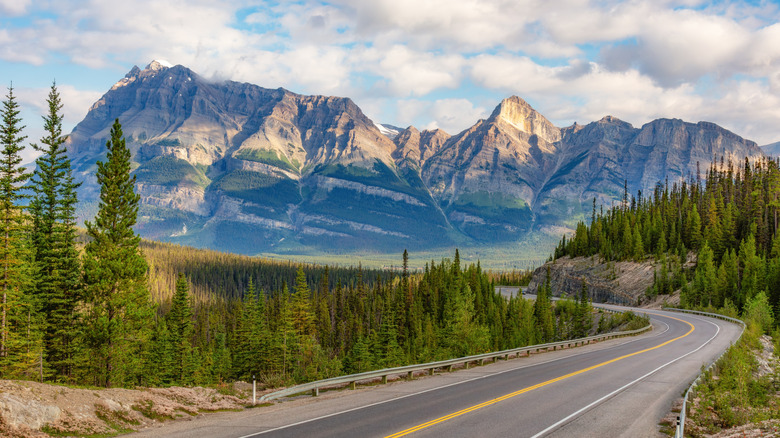
Canada brims with remarkable natural sights, from the stunning Grasslands National Park in southern Saskatchewan to the famous Banff and Jasper National Parks in the Rockies of Alberta. Many more of the nation's least-visited national parks are spectacular adventure destinations. Even outside of these formal boundaries, you'll find wide open spaces, sweeping mountains, and expansive, island-dotted coastlines. Vancouver is the "greenest city in the world" with walkable charm and mountains that rise just outside of the city. Black bears call the rugged landscape home, and orcas swim off the coast — just as they do on the Atlantic coast around Newfoundland and Labrador.
In Canada's western provinces, you may also see grizzlies, elk, mountain goats, and bison, and in many areas, it's not uncommon to see moose wandering across the road or a red fox scurrying amid the brush. Expansive provincial parks are wonderful places to experience unspoiled wilderness, such as Quetico Provincial Park in western Ontario, which will feel familiar to anyone who has canoed through the Boundary Waters in Minnesota, as they're just across the border from one another. What makes these sightings unique is that, in many parts of Canada, opportunities to immerse oneself in nature are usually not far. "Even Americans familiar with large national parks are often surprised by how quickly major cities connect to forests, mountains, lakes, and open wilderness," says a segment from The Espresso Brief.
Forget football, the fun's on the ice

Many Americans may be reared on high school football and NFL Sunday games, or perhaps you're a fan of the fast-paced hardwood court experience of the NBA. Canadians take their love of sport out on the ice. Hockey is a huge source of entertainment for many, and it's deeply tied to national identity. "When you go to a public ice skating rink the US and rent skates, you get figure skates," shares a Redditor. "When you rent skates at a Canadian public rink, you get hockey skates."
Partly due to the milder climate, hockey is marginally less of a big deal on the West Coast, but everywhere else, it's a beloved sport. Canada has six teams in the NHL, and kids grow up playing it in dedicated ice rinks or wintertime installations in their communities. "If you lived in a neighbourhood you played street hockey with the other kids," shares another Redditor. "Most people I knew had a net set up in their basement to play slapshot regatta at the very least and depending on space, floor hockey." If you're in Montreal, visit Centre Bell to see the Montreal Canadiens play, or in Toronto, catch the Maple Leafs at Scotiabank Arena.
You've heard of poutine, but what about a Caesar cocktail?

Canada is home to some delightful if unexpected culinary concoctions, not least the cheese curd-topped pile of fries with brown gravy known as poutine. It's a flavor combination that many Americans have a hard time wrapping their heads around at first, partly because gravy and fries are already an unusual combo, but cheese curds, too? Then there's All Dressed potato chips, which combine barbecue, salt and vinegar, and sour cream and onion flavors in one bag. And have you heard of a Caesar cocktail? It's a cousin of the Bloody Mary, except it's made with Clamato — tomato and clam — juice instead of straight-up tomato.
There are plenty more unique national nibbles well worth scouting out on a visit, or simply taking inspiration from so you can make them at home. Nanaimo bars are a classic, named after the British Columbia city. They're no-bake, with a chocolate-coconut base, custard icing in the center, and straight-up chocolate on top. Butter tarts are a holiday treat with a caramelly, gooey center, and did you know that most of the world's Swedish Fish are made not in Sweden but in Hamilton, Ontario? Keep your eye out for unique Canadian sweets on supermarket shelves, like the Ding Dong-like cakes called Jos Louis or chocolatey Coffee Crisp candy bars.