
America's 10 Best German-Inspired Destinations To Celebrate Oktoberfest
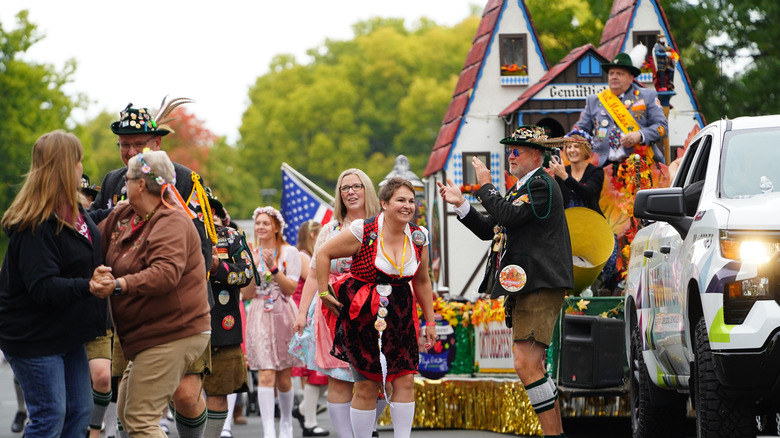
Every fall, long before the last keg is tapped in Munich, a parallel Oktoberfest season spills over the United States, and the celebrations are almost as varied as the brews they serve. From reinvented logging towns in the Cascades to riverside parks in Cincinnati, mountain resorts in Utah, and communal villages built by 19th-century Pietists in Iowa, the celebrations reveal how thoroughly, and sometimes strangely, America has absorbed German traditions. Waves of German immigrants fleeing economic hardship and political upheaval in the mid-1800s settled across the Midwest, the Northeast, the Mountain West, and elsewhere, creating communities whose traditions would endure for generations. A later wave of immigrants arrived after World War II, while refugees fleeing Nazi persecution added another, very different chapter to the German-American story.
Some towns wear that heritage as lived history, while others deliberately reinvented themselves in a German style. In one city, Oktoberfest can mean a 300-foot fest tent and a dachshund race; in another, it's Austrian lager beneath the Green Mountains, or a glockenspiel chiming over a prairie town where a distinctive German dialect is still spoken. The common threads are the steins, the polka, the dirndls, and the lederhosen — all part of that quintessential German sense of "Gemütlichkeit".
As these festivals fall at different points across the season, some on this list are still to come this year, while others are worth bookmarking for next fall. You'll find those that earn their spot through sheer scale — the kind of Oktoberfest that swallows a city for a weekend — and others that hold onto something more enduring in their history, long after the "zelte" (tents) have come down. There are also those that pack in everything, all at once. We kept the focus on that spectrum, incorporating celebrations both big and small, with traditions that are reinvented, inherited, or a little bit of both.
Oktoberfest Zinzinnati, Ohio
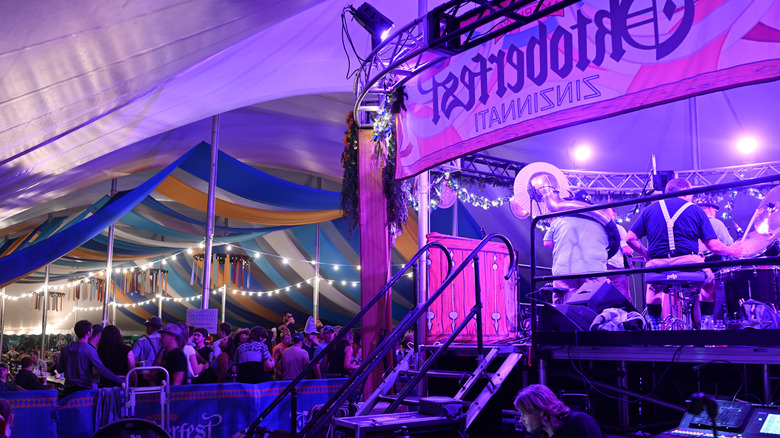
As the largest Oktoberfest in the United States, and one that celebrated its 50th anniversary in 2026, this is a natural opener for this list. The Oktoberfest Capital of America has been home to this festival since 1976, when the German-American Citizens League proposed it to celebrate the nation's bicentennial and honor the city's deep German settler-roots. Held every year since, it has grown into the second-largest Oktoberfest in the world after Munich, typically drawing 700,000 to 800,000 attendees over four days (as reported by Fox19). Shaped over five decades by Cincinnati's German societies, Zinzinnati Oktoberfest features community leaders, performing artists, volunteers, and sponsors, and remains the city's most unambiguous expression of its German heritage.
The recently concluded golden-anniversary celebrations earlier saw the debut of a two-story glockenspiel biergarten and a 31-foot bell tower with a clock overlooking the festival grounds. Among the events were the Samuel Adams' Stein Hoisting Competition and the 14k/7k Brewery Run, which took runners past historic brewery sites and along routes once used by horse-drawn carts to transport beer to riverboats bound for trade. There was also the much-loved Running of the Wieners dachshund race and the world's largest chicken dance. Alongside Bavarian pretzels and local specialties like goetta cheese fries, smoked mettwurst, and spicy halusca, attendees could also choose from 25 German and domestic beer vendors, including the Samuel Adams Oktoberfest Zinzinnati 50th Anniversary Lager, launched at the festival this year.
Zeeco Oktoberfest, Oklahoma
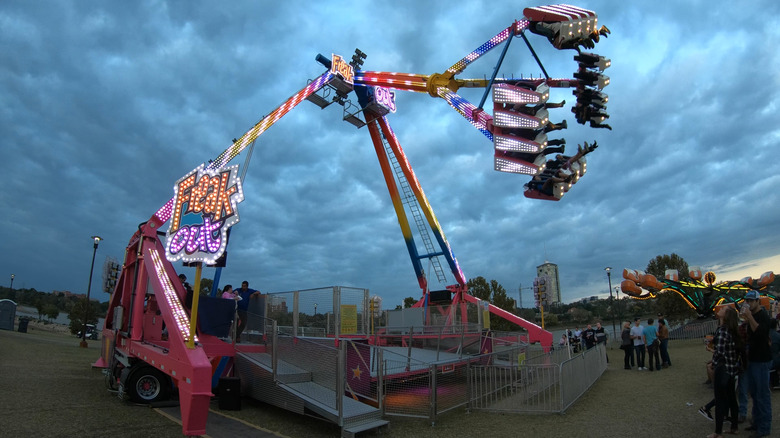
For the third year in a row, Zeeco Oktoberfest in Tulsa has taken the top spot in USA Today's annual Oktoberfest rankings. Each year, tens of thousands of visitors gather in 11 tents and stages spread across 140,000 square feet, with over 300 taps pouring German and domestic beers. This year, the festival kicks off on October 22 and will feature a lineup of German and polka music acts, including Das Glockenspiel and Dorfrocker, along with Ohio's very own Chardon Polka Band, keeping the Zelte bouncing with polka rhythms all through the weekend.
Families will also have a lot to look forward to, with carnival rides, a Jugendzelt (Children's Tent) exclusively for youngsters, and a dedicated Family Free Day on Friday that follows right after Friends and Family Night. For those here for the competitions, the games bring their own thrills, from the intense MassKrug Carry to the comical chaos of the Dachshund Dash, the tension of the Bier Barrel Race, and the wobbly-legged endurance of the Strong Stein competition.
A selection of German and Central European specialties fills the food counters with Bavarian cheesecake, schnitzel sandwiches, bratwurst paired with sauerkraut, Polish sausages, knackwurst, and much more, leaving attendees spoiled for choice. With its distinctly Oklahoman take on Bavarian traditions, Tulsa might just be the best city to celebrate Oktoberfest in America.
Helen Oktoberfest, Georgia
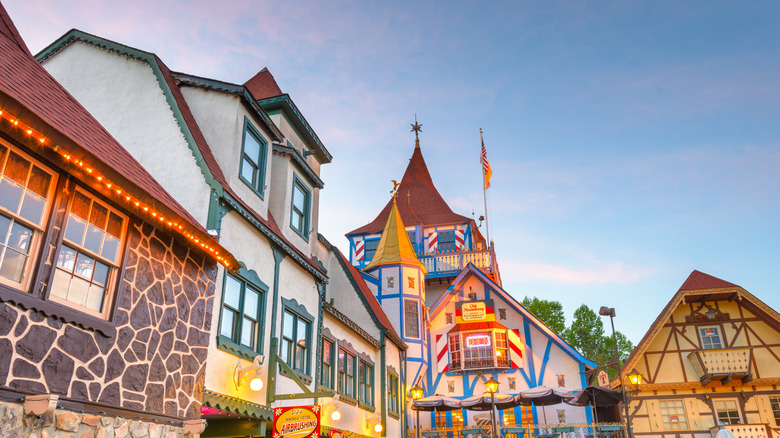
Unlike most Oktoberfests that span over a long weekend, the celebration in Helen, Georgia, goes on for well over a month, running from mid September through early November at the Festhalle. This little Alpine village, sitting in pretty the Blue Ridge Mountains, holds the distinction of being the longest-running Oktoberfest in the United States (according to the Helen Chamber of Commerce), having hosted its first edition in 1970. A former timber town in economic decline got a needed makeover when a group of local businessmen consulted John Kollock, a local artist and set designer, who proposed transforming Helen into a Bavarian-style village.
Kollock drew from his own military experience serving in Germany to redesign the town's business district, his vision transforming the hitherto humdrum streets and storefronts into a village modeled on Bavarian Alpine architecture. Its detailed splendor emerged in new cobblestone paths, landscaping, half-timbered walls, murals, and other Alpine embellishments. The transformation soon paid off, with visitors flocking to Helen's freshly reimagined streets and reviving businesses that were on the verge of shutting down. More than half a century later, this Blue Ridge village sees footfall of over 2 million tourists each year, according to the Alpine Helen Georgia guide, with its specialty shops and restaurants keeping the Bavarian vibes going year-round.
Oktoberfest is arguably the peak of it all. As a festive parade kicks off the season, Festhalle sets the tone with traditional German music, a host of Bavarian delights such as wurst, schnitzel, and spätzle, washed down with German and domestic beers. Visitors in dirndls and lederhosen turn up the Bavarian charm, and this year they get the chance to show off with a purpose at a costume contest on Halloween Night, a new addition to the festivities in 2026.
Mt. Angel Oktoberfest, Oregon
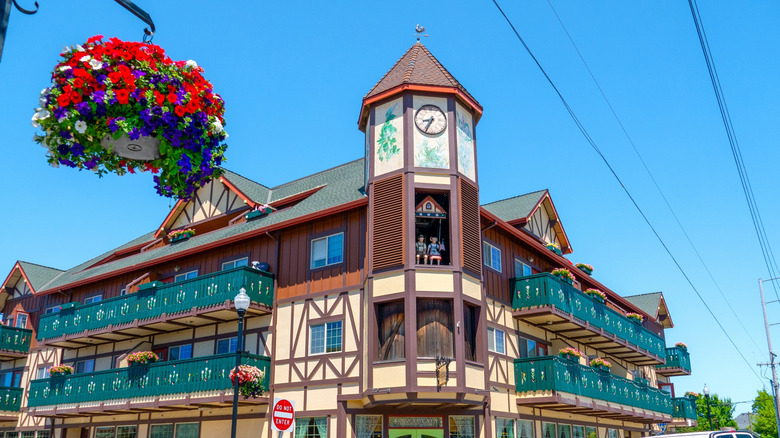
Tracing its origin back to September 1966, the Mt. Angel Oktoberfest had grown into the largest folk festival of its kind in the Pacific Northwest by the mid-80s. The attendance climbed from roughly 39,000 in its first year to over 375,000 in 1989 (as per the Oregon Encyclopedia); not bad for a festival run entirely by volunteers and managed by a nonprofit corporation. A "Webertanz" (Weaver's Dance) is performed by the town's children each day at noon, with the rest of the events spread across distinct zones. The festival spreads across a collection of themed venues, from the music-filled Alpinegarten and Biergarten to the family-friendly Kindergarten and the Bandstand, where the Webertanz takes place.
At the heart of the fetsival is a 49-foot high glockenspiel, built in 2006 and the tallest of its kind in the United States. It's accompanied by a 20-foot Fruchtsäule, an obelisk decorated each year with the new harvest. Since 2000, the community dinners here have dished out up to 20,000 servings of sausage and sauerkraut annually. Most of the festival remains free to attend, but the Mt. Angel Oktoberfest has contributed over $3.5 million back to other nonprofits since its inception. Add to this a wide assortment of German food, and this Oktoberfest brings its own character to Mt. Angel, Oregon's Bavarian-style mountain city.
New Ulm Oktoberfest, Minnesota
For one of the most authentic German experiences in the country, New Ulm Oktoberfest may well be the choice of many, having earned its stripes over several decades. The town has held on to its heritage closely ever since it was founded in 1854 by German immigrants associated with the Chicago Land Society, so much so that it's still known as the most German city in America (according to the New Ulm website), where traditions stretch well beyond its Oktoberfest celebrations, having been passed down from generations.
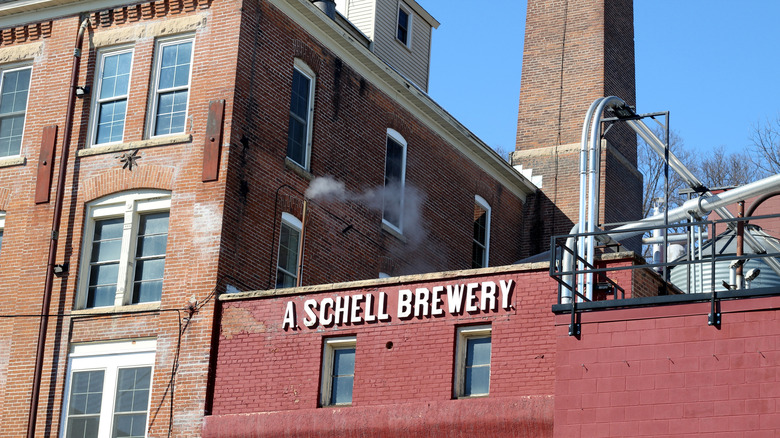
Towering over the town's skyline is the 102-foot-high Hermann Monument, erected in 1897 and modeled on the famous Hermannsdenkmal near Detmold, Germany, honoring the Germanic chieftain Arminius, nicknamed Hermann. The monument was designated by Congress in 2000 as a national symbol of German heritage. New Ulm's brewing pedigree runs just as deep; it's home to Schell's Brewery, founded by German immigrant August Schell in 1860, the oldest brewery in the Midwest and the second-oldest family-owned brewery in the country, according to its website.
All this heritage converges each fall at one of the largest Oktoberfest celebrations in the state, spread across two weekends and multiple locations, with this year's festivities starting on October 2. Expect local beer, live music, polka dancing, and this year's new marquee event, the U.S. Steinholding Association Minnesota State Championship Finals.
Frankenmuth Oktoberfest, Michigan
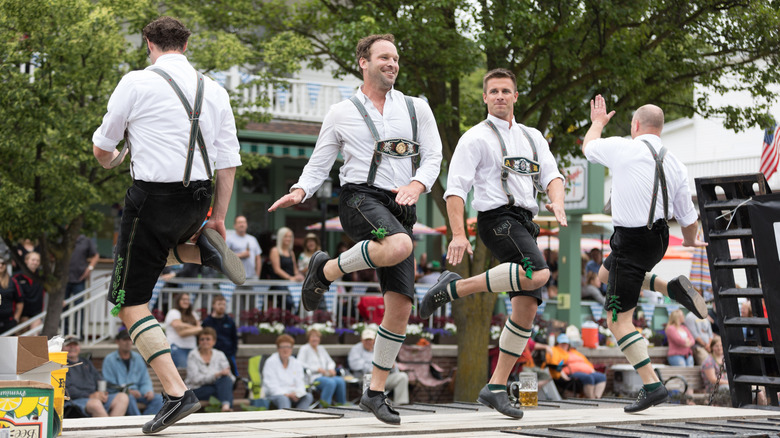
This Oktoberfest must be doing something right, as it is the only Oktoberfest in the U.S. sanctioned by the German government, as reported by Mid Michigan Now. Michigan's "Little Bavaria" started its Oktoberfest journey in 1990, marking the fall of the Berlin Wall. In 1996, Munich's Lord Mayor Christian Ude and the German Parliament issued an official proclamation recognizing it as the first Oktoberfest outside Germany to bear Munich's endorsement (according to Secret Detroit), and this also brought a significant beer connection. Munich's Hofbräuhaus became the official sponsor, and Frankenmuth Oktoberfest became the first American festival to import Hofbräu beer directly from Munich.
Founded in 1845 by 15 German missionaries, Frankenmuth today welcomes more than 3 million visitors a year, according to the town's tourism website, many of whom want to get a closer look at its Fachwerk architecture and distinctly Bavarian downtown. The 2026 Oktoberfest saw a full lineup of German bands and dance troupes, kicked off by the official keg tapping on opening night, and followed by the beloved Wiener Dog Races, where up to 100 costumed dachshunds competed for titles like Best Dressed and King & Queen of the Wieners. Four days of good food, flowing Hofbräu beer, live music, and dancing bring Michigan's unique festival full of Bavarian charm to life, one that's an easy weekend getaway from Detroit.
Snowbird Oktoberfest, Utah
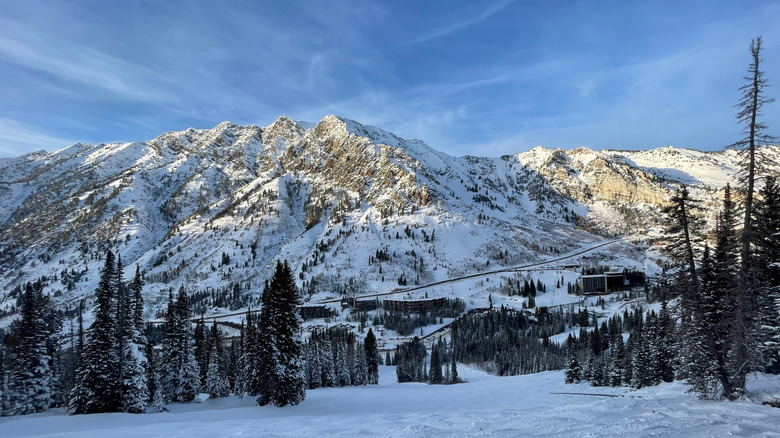
The scenic Wasatch Mountains along Little Cottonwood Canyon lend a majestic backdrop to Snowbird Oktoberfest, one of the oldest and largest in Utah. Snowbird, an idyllic getaway known for spas and outdoor fun, opened in 1971 and held its first Oktoberfest the following year. It is said that two Bavarian accordion players helped inspire the festival after being struck by the resemblance of the surrounding peaks to their German homeland. The resort enthusiastically welcomed the idea, and what began with a few tables and a single large barbecue on the plaza has grown into a 10-weekend celebration that draws more than 60,000 visitors annually, according to Visit Utah. The 2026 edition runs from August 8 through October 11.
More than five decades in, Snowbird offers more than 50 varieties of German-style beers and beers made by local Utah brewers. While the bratwursts get grilled, the air fills with smoky aromas and the sharp tang of sauerkraut, laid out alongside other Bavarian staples like spätzle and apple strudel. Dialing up the Deutsch is a Marktplatz village with offerings from dozens of local vendors and free alphorn demonstrations on Chickadee Hill. Against this backdrop, oompah rhythms and yodellers fill the air, every detail recreating a little but vibrant piece of Bavaria in the Wasatch Mountains, just as the two accordion players are said to have envisioned.
Amana Colonies Oktoberfest, Iowa
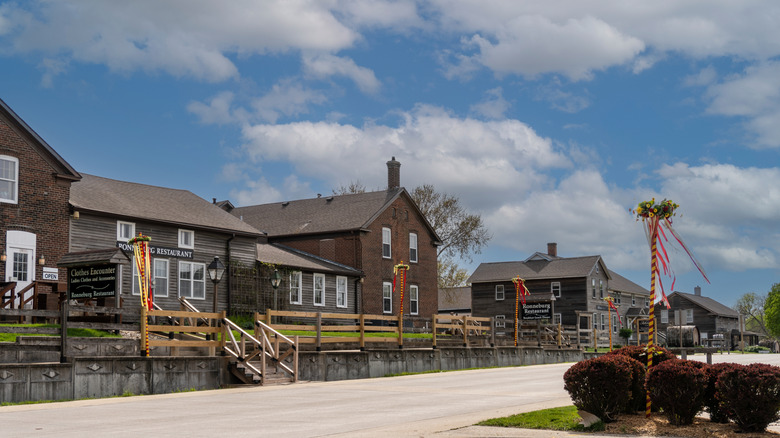
A far cry from America's mega-sized Oktoberfest celebrations, the Amana Colonies Oktoberfest offers a more heritage-focused, small-town take on the festival. Now in its 61st year, the four-day festival starts October 1 and is Iowa's oldest and among the oldest in the country, as Amana Heritage Society executive director Jon Childers told the Iowa Podcast. The seven villages that make up the colonies were founded between 1855 and 1861 by German religious separatists who left Europe and established a communal society where residents shared kitchens, labor, and land. This was the case until 1932, when the Colonies abandoned the communal system in favor of private ownership.
According to Radio Iowa, a small baseball park in Middle Amana was the venue for the colonies' first Oktoberfest back in 1965. Today, the festival draws an estimated 30,000 to 40,000 visitors over the weekend to the sprawling Festhalle Barn, with an official keg-tapping ceremony and a host of German bands and dancers bringing the Colonies to life. A festive Saturday parade that unfolds across the villages is anchored by a theme each year, with the 2026 theme being "Harvest Moon". Competitive contests run strong too, with keg toss, log-sawing, Nagelhauen (nail-driving) challenges, and also a yodeling contest for the musically inclined. The beer here is provided largely by Millstream Brewing Co., Iowa's first post-Prohibition brewery, which opened in 1985 and still pours beers unique to this region. If you're looking to experience authentic German culture in a thriving Midwest community, where better than here?
Trapp Family Lodge Oktoberfest, Vermont
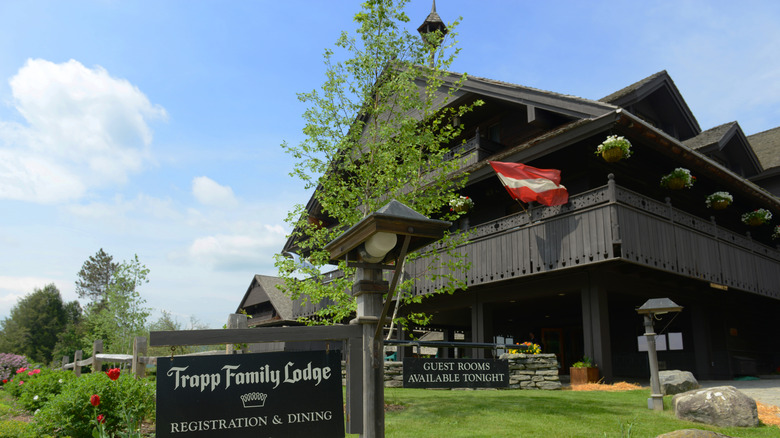
This is one entry on the list with a rather unusual connection to Hollywood. The von Trapp family — the real people behind the iconic musical "The Sound of Music" — fled Nazi-occupied Austria in 1938 and toured the United States as the Trapp Family Singers before eventually settling on a farm in Stowe, Vermont, and opening their 27-room family home to guests in the 1950s. The current 2,600-acre resort is the state's nostalgic stay with four-season activities, rebuilt following a devastating fire in 1980.
Beer, however, entered the picture more recently. The family began brewing lager on-site in 2010, and by 2014 had scaled production from 2,000 to 50,000 barrels a year, according to Seven Days Vermont. This paved the way to the opening of the von Trapp Brewing Bierhall, an Austrian-style beer hall perfect for hosting Oktoberfest. The annual celebration takes place in September, with the Green Mountains as the backdrop to Austrian-inspired food paired with von Trapp's own lagers and a ceremonial keg tapping, with Inseldudler providing an oompah soundtrack. Trachten costume and stein-holding contests add a competitive streak to the day, resulting in a distinctly von Trapp take on Oktoberfest: Austrian beer and food, German festival traditions, and a Vermont mountain setting.
Leavenworth Oktoberfest, Washington
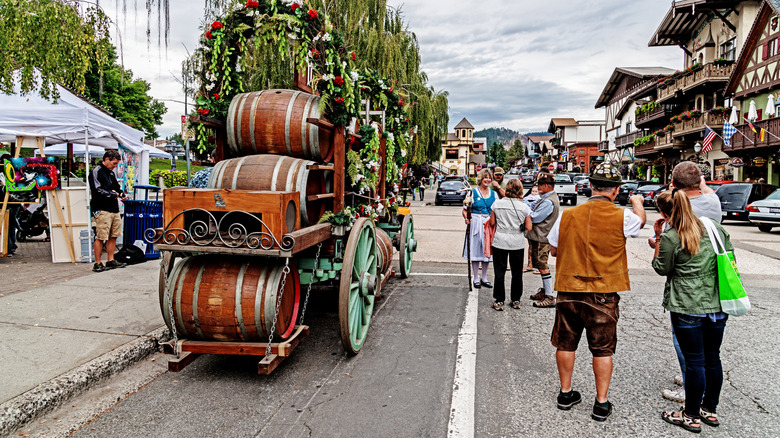
Unlike other American towns and villages with deep ties to Germany, Leavenworth started out very differently. By 1890, settlers had founded a trading post known as Icicle Flats, but it could hardly have been further removed from the Bavarian character of today. The town boomed with the arrival of the rail line, only to nearly die when the railroad moved to nearby Wenatchee. In 1962, local community leaders set out to bring it back to life, eventually landing on an ambitious vision to remake the entire downtown as an Alpine Bavarian village, using the surrounding Cascades to evoke the Bavarian Alps. Half-timbered facades and Alpine signage went up block by block until the town began to resemble a picturesque Bavarian village.
Today, Leavenworth draws over 3 million visitors a year (according to Fox13 Seattle), its deliberately constructed heritage now an established reality. Over three weekends starting October 2, the 2026 Oktoberfest will take place across the Leavenworth Festhalle and Front Street Park, with fresh brews from local breweries available alongside vintage German imports. The festival even gets its own ale this year, with local breweries joining forces to brew something unique for the occasion. Families can also head to the 10,000-square-foot Kinderplatz for more games and activities, a root beer garden, and a 62-foot Ferris wheel.