
9 Walkable Midwest Cities Where You Can Retire Without A Car
One thing the Midwest isn't necessarily known for is being a place where you don't need a car. Unlike densely populated regions like New York, Seattle, or San Francisco, much of the Midwest is expansive and rural — which is precisely its appeal for many. But if you're looking to ditch the car in retirement so there's one less thing to worry about (and pay for), there are still some great options throughout the 12-state region that make getting around easy enough by other means, namely walking, biking, and hopping on public transit.
If you choose specific neighborhoods or stick close to downtown districts and universities, where amenities are designed to be easily reached on foot, you'll find quite a few options to choose from across the Midwest. Chicago, for example, has numerous areas that could fit the bill, and thanks to its robust public transportation system, it's easy to reach other parts of the city. Other places are smaller and more contained, such as mid-size university towns that attract retirees for their cultural events and plenty of opportunities for intellectual stimulation. Below, discover nine cities across a range of states, each with its own character and attributes that make it a standout for car-free living, not to mention living comfortably and keeping busy.
In addition to the author's experiences in nearly all of these cities — she's also a Midwest native — we've referenced sites like Close.city, WalkScore.com, and SafeStreets.com to compare each place's ease of getting around. We researched individual public transit networks to get a sense of each city's connectivity, and we've also focused on regional tourism sites, city-specific retirement resources such as those published by the municipalities or real estate agencies, plus Reddit threads to get locals' perspectives.
Chicago, Illinois
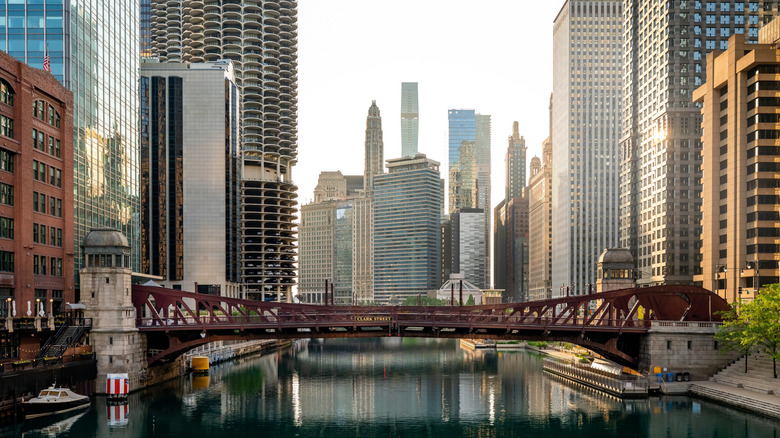
Chicago is, hands down, the most walkable city in the Midwest where foregoing the car is not going to make life difficult. It has numerous neighborhoods and suburbs where essential amenities like supermarkets are within easy reach of residential areas, not to mention wonderful local hubs with restaurants and boutiques. The suburb of Oak Park is a walkable village with small-town charm and immaculate architecture, while neighborhoods closer to the center — known as The Loop — also provide great transit links. Lincoln Park sits just north of downtown, nestled along Lake Michigan, and the Lakeshore Trail is an immensely popular place to stroll or jog along the water. Old Town is a nearby gem with historic architecture and charming streets. There are many others: Wicker Park, Bucktown, Lincoln Square, Logan Square, and more.
There's also The Loop itself, which is defined by the Chicago River and the circular route of the Chicago "L" — a play on "elevated" — operated by the Chicago Transit Authority (CTA). The system also includes more than 40 bus routes. Use these to get to The Art Institute of Chicago, where seniors receive discounted admission (it's only $14 if you're a Chicago resident). Many other museums offer senior discounts, plus numerous free days throughout the year for residents. Dip into the stores on Michigan Avenue, known as the "Magnificent Mile," and take advantage of myriad stage performances in theaters throughout the city. Chicago's dining scene is also fantastic, with more options than you'll know what to do with, covering everything from authentic tacos to legendary pizzas to the city's iconic hot dogs with pickled sport peppers, mustard, relish, and more — just don't ask for ketchup — it's not the Chicago way.
Minneapolis, Minnesota
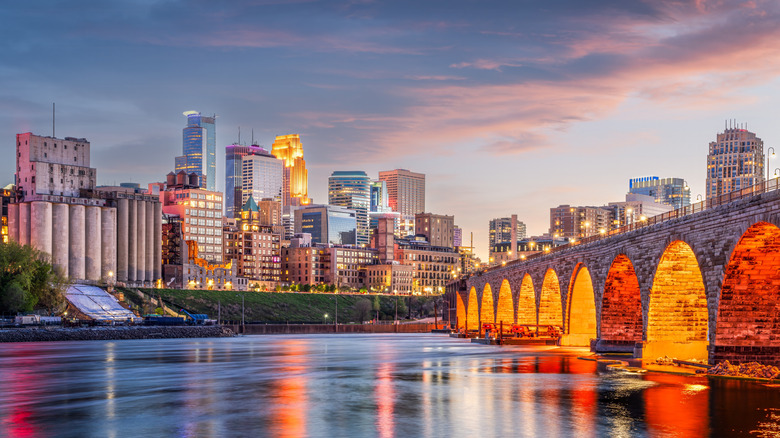
Minneapolis is the jewel of eastern Minnesota, hugging the banks of the Mississippi River and claiming some of the Midwest's most interesting architecture. It's much smaller than Chicago, with a population of around 430,000 residents, but that's only part of the story. Along with the state capital of Saint Paul right next door, Minneapolis is one of the Twin Cities, so the metro area is actually closer to 3.76 million. That means you'll have access to a robust public transit network that connects the two cities, known as Metro Transit, which provides light rail, buses, and rail connections. Saint Paul is also on Amtrak's Borealis route, which connects to the nearby Minnesota cities of Red Wing and Winona along the Mississippi River before ultimately arriving in Chicago.
Minneapolis' downtown is very walkable and ideal for apartment living, with office buildings and hotels nearby. Adjacent neighborhoods are great for getting around on foot, such as Loring Park, North Loop, the Mill District, and Lowry Hill East with its historic homes. The Mill District connects via the stunning Stone Arch Bridge to the opposite side of the river, providing great views and opportunities to walk or bike to Father Hennepin Bluff Park. Just southeast of here is the University of Minnesota campus, which means tons of shops and great eateries to choose from, including the longstanding Al's Breakfast in Dinkytown. Back around the Loring Park neighborhood, stroll through its namesake green space around Loring Pond, discover art in the Minneapolis Sculpture Garden, or attend an exhibition or event at the Walker Art Center.
Ann Arbor, Michigan
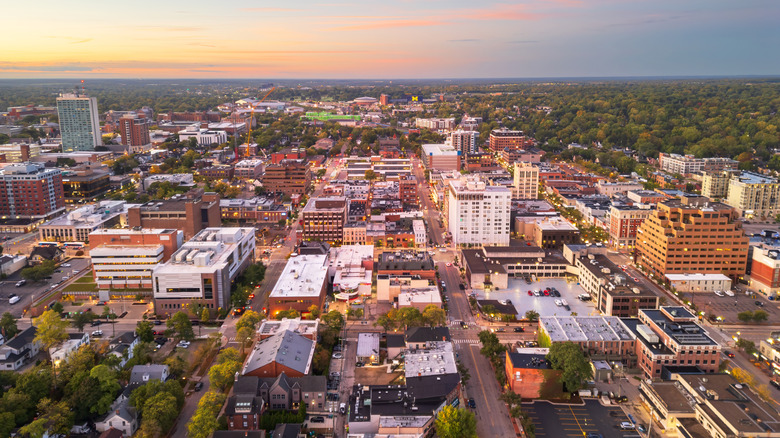
No list of walkable Midwest cities for car-less living would be complete without a thriving university town like Ann Arbor, sometimes fondly referred to as "A2" for its double As. It's a walkable hub with riverfront trails and a charming downtown — an inviting, smaller city that's served by Ann Arbor Area Transportation Authority, also known as TheRide, which links parts of the surrounding area, including Ypsilanti. Downtown and the campus area are most walkable. "Ann Arbor has a lot of parks, both within neighbourhoods and connecting neighbourhoods," shares a Redditor. "My biggest recommendation for you honestly if you're looking for that sort of walkability is to mostly look within city limits. The townships (and Plymouth, Northville, etc.) are much less walkable."
If you love to be active, walk or bike along the 43-mile Border 2 Border Trail (B2B) when the weather's nice. Take in nature's bounty at the Matthei Botanical Gardens and Nichols Arboretum at UMich, or attend a workshop or regular meetup at the Ann Arbor Senior Center, where you can join others for Scrabble, music, coordinated walks in local parks, or simply "The Weekly Mingle," among many other events. When the grandkids are visiting, take them to the Ann Arbor Hands-On Museum, or visit a wide range of exotic animals at The Creature Conservancy. In town, you'll find numerous options for food and drink, including longstanding favorites like Knights Steakhouse on Dexter Avenue and the renowned Zingerman's Delicatessen, where you can order a craft sandwich or grab gourmet groceries to go.
St. Louis, Missouri
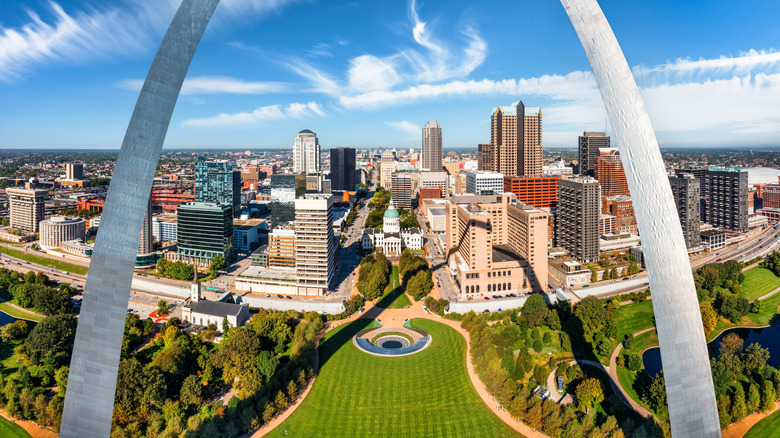
As Missouri's second-largest city nestled along the western bank of the Mississippi River, St. Louis is a culture-filled urban hub, and it's a bit milder temperature-wise than some of the more northerly options like Minneapolis and Madison — although it can still get cold in mid-winter and will get hot and humid in the summer. Downtown is one of the most walkable areas, as it's condensed with many businesses, apartment buildings, and other amenities, including architect Eero Saarinen's iconic Gateway Arch and its riverside park. Additional walkable areas include The Delmar Loop and the Central West End. "Central West End would certainly be at or near the top of any walkable neighborhoods list," says a Redditor. "Housing, grocery, and bar/restaurant/entertainment all self-contained within the neighborhood."
Metro is St. Louis' primary public transit provider, with a bus and light rail system called MetroLink, plus a paratransit program called Call-A-Ride and an on-demand shared-ride service bookable using an app called Via Metro STL. Use it to get to fantastic cultural institutions like the St. Louis Art Museum and the Pulitzer Art Foundation, not to mention performance venues like Powell Hall, home of the St. Louis Symphony Orchestra. Busch Stadium, where you can catch the St. Louis Cardinals playing other MLB favorites, is right downtown. After a game, tuck into barbecue at Salt + Smoke at Ballpark Village, where you'll also find several other eateries, plus the Cardinals Hall of Fame and Museum.
Madison, Wisconsin
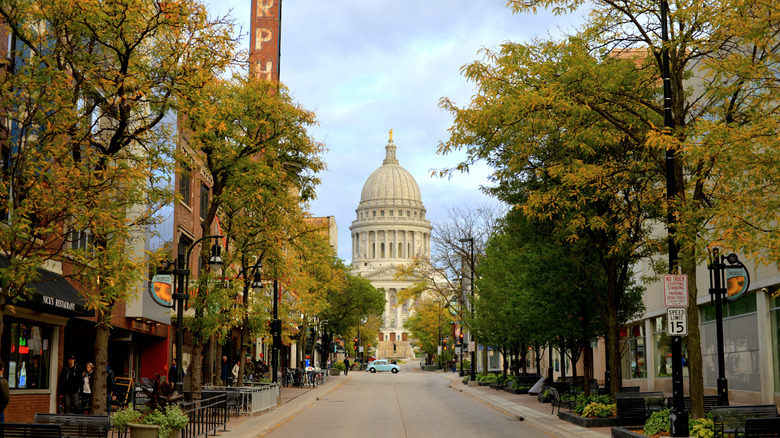
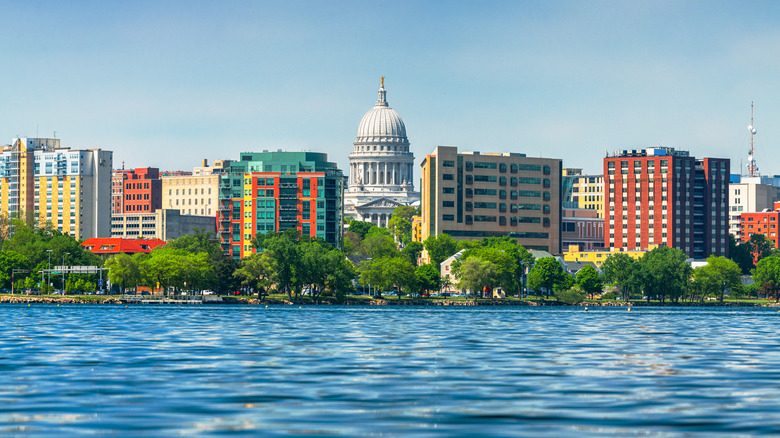
Wisconsin's capital, Madison, is also home to the University of Wisconsin and some of the state's most pedestrian-friendly areas. Its downtown occupies an isthmus between two picturesque lakes — Lake Mendota and Lake Monona — which offer plentiful recreation in the summer and dozens of miles of multi-use paved paths for walking and cycling, making it the "biking capital of the Midwest." Buses connect many places, and downtown is eminently walkable, especially along the State Street pedestrian corridor that connects Capitol Square to the university campus. On Saturdays during the warmer months, the giant Dane County Farmers Market takes over the square, which is also a great place to grab a bite to eat at one of many restaurants or relax with a drink. Explore the holdings of the city's robust public library network or attend an exhibit as part of its Bubbler arts program. Then take advantage of social events at Madison Senior Center, where you can discover everything from walking stick woodworking to fitness classes.
Madison prides itself on its characterful neighborhoods, many of which are very walkable, such as the Marquette-Willy Street area, Schenk-Atwood-Starkweather-Yahara (SASY), and others. Dudgeon-Monroe extends southwest of campus, forming a walkable neighborhood lined with shops, cafes, and global restaurants, and everywhere you look around Madison, you'll find events, performances, exhibitions, and recreation. Lake Mendota is popular with rowers and paddlers, and nature is easily accessible at Olbrich Botanical Gardens, which features elaborate holiday festivities every year, or the UW Arboretum with its many trails. See a concert or musical at the Overture Center for the Arts, explore art history at the Chazen Museum of Art, and delve into history at the Wisconsin Veterans Museum. A new Wisconsin Historical Museum is also under construction, slated to open in 2027.
Milwaukee, Wisconsin
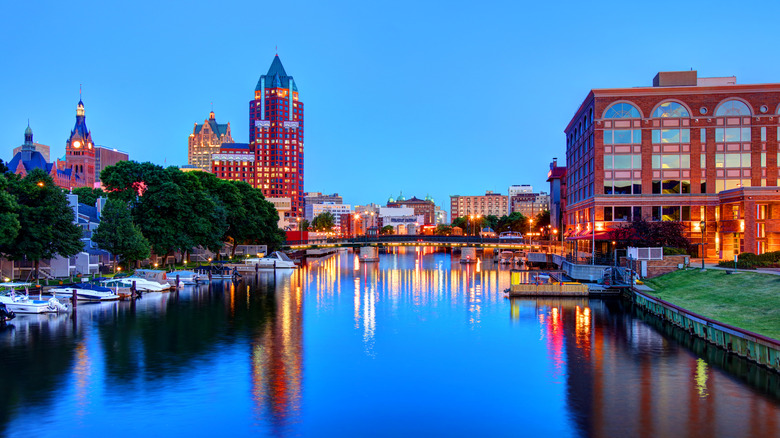
Milwaukee is a post-industrial university town boasting historic districts like the Third Ward, Bay View, and Riverwest, all of which are attractive, walkable, and well connected to downtown. For vibrant Riverwest, in particular, one Redditor says, "North of locust is a little more quiet than south of locust. There's a ton of stuff to do in the neighborhood, wonderful bars, restaurants, coffee shops, music venues, breweries, etc. everything is very walkable." Milwaukee's downtown also boasts a 3.1-mile pedestrian path called the RiverWalk along both sides of its eponymous waterway, which connects restaurants and shops. The path is ADA accessible with a few lifts to make getting up and down stairs easier.
Milwaukee hugs the shoreline of Lake Michigan, and many of its biggest attractions like the Milwaukee Art Museum, Lakeshore State Park, and Veterans Park make the most of their lakefront location. Between Veterans Park and McKinley Park, you'll also find the public McKinley Marina, where you can rent a slip for your boat, enjoy a cold beverage in the summer at the Roundhouse Beer Garden, or rejuvenate in the Hot Spell Sauna during the winter.
Milwaukee features a free downtown streetcar called The Hop, which makes it easy to connect between the lakeshore and other local attractions like the Historic Third Ward and its Milwaukee Public Market. Potawatomi Casino Hotel is located just southwest of the Interstate 94/43 interchange, accessible via Milwaukee County Transit System (MCTS) buses, plus the iconic Mitchell Park Domes, Milwaukee Brewers' stadium, and State Fair Park a little further west. And on the note of public transportation, the Intermodal Station is also served by bus and The Hop, where you can step aboard one of Amtrak's Hiawatha or Borealis trains to connect to Chicago's Union Station in less than two hours.
Iowa City, Iowa
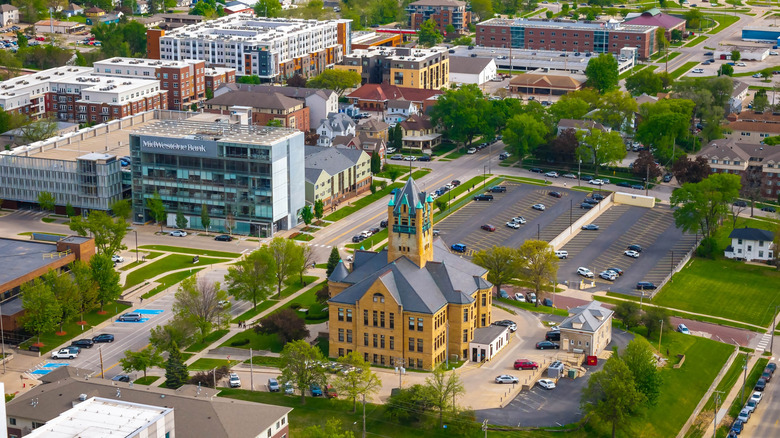
In the Hawkeye State, Iowa City is another university city with plenty of character and true Midwest vibes. It's less connected to other major cities in terms of public transportation, so it's a better option for retirees who prefer a more relaxed pace and a smaller area, but thanks to the University of Iowa, there are plenty of walkable areas. The university also helps provide the intellectual and creative opportunities you can take advantage of in the Midwest's one and only UNESCO-designated City of Literature. Downtown features a pedestrian mall, where you'll find ReUnion Brewery, a martini-and-tapas bar called The Stuffed Olive, the Riverside Theatre, and a playground great for entertaining the grandkids when they're in town. "Downtown ped mall is very walkable with a ton of local stores/restaurants," a local says on Reddit. "Pretty safe place overall and probably has the most culture of any city in Iowa."
Like the other university towns on this list, Iowa City features plenty of cultural activities and events, including museums, concerts, and more. Its public transit link also connects to nearby Coralville for more shopping and amenities. The Iowa City Senior Center is a great place to take advantage of a dedicated fitness center for adults aged 50 and older, plus numerous lifelong learning courses, bowling, a weekly singles breakfast, art-making, dance lessons, and more. Tour the Old Capitol Museum, peruse masterpieces at the Stanley Museum of Art on the University of Iowa campus, and head to Chauncey Swan Park for the city's weekly farmer's market, which runs every Saturday morning between May and October.
Athens, Ohio
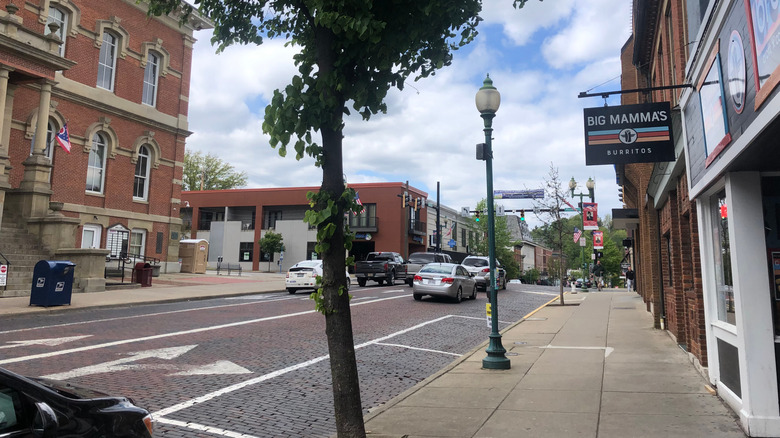
Southeastern Ohio's pre-eminent university town borders Appalachia and provides a completely different feel on the periphery of what we consider the Midwest, where people even speak what's known as the Upper Southern accent. Athens is home to Ohio University, which, like Madison, Iowa City, and Ann Arbor, has a college football team in the Big Ten Conference, so if you love gridiron excitement, you're in the right place. Athens Public Transit provides bus services around town and to a handful of neighboring communities, and its downtown and campus area are among Ohio's most walkable gems. Thanks to milder weather than what the Upper Midwest experiences, the Athens Farmers Market runs year-round from 9 a.m. to noon on Saturdays, plus Wednesday mornings during the warmer months.
United Seniors of Athens County is the area's primary senior center, offering regular events like cookouts, bingo, line dancing, tai chi, and more. The Athens Community Center also boasts a fitness center with indoor courts for basketball and pickleball, and if you're 65 and older, you may be eligible for the Silver Sneakers program, which grants free membership. When you're out and about, learn about Ohio culture and heritage at the Southeast Ohio History Center, and make sure to stop into the non-profit gallery and art space called Passion Works Studio to shop for gifts that support opportunities for local residents with developmental disabilities. Head just one block west to Casa Nueva for vibrant Mexican fare and monthly live music, or head toward the courthouse to relax with a pick-me-up at Donkey Coffee and Espresso, which boasts lots of space to sit across its six rooms.
Indianapolis, Indiana
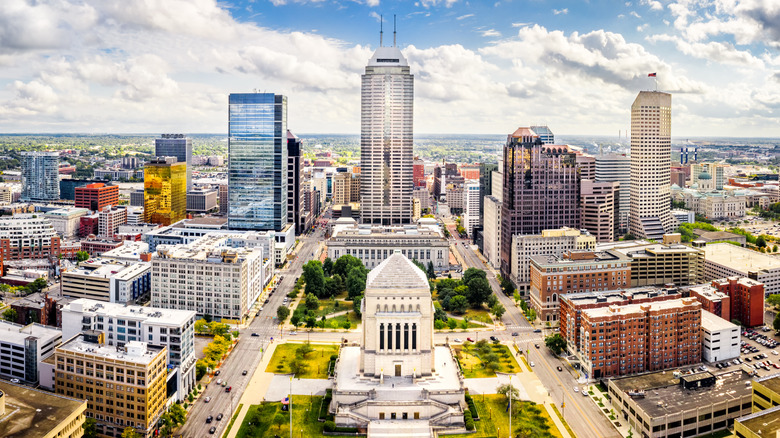
Indiana's state capital and largest city is a hub for arts, culture, sports, and true Midwestern energy. Among the cities on this list, Indianapolis has a generally lower Walk Score in comparison to other cities, but if you're close to downtown, you can get around without a car thanks to IndyGo, the city's public transit network. According to a Redfin comparison, downtown is the most walkable but only rates 77 out of 100 in terms of ease of getting around on foot, although that still rates as "very walkable." Stroll along the attractive Canal Walk, which traces both sides of the 19th-century Indiana Central Canal, and practice your swing without ever leaving the city at Back 9 Golf, which features three levels of golf bays, food, and entertainment.
White River State Park is a jewel of downtown Indianapolis, touting itself as "Indy's Backyard." It's the site of Victory Field, where the Indianapolis Indians play as a farm team for the Pittsburgh Pirates. Then there's the NCAA Headquarters and Hall of Champions, the Indianapolis Zoo, Indiana State Museum, and the world-class Eiteljorg Museum of American Indians and Western Art — voted one of the best art museums by USA Today 10Best for 2026. For something relaxing that also stimulates the mind, head to a branch of the Indianapolis Public Library for chair exercises, book clubs, and lifelong learning opportunities on topics like social media and AI so you can keep up with the grandkids. Grab lunch at the old-school, diner-style Workingman's Friend, and it's like you'll fall hard for the local delicacy of fried pork tenderloin sandwiches.