
Unwritten Rules You Should Know Before Visiting Jackson Hole
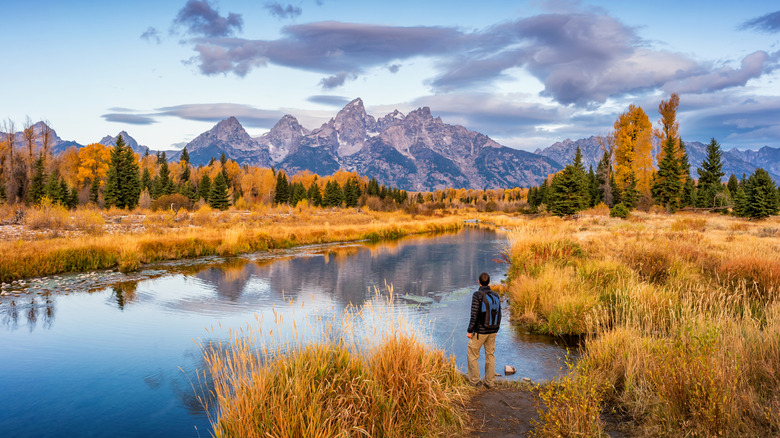
One of the most alluring things about the landscapes of the American West is the way they play into the collective imagination of what "wilderness" means, even if mountain ranges, grasslands, and rivers are today dotted with buzzing communities and touristy experiences. Among the best places to explore the Mountain West is Jackson Hole, a bucket list destination that combines timelessly stunning views with modern comfort. Wyoming's year-round haven is an adventure-filled valley with a national park, ski resorts, hot springs, and awe-inspiring peaks, but there are a few things worth brushing up on to make the most of your visit.
These unwritten rules can help you prepare for a trip to Jackson Hole, the valley that runs roughly 50 miles long between the Teton and Gros Ventre ranges. Here, the soaring granite Tetons appear remarkably dramatic because they're not flanked by foothills like many other ranges. And the popular town of Jackson boasts a vibrant art scene, historic buildings, old West heritage, and contemporary amenities, with nature often closer than you think.
Whether you're hiking or camping in Grand Teton National Park, cozying up at the iconic Million Dollar Cowboy Bar in downtown Jackson, hitting the slopes at one of the valley's three main ski areas, or doing anything else in between, there's something for everyone in Jackson Hole. Before enjoying everything Jackson Hole offers, it pays to learn a thing or two about the area's seasons and weather, how to get there, the local denizens — wild and otherwise — and attractions and experiences you won't want to miss. To compile this list, we've referenced regional tourism sites, local reporting, social media, the National Park Service, the U.S. Forest Service, and local businesses and organizations.
Get the names of local places right
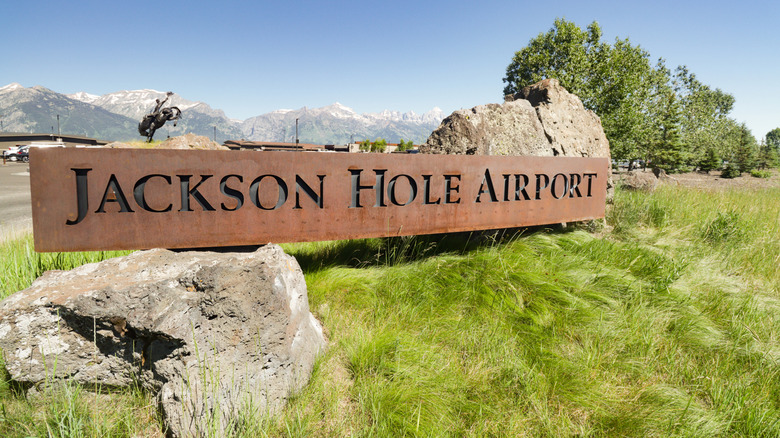
Before diving into the nitty-gritty of visiting this gem of an area in Wyoming, let's start with something that a lot of tourists get confused about: the names of places here. Is it Jackson or Jackson Hole? Do they mean the same thing? No, they do not. Jackson refers to the town itself, and Jackson Hole refers to the entire valley, as "hole" was often used by 19th-century explorers to describe deep valleys, according to the Jackson Hole Chamber of Commerce. Depending on where geographers plot their measurements, the valley runs north to south for roughly 50 miles, give or take, between Jackson Lake in the north and a rolling stretch south of the town of Jackson where the Snake River carves into the hills.
There are several defining features of the valley, namely the Teton and Gros Ventre mountain ranges that embrace it. Grand Teton National Park, which sits in the north, is named for the range's tallest mountain at roughly 13,770 feet, but when referring to the entire range, it's not the "Grand Tetons," just the Teton Range or the Tetons. And Gros Ventre means "Big Belly" in French — a name early French trappers used to describe the Native American people now known as the A'aninin. Gros Ventre is also the name of a wilderness area, campground, and more, and is pronounced "groh vont," not "gross ventray." Gros Ventre Road and river are also great places to see moose when visiting Grand Teton National Park.
Always make reservations
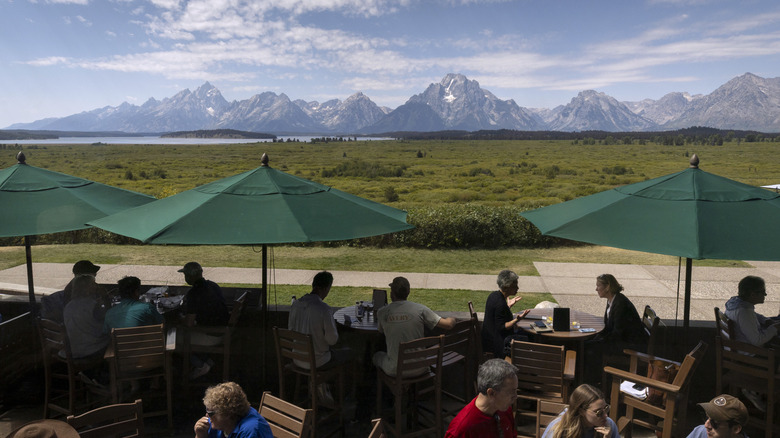
Although Jackson Hole may evoke a bucolic natural landscape with lots of room to roam, just remember that it's an immensely popular tourist destination and can get crowded. It doesn't matter what season it is — summer brings hikers, campers, and golfers, while winter draws skiers, spa-seekers, and visitors hoping to catch a glimpse of wildlife. And all year round, experiences like guided wildlife tours and dining spots like Snake River Grill, considered by some to be Wyoming's most beautiful restaurant, are in demand. To avoid being stuck out in the cold, make reservations as far in advance as possible. You can make individual bookings directly with hotels or attractions, or opt for something a bit more seamless with the aid of a package-booking service like Jackson Hole Resort Reservations. It's also worth keeping in mind that some restaurants often close by around 9 p.m., so you may need to plan for a somewhat early dinner.
Prices might be rather steep, too — Jackson Hole is one of the most expensive places in the region — so it's good to plan ahead. You'll find casual options for eating out, but well-known spots will book up far in advance. Do your research to find genuinely worthwhile spots. "I would avoid blue lion and million dollar, both serve mediocre food at high prices," shares a Redditor referring to The Blue Lion Restaurant, set in a historic home in Jackson, and Million Dollar Cowboy Steakhouse, which is right next door to the legendary bar of the same name overlooking the town square. Definitely sidle up to the bar for a whiskey or a beer, though, and enjoy live music throughout the week.
Do not approach wildlife
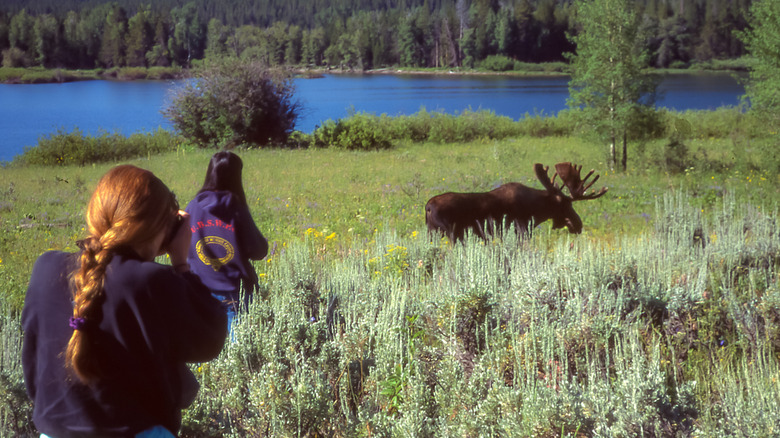
National parks often emphasize the importance of viewing wildlife safely from a distance. This is sometimes easier for people to remember or consider with common sense when they're in a place where they expect to see wildlife. But what about in town? Wildlife doesn't always stick to wilderness areas, and in a place like Jackson Hole, which is also quite urbanized, elk, bears, and other creatures sometimes wander into neighborhoods in search of food. Remember never to feed the animals, and keep your distance as much as possible.
"I've lost track of the number of times I've been in utter disbelief as I watched families, with children in hand, walk straight up to bison, moose, elk, and even bears," says Jackson native Matt Stirn in an article for Business Insider. "These are wild animals, and Jackson Hole is not a zoo where you're protected by barriers." Getting close to a moose or elk — especially during rutting (or mating) season in the fall when bulls in particular can be territorial and aggressive — can lead to scary and dangerous encounters. The National Park Service recommends staying at least 25 to 50 yards away from most animals and 100 yards from predators for your own safety. No matter where you are, defer to the binoculars or use a zoom lens to snap "up-close" photos.
Gear up for Wyoming friendliness
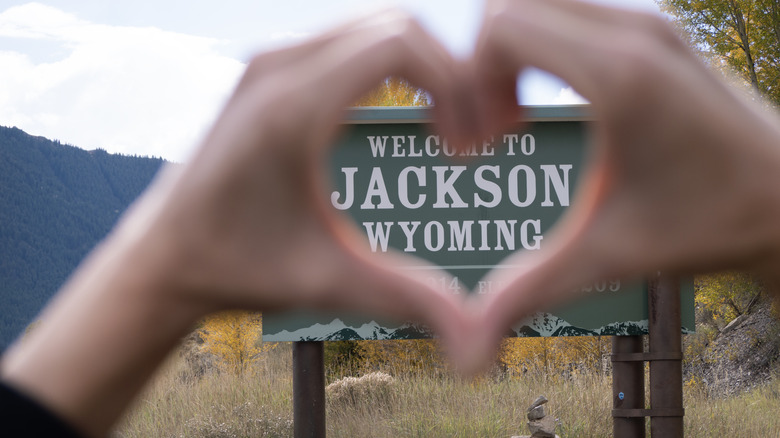
Jackson is a small town, home to fewer than 11,000 residents, as per the 2020 U.S. Census. When tourists arrive, it can feel much busier, but that doesn't negate the area's friendly vibe and the fact that it's situated in the nation's least populated state, where fewer than 600,000 people (as reported by Stats America) live across its approximately 97,088 square miles. There's definitely a small town vibe here, and locals really like it that way. Opinions vary on the impacts of tourism, but those who live here know that it's a big part of what makes Jackson Hole so charming. Don't be afraid to smile and wave, says Britney Magleby in an article on Visit Jackson Hole. She adds, "We're not afraid to connect with strangers. When I'm on the trail, I'll always say 'hello' to those I pass. When I order at a coffee shop, I ask the barista how their day is going. When I'm on a new adventure, I'm never too proud to ask for suggestions."
Additionally, traffic can get hairy around Jackson Hole when everyone wants to get to the slopes in the winter or when day visitors to Grand Teton National Park are leaving the park for the night. Don't honk or be too aggressive; everyone is trying to get somewhere, so just go with the flow and be polite. Driving in the mountains is also a skill, so take extra care to avoid getting a speeding ticket or experiencing something far worse. Moose and other animals are often killed on the highway (more than 300 a year, according to Visit Jackson Hole), so by driving responsibly, you'll help ensure both yours and their safety.
There are more travel options than just driving
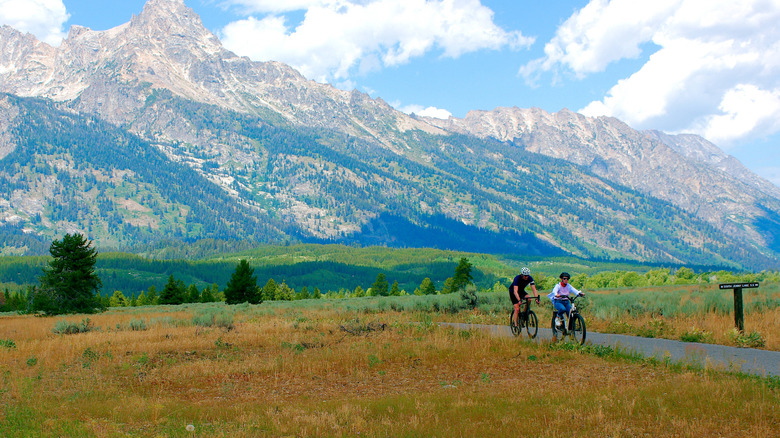
While many people prefer to navigate Jackson Hole by car, rentals can be expensive. There are actually plenty of other ways to get around without one. Firstly, the START Bus runs frequently during the summer and has a reduced schedule in the fall and winter. Within Jackson's town limits and between the Village Road Transit Center and Teton Village, the fare is free. Between these places and other parts of the valley, including the airport, fares range from $3 to $10 and can be purchased with exact change on the bus or in advance on the transit system's app. If you plan on using the service frequently, bundled ride discounts and season passes are also available.
Cyclists will also be thrilled to learn that there are more than 56 miles of paved, multi-use trails known as Pathways throughout Jackson Hole. These connect to an even longer network of marked road routes and several mountain biking tracks in adjacent national forests. The Pathways make it possible to bike between the area's major attractions, including Jackson, Wilson, Teton Village, farther north into Grand Teton National Park via the town of Moose, and as far as the stunning Jenny Lake, which might be the most beautiful spot in Wyoming. In the winter, Friends of Pathways grooms 12 miles of singletrack in Cache Creek for Nordic skiers, fat tire bikers, and snowshoers. Snowmobiling is also a popular way to get outside in the colder months.
Save money by flying into Utah and driving up to Jackson Hole
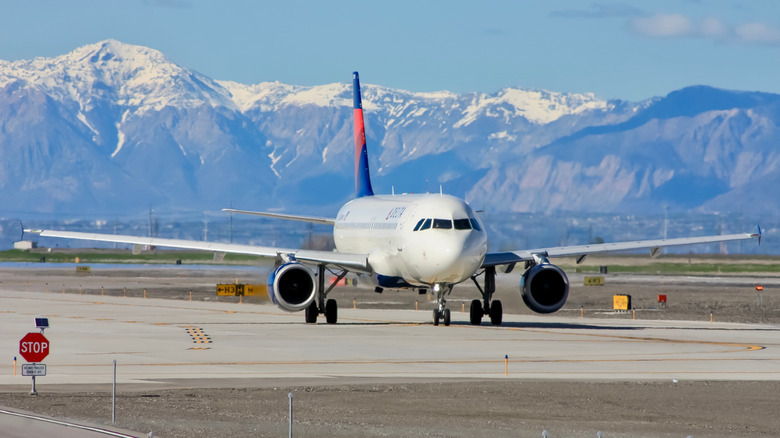
Flying into Jackson Hole Airport (JAC) may be the most convenient option if time is of the essence. It's centrally located with car rentals available on-site, so it's certainly efficient. But it can also be expensive. A flight from Los Angeles, for example, for a Thursday-to-Sunday itinerary in mid-November (shoulder season) starts at about $450 (at the time of writing). From New York, it's about $550 and up. However, if you fly to Salt Lake City International Airport (SLC) instead, you could save some money. On the same mid-November dates we checked using Google Flights, the flight from LA to Salt Lake City was about $300 cheaper, and from New York, it was about $150 less.
Factor in the addition of a rental car — which at SLC averages around half the price of rentals in Jackson Hole, according to Kayak — and you could save several hundred dollars by adding a five-hour drive on either side. One could look at that as a bit of a time drain, but the drive through the Wasatch Mountains east of Salt Lake City and the Snake River Range south of Jackson Hole offer up some of the most breathtaking scenic drives in the country. There are also alternative routes between the two destinations, so you can return a different way than you came.
Don't underestimate the effects of altitude
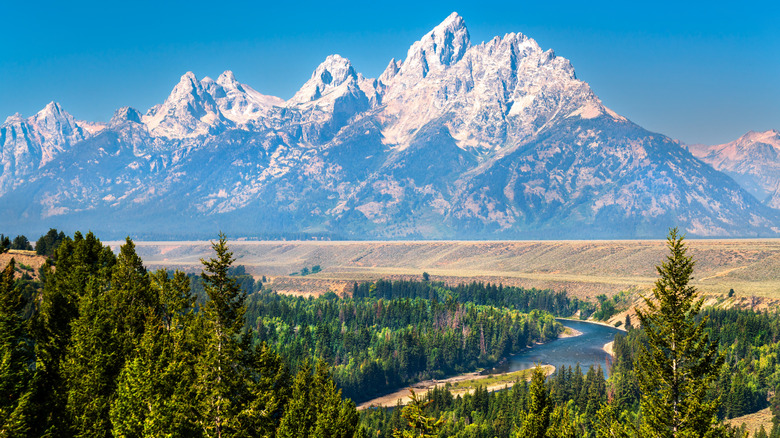
Jackson is located more than 6,200 feet in elevation, and many of the area's most popular destinations are even higher still. Even though you may feel like you're "low" compared to the colossal granite peaks that rise dramatically right from the valley floor, you're still actually pretty high up! If you feel a little tired or sluggish after you arrive or those drinks at the bar suddenly have a greater impact, it might be the effects of altitude.
Altitude sickness typically doesn't come on in full force until you're above 8,000 feet in elevation, and different people experience it to varying degrees. But if you fly in directly from a place that's at sea level, such as Chicago or Los Angeles, you may notice some minor effects. As noted by Jackson's Spring Creek Ranch, symptoms can include headaches, dizziness, nausea or a tight stomach, lethargy, shortness of breath, or any combination of these things. If you're doing something active, you may run out of breath more quickly or feel like you can't breathe as deeply as you'd like. Drinking water will help. Bonus note: Be wary of the sun! At more than a mile above sea level, the atmosphere is less able to protect you from the sun's UV rays, and sunburn can happen quickly. Wear sunscreen, regardless of the weather.
Avoid famous places during peak times
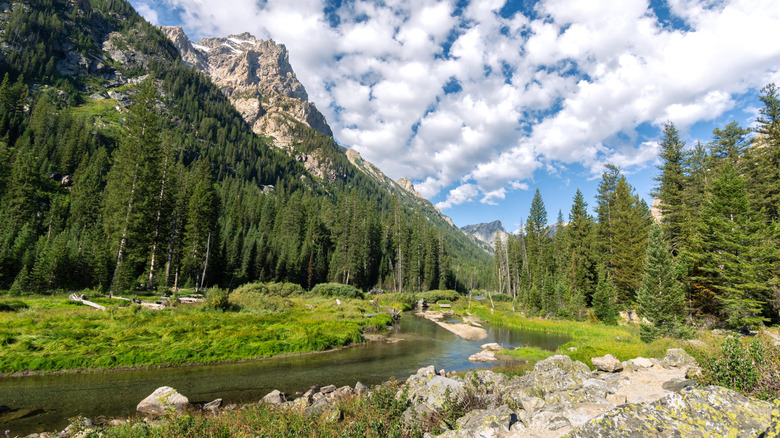
What comes with a place being really popular? Crowds and congestion. To avoid getting stuck in traffic or seeing throngs of other people rather than the beautiful sights, get started early. Parking in iconic places, such as around Jenny Lake in Grand Teton National Park, can fill up very quickly during the day, so arrive earlier than 9 a.m. Seasonally, spring and fall can be excellent times to experience the quieter side of Jackson Hole, as the weather may be mercurial but neither summer nor winter activities are in full swing. If you want the full summertime experience, though, local gallerist Maya Frodeman told W Magazine that she considers August the best time to visit, saying that "The weather is warm and the sun is out 'til 10 p.m., which allows for a lot of activities."
Then, go beyond the places where many tourists stop. By all means, see famous spots like Jenny Lake or Inspiration Point, but don't assume the first viewpoint is the entire experience. Around Jenny Lake, several trails can take you around the lake in a loop or on a longer jaunt north to String Lake, Leigh Lake, and beyond. In this area, you'll also find the famous Inspiration Point. Many people simply stop here for the view and then turn around, but do yourself a favor: After gaining the elevation you've worked hard for, continue into Cascade Canyon. Additionally, venture into surrounding areas like Bridger-Teton National Forest or the John D. Rockefeller, Jr. Memorial Parkway, the latter of which ultimately connects to Yellowstone, where you'll find more secluded stays and hidden hikes.
Get out there
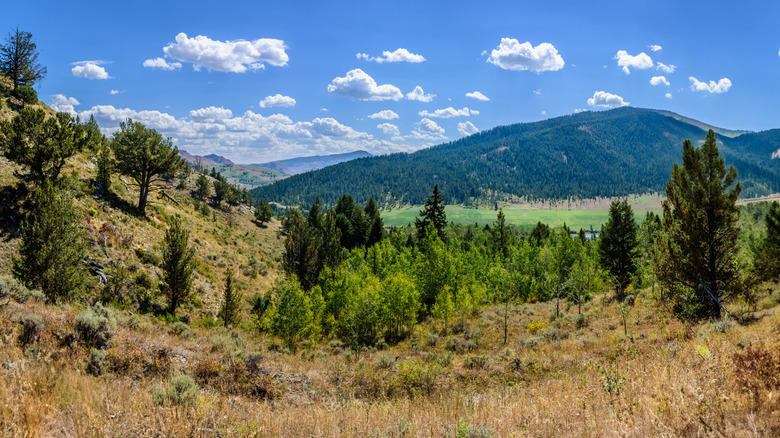
Jackson Hole is as famous for its recreation and resorts as it is for the spectacular natural vistas that awe nearly 3 million visitors to the valley every year (as reported by Mountain Journal). However, local Matt Stirn notes in Business Insider that visitors who don't experience Jackson Hole's backcountry, namely in the national park and expansive forests within the region, are missing out. "Some of the country's most isolated wilderness surrounds Jackson and can provide a therapeutic escape to those who venture into the rolling pine forests. Many people visit Jackson and never have this special experience," he says. Dispersed camping is allowed for free in the surrounding national forests for up to 14 days (according to the U.S. Forest Service), with Bridger-Teton boasting 3.4 million acres of land just waiting to be explored. Caribou-Targhee National Forest adds millions more acres of public land.
The Guardian reported that the night sky is getting 10% brighter every year, so places where you can clearly see a sky filled with stars are becoming increasingly rare. Fortunately, stargazing in Jackson Hole is spectacular, and getting into the backcountry is one of the best ways to take advantage of it. Teton County as a whole was designated an International Dark Sky Community in 2025, and even the airport helped make that possible by upgrading hundreds of lighting fixtures to minimize light pollution. Wyoming Stargazing operates telescopes in Grand Teton National Park that the public can use during exciting guided tours.
Dress the part (and dress for the weather)
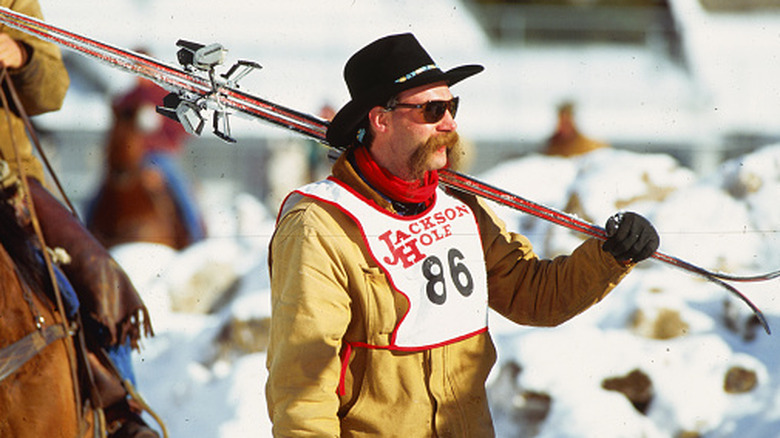
Seasons and activities vary greatly in Jackson Hole, and clothing is something to consider seriously. For one, when it comes to footwear, leave the heels at home! Depending on the season, don Western boots or warm snow boots, and bring some sneakers for walking around town. If you plan to camp, bring hiking shoes and outdoorsy sandals. Of course, any special activities, such as snowboarding or hiking, will require appropriate clothing, so consider everything you might be doing during your visit.
You should also make sure to bring the right layers. Elevation and rapidly changing weather conditions can lead to surprises, so no matter what time of year you visit, pack a series of different garments that you can easily add or remove throughout the day, or as needed for certain activities. A good coat is a must in the winter, but even in the summer, you'll want something snuggly and warm for cool, dry evenings or trips up into the mountains where it will be colder.
Remember to relax
Jackson Hole is an escape. Whether you're there for the skiing, wildlife viewing, national parks, hiking, or shopping, it's a spectacular place to unwind. It can be busy, but that doesn't mean things are rushed, and you shouldn't overbook yourself. "Jackson is laid-back," says local boutique owner Abigail Greene in W Magazine. "Most activities here are meant to take time, don't try to pack too much into your itinerary ahead of time, otherwise you might miss out on some spur-of-the-moment adventures."
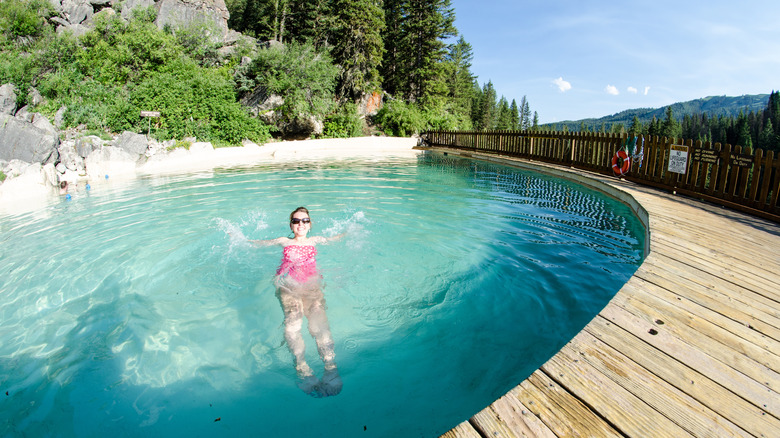
Many visitors opt for outdoor recreation to reset and relax, from taking to the slopes at the area's three primary ski areas — Jackson Hole Mountain Resort, Snow King Mountain, and Grand Targhee Resort — to camping beneath the stars. You'll also find upscale resorts for supremely comfortable stays, such as the Rustic Inn and the Snake River Lodge & Spa. And on that final note, spas and wellness centers provide an excellent way to rejuvenate while in Jackson Hole. Astoria Hot Springs & Park is conservation-focused, open all year, and family-friendly, whereas the spa at Four Seasons Resort is a tremendous way to unwind, with offerings ranging from massages to yoga. For something just a little more rustic, head into the Gros Ventre Mountains and seek out Granite Hot Springs, where a pool has been constructed around a natural mountain spring with a campground nearby.