
7 Things That Will Get Confiscated When You Cross The Canadian Border
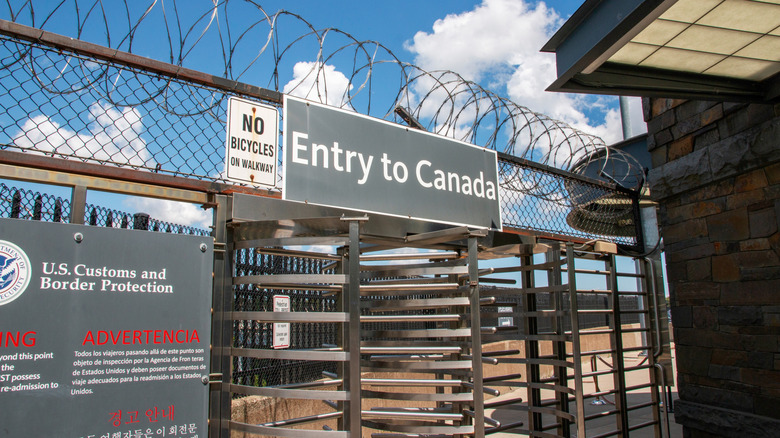
The favorable exchange rate and proximity aren't the only reasons Americans flock to Canada in droves. Some of the most stunning landscapes and cosmopolitan cities make it the perfect year-round destination for those looking for escapades they can drive to across the border. In winter, skiers find powder at Whistler, a skiing destination that's also popular in summer. With both cold and warm weather action, the majestic mountains of Banff National Park pull their fair share of Americans. And those who prefer big-city adventures will find much to enjoy in popular urban destinations, like Vancouver, voted one of the greenest cities in the world. With all this cross-border travel, issues are bound to arise.
One problem you may encounter is unknowingly transporting prohibited items into the country. Some of these items are obvious enough that if you plan on carrying them — for example, weapons and similar objects — you may already know to prepare beforehand. Others can be quite surprising. These can include products that are legal in the U.S. but banned in Canada, and common foods you would never suspect.
Having any of these restricted items means you may get additional scrutiny at the border, and the items may be confiscated. Since some of these objects are only partially restricted and can be transported under certain circumstances, we've pointed you in the right direction for more information to help as you plan your trip. If you're unable to find information on an item you want to carry, it's always better to declare it than to be surprised with a hefty penalty for withholding information. You may also want to read up on a few other things that surprise Americans visiting Canada.
Baby walkers

While many parents in the U.S. use baby walkers to encourage walking and to keep their infants safe while they're busy with chores, Canada has had a law against the devices since 2004. It's illegal to manufacture, sell, import, or even advertise baby walkers in the nation. Canada's beef with baby walkers is based on studies that show the walking aids are often associated with serious injuries; health organizations like Nationwide Children's and Tufts Medicine consistently sound the alarm on the hazards of the toys.
While the U.S. has taken certain steps to make baby walkers safer — manufacturers are required to add locking mechanisms and other protective components, for example — you can't cross the border with one. If you try to head to Canada with a baby walker in tow, you can expect it to be seized if discovered by officials.
While Canada doesn't allow baby walkers, they do allow alternatives if they meet labeling and other requirements. For example, if you need to keep your child safe while you're occupied, a play pen is one option to consider. You can check if any baby equipment you plan on carrying fulfills Canada's specific requirements on the Canadian government's official consumer goods page before packing.
Cannabis in most circumstances
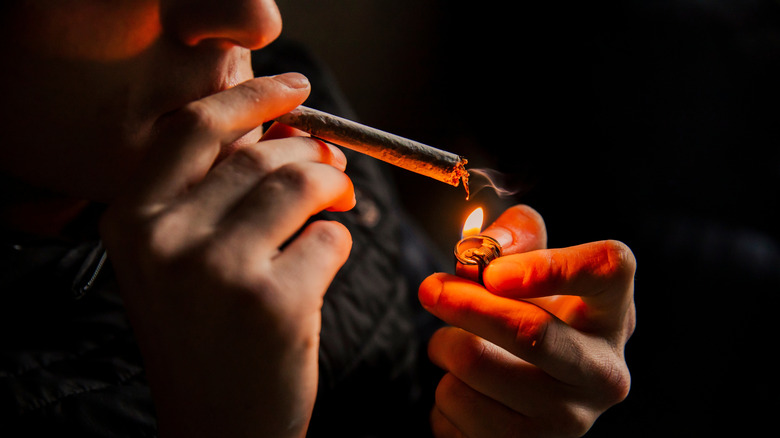
Cannabis has been legal nationwide in Canada since 2018. The passing of The Cannabis Act in that year made it lawful to possess up to 30 grams of the dried plant. Marijuana is also legal for recreational use in many states on the U.S.- Canada border. These include Washington, Montana, Minnesota, Michigan, New York, and more. Given all of this, you may think that transporting the substance across the border, from one place where it's legal to another, is allowed. You would be mistaken. Doing so will not only get your stash confiscated, but you can also face serious consequences in most circumstances.
Carrying cannabis into Canada is a criminal offence, and this applies to almost every form of it. Seemingly innocent edibles, CBD products like oils and creams, other products with cannabis extracts, and dried cannabis of any amount are all prohibited from being brought across the border. The only two potential exceptions are if you're carrying cannabis because you use it for medicinal purposes or you have prescription drugs that contain it as one of the ingredients. But if any of these potential exceptions apply to you, you'll need to fulfill certain requirements before you're off the hook.
If you're carrying cannabis into Canada for medical reasons, you'll need to apply for the proper authorization from Health Canada. This is an additional requirement, even if you already have a medical document that allows you to use cannabis as a treatment. You can easily check to find the proper channels for the application before traveling. Exemptions are only issued in rare circumstances, so keep that in mind as you plan. If you take prescription drugs with cannabis, these are allowed provided they follow certain guidelines, so you may also want to check on that. Finally, you'll need to declare cannabis in all cases, as failure to do so comes with hefty fines.
Some foods

You shouldn't have much of an issue if you've packed some of your favorite foods to enjoy while in Canada. Many foods are unrestricted and are perfectly acceptable to carry across the border. However, while the majority of foods you will carry with you for your personal use are allowed, a few are banned altogether or will be confiscated if they pass a certain threshold.
Where foods are banned, this is usually to protect human or economic health. For example, to shield its pig herds and the pork industry from African swine fever, pork and pork products from countries with the disease will be confiscated. The United States is not one of these countries, but if youare traveling from an affected nation and packed pork-based foods from that country, you can expect it to be confiscated. Avian flu is another concern that can affect what foods are allowed in. Generally, poultry products should be retail packaged for human consumption and bear a "Product of the USA" label. Foods that do not meet this standard (for example, homemade and restaurant meals made with poultry) may be confiscated.
Other foods are allowed, but only in certain quantities. For instance, while you may bring breads, pastries, and other baked goods with you, you'll be restricted to 20 kilos (around 44 pounds). Dairy, seafood, and eggs have similar restrictions. A complete list of banned and restricted foods can be found on the Government of Canada website — the list can change, so it's a good idea to check it before travel. It's also worth noting that you will need to declare all your food, whether you're traveling with a banned product like pork or an unrestricted item. Remember that in addition to confiscation, border officials can fine those who withhold information on the declaration form.
Firewood
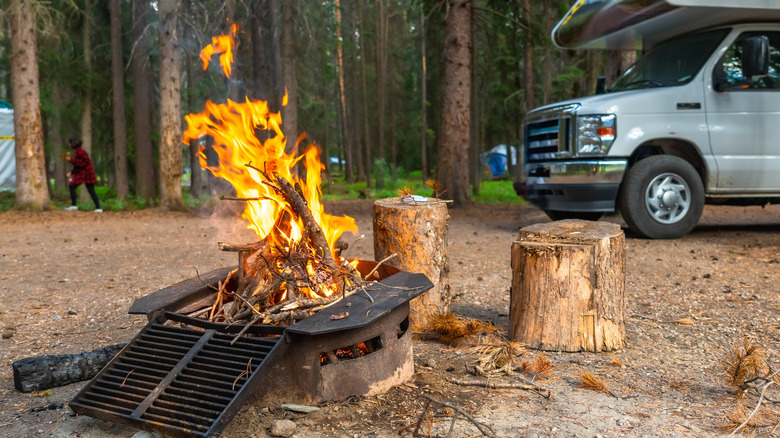
You may have plans for a roaring campfire if you're headed across the border to go camping in one of Canada's amazing national parks. Not only are campfires the perfect way to cozy up together on frigid nights, but they're also handy for roasting marshmallows and preparing tasty meals. One thing you may not be able to carry across the border is the firewood you need to start the fire. The Canada Border Services Agency (CBSA) prohibits firewood from entering Canada under some circumstances. When it is allowed, you may need to get permits and meet other requirements.
The main reason for the restriction is the possible presence of invasive diseases and insects. When you transport firewood infested with any of these pests, you carry the destructive agents with you wherever you end up camping. And once they invade the area, they can cause widespread destruction to Canada's forests if they take hold in their new environment. For example, Dutch elm disease entered Canada in the 1940s and has significantly diminished the number of American elm trees since then, and the invasive gypsy moth species from Asia has devastated some hardwood trees.
The easiest way to prevent this is to buy local firewood once you get to your destination. This prevents the introduction of new species and frees up space in your luggage for other necessities — like marshmallows! If you must carry firewood for any reason, check with the appropriate governmental authority for regulations and required permits. It's also worth noting that in addition to not allowing firewood across the border, Canada has regulations on transporting certain species of wood between some provinces, and between cities within individual provinces. You may want to check on these before arranging for your firewood needs while camping.
Water vessels (in some some instances)
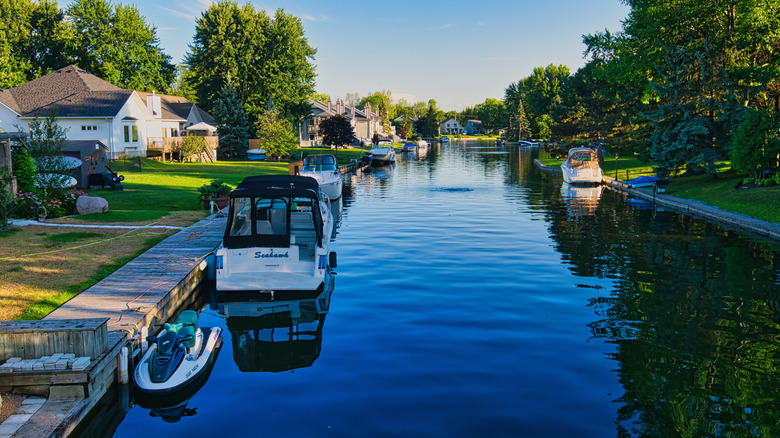
Whether you're driving across the border for fun on the lake at sẁiẁs Provincial Park, or plan on spending time in Lagoon City, known as the Venice of Ontario because of its serene boating, you'll need a watercraft. Most travelers rent one when they get to their destination, and if this is you, you won't have a problem. However, if you like to travel with your own boat in tow, you may encounter some issues. While Canada doesn't impose a wholesale ban on water vessels, they may be stopped at the border if certain conditions are present. They won't be confiscated in the strictest sense of the word, but they may be quarantined for decontamination.
This brings up an obvious question: What exactly are the vessels being decontaminated from? Invasive water creatures can affect marine ecosystems in the same way pests have harmed Canada's forests. At the time of this writing, zebra and quagga mussels are the main concerns. The creatures can survive on hard surfaces and have successfully invaded waterways in parts of the U.S. In trying to prevent invasion of their own waterbodies, Canadian officials have taken certain steps. One measure is to require water vessels to be completely dry — the mussels' larvae can survive in water for up to 30 days. They're also required to be clean, as the creatures can cling to hard surfaces.
If your vessel doesn't meet these guidelines, or is suspected of carrying the mussels, you may be turned away at the border or required to send it to a cleaning facility. If that isn't possible, you may lose possession while it's put in quarantine. You can prevent this by cleaning your boat yourself or taking it to a cleaning service before travelling. The Canadian government has a handy guide on best practices for cleaning.
Firearms and weapons of all kinds
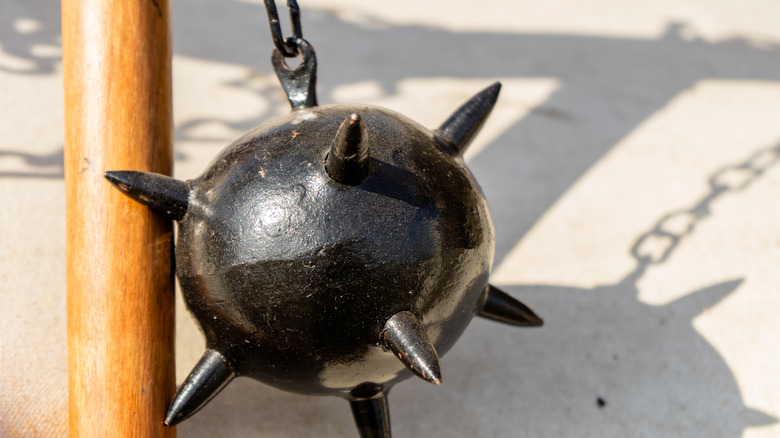
Whether you're going hunting or partaking in a shooting competition, firearms will require proper authorization before being allowed across the border. You'll need to declare all firearms and have (or apply for) the relevant Canadian permit. This permit acts as a visitor's firearm licence while you're in Canada and is needed if you do not have a Canadian firearm licence (the Possession and Acquisition Licence). However, these are issued contingent on you having a valid reason for carrying a weapon. Acceptable reasons can include hunting, shooting contests, and if you're traveling to get your weapon repaired. The status of your firearm — restricted or unrestricted — will also affect whether you need additional permits.
If you do not meet these requirements, your weapons may be confiscated – although you may be given the opportunity to return and retrieve them with the prescribed documents. Declarations and authorizations like these are standard security procedures at borders around the world, so it's not unusual that Canadian border officials would do the same. What may be surprising is the vast array of other weapons that get confiscated on a regular basis.
Border authorities have reported seizing brass knuckles, concealed blades, and switchblades in the past. Those medieval-looking spiked morning stars many of us only see in fantasy movies and novels have also been confiscated. And travelers have even tried to transport shuriken (ninja throwing stars). Unusual weapons continue to be an issue at the border and are frequently detained, so if you happen to have one in your possession while traveling, you can expect to lose it. In addition to these, Canada prohibits taser guns and a long list of very specific models of firearms; check the official website for a full listing if you're worried about your particular model.
Some wooden souvenirs and products

That intricately carved wooden souvenir you have in your luggage may seem attractive, but like firewood, it could be hiding pests that might spread and damage the environment. To prevent these kinds of episodes, some wooden products, including souvenirs, face strict regulations at the border. These are usually objects made from untreated wood or bamboo, or bark pieces. When not properly treated, these can contain the eggs or larvae of an invasive species. Before you finalize your purchase, you can ensure your wooden souvenirs and objects are safe to cross the border by inquiring whether they have been treated to prevent pests.
Some that may be allowed in without meeting additional requirements include dried wooden baskets and handicrafts that are made from wood below 1.5 cm in diameter and bark-free. If you have products made from bamboo laminates that have undergone processing, for example, woven mats and kitchenware, these are also allowed. So are wooden tool handles, any kind of commercially processed furniture or flooring, and objects made from particle and fiber boards. You can see the full list of allowed items and additional requirements on the inspection website.