
8 Unwritten Rules You Should Know Before Visiting New England
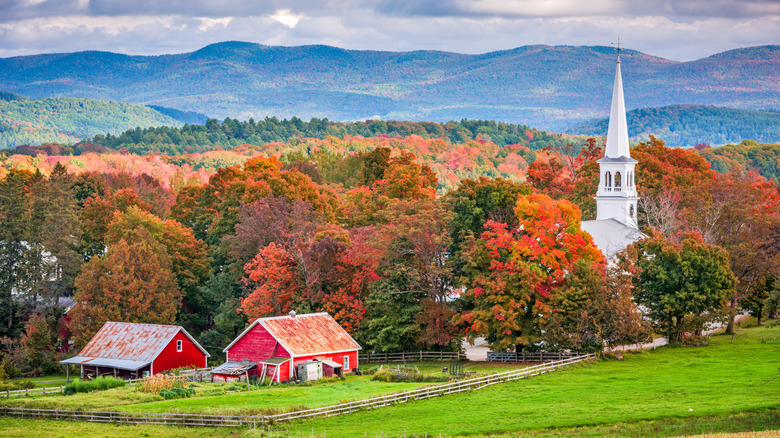
Way up north, on the easternmost tip where the U.S. meets the Atlantic, sit states known as New England. Each of the six draws its share of visitors. And each is famous in its own right. Maine has its storied coastline and renowned lobster eateries. Vermont attracts leaf peepers who flock to see its vibrant fall foliage. And while Massachusetts has pretty beaches, Boston, its capital, is also a major destination. Meanwhile, Rhode Island and Connecticut offer sailing and other waterfront attractions. And though it's pretty year-round, New Hampshire is a popular skiing destination in winter. It goes without saying that whether you visit one state or a few, the region has plenty to offer. These charms are even more enjoyable if you know the unwritten rules that can make a trip smoother.
You can look at these rules as your cheat sheet to having the most comfortable, most enjoyable days on your next trip to the area. Some are especially helpful for navigating interactions in eateries and other local spots, while others set expectations so you don't get frustrated with unique local conditions. To help with packing, we've also included advice on a few crucial items you'll need so your outdoor excursions don't spiral into the proverbial "days from hell." We don't have a specific tip for budget travelers, but these hacks for saving money during a New England summer trip are just as useful.
Prepare for spotty cell phone service in some areas
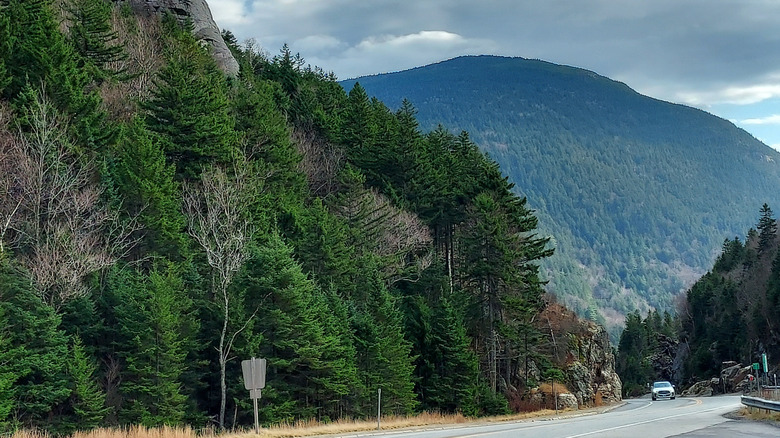
New England is the kind of place where you could just as easily spend the day beachcombing as hiking through forested mountains. As you leave the sandy coast and head inland, the Appalachians appear across several states, providing spectacular scenery. Stunning as they are, the massive mountains can make it difficult to get cell phone service while you drive. But all the blame doesn't belong to them, as other factors can also come into play.
The mountains and forests act as obstacles, blocking signals from cellular towers and making it difficult to make phone calls or access the web in some areas. Extreme weather, insufficient coverage by service providers, and resistance to installing cell towers and 5G technology in some areas can also play a part. As a result, reception around the region is notoriously spotty, especially in remote places.
In fact, a 2024 Holafly study that analyzed cell-signal dead-zone complaints found that three of the top five "dead zone" states were in New England. The three are Maine, Vermont, and New Hampshire, so you can expect spotty service as you drive around parts of those states. Surprisingly, even popular towns like Hanover, a charming New Hampshire destination where you can easily access the Appalachian Trail, can be plagued by inconsistent service. So it's a good idea to prepare for the possible loss of service, even if your destination is well populated. Before your trip, download maps or other offline directions for places where you plan to use your phone to navigate. You may also want to consider a cell phone booster, as it can strengthen weak signals.
Learn a few slang words before you go

You'll be able to communicate with New Englanders just fine most of the time. It's not like you've landed in a different country. However, with the region being known for its distinct speech patterns, there are a few words locals use that you've likely never heard. You may also find yourself using a familiar word that has a completely different meaning in the region, and you can imagine how this can cause confusion — if you can't, just wait until our next tip on milkshakes. For now, it's a good idea to study up on uncommon slang words you may encounter in everyday interactions so conversations go more smoothly on your trip.
If you want to buy alcohol and a local recommends going to a packie, that's slang for a liquor store, and it's commonly used in Rhode Island and Massachusetts. If you go shopping and need a shopping cart, you would ask for a carriage. And if you get lost while driving and a local tells you to "bang a uey," you need to make a U-turn. Also, in Massachusetts, the Pike refers to the Massachusetts Turnpike, also called the I-90.
Eating out comes with its own special set of unusual words. Don't order a sub if you want one of the delicious, long sandwiches. In parts of New England, they're called grinders. The word is especially common in Rhode Island, so you can expect to see it on menus all over that state. If you see scrod (or schrod) on a menu, it refers to firm white fish: halibut, cod, haddock, or pollock. "Creemee" is slang for soft-serve ice cream, and you would order jimmies if you want sprinkles on top.
Don't order a 'milkshake' if you want a milkshake
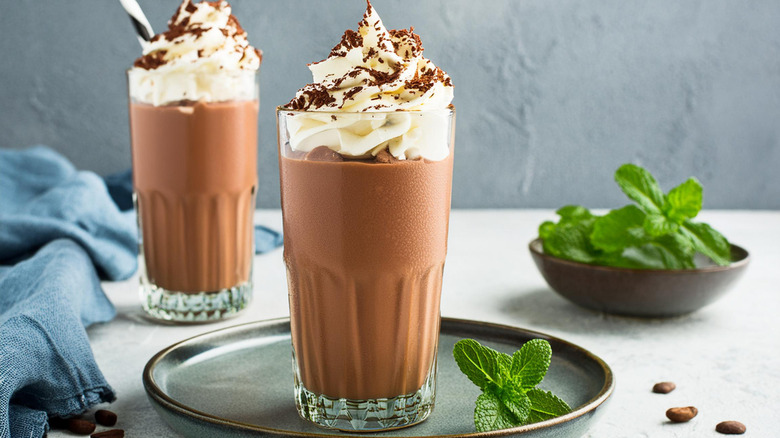
We know that the headline is confusing, but bear with us. In addition to slang words you've never heard of, you may also find common words being used in strange ways. One word that may come up is "milkshake." In parts of New England, a milkshake may not be what you expect, and if you find yourself craving a thick, ice-cream-filled drink, you could be in for a surprise if you order one. Instead, you may get a drink made from milk and flavored syrup. There may not be a drop of ice cream anywhere.
Interestingly, this drink is what was historically known as a milkshake around the U.S. in the 1800s, so it's not as strange as it sounds. In the late 19th century, soda fountains (which also dispensed flavored syrups) were all the rage. A milkshake was made from milk, a syrup, and a sprinkle of nutmeg. Popular flavors include pineapple, coffee, chocolate, and vanilla. Once the flavor was chosen, all the ingredients were shaken until frothy— hence the name milkshake. After modern refrigeration became more widespread in the early 1900s, soda fountains began serving ice cream, which was then added to the recipe. The new ice-cream-filled milkshake took hold around the U.S., but in parts of New England, eateries continued serving the older recipe of milk and syrup.
So, what do you order if you want your usual drink? Well, it gets interesting again. An ice-cream-based milkshake is called a frappe (pronounced "frap") in much of the region, so you would order a frappe if you want the type of milkshake you're accustomed to. But there is another twist. If you happen to be in Rhode Island or southeastern Massachusetts, you may hear an ice-cream-based milkshake called a cabinet.
Don't expect the typical big-city feel in urban areas
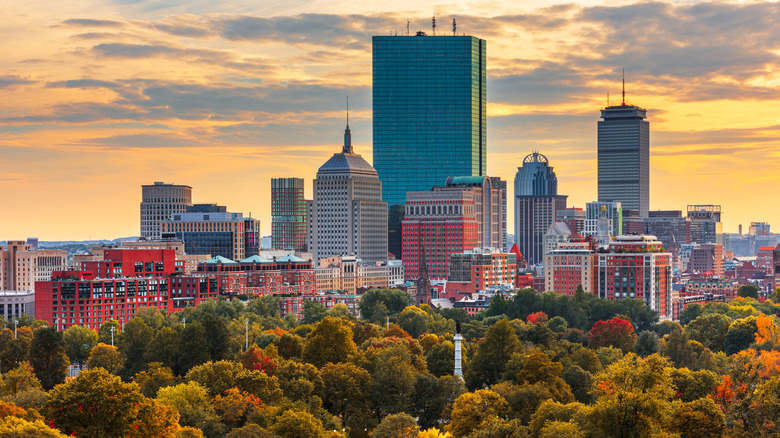
If you're looking forward to big-city excursions, you'll find everything your heart desires in New England's larger urban areas. In many ways, these cities won't come with the typical big-city feel. Comparatively speaking, New England cities aren't as populous as others. Boston is the largest with 670,000 residents. The second-most populous, Worcester, Massachusetts, has around 215,000 people. For perspective, New England's most famous neighbor, New York City, is home to approximately 8.5 million people. The relatively small populations and prevalence of smaller-scale buildings can affect how these cities feel as you walk around.
One good example is Boston, consistently recognized for its small-town feel. Visitors familiar with New York City are often surprised by how different Boston looks and feels in comparison. Instead of the rushed frenzy typical of the Big Apple, Beantown can feel unhurried and quieter. And instead of larger-than-life megastructures, Boston's buildings tend to be more modest in scale.
Unlike Chicago and New York City, Boston doesn't have many major skyscrapers. Buildings are restricted from reaching certain heights for a variety of reasons. Wanting to retain the charm of smaller buildings, locals often push back on plans for skyscrapers. Environmental and other regulations limit building heights in some areas, and Boston's proximity to Logan International Airport also affects how tall buildings can be. This makes for a skyline that may feel less dramatic than those of some other major cities. But although Boston feels smaller, the charming buildings hide a variety of museums, theaters, and Michelin-starred restaurants, so you'll never get bored. And if you head outside, breathtaking parks and scenic river views offer new ways to enjoy the city.
Prepare for cold beach days in some states
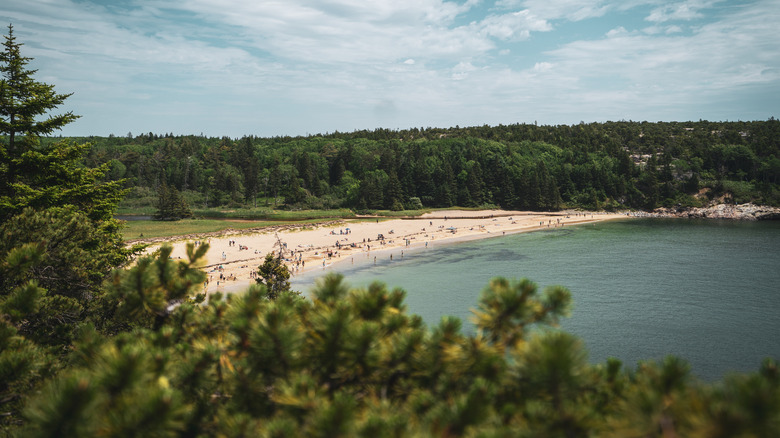
The New England coastline is a thing of beauty. From the pretty blue waters of Cape Cod in Massachusetts to lighthouse-hopping on Maine's famously jagged shoreline, everyone loves a good New England beach. One thing you may not know is that the water at some of these beaches remains cold year-round. If you're taking a summer trip and looking forward to a nice swim in the ocean, you may have to put the brakes on those plans in some states.
One such state is Maine, particularly known for its cold waters. While you may find the water too cold for a comfortable swim if you're headed to the Pine Tree State, it does have some famous beaches. These are absolutely worth a trip if you don't mind sunbathing on the shore. One unique option is the award-winning Sand Beach. Its pink-hued sand is a pretty special sight, and it's nestled inside Acadia National Park, a destination in its own right. The ocean is frigidly cold in summer, averaging between 50 and 57 degrees Fahrenheit, so swimmers should take the cold water seriously. There's also Old Orchard Beach, popular for having New England's only beachfront amusement park. Again, the ocean hovers in the 60s in summer, so the water may still feel chilly to many swimmers.
You can always pack a wetsuit if you must swim at any of Maine's cold beaches. Or, you could head to a state with warmer waters. Connecticut beaches along Long Island Sound are good options, as its more sheltered waters can be warmer than the open Atlantic. One to consider is the beach at Silver Sands State Park. Along with nice, warm waters, it offers eateries, dunes, and more. Some beaches in Nantucket, Massachusetts, also have relatively warm water. Eel Point Beach reaches a high of around 70 degrees in August, so it's another to add to your list.
Beware of the great clam chowder debate

That thing about doing as the Romans do when in Rome couldn't be truer when it comes to ordering clam chowder in New England. Locals are engaged in an ongoing debate between Manhattan and New England clam chowders, and you'll want to be on the right side if you want to fit in. Both chowders have clams, celery, onions, and potatoes. But Manhattan clam chowder is red, thanks to a tomato base, while New England clam chowder is white because it uses heavy cream and milk as its base.
Some locals are so passionately against the Manhattan type that they often show their ire publicly. "That red stuff doesn't exist to me. New England is the only way to go," proclaimed one local on Reddit. Another said in the same thread, "Manhattan style is heresy. In my completely unbiased New England opinion." One Redditor in another thread likened asking people to choose between the two chowders to starting a "U.S. Civil War." In fact, Manhattan clam chowder was so disliked that in 1939, Cleveland Sleeper Jr., a Maine state representative, introduced a bill that would have banned it in the state.
The bill never became law, but some New Englanders still treat the red chowder as unofficially off-limits. While you may be able to find it in a few eateries, ordering it may immediately signal that you're an outsider. You may even inspire a bit of angst, if Reddit responses like this are any indication: "Leave Maine RIGHT NOW. Go away. Manhattan clam chowder isn't on the menu here." You can avoid this by staying on the safer side of the longtime debate and ordering the New England type. Of course, if you like Manhattan clam chowder, that's what you'll have to order. Just know you'll be going against the grain.
Do your shopping early in the day
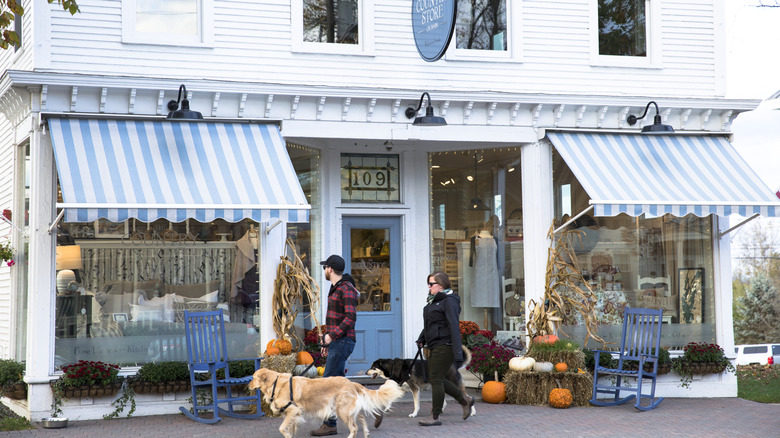
From tiny mountain villages to neighborhoods that look like dots on the coast, New England is known for charming small towns. And part of small-town culture in some places is the habit of closing stores earlier than you might expect in a big city. This is a reality you'll likely encounter on your trip, especially in places like Vermont and New Hampshire, where visitors regularly complain about establishments closing early. One Vermont local gave this perspective on Reddit: "There's only 600,000 people in the entire state. That means there's not a critical mass of people to go out at late hours or enough of a workforce that will work those late hours. We have a hard enough time staffing businesses during regular business hours."
Early closures can affect you in many places around the region. Stowe, a popular Vermont small town that's been nicknamed Fall's Color Capital, is one good example. If you were to visit, you might be surprised to find your options for eating out or shopping severely limited after 10 p.m. The two main supermarkets, Commodities and Shaw's, close at 7 p.m. and 9 p.m., respectively, so grocery shopping can also be challenging if restaurants are shuttered and you need ingredients for a meal.
These closing times may be earlier than you're used to if you're from a major city, but if you prepare, they won't affect you as much. Check closing times for restaurants, convenience stores, and other important establishments as soon as you arrive at your destination. Schedule meals so you don't show up after the restaurant's doors are closed. And keep extra supplies of any essentials that might run out and need replacing at night when nothing is open.
Beware of flies in the summer months

While the tourist guidebooks may not mention it, your dreamy New England summer vacation can come with flies, and they're the type that bite. What's more, there may not be much of a reprieve. Different parts of the summer bring different species, sometimes more than one at once, making outdoor excursions uncomfortable for those who don't prepare.
Black flies typically make their appearance around the region in spring and early summer, beginning to die out in many places by June. They can remain an annoyance until August and September in a few places, so depending on where you visit, you may encounter them in later months. They tend to bite areas with thinner skin, so try to cover your ears, ankles, and the nape of your neck as much as possible if you happen to stay in an area where they're a nuisance. DEET is known to be effective against the pests, so you may also want to pack some, just in case.
Deer flies also show up in summer and can remain active through July. This species can leave a painful, cut-like bite and is pesky enough that locals in Vermont and New Hampshire often complain about not being able to walk their dogs or enjoy their yards when it's warm out. And if you go to the beach, greenhead flies frequent parts of the coast during July and early August and are known for their painful bites. The bad news is that standard repellents may be less effective against deer and greenhead flies. However, some locals swear by oil of lemon eucalyptus as a deterrent. For deer flies, some locals also recommend mixtures containing lavender, citronella, and peppermint oils. Packing lighter-colored clothing may also help reduce attention from some biting flies.