
The 9 Most Breathtaking River Towns In Europe
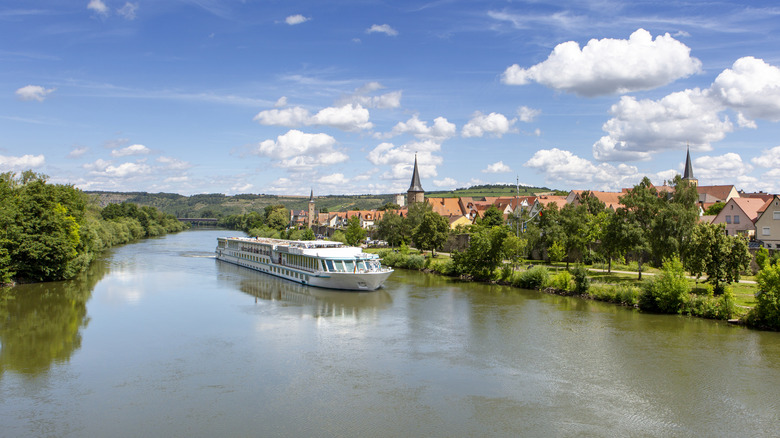
Water is life, or so they say, and for as long as civilization has endured, humans have gathered at the shores of oceans, rivers, and lakes. The Scottish author Kenneth Grahame famously noted that there was nothing worth doing half so much as messing around on boats, but for those of us who prefer to keep our feet on terra firma, a next best thing exists: A home with a riverside view is a thing of beauty.
Of course, not all rivers are born equal. Some have been all but ruined by the urban sprawl that invited them in the first place; in Japan, many natural riverbanks have given way to concrete, while the Thames smelled so bad in 1858 that it almost brought the city of London to its knees. Meanwhile, rivers like the Ganges in India and the Mississippi in the U.S. are often picturesque and undeniably iconic, but they also rank among the most polluted rivers in the world, according to SeaSmart.
Urban development hasn't always been kind to rivers, but for every riverway that has suffered at the hands of humans, dozens more strike a balance between progress and conservation. Europe is home to some truly mighty waterways, many of which play host to some of the best river cruises in Europe, if not the world. And yet, even as the thought of a cruise draws people in, it is the stops along the way that often prove to be the main event. For every waterway there is a town, city, or village that rests beside it; each has its own story to tell. What follows below is drawn from personal experience, curated recommendations, and a healthy appreciation for the accolades these places have earned. There are UNESCO World Heritage towns to visit, hidden corners waiting to be discovered, and places that have earned near-universal acclaim.
Český Krumlov, Czech Republic (Vltava River)
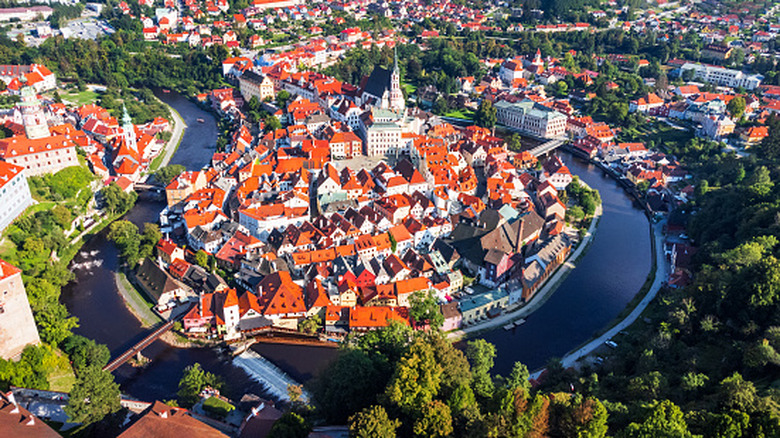
When it comes to visiting the Czech Republic, Prague tends to dominate the headlines, and understandably so. It's home to one of the most awe-inspiring castles in all of Europe, a marvel of competing architectural styles, summer cruises, and the kind of grace and style that is hard to fake. But it is also terribly overcrowded, with 8 million visitors descending on the city (according to Best Prague Guide) annually. And as they do so, they miss out on everything else the country has to offer: the fairy-tale towns that lie to the south, the industrial grit of Ostrava to the east, the beer-hall culture of western Plzeň, and much more. Oh, and they don't get to experience the meandering streets of Český Krumlov, a speck on the map resting along the Vltava River near the Austrian border.
The town boasts around 12,700 inhabitants, and its skyline is dominated by the enormous medieval castle that lies at its heart, the second-largest castle in the Czech Republic. As with Prague Castle, it's more of a sprawling complex than a single defensive structure; you could easily spend an entire day exploring all it has to offer. And again, as with the capital, the weight of architectural style here is breathtaking; Gothic foundations, Baroque interiors, and Rococo outbuildings blend together into an unforgettable experience that is quintessentially Czech.
Meanwhile, the river itself offers a postcard-perfect backdrop for the town's historic center, a UNESCO World Heritage site in its own right. The area is compact, ensconced within the meander of the river itself. It's eminently walkable, and the nearby Castle Tower, which rises almost 300 feet above the waterline, offers some truly memorable views.
Cochem, Germany (Moselle River)
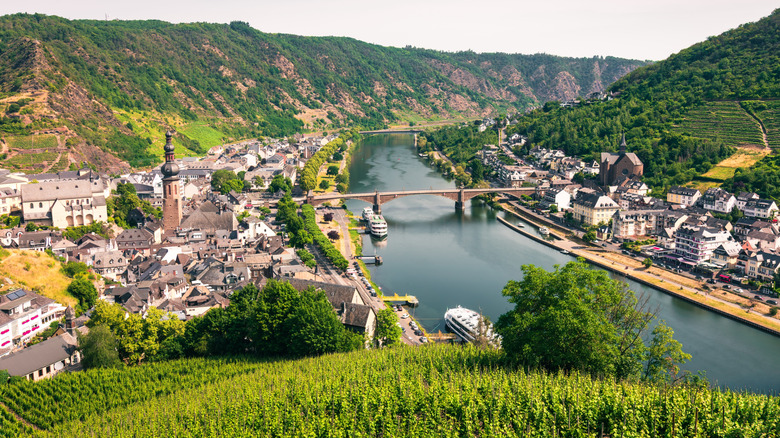
Germany has not existed as a unified nation-state for quite as long as some people might think — its bicentennial is still some decades off — but the area has long been blessed with waterways. Many of them roll off the tongue with the distinct lilt of familiarity: the Danube, the Rhine and the Elbe. But for every river, there is a tributary, and for almost every one of those, a town that has carved out a slice of river living all of its own. Such is the case with Cochem, a sleepy enclave located a little more than an hour's drive south of Bonn.
The first thing that visitors tend to notice about Cochem is the way the vineyard-laden hills seem to melt into the river below. Brightly painted houses cluster along the banks as the Moselle makes its way towards the Rhine, but once again, the skyline is dominated by the enormous castle perched high above the tree line. It is the largest castle on the Moselle, and its intimidating Neo-Gothic lines conceal the much deeper history of its very foundations. Views from the castle's elevated position — some 300 feet above the river — allow visitors to take in the majesty of the surrounding region. Tours are available, and you can channel your medieval energies by cosplaying as a knight or fair maiden and signing up for an honest-to-goodness feast held in the cellar.
Meanwhile, the town bustles down below. River cruises regularly stop here, as clear a sign that it is a place worth visiting if ever there was one. There are seasonal wine festivals, Christmas markets to enjoy if you miss the grape harvest, and a really satisfying café culture that is more robust than the size of the town might suggest.
Dürnstein, Austria (Danube River)
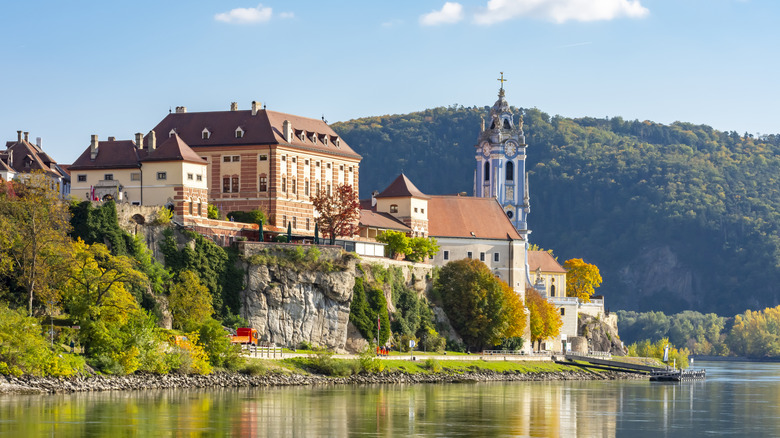
It would, of course, be remiss not to include at least one stop along the river that inspired the most famous waltz in the world. The Danube is the second-longest river in Europe (the Volga is longer), snaking from the Black Forest to the Black Sea and passing through 10 countries along the way. Danube cruises are extremely popular, and typical itineraries include stops in Budapest and Vienna, with longer journeys also traveling deeper into Eastern Europe toward the Black Sea. But there are other places of note besides the big cities, and Dürnstein, situated in the UNESCO-listed Wachau Cultural Landscape, is definitely one of them.
The town itself is located on a bend in the river, about 20 miles from Stift Melk, a lavish 11th-century abbey refashioned in the Baroque style and a must-see stopover in its own right. Dürnstein, however, has an abbey of its own to marvel at, and its blue-and-white bell tower is one of the most iconic sights anywhere on the river. The town lies in the ruins of a once-mighty castle and one-time jail of Richard the Lionheart, who was imprisoned there in the late 12th century after his return from the Third Crusade.
History buffs will delight in Dürnstein's connection to the quasi-mythological Robin Hood (Richard was Bad King John's brother), but the entire valley it sits within is quite rightly recognized by UNESCO as being World Heritage-worthy. Many cruises pass alongside the town, though not all stop over. If you want to experience all Dürnstein has to offer, double-check cruise itineraries.
Bamberg, Germany (Regnitz River)
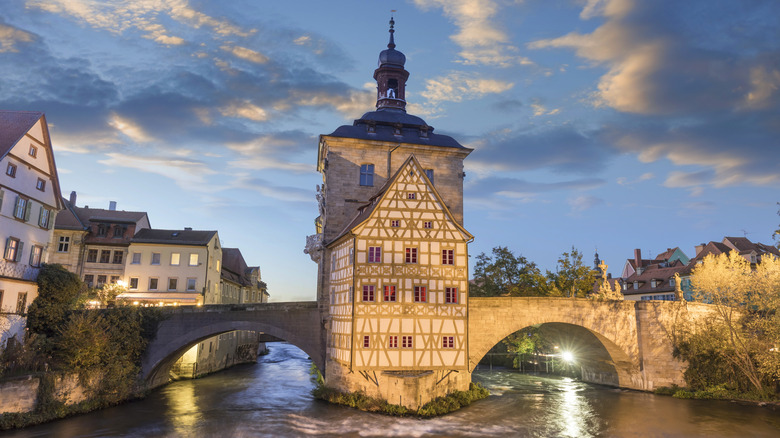
You could perhaps be forgiven for having allowed the town of Bamberg to slip below your radar. It sits tucked away in a half-forgotten corner of Bavaria, about 40 miles north of Nuremberg. Its population of around 80,000 makes it neither large nor particularly small, and it has the curious distinction of being home to a centuries-old brewing tradition that produces beer with a distinctive smoky, bacon-like flavor. And yet, this medieval town is often considered to be one of Europe's most beautiful.
There are few places in Germany where scars of the past fail to blemish the skyline, and Bamberg is no different, but how the Altes Rathaus (Old Town Hall) and the many buildings of historical interest escaped major destruction during World War II is anyone's guess. The town is a mix of medieval charm and baroque magnificence, built, like Rome, upon seven hills and sporting a waterfront lined with trim gardens known as Little Venice. The whole place feels like an open-air museum, and UNESCO has duly blessed it.
The Regnitz River has helped define Bamberg from its very beginnings, with the nearby Main shaping the wider region, and there are plenty of cycle paths and hiking trails that allow you to explore both rivers at your leisure. Taking a boat excursion is also an excellent way to take things in as you glide past the many landmarks at a leisurely pace. Back on dry land, you can visit the only Papal tomb north of the Alps, delve into the mystery of the Bamberger Reiter (a life-size statue of a man on a horse whose identity is entirely unknown), and marvel at one of the only town halls in the world to have been built upon an island.
Dinant, Belgium (Meuse River)
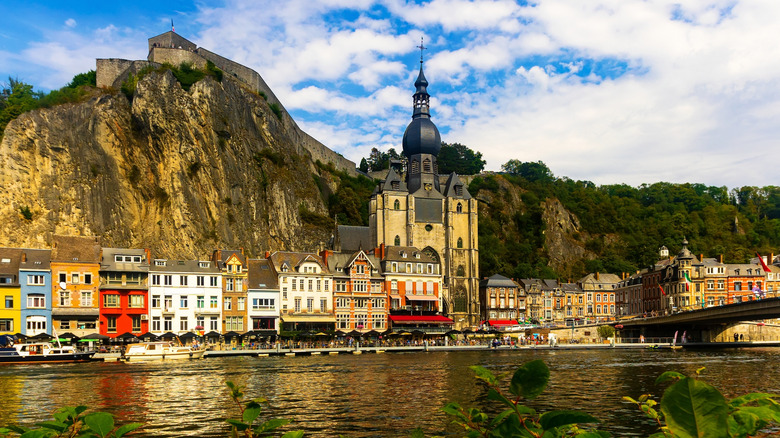
Visitors to Belgium are often quite naturally drawn to three locations. The capital city calls as all capitals do; Bruges is unimaginably picturesque and one of the most walkable cities in Europe; and Ghent offers Bruges' charm without the crowds. But Dinant is a place with magnificent Gothic architecture, dramatic topography, and a compact center small enough to explore in a single day. It's a worthy addition to any itinerary.
You'll find the town on the northern edge of the Ardennes, squeezed into a tiny strip of land with the fast-flowing Meuse on one side and towering limestone cliffs on the other. That view alone is worth the visit. Adolphe Sax — the inventor of the saxophone — was born here, and the town's musical heritage is writ large across its streets for all to see. A visit to the House of Mr. Sax Museum is a must, and while the streets are filled with the velvet moan of woodwind-inclined street performers year-round, true enthusiasts make their way to the nearby Leffe Abbey during summer to enjoy the Dinant Jazz festival.
Other than that, it's just a fantastic place to sit, eat and drink as you watch the river go by. Dinant lacks pretense, as indeed does the river it shares real estate with. The Meuse has carved its way through this landscape over millions of years, cutting deep into the ancient limestone and rock formations that define the surrounding valley. Such age is visible in the cliffs above, sure, but there is a peaceful nature to this river that seems to stem from the deep time from which it spawned. Perhaps words cannot do it justice. Go sit by it awhile and see.
Stein am Rhein, Switzerland (Rhine River)
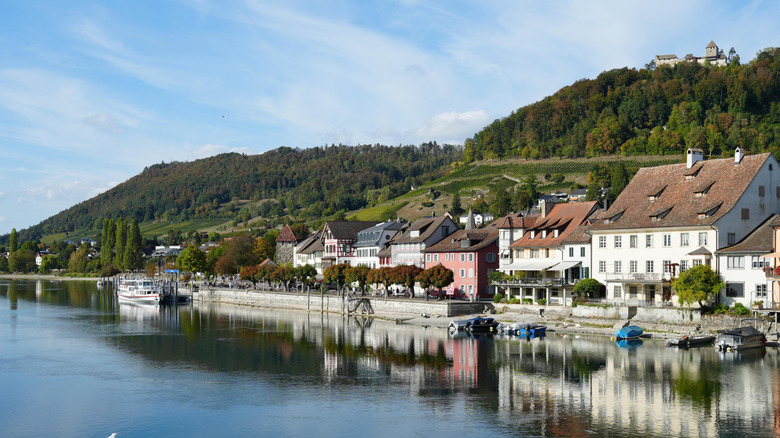
It's hardly a surprise that the Rhine (or Rhein to use its German spelling) makes a second appearance here. It is one of the longest rivers in Europe, flowing through six different countries and emptying into the North Sea; the Rhine is one of the most important waterways in the world. Stein am Rhein sits alongside it, about 30 miles northeast of Zurich and close to the border with Germany. Here, Lake Constance, one of Europe's most beautiful lakes, narrows into its western section, before the Rhine emerges from the lake at Stein am Rhein and continues its journey west.
As you approach Stein from the river, you'll find a peaceful promenade running alongside the water. This is a place for scenic boat rides, quiet cycling trips, and swimming in crystal-clear waters. The town itself, however, is an incredibly well-preserved example of Swiss medieval elegance replete with a 13th-century castle perched some 600 feet above the waterline. Known as Burg Hohenklingen, it's well worth a visit, offering panoramic views of the entire region and a restaurant that is one of the classiest joints for miles around.
As for other attractions, well, the small town is all about the waterfront. The painted facades of the Rathausplatz central square feel like something out of a storybook, and it is a fantastic location to grab a quick coffee or bite to eat. Even so, its principal draw is undoubtedly its beautifully preserved old town, and you can also pick up a souvenir or two before gathering supplies for a quiet picnic by the river.
Hay-on-Wye, Wales (River Wye)
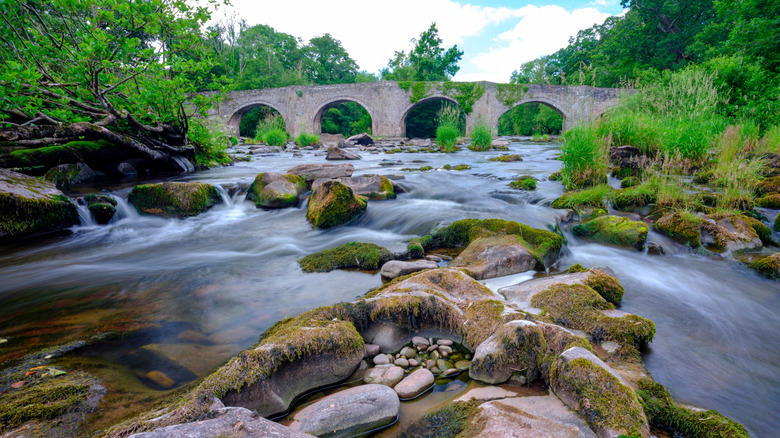
Delightfully picturesque, Hay-on-Wye is known as the Town of Books and sits on the Welsh side of the Wales-England border. The whole place is infused with a feeling of measured tranquillity, and while the River Wye lacks the prestige and commercial importance of some of the other rivers on this list, it more than makes up for it with charm.
The Wye Valley is designated an area of Outstanding Natural Beauty and is much beloved by Brits, who see it as the quintessential example of what a British waterway should be. Its origins, however, are Welsh; it rises in the Cambrian Mountains and flows southeast through Wales and England towards the Severn Estuary, home to the highest tides found anywhere in Europe. Hay-on-Wye is but one stop on that journey, and trying to find somewhere close by with international name recognition is a challenge: Cardiff lies some 60 miles to the south, but canal boat enthusiasts might also be familiar with Brecon, less than 30 minutes' drive away.
Not that you'll necessarily want to leave Hay-on-Wye. The steep banks upon which the town is built offer fantastic views of the river as it sweeps past in melodramatic loops. The castle dominates; it's a mixture of a medieval Norman fortress dating to around 1200 and a 17th-century Jacobean manor, serving as a reminder of the strategic importance of the borderlands in days gone by. Here under its shadow, you can experience the so-called Woodstock-of-the-Mind, the Hay Festival, an annual celebration of literature, comedy, and the arts that takes place in late spring, alongside a separate Winter Weekend each November. Down in the town, there is a bookshop around every corner, and a patch of river waiting for you to curl up in and get lost in the pages for an hour or three.
Ribe, Denmark (River Ribe)
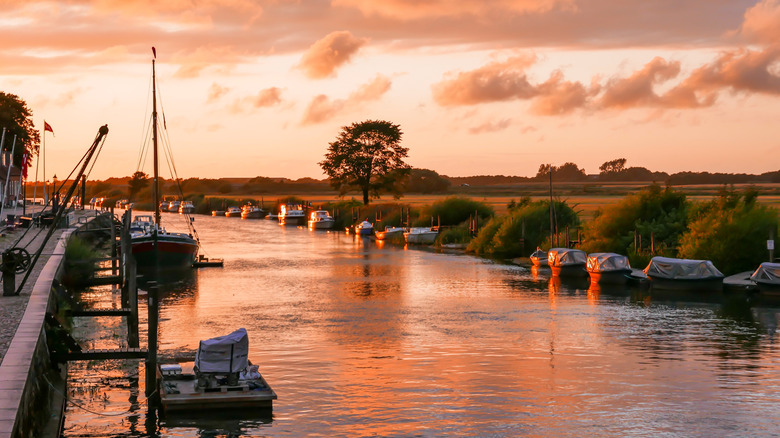
Long before Copenhagen ever existed, in the years following the collapse of the Roman Empire, there sat a small town about halfway up the Jutland Peninsula in what is now Denmark. It sprang up alongside the Ribe River, a waterway formed by the confluence of other rivers that eventually flows west towards the Wadden Sea. Its position gave it access to the North Sea and the increasingly important trading routes connecting Scandinavia with western Europe. Ribe began as a marketplace sometime between A.D. 704 and 710 and, within a few decades, had become an important center of commerce in the Viking world. This was, after all, the beginning of an era that would fundamentally change the history of Europe. Recognized as Denmark's oldest town, Ribe is a place where the Viking past remains very much alive.
Today, despite being less than 4 miles from the west coast of Jutland, the town never quite fulfilled its early promise as a major trading center. A devastating fire in 1580 destroyed much of its historic center, while the gradual silting of the river during the 17th century made it increasingly difficult for merchant ships to reach the town. Such catastrophes ultimately worked to the town's advantage, and it maintains a quiet riverside attitude to life.
The architecture is a mix of cobbled streets, pastel-shaded houses, and buildings of much older pedigree, such as the Ribe Cathedral, built on land used as a place of worship for over 1,000 years. There is a Viking Center where you can wander around recreations of Viking-era settlements, browse the marketplace, and watch reconstructed battles. A short way off, you can also find the Wadden Sea Center, a gateway to the surrounding national park and the UNESCO World Heritage-listed Wadden Sea.
Blagaj, Bosnia and Herzegovina (Buna River)
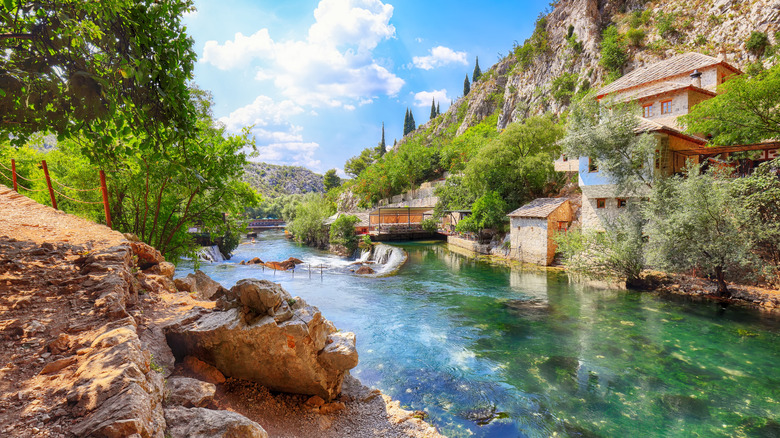
Bosnia and Herzegovina is both a wildly underrated mountainous gem and one of the cheapest countries to visit in Europe. The capital, Sarajevo, is a magical city in its own right, but some 85 miles or so to its south, you will find the quiet town of Blagaj. It sits astride the Buna River, which bursts dramatically from a cave beneath a towering limestone cliff at the edge of town. This spectacular spring, with its impossibly clear water and surrounding greenery, is worth a visit in its own right. Blagaj itself offers all that you would expect from a vacation in Bosnia and Herzegovina. There is a medieval fortress perched dramatically above the town, strong coffee served in traditional copper pots to sample, and a deep, interwoven history that reflects the cultural history of the wider region.
Yes, there is the river, and a boat tour is a must-do activity, but you'll also find excellent cycling here, as well as the Museum of Bosnian and Herzegovinian Tradition, which features hundreds of objects that offer a glimpse into regional traditions. Meanwhile, the city of Mostar, with its magnificent Ottoman-era architecture and famous Stari Most (Old Bridge), is just a 20-minute drive away, offering a delicious contrast between urban bustle and the quietude of Blagaj's much slower pace. Indeed, the whole region is one of those corners of Europe that simply works as a vacation destination, and the opportunity to experience its extraordinary scenery and history without the crowds or prices of some better-known European destinations is the icing on the cake.