
10 Unwritten Rules Tourists Should Know Before Visiting Edinburgh
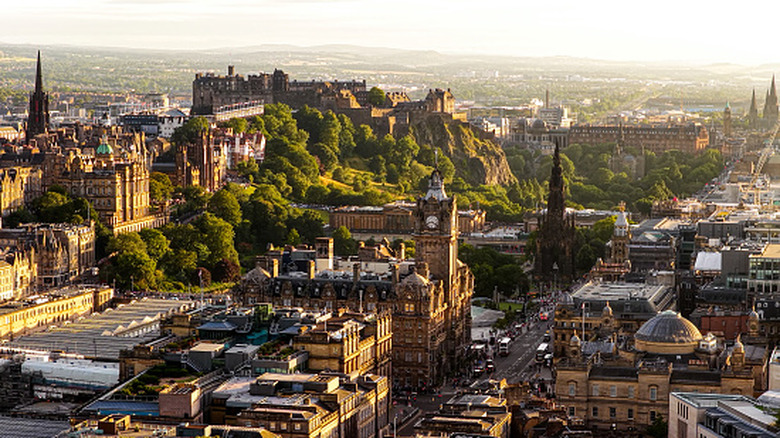
Edinburgh, Scotland's resplendent capital, is having a moment. As the second most-visited city (according to Visit Britain) in the United Kingdom — London is first — visitors are flooding into its cobbled streets year-round. The pattern is similar across the country, partly due to fans of shows like "Outlander" and "The Traitors," but Edinburgh remains the primary draw, wooing with its beautiful streets, outstanding culinary scene, and of course, our liquid gold — whisky.
But with those arrivals, the city's social conventions, cultural quirks, and local frustrations can be exposed more abruptly, dropping unsuspecting tourists in awkward situations. As a Scottish man, I've seen these faux pas on Edinburgh's streets, internally cringing as a tourist holds up a local bus or gets wound up at the serving order at the pub.
But that's what this article is for. It'll highlight 10 unwritten rules that should be mandatory reading on the plane to Edinburgh. Follow these, and you'll avoid stepping on toes and uncover a slice of Edinburgh other visitors don't get to experience.
Never jump a queue
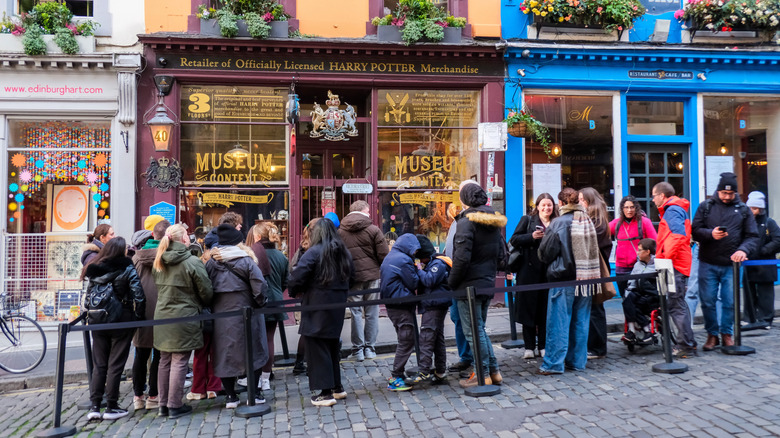
Start with the big one: never, ever jump the queue. It doesn't matter if it's the bus stop, the pub, the shop, or the toilet, skipping the line in Edinburgh — it's also a faux pas in England and the rest of the U.K. — is a surefire way to make enemies quickly. The worst part? In some parts of the U.K., our inherent politeness means you might not even be aware of the seething crowd behind you, but up north, we're likely to let you know.
Different cultures value different ways of doing things, and as an increasingly diverse city, you'll see the occasional clash. To be clear, we celebrate that diversity, but jump the line at the pub, and you'll find another line has been crossed. In most cases, it should be clear. Bus stops will see lines form naturally to the sides to avoid blocking the street, while pub service's amorphous nature still has a system, even if it's not immediately clear. And yes, there's another list of unwritten rules for British pubs, too. If you're unsure, don't be afraid to ask where the queue starts. And if you know you're being served before someone else, inform the bartender that you aren't next.
Escalator and public transport etiquette falls under the same umbrella. Similar to the rest of the U.K., you'll want to stand on the right if you're not walking and leave the left-hand side clear for those who are. When getting on trains and buses, you should step aside until everyone gets off, and always give up your seat for someone who needs it. But again, if you're unsure, just ask.
Don't stop in the middle of the pavement for photographs
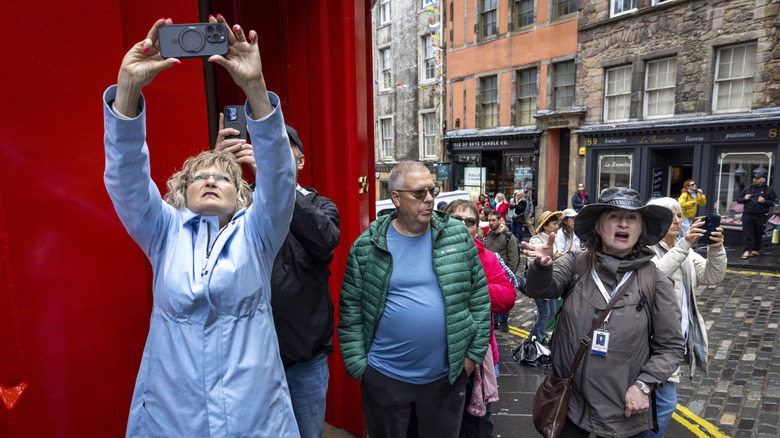
Edinburgh is a spectacular city. Strung along and around an extinct volcano, its medieval old town, Georgian new town, and everything in between are crying out for photos from every angle. Even Dean Village, a verdant oasis in urban Edinburgh, is a place where people live, not a photography set. But please, don't grind to a halt in the middle of the pavement to snap your picture.
Roads like Princes Street, with its shops and access to the train station, are packed during peak tourist season — and sometimes even outside those times — so a sudden stoppage can be like toppling the first domino in a line. People live and work here and are bustling to and from work, home, or other endeavors, and don't need to be thrown into a pedestrian traffic jam for the sake of an Instagram feed. If you want to snap a shot, check behind you and step to the side of the pavement. Wait for a break in the crowds and seize your moment.
The Royal Mile can be a chaotic place for this, too. As the focal point of the city's tourist industry, it's inundated with tour groups, visiting families, and solo travelers before the locals are even considered. Its cobbled roads look as if they have been pedestrianized, but most of the year they're not, and the other side of the sidewalk has shadowy streets hidden down steep corridors. Stopping suddenly here could send someone off a steep curb onto uneven ground or down a steep staircase in a close. One Redditor from Edinburgh said it best when they wrote: "remember that this is a lived-in city, not a theme park."
Don't rub Greyfriars Bobby's nose
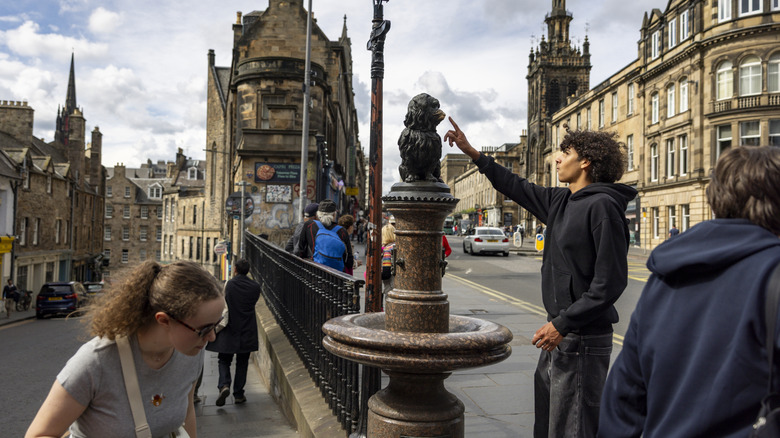
Greyfriars Bobby is one of Edinburgh's most beloved icons. The shortened story tells of a 19th-century night watchman for the police who took a Skye Terrier named Bobby on his rounds with him. When his owner passed away, Bobby is said to have sat at the owner's grave in Greyfriars Kirkyard for 14 years. While the details of the story have always been varied and dubious, there really was a dog called Bobby in these parts, and after garnering the affection of the locals, he was buried just outside the kirkyard.
A statue of Bobby has sat on a drinking fountain in front of Greyfriars Kirkyard (and an excellent pub bearing his name) since 1873. Visit today, and you'll find the dog's nose a polished bright bronze in stark contrast to the darker, weathered finish on the rest of the statue. This has happened after years of tourists rubbing the little dog's nose, a trend that appears to have started in 2012. While some tour guides and travel influencers suggest this has been a long-time tradition that brings luck, it's actually a new problem for the city,
Since the practice started, the city has had to pay for multiple repairs and has made public pleas for tourists to stop rubbing the dog's nose. It doesn't seem like a huge deal, as you'll see others doing it. But it's a small disrespect to the city that its locals take seriously. Countless Facebook pages have been set up to protect the statue. Take photos, enjoy Bobby, but don't rub his wee nose.
Don't stick exclusively to touristy pubs along the Royal Mile
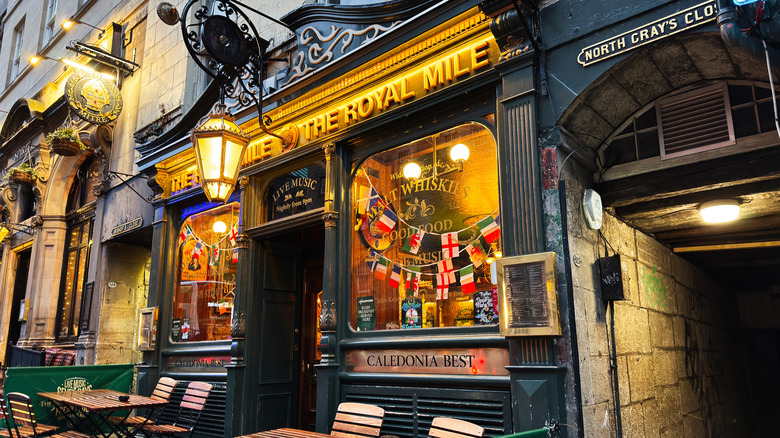
Few things are more associated with Scottish culture than the pub. It's not a cliché either; our local drinking holes are integral parts of the community — places where we catch up with friends, decompress, celebrate good news, commiserate over the bad, and generally find a bit of solace. Edinburgh is packed with pubs like the Sheep Heid Inn, widely regarded to be Scotland's oldest pub, but many tourists make the mistake of sticking solely to those on and around the Royal Mile.
To be clear, many of those pubs are stunning and worth stopping by. Spots like The World's End, The Last Drop, and Deacon Brodie's are among the most atmospheric spots in the country for a drink, but that reputation means you're more likely to be toasting an international visitor than a Scot. That doesn't mean you won't have a great time, but broaden your search radius to find traditional spots where you can get a feel for what we do when we step into our favorite haunt. Swinging through other neighborhoods, like Leith, Southside, Morningside, and the New Town, can unlock a more authentic experience — maybe even an "Old Man Pub," as we call them: simple bars where the regulars could have been coming for decades.
Rose Street in the New Town is an unintimidating middle ground, striking a nice balance of tourists and locals, with professionals clocking off work and heading for a pint alongside visitors wandering the nearby shops. Even modern iterations are worth checking out. Places like Jeremiah's Taproom at the head of Leith Walk draw in younger Scots with brilliant craft beer selections in a pub setting.
Always take your turn buying a round at the pub

On that note, here's a pub-related faux pas: skipping your round. Drinking is a communal experience in pubs across the U.K., and buying a round for everyone is a massive part of that culture. For us, it's second nature, and we rarely think about it until someone pulls a sneaky dodge on their own turn.
There are a few reasons this has stuck in pub culture for so long. For efficiency, it's far easier than sending five individuals to the bar for separate orders. Table service doesn't really exist, so a single drink order for five could take a long time. It also takes away the awkwardness of splitting a large bill. But culturally, it represents trust, camaraderie, and belonging. It's a small token that you're invested in the group you're with, and a celebratory moment as you all tuck in to your next drink. Best practice is not to wait till everyone is done. Head to the bar when most glasses are getting low to prevent a lull.
Now, while it's still very much a part of the culture, rising drink prices, contactless payment, and changing drinking habits have made it less rigid than it used to be. If you're not comfortable taking part, make it clear early on. That could be a financial decision or because you're only staying for one or two, but it will be fine as long as you let your group know. Just don't enjoy five drinks of your own, then make for the door without grabbing one — that's a big black mark on your record.
Don't treat the bus driver like a personal tour guide
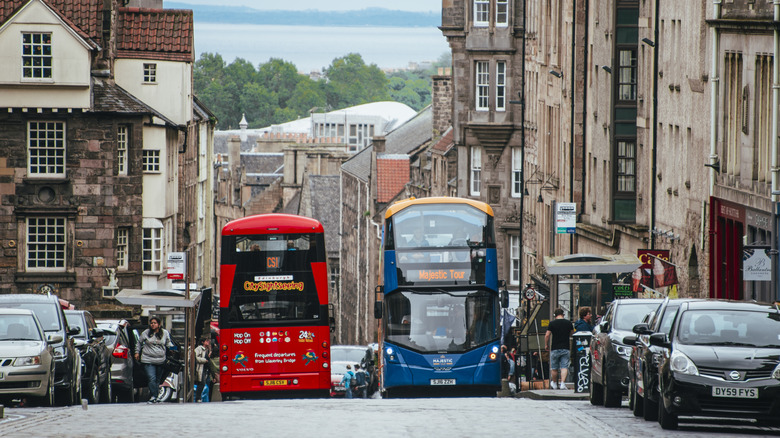
Edinburgh isn't a big city, but if you only have a few days in the capital, it's smart to take full advantage of the public transport options to save some time getting around. It's one of the world's most travel-friendly cities, partly thanks to how easily you can get about without a car. The bus system is the most comprehensive and affordable way to get around — in tandem with the trams — making it possible to get within a block of almost anywhere in the city for just £2.40 ($3.20 USD) or £6 ($8 USD) for a whole day. Unfortunately, tourists have a knack for overusing the bus driver's knowledge, at the expense of everyone else.
The buses run on a pretty strict schedule, working to stay regular despite the unorthodox nature of a city never built for motor vehicles. It can be a source of immense frustration for both drivers and locals to see a tourist holding up a driver to ask for advice, directions, or a mixture of both. It's not that drivers aren't helpful; they're stereotypically good humored and glad to help when they can. But a bus pulling away from a busy Princes Street is not the moment to ask the best way to get to the castle or a specific pub. It's also helpful to have your payment ready. The buses accept contactless payment, so have your card or phone ready, tap, and hop on. If you're going with cash, have the change ready instead of fumbling around (standard daytime journeys have a flat fare).
If you're in line with other passengers, ask them for some help with the bus numbers, fares, and directions. Most of them can probably help with anything you need. If you're alone and uncertain of the bus, have the stop you want in mind, lean in and shout to double-check. If it's the right one, they'll beckon you on, and if not, step back off and wait for the next. And when your bus approaches, extend your arm to signal to the driver that you want to get on.
Don't butcher the pronunciation of Edinburgh and other Scottish place names
Let's say it together: "ed-in-burruh." I know, it might not make sense, especially since two places in the U.S. named after Edinburgh are spelled "Edinboro" and "Edinburg," but that's how we say it. And I have some bad news ... that's one of the easier words you'll have to learn. But if there's one thing that impresses us, it's an American tourist with a grasp of our pronunciations, so get studying on the plane over. It's one of many things that surprise American tourists visiting the U.K.
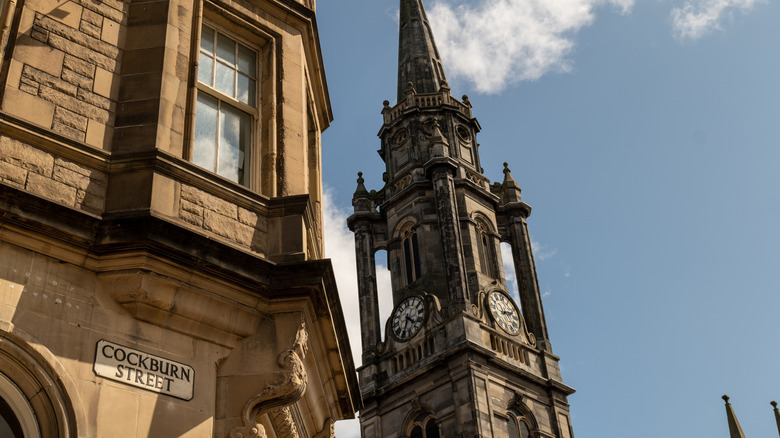
At a core level, it's not a massive deal. The irk comes when big mispronunciations feel a little careless — as if our own words and culture should conform to the visitors. We know that's not usually the truth, but it can frustrate us. The bigger issue for you as a tourist is more practical. There are a lot of tough ones to pronounce, and saying them wrong could lead to confusion or you getting a little lost. Cockburn Street is pronounced "co-burn," not "cok-burn," Buccleuch Place is "buk-loo," and double-check what you tell your taxi driver when you ask them to take you to Princes Street — it's the plural of prince, not "princess," as many accidentally say. If you head to a Scottish traditional dance — you definitely should — you'll find they're called "ceilidhs", pronounced kay-lee.
Some of them are tough. Many of them are rooted in Old Scots or Gaelic, both of which are known for being incredibly complex on the pronunciation front. It's important to grasp, though, that these are important parts of our heritage, and making the effort to understand them goes a long way. As the brother of a girl named "Eilidh Ceit," pronounced "ay-lee kate," I've seen the frustration firsthand as she repeats her name for the fifth time. Be the tourist we appreciate.
Don't mistake Scottish directness or sarcasm for rudeness

Your first conversation with a Scottish person might be an odd one, especially if it's in the pub. While we're in the U.K., a place known for its politeness, the Scots are known for their biting, sarcastic humor and their directness, which is practically a national pastime. For Americans, digesting the Scottish banter can be a little jarring, with tourists often mistaking it for rudeness.
A Scottish person giving you a hard time is actually a strong sign that they're enjoying your company and view you as bold enough to take it. Playful insults, deadpan remarks, and brutally honest observations are all common parts of Scottish conversation. What might sound like an argument to an outsider could simply be two friends having a laugh. Someone with "good banter" is well regarded for being funny to be around, usually with good stories or witty comebacks, so if you can give it back in a tongue-in-cheek way, you'll be accepted as one of us in no time.
The trick is learning to recognize the difference between genuine hostility and good-natured ribbing. If someone makes a sarcastic comment, there's no need to take it personally or immediately fire back with an insult of your own. A smile, a laugh, and a wee bit of willingness to laugh at yourself will usually go a long way. Of course, not every rude comment is affectionate; we're not all lovely, but don't be surprised if the person who's been teasing you all evening is also the first to offer you another pint and invite you out the next day.
Don't assume everyone supports Scottish independence
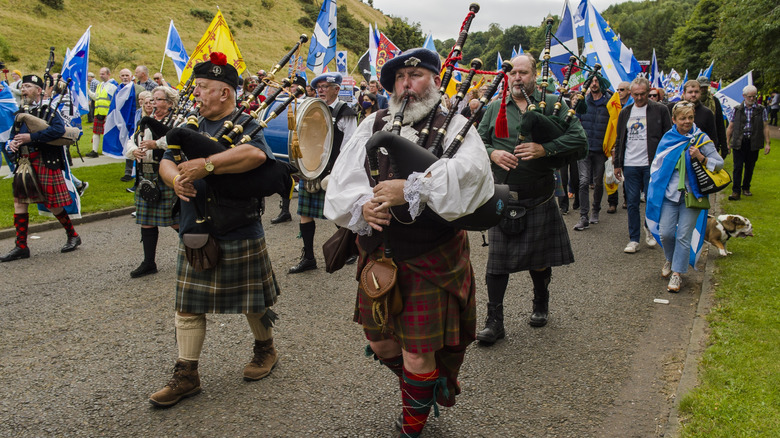
This is a very important one, as with the wrong person you might ruffle some serious feathers and send the conversation down the wrong path. Scotland's relationship with the rest of the U.K. is complicated. Just over a decade ago, a growing number in the country successfully pushed for a referendum on Scottish independence from the rest of the U.K. While the movement was unsuccessful in that attempt, it has continued to push for independence, keeping the issue a polarizing trigger point in Scottish politics.
Many Americans' view of Scotland is shaped a little narrowly by movies and television. Visions of Mel Gibson in the movie "Braveheart" lend to the idea that we're all anti-English and being held in a union we don't want. The reality is that the wars of independence were in the 13th and 14th centuries; we've been in the Kingdom of Great Britain for over 300 years, and many of us are content as is. In fact, many Scots fought under the British Crown in the American Revolutionary War. We hold British passports, many of us identify as British first and Scottish second, and some are just as passionate about remaining as the independence movement is about leaving.
You can ask about the independence debate. We generally welcome healthy conversations and are happy to share our opinions on why we believe what we believe. But approaching a conversation assuming the other party is hell-bent on leaving the U.K. is risky business. It would be similar to a Scot arriving in the South of the United States and assuming everyone is a die-hard Republican. Ask the wrong person, and you'll cause serious offense. You don't need to overthink it; just don't assume you know more than the person you're talking to. This applies doubly if you see a rally.
Don't underestimate just how busy Edinburgh gets during festival season
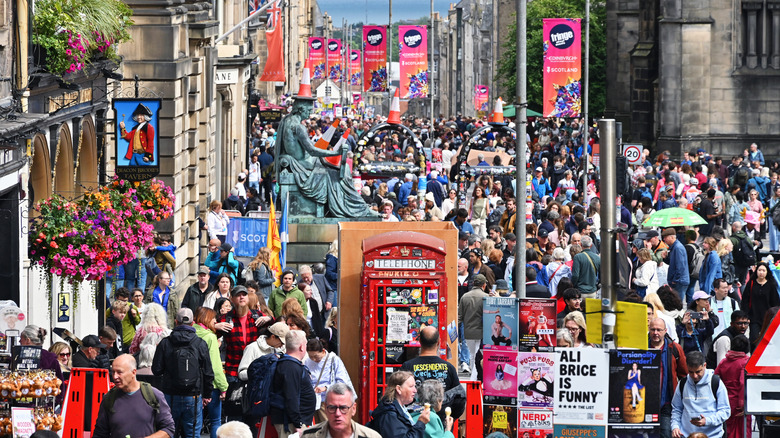
Edinburgh's popularity means it is a busy city at the best of times, but August is an entirely different beast. Every summer, the Scottish capital transforms into one of the world's biggest cultural destinations, with the Edinburgh Festival Fringe, Edinburgh International Festival, and Royal Edinburgh Military Tattoo drawing enormous crowds. If you've booked a quiet summer getaway without checking the calendar, you might be in for a shock.
The Royal Mile becomes a sea of street performers, promotional flyers, and visitors, while bars and restaurants fill up and accommodation prices can climb dramatically. The festival itself makes use of almost every space possible — seriously, even toilets have been used as comedy venues. Even simple tasks like crossing the Old Town or finding somewhere for dinner can become an utter ordeal. The festivals are undoubtedly part of what makes Edinburgh special, but they're also a major disruption to everyday life for locals.
If you're visiting specifically for the festivals, embrace the chaos and plan ahead. Choosing the best places to stay in Edinburgh matters even more in August. Book accommodation well in advance, reserve tables at popular restaurants where possible, and allow extra time to get around. If you're not interested, I'll be blunt. Don't come. Wait till September or come in July.