
5 Massachusetts Towns Filled With Railroad History And Vintage Vibes
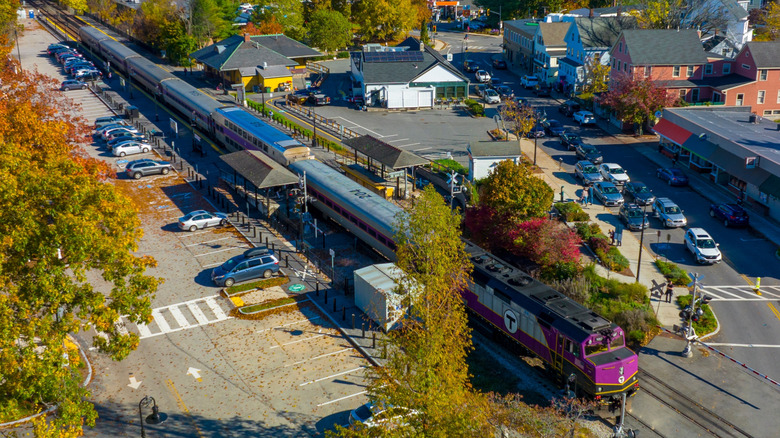
As one of the original 13 colonies and oldest states in America, Massachusetts is steeped in history. And while many focus on the state's Colonial history, there's another era that made a great impact. The 19th-century Industrial Revolution changed the state, with textile mills transforming sleepy villages into booming industrial centers. With these changes came the advent of Massachusetts' first railways, which first hauled passengers in 1835.
The remnants of the state's rail history can be found across Massachusetts, which still has a vast commuter rail and Amtrak network. While many early Massachusetts railroading towns are no longer served by passenger trains, they hold an important place in the state's rail history. In fact, Massachusetts is actually the birthplace of the commercial railway. The Granite Railway, which began operating in Massachusetts in 1826, was the country's first chartered railroad. Using horse-drawn wagons, it brought granite from the town of Quincy three miles to the Neponset River, from which it went by barge to build Charlestown's Bunker Hill Monument.
From that initial experience the state's relationship with railroads exploded, as evidenced by these five towns. Each is not only a former train hub, but is also an example of the charm and history that awaits visitors to New England.
Amesbury is a North Shore destination with a train station transformation
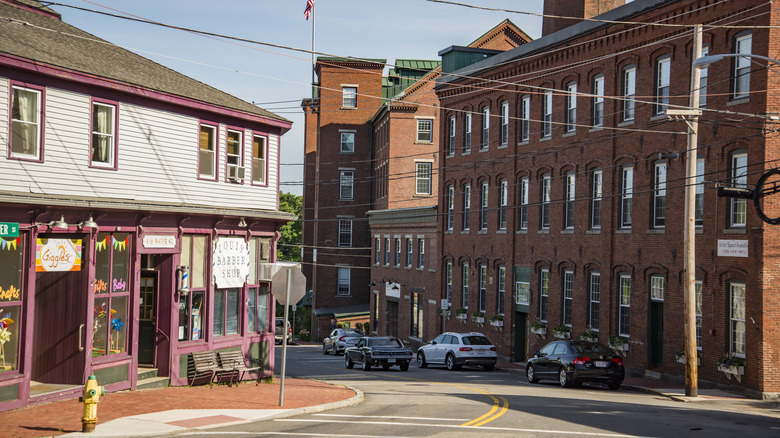
Located about 40 miles north of Boston, wildly underrated Amesbury is a true New England gem with a beautiful downtown that tells the story of its early industry. This inland North Shore town is nestled on the banks of the Merrimack River, a location that made it an epicenter of industry, particularly iron work, textiles, and carriage manufacturing. These booming industries helped usher in the railway, with the town's first train depot located close to the textile mills.
A permanent station was finally set up in the late 19th century and though it shuttered when passenger service to Amesbury stopped in 1936, you can still visit (and grab a bite to eat). The former historic station is now home to Crave: Wine • Kitchen • Tap, which serves up American fare. You can also learn more about Amesbury's industrial history with a visit to the Industrial History Center, in the Upper Millyard, a historic area of town where the textile industry once thrived. After surveying the area, take some time at the Amesbury Carriage Museum, which houses exhibits showing how the town was heavily involved in the transportation industry, from carriage to early auto manufacturing.
Today it's still possible to reach Amesbury by train, though indirectly. The town never got its train station back after the 1930s, but the nearby coastal town of Newburyport is served by the MBTA commuter rail and connected to Amesbury by a quick bus ride.
Plymouth has a suprisingly rich rail history
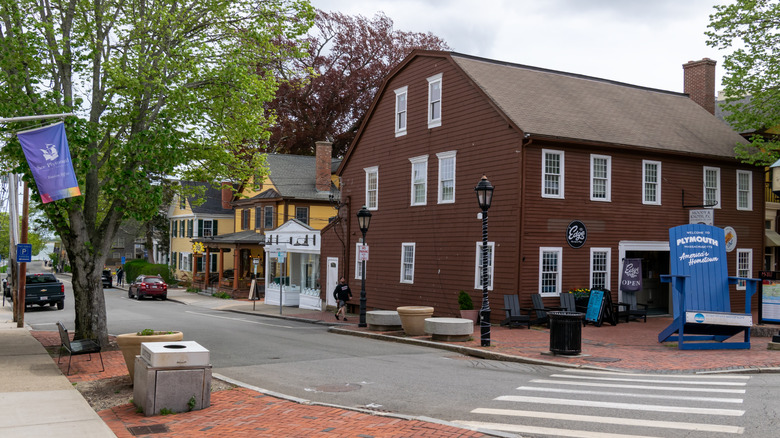
Located 37 miles southeast of Boston, this quaint town is perhaps best known for the historic — yet somewhat disappointing — Plymouth Rock. So while you can skip the rock, you'll want to take in everything else the onetime Plymouth Colony has to offer. It has a surprisingly rich railway history, with the first passenger rail reaching town in 1845. Run by the Old Colony Railway, the line stretched all the way down to Newport, Rhode Island and covered much of southeastern Massachusetts.
At one point, Plymouth even had three train stations, but passenger service ceased in 1959. Service resumed in 1997 when the MBTA revived the Old Colony lines and created the Kingston Line. While the town's MBTA station has since closed, there 's a bus connection from the Kingston stop and plenty of rail history to be found. For instance, take a stroll on the North Plymouth Rail Trail, an easy hike at just over a mile, and walk the steps of the Old Colony Railroad.
Once you're done, head to Plymouth's historic waterfront and grab a bite at Wood's Seafood, highly rated on TripAdvisor. This no-fuss restaurant is attached to a seafood shop and is known for its whole fried clams and lobster roll. You can cap the day with a look at Plymouth's industrial history by visiting the Cordage Company Museum, which pays tribute to a 19th-century factory that produced rope for the global maritime industry.
Lenox's historic trains tell the story of the Berkshires' Gilded Age

The Berkshires may be known for fall foliage, but there's also plenty to learn about the area through the history of the area's railways. Take the quaint town of Lenox, which boasts just 1,800 residents and is home to the renowned Tanglewood concert venue. Lenox's first train station was built about 1850, when the Stockbridge & Pittsfield Railroad began operating.
Given the Berkshires' reputation in the 19th century as a place for wealthy New Yorkers and Bostonians to vacation, it only made sense for railways to serve their needs. Today, the Berkshires Scenic Railway Museum preserves that history. The museum, open on Saturdays during the summer, has transformed Lenox's 1903 train depot into a space to appreciate the area's railroading past. You can take a ride on the Lenox Jitney across the train yard filled with historic equipment and visit a replica of a block station with a vintage communication system that let engineers know how their trains should proceed.
Understanding Lenox's railway history is a look into the back story of the beautiful Berkshires, with their Gilded Age mansions and castles. It's just one more excuse to visit this incredible area of Massachusetts.
Pioneer Valley's Palmer is the Town of Seven Railroads
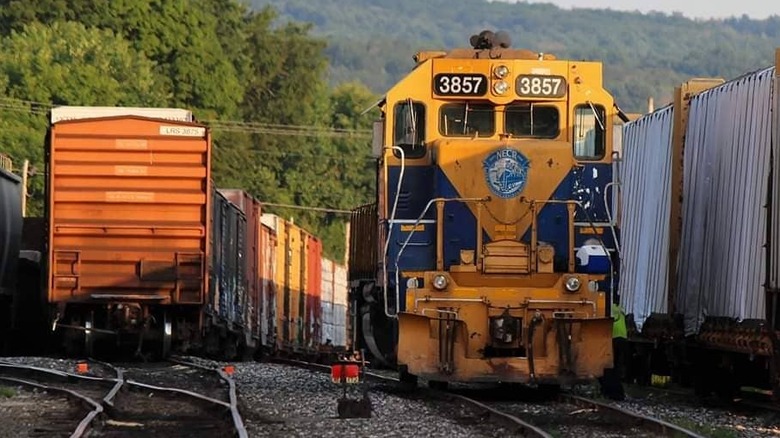
This small city in Massachusetts' Pioneer Valley, just 18 miles east of Springfield, was once an important transportation hub. Known as the Town of Seven Railroads, Palmer comprises four villages, one of which — Depot Village — had five rail and two stagecoach lines. Founded in 1746, Palmer has a strategic location at the crossroads of three rivers that made it ripe for early industry, namely textile mills.
Today, visitors can enjoy time in Palmer's historic Union Station. Erected in 1884 and designed by the renowned American architect Henry Hobson Richardson, it was transformed in 2004 into the Steaming Tender restaurant, which serves American comfort food. Time in Palmer also warrants a stop at the Seven Railroads Brewing Company, which has a tap room open to the public from Thursday to Sunday. And no stop in Palmer is complete without checking out the Yankee Flea Market. The 15,000-square-foot indoor market has over 165 vendor booths where you can find everything from antiques and collectibles to home decor.
Though passenger service ceased in 1971, Palmer's relationship with the railroad is still going strong. Freight trains regularly run through town on the two railroads that are still in operation, and the state is currently planning to build a new station to reintroduce passenger service to Palmer.
Chester is a tiny hamlet with a big railway history
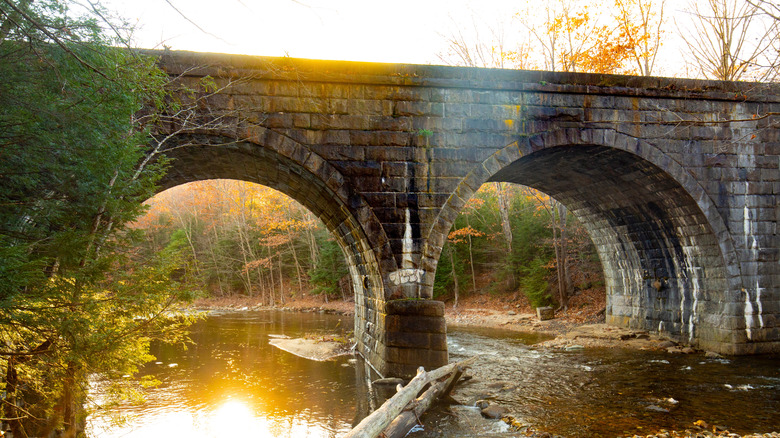
If you're a fan of riding the rails and want to really get into local train history, visit Chester. Home to just over 1,300 residents, this tiny hamlet just 23 miles west of artsy Northampton holds an important place in railway history. This rural town was part of the first mountain railroad in the world when the Western Railroad began operating in 1841. This train ran over the Berkshires, helping connect Albany and Worcester.
Today, visitors can see what remains at the town's two National Historic Register sites — the Keystone Arches, which were the first group of stone-arch railway bridges built in the U.S., and Chester Station. The station is now home to the Chester Railway Museum, which has memorabilia and artifacts related to the history of Chester's railroad, as well as a host of vintage trains and the Children's Heritage Boxcar Museum. Visitors will also find plenty of events happening in and around the museum, from themed dinners to walks where you can discover historic sites.
Methodology
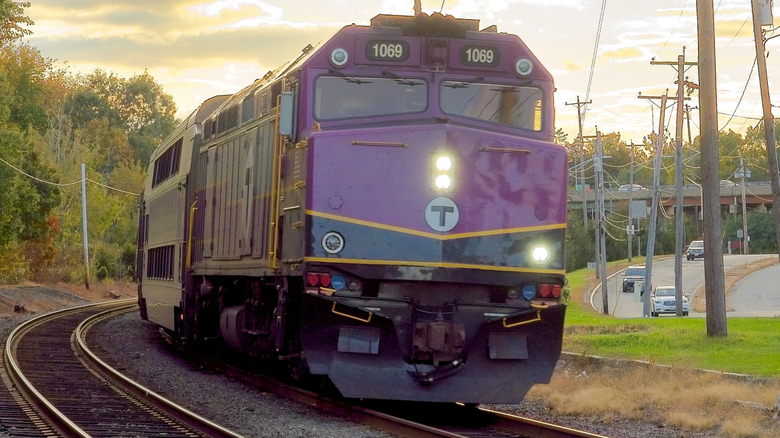
Given the state's history with railways, narrowing our selection to just five towns was no easy task. To do so, we researched towns that not only have a connection with Massachusetts' rail history, but also offer something unique such as a rail museum or train stations that have been repurposed. In addition, using the author's experience as a Massachusetts native, the towns selected are wonderful jumping-off points to explore different areas of the state, from the North Shore to the Berkshires.