
Colorado's 5 Abandoned Ghost Towns That Were Once Thriving Destinations
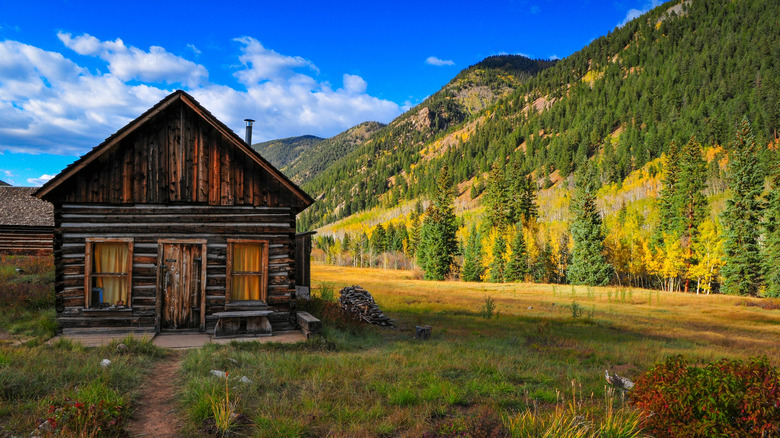
Colorado is now known for its incredible skiing, and Denver, its capital city, is also considered America's craft beer capital. But long before the ski resorts and the breweries, Colorado was a hotbed for mining. The Pikes Peak Gold Rush, which kicked off in 1858, brought tens of thousands of people to the Rocky Mountains, many hoping to strike it rich. With that influx, all kinds of towns started popping up in the mountains in the years that followed, helped by the railroads built to transport people in and the gold and silver out. Other towns grew up around hopes of a thriving ranching and farming future – hopes that ultimately came to naught.
Some of those Gold Rush towns are still around, like Cripple Creek, offering high country adventure and charm. But others were abandoned, and all that's left are remnants of the dreams in the form of dilapidated stores, abandoned schools, and long empty cabins. Walking past the old buildings, it's fun to imagine what life was like more than 100 years ago in these places.
There are more than 1,500 ghost towns in Colorado, according to ColoradoInfo, although only over 600 visible remnants remain today. Many, though not all, are former mining towns in the mountains, and some have more to see than others. These five are some of the best for their preserved buildings, ease of access, and unique history.
St. Elmo near Buena Vista, Colorado
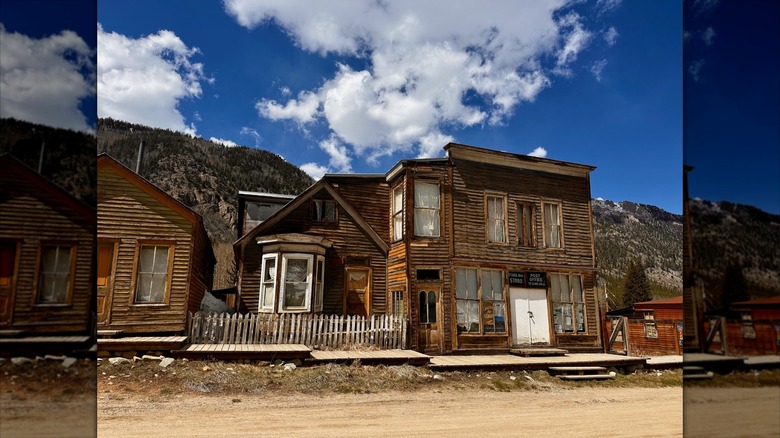
St. Elmo, touted as "Colorado's most original ghost town," is also considered one of the best-preserved ghost towns in the state. Now listed on the National Register of Historic Places, this mining town was founded along Chalk Creek in 1880 as Forest City. Because it was determined that the name was already common in the area, one of the founders reportedly renamed it "St. Elmo" after the title of the book he was reading. More than 2,000 people made their home here, and the town had its own railroad station, hotels, restaurants, stores, saloons, and more. In 1890 and then in 1898, fire devastated the town, and that was the beginning of the end. By the 1920s, the railroad stopped running, and by 1943, just two siblings from the Stark family, who had been there since nearly the beginning of the town, were the only residents. They turned many buildings into summer cabins.
Today, private cabins still exist here, but the main part of town features over 40 buildings dating back to its founding. You can walk down the main street and see structures like the courthouse and school; some are staged with period furniture, while some remain closed. A general store remains open to offer antiques, local souvenirs, and snacks, and a longstanding tradition of hand-feeding chipmunks continues.
St. Elmo is about 20 miles from Buena Vista, which has its own mountain beach. The last 7 miles of the main Forest Service road into town are unpaved, but typically in good condition and open to most 2-wheel-drive vehicles.
Animas Forks near Ouray, Colorado
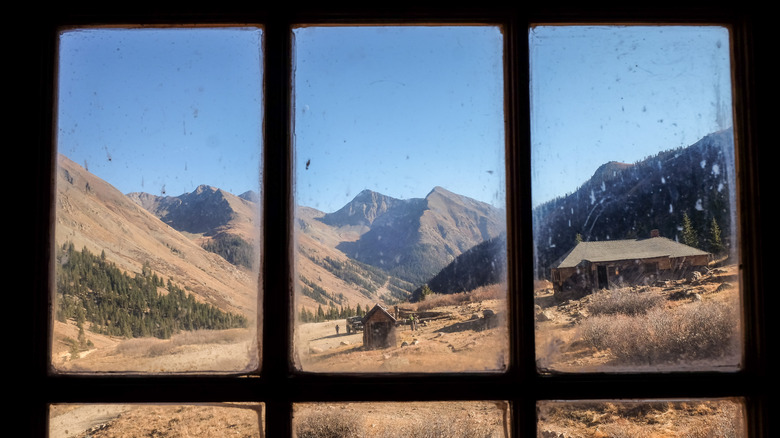
The San Juan Mountains in Southwestern Colorado are home to delightful towns like Telluride, Durango, and Ouray, known as America's Switzerland. But not all the towns in this rugged, remote region have survived the test of time. One such place is the well-preserved Animas Forks, but you can still see some of this mining and mill town's original buildings.
Animas Forks started as a mining camp and blossomed into a thriving community in the late 1870s, with a restaurant, saloon, stores, sawmill, and hotel. At its peak, nearly 500 people lived here. A frequently repeated fact about this ghost town is that in 1884, it had a severe blizzard buried the town under as much as 25 feet of snow, forcing residents to dig tunnels between buildings. Today, nine of its original buildings are still standing, including cabins, jail, the mill, and the William Duncan House, a grand, two-story home that was once the residence of the mercantile owner. While the structures are more than a century old, they were stabilized in the 1990s, and many can still be entered. The land is now owned by the Bureau of Land Management (BLM), and Animas Forks is on the National Register of Historic Places.
Located between Ouray and Silverton at 11,200 feet, Animas Forks is a stop on the Alpine Loop Backcountry Byway, a 65-mile journey over unpaved backroads through the San Juan Mountains. A high-clearance 4WD vehicle is recommended to get there, and due to heavy snow, the site is typically only accessible in summer.
Ashcroft near Aspen, Colorado
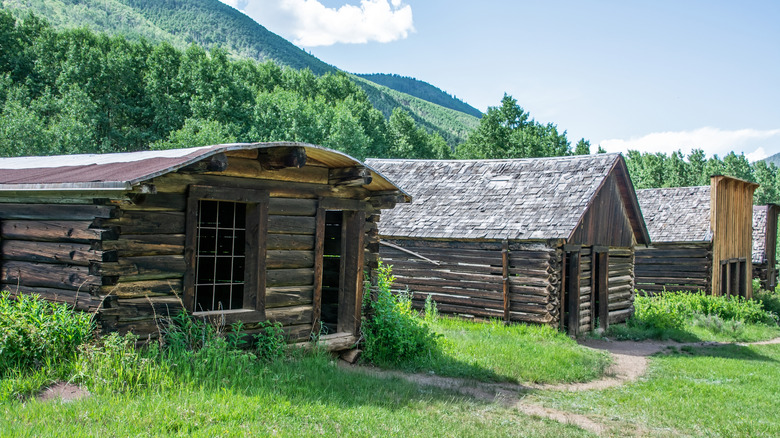
Long before Aspen became a celeb-ridden alpine playground, nearby Ashcroft, a historic mining town nestled in the forest, once rivaled it in population and was seen as having more promise. Silver discoveries in the early 1880s spurred rapid growth, with a particularly large strike in 1882. At its peak around the mid-1880s, it had a population of about 3,500. The town even supported not just one but two newspapers, along with 20 saloons, six hotels, and a school. But fast forward some 20 years, and fewer than 50 men lived here. According to the Longmont Leader, after Jack Leahy, the town's last resident (who had been there since the founding, no less), died in 1939, Ashcroft officially became a ghost town.
Today, several of the original buildings stand, including the Kinney Mercantile, post office, blacksmith shop, and a two-story building that may have been a lodging house or a newspaper office. There are a number of old miners' cabins, too. Trails — some with interpretive signs — wind through the site, and the Aspen Historical Society runs 1.5-hour guided tours during the summer. Ashcroft is particularly beautiful to visit in the fall as the mountains around the town are filled with aspen trees, turning the hillsides yellow.
The site is about a 25-minute drive south from Aspen. The road to this National Register of Historic Place site is paved, and there's a $5 honor system admission fee. There's also a small gift shop open during the summer.
Independence near Aspen, Colorado

Another ghost town in the Aspen area, Independence, a once-thriving Colorado mining boomtown, lies about 50 minutes southeast of the city, deep in the Sawatch Range. It's accessible via the paved Colorado Highway 82 and Independence Pass, which links Leadville and Aspen and crosses the Continental Divide. The summit is 12,095 feet, and the ghost town of Independence is about 4 miles west of it at 10,900 feet.
Gold was reportedly discovered here in 1879, and it didn't take long for people to build homes. By 1882, roughly 1,000 people worked the mines, and a bustling town provided services to everyone. But after a few years, the gold played out, and families moved on. There were fewer than a hundred people in town by 1888. Independence's time really came to an end following a huge snowfall in 1899, and according to the Aspen Historical Society, the remaining residents made skis and raced to Aspen, paying a ham sandwich for entry. The town was listed on the National Register of Historic Places in the 1970s, and today you can see the general store, the remains of the Farwell Mill where ore was processed, and some old cabins.
The Colorado Department of Transportation typically shuts down Independence Pass every winter, making Independence inaccessible. Similar to Ashcroft, the Aspen Historical Society runs walking tours of the town, though you can also take a self-guided tour thanks to signages around town that provide historical context. It's also got a $5 honor-system admission fee.
Dearfield near Greeley, Colorado
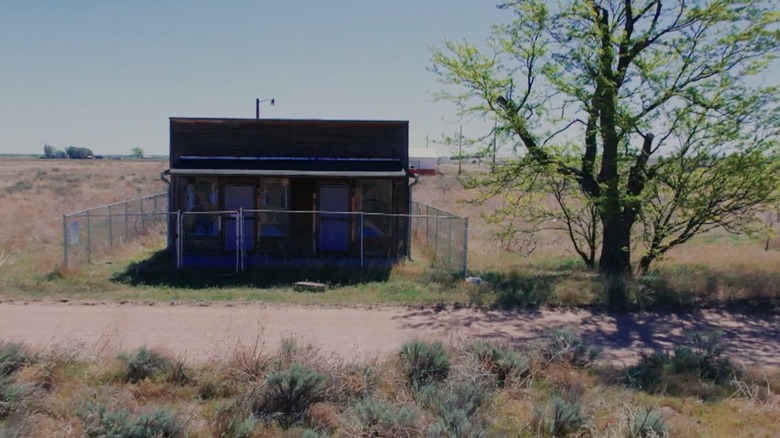
Dearfield, a once-thriving, historic community, holds the distinction of being Colorado's largest all-Black settlement. The youngest ghost town on our list, Dearfield sits on the Eastern Plains about 35 minutes east of the artsy town of Greeley. Its founder was Oliver Toussaint Jackson; he established the town in 1910 on 320 acres. The name came from Dr. Joseph H.P. Westbrook, a doctor who settled here, who said that the colony "will be very dear to us."
The peak years for this community were the late 1910s and into the 1920s, with around 300 people living here in a town complete with a school, churches, a doctor's office, a hotel, a gas station, and a restaurant. But after World War I, with the Great Depression as well as the Dust Bowl, residents were driven away.
Today, with part of the town torn down, only a few structures remain — including the gas station and founder Jackson's house — and the site is listed on the National Register of Historic Places. You can also see the remains of the lunch room building or community center. As of this writing, there are plans in place to help restore this unique ghost town and help keep its history from being swallowed up by the march of time.