
5 Once-Thriving Ghost Towns You Can Visit Along Route 66
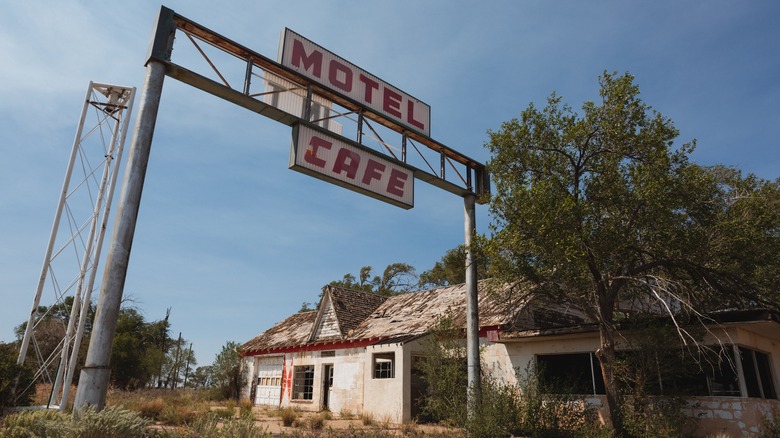
Winding over 2,400 miles from Illinois to California and linking disparate parts of the country with a thread of freedom, independence, and the promise of a better life, Route 66 is arguably the emblem of 20th-century America. Formed in 1926 from pre-existing roads, the "Mother Road" was the first cross-country interstate, and reached its height from the '30s to the '60s. Those fleeing the Depression and the Dust Bowl in the 1930s found a way out on Route 66, while folks in the 1950s, now able to afford automobiles, found freedom and adventure on the Mother Road.
Route 66 transformed the United States, as towns along its route found new life as roadside destinations on the famed highway. Gas stations, diners, motels, and quirky landmarks popped up to draw travelers in, giving Route 66 its famous "Americana" identity. Unfortunately, the creation of the modern-day interstate network in the 1970s meant the demise of Route 66 and with that, the death of many of the towns whose life and livelihood were dependent upon the highway.
We've compiled a list of five once-thriving hubs that have since become ghost towns on America's most iconic highway, that's a must-do road trip. Some are haunting reminders of a bygone era, others are nostalgic portals to the past, and a few are even considered the most underrated stops on Route 66. In this list, we'll look at a mix of restored locations and spookier, off-the-beaten-track towns that embody what Route 66 once was. Based primarily on a combination of history-focused and Route 66 sites, this list focuses on ghost towns that have well-preserved buildings and Americana elements. Some are fully abandoned, while others have some residents.
1.) Funks Grove, Illinois
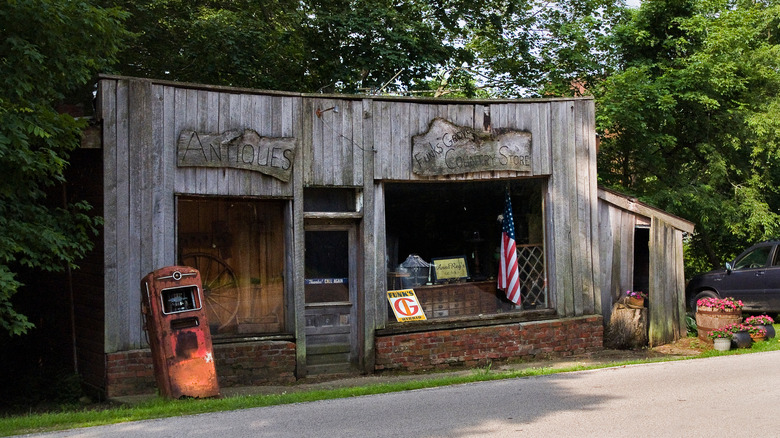
One of the most well-known ghost towns on Route 66 is Funks Grove, Illinois, home of the Prairie State's famous "maple sirup." Less than an hour from the bustling Route 66 stop of Springfield, this town was founded in 1824 by Isaac Funk, a descendant of German immigrants. While "funk" means "radio" in German, Funks Grove was no radio town. In fact, it was initially a popular railroad stop. From the beginning, it was a favorite spot because of the Funks' maple sirup. The area is filled with protected maple trees, which are currently just outside the Funks Grove Nature Preserve, one of the largest virgin forests in Illinois.
If you're wondering about the untraditional spelling of syrup, it's a holdover from Hazel Funk, who ran the maple farm in the 1920s and created a trust stipulating that the product keep the name "sirup." The town transformed with the arrival of Route 66, as signs on the interstate brought in curious travelers to taste Funk's maple sirup. But like other ghost towns, it became deserted once Route 66 was decommissioned.
Those wanting to experience an unchanged taste of America can stop by Funks Grove Pure Maple Sirup, which has remained in the Funk family for generations and offers maple candy and other treats alongside its unique sirup, which could be considered one of the best attractions of Route 66. Besides that, you can also see the abandoned general store that now sells antique furniture, and the old train depot, an evocative remnant of the town's early days.
2.) Texola, Oklahoma
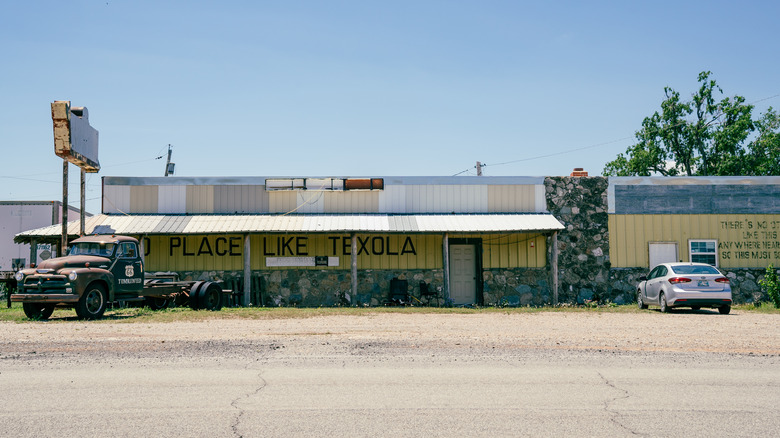
Route 66's power was partially how it connected the states, meaning some of its most emblematic enclaves were border towns. Texola is just one mile east of the Texas-Oklahoma border, whose motto, "There is No Place Like Texola," can still be seen painted on the side of an old ruined bar in this nearly abandoned Oklahoma town. Established in 1901 initially with the names of Texokla and Texoma, this border town developed around the Chocktaw, Oklahoma and Gulf Railroad line (later the Chicago, Rock Island and Pacific Railway), which came through the area in 1902.
By 1909, the town was booming with several cotton gins, a bank, a blacksmith, a newspaper, and a 300-person auditorium. The population peaked at 581 in 1930 but dwindled in later decades, as people headed west during the Dust Bowl. The town even has a cameo in John Steinbeck's Dust Bowl epic, "The Grapes of Wrath". But Route 66 kept the town alive as the first or last stop in Oklahoma (depending on which direction you were driving) until the construction of the interstate in the 1970s diverted traffic away from the town.
With fewer than 40 residents left, Texola is a living ghost town with curious historical sites. The 1930s Magnolia Service Station has been left to the elements since the 1960s. Just off of Route 66 is the one-room jail erected in 1910 and next to it, a stone with names carved into it of the graduating class of 1939. The Tumbleweed and Water Hole #2 Cafe was renovated in the style of the original building, but unfortunately, this classic Route 66 pitstop is now closed indefinitely, adding a deeper sense of emptiness to this once-thriving town.
3.) Glenrio, New Mexico/Texas
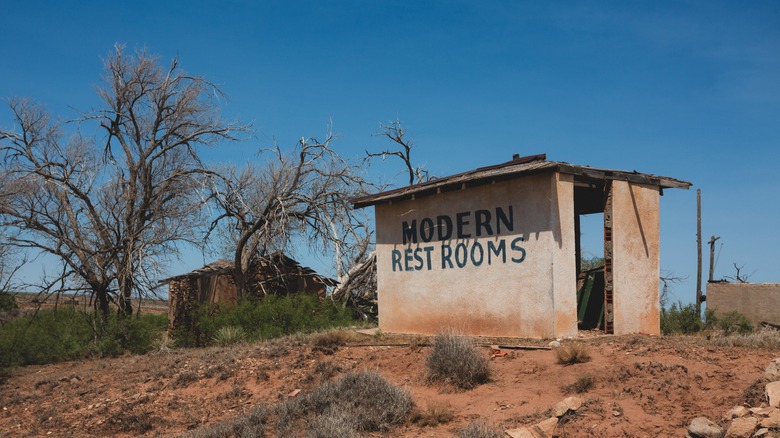
Glenrio is a small town on the border of Texas and New Mexico, which has seen thousands of people pass through since its founding in 1905. In 1906, the town became a cargo and freight hub as a railroad stop, and the arrival of Route 66 later turned it into a beacon for travelers crossing the empty desert sprawl in search of diners, hotels, and service stations.
What set Glenrio apart was the state line that split it in half. The Deaf Smith County of Texas was dry, meaning that there were no bars on that side, while the New Mexico side didn't have service stations because of higher gas taxes in the Land of Enchantment. The Longhorn Motel took advantage of this unique positioning, becoming known as the "First/Last Motel." Depending on which direction you were driving in, the motel sign read "motel, first in Texas" or "motel, last in Texas." The death of Glenrio came when Interstate 40 was built, which bypassed the town. The iconic motel was abandoned, along with the art moderne diner and gas station that make up the Route 66 charm of this well-preserved border town.
Some say it's one of the loneliest Route 66 stops, while others say it's one of the most legendary due to its status as "one of the country's best preserved mid-century ghost towns," according to the National Parks Service. However, a new future awaits Glenrio. In 2021, a Texas farmer had a vision of Glenrio after consuming magic mushrooms and bought the town with his partner to revitalize it. They opened a retro cannabis dispensary, and plan to open wellness facilities and renovate the First/Last, a decision that some historians lament as it changes rather than preserves this historic site.
4.) Two Guns, Arizona
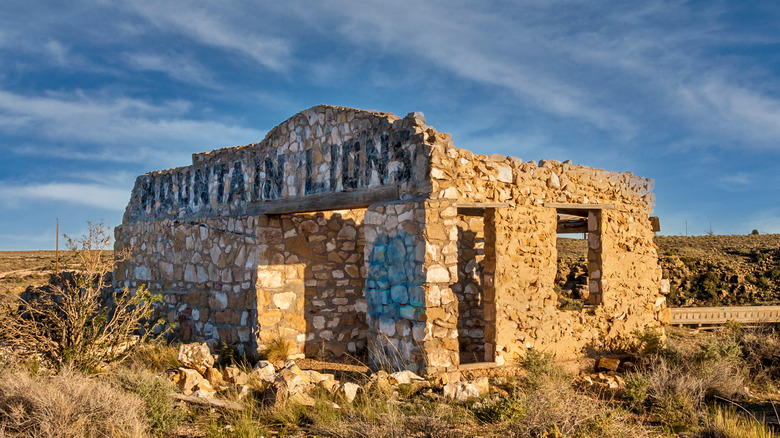
One of Arizona's most famous ghost towns is also one of its eeriest and is known for both paranormal activity and dark history. Two Guns is located on the east rim of Canyon Diablo (itself home to a ghost town), just over 30 minutes from Flagstaff, the world's first International Dark City. Earle and Louise Cundiff homesteaded this land in the 1920s and built a post office, restaurant, and service station. They leased part of the land to Harry E. Miller, whose unique vision for the town turned it into a thriving hub.
A year before the town's historic 1915 bridge was added to Route 66, Miller opened a zoo, whose crumbling walls with "mountain lion" painted in big block letters can still be seen today. The town was built near the Apache Death Cave, where a group of Navajos murdered 42 of their Apache rivals in 1878, which led to the belief that the area was cursed. But Miller saw an opportunity there, too. He changed his name to Chief Crazy Thunder and gave tours of the cave, going so far as to sell skeletons to travelers with macabre interests.
Miller left the town after killing Earle Cundiff in cold blood in 1926 and being bitten by some of his caged animals. His wife, Louise, took over and added motels and campgrounds to Two Guns. The town fell into decline after the service station caught fire in 1971. All that's left today are empty ruins. Besides the zoo, visitors will find the abandoned and graffiti-covered gas station and campground, the bridge, and the collapsing stone entrance above the death cave, all capturing a spooky history in the heart of Arizona's desert.
5.) Amboy, California
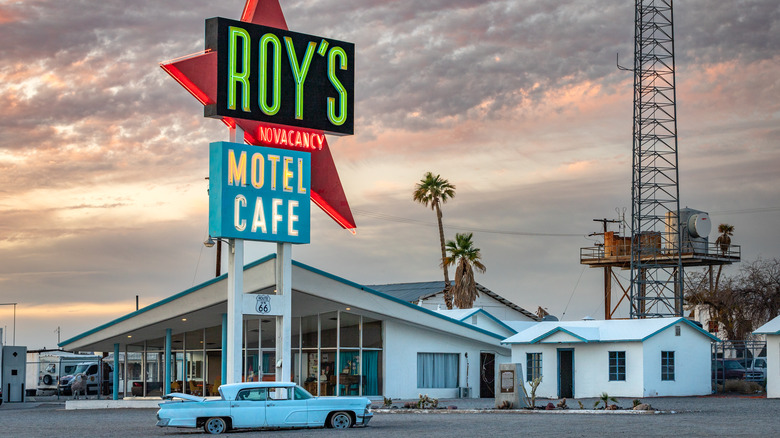
Route 66 evokes images of neon signs, perhaps none more recognizable than the 50-foot Roy's Motel and Cafe sign in the abandoned town of Amboy, California, where nostalgia and lava fields collide. This towering sign in the Mojave Desert is a prime example of the Googie architectural style that defined Southern California in the 1950s. Googie refers to the space age, neon-prone Mid-Century Modern style that was found throughout California and is intricately linked with the Americana identity of Route 66.
Located near an extinct volcano, Amboy was settled as a mining town in 1858 and was meant to be the first stop on a rail line across the desert, but it really hit its stride with the development of Route 66. While there were service stations and other businesses, Roy's — opened in 1938 — was the star of the show. Supposedly, Harrison Ford used to fly himself to a nearby airstrip just to eat at Roy's. Unfortunately, Amboy fell into ruin in the '70s when I-40 was built and diverted traffic away from the town, leaving this Mojave Desert enclave abandoned.
That is, until Albert Okura, founder of Juan Pollo, purchased it in 2005 with the promise of revitalizing it. After his death in 2023, his son Kyle took over and told The LA Times that Amboy is "the true symbol of Americana. Our car culture, the American dream, freedom, the open land of the US." The abandoned town is on its way to revival. Artwork is displayed, including a large Buddha and a sculpture of shoes, while the old gas station still works. Okura is renovating Roy's Motel and Cafe and plans to open the town in 2026.