
Arizona's Most Charming Main Streets Deserve A Detour From The Usual City Stops
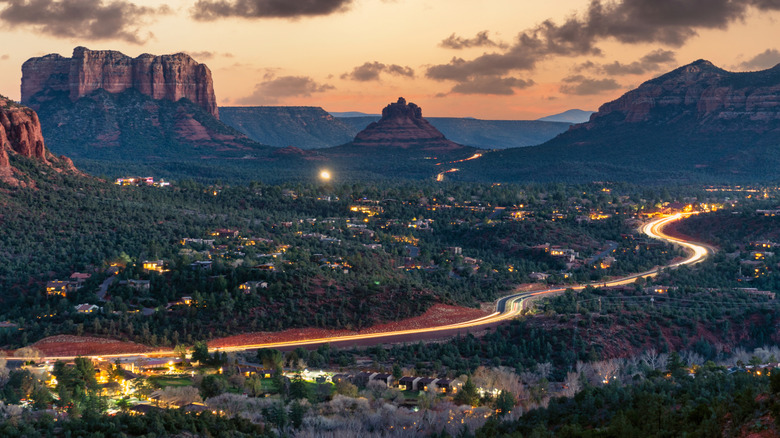
When it comes to scenery, outdoor recreation, shopping, or road trips, Arizona has a lot to offer. For those travelers creating their own unique vision of what to see in the Grand Canyon State and who want to see more urban flair, Arizona has a plethora of charming main streets to explore. The horse and cowboy culture is a common thread, no matter where you go in the state, but the environment has a wide range that includes much more than the typical desert landscape.
Many of the state's coolest small towns and their main streets have a shiny urban side in addition to a quaint downtown community. These places might not be listed on the travel sites next to ancient national monuments, cave paintings, dude ranches, or mining museums, but they're just as compelling to see and rewarding to visit.
Many of these special places are historic sites that include vintage buildings, rare antiques, and even some historic reenactments. Some are old movie sets or inspired by books and songs. Others are examples of the locals' own creative takes on Arizona's traditions, style, and culture, and the modern amenities in Arizona's charming downtown streets also include museums, walking tours, and wineries.
1. Tempe
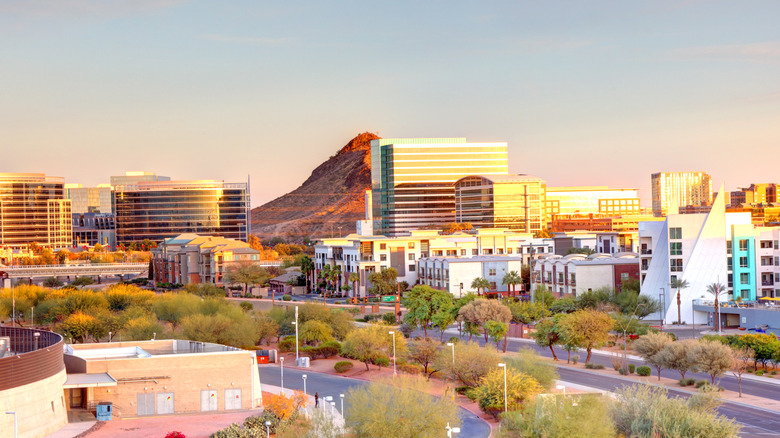
Tempe is a suburb of Phoenix, located in the southern part of the larger metropolitan area, and has struck a balance between small-town charm and big-city convenience thanks to its location. Visitors can experience this walkable gem of a city and its eclectic mix of urban culture and rural design on Mill Avenue, a stretch of road that includes the historic Mill Street Bridge and access to Tempe Town Lake.
The northern and southern ends of Mill Avenue stretch across the Salt River, and visitors can enjoy a pleasant walk along the avenue. Downtown Tempe makes it easy to combine outdoor fun on the water with urban activities like gourmet food and art walks.
An advantage of Tempe's downtown is that it's one of the easiest to reach, as opposed to others that are in more isolated and far-flung parts of the state. Travelers can find the center of the action, Mill Avenue, less than five miles away from the Phoenix Sky Harbor International Airport. It's not such a big detour to see it, no matter your choice of transportation.
2. Casa Grande
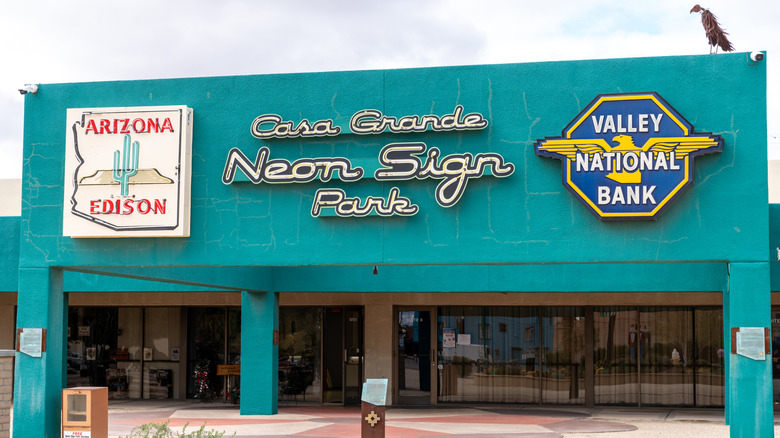
Drive about an hour south of Phoenix to find Casa Grande, a town that's known for its scenic hikes and historic monuments. Its proximity to ancient landmarks like Casa Grande Ruins National Monument and Picacho Peak State Park tends to overshadow its unique and vibrant downtown, which is worth an extra stop to experience.
Historic preservation is one of the community's top priorities, and visitors can take a walking tour of the many historic buildings and enjoy the charming ambiance of downtown Casa Grande. A popular local attraction is the Neon Sign Park, which is best to visit after dark, but that's just one famous suggestion. The Museum of Casa Grande is located on Florence Boulevard just north of the park, and is a nice place to begin exploring the historic downtown area. Walk for just a minute from the Neon Sign Park along 3rd Street to find the Casa Grande Art Museum.
Lesser-known but equally worthy venues await in the locations near Florence Boulevard and 2nd Street. The walk along Main Street Alley is one example, a space where annual events are held and public art exhibits are displayed.
3. Tombstone
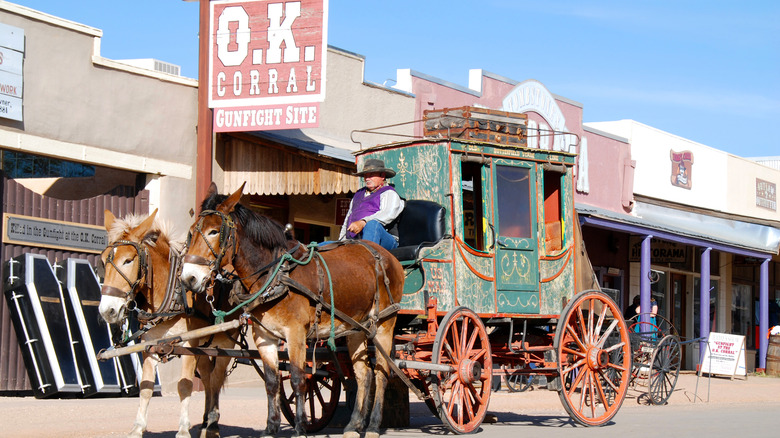
Between the gunfight shows, carriage rides, and historic reenactment, it's easy to take the best of Tombstone for granted. This is already an iconic town because of its connection to frontier legends and Hollywood fame, and today the city is a mix of historic charm, modern art, and tourism.
The location of Tombstone, in the southern part of the state, is more isolated than that of other towns, but that's part of the charm. The open desert, punctuated with cacti, tumbleweeds, and stark cliffs in the distance, adds to the already immersive desert experience. Some of the city's most infamous attractions are in the surrounding hills, like the former mines and notorious Boot Hill Cemetery.
Now that the silver mines and Old West are gone, and abandoned ghost towns litter the deserts of Arizona, the "town too tough to die" thrives because of its history, culture, and colorful downtown core. Fremont, Allen, and Toughnut are the streets that make up the historic district and include a few museums, theaters, restaurants, and vintage photo shops.
4. Prescott
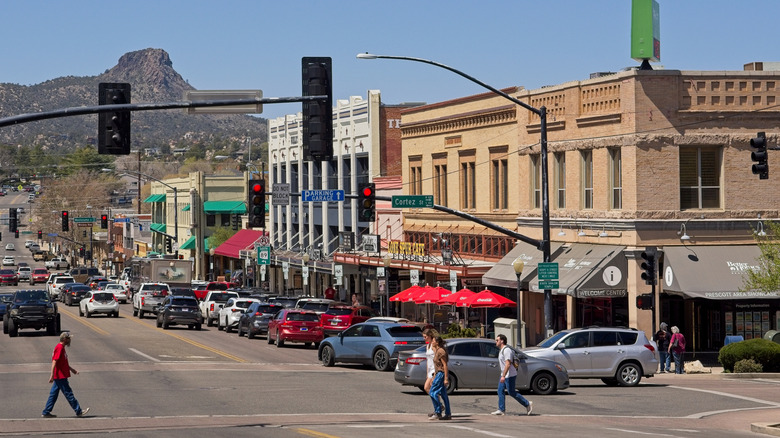
Visitors come to this part of northern Arizona to see the scenic beauty of both the desert and the pine trees, as seen in Prescott National Forest, but you should also make time to see Prescott itself. The town is located in the midst of a leafy, temperate paradise that's actually called the Verde Valley, perfect for travelers looking for respite from the stark desert heat.
Take a detailed walking tour of downtown that combines history, food, and some frosty beverages. Whiskey Row, as the name suggests, is where the historic saloons can be found, along with many stately homes and buildings dating from the Victorian era and an impressive granite courthouse. Take a casual stroll by Courthouse Plaza and enjoy the surrounding art and architecture.
Most of the attractions in the historic downtown area are near the Yavapai County Courthouse Plaza, and the venue is also used for special events. These can be seasonal but also include general celebrations you can enjoy at any time, like community dinners, happy hour, or musical performances.
5. Payson
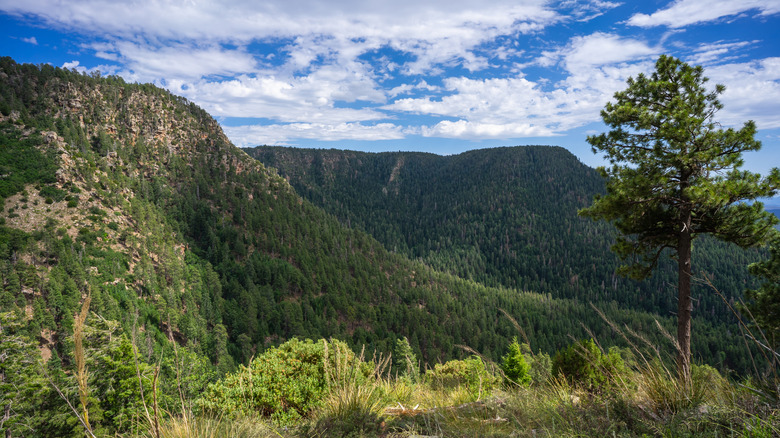
It's a 90-minute drive to get from here to Phoenix, but it's a scenic route through the verdant mountains that make up Tonto National Forest. Payson sits at an elevation of 5,000 feet among the Ponderosa pines, but before you venture into the woods, since Sitgreaves National Forest is also only 30 minutes east, check out the quaint and artistic downtown.
The lush environment was an obvious place to raise animals, which explains how the city started as a ranching settlement. The culture and aesthetic live on in the modern design, which gushes with nostalgia. One of the main streets downtown is called Longhorn Road, and running parallel to the south is the town's main street, where visitors can roam a variety of unique gift shops and thrift stores on the way to visit Pioneer Park.
The Zane Grey Cabin can also be found along this road. The prolific author was originally from Ohio but wrote one of his most successful novels, "The Heritage of the Desert," here in Payson after experiencing the big skies and wide-open spaces of northern Arizona. Enjoy some modern urban flair while learning about his life and literary vision.
6. Bisbee
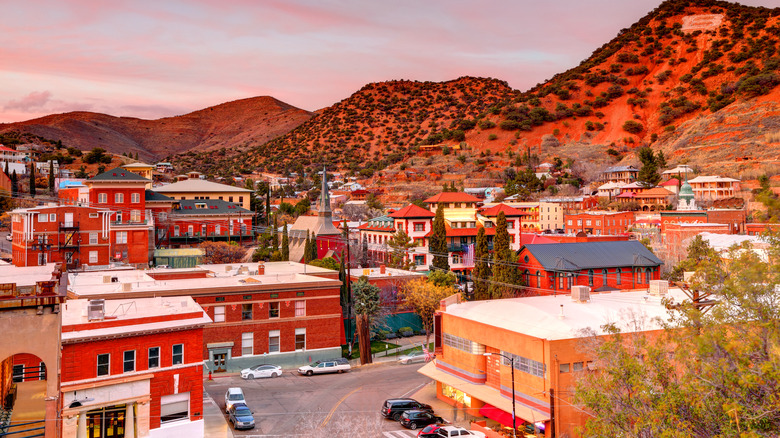
Head south from Tombstone for 25 minutes or 90 miles southeast of Tucson to Bisbee, an old mining town tucked away on historic Route 80. Like many other towns and settlements in the area, Bisbee was founded and thrived as a mining town, harvesting the rich reserves of silver and copper in the surrounding Mule Mountains.
Subway Street, Main Street, and Brewery Avenue are all part of the old-timey downtown scene, with plenty of parking and easily walkable central streets. The Bisbee Mining and Historical Museum, located at the junction of Brewery Avenue and Howell Street, is an ideal location to start exploring Copper Queen Plaza and the surrounding area. Head north on Brewery Avenue to find the Art Wall or west on Subway Street for even more historic information at the Bisbee Restoration Museum, a collection of vintage furniture and clothing donated by locals.
Follow Brewery Avenue north past several vintage buildings and find the Art Wall, a collection of street art on public exhibition. Find the Bisbee Seance Room, which is actually a museum about local superstition and haunted history, across from the Old Bisbee Brewing Company.
7. Lake Havasu City
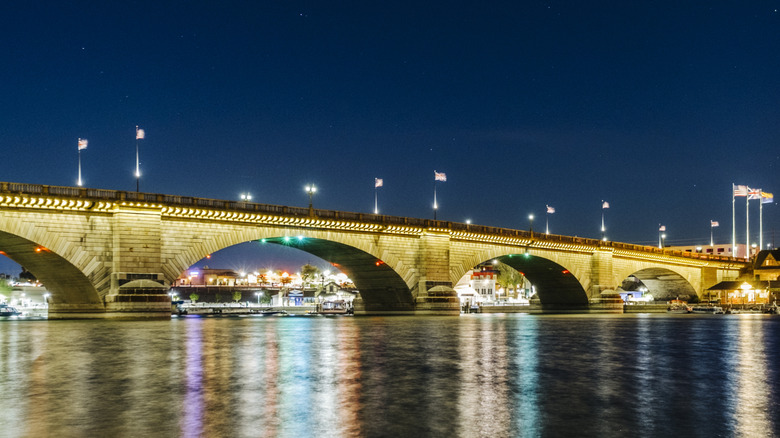
More colloquially known simply as Lake Havasu, the name might sound familiar to fans of modern cinema. Although it never appears in the movie, it was the intended retirement home of Sergeant Prendergast, who played a leading role in the 1993 film "Falling Down." Some of the prominent features and popular sights locally, like the London Bridge, are mentioned in the film's dialogue.
The city has a reputation for being in a remote and even secluded area near the California border. Flagstaff is one of the closest major centers, and it's more than three hours away by car. However, this makes it an ideal destination for visitors who want to get away from the big city lights and enjoy some vibrant downtown street life at the same time. It also might explain why it's a popular choice for retirees.
The London Bridge is a distinctive landmark, and a few steps away is the charming section of downtown known as English Village. This quaint area is designed for shopping, food, and sightseeing along the scenic waterfront. View the 27 replica lighthouses that line the river's edge while browsing various waterfront rentals.
8. Winslow
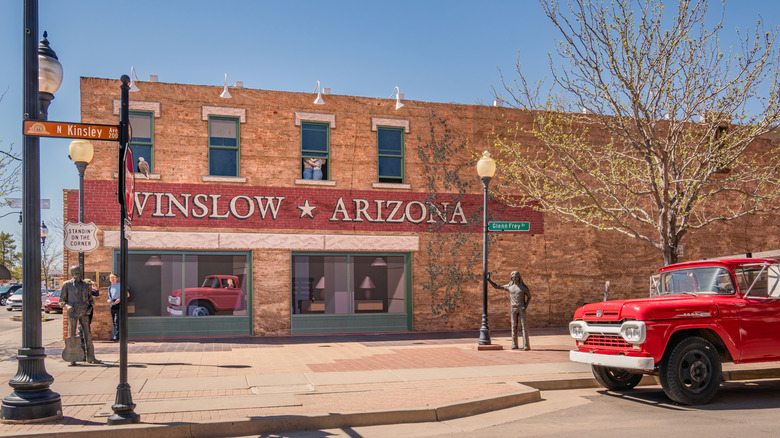
Head east from Flagstaff for about an hour to reach another city made famous by movies. About 25 miles west of Winslow, you can find the location of the famous crater that was featured in the 1984 film "Starman," along with various other science fiction titles.
While you might be here for Meteor Crater, which is one of the area's top attractions, don't forget to head to town and enjoy the charming urban streets. It's an easy 30-minute drive east along the southwestern part of Route 66 to Winslow, which leads directly into the heart of the city.
The city apparently inspired the Eagles' song "Take It Easy," which references a real street corner located next to Route 66 Plaza. After taking a photo at "Standin' on the Corner Park" with the statues and vintage truck, head north along Kinsley Avenue to the Old Trails Museum for a deep dive into local culture and history. Other than music and movies, there's a side of Winslow that features vintage hotels, museums, and parks in the charming downtown streets.
9. Cottonwood
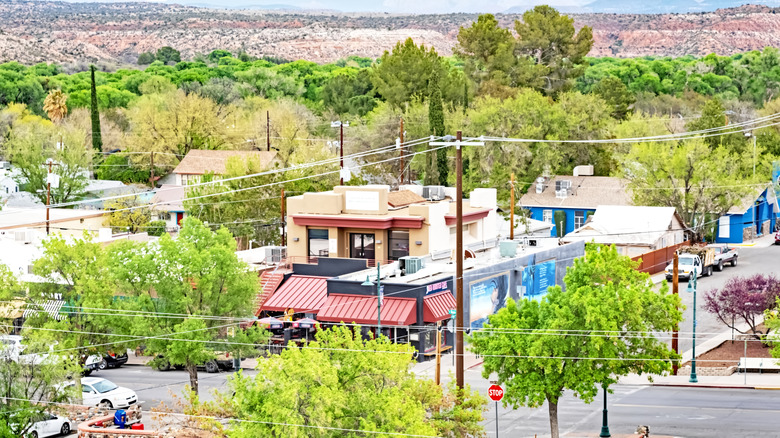
It's not the typical Arizona town with the cowboy aesthetic and old mining town plaques, which is exactly why you should make time to see it. Cottonwood is in the heart of the Verde Valley, a region famous for its wine culture, heavy forests, and refined living, and it has a different vibe compared to the usual desert and mesa landscape common in other parts of the state.
Visit Old Town Cottonwood, which starts at the junction of Main Street and Cactus Street near Old Town Square, for a taste of the modern art and avant-garde culture that makes this location so unique. After browsing this charming old-fashioned neighborhood, visit one of the many local wineries that are also located here.
Virtually everything is within a few blocks walking distance of this central location. The Merkin Vineyards Tasting Room & Osteria is one example; it's a fully functioning wine production facility, complete with a greenhouse and trattoria on a scenic hilltop. It sounds like something that would be in a rural location, but it's directly across from the Old Town Cottonwood Visitor Center, and visitors can take a convenient tram to the summit rather than sweat over a walk in the Arizona heat.
10. Jerome
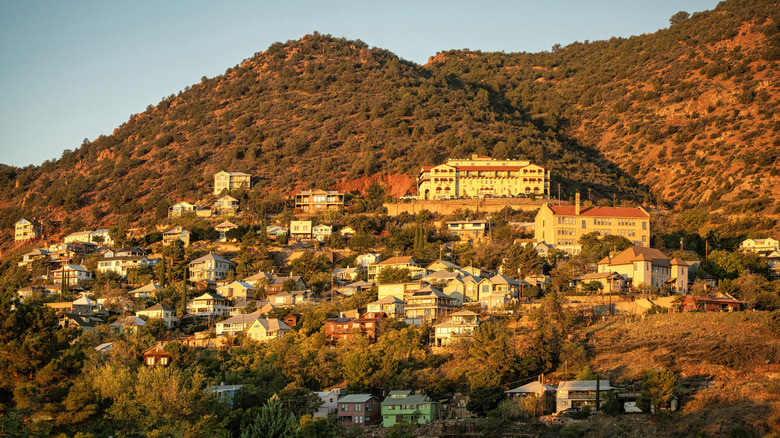
For a taste of true frontier grit, visit Jerome, "the wickedest town in the West." It's not a very big place now, but once upon a time, the thriving copper trade made it one of the biggest cities in Arizona. When the mines closed for good in the 1950s, Jerome might have become another one of Arizona's ghost towns, but a new wave of artists brought their galleries and restoration know-how. The old saloons and bordellos are now respectable businesses, but they still retain their vintage designs and local stories.
Jerome was built on Cleopatra Hill, and the architecture, combined with the vintage buildings that seem to crawl upward, is one of the things that make this mining town different. Walking tours are one way to explore the downtown core, but there's also a convenient free shuttle available for those who would prefer to stay under the shade.
The Jerome Historical Society is a good place to start exploring the charming streets downtown. It's located at the corner of Main Street and Jerome Avenue, next to Paul & Jerry's Saloon, one of the oldest family-run businesses in the state. Walk a few paces north to find Jerome Ghost Tours, and explore some local haunted legends complete with narration and backstory.
11. Bullhead City
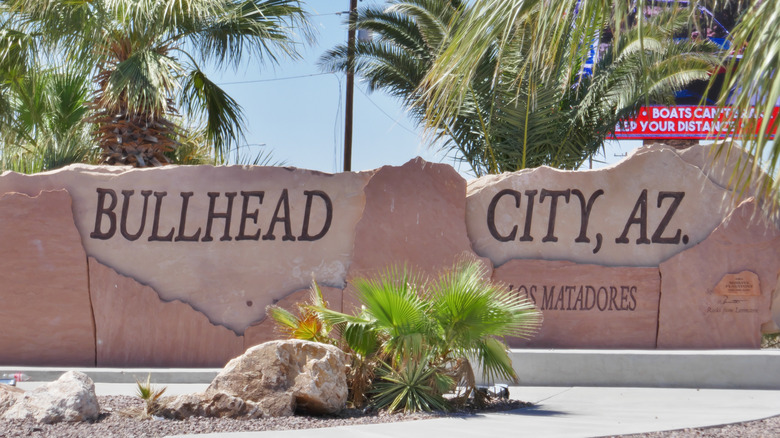
Named after a rock resembling a bull's head that now sits at the bottom of Lake Mojave, Bullhead City started as a camp for local laborers. The workers and families that came to complete the dam never left, and instead decided to settle on the banks of the river. It grew into a thriving town thanks to the construction of the Davis Dam on the Colorado River in the 1940s.
Bullhead City is located in the southwestern part of Arizona, right on the Nevada border, and the city of Laughlin occupies the opposite side of the riverbank. That makes it easy to visit the flashy casinos west of the border when it's time to hit the road again.
Cruise along Mohave Valley Highway to find the best of Bullhead City's downtown sights. The main street community can be found along the riverfront, which also includes the Colorado River Museum, an ideal place to start exploring.
Behind the museum, on the water's edge, is the Bullhead City Community Park, where it's possible to access boating, kayaking, and other related activities. Most of the activities here focus on the river, a secret paradise for a beachfront setting, but don't get distracted and miss the best of downtown Bullhead City.
12. Yuma
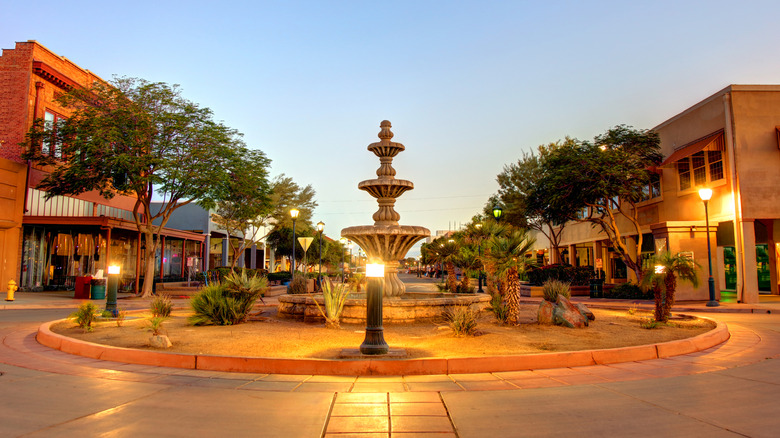
Yuma's downtown has actually been rated as one of Arizona's best historic main street communities, according to the folks at Official Best Of, and the name is well-earned. It's a worthy detour while exploring the Historic U.S. 80, and the city's Main Street, which is also part of this classic route.
The small-town vibes and unique shops that line the downtown core are a pleasant diversion from the outdoor activities that often attract visitors to Yuma. There's plenty of history to experience, and you can organize the activities and attractions with a visit to the Yuma Visitor Information Center, which is located on Historic Main Street.
Travel south to the junction of South Main Street and the Harold C. Giss Parkway, and you can find the Historic Downtown Yuma Gateway. This is east of the distinctive roundabout on the corner across from City Hall. Or head north to enjoy a variety of shopping, museums, and restaurants before reaching Pivot Point Interpretive Plaza on the banks of the Colorado River.
13. Methodology
These charming main streets were chosen using information from various travel websites based in Arizona, cross-referenced with our own articles about the Grand Canyon State. This handy Travel Guide to Arizona's Small Towns, courtesy of the Arizona Office of Tourism, was also helpful.
The desert inspires some amazing and unique art and design, reflected in the main streets and historic buildings, and they are definitely worth a visit from the usual, more popular attractions. The rich history and culture of Arizona make it difficult to select only 13 out of various towns and cities, and we've tried to choose ones that represent every corner of the state.
Our journey takes us to locations along Route 66, near the Mexican and Nevada borders, the old mining towns of the south that grew during the silver and copper boom, and the forested mountains of the verdant south. The charming city streets might not be on the front cover of every tourist brochure, but they're worth the detour.