
5 Of America's Oldest Hotels That Still Offer Nostalgic Charm And Rooms For Guests, According To Reviews And Research
If you're looking for the oldest hotel in the world, you'll have to travel to the small Japanese town of Hayakawa, where the Keiunkan inn has been welcoming guests since A.D. 705. Considering that was more than 800 years before the first European colony was established in North America, it's no surprise that America's oldest hotels are young by comparison. But there are still lots of inns across the U.S. that have colonial roots and hotels that offer their guests Victorian-era elegance.
The question of which hotel in the United States is the oldest is trickier to answer than it seems. Multiple inns lay claim to various versions of the title, from La Fonda on the Plaza in Santa Fe, New Mexico to the Seaside Inn in Kennebunk, Maine. Age isn't the only factor that imbues a property with nostalgic charm, though. That's as much a factor of the hotel's interior design and the experience it provides for guests as it is about how long the walls have been standing.
If a trip into the past is what you're looking for, all five of the hotels below deliver. Every one has been in business as a hotel since the 19th century (and in some cases the century before), and all of them embody the spirit of days long gone, bringing the past to life for their guests in ways that will make you feel as if you've stepped into another era.
Beekman Arms & Delamater Inn in Rhinebeck, New York
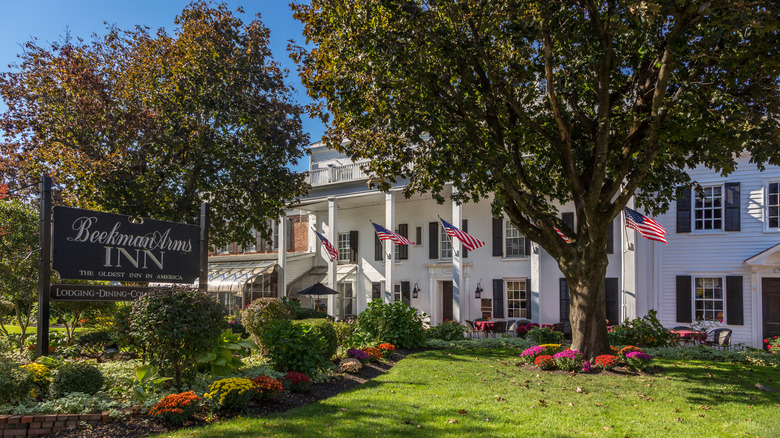
The Beekman Arms officially opened in 1766 and is one of the places that claims the title of America's oldest continuously operating inn, but its history goes back even further. Founder William Traphagen opened the Traphagen Tavern at the crossroads of the small settlement of Ryn Beck in 1704, and guests have stayed on the site ever since — including George Washington and Benedict Arnold during the Revolutionary War. It's even said that the argument that led to Alexander Hamilton's fatal duel with Aaron Burr started in the inn's tavern. The nearby Delamater Inn was added to the property in the 1980s and has its own storied history. It was designed by Alexander Jackson Davis, one of the first American architects, and stands today as one of the oldest and best examples of the American Gothic Revival style architecture.
Located in the scenic Hudson Valley town of Rhinebeck, the area around Beekman Arms is as historic as the property. Rhinebeck's riverfront is part of the Hudson River National Historic Landmark District, the largest such area in the continental United States. The hotel aptly describes the historic furnishings and décor of the rooms as "pleasantly old fashioned." Along with the original 1766 rooms in the main building, guests can stay in repurposed historic buildings like the village's original firehouse and The Gables, a Victorian home built in the early 1800s. You can also dine at The Tavern and its Colonial Tap Room by the same open hearth where guests have gathered since 1704. "The hotel had a true historic vibe with rich history," wrote one Tripadvisor reviewer, adding, "The town of Rhinebeck felt like a step back in time."
Concord's Colonial Inn in Concord, Massachusetts
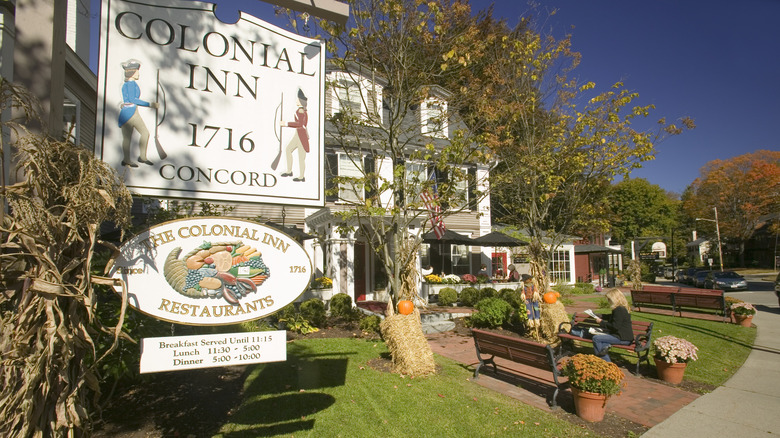
Concord is home to a rich legacy of Revolutionary War history as well as one of the most charming and walkable downtowns in Massachusetts. Concord's Colonial Inn is right in the heart of it, adjacent to the historic landmarks of Monument Square. The inn boasts its own rich history as one of the oldest inns in America. The building dates to 1716 and served as a storehouse during the Revolutionary War. Henry David Thoreau lived there in the 1830s, and in the mid-19th century it was a boarding house named the Thoreau House after the famous writer's aunts. It has operated as an inn since 1889, and though it has been expanded in the 130-plus years since, it retains its colonial features and spirit.
The 15 rooms of the Historic Main Inn date back to the original 1716 building, and many still have their original pine floors and post-beamed ceilings. All are decorated to provide a colonial ambiance, with antique furnishings and period décor. As reviewer DonDon said on Google, "It's a fantastic place if history and nostalgia are your bag."
You'll find similarly historic touches in Concord's Colonial Inn's dining spaces. The Tap Room started its life as Concord's "men's only" bar and its elegant dark wood interior still has features from this era. The Village Forge Tavern dates back to Revolutionary War times, when it served as a supply storeroom. In short, it's an ideal colonial-era home base for exploring nearby landmarks like the the historic North Bridge (site of the "shot heard 'round the world") or the famous Walden Pond whose nature inspired Thoreau.
The Greenbrier in White Sulfur Springs, West Virginia
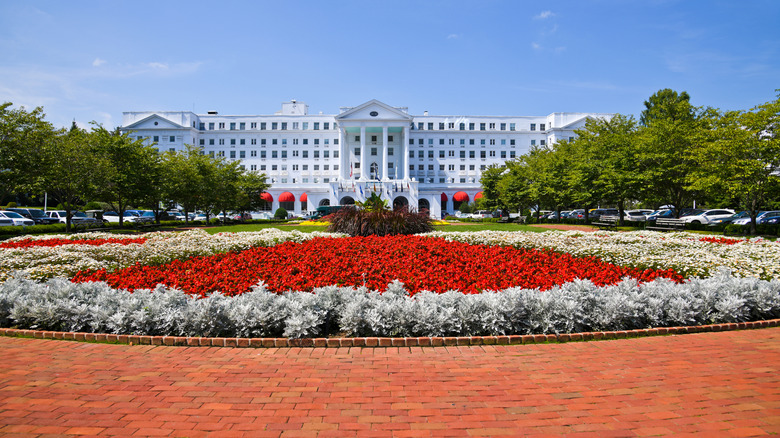
The mineral springs in White Sulfur Springs have been attracting visitors since their healing power was first reported in 1778. The town's world-renowned luxury mountain resort, The Greenbrier, opened that same year, and today offers something for just about any type of traveler on its 11,000 acres.
The layers of history and nostalgia at The Greenbrier set it apart from other similarly storied resorts. The aesthetics and décor were designed by famed 20th-century interior designer Dorothy Draper, lending the rooms and common spaces a bold opulence. That elegant old-school ambiance is reinforced with activities like horse-drawn carriage and equestrian tours of the grounds, croquet games on the lawn, and daily Afternoon Tea in the Upper Lobby, a tradition dating back to the 1930s. The Greenbriar Casino has a 1920s-style elegance that you can sink into while sipping a cocktail at the Greenbrier Royale. If you prefer America's Native Spirit, Café Carleton is the only place you can indulge in The Greenbriar's private select bourbons — as well as an upscale cabaret show on weekends.
Overnight guests can take complimentary guided tours of both the resort's interior and the grounds. Tours of what is arguably the Greenbrier's most unique feature: a once-secret bunker constructed to shelter the entire government in the case of nuclear war, which anyone can reserve for an additional fee. Built in 1958, the bunker's existence wasn't revealed to the public until 1992 and now serves as a time capsule of the Cold War era.
The Willard InterContinental in Washington D.C.
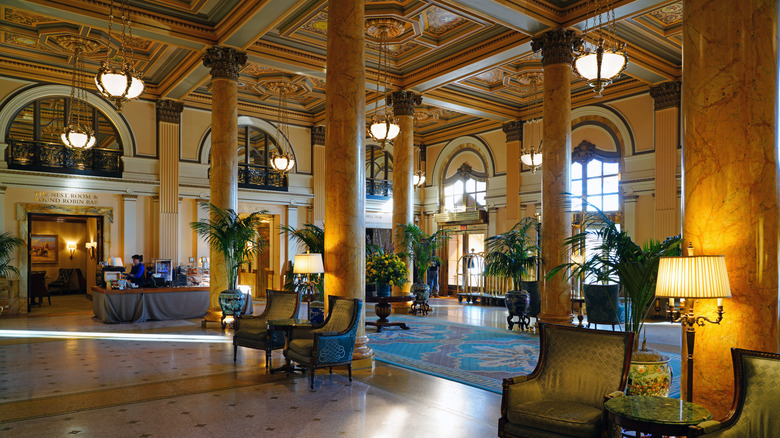
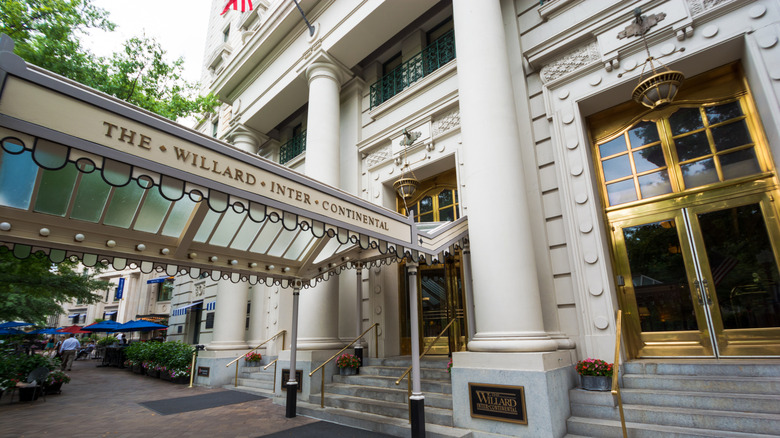
Opulence meets history at The Willard InterContinental in Washington, D.C., where Joshua Tennyson opened a hotel at the corner of 14th Street and Pennsylvania Avenue — just one block from The White House — in 1818. A facelift and name change in 1850 started its reputation for luxury, and it welcomed its first presidential guest, Franklin Pierce, in 1853. Nearly every American president since has stayed there, along with other famous names like Martin Luther King, Jr., who put the finishing touches on his "I Have a Dream" speech in its lobby (pictured).
You can feel all of that history the second you walk into the Willard InterContinental. Google reviewer Jason Harris noted the "great sense of nostalgia as you walk the halls or take a peek into the ballrooms," and the elegant guest rooms enhance that experience. Fans of a particular famous former guest can stay in one of the Signature Suites, which are designed to reflect the personalities of individuals like Martin Luther King, Jr. or opera star Jenny Lind.
The Willard's culinary traditions similarly reflect the property's storied past. Its afternoon tea was ranked third on Historic Hotels of America's list of Top 25 Afternoon Tea Experiences in 2024, and can be enjoyed in the splendor of Peacock Alley or in the privacy of your suite. The Round Robin Bar's signature Mint Julep also earned the hotel a spot on the Historic Hotels of America 2025 Culinary Heritage and Traditions list. As the story goes, the hotel became the first place to serve the drink outside of Kentucky in 1830, when Senator Henry Clay hopped behind the bar to mix up his own, and then scrawled his recipe on a napkin for the bartender who didn't know how to make one.
Grand Hotel on Mackinac Island, Michigan
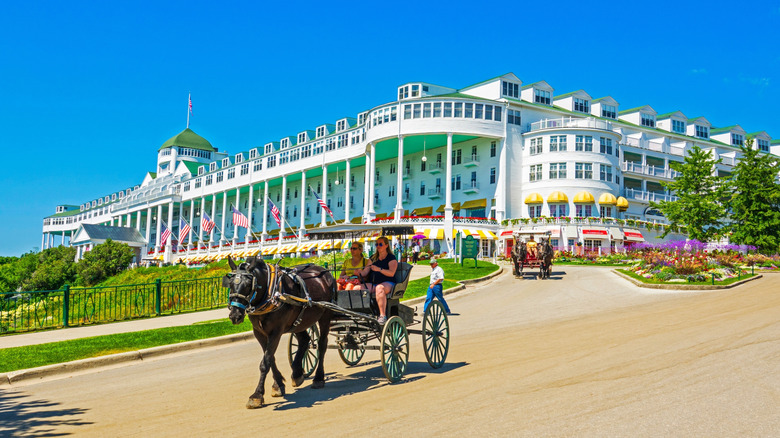
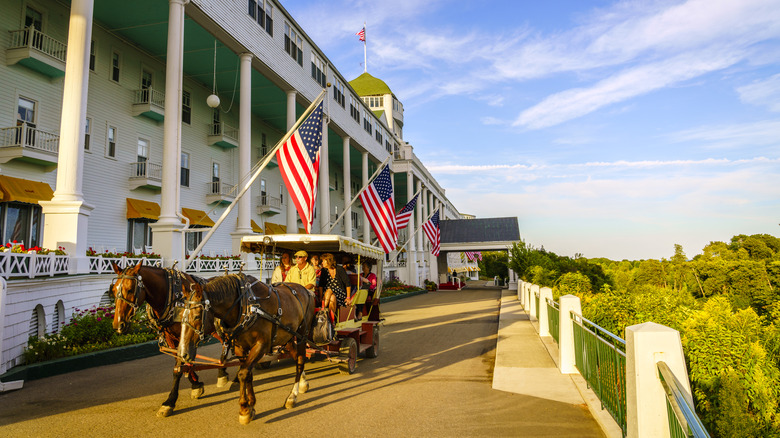
Mackinac Island is among the most nostalgic destinations in America. This secret beach town is known for idyllic car-free streets, along with historic forts and museums featuring costumed reenactors that bring the past to life. Many of the island's Victorian buildings have been there for over a century, including Grand Hotel, which first opened in 1887. Back then, guests arrived by steamer boat and took a horse-drawn carriage from the dock to the hotel. While modern ferry service has replaced the steam ship, carriage rides are still the main ground transportation.
The most iconic physical feature of Grand Hotel is the multi-story front porch that spans 600 feet. Referred to by some as "Flirtation Walk," it has served as a gathering place since the late 19th century. Guests today can still sit in its rocking chairs to admire the tea garden or watch croquet games on the lawn. The hotel's interior reinforces this old-fashioned elegance, as noted by reviewers like P.J. A. on Yelp, who said, "After roaming the hotel a spell and checking out the areas we truly felt the charm, nostalgia, and exclusivity that earns the name Grand."
Grand Hotel also offers special packages that amplify echoes of the past. These include old-timey fun like Murder Mystery Weekends or the themed Titanic Weekend, which transports guests back to 1912 with authentic costumes, ballroom dancing, and food based on the ship's menus. Fans of the 1980 movie Somewhere in Time, which was filmed at Grand Hotel, can immerse themselves in the film with vintage attire and movie site walks. Early June is time for Mackinac Island's Lilac Festival, an annual tradition since 1948, and Grand Hotel helps guests appreciate this timeless beauty with garden tours and insights from a resident historian.
Methodology
We started our research by identifying the oldest hotels still operating in the United States, using the National Trust for Historic Preservation's database of Historic Hotels of America and the National Register of Historic Places. Next, we pared down this list to hotels that have been operating as a hotel out of the same building since the 19th century or earlier. This eliminated spots like Vermont's Woodstock Inn & Resort, which opened in 1793 but was torn down and rebuilt in 1967, or the John Rutledge House Inn, which is in a building dating back to 1763 but has only operated as a hotel since 1989.
To choose five hotels to highlight from the remaining list, we considered three main factors. First, which hotels have preserved the décor and spirit from an earlier era. While all of these hotels have been modernized in some way since their opening, the look and feel harkens back to their founding. Second, we consulted user reviews of the properties, looking for references to the hotel's history and a sense of nostalgia from people who have stayed there. Finally, we looked at the services offered by the hotel, seeking out historic menu offerings, long-standing traditions, or period-themed experiences that transport guests back to the past.