
Unique Kinds Of Wildlife You May Encounter During Your Trip To The Caribbean
The Caribbean is a region peppered with thousands of islands, reefs, and cays, all spread across a rather voluminous 1 million square miles. The region's 7,000 islands are divided into four distinct parts: the Greater Antilles and Lower Antilles, which are two regions situated across Northeast to Southeast Axis; The Bahamas, which lies just off the coast of Florida, and the Turks and Caicos Islands that sit to the east of Cuba. Over 34 million tourists headed to the region in 2024 to seek out under-the-radar Caribbean islands, to while away days on white sandy beaches, or to settle in the groove of some of the most vibrant nightlife in the world.
The area's diverse ecosystem plays host to 700 species of frogs, 59 kinds of bats, twice that number of land-based mammals, and over 550 species of birds. The waters teem with 1,300 different fish, an incredible 3,000 distinct lobster variations, and a whole host of sharks, aquatic mammals, eels, and other exotic fare. Many of these animals are endemic to the region, so the only way you can experience them outside of a zoo is to book a trip to one of the best Caribbean destinations for viewing wildlife, and work your way from there.
Unfortunately, the fauna of the Caribbean is facing unprecedented levels of extinction. Well over half the reptile population has vanished, and every single land mammal endemic to the area is on the endangered list. All in, 1,200 endemic species are currently on the brink of final disaster. Conservation efforts continue apace, but the best time to experience all the area has to offer is now. No list of unique wildlife can ever be complete, but here are some first-hand highlights that you simply will not want to miss.
The West Indian Manatee
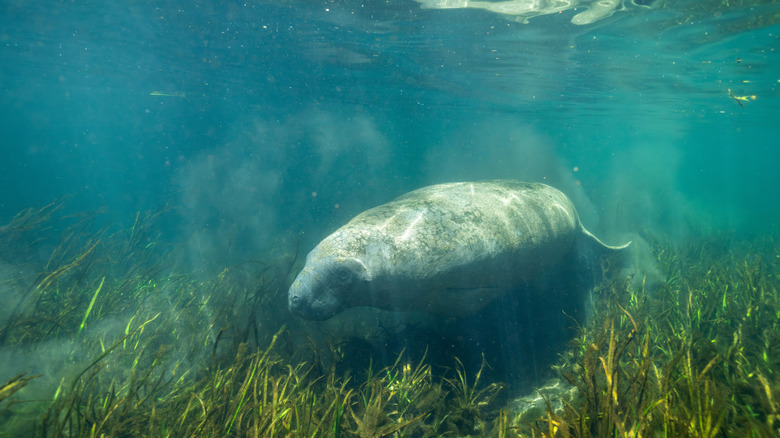
Christopher Columbus claimed to have sighted a mermaid on his infamous 1492 voyage to the Americas. What he was probably actually looking at was a manatee, and while Columbus noted that they were less beautiful than expected, it's still difficult to imagine why he, and many other mariners, ever made the connection at all. Regardless, manatees have an intrinsic beauty of their own, despite it not quite rising to the level of their mythological brethren.
Adults grow to around 13 feet in length and can weigh as much as 1,300 pounds. They are herbivores, and both gentle and curious creatures, lacking natural predators, and have only ever been known to attack humans in self-defense. Although similar to their dugong cousins, the two species do not live in close proximity to each other. Both love warm tropical and subtropical waters, but dugongs are more commonly spotted in the Indo-Pacific region, while manatees prefer the waters around the Americas, and in some cases, Africa.
As for the West Indian Manatee, it simply adores the shallow waters and mangrove swamps that proliferate around the Caribbean. Traveling up and down the shores of Belize or Puerto Rico, is as close as you will get to a sure-fire sighting. Sighting one is an absolute delight, and one of the best places to do that is Belize, which is home to the largest population of West Indian Manatee in the Caribbean. You'll find tours running year-round and charging just under $60 a head.
Antillean Crested Hummingbird
In a world filled with such a wide variety of incredible creatures, the hummingbird still manages to stand out from the crowd. There are 368 recognized species, the smallest of which — the aptly-named bee hummingbird — is only 2.25 inches long. Hummingbirds can also fly backwards, travel in one direction while looking in another, and are known to eat twice their own body weight each day. They are also noted for their incredible endurance; some species can fly for 20 hours without stopping for a rest, and, if things get too cold for them, they can decrease their own life support mechanisms to the bare minimum and wait for better days to come.
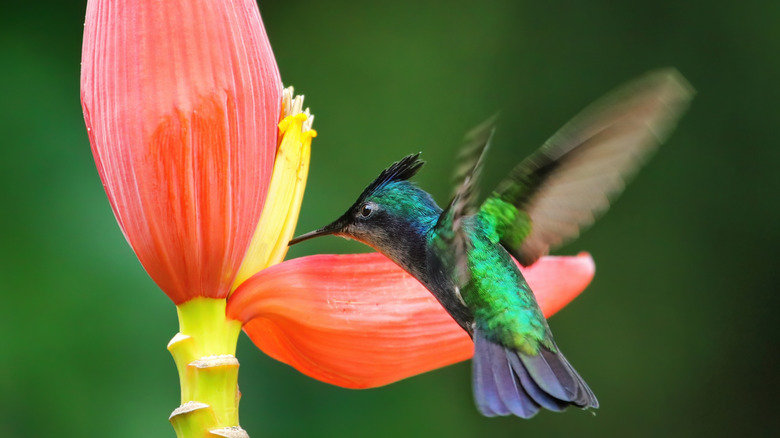
Meanwhile, this particular bird's name gives further clues as to what is so special about this otherwise stealthy creature. Its crest — the existence of which is a rarity for hummingbirds in itself — is an iridescent and easily identifiable delight.
Still, those interested in visiting the best birdwatching destinations the U.S. has to offer would do well to cast their gaze further afield. Around 95% of hummingbird species live south of the U.S., and in the Caribbean alone, you will find 185 unique varieties. The Antillean Crested Hummingbird proliferates across the entire Lesser Antilles, but visitors to Barbados and parts of Puerto Rico are also likely to be blessed with a sighting or two.
Smalltooth Sawfish
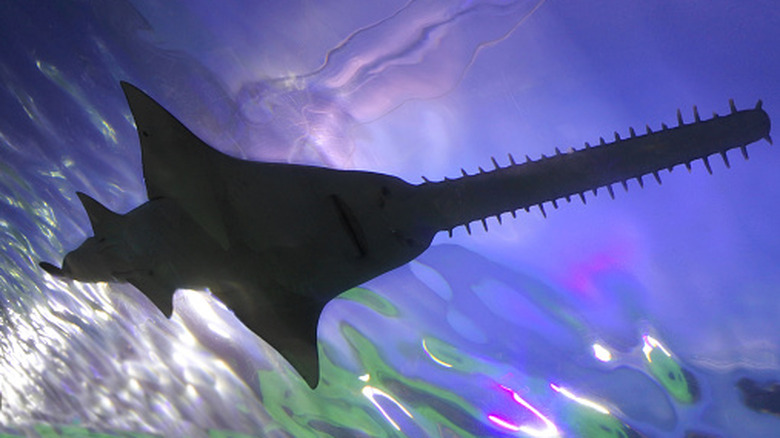
The smalltooth sawfish is yet another animal on this list that provides a fair amount of background information from its name alone. They are named for their saw-like snout — or rostrum, as it is known — which is covered in serrated teeth reminiscent of a saw blade. They are roughly shark-shaped and are occasionally mistaken for one of the ocean's most notorious predators, but they are in fact a type of ray.
Seeking one out is something of a challenge. This smalltooth variety is critically endangered, and sightings are exceedingly rare. Still, the waters south of Florida and across the Bahamas represent your best chance, so visiting an underrated island in search of relaxing beach vacations presents opportunities to see this rare treat in the surrounding waters. Dark grey in color, populations can also be found in the shallow waters around Andros Island, located roughly halfway between Miami and Cuba. Needless to say, if you catch one of these fish even by accident, you should immediately return it to the water.
Cuban Hutia
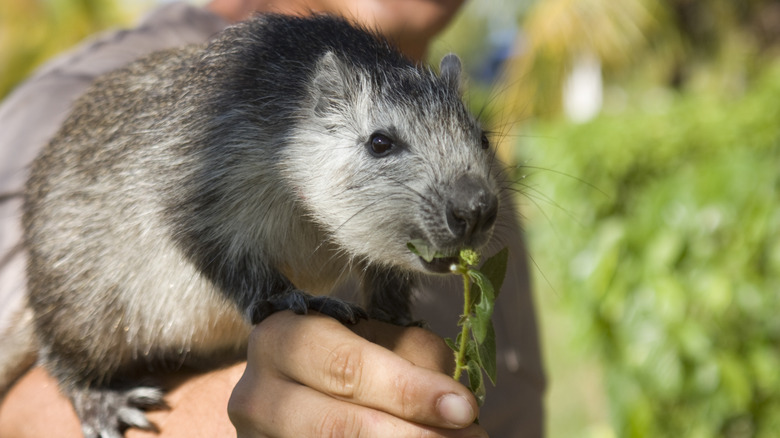
Cuba is the largest island in the Caribbean, and it is a place of contrasts. From the salsa-strewn cabaret of the island's infamous nightlife to underrated beaches that can help you stay warm in winter, visitors to the tropical paradise are greeted with an experience like no other. There are adventure holidays to immerse yourself in, hidden gem snorkelling adventures to explore. Of course, there are wildlife experiences to be had in the water and on land.
The Cuban Hutia is a native rodent species that has long been considered a delicacy by the indigenous population and was later incorporated into the post-colonial diet. Today, it's becoming less common to eat this animal due to hunting prohibitions and a smaller population. Something of a chunky beast, they are reminiscent of the capybara, weigh in at around 15 pounds, and reach an average length of about 2 feet.
They are especially abundant close to the naval base at Guantanamo Bay — which is, of course, off limits to anyone without a permit — but you'll also find concentrations of the tree-dwelling variety in many of the mangrove swamps that dot the north half of the island. Photogenic to the extreme, the Hutia are not particularly aggressive, but as a protected species its best to leave them to their own devices if you are lucky enough to spot one.
Blue Tang
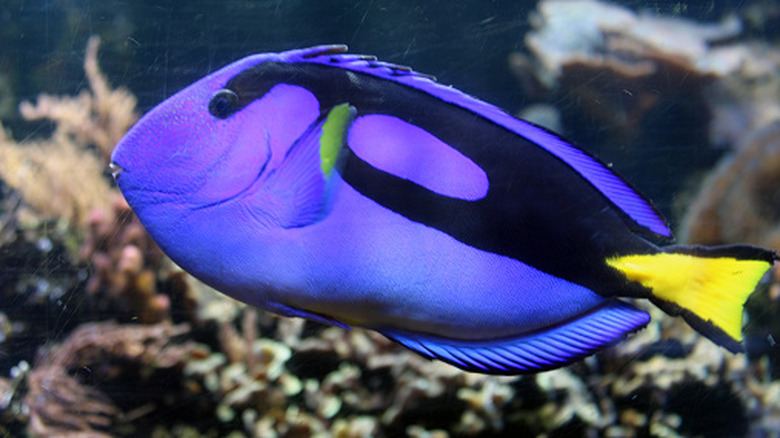
For those choosing to vacation within the continental U.S., the waters around the panhandle certainly provide the opportunity to spot one of the world's most recognizable fish: the blue tang. Still, despite the pitfalls of tourist traps to avoid, the Caribbean remains better placed to offer a full-on blue tang experience.The famously blue creatures actually begin life as yellow fish, and delight in a wide range of waters. Schools can be seen in Bermuda, and even along the New York coast, but several unique species — such as the Nassau — spend their days in warmer waters, and spotting this variety is one of those unique experiences you can only have in the Bahamas. Regardless, there is more to this photogenic fish than meets the eye.
To start with, they can be toxic if eaten, so the fish is prized by aquariums, not chefs. Certain species are also in possession of venomous spines, leading to a look but don't touch policy that most divers honor as a matter of good practice. The sting is painful, though not deadly, but there is always a risk of anaphylaxis, and medical attention should always be sought after any such encounter.
Red footed Booby
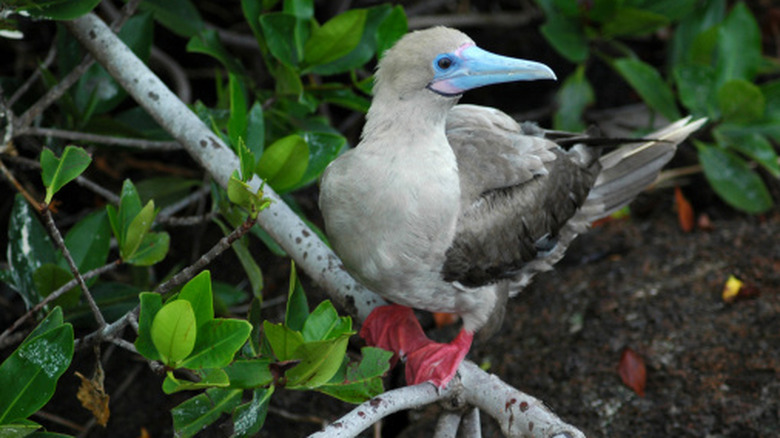
If you can think of a tropical island, the chances are that a red-footed booby has visited it at some point. The bird is known for its bright blue beak and decidedly red feet, but it's also a strong flier. They fly at high altitudes, traveling close to 100 miles in search of food, and are able to glide for an impressive distance with but one flap of their wings. The Galapagos Islands boast the largest single colony of this bird, but there are no shortage of them to be found in and around the Caribbean.
Spotting them is a simple enough task given their distinctive coloring; they have a wingspan of approximately 4.5 feet, or around twice the length of their actual body. Occasionally sighted off the coast of Florida, you're more likely to find them clustered around the reefs of Belize, circling the shrub lands of Cuba, or nesting in the fig trees of islands across the Caribbean.
Hawksbill Sea Turtle
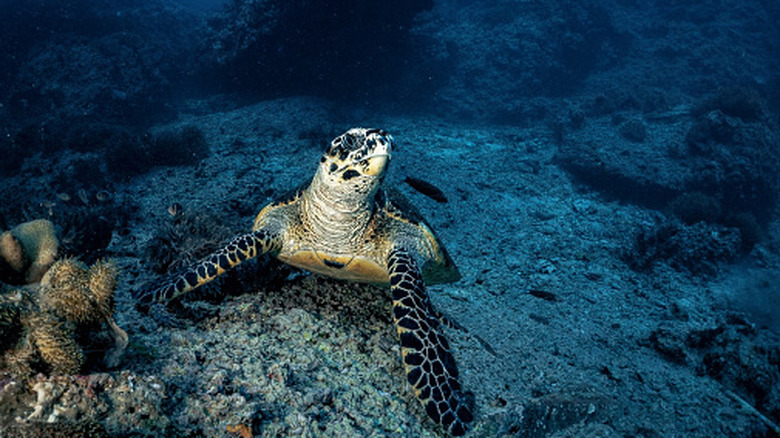
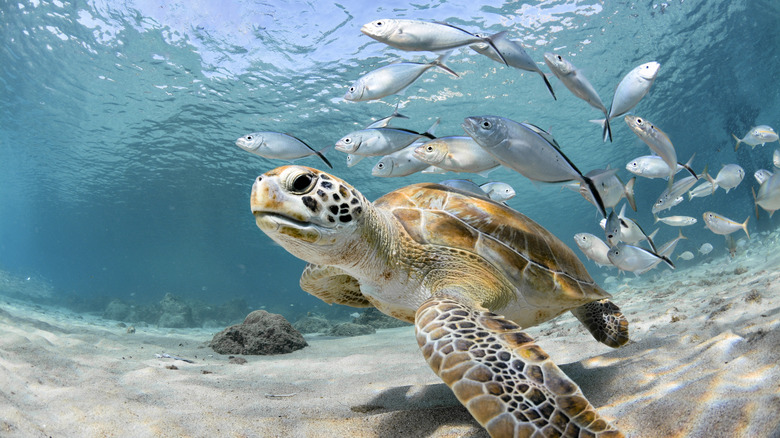
There are few sights more thrilling than watching a turtle in its natural habitat as it glides through the water. There are 356 species of turtles, all in, the vast majority of which split their time between the land and the sea. The hawksbill variety bucks this trend, being a fully ocean-dwelling creature, albeit one that prefers warm tropical and subtropical waters. They spend their entire life at sea, save for those moments when they climb up the beaches to lay their eggs.
Measuring around 35 inches in length but weighing in at as much as 200 pounds, spotting the turtle presents a challenge only due to their relative scarcity. They are most at home around the reefs and shallow waters, where they spend most of their time alone — aside from during the mating season — and are often seen foraging for sea sponges in shallow coastal waters and reefs. Sadly, they are an endangered species, and taking a day-trip to one of the popular islands of Costa Rica or some of the little-known Caribbean marine-lover hotspots is something of a privileged event if you're trying to spot them.
Jamaican Boa
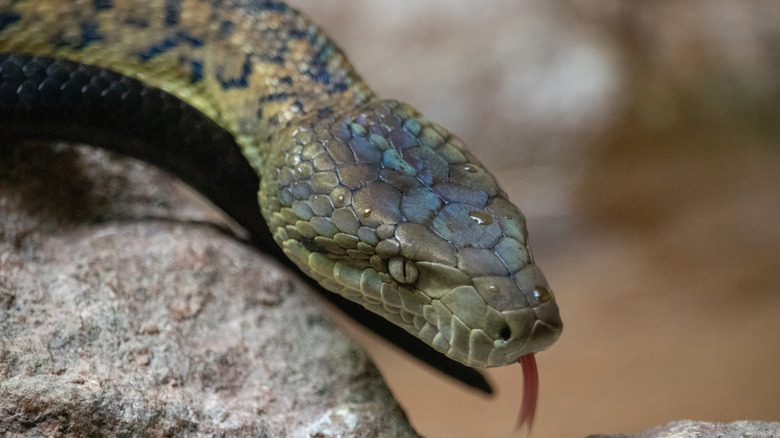
There are around 3,400 different species of snake, and within that number, you'll find a staggering variety of subsets. There are sea snakes that spend their entire lives underwater, tree-climbing snakes that can glide between branches, snakes that burrow into the ground, and snakes that kill their prey by crushing them to death. The Jamaican Boa belongs to that latter group. Although it also likes to climb trees, sometimes digs its own burrows, and is a more than capable swimmer. So, it's something or an all-rounder.
As the name suggests, the only place you are likely to encounter one of these non-venomous reptiles is on the island of Jamaica. Ostensibly yellow (or sometimes described as tan or brown), they are covered in dark mottling that gets increasingly dense as it moves back towards the tail and a jet black conclusion. They can reach an impressive 7 feet in length, give birth to live young, subsist primarily on lizards, bats, and rodents, and can live for several decades.
There is no hard data relating to how many of these outstanding creatures remain in the wild, but encountering one presents something of a challenge these days. Their natural habitat has come under increasing pressure and has brought the snake to the brink of extinction. Excursions into Jamaica's natural wilderness, such as a trip through some of the island's one of Jamaica's waterfall adventure activities, or in the scrub-land around some of the island's best beaches is probably your best bet. Signing on to a guided tour through some of Jamaica's more heavily forested areas also remains a viable option.
Bananaquit
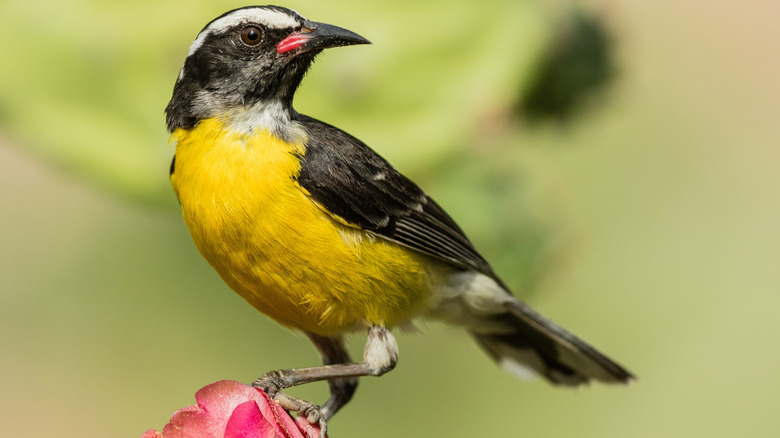
Bananaquit may sound like the first draft of a new fad diet, but the truth is, they are a species of birds with a thirst for sugar and the curved bill to prove it. They are, in many respects, the quintessential Caribbean bird, found all over the region, though oddly they avoid Cuba for some unspecified reason. Their call is immediately recognizable to those in the know, with a sound that is both staccato and falsetto rolled into one.
Fortunately, unlike many of the animals on this list, spotting one is a relatively easy thing to do. Just leave out a bowl of sugar. Seriously, they love sugar and are bold enough to steal some from your table if you're dining al fresco. Aside from their penchant for sucrose larceny, the best place to see them is anywhere rich in flora, such as any one of the serene gardens hidden in the heart of the Caribbean that dot the landscape. Mischievous by nature, they sometimes use their beaks to pierce flowers, thus stealing nectar without engaging in the reciprocal pollination deal that Mother Nature insists upon.
Caribbean Spiny Lobster
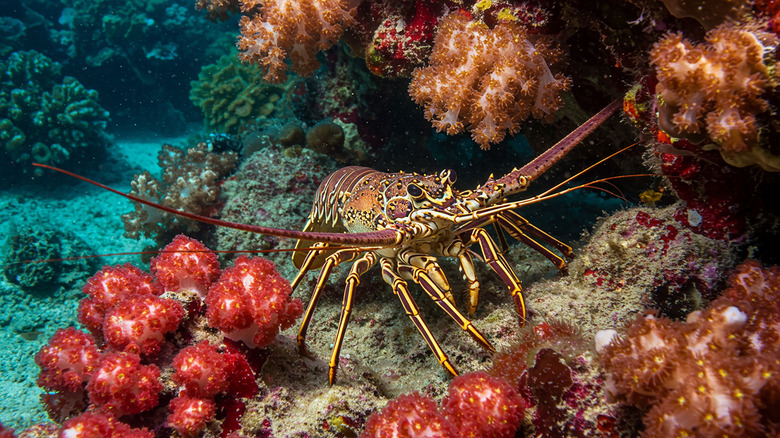
While many of the animals on this list are either inedible, unpalatable, or protected to the point where consuming them is against the law, the spiny lobster is not only responsibly governed but is also considered something of a delicacy. These autumnal-hued crustaceans prefer to live in the shallows, and while colonies of them exist across the Atlantic seaboard, they are also found in large numbers in the waters around Puerto Rico, across the coast of Belize, and anywhere else you are likely to find cosy holes for them to hide in. They are nocturnal hunters, so the best way to spot them is to engage in a little night diving, granting an opportunity to add the Caribbean to a list of the top destinations to experience "noctourism."
Lacking true pincers, these lobsters catch prey with a pair of small claws and defend themselves from predators thanks to a series of forward-facing spines that their name derives from. Thanks to sustainability efforts, those looking to catch one of these creatures on a fishing trip may do so, but strict regulations are in place. They are subject to a 3.5-inch minimum size requirement, there are limits on the number you can harvest, and certain techniques, such as the use of spears and hooks, are prohibited.
Queen conch
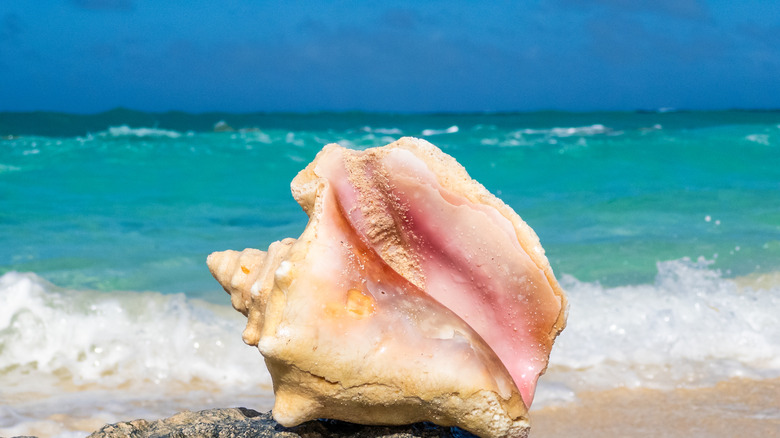
In a world filled with incredible fauna, snails get something of a raw deal. Considered to be something of a gastronomic delight in certain parts of Europe, these gastropods differentiate themselves from their less edible slug cousins on account of their possession of a hard shell made from calcium carbonate. There are more than 60,000 different kinds of snails, and many of them spend their lives entirely underwater. The queen conch is one such marine snail, and it is a mighty beast indeed.
A conch is, of course, a type of sea snail that sports a particularly impressive shell. The shell can survive long after the demise of its parent body, and they are sometimes repurposed as an ornament or acoustic device. Indeed, in 2021, archaeologists unearthed a conch used by members of a tribe some 17,000 years ago that, despite its age, retained its functionality as a musical instrument.
The queen conch can be found across the Western Atlantic, and it can be seen grazing on seagrass, around the Bahamas, Belize, Jamaica, Honduras, and parts of Florida. They are protected and considered something of a delicacy, but it is illegal to harvest any you find. Local laws vary — which means you will need to double-check depending on location — but it's generally okay to keep any discarded shells with no live snail inside. Taking them across international borders, however, requires a permit. Still, they are easy enough to spot. They can grow to around one foot in length, have a pinkish interior, and their life span of 30 years or so means you can often find them in more or less the same spot across multiple visits.
Lesser Antillean Iguana
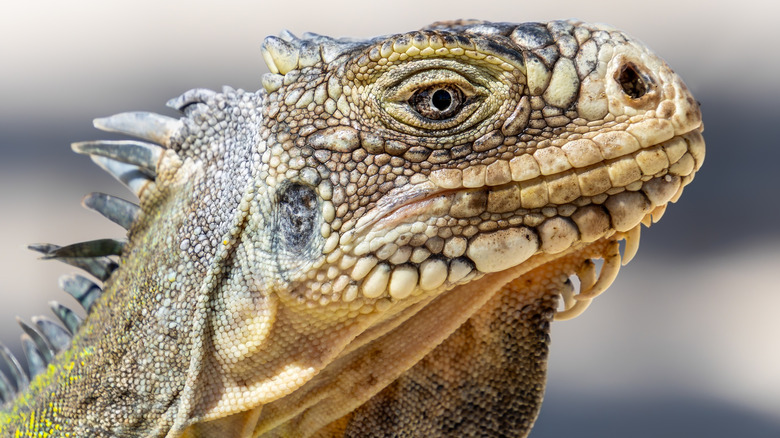
The Lesser Antilles is an archipelago of islands located on the eastern edge of the Caribbean Sea. It is a place of luxury resorts tucked away inside dazzling rainforests and vibrant coral reefs on beaches right by the shores of Saint Lucia. And, if you are lucky, while you are there, you might just spot one of the region's most impressive land animals.
The Lesser Antillean iguana used to be found on islands across the Caribbean's Eastern front, but these days it is restricted to a much narrower remit. Present in Anguilla, St. Barth's, St. Eustatius, Dominica, Guadeloupe, and Martinique, these critically endangered creatures like to nest within woodlands or mangrove swamps. Even so, spotting one is no easy task.
They are well-camouflaged, being an ostensibly dark green color, and can change hue if the situation demands it, though less dramatically so than chameleons. To make things worse, there simply aren't that many of them left. Recent estimates suggest that there are as few as 20,000 of the 8-pound lizards left, with the vast majority of those currently living on the island of Dominica.
Methodology
Many years spent wandering around the Caribbean helped build a comprehensive knowledge of the incredible wildlife that lives there, but here we took things a step beyond on-the-fly knowledge. Data was gathered from real conservation work being undertaken in the region, and government organizations such as the National Oceanic and Atmospheric Administration proved invaluable when it came to checking rules and regulations. Information relating to population sizes, spawning grounds, and potential hazards were all correct at the time of writing.