
Chicago's 5 Must-Visit Abandoned Places, According To Urban Explorers
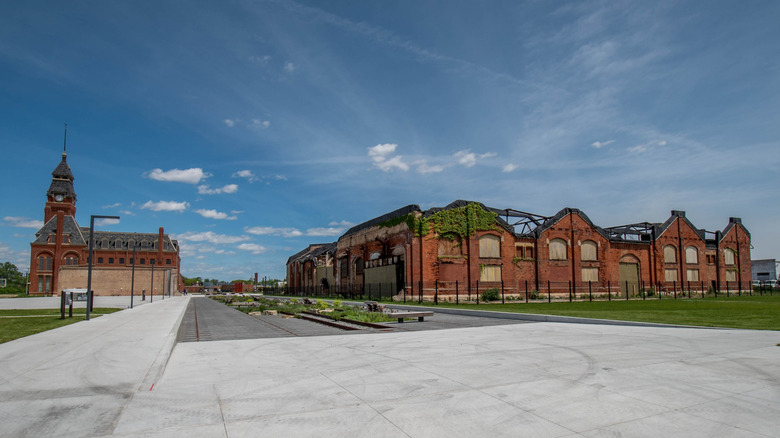
I grew up in Western Pennsylvania during Pittsburgh's post-steel lull, when industrial sites like the Homestead Steel Works sat abandoned, and some areas had a housing vacancy rate of over 28% — the second-highest in Pennsylvania behind only the "Burning Ghost Town" of Centralia. Given this background, I suppose it's no surprise that I developed an obsession with dead malls, shuttered factories, and similar urban ruins.
Chicago, a city with its own varied array of once-thriving empty places, is an excellent destination for other folks who share this interest. As of early 2026, thousands of buildings and storefronts have been officially registered as vacant with the City of Chicago, with the highest concentration (1,270) found in Ward 16.
Granted, not all of these abandoned sites are safe (or legal) to explore, nor do they all have the visual appeal or intriguing backstory to make it worth the effort to do so. Some once-popular spots for urban explorers in Chicago are in the process of disappearing, like Damen Silos, which was a gathering place for local graffiti artists from when it closed in 1977 until demolition of the site started in 2025. Others are off-limits while they undergo renovations, like the 1926 Classical Revival-style Pioneer Trust & Savings Bank in West Humboldt Park, which had been a popular urban exploration destination since its closure in 2008. But with plenty of forgotten corners still to be explored, here are five Chicago spots that locals recommend as the best places to visit if you're looking for traces of the Windy City's past.
Zion Evangelical Lutheran Ghost Church
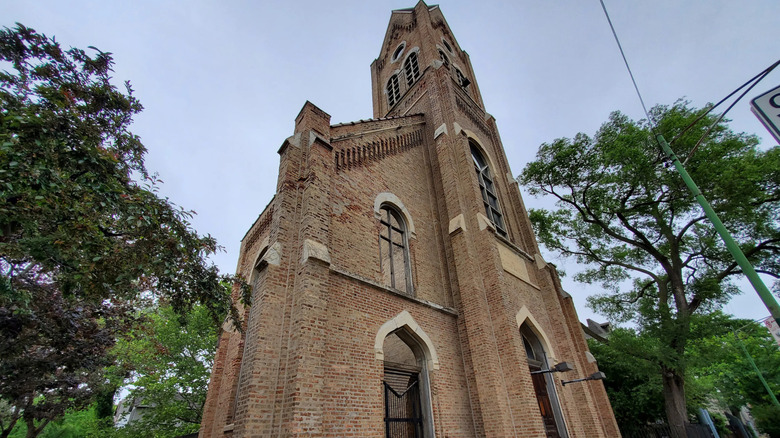
Street art fans have long flocked to Chicago's Pilsen neighborhood to check out the nonstop color and fun of its two-mile art zone. The area also has some great spots for urban explorers, like the partially destroyed ruins of the Zion Evangelical Lutheran Church on W 19th Street.
The church was built in 1880 to serve the Lower West Side's large population of German immigrants. Though that population had largely moved to other areas of the city by the 1950s, the church remained an active house of worship until a fire destroyed much of the building in 1979. A developer bought the property but didn't do anything with it until 1998, when a windstorm took out the gutted building's side walls. As the story goes, descendants of the original congregants visited him the next day with a chronicle of the church's history, asking for its remnants to be saved. Moved by this request, the developer restored the still-standing façade and bell tower, planting a garden in what was once its interior and creating the "Ghost Church" that you can visit today.
The standout feature of Zion Evangelical Lutheran Church is the 90-foot bell tower rising from the center of the preserved brick façade. Behind it, in the former interior, you can see brick foundation pillars and the charred crucifix that was hanging on the wall during the fire. The once seemingly doomed church has become a beloved landmark, referred to as "The Sanctuary" by locals. While the developer claimed to want to build artist studios on the site, he's had that plan since roughly 2000 and hasn't done anything with it yet, so it seems likely the church will remain in its current form for years to come.
Meigs Field Airport Tower and Terminal
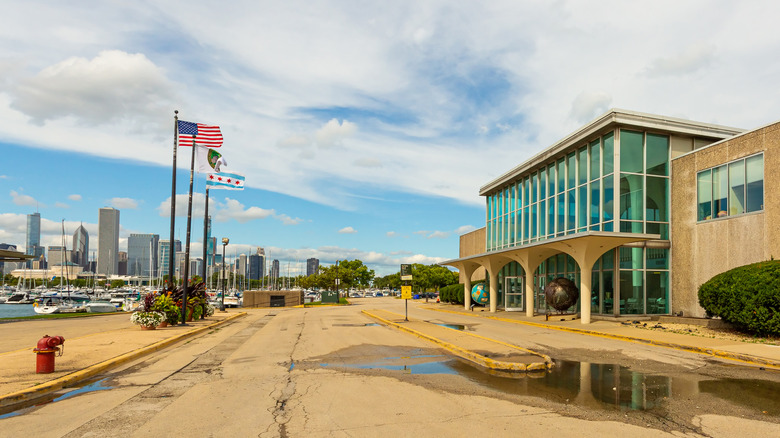
Walk due east from the Field Museum, down E Solidarity Drive, and you'll find yourself on the underrated Chicago peninsula of Northerly Island. This 91-acre, man-made peninsula was intended to be used as parkland when it was built in the 1920s, but it was put to a more commercial purpose with the opening of the Northerly Island Air Strip in 1948. It was renamed Meigs Field in 1950, and by 1955 it was the busiest single-strip airport in the United States.
But despite its popularity, not everybody was a fan. Long-time Chicago Mayor Richard Daley started trying to close the airport as early as 1972. He finally succeeded in 2003 when he ordered bulldozers to slice up the runway under cover of the night.
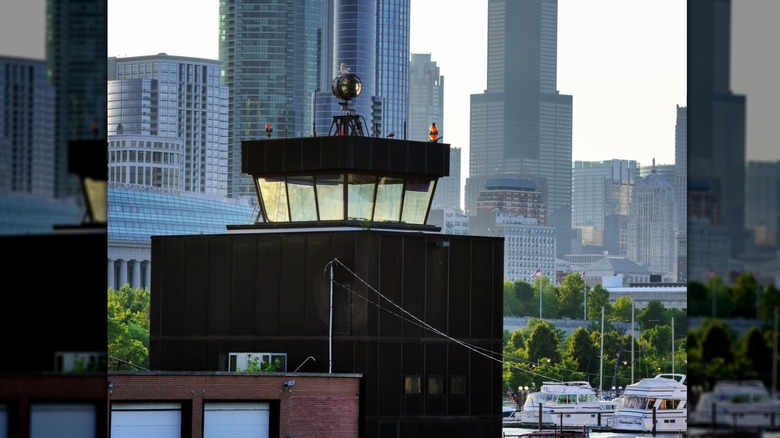
The airstrip has since been replaced by Northerly Island Park, but two nearby structures remain standing from the peninsula's Meigs Field days. The terminal that was built in 1961 has been repurposed into the Northerly Island Visitor Center but is still recognizable for what it once was — so much so that it served as the stand-in for the Scranton Airport in "Home Alone." Just to its south stands the abandoned Air Traffic Control Tower that was built in 1952. While you can't enter the tower, the former terminal is open to visitors and still has remnants from its airport era, like the passenger seats in the one-time gate areas.
Uptown Theatre
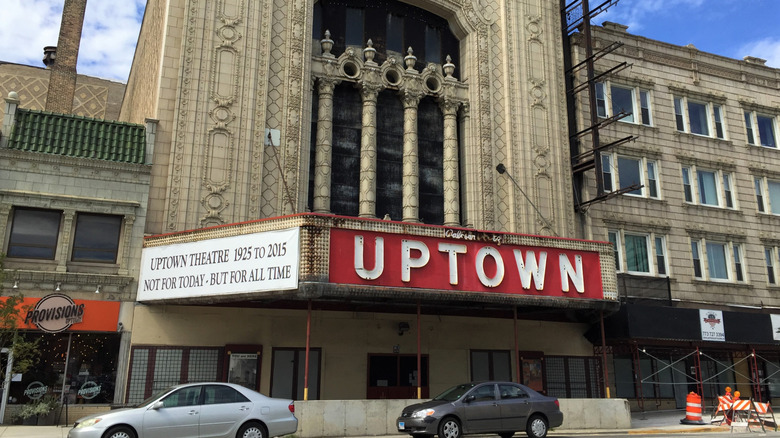
The Uptown Theatre was the world's second-largest movie theater when it opened in 1925, and to this day, its 4,320 seats are the most of any theater in Chicago. Located down the block from The Green Mill, the must-visit historic hangout of Al Capone, the Uptown Theatre offered a range of entertainment in its prime, from silent movies to comedy routines to performances from jazz greats like Duke Ellington. Its opulent design features a Spanish Baroque façade, three lobbies, and a six-story main entrance with what caretaker Dave Syfczak calls "one of the grandest staircases ever in a movie palace." Sadly, its luxurious appearance was already starting to deteriorate by the time it hosted its last concert in 1981.
Several people have owned the Uptown Theatre since then, but their attempts to restore and reopen the historic venue have all proved unsuccessful. The most recent plan to redevelop the Uptown with city and state financing fell through in 2021. A book released about the theater for its 100th anniversary brought new attention to these renovation efforts but, as of this writing, it remains vacant save for special uses, like when "Transformers 4" was filmed there in 2013.
While there's no official way to get a tour of the Uptown Theatre's interior, the owner has opened it up for historians and reporters in recent years, so it's worth reaching out if you have an academic or research-based interest. The caretaker is also regularly on site doing maintenance work, and has been known to give folks a brief look inside if they happen by at the right time. Otherwise, The Uptown can only legally be enjoyed from the outside, though its grandeur still makes it worth a stop for those interested in abandoned places.
The Pullman Factory
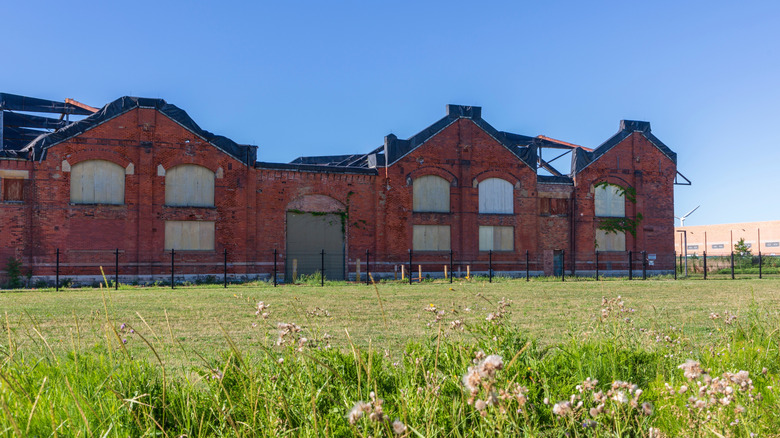
In 1881, railcar entrepreneur George M. Pullman established the company town of Pullman just south of where Chicago's city limits ended at the time. At its heart was a factory producing rail and subway cars that employed almost 4,000 people, many of whom lived in the on-site worker housing. When it opened, Pullman was considered an exemplary model of the company town, one complete with its own shops and church along its paved streets.
By the time the Pullman factory closed in 1982, the city of Chicago had absorbed the one-time town of Pullman, which was named a National Historic Landmark in 1972. The row houses built for workers between 103rd and 115th Streets are now privately owned, and while most remain occupied, some are notably vacant and deteriorating. The former factory buildings were badly damaged by a fire in 1998, but the remaining structures are now preserved as Pullman National Historical Park, Chicago's first national monument.
Visitors can tour the Pullman Car Works factory and the Hotel Florence across the street or wander the park grounds to see the historic gatehouse and administration building, the latter of which now serves as the site's visitor's center. If you're looking for something more well and truly abandoned, the Old Pullman Firehouse, just up the block, has been out of use since 1957. Along with its location near the former factory, it's notable for its observation tower, as it was the last firehouse in Chicago with this feature.
U.S. Steel South Works Plant
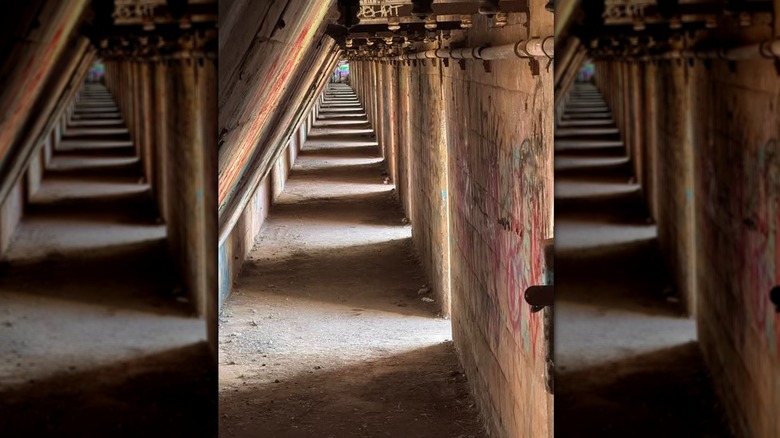
The Pullman Company was using a lot of steel for its railcars by the early 1900s, and some of that was produced right in Chicago, at the South Works. Opening around the same time as Pullman's plant, in 1882, South Works became part of U.S. Steel in 1901. The massive facility covered nearly 500 acres and provided jobs for around 20,000 people at its peak. It was the anchor employer for South Chicago until the 1970s, when the U.S. steel industry collapsed and plants across the country closed or downsized.
When the South Works shut down completely in 1992, the large area it had once occupied was left empty. Much of the plant was demolished, but the ore walls that once stored coking coal and iron ore pellets proved impossible to destroy. The Chicago Park District found a creative new use for them after purchasing part of the South Works site in 2004. The abandoned industrial area was converted into a tranquil lakeside haven called Steelworkers Park, which officially opened in 2014.
The former ore walls are the highlight of Steelworkers Park. A portion of one wall has been turned into a climbing wall, while other stretches are popular canvases for graffiti artists. There are other abandoned structures from the Steel Works throughout the park, along with walking trails and a statue by local artist Roman Villarreal that pays tribute to the steelworkers who once worked in the former mill.
Methodology
To compile this list, I researched abandoned places in Chicago using sites like Urbexology, Urban Explorer, and Preservation Chicago, as well as subreddits like r/urbanexploration and r/Urbex. I focused on spots within the core city limits of Chicago, eliminating places that frequently show up on "Chicago abandoned buildings" lists but are actually located in small towns that function as suburbs of the city, like the Old Joliet Prison or Dixmoor Power Plant.
I looked for locations that have enough visual interest and explorable areas to be of interest to urban explorers while being suitable for casual visitors. This meant omitting locations that require climbing or other strenuous or risky physical activity in order to access them. This was why I left out spots like the abandoned 21st District Police Station on the South Side, which is a popular destination for urban explorers but can only be entered through the roof and isn't much to look at from the outside. I also left off any places that are illegal to visit, like the abandoned water cribs in Lake Michigan, which are certainly intriguing and historic abandoned places, but are within a Coast Guard security zone and are off-limits to visitors.