
America's 5 Top Beaches To Visit With The Least Amount Of Shark Attacks, According To Data
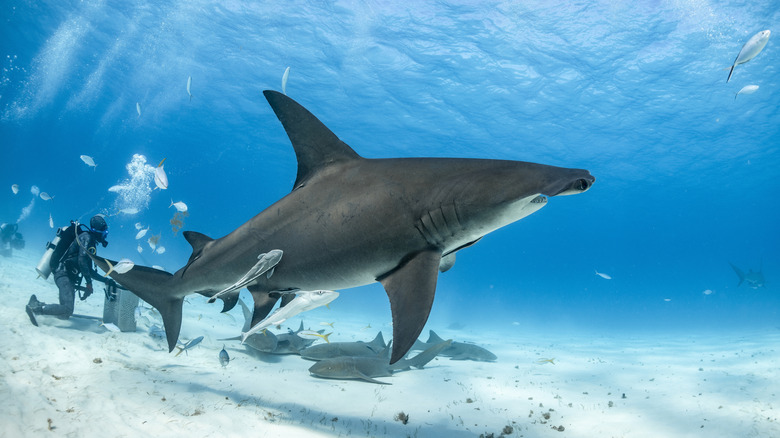
When "Jaws," Hollywood's first summer blockbuster, was released in 1975, the impact was immediate: People were terrified to get in the water, and one of nature's most enduring creatures discovered that not all press is, in fact, good press. After minding their business for 450 million years — roughly 200 million years longer than dinosaurs – sharks suddenly became one of nature's most feared boogeymen.
That reputation has had long-lasting effects on the conservation of this species. Although shark attacks occur, they remain rare. The Florida Museum International Shark Attack File (ISAF) tracked 94 shark bites in the U.S. in 2025. Of those, 65 were unprovoked – meaning they occurred in the shark's natural habitat, such as when a shark mistakes a surfer for prey — while 29 were provoked through human-initiated interaction. The United States leads the world in reported shark attacks, with Florida accounting for the most incidents worldwide. The irony is that humans are far more dangerous to sharks than the other way around, killing an estimated 100 million sharks each year. Over a third of sharks, rays, and chimaeras are now endangered, and the extinction of sharks would disrupt marine ecosystems worldwide.
Historian Helen Rozwadowski told UConn Today that "the ocean is an environment that human bodies can visit but not inhabit," highlighting our need to respect the habitat of these powerful creatures. Regardless, it's understandable not to want to encounter an apex predator whose prehistoric relatives include the 60-foot megalodon with 10-foot jaws and 7-inch teeth. While daredevils may want to dip a toe into the waters of America's most shark-infested beaches, others may want to play it safer. So, these are the shark-attack-free saltwater beaches in the United States, in states with the fewest unprovoked attacks (five or fewer since the 1800s), according to data from research centers and local news sources.
Hammonasset Beach State Park, Connecticut
Despite having 332 miles of shoreline along Long Island Sound, which feeds into the Atlantic Ocean where great white sharks live, Connecticut has recorded very few shark attacks. ISAF reports only one unprovoked attack in Connecticut since 1837, although Sharksider lists three incidents in Bridgeport, Branford, and the Mystic River. According to Sharksider, the most recent unprovoked attack in the state occurred in 1960 in Bridgeport.
Although sharks do inhabit the Long Island Sound, the species typically found around Connecticut, such as sand tiger sharks and brown sharks, feed mostly on small fish and invertebrates. In 2019, a great white was supposedly spotted in the Sound for the first time, but tracking data later showed the shark was nowhere near there. Generally, you won't find great whites in this body of water, whose shallow depths make it more protected from sharks than the deeper Atlantic coast of places like New York and Massachusetts.
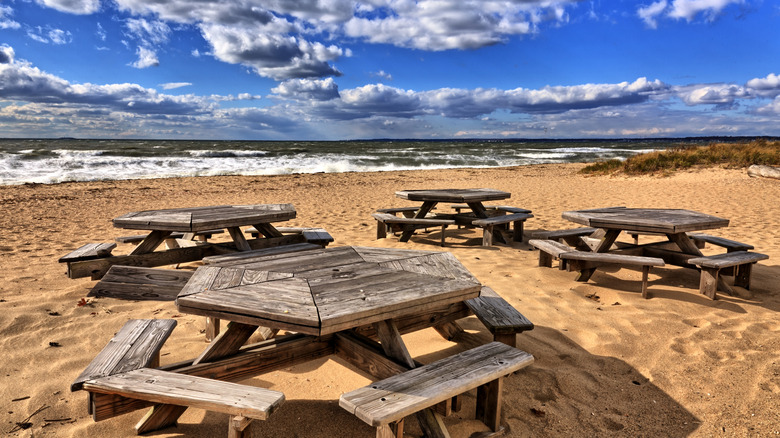
That means that you can take your pick from Connecticut beaches like the bayside paradise of Hole-In-The-Wall, although our preference for the best shark-free beach is Hammonasset Beach State Park. Arguably, it's Connecticut's most beloved public beach, and some joke that half of the state ends up there in the summer. After all, who can resist two miles of sand, family-friendly facilities like bathrooms and picnic areas, and some of the cleanest water in the state? And there's no record of there ever being a shark attack on this beach, so you can relax easily on its sandy shores. In-state registered vehicles can park for free, while out-of-state cars pay $22 on weekends and holidays and $15 on weekdays.
Ruby Beach, Washington
If you're afraid of sharks, you might be inclined to avoid the Pacific Ocean, especially since California and Hawaii have each recorded nearly 200 unprovoked attacks since the 1800s. Luckily, there's a site up north where you can more safely enjoy the waters of the Pacific: Washington. Only two confirmed attacks have been recorded since 1837, and both were non-fatal and occurred in Grays Harbor. That means beachgoers who want to be extra cautious may want to avoid swimming there.
Great white sharks are rare in Puget Sound, although they occasionally pass along Washington's outer Pacific coast. Instead, you'll be more likely to see species like blue and thresher sharks, and very occasionally, basking sharks, the second largest gentle giants of the sea (after whale sharks), who feed on tiny plankton with their big mouths.
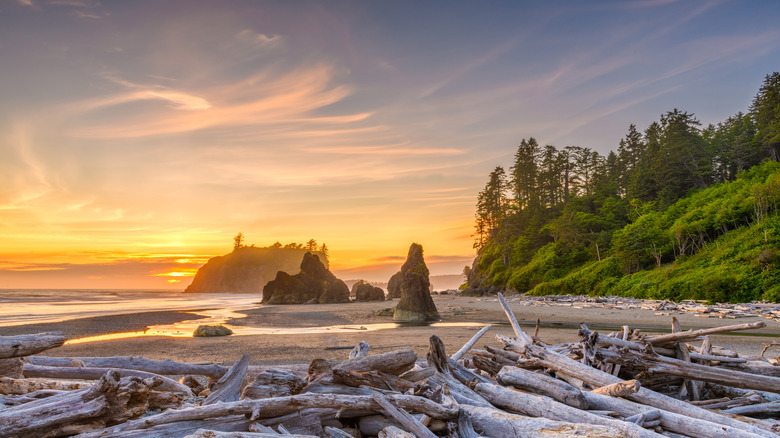
The evergreen state has some epic beaches, like the longest beach in America, which you'd expect to find in the dramatic landscape of the Pacific Northwest. Ruby Beach is one of the best in the country with its iconic rock formations, and because of that, it's our (and many people's) favorite shark-free beach in Washington. There have been no recorded attacks in this wild paradise of driftwood strewn across reddish sand and pebbles, which overlooks Destruction Island and its lighthouse. Ruby Beach is in Olympic National Park, so it costs $30 per vehicle to visit or $15 for walk-ins, while holders of the America the Beautiful Pass can visit for free.
Narragansett Town Beach, Rhode Island
The most shark attacks in the U.S. occur in states like Florida, Hawaii, and California, whose plentiful beaches and sunny days make both swimming and surfing popular. All three states have some of the most shark-infested beaches in the world, in part because of their warmer waters that great whites prefer. That doesn't mean that cloudier New England is off the hook though; areas like the seal-heavy Cape Cod have seen their fair share of shark attacks as there's a continuous population of great whites in the Atlantic off the United States' East Coast.
Still, some places in New England are safer from sharks than others, and Rhode Island is one of them. The ISAF only has one confirmed unprovoked attack listed, although the Providence Journal notes there have been two, including an unconfirmed case in 2019. Either way, it's an impressively low number for a place literally known as the Ocean State with over 400 miles of shoreline.
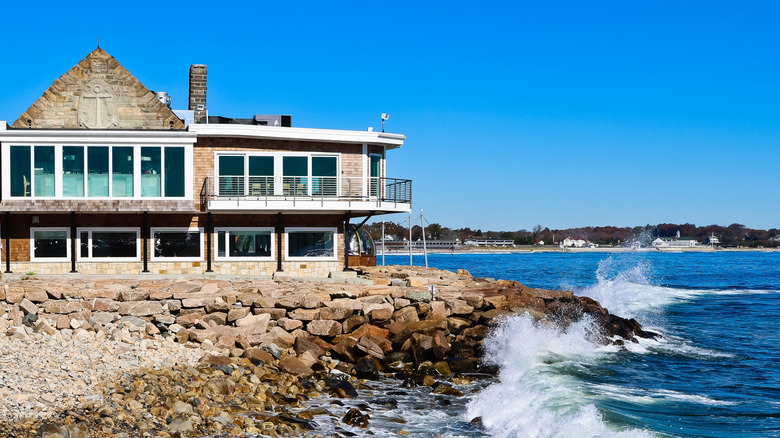
Some say that Narragansett, one of America's best beach towns, is the most iconic beach in the state with its sandy shore and expansive views of Narragansett Bay. At the end of the beach are
the 19th-century Narragansett Towers, the surviving remnant of a casino that was once the social center of the town. Despite occasional sightings of sand tiger sharks and blue sharks in the outer parts of the bay — and great whites passing by to reach their hunting grounds up the coast — there are no recorded shark attacks at Narragansett Town Beach. If you're nervous about great whites being in the area, though, the Sharktivity White Tracking App has up-to-date information on great white sightings in New England.
Biloxi Beach, Mississippi
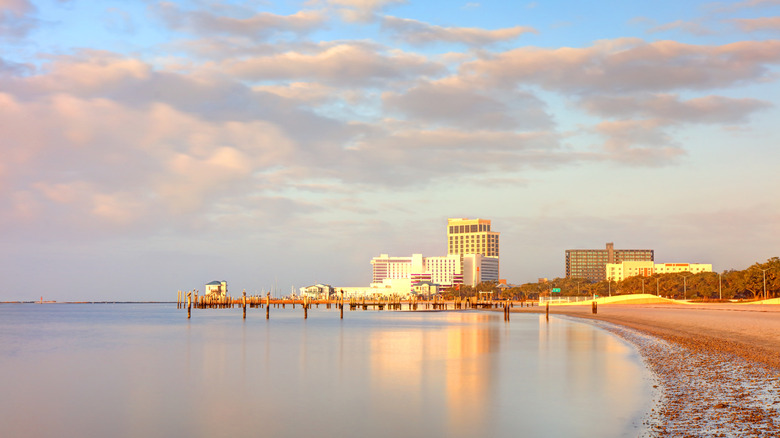
With its shoreline of just 62 miles along the Gulf of Mexico, Mississippi is a safe haven from shark attacks. ISAF lists two confirmed unprovoked attacks since 1837, although the Global Shark Attack File reports five unprovoked attacks since 1879, two of them fatal. Despite the discrepancy in data, the fact remains that Mississippi has a low likelihood of attacks. It has natural barrier islands that help buffer the mainland coastline from deeper Gulf waters where larger sharks are more common. . At the same time, the Mississippi Sound serves as a nursery habitat for baby sharks.
That's not to say that there aren't sharks off of Mississippi's coast. Species including hammerheads, tiger sharks and bull sharks have been documented in the area, with bull sharks being notable for their ability to travel far upriver — including into the Mississippi River. But before you start panicking about running into some of these dangerous sharks while swimming, keep in mind that tiger sharks are usually found in deep waters and even if they come closer to the shore, it's usually while they're heading elsewhere.
Southern Living names Biloxi the creme de la creme of Mississippi's beaches, thanks to the pure white sand of this beloved destination that's part of the world's largest man-made beach. Barrier islands off the shore keep the waters calm and bigger sharks at bay. While sharks live near Biloxi, there have been no attacks on this free public beach so far, which is home to a unique 19th-century lighthouse. If you're feeling anxious, just remember to take off shiny jewelry (sharks can mistake flashes of light for fish), remove bait from your pockets, and stay calm on the off chance that you spot a shark.
Popham Beach State Park, Maine
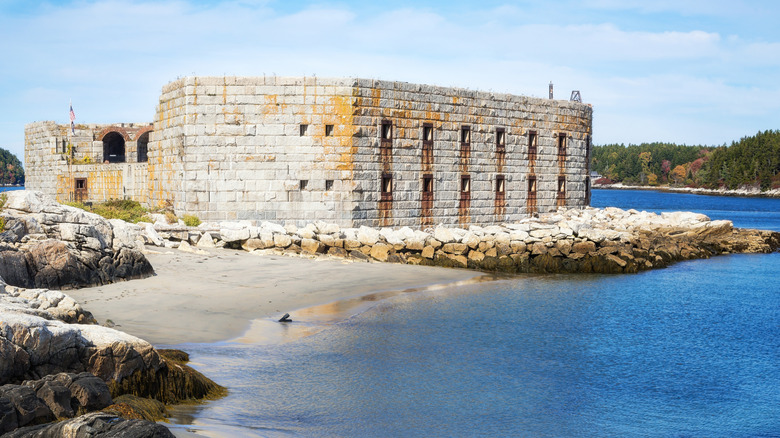
It was once unthinkable for Maine to have shark attacks, despite its nearly 3,500-mile coastline and shark-friendly waters. After all, the ISAF reports just one unprovoked attack since 1837, while the Global Shark Attack File lists two. But a woman's tragic death from an unprovoked great white attack in 2020 off Bailey Island changed people's understanding of sharks around Maine. Even so, Maine ranks among the states with the fewest incidents.
Since the incident, there has been an effort to track great whites in the region, particularly near beaches with large seal populations, including Ogunquit, Kennebunk, and Higgins. But before you write off swimming in these places forever, know that typically, white sharks only spend 15 minutes in these locations before moving on. Despite an increase in shark sightings around the Pine State, there have been no further attacks since 2020. Prior to that, the only other recorded unprovoked attack was in Broad Cove in 2010, when a shark likely went for a diver's shiny camera.
For those wanting to enjoy a peaceful day on one of Maine's best beaches, head to the scenic Popham Beach that's perfect for surfing. Known as one of the nicest beaches in the state, Popham currently averages only about three great whites per year and has never been the site of a shark attack. Bordered by two different rivers and home to a Civil War fort, Popham is the busiest state park beach in Maine. This state park beach currently costs $6 for Maine residents and $8 for non-residents. It's $2 for seniors and just $1 for kids aged 5-11.
Methodology
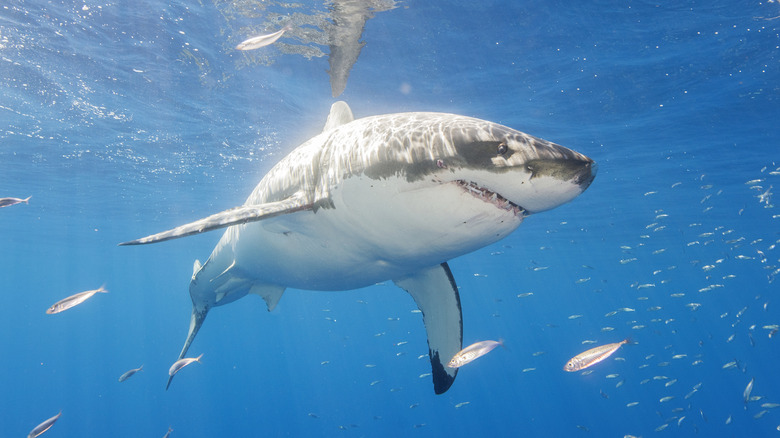
To determine the beaches with the fewest shark attacks, we began by examining data from states with the fewest attacks. The Florida Museum International Shark Attack File, Sharksider, and Global Shark Attack File all maintain databases of confirmed provoked and unprovoked attacks, though their numbers don't always align. While we initially wanted to find states with two or fewer confirmed unprovoked attacks over almost 200 years, the differing numbers across these databases made that difficult to do with certainty. So, we increased that number to five to account for those discrepancies.
We wanted to pick a beach from each state to offer a diversity of locations and bodies of water. Once we had the states down, we looked at local news sources to get a sense of where shark attacks happened and which areas in each state are known to have larger shark populations. These included Mississippi's Super Talk, Washington's The Olympian, NBC Connecticut, and the New York Times. In cases where local reporting did not identify a specific beach as safer, we reviewed travel sources such as Tripadvisor, Reddit discussions, and travel blogs to identify the most frequently recommended beaches in each state. Finally, we verified that no shark attacks have been recorded at the selected beaches.