
Europe's 10 Best Hiking Destinations For Adventurous Travelers
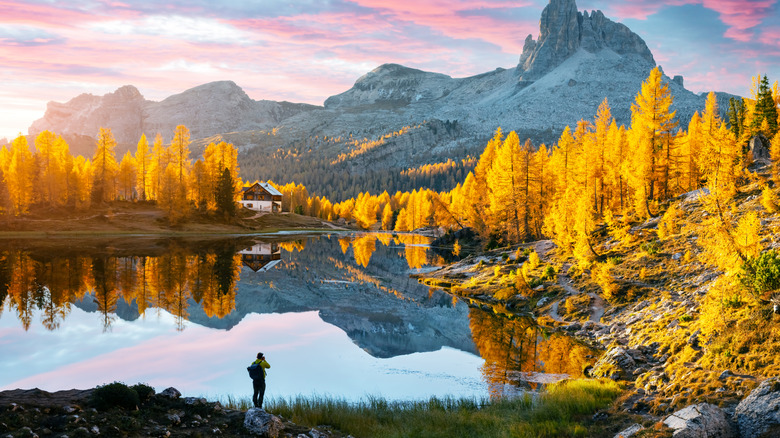
Numerous mountain ranges, coastlines, charming towns, lakes, and historic sites are just a few of the things that make Europe so attractive for travelers. Perennially popular hubs like Paris, London, and Rome are complemented by a myriad of mid-size and small cities that each have a unique story to tell. But when it comes to scouting out European destinations where you can avoid crowds, the best method is getting out of the city altogether. Fortunately, the continent is positively overflowing with options for amazing hikes.
From legendary mountaineering routes in the Alps to ancient pilgrimage trails across Spain and beyond, Europe is home to a wide range of hiking terrain and treks that combine history, adventure, culture, nature, and even the spiritual side of walking. Some countries, such as Austria and Switzerland, are renowned for their mountainous journeys, speckled with alpine lakes and bucolic upland villages, and their trails are very well maintained. Other places are a bit more wild, such as Scotland, with its many well-maintained formal trails in addition to "right to roam" access rights across vast swathes of countryside.
Below, 10 regions across Europe represent a range of hiking styles, whether you're into rugged backpacking treks, well-planned thru-hikes, serotonin-boosting day jaunts, or inn-to-inn routes that blend the comforts of nightly lodging with daily adventure. Far from a comprehensive list of everywhere it's great to hike in Europe, consider this an inspirational starting point for planning your next adventurous trip.
Karwendel Mountains, Austria
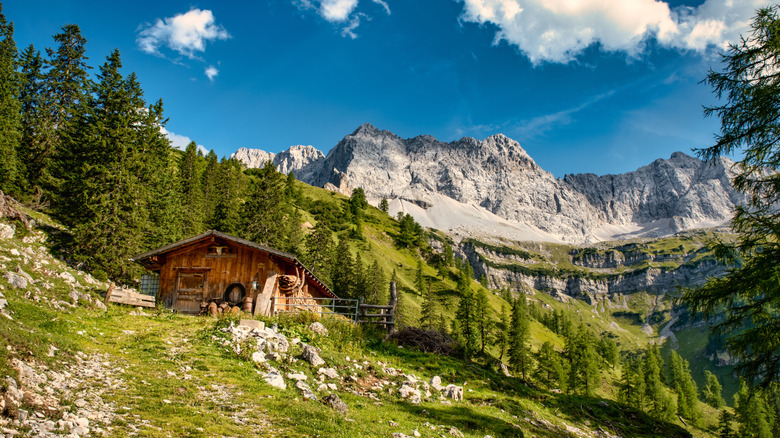
The North Tyrol Limestone Alps border the Austrian state of Tyrol and the German state of Bavaria, where they merge into the Bavarian Alps. The tallest peaks soar to nearly 10,000 feet and they encompass a number of sub-ranges, including the spectacular Karwendel Range. Here, you'll find a combination of pristine wilderness, idyllic rural communities, and spectacular views all around.
Across more than 280 square miles, Karwendel Nature Park is the largest preserve of its kind in Austria, where dozens of scenic trails criss-cross mountains, meadows, and lakes. It also includes Nordkette, one of nearby Innsbruck's prime tourist attractions. With a breathtaking airport to land at (which you'll want a window seat for), Innsbruck is a perfect basecamp for your Karwendel area adventures. A cable car conveys visitors from the center of the old town to a viewpoint at more than 7,600 feet, providing access to part of Karwendel Nature Park, too.
One of region's most popular and challenging routes is the Karwendel High Trail, which comprises six stages between Reith and Scharnitz and covers 43.5 miles with huge ascents and descents. If moderately challenging day hikes are more your speed, check out the Wolfsklamm, or Wolf's Gorge, which extends about 4.25 miles round-trip from the town of Stans into a beautiful river canyon, taking about three hours or complete. Another high-altitude option is the Goethe Trail, which starts at the Hafelekar station of the cable car route from Innsbruck, and extends a little more than 6 miles to the picturesque mountain refuge of Pfeishütte. Give yourself at least five to six hours for this one, or more, especially if you want to make stops to take in the view or plan to rest frequently along the way.
The Pyrenees, France, Spain, and Andorra
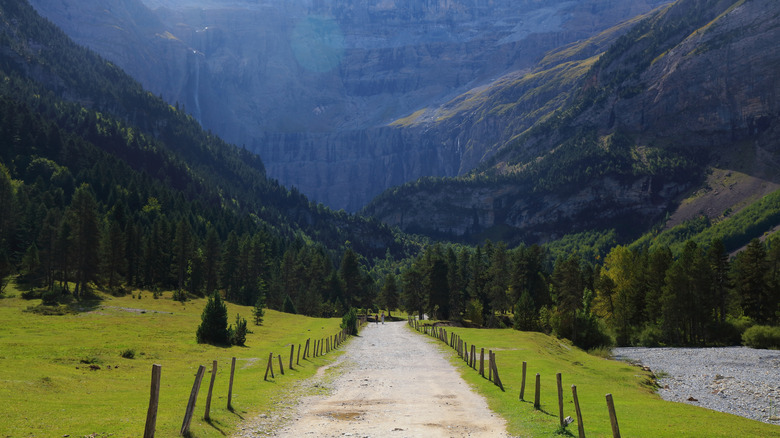
Forming a natural boundary between France and Spain, and including the tiny nation of Andorra, the Pyrenees are a striking mountain range. In France, Pyrenees National Park covers more than 120,000 acres and contains mountains nearly 10,000 feet tall, plus well over 200 crystalline lakes. The Spanish side also boasts a number of parks, such as Aigüestortes i Estany de Sant Maurici National Park and Ordesa y Monte Perdido National Park, home to breathtaking waterfalls, glacier views, and hiking trails.
Both sides of the border have huge thru-hike routes you can choose from if an all-out adventure is what you seek. Called the GR10 in France and the G11 in Spain and Andorra, these routes span 573 miles and 522 miles, respectively. They're organized around a combination of backcountry camping, huts, and lodging, depending on what part(s) you tackle. In Pyrenees National Park, bivouac sites — common wild camping areas — are fairly typical, but you'll also find a number of remote communal refuges that overlook spectacular scenery. These provide a real roof over your head, typically with a number of rustic bunks. The Ayous Refuge, for example, is perfectly situated for views of the lofty Pic du Midi d'Ossau.
Enough about where to stay — where do we walk? A gorgeous, moderately challenging day hike option to Gaube Lake is one place to start, starting at Pont d'Espagne. Covering 5.1 miles in a loop and ascending a little more than 1,200 feet, you'll be treated to scenic cascades and the dramatic peak of the Vignemale, the highest mountain in the French Pyrenees. And a little further south, head out on the Cirque de Gavarnie, another 5-mile jaunt that's watched over by Mont Perdu — also a UNESCO World Heritage Site recognized for both its striking geology and pastoral heritage.
Camino de Santiago, Spain, Portugal, and France
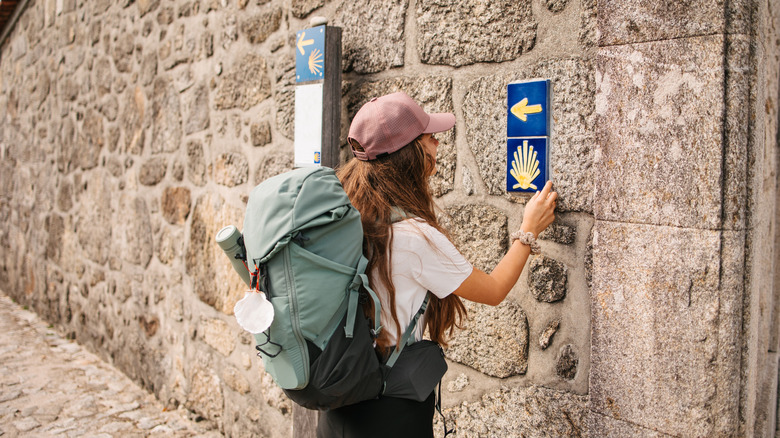
The Camino de Santiago, or "Way of St. James" in English, is an expansive network of millennium-old pilgrimage paths that all lead to the storied Cathedral of Santiago de Compostela in Galicia, Spain. Routes in both France and Spain are designated as UNESCO World Heritage Sites thanks to their hundreds of miles of coastal and inland routes, which have been traversed by Christian pilgrims and intrepid travelers since the Middle Ages. You can even earn an official Compostela Pilgrim Certificate for completing a minimum of about 62 miles (100 kilometers) on foot or twice that on a bike. Along the way, look for the telltale yellow scallop shell icons and arrows that mark the way, a nod to the medieval tradition of pilgrims collecting scallop shells once they had completed the journey.
Camino Frances is the most popular route chosen by modern-day pilgrims headed to Santiago de Compostela. It starts at the southern base of the Pyrenees Mountains and continues across Northern Spain, spanning about 500 miles. Another well-traveled route is the Camino del Norte, which hugs the northern coastline of Spain before dropping southwest to Santiago de Compostela. Camino Portugues is a scenic and less-crowded version of the famous hike that begins in Lisbon and passes through the equally stunning city of Porto. And the relatively short-but-sweet Camino de Finisterre, which clocks in at about 56 miles, heads west to the coast, where you can take in the surf crashing against the cape at what pilgrims in the Middle Ages thought of as the "End of the World."
Durmitor National Park, Montenegro
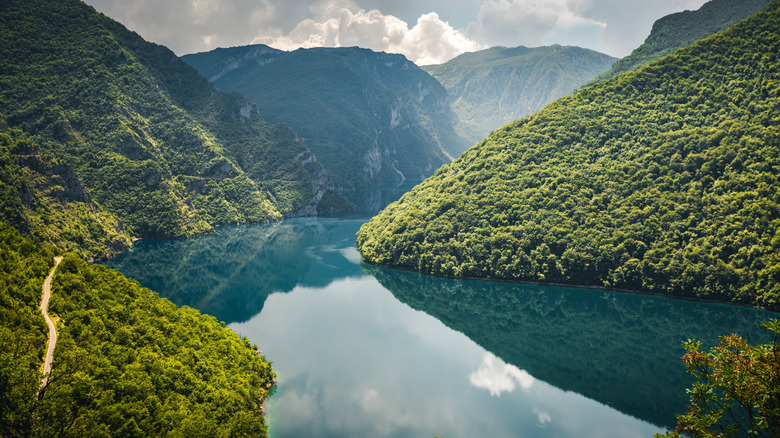
Located in Northern Montenegro, near the city of Žabljak, Durmitor National Park is a continental hiking oasis. It's shaped by the Tara River, which creates a stunning canyon, plus awe-inspiring mountains and the beautiful Black Lake. Less touristy than neighboring Croatia, Montenegro is a fantastic choice for more remote experiences, and as a UNESCO World Heritage Site recognized for its glacially influenced geology, deep gorge, and dense forests, you'll find plenty of trails to traverse amid a mountain range known as the Dinaric Alps.
Durmitor National Park is home to 25 official trails, which range in length and difficulty. A perfect loop hike for the whole family encircles Black Lake, covering 2.9 miles and taking around 1.5 hours to complete. Bobotov Kuk, the park's highest peak, invites a challenging 6.3-mile out-and-back day hike perfect for those who don't have a ton of time but want to get in a really good trek, as it can be accomplished in one day. And if you really want to delve into this park's best features, turn the trip into a multi-day event with a 4-day loop hike over summits and into spectacular valleys. Heading out from Black Lake, you'll scale Bobotuv Kuk and visit lakes like Zeleni Vir before returning to the starting point. Backcountry camping is permitted throughout the park, but you also have your choice of refuges for more robust lodgings.
The Dolomites, Italy
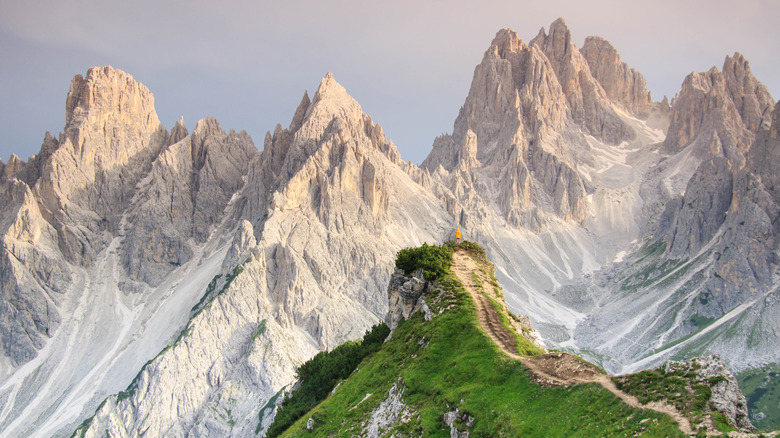
When it comes to dramatic landscapes, no list would be complete without a mention of Italy's Dolomites, with their staggeringly steep faces and sharp peaks complemented by fairytale valleys with majestic mountain views. This region is a go-to for skiing in the winter and is also spectacular for summer hikes, home to famous multi-day routes like the strenuous — and gorgeous — 78-mile Alta Via 1. Make your base camp in Val Gardena for easy access to a wide range of routes, not to mention charming communities like Ortisei, Santa Cristina, and Selva di Val Gardena.
The Dolomites are also, of course, a destination for great day hikes, such as the Three Peaks of Lavaredo loop, a legendary route that covers 6.3 miles and is rated moderately challenging with about 1,600 feet of elevation gain. If you visit during the summer, when the mountain huts are open, it's easy to extend your trip into an overnight experience and make the most of the incredible landscape.
Another day hike option is the trail from Seceda — one of the most photographed peaks in the jagged Dolomites — to Wolkenstein. Unlike a lot of hikes, where you expect to climb, this one leads you down the mountain instead for about 5.8 miles. Thanks to a cable car from Ortisei that drops you expressly on Seceda, the initial ascent is about as easy as it gets! On your way down, take advantage of a number of refuges, where you can stop to rest and refuel with snacks and plenty of astonishing views.
Valais, Switzerland
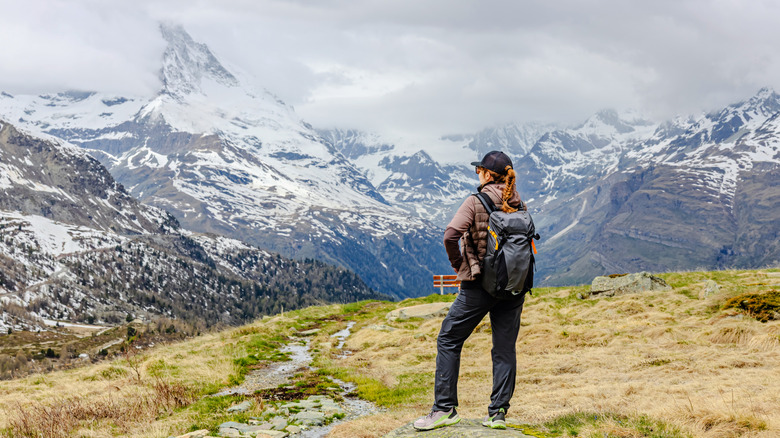
Among Switzerland's prettiest and most iconic destinations you shouldn't skip on a trip, the Matterhorn is quite possibly the first sight to spring to mind. Then, perhaps, Zermatt, the ski resort that the legendary mountain overlooks. You'll find both at the heart of Valais, a southern region, or canton, in this welcoming and immanently stunning Alpine country.
One not-to-be-missed route in Valais that provides epic views of the Matterhorn is the 5-Lake Route from Blauherd to Sunnegga — both peaks above Zermatt that are reachable by lifts. You'll pass the stunning lakes of Stellisee, Grindjisee, Grünsee, Moosjisee, and Leisee, which mirror the surrounding trees and towering peaks for about 7 miles one-way. Head back to Zermatt on the underground funicular from Sunnegga or refuel with a comforting meal and spend the night at Mountain Lodge Ze Seewjinu. For more strenuous, high-altitude options — especially if you love a good thru-hike — check out Segment 7 of the Tour de Mont Blanc, which in its entirety traverses three countries across 105 miles around its namesake mountain.
Valais is also home to one of the world's longest pedestrian suspension bridges, clocking in at more than 1,600 feet long and nearly 280 feet high. It's a highlight along the Europaweg, a mindbogglingly beautiful, two-day hike between Grächen and Zermatt where charming and historic villages merge with spectacular nature. When you've gotten in plenty of walking, don't miss out on some comforting melted raclette cheese, often served alongside potatoes.
Bernese Oberland, Switzerland
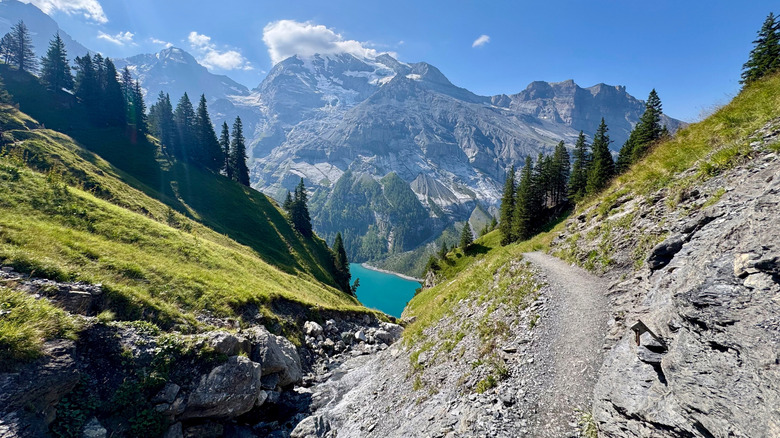
With the Alps comprising two-thirds of Switzerland's landscape, it's not too difficult to see why the nation makes it onto this list twice. In the west-central part of the country, the canton of Bern is yet another region brimming with dramatic views of mountains, valley-nestled villages, and bodies of water. The upland region of Bern is known as the Bernese Oberland, or the Bernese Highlands.
Oeschinensee, one of the most iconic of the country's approximately 1,500 lakes, is part of the Jungfrau-Aletsch-Bietschhorn area, which was designated a UNESCO World Heritage site in 2001. This spectacular sight can be explored via a challenging loop hike that covers 5.7 miles around the northern side of the lake. An easier option is a 2.7-mile descent from Oeschinensee to the nearby community of Kandersteg, doable in just a couple of hours and suited to a range of skill levels.
Where there are mountains, there are also plenty of challenging routes to choose from. Hardergrat is a nearly 17-mile one-way trail from the north side of Interlaken that passes numerous peaks, primarily along a dramatic ridge. For something you can accomplish in a day, some of the region's most impressive waterfalls can be viewed along a 5-mile round-trip route to see Staubbach Falls and Trümmelbach Falls, just outside the town of Lauterbrunnen. The area is famous for its cascades, with some of the tallest and most powerful in the country.
Julian Alps, Slovenia
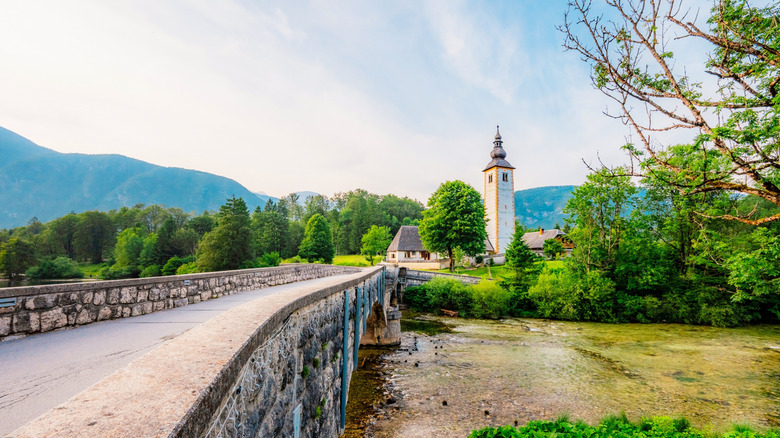
Spanning Northeastern Italy into Western Slovenia, the Julian Alps are a spectacular limestone range that sit between the Pass of Camporosso and the Fella and Sara Rivers. Compared to Alpine meccas like Austria and Switzerland, this pleasant country may not be the first to pop to mind, but don't discount it. Slovenia is a stunning and underrated gem wooing remote workers with its digital nomad visa, making access to great hikes something remote workers can factor in when considering moving to Europe.
The Julian Alps encompass the beautiful Triglav National Park, where you may be fortunate enough to spot a native lynx or wolf along a hike around forests, meadows, and dramatic slopes. You'll find a range of trails for different skill levels, from the easy Goreljek Educational Nature Trail that takes an hour or less to strenuous high-altitude climbs like the trail to Slemenova Špica, which covers 3.7 miles out-and-back with around 1,600 feet of elevation gain.
The Julian Alps are also an inviting prospect for a hut-to-hut hike, such as one organized by Alpine Exploratory, which covers 36.3 miles in a five-day loop from Bohinj at the eastern edge of its eponymous lake. And if thru-hikes are a thing you just can't get out of your system, the Juliana Trail covers 167.8 miles in a loop composed of 16 sections.
The Lake District, England
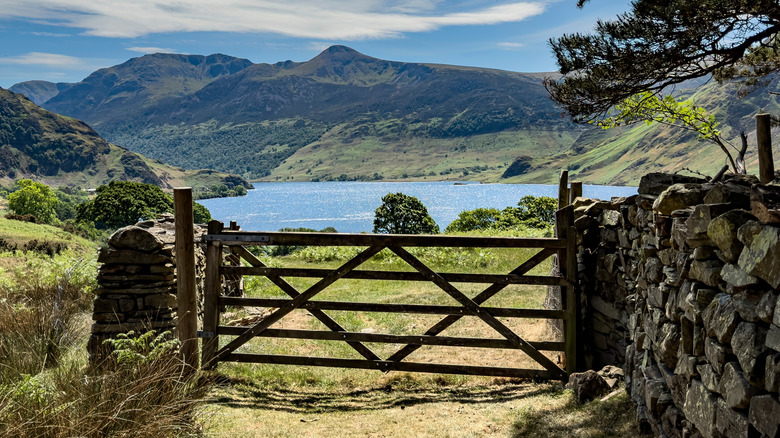
Formed by millions of years of glacial activity, then shaped over the past several centuries by agriculture into the bucolic landscape of drystone-walled farms and charming villages that we see today, the U.K.'s Lake District is a hiker's paradise. Its 16 famous lakes and mountains, four of which exceed 3,000 feet, are encompassed by Lake District National Park. Unlike more rugged adventures in the Alps, for example, the peaks don't require so much technical finesse, but you're in for a treat if you love pairing great hiking — which the British often refer to as hill walking — with cozy accommodations. An inn-to-inn hike may be just the ticket in this beautiful part of Northwest England.
Although there are a number of inn-to-inn routes, and you can certainly plan your own depending on what you'd like to see and how long you plan to walk, The Inn Way is a true classic, chronicled in a series by Mark Reid, who also has published itineraries for other inn-to-inn routes in different parts of the country. Covering 90 miles, The Inn Way in the Lake District can be completed in about a week, but it's also very easy to stretch this by a couple of days longer to relax a little more along the way. Starting in Ambleside, you'll head through places that feel as charming as they sound, such as Braithwaite, Buttermere, and Boot. And importantly, you'll pass dozens of local pubs, so there'll be no shortage of ale.
If a day hike is more your speed, climb Scafell Pike, the highest point in England, offering spectacular views over surrounding mountains and valleys. Scafell Pike doubles as a memorial to those who gave their lives in World War I, which you can observe at the summit amid a rock cairn.
The West Highlands, Scotland
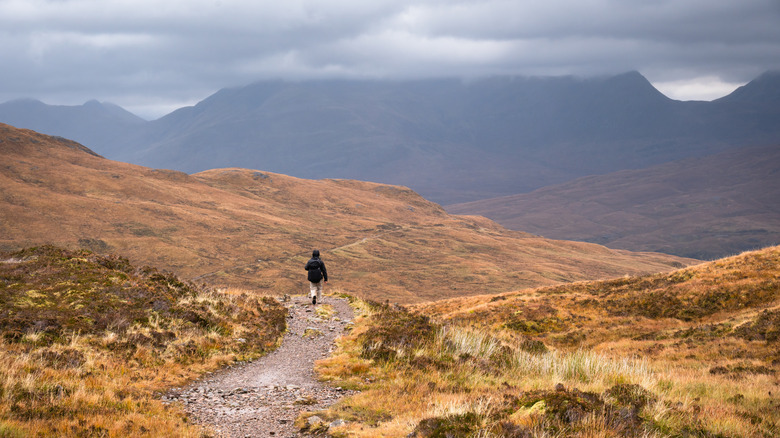
Brimming with astonishing moors, lochs, and sea views, the Scottish Highlands are rugged and otherworldly. This small and picture-perfect country's remote upland areas are ripe with immaculate destinations to pull you far from the tourist trail. It's dotted with mountains, which the Scots called "munros" after a surveyor who catalogued them all in 1891. They are just waiting to be "bagged," which is how local hikers describe climbing as many as you can. The tallest is Ben Nevis, which soars to 4,411 feet, but there are 282 munros in Scotland in all, so you'll be spoiled for choice if you like a heart-pumping climb.
The Highlands are a vast northern region of the U.K., and they can be thought of in a couple of different regions, separated by a vast geologic rift called the Great Glen, which is filled with lochs and dotted with quaint communities like Fort Augustus and Spean Bridge. To the east you'll find Cairngorms National Park — also a spectacular destination for hikes — and in the other direction, you'll find yourself in the atmospheric West Highlands and Islands.
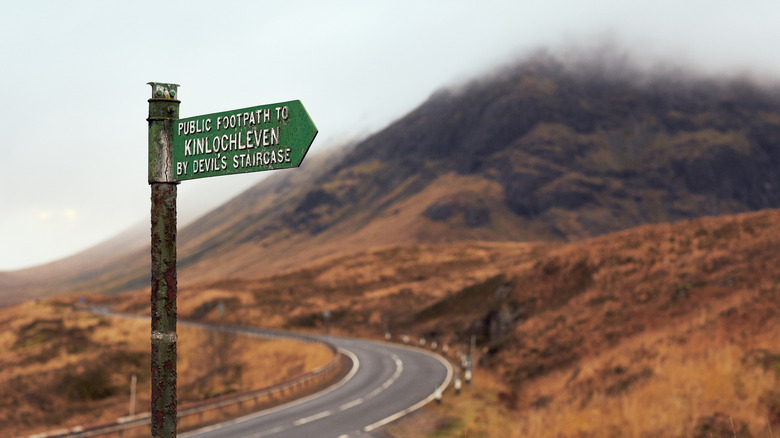
Major thru-hikes in the West Highlands include the aptly named Great Glen Way, which traverses the 78-mile length of its namesake area from Inverness to Fort William. This usually takes between five to seven days to complete and can be tackled in either direction. Then there's the legendary West Highland Way, a 96-mile route that starts in Fort William and strikes a southeasterly direction to Milngavie, just north of Glasgow. On the way, you'll pass through stunning Highland villages like Tyndrum and Crianlarich, plus the fabled Loch Lomond.
Methodology
In addition to the author's experience hiking in the Scottish Highlands, the Lake District, and along parts of the Camino de Santiago, we gathered information found here from local and regional tourism sites, including Tyrol.com, Karwendel-Hoehenweg.at, Karwendel.org, France.fr, Pyrenees31.com, DurmitorNP.com, Zermatt.swiss, Valais.ch, Europaweg.ch, AboutSwitzerland.eda.admin.ch, Slovenia.info, TNP.si, LakeDistrict.gov.uk, InnWay.co.uk, LochLomond-Trossachs.org, and ScotlandsGreatTrails.com, and WestHighlandWay.org, among others.
We also referenced blogs whose writers had personally hiked some of the routes we mentioned here, including MoonHoneyTravel.com, TheSandyFeet.com, and BackroadPlanet.com. Additional information, including historical context and data, came from PeakVisor.com, Hiking-Trails.com, Hexatrek.com, National-Parks.org, UNESCO, CaminoWays.com, SantiagoWays.com, wikiloc.com, Hika.app, and Britannica.com. And to make sure we included some of the best trails in these regions, we focused on highly rated routes on Alltrails and Tripadvisor.