
The 10 Best Places To Go Camping In Texas, According To Visitors
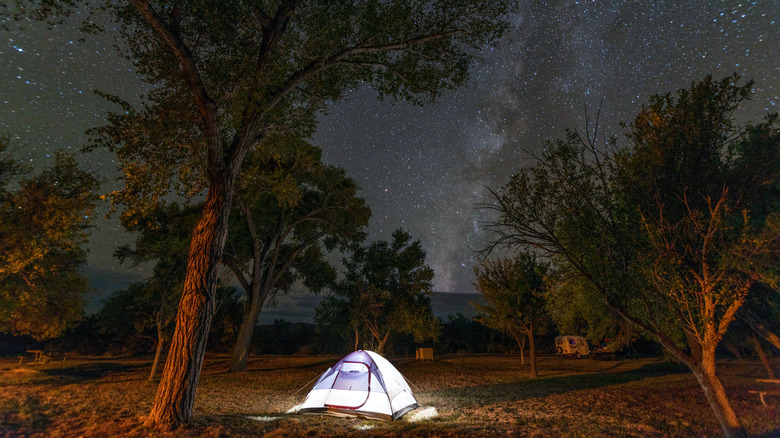
Thanks to its vast square mileage, Texas boasts a huge array of different landscapes, from biodiverse deserts and mountains to rolling grasslands and sandy coastal stretches. You'll find impressive, underrated state parks to visit along with recreation areas, national parks, and unbroken expanses of wilderness. And fortunately for those of us who like to stay and explore a while, there are some great camping spots to boot.
The Lone Star State isn't necessarily known as a go-to for dispersed camping due to its relatively small amount of federal public lands outside designated national parks. For comparison, Texas has about 800,000 acres, while Utah has nearly 23 million, and Nevada has more than twice that. There are some options in the Panhandle and Piney Woods areas, but aside from that, most opportunities are found in state natural areas and recreational preserves. Each park has its own entrance fees, and camping fees vary greatly depending on the amenities you're looking for, but generally speaking, nightly rates are quite reasonable.
Below, explore 10 state and national parks that make for some of the best camping in this expansive southern state. Whether you're looking for the best lake camping spots in Texas or dramatic canyon escapes, you'll find some within easy distance of major cities, making for perfect weekend jaunts for locals, while others involve a bit more planning and time. Far from a comprehensive list, consider this a roundup of several that are absolutely worth a visit, whether you're passing through on a road trip, scouting out destinations for a long weekend, or angling to add to your National Parks Passport stamp collection.
Palo Duro Canyon State Park
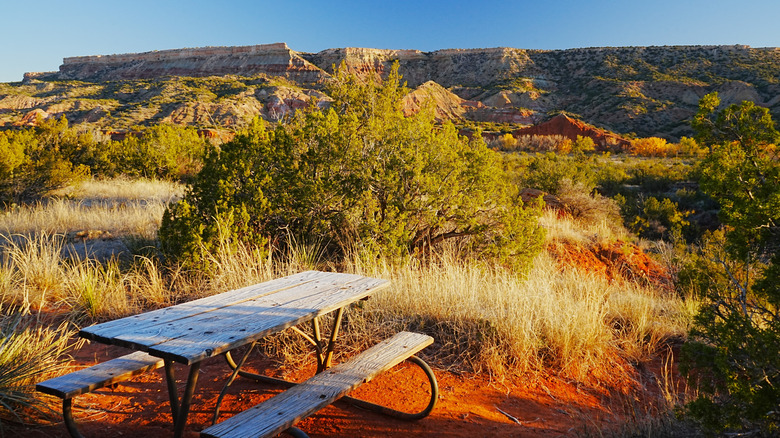
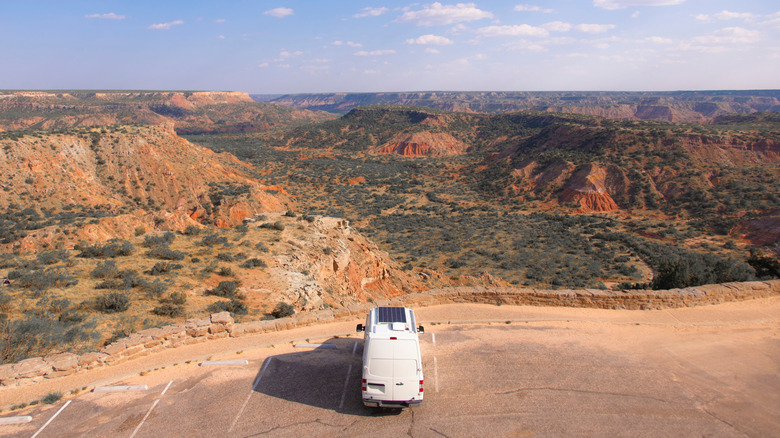
A stunning gorge that opens up unexpectedly amid the grasslands just south of Amarillo, Palo Duro Canyon State Park is like Texas' less crowded "Grand Canyon." You'll find stunning hikes on more than 30 miles of multi-use trails, and you can even purchase tickets for a musical titled "TEXAS!," staged at the amphitheater most nights during the summer — something you don't typically experience at a state park.
One thing to keep in mind is that Texas can get hot in the summer, and Palo Duro Canyon averages 92 degrees Fahrenheit during the daytime in July — but the thermometer can regularly exceed 100. Spring and fall are ideal times to visit for more comfortable temperatures, especially for tent camping. But if you plan to camp in the summer, there are plenty of RV-friendly spots throughout the park, so you can take advantage of that AC, if needed. It's always a good idea to make sure you have plenty of water with you at all times.
There are several ways to camp in Palo Duro Canyon State Park, whether you have a 60-foot motorhome or a tent strapped to your rucksack. Sites with both water and electricity hookups can be found in the Juniper, Sagebrush, Mesquite, and Hackberry campgrounds. Water is available adjacent to 18 tent-only sites in the Fortress Cliff area, and a hike-in area is an ideal place to pitch a tent. And if creature comforts are a must, glamping is a luxe option, with fully furnished accommodations starting at $299. "What an amazing place!" shares a visitor on Tripadvisor. "We stayed in a 5th wheel ... Level sites with a nice covered picnic area at each site. Plenty of space between the sites and for our tow vehicle."
Caprock Canyons State Park & Trailway
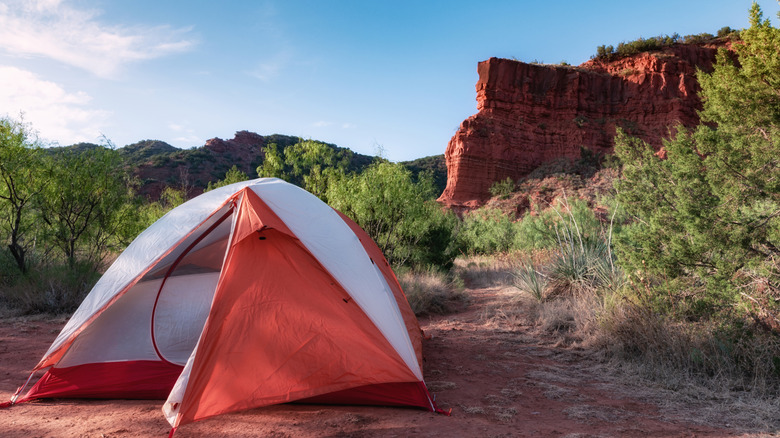
For a true taste of both red rocks and the Great Plains, head to Caprock Canyons State Park & Trailway, another Panhandle gem where wild bison roam the grasslands. For the hikers and bikers among us, the park boasts almost 90 miles of trails, ranging from one to 15 miles apiece. Join a ranger talk to learn about the bison herd, migrating birds, native wildflowers, and much more. As Texas' newest internationally recognized dark sky haven, it's a safe bet that camping out under the stars at Caprock Canyons is an experience you and your family won't soon forget.
RVs and tent campers are welcome at full hookup sites in the Honey Flat area, with options for 50- amp or 30-amp electricity. "LOVE this campground, it's a true hidden gem," writes a visitor on Hipcamp. There are also several walk-in tent areas — primitive, pack-in/pack-out sites that are located along the park's Trailway. This is a wonderful 64-mile path along a former railroad route that makes for a solid multi-day backpacking trek or bike ride. Head through Clarity Tunnel, a historic railroad passage that is home to a beloved colony of Mexican free-tailed bats, and peer across the beautiful and historic Valley of Tears, which served as a late 19th-century trade route.
McKinney Falls State Park
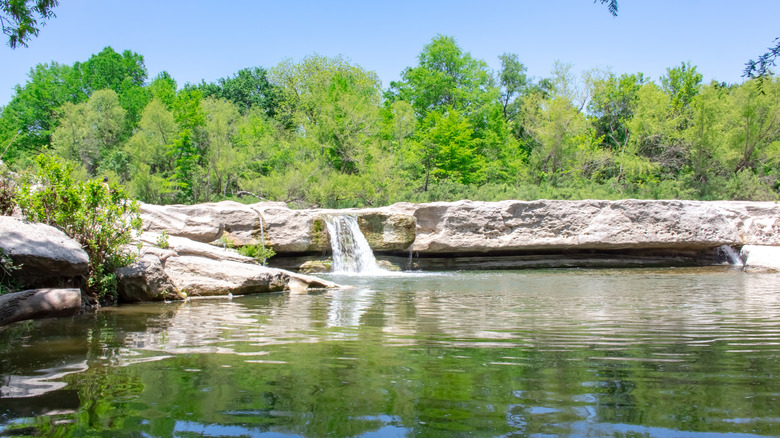
Just a 20-minute drive south of downtown Austin, McKinney Falls State Park is an ideal escape when you have little time for long drives but still crave a nature-infused getaway. As it's located adjacent to such a large metropolis, however, it can also get crowded. The park recommends making reservations well in advance, not only for camping but also for day visits, which can be made up to a month ahead of time. It's not unusual for the park to reach capacity, at which point the gates close to anyone who doesn't have an advanced booking — especially on weekends and holidays. General camping reservations can be made up to five months ahead of time.
McKinney Falls is known for its namesake cascades and pools, which are formed as the picturesque Onion Creek flows over limestone outcrops. The El Camino Real de los Tejas National Historic Trail passes through here, and you'll also find excellent camping. There are a total of 74 sites that include electric hookups, most of which can accommodate large RVs. Additionally, the park offers six basic cabins that are perfect for groups of up to four.
A perfect option for digital nomads or campers who like to stay connected, McKinney Falls has the advantage of a good cellular signal thanks to its location within a developed area, so it's easy to stay connected. "Our internet and television signals were very strong, yet the campground was tranquil," shares Cindy Scott of CindersTravels.com.
Lost Maples State Natural Area
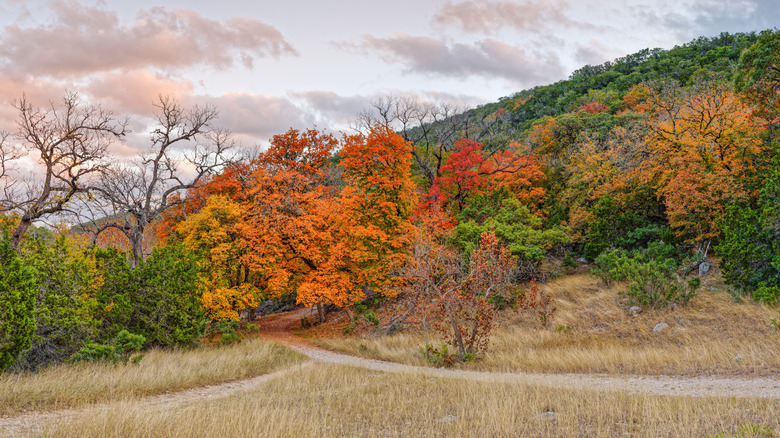
Located less than a 2-hour drive northwest of San Antonio, Lost Maples State Natural Area is famed for its fall foliage transformation thanks to its beautiful namesake bigtooth maples. But it's also a great place to visit any time of year, with opportunities for stargazing, birdwatching, and wildlife spotting, and more than 10 miles of trails, some of which can be combined to create loops. Camping here is also a special treat.
Compared to some of the other parks on this list, Lost Maples has a relatively small selection of developed campsites, with only 28 spots that include 30-amp hookups and have restrooms nearby. These run $20 per night, or there's a deal for $120 per week when the park's less busy between December and February. Fortunately, backpackers are in luck with a total of 50 primitive sites to choose from if you're willing to hike in. These campsites are organized into seven different areas, lettered A through H (C is permanently closed), that are within easy reach of popular trails.
Like McKinney Falls State Park, Lost Maples operates on a reservation system for day passes in addition to camping and closes if the parking lots fill up. Especially during the busy autumn period when the leaves change color, avoid disappointment by booking ahead. "We really enjoyed this small peaceful campground in a Texas State Natural Area," shares a visitor on Campendium. "The best thing was NO cell service & NO Internet."
Caddo Lake State Park
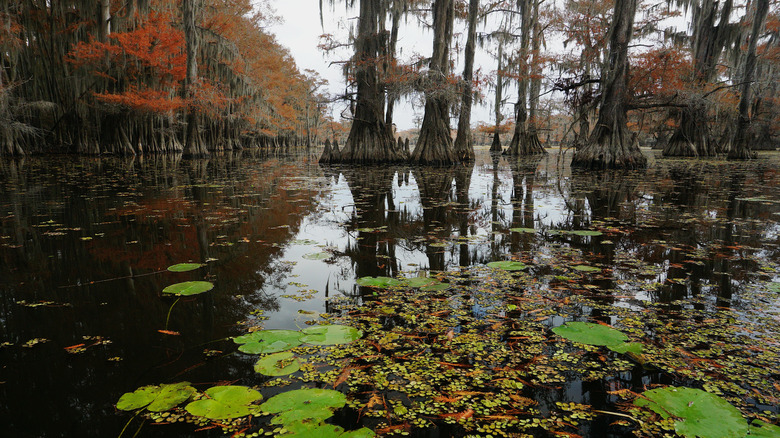
Located in eastern Texas, the beautifully atmospheric Caddo Lake State Park is an otherworldly oasis on the western side of its eponymous lake, which extends about halfway into neighboring Arkansas. This swampy state park boasts a unique "gothic natural beauty" with its stunning, Spanish moss-draped cypress trees and serene waterways, making it a fantastic place to boat, paddle, and hike. The park is home to a little more than two miles of trails, which are reserved only for walkers, so you don't have to worry about cyclists spinning by if you're in the mood for a calm stroll. But the water is the real treat here. You might even spot an alligator or two — a creature that will certainly be exciting to see but one you'll want to be prepared for, too.
Camping options abound at Caddo Lake, whether you're looking for full hookups or comfortable tent-only sites under a beautiful canopy of trees. Each camping area has two sites apiece that are ADA-accessible, too. If you really like the rustic, simple feel but don't want to lug quite as much stuff, opt for one of seven screened shelters, which include water, electricity, and electrical hookups. A series of charmingly rustic and historic cabins range from $40 to $115, depending on size and amenities. "Caddo Lake is beautiful!" shares a visitor on Hipcamp. "We only spent one night there as we were passing through, but the swampy cypress trees stole my heart."
Enchanted Rock State Natural Area
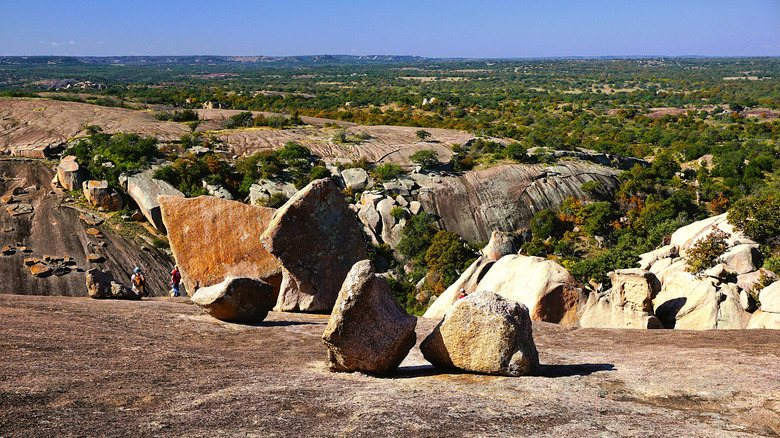
For rock climbing, birding, or hiking along more than 10 miles of scenic trails, a beloved Texas state park with a pink granite mountain awaits in the heart of the Hill Country. Located north of Fredericksburg, Enchanted Rock State Natural Area is a perfect weekend getaway destination at about a 2-hour drive northwest of Austin and about 1.5 hours north of San Antonio. The area is characterized by its unique geology, with rolling, rocky hills and giant boulders that are perfect for climbing. On the trails — which it should be noted don't allow bikes — keep an eye out for scurrying roadrunners, nighthawks, chimney swifts, and many more feathered denizens. Even better, Texas Parks & Wildlife recently acquired more than 3,700 additional acres that essentially double the size of the area and will be developed around its natural treasures with even more trails and amenities.
Enchanted Rock State Natural Area is a tent camper's oasis, as all of the sites require walking or hiking in. There are 35 campsites with water that can be reached via a short stroll from the nearest parking area, and a total of 20 sites are dispersed around the Moss Lake and Walnut Springs areas. If you don't mind backpacking in for one to three miles, you'll love the wilderness feel of these backcountry spots. "I can't speak highly enough about Enchanted Rock!" raves a visitor on Campendium. "Incredible hiking, camping, and rock climbing. Awesome to fall asleep to the sound of packs howling coyotes."
Guadalupe Mountains National Park
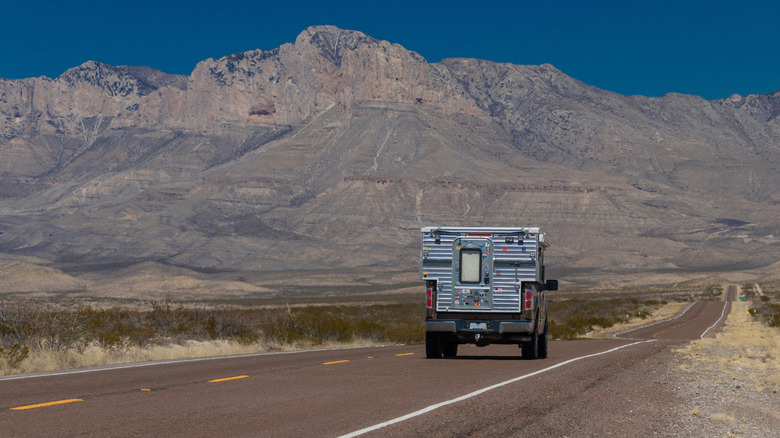
Tucked in far west Texas, just south of the New Mexico border, Guadalupe Mountains National Park protects its dramatic namesake range of rocky, Chihuahuan Desert peaks. It's one of the state's most breathtaking mountain getaways, which is also one of the least crowded national parks in the country. The park is also home to one of the most significant fossil reefs in the world. At about 400 miles long, the Captain Reef is a remnant of an ancient sea that existed here 260 to 270 million years ago, covering what's now known as the Permian Basin. The varied landscape is a world unto itself with canyons, dunes, and Texas' four highest summits. Take several scenic day hikes or grab a wilderness permit and head out for an overnight backpacking adventure.
The Guadalupe Mountains are a spectacular place for camping, with two developed campgrounds that are open year-round. Pine Springs is the larger of the two, with 20 tent sites and 13 reserved for RVs, while the higher elevation Dog Canyon Campground has nine tent sites and four spaces for RVs.
Wilderness camping is the true star here, as no roads wind through the park, so the feeling of remote immersion in nature is spectacular. The park features 10 small wilderness campgrounds speckled throughout the backcountry, each containing five or eight sites depending on the location. Most of these are located in the higher altitudes, where you'll find the refreshing shade of trees and epic mountain views. As of this writing, a permit is $6, plus a recreation fee of $6 per person, per night. Remember to bring a lot of water with you.
Big Bend National Park
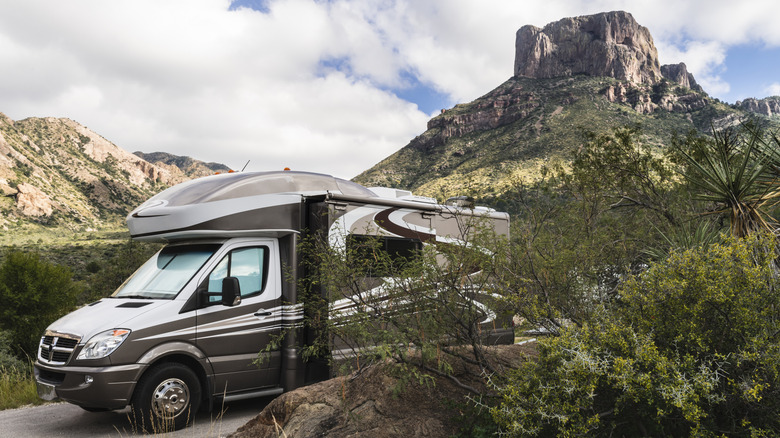
Texas is home to two national parks, in addition to a number of historical sites, recreation areas, and monuments. Big Bend National Park is a beautiful, under-the-radar gem in west Texas, also in the Chihuahuan Desert, nestled along the border with Mexico along the Rio Grande. The park is on UNESCO's tentative list of World Heritage Sites for its biodiversity and fossil record that includes more than 1,200 known groups of ancient organisms. Explore more than 150 miles of trails through expansive desert landscapes or in the mountains, or gear up for a paddling trip along the park's iconic river to explore canyons and spot wildlife.
Big Bend is a stunning place to camp with four campgrounds to choose from, three of which are managed by the National Park Service, plus an RV park operated by a concessionaire. Cottonwood Campground is closed in the summer due to the extreme heat, but all the others remain open year-round. A construction project starting in May 2026 will close Chisos Basin for two years, but you'll still be able to access other areas.
For more adventure, head out on a backpacking trek or a 4x4 drive, where, along backcountry roads, you'll find 67 primitive sites for genuine solitude and connection to nature. You'll need a backcountry permit, and 20 of the most in-demand sites are available to reserve in advance on Recreation.gov. It's a good idea to do your research well ahead of time, as these sites are very often booked. Permits for the rest can be secured in person at one of the park's two visitor centers.
Lake Mineral Wells State Park & Trailway
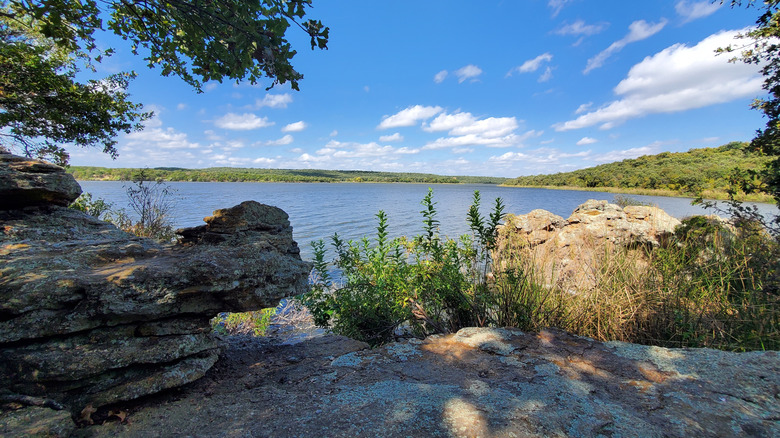
Lake Mineral Wells State Park & Trailway is located just four miles east of the relaxed community of Mineral Wells, Texas' "wellness capital." At an hour's drive west of downtown Fort Worth, it's an easy, relaxing getaway from the big city that's perfect for either a day trip or a long weekend. The 640-acre lake, of course, is the highlight of this lovely park, where you can swim, paddle, SUP, and boat. Vessel rentals are available, or you can fish from six different piers for crappie, largemouth bass, sunfish, and catfish. There are also more than 11 miles of trails in the park, popular with hikers, bikers, and horseback riders alike. And at the end of a day well spent outdoors, cozy up around the campfire in one of the park's many campsites.
Choices abound for where to pitch a tent or park the trailer at Lake Mineral Wells, including 50- and 30-amp electricity hookups. There are less-developed sites with access to water, including 20 that can accommodate horses, and several primitive hike-in sites provide extra tranquility. These are reserved via the purchase of a permit in person at the visitor center when you arrive and involve around a 2-mile hike to reach. Alternatively, for a slight upgrade in comfort, screened shelters are a wonderful, family-friendly option if you prefer not to bring quite so much of your own gear. "We were at Lake Mineral Wells State Park last weekend, and it was wonderful!!" shares a visitor in a Facebook post. "The park was very clean and park staff were friendly."
Mustang Island State Park
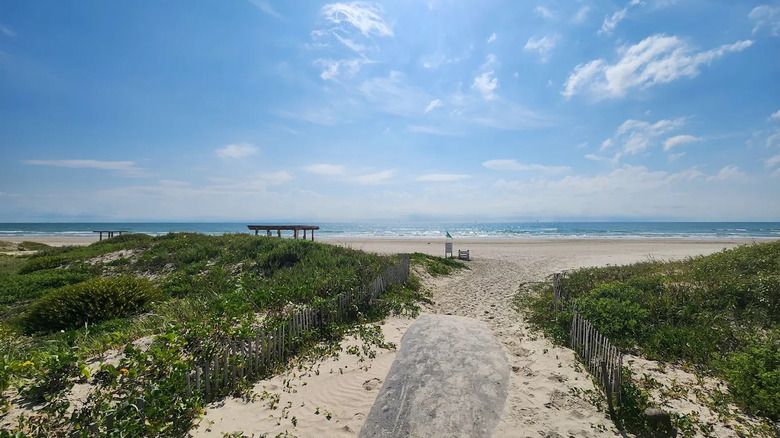
When we think of Texas, the first thing to come to mind may not be gleaming, sandy beaches and wide-open sea views, but for all its regions of desert, grassland, and mountains, the Lone Star State's Southeast border is characterized by its stunning Gulf Coast. For beachy vibes and even camping right on the sand, Mustang Island State Park near Corpus Christi is unlike any other state park in Texas. You'll find more than five miles of waterfront with easy access to Padre Island and its national seashore to the south. Naturally, swimming and fun in the sun are the name of the game at Mustang Island, but you can also easily stay overnight in one of 98 campsites.
A total of 48 RV-friendly sites with 50-amp hookups are nestled beside dunes and situated about a 0.3-mile walk to the beach. If you prefer to fall asleep to the sound of lapping waves, pick from a range of drive-up sites right on the sand along a 1.5-mile area specifically reserved for camping. The farther you're located from park headquarters, the longer your walk will be to the nearest restroom — or you'll need to drive — but you'll enjoy relatively more solitude if you decide to park a little ways away. There's no shade, so be sure to pack the SPF and bring any extra layers or sun shelters to make your visit as comfortable as possible. "This is a great place if you are looking for peace and quiet in the winter months," a visitor shares on Tripadvisor. "Almost no one is on the beach and the campers are friendly but generally quiet."
Methodology
To land on this list, we primarily relied on official information published on TPWD.Texas.gov and NPS.gov, in addition to the author's personal experiences visiting Palo Duro Canyon, Big Bend National Park, and Guadalupe Mountains National Park. Additional context was sourced from Britannica.com. And to make sure we shared some of the very best camping destinations across the state, we referred to ratings, reviews, and discussions from visitors posted on Reddit, Facebook, Tripadvisor, Campendium, and Hipcamp.