
12 Of The Most Jaw-Dropping Castles Around The US
Stone castles and fortresses dating back hundreds of years are common sights in Europe, but their modern imitations are rare in American towns and cities. These structures often started as private homes or estates, tucked away in the countryside away from the nearby towns and cities. One moment you can be driving along the California coast or crossing a quiet New York river, and the next you're standing in front of stone towers, grand halls, and landscapes that feel far removed from anything typically American.
Some U.S. castles may feel convincingly European at first glance. They call upon architectural details and location settings that may resemble the historic traditions of their Old World counterparts. Others take a different approach, blending historical elements creatively into their New World locations. What they all share is an arresting impact on those who visit them. They're the kind of places that make you pause, look a little longer, and notice how out of place they feel in the moment.
1. Hearst Castle (San Simeon, California)
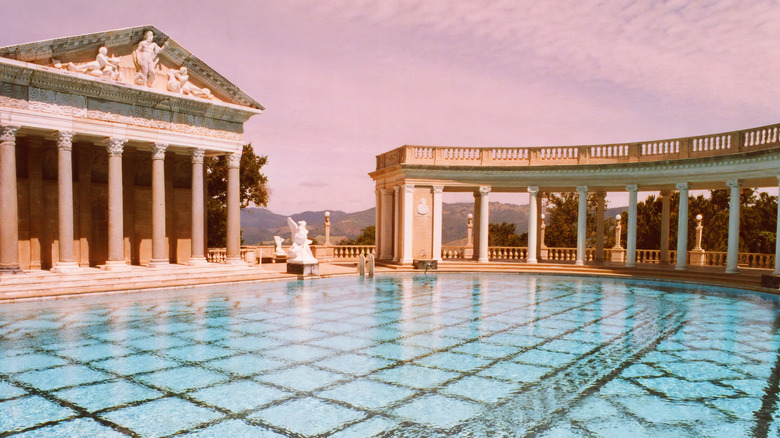
Driving along California's Central Coast, it's easy to get caught up in the ocean views. Perched on a hilltop overlooking the Pacific, the Hearst Castle estate feels deliberately set apart from everything below, with a scale and setting that make it hard to ignore. Media magnate William Randolph Hearst was well-known in California, as he owned multiple newspapers and publications. Today, the media empire he created remains family-owned and is one of the largest diversified information, services, and media companies in the world.
Using ranch land he inherited from his mother, Hearst started construction on Hearst Castle in 1919. By 1947, the estate had 165 rooms and 127 acres of gardens, pools, terraces, and walkways. The lavish California castle was designed to reflect influences from European castles, while still embracing its California location. Inside Hearst Castle, visitors pass through a series of grand rooms filled with antique European ceilings, antique artwork, and architectural details that reflect Hearst's passion for collecting. The Neptune Pool, lined with marble and classical columns, is one of the castle's most recognizable features. It's quite the contrast to the indoor Roman Pool, which is decorated with mosaic tile and gold accents.
Visitors reach the castle via a guided tour, which includes transportation up the hill. Multiple tour options provide specific access to different sections of the estate. From the road, you cannot really see the castle well, so the tour is necessary if you want to take in both the building's design and the views around it.
2. Boldt Castle (Alexandria Bay, New York)
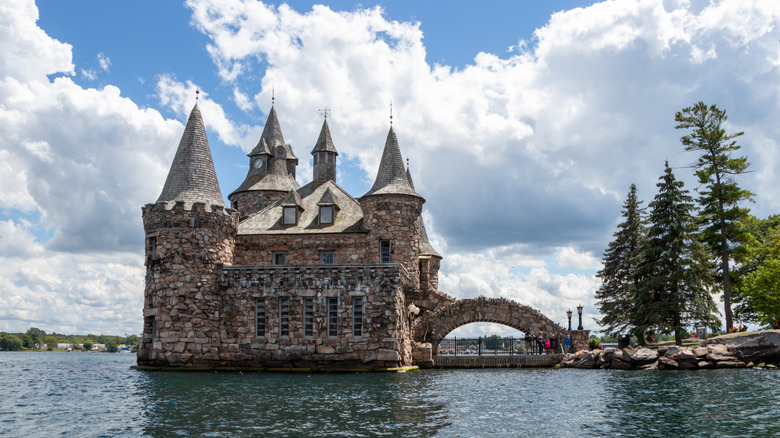
Boldt Castle is not something you pass by on your way to somewhere else. Located on Heart Island in the Thousand Islands region of upstate New York, getting there requires a boat ride across the St. Lawrence River. You can either book a tour or arrive on a private pleasure craft. That approach shapes your experience from the start, with the castle gradually coming into view as you move through the water.
Hotel magnate George C. Boldt built the castle for his wife, Louise. Unfortunately, due to Louise's sudden death in 1904, construction was halted. George was so heartbroken that he never returned to the island. It wasn't until 1977, when the Thousand Islands Bridge Authority acquired the property, that funds were applied to improving and rehabilitating the property to preserve it for future generations. The unfinished quality is still visible to those who journey to the castle today. When you tour the castle, you can visit restored rooms and open areas that offer a peek at what the castle was meant to become, complete with a grand staircase and large windows that frame views of the river.
The need to arrive by boat deepens the castle's isolated location, making it feel like its own little world. Be sure to check the schedule before planning a trip, though, as the castle grounds and yacht house are only open seasonally.
3. Bannerman Castle (Pollepel Island, New York)
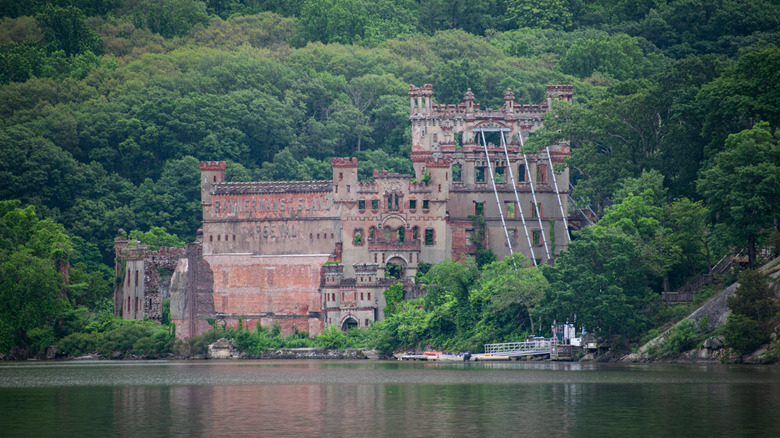
When viewed from the shoreline, Bannerman Castle is hard to overlook. Up close, it's even more impressive. The castle's broken walls and partial towers stretch across Pollepel Island in the Hudson River. Bannerman Castle's silhouette feels closer to a Scottish stronghold than a structure you'd expect to see along the New York shoreline. Rough stonework and uneven edges give it a weather-beaten look that makes it stand out even more.
While impressive in appearance, its intended purpose was more practical. Francis Bannerman VI built his castle in the early 1900s to store military surplus, essentially serving as an arsenal. Over time, the castle's appearance changed due to fires, explosions, and exposure to the elements. The island itself has a darker lore, believed by some to be haunted.
Visitors can access the grounds by guided boat and walking tours from nearby Beacon, New York. Bannerman Castle also hosts a wide variety of events, including dinners and movie nights. Island tours operate seasonally from late spring to early fall, primarily on weekends, most official holidays, and some Friday evenings. Note that grounds are not accessible for people with severe mobility issues. You must be able to climb 72 steps from the dock area.
4. Castello di Amorosa (Calistoga, California)
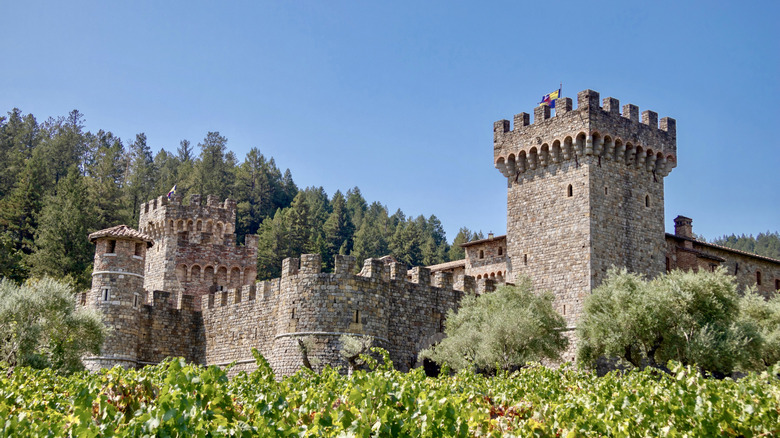
Castello di Amorosa is a sight that most people don't usually expect to see while driving through Napa Valley. It feels like something that doesn't belong. And that's exactly the point. It was built as a labor of love. The castle wasn't just inspired by a fortress in Italy. Castello di Amorosa was built using authentic materials and techniques, sourced directly from Europe and assembled to recreate the feel of a 14th-century Tuscan fortress.
Inside, the experience leans fully into that authenticity. Stone corridors, vaulted ceilings, and open courtyards provide the Old World charm as you move through the space, and it doesn't take long to realize how much detail went into every nook and cranny. There's even a small torture chamber tucked within the castle dungeon, complete with replicas of original instruments of torture that add a slightly unexpected edge to the visit. It's theatrical, but grounded enough that it doesn't feel overdone.
At the same time, Castello di Amorosa isn't just a castle to walk through. It's a working California winery that looks like it belongs in the Italian countryside, and that's what gives the experience another layer. Guided tours of the castle usually end with a wine tasting, directly linking visitors to Napa's wine culture. It's that combination that makes Castello di Amorosa stand out even more. You're not just seeing a castle. You're spending time in one that still has a purpose, which makes visits feel more complete.
5. Bishop Castle (Rye, Colorado)
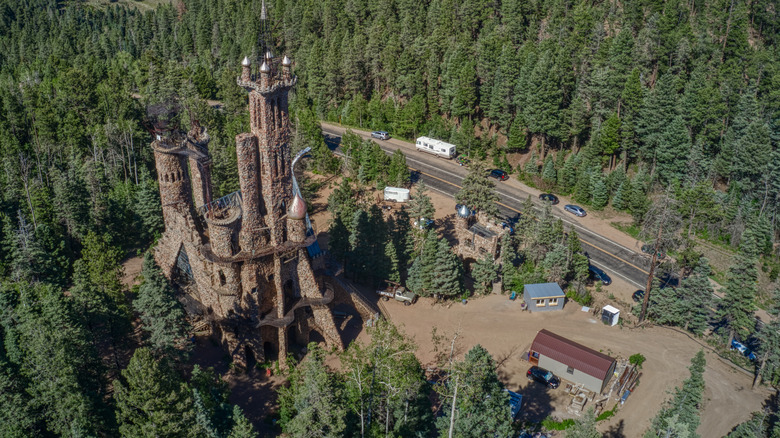
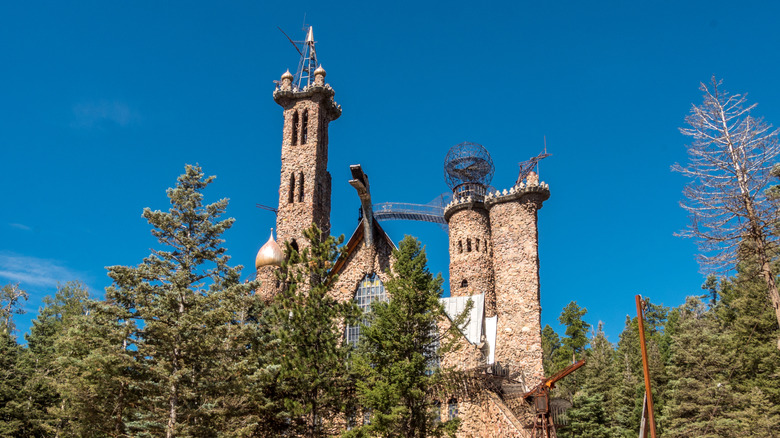
Bishop Castle isn't a castle you gradually come across; it seems to appear out of nowhere. One minute you're driving through the forest, and the next, there is a towering explosion of jagged stone and wrought iron erupting from the tree line. It's very different than most castles you might have visited.
The beautiful, chaotic design extends to the interior. It was not built using a formal plan. Instead, Colorado resident Jim Bishop built much of the castle himself, a fact that becomes more evident as you explore. Staircases wind upward in tight turns, and platforms open out without much warning. Suddenly, you find yourself at treetop level with the San Isabel National Forest stretching toward the horizon. One of the most standout features of Bishop Castle has to be its fire-breathing dragon perched near the top, a seemingly logical fit for this unique structure.
Previously named the best castle in the state by Far & Wide (via Only In Your State), Bishop Castle is a free attraction and architectural marvel in Colorado that is still evolving. Travelers are welcome to visit any day of the year from sun-up to sun-down, provided you agree to enter at your own risk and accept responsibility for your own safety.
6. Hammond Castle (Gloucester, Massachusetts)
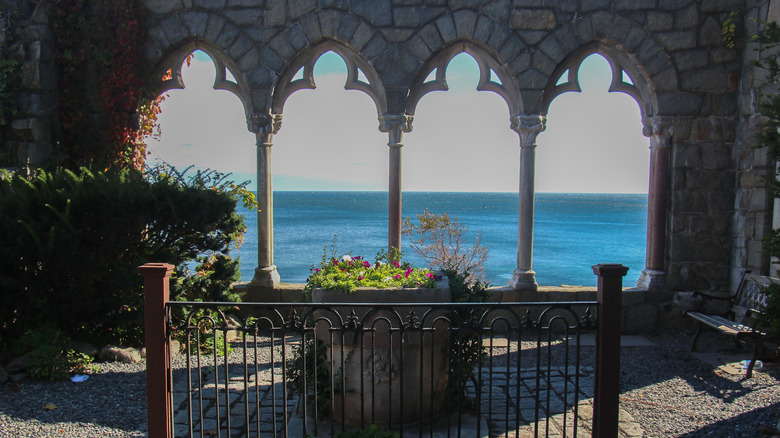
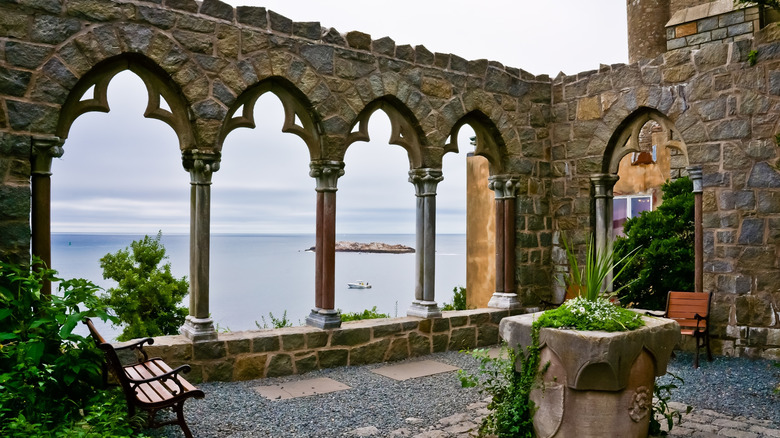
At Hammond Castle, it's the setting that first catches your eye. The castle is steps away from the Atlantic Ocean, anchored to the rocky coastline, where sloshing waves and winds add to the experience. Once you stop admiring the stunning scenery, you start noticing the castle details. There are stone walls, gargoyles, arched passageways, a towering great hall, and even a drawbridge. These details give the unmistakable appearance of a medieval fortress, even though Hammond Castle was built in the 20th century.
The castle's sense of authenticity comes from its purpose. Created by inventor John Hays Hammond Jr., the Medieval-style castle on Massachusetts's North Shore is filled with interesting artifacts. Hammond was a prolific inventor who held over 500 patents and was known as the father of "radio control." Hammond had an extensive collection of medieval artifacts and needed a place to house them. Walk through the interior, and it feels more like a curated world rather than a traditional museum. The rooms have artifacts from his collection, including artwork and furniture dating back to the 13th century, decorative ceramics, and 15th-century textiles.
Guided and self-guided tours are available seasonally. Don't miss visiting the grounds, which are just as impressive as the castle itself. Hammond Castle's terraces and walking paths surround the structure and look out toward the ocean, creating an interesting intersection of rugged New England coastline and a storybook kingdom.
7. Gillette Castle (East Haddam, Connecticut)
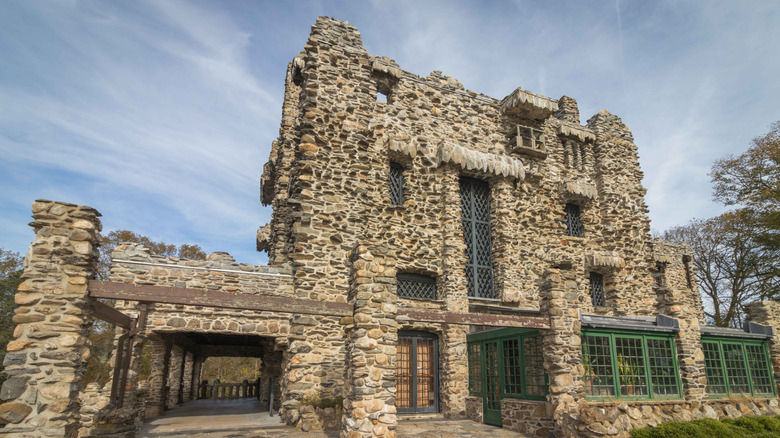
In East Haddam, you'll find an unexpected hidden fairytale town, complete with a stunning castle. Perched high above the Connecticut River, Gillette Castle's stone exterior and irregular silhouette feel almost storybook-like. They blend into the surrounding landscape, giving the impression that the castle is older than it appears. It was built in the early 1900s by the writer and actor William Gillette, best known for portraying Sherlock Holmes.
Eccentric interior details lean into the Sherlockian spirit with hidden passageways, hand-carved woodwork, and custom door latches. There are cleverly designed features throughout the space, each one revealing a bit more about Gillette's personality. You're bound to find something unexpected around nearly every corner.
Getting to the castle is part of the adventure. The castle is located within the Gillette Castle State Park. You can reach the castle by car or ferry if you're crossing the river. Gillette Castle offers seasonal tours from Memorial Day Weekend to Labor Day. It reopens for the weekend Holiday Tour Program between Thanksgiving and Christmas.
8. Singer Castle (Dark Island, New York)
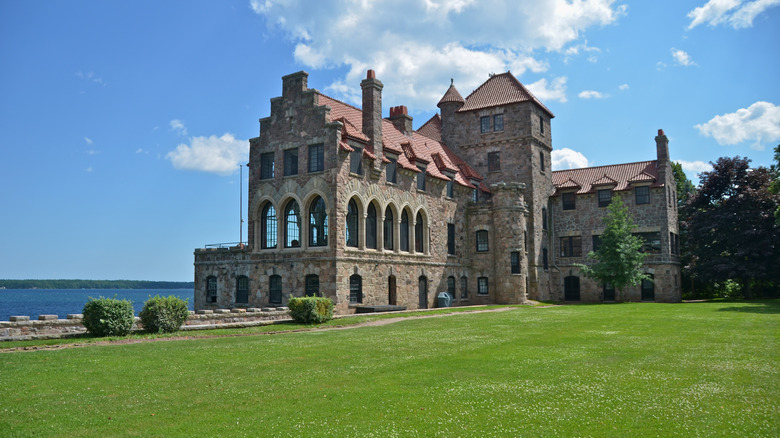
Singer Castle sits on Dark Island, right near the Canadian border. It's one of two islands that hide fairytale castles offering a taste of Europe in upstate New York. Visiting the castle requires a boat ride across the St. Lawrence River, which is part of the allure. As you round the neighboring islands, Singer Castle is immediately visible. Singer Castle was owned by Frederick Gilbert Bourne, who worked his way up at Singer Sewing Machines. He was only 36 when he became the company's fifth president and director.
Once inside Singer Castle, you'll be treated to impressive views of both the American and Canadian shores of the St. Lawrence Seaway. Bourne had tons of granite quarried from a nearby island between 1903 and 1905 to construct the castle. Italian stonemasons shaped the 28-room castle that spans four stories. There are special secret passageways and clever architectural details that continue to surprise. Even today, staff continue to discover new castle secrets.
Arriving at Singer Castle requires taking a tour boat or private vessel. A guided tour takes you to both the castle interior and the surrounding grounds of Dark Island. For a truly immersive experience, you can book an overnight stay at Singer Castle. Like some other notable castles in this region, Singer Castle is only open seasonally.
9. The Kentucky Castle (Versailles, Kentucky)
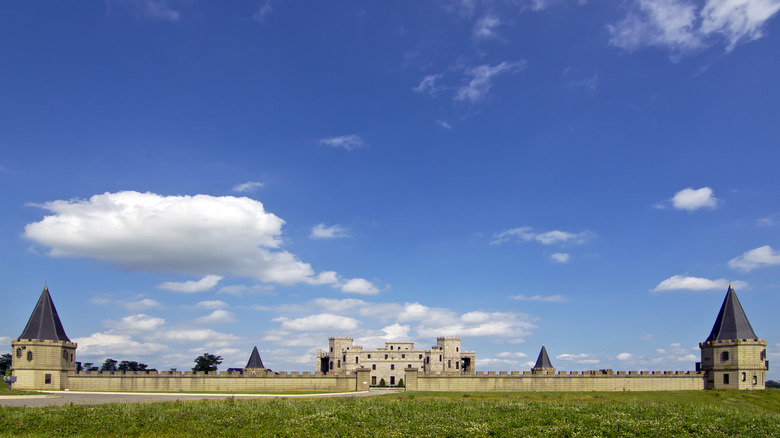
As you drive through Kentucky's Bluegrass region, you'll see plenty of rolling hills and horse farms. What you might not expect to see is a massive stone fortress. The Kentucky Castle looks like it was plucked right out of a European history book, despite being built in 1969. It has stone walls, pointed turret towers, and a symmetrical design, modeled after European castles that the original owners, Rex and Caroline Martin, fell in love with during their travels. Unfortunately, the owners subsequently divorced, and castle construction came to a halt.
The property sat vacant for years until an investor finally purchased it in the early 2000s and resumed construction. A fire destroyed the main building in 2004. Fortunately, a talented team rebuilt it, and the castle opened to the public in 2008 as a bed-and-breakfast called Castle Post. In 2017, a new investor group purchased it and renamed it The Kentucky Castle. It then became more of a luxury destination, with a hotel, spa, and an on-site farm-to-table restaurant. More recently, the property underwent another change in ownership. Now, it's owned by an investment group led by Wes Henderson, co-founder of Angel's Envy and True Story whiskies.
Visitors can experience The Kentucky Castle in several ways. It hosts a variety of public events, such as the annual bourbon market, guided tours, and weddings. Located in the heart of Kentucky's horse country, the nearby town of Versailles also offers plenty of European charm and opportunities to visit local distilleries.
10. Scotty's Castle (Death Valley, California)
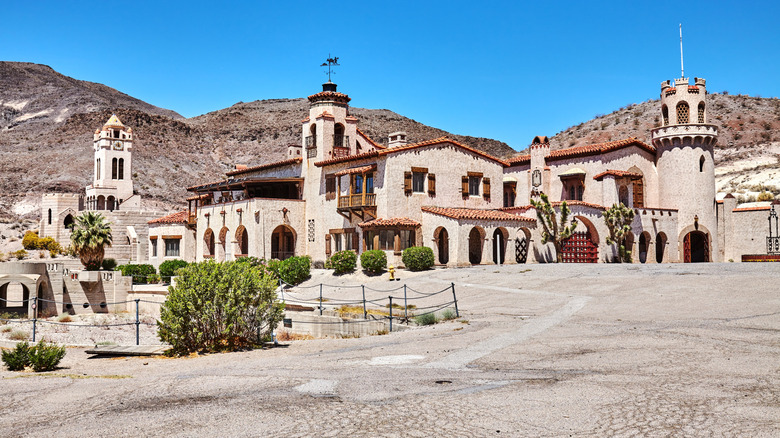
Death Valley is primarily known for heat waves and salt flats. In the middle of seemingly nothing is Scotty's Castle. It's not a mirage; there is a castle in the middle of Death Valley's stark landscape. Scotty's Castle is a Spanish-style mansion with red-tiled roofs and pale stucco walls. Construction started in the 1920s with plans to become a lavish desert retreat for owner Albert Mussey Johnson and his wife, but a convoluted history led to it remaining unfinished.
Today, the castle is part of Death Valley National Park. Since the 1970s, park rangers have dressed in period costumes and led tours of the castle grounds. Unfortunately, a massive flood in 2015 damaged some of the buildings. If that wasn't enough, a subsequent fire and funding woes have delayed reconstruction. Because of these issues, the interior of Scotty's Castle is closed to visitors. However, the Death Valley Institute recently held some flood recovery tours and may offer additional dates in the future.
11. Iolani Palace (Honolulu, Hawaii)

Iolani Palace is an outlier on this list. It is not hidden in a forest or stretching out over a jagged cliff. Instead, it's in the middle of downtown Honolulu. Iolani Palace isn't a castle in the sense of moats and knights, but it checks the boxes on criteria that designate a building as a castle: symbol of royalty, seat of power, and a space designed to impress. It is the only royal palace in the United States, serving as the official residence of the last ruling monarchs, King Kalākaua, and his sister Queen Liliʻuokalani.
The palace was built in 1882 and was considered high-tech for its time. It's the only building in the world to follow the "American Florentine" style, which blends Italian Renaissance elements with Hawaiian architecture. Today, the palace is used as the seat of various government functions after the Kingdom of Hawai'i was overthrown in 1893. The first and second floors have been restored and are open for tours. Walking through the halls, you get a heavy mix of European architectural flair and deep Hawaiian identity.
12. Biltmore Estate (Asheville, North Carolina)
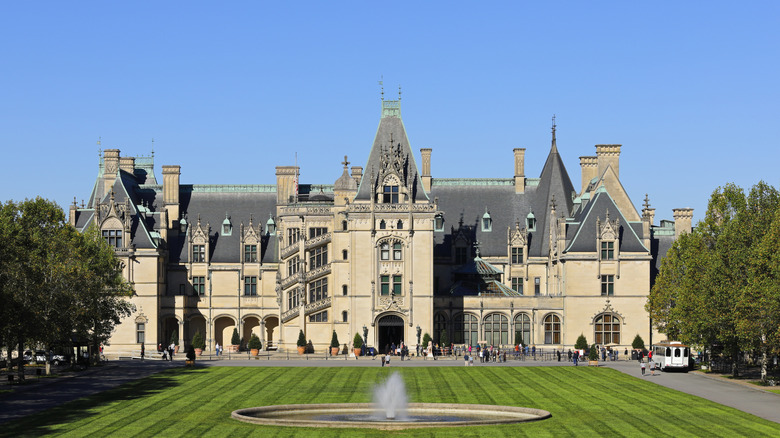
Biltmore Estate is the final boss of American castles. It's not just a massive home; it's a 250-room French Renaissance chateau. It is the largest privately-owned home in the country. Owner George Vanderbilt II intended for the chateau to be a self-sustaining estate, providing job opportunities for the local community.
The estate houses Vanderbilt's massive art collection. There are over 92,000 items at the Biltmore Estate, from architectural drawings of the estate to paintings by Renoir and Monet. Visitors can tour parts of the main home where they'll see intricate details, including the massive 70-foot-high banquet hall ceiling. The home is 175,000 square feet and has 33 bedrooms, 43 bathrooms, and 65 fireplaces.
Interestingly enough, the estate is only half of the story here. The grounds themselves are massive. There are thousands of acres of managed forests and gardens. The gardens were designed by renowned landscape architect Frederick Law Olmsted, co-designer of New York's Central Park. Twenty-two miles of nature trails and activities await visitors, but you must have a ticket, an annual pass, or be staying overnight to participate in any activities.
13. Methodology
We highlighted castles and castle-like estates in the United States that stand out for their distinctive architecture, visual impact, and a strong sense of place that feels removed from their surroundings. They include everything from reproductions of Old World fortresses to uniquely American adaptations shaped by personal vision, culture, and surrounding landscape.
These properties are often recognized for their beauty or uniqueness, or for standout elements that tend to leave a lasting impression on travelers. They often appear on round-up lists and articles about beautiful or unique castles in America.
We gave consideration to how each of these castles can be experienced by visitors today. One priority was choosing sites that were available to the public in some form, whether through a guided tour, self-tour, or exterior viewing opportunity. Beyond the castle's architecture, we also highlighted destinations that feature compelling backstories.